






Abstract
Purpose
To measure the impact of a personalized message about current risk of having advanced colorectal neoplasia (ACN; colorectal cancer [CRC] or advanced precancerous polyp) on informed concordance and CRC screening decision-making outcomes.
Methods
A total of 1,084 patients, aged 50 to 75 y, with an upcoming clinic appointment, due for CRC screening, and at average risk for CRC were randomized to view a decision aid (DA) about CRC screening with or without personalized ACN risk information. Providers were randomized to receive CRC screening notifications with or without each patient’s personalized ACN risk. Patients completed surveys before (T0), immediately after viewing the DA (T1), and after their clinic visit (T2) to assess informed concordance (primary outcome), screening intent, decisional conflict, knowledge, perceived personal risk, and perceived shared decision making. Analysis of covariance and logistic regression models compared intended screening behavior and decision-making outcomes by intervention groups.
Results
At T1, participants (mean age 56.5 y, 59.7% female) sent the personalized rather than the generic DA had higher odds of intending to be screened with any test (odds ratio [OR] = 1.55, confidence interval [CI] = 1.03, 2.33) and to have a stool test (OR = 2.17, CI = 1.62, 2.91) and lower odds of intending to undergo colonoscopy (OR = 0.58, CI = 0.43, 0.79). There were no statistically significant effects of either intervention on informed concordance. Moderation analysis, however, showed that for one health system, participants whose provider was sent the personalized notification had higher odds of informed concordance.
Limitations
Single Midwestern city, English-speaking patients only, low enrollment of patients at high-average risk for ACN.
Conclusion
Providing patients with a personalized message about their ACN risk increased the intent to be screened and to do a stool test and decreased the intent to undergo colonoscopy. For one health system, sending providers the ACN risk message increased the odds of informed concordance.
ClinicalTrials.gov: NCT04683731
Highlights
A personalized message about patients’ advanced colorectal neoplasia (ACN) risk, provided as part of a decision aid, increased patients’ intent to be screened with any test and to have a stool test and decreased their intent to be screened with colonoscopy.
A personalized message about patients’ ACN risk, included in a decision aid sent to patients or in a screening notification sent to their providers, had no significant effect on informed concordance.
At one health system, a personalized message sent to providers about their patients’ ACN risk increased the odds of informed concordance between the patients’ intended screening test and the test received.
Introduction
Screening for cancers such as breast, colorectal, lung, and cervical cancer is recommended because evidence shows that screening reduces cancer incidence and mortality.1–4 Screening has little benefit, on average, and carries potential harms,5–7 though, making it important for patients to be informed.8–13 In addition, people who are eligible for screening have varying levels of cancer risk, which could inform screening decisions.14–19 While there are calculators to estimate an individual’s risk of colorectal cancer (CRC), 20 breast cancer, 21 and lung cancer, 22 and modeling studies show benefit to screening based on risk,23–25 studies have not found any positive effect of providing personalized risk information to patients or providers on decision making or screening uptake.26–30
Patients at average risk for CRC can choose from multiple approved tests.31–33 Colonoscopy finds most polyps (precancerous growths) and almost all cancers but requires that the patient complete an uncomfortable prep to clean out the colon, undergo anesthesia, and miss 1 or more days of work; further, the procedure carries risks.3,7,31 Stool testing, the other most common approach, can be done at home using the fecal immunochemical stool test (FIT) annually or multitarget stool DNA test (e.g., Cologuard®) every 3 y. But stool testing may miss some polyps or cancers, must be done more frequently than colonoscopy, and a positive test requires colonoscopy.3,7,31 Colonoscopy is recommended for people with high risk for CRC, such as those with genetic syndromes (e.g., Lynch) or high-risk family history, and starting at younger ages than for average-risk persons.34,35
For people without high-risk conditions, there are a variety of calculators that estimate an individual’s CRC risk, including ones that estimate a person’s risk of having a current advanced colorectal neoplasm (ACN), that is, either a CRC or advanced, precancerous polyp.20,36–40 A prediction model that uses 5 variables (age, gender, smoking history, waist circumference, and family history) 36 provides greater discrimination for ACN than several other models do37–39 and classifies a significant percentage of average-risk patients eligible for screening as being at low or very-low risk (54%), moderate risk (32%), or high-average risk (15%). 36 (We use the term “high-average” risk to distinguish these patients from those who have conditions that place them at high risk for CRC, such as Lynch syndrome.) Imperiale et al. 36 found a 10-fold difference in the risk for current ACN between those who had very-low risk versus high-average risk (2% v. 22%).
ACN risk information could directly inform decisions about CRC screening. Moderate or high-average ACN risk increases the importance of screening due to the heightened chance that a potentially dangerous lesion is present and favors the selection of colonoscopy due to its higher sensitivity.36,41 Low ACN risk, in contrast, might favor stool-based testing due to the expected lower yield from colonoscopy and lower chance that stool-based testing will miss an advanced polyp or CRC. One previous study showed that disclosing ACN risk to patients and providers had no effect on screening uptake, test choice, or decision making 27 but that study used an earlier prediction rule for ACN that provided less discrimination in ACN risk and an ACN risk message that did not describe implications for test selection.
We hypothesized that using the larger discrimination in risk of ACN to justify a recommendation of stool testing for low-risk patients and colonoscopy for high-average risk would have more significant effects, due to the influence of recommendations in screening behavior 42 and the relative ineffectiveness of personal risk information on its own. 43 In a previous study, an intervention that informed patients that they had low risk for CRC and recommended stool testing found increased uptake of stool testing. 29 We further hypothesized that ACN risk messages sent to patients and providers would help align patient and provider test choice and increase patient motivation to complete the ordered test, increasing screening uptake and informed concordance, an important measure of decision quality.44,45 We therefore conducted a randomized controlled trial to measure the effect of patients and their providers viewing a message about the patient’s ACN risk, with primary outcomes of uptake of CRC screening within 6 mo and informed concordance. Outcomes involving screening uptake and the specific screening test completed (colonoscopy or stool-based) were reported elsewhere. 46
In this article, we report on the intervention effects on the primary outcome of informed concordance and secondary outcomes involving decision making. The aims of this study were to assess the effects of personalized ACN risk messages on the following:
Aim 1: Intent to be screened with any test or with colonoscopy versus stool testing.
Aim 2: Decisional conflict, CRC screening knowledge, perceived risk, and perceived shared decision making.
Aim 3: Informed concordance (primary outcome), defined as the patient having adequate CRC screening knowledge and receiving the test (colonoscopy, stool testing, no screening) within 6 mo that they intended after their clinic visit.
We examined these effects overall and stratified by participants’ risk of having a current ACN as well as moderators of the intervention effects on informed concordance. Although informed concordance is the primary outcome, it is listed as aim 3 since it is computed using outcomes described in aim 1 (screening intent) and aim 2 (knowledge).
Methods
Detailed methods for the study have been published 46 and are briefly summarized below, with additional information in the Supplement Methods.
Design
From November 2020 through May 2023, we conducted a randomized controlled trial with a 2 × 2 factorial design at 41 primary care practices in 2 health systems in the Midwestern United States. Health system 1 consists of federally qualified health centers (FQHCs) located in an urban setting, while health system 2 is a large, private health system serving patients in rural, suburban, and urban areas. The study was approved by the Indiana University Institutional Review Board and is registered in ClinicalTrials.gov (NCT04683731).
Patients viewed a decision aid (DA) about CRC screening that included either a personalized message about their ACN risk (personalized DA) or not (generic DA), and their providers received a notification that their patient was due for screening that included either a personalized message about the patient’s risk of ACN (personalized notification) or not (generic notification) (Figure 1).

Study Groups
Inclusion/Exclusion Criteria
Primary care providers who saw adult patients at participating practices were eligible. Patients were eligible if they were aged 50 to 75 y, scheduled to see an enrolled provider within 1 mo, due for CRC screening, did not report having had a colonoscopy after age 50 y, and had no symptoms of CRC or a family or personal history making them high risk for CRC, as detailed in the Supplement.
Recruitment and Randomization
Eligible providers were sent an introductory letter, study information sheet, and an option to decline participation. Potentially eligible patients were identified from the electronic health record (EHR) and mailed an introductory letter followed by a phone call by research staff who determined eligibility and willingness to participate. Those who agreed to participate answered questions to allow calculation of ACN risk (see Supplement) and were e-mailed a unique link to enroll in the study.
Providers were randomized to receive either generic or personalized notifications for all their enrolled patients. The randomization scheme was stratified by provider type (physician or advanced practice provider) and health system.
When patients clicked the link to access the DA and enroll in the study, they were randomized to view the generic or personalized DA. Patient randomization was stratified by age (<65 or ≥65 y), health system, and ACN risk (very low/low, moderate, or high-average).
Study Procedures
Patients who accessed the link to enter the study were taken to our survey platform (Qualtrics, Provo, UT, USA) to complete the baseline survey (T0), then view the appropriate DA, and then complete a second survey (T1). About 4 to 7 d after their appointment, patients were contacted to complete another survey (T2) and again at 6 mo after enrollment (T3). The T2 and T3 surveys were either self-administered using REDCap electronic data capture tools, a secure, Web-based software platform, or collected by research staff over the phone. Completion of a colonoscopy, stool test (FIT or multitarget stool DNA test, e.g., Cologuard®) or other approved CRC screening test within 6 mo of enrollment was extracted from the EHR.
Providers were sent the notification in the EHR system the day prior to the patient’s appointment. If the patient enrolled within a day of the appointment, the notification was sent as soon as possible after the patient enrolled.
Interventions
The research team developed the DAs with input from patient partners and other stakeholders, building on DAs about CRC screening used in previous studies.47,48 For more information about the DAs and provider notifications, please see the Supplement.
Patient DAs
The DAs were Web-based videos that presented information about CRC and the 2 most commonly used screening tests: colonoscopy and stool tests (FIT and Cologuard). The generic DA included only this information and encouragement to talk to their provider and be screened, while the personalized DA also contained the following (see Figure 2):
explanation of calculation of the patient’s ACN risk score;
classification of ACN risk as “very low” or “low” (“below average”), “moderate” (“average”), or “high” (“above average”) (we used the term “high risk” in the DA, due to patient confusion regarding the term “high-average”);
frequency of ACN displayed on an icon chart (100 blue figures, with the number predicted to have an ACN colored orange); and
recommendation of stool testing for patients with very-low or low risk, colonoscopy for those with high-average risk (with reasons provided for why these tests are appropriate for people at these risk levels), and recommendation of either test for patients at moderate risk.
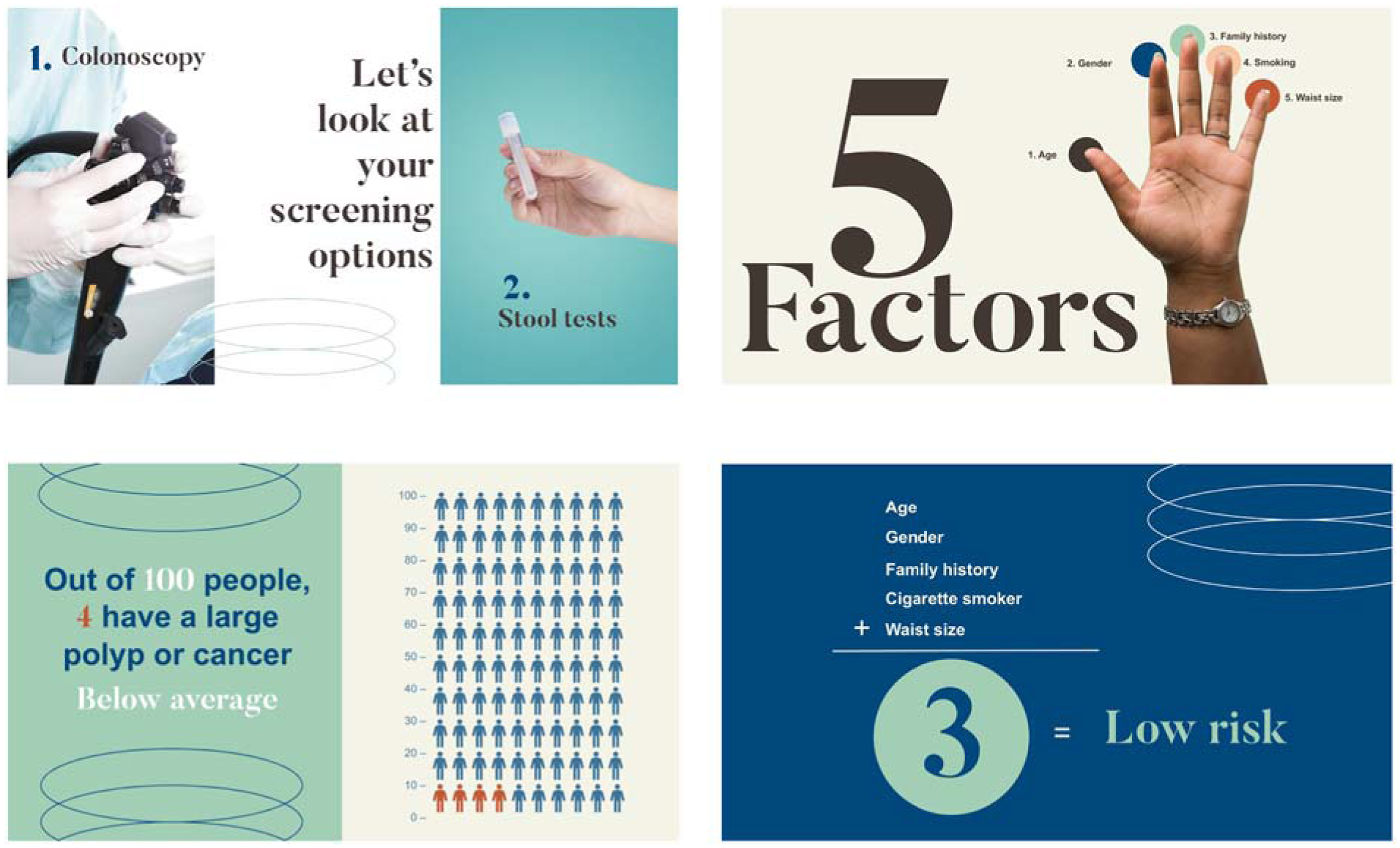
Four sample still images from the decision aid.
Provider notifications
The electronic notifications sent in the EHR informed the provider that their patient was due for CRC screening and had an upcoming appointment with them. The personalized notification included their patient’s current risk of having an ACN and categorized this risk as “very low” (“below average”), “low” (“below average”), “moderate” (“average”), or “high-average” (“above average”). The notification stated, for participants with below-average risk, that “a stool-based test (FIT or Cologuard) may be most appropriate,” and for participants with above-average risk, that “colonoscopy may be most appropriate.”
Measures
Aim 1: Intent
Screening intent was assessed (T0, T1, T2) based on 2 investigator-developed items used in previous studies.47,48
Participants first answered: “Do you plan to get any type of colon test within the next 6 months?” with 5 response options: “Definitely,”“Probably,”“May or may not,”“Probably not,” and “Definitely not.” Patients who answered “Definitely” or “Probably” were classified as “Intend to be screened with some test,” while those who answered “May or may not,”“Probably not,” and “Definitely not” were classified as “Do not intend to be screened.”
Participants then answered, “If you did have a colon cancer screening test, which one would you choose?” with response options: “Colonosopy,”“Stool test (FIT or Cologuard),”“Don’t know,” or “Another test.” Patients who were classified as “Intend to be screened with some test” by the previous question were further classified based on their answer to this question as “Intend to be screened with [stool test], [colonoscopy], [don’t know}, or [another test].”
Three dichotomous outcomes were created: “Intend to screen with some test” (yes/no), “Intend to screen with stool test” (yes/no), and “Intend to screen with colonoscopy” (yes/no).
Aim 2: Decision-making process
See the Supplement for more information about each of these measures.
Decisional conflict was assessed (T0, T1, T2) with the low-literacy version of the Decisional Conflict Scale, a 10-item instrument that assesses patients’ subjective feelings regarding the decision-making process across 5 areas.49–52 A higher score means more decisional conflict.
Perceived personal risk of CRC was assessed (T0, T1, and T2) by asking participants 3 questions about their likelihood of getting CRC during the next 5 y, 10 y, and lifetime. Each question had 4 response options from very likely = 4 to very unlikely = 1. This scale has been used by members of our team in multiple projects.47,48
CRC-screening knowledge was assessed (T0, T1, T2) with a 12-item investigator-developed instrument with 6 multiple-choice and 6 true–false questions, including only information that was covered in both DAs, developed from versions used in earlier studies.13,53 Knowledge score (mean number correct) was a secondary outcome of the study, while having adequate knowledge (at least 9 correct out of 12 questions) or not (dichotomous variable) was used to calculate the primary outcome of informed concordance (see below).
Patients’ perception of shared decision making (SDM) (T2) was assessed using 5 items adapted from the Shared Decision-Making Process_4 Survey (SDMP-4),54–56 and CollaboRATE.57,58
Aim 3: Decision Quality
Informed concordance
The primary outcome was informed concordance, which occurs when an individual has 1) adequate knowledge about a decision and 2) receives the intervention that matches their values.45,59,60 In the current project, a decision had “informed concordance” if it satisfied 2 criteria: the participant a) had adequate knowledge at T2 (9 of 12 correct on the CRC screening knowledge measure) and b) concordance (received the screening test at T3 that they intended at T2 [colonoscopy, stool test, other, or no screening]). Participants whose decision satisfied these requirements had “informed concordance” and were coded as having made a “high-quality decision.”
Moderation
Five prespecified moderators were examined for informed concordance: health system (1 or 2), age (<65 y, ≥65 y), ACN risk (low, moderate, high-average), adequate knowledge at baseline (yes/no), and health literacy. Health literacy was measured with the Brief Health Literacy Screener, 61 a 3-item health literacy scale (see Supplement).
Sample Size and Statistical Analysis
The main study had 2 primary outcomes: uptake of screening (reported elsewhere) 46 and informed concordance. For the informed concordance outcome, we expected exposure to either personalized message would increase informed concordance from 20%, the outcome in our past trial, 53 to 30% (odds ratio [OR] = 1.71) and be additive. We targeted 80% power and alpha = 0.05 for the Wald test for either patient or provider message main effect in a logistic model assuming patient outcomes were independent. This led to a sample size of 604 total (151 per group) before accounting for inflation due to clustering by provider and attrition, which was less than what was needed for uptake of screening; thus, the sample size target based on uptake of screening and accounting for inflation due to clustering and attrition was N = 1,048. 46
Patients who were lost to follow-up at T2 were compared with those who were not using 2-sample t tests, chi-square tests, or Fisher’s exact tests. Intervention effects were tested for continuous measures collected at T0, T1, and T2 (CRC screening knowledge and decisional conflict) using analysis of covariance, and at T2 using only analysis of variance (collaboRATE). For dichotomous outcomes (informed concordance; intent to screen with some test, stool test, or colonoscopy; and individual SDM questions), logistic regression models were fit. For all T1 models, only the patient DA was tested since the provider intervention had not yet occurred. At T2, both patient DA and provider notification were tested. For all T2 models, the interaction between patient DA and provider notification was not significant, so the interaction term was omitted. Because the content of the DA varied by risk level, exploratory analyses stratified by risk level were conducted for intent to screen with stool test and intent to screen with colonoscopy. For decisional conflict and CRC screening knowledge, additional models at T1 and T2 were fit that had no intervention effects to see if, regardless of intervention, patient outcomes were changing over time. All models included covariates of age group, health system, risk level, and baseline (T0) outcome. A random effect for provider was included in models to account for clustering of patients within provider. Analyses were performed using SAS version 4 (Cary, NC, USA). The alpha level was set at 0.05 for informed concordance and “Intend to screen with some test.” For all other outcomes, a Bonferroni-adjusted alpha level was used to adjust for multiple comparisons. To address missing data, we used all available data for descriptive statistics and complete case analysis for models. See the Supplemental Methods for further details.
Role of Funding Source
The Patient-Centered Outcomes Research Institute (PCORI) funded this study and had no role in the study design, data collection, statistical analysis, interpretation, development of the manuscript, or decision to approve publication.
Results
As reported elsewhere, the study found no impact of the personalized versus generic DA or provider notification on CRC screening uptake or test completed (stool test v. colonoscopy). 46 However, a preplanned analysis found that health system moderated the intervention effects for stool testing. Please see Schwartz and colleagues 46 for further information.
Description of the Study Cohort
The full demographics for the study are provided in the Supplement (Supplemental Table 1) and in Schwartz and colleagues. 46 A total of N = 1,111 (1,084 eligible) patients were randomized to 1 of 4 groups (Figure 3). Most participants were female (59.7%) and White (63.8%), a significant minority were Black (27.9%), and almost all were non-Hispanic (96.7%). The mean (SD) age was 56.5 (6.2) y; 88% were younger than 65 y. The ACN risk for participants was low or very low for 684 (63.0%), moderate for 346 (31.9%), and high-average for 55 (5.1%). For the rest of this article, we will use the term “low risk” for participants whose ACN risk was low or very low.
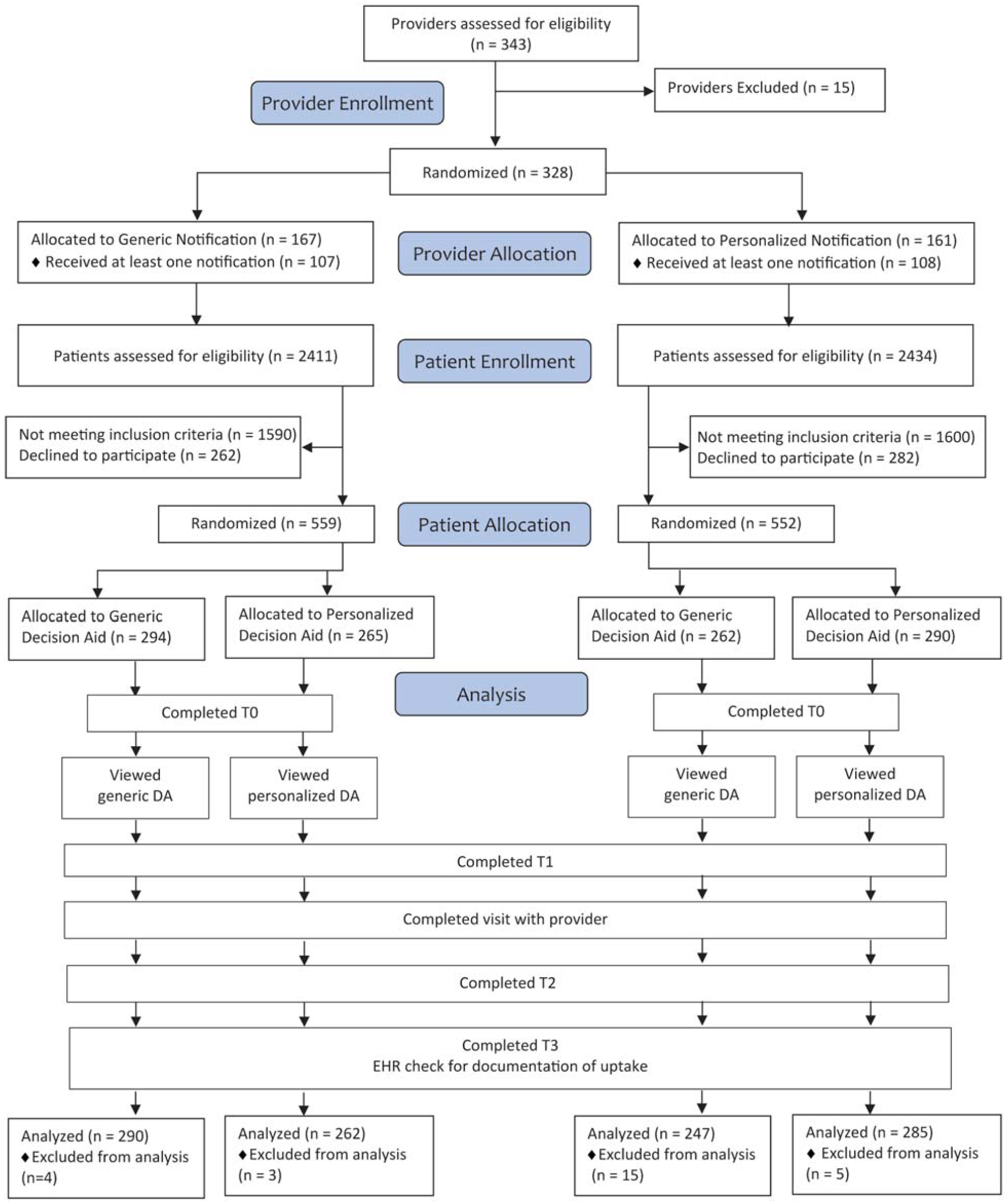
Study flow diagram.
Eighty-nine percent (n = 960) of patients completed the T2 survey. Differences between those lost to follow-up and those who completed T2 are shown in Supplemental Table 1. The only differences observed were in smoking history and health literacy scores. T2 completers were more likely than noncompleters to be never smokers (58.3% v. 45.2%, respectively; P = 0.02) and had better health literacy scores (mean [SD] = 1.9 [2.2] v. 2.5 [2.7], respectively; P = 0.02).
Aim 1: Screening Intent
Intent to be screened with some test
The percentage of participants who intended to be screened with some test increased from 61.4% at T0, to 83.9% at T1, and to 88.2% at T2 (Table 1). Patients who received the personalized rather than the generic DA had greater odds of intending to be screened at T1 (OR = 1.55, confidence interval [CI] = 1.03, 2.33, P = 0.03). At T2, there was no significant effect of the personalized versus generic DA or provider notification on intent to be screened.
Screening Intent Outcomes, Summary Statistics, and Modeling Results
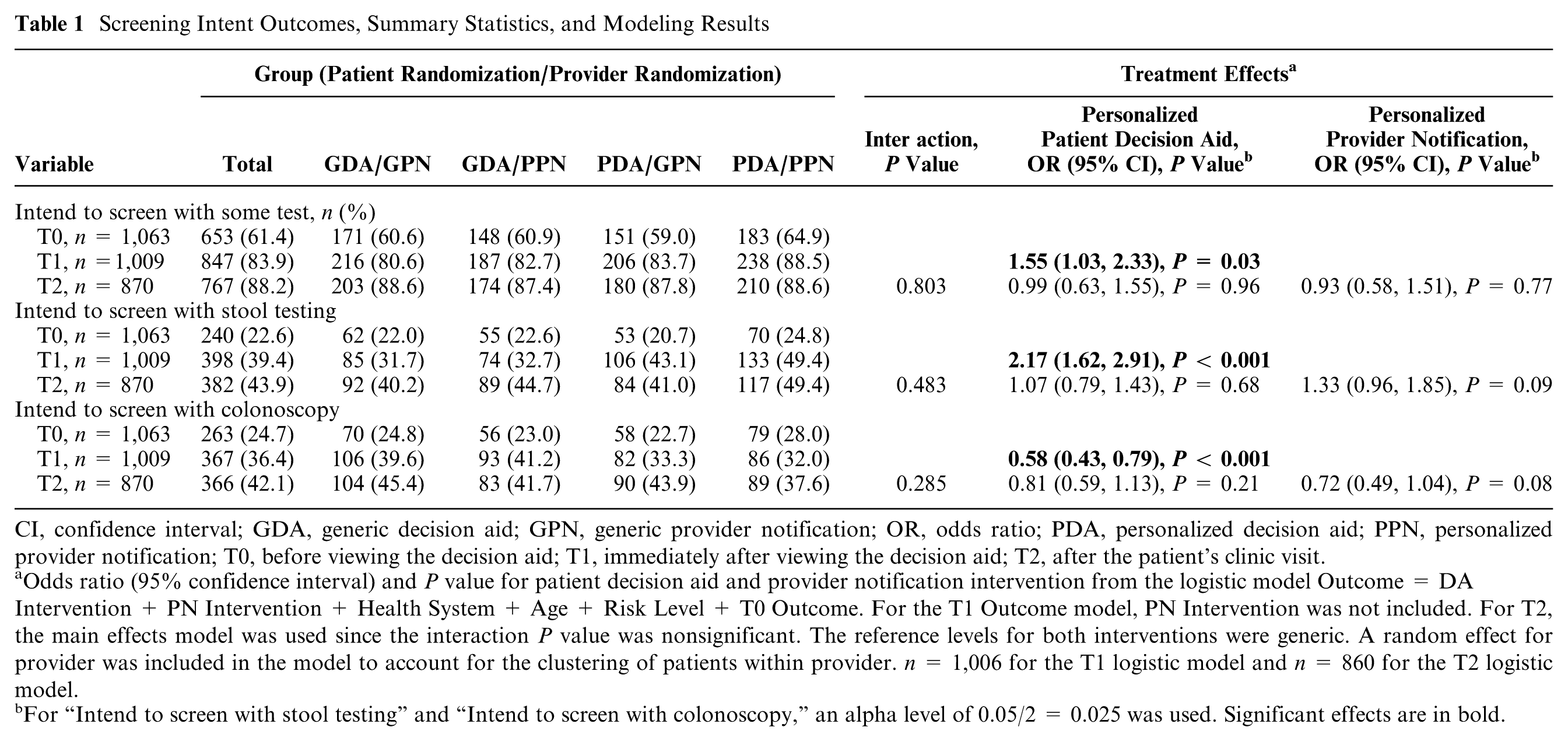
CI, confidence interval; GDA, generic decision aid; GPN, generic provider notification; OR, odds ratio; PDA, personalized decision aid; PPN, personalized provider notification; T0, before viewing the decision aid; T1, immediately after viewing the decision aid; T2, after the patient’s clinic visit.
Odds ratio (95% confidence interval) and P value for patient decision aid and provider notification intervention from the logistic model Outcome = DA Intervention + PN Intervention + Health System + Age + Risk Level + T0 Outcome. For the T1 Outcome model, PN Intervention was not included. For T2, the main effects model was used since the interaction P value was nonsignificant. The reference levels for both interventions were generic. A random effect for provider was included in the model to account for the clustering of patients within provider. n = 1,006 for the T1 logistic model and n = 860 for the T2 logistic model.
For “Intend to screen with stool testing” and “Intend to screen with colonoscopy,” an alpha level of 0.05/2 = 0.025 was used. Significant effects are in bold.
Intent to be screened with stool test
The percentage of patients intending to do a stool test increased from 22.6% at T0, to 39.4% at T1, to 43.9% at T2 (Table 1). Patients who received the personalized rather than the generic DA had greater odds of intending to be screened with a stool test at T1 (OR = 2.17, CI = 1.62, 2.91, P < 0.001). At T2, there was no significant effect of the personalized versus generic DA or provider notification on intent to be screened with a stool test.
Intent to be screened with colonoscopy
The percentage of patients intending to have a colonoscopy increased from 24.7% at T0, to 36.4% at T1, to 42.1% at T2 (Table 1). Both personalized and generic DA groups had increases in intent to undergo colonoscopy from T0 to T1, but patients who received the personalized rather than the generic DA had lower odds of intent to undergo colonoscopy (OR = 0.58, CI = 0.43, 0.79, P < 0.001). At T2, there was no significant effect of the personalized versus generic DA or provider notification on intent to have a colonoscopy.
Stratification by risk level
Due to sample size limitations, we assessed only the low-risk (low- and very-low) and moderate-risk groups (Table 2). With the alpha level adjusted for multiple comparisons, in the low risk group at T1, the odds of intending to do a stool test were higher for patients who viewed the personalized versus the generic DA (OR = 2.63, CI = 1.81, 3.82, P < 0.001), and the odds of intending to undergo colonoscopy were lower for patients who viewed the personalized versus the generic DA (OR = 0.45, CI = 0.31, 0.67, P < 0.001). There were no other effects for personalized versus generic DA or provider notification in the low-risk group at T2 or the moderate-risk group at either T1 or T2.
Intend to Screen with Stool Testing or Colonoscopy by Low- and Moderate-Risk Groups over Time, Summary Statistics, and Modeling Results
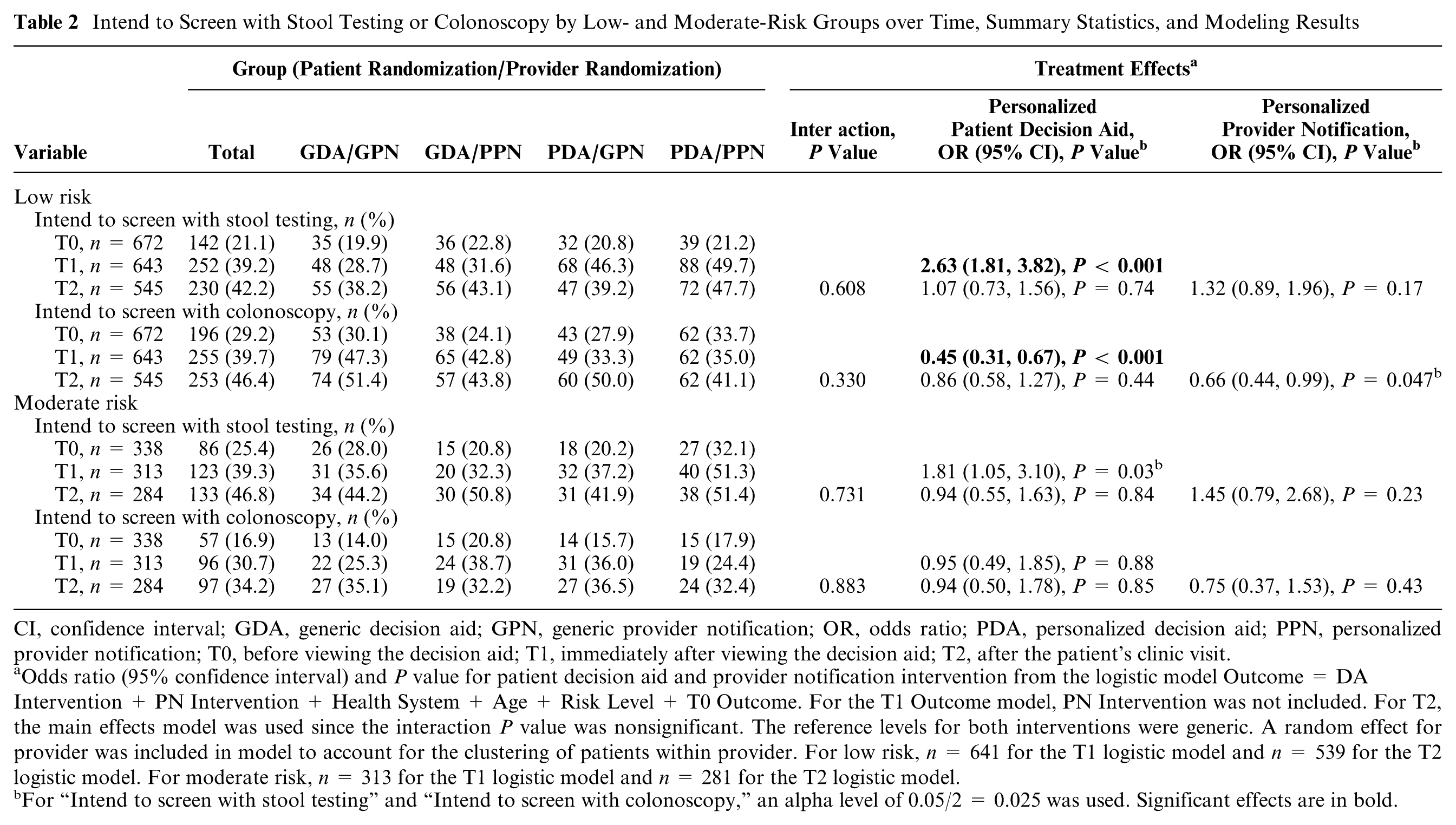
CI, confidence interval; GDA, generic decision aid; GPN, generic provider notification; OR, odds ratio; PDA, personalized decision aid; PPN, personalized provider notification; T0, before viewing the decision aid; T1, immediately after viewing the decision aid; T2, after the patient’s clinic visit.
Odds ratio (95% confidence interval) and P value for patient decision aid and provider notification intervention from the logistic model Outcome = DA Intervention + PN Intervention + Health System + Age + Risk Level + T0 Outcome. For the T1 Outcome model, PN Intervention was not included. For T2, the main effects model was used since the interaction P value was nonsignificant. The reference levels for both interventions were generic. A random effect for provider was included in model to account for the clustering of patients within provider. For low risk, n = 641 for the T1 logistic model and n = 539 for the T2 logistic model. For moderate risk, n = 313 for the T1 logistic model and n = 281 for the T2 logistic model.
For “Intend to screen with stool testing” and “Intend to screen with colonoscopy,” an alpha level of 0.05/2 = 0.025 was used. Significant effects are in bold.
A graphical overview of how the intended screening outcome changed over time is shown in Supplemental Figure 1. Supplemental Figure 2 provides a graphical description of changes in percentage intending to be screened with any test, stool test, and colonoscopy at T0, T1, and T2.
Aim 2: Decision-Making Process
Decisional Conflict Scale
Among all participants, the Decisional Conflict Scale scores decreased from a mean (SD) of 45.0 (28.4) at T0 to 6.1 (12.9) at T1, a statistically significant difference after adjustment for multiple comparisons (P < 0.001). Decisional conflict scores were similarly lower at T2 (P < 0.001), with a mean (SD) of 6.0 (13.3) (Table 3). Patients who received the personalized DA had lower mean decisional conflict scores at T1 than did patients who received the generic DA (an absolute difference of 2.58, CI = 0.98, 4.18, P = 0.003) (Table 3). The difference in personalized versus generic DA was not significant at T2, and there was no effect of the personalized versus generic provider notification.
Decision-Making Process and Decision Quality Outcomes, Summary Statistics, and Model Results
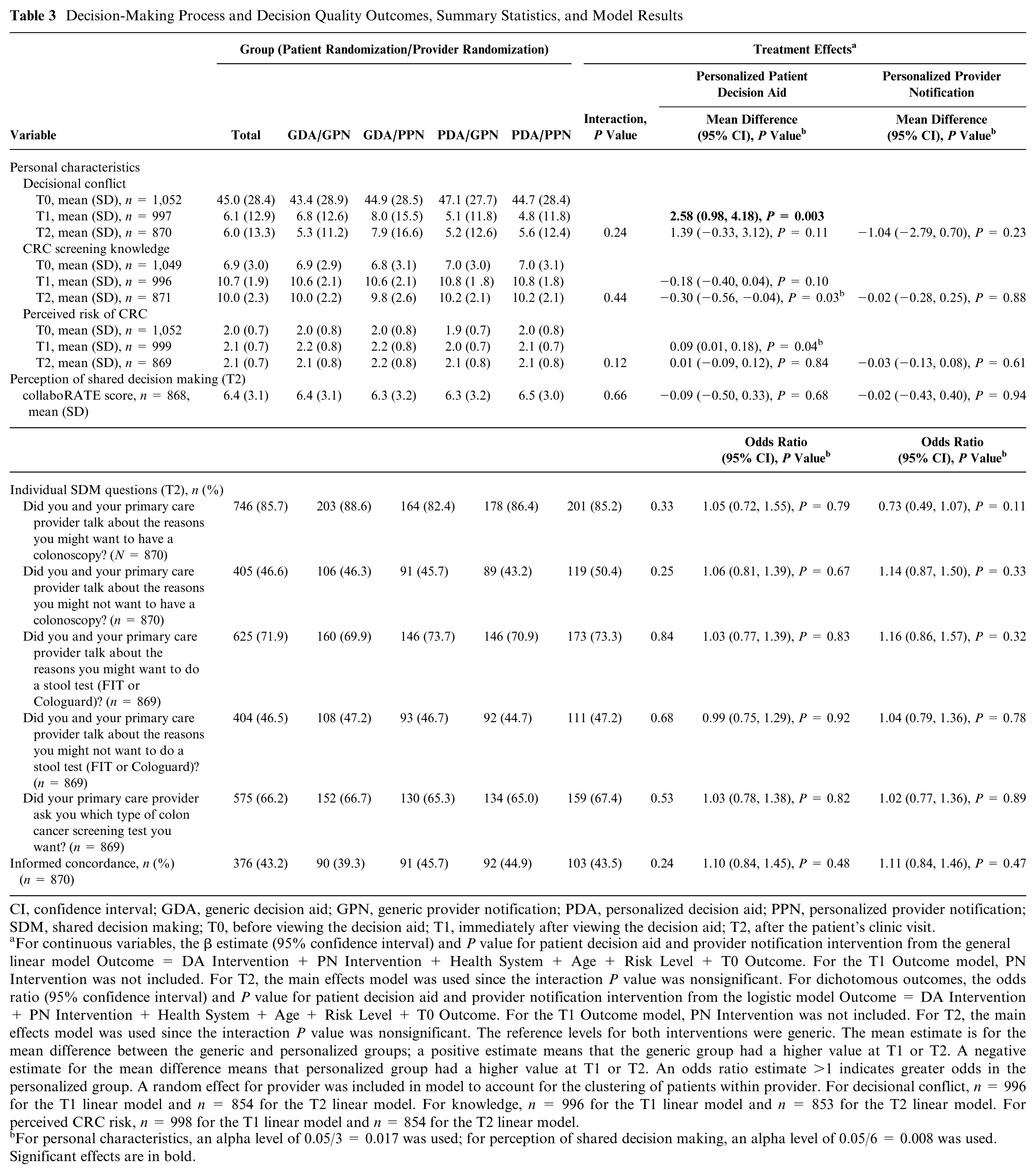
CI, confidence interval; GDA, generic decision aid; GPN, generic provider notification; PDA, personalized decision aid; PPN, personalized provider notification; SDM, shared decision making; T0, before viewing the decision aid; T1, immediately after viewing the decision aid; T2, after the patient’s clinic visit.
For continuous variables, the β estimate (95% confidence interval) and P value for patient decision aid and provider notification intervention from the general linear model Outcome = DA Intervention + PN Intervention + Health System + Age + Risk Level + T0 Outcome. For the T1 Outcome model, PN Intervention was not included. For T2, the main effects model was used since the interaction P value was nonsignificant. For dichotomous outcomes, the odds ratio (95% confidence interval) and P value for patient decision aid and provider notification intervention from the logistic model Outcome = DA Intervention + PN Intervention + Health System + Age + Risk Level + T0 Outcome. For the T1 Outcome model, PN Intervention was not included. For T2, the main effects model was used since the interaction P value was nonsignificant. The reference levels for both interventions were generic. The mean estimate is for the mean difference between the generic and personalized groups; a positive estimate means that the generic group had a higher value at T1 or T2. A negative estimate for the mean difference means that personalized group had a higher value at T1 or T2. An odds ratio estimate >1 indicates greater odds in the personalized group. A random effect for provider was included in model to account for the clustering of patients within provider. For decisional conflict, n = 996 for the T1 linear model and n = 854 for the T2 linear model. For knowledge, n = 996 for the T1 linear model and n = 853 for the T2 linear model. For perceived CRC risk, n = 998 for the T1 linear model and n = 854 for the T2 linear model.
For personal characteristics, an alpha level of 0.05/3 = 0.017 was used; for perception of shared decision making, an alpha level of 0.05/6 = 0.008 was used. Significant effects are in bold.
CRC screening knowledge
As shown in Table 3, patient knowledge of CRC screening increased from T0 to T1 and from T0 to T2 regardless of group assignment (P < 0.001 in both cases). Before watching the DA, patients correctly answered a mean (SD) of 6.9 (3.0) of 12 questions (57.5%), and after watching the DA, they correctly answered a mean (SD) of 10.7 (1.9) questions (89.2%). Knowledge waned slightly at T2, 1 to 2 wk later, to a mean (SD) of 10.0 (2.3) questions answered correctly (83%) but still higher than at T0. After adjustment for multiple comparisons, there were no effects for either intervention at T1 or T2. The percentage of participants with “adequate knowledge”—set at 9 correct answers and used for the informed concordance analysis below—was 36.4% at T0, 89.3% at T1, and 82.9% at T2.
Perceived personal CRC risk
As shown in Table 3, perceived personal CRC risk increased from T0 to T1 and T0 to T2 regardless of group assignment (P < 0.001 in both cases). There were no significant differences in perceived personal CRC risk for patients at T1 or T2 based on whether they saw the personalized DA or not or whether their provider was sent the personalized or generic notification.
Supplemental Figure 3 provides a graphical summary of changes over time for the 3 outcomes above.
Perceived SDM
The mean (SD) collaboRATE score was 6.4 (3.1). For individual SDM questions, while 85.7% of participants indicated they and their provider discussed reasons to have a colonoscopy, only 46.6% reported they discussed reasons not to have a colonoscopy. A similar pattern was seen for stool testing; 71.9% of participants reported discussing reasons for having a stool test, while 46.5% said they did not discuss reasons for not having a stool test. Overall, 66.2% of participants said their provider asked them what type of CRC screening test they wanted. There were no significant effects for any perceived SDM outcome based on having been assigned to the personalized versus generic DA or provider notification, and there was no interaction between these interventions (Table 3).
Aim 3: Decision Quality/Informed Concordance
The percentages of patients who had informed concordance (“made a high-quality decision”) for the total sample and by intervention group are provided in Table 3. Overall, 43.2% of patients made a high-quality decision. There was no 2-way interaction between the DA and provider notification interventions, and neither the personalized DA (OR = 1.10; CI, 0.83–1.46) nor personalized provider notification (OR = 1.13; CI, 0.85–1.50) was associated with a high-quality decision.
Moderation
There was a significant moderation effect (2-way interaction) between health system and provider intervention, indicating that the effect of the personalized provider notification was different for the 2 health systems. For health system 2, the odds of making a high-quality decision were greater when the provider was sent a personalized message about their patient’s ACN risk versus a generic notification (OR = 1.32; CI, 0.96–1.81), but for health system 1, the odds were in the opposite direction (OR = 0.64; CI, 0.37–1.12) (Table 4), and the ratio of the 2 ORs was 2.06 (CI, 1.08–3.91, P = 0.03). Another way to interpret the same interaction is to note that the odds of a high-quality decision were higher for health system 2 than for health system 1 for both the personalized (OR = 3.31; CI, 2.08–5.27) and generic (OR = 1.61, CI, 1.03–2.52) provider notification, with the ratio of the 2 ORs being 2.06 (CI, 1.08–3.91, P = 0.03). There were no moderation effects for any of the other 4 prespecified potential moderators.
Moderation Effect of Health System on Provider Notification for Informed Concordance
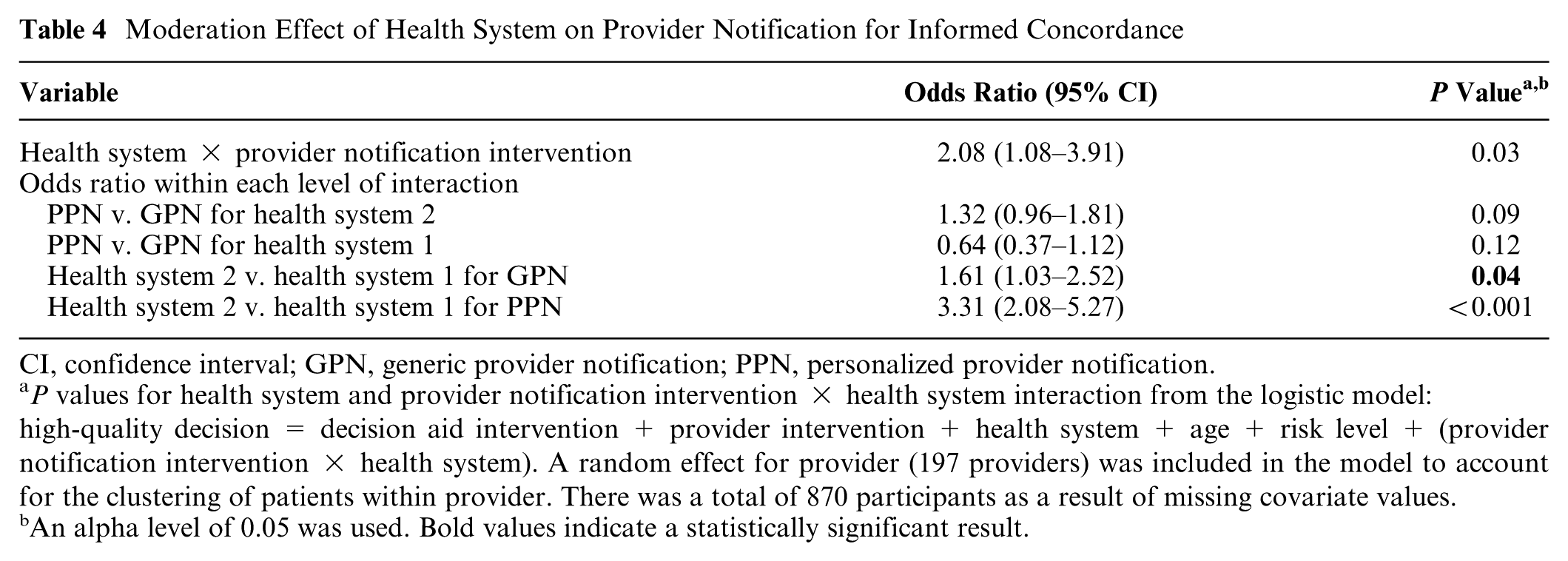
CI, confidence interval; GPN, generic provider notification; PPN, personalized provider notification.
P values for health system and provider notification intervention × health system interaction from the logistic model: high-quality decision = decision aid intervention + provider intervention + health system + age + risk level + (provider notification intervention × health system). A random effect for provider (197 providers) was included in the model to account for the clustering of patients within provider. There was a total of 870 participants as a result of missing covariate values.
An alpha level of 0.05 was used. Bold values indicate a statistically significant result.
Post hoc descriptive analyses
To explore possible reasons for why the provider intervention had an effect on high-quality decision making for one health system but not the other, we examined the percentage of patients who had informed concordance and who satisfied both of its components: a) adequate knowledge at T2 and b) concordance (received the test at T3 that they intended at T2), by health system (Supplemental Table 2). A higher percentage of patients in health system 2 than in health system 1 had informed concordance, both overall (a difference of 19.8%) and in each of the 4 randomized groups (differences of 9.3% to 22.5%). The percentage of patients in health system 2 who had adequate knowledge was 27.7% higher and the percentage who had concordance was 7.3% higher than for health system 1.
Discussion
This study did not confirm the primary hypothesis that including a personalized message about ACN risk in a DA and in a provider notification about screening would increase the odds of high-quality decision making, as measured by informed concordance. However, a planned moderation analysis found that in one health system, patients had higher odds of informed concordance when their provider was sent the personalized rather the generic message about the patient’s ACN risk. We also found significant effects of viewing the personalized rather than the generic DA on participants’ intent to have a stool test and intent to have a colonoscopy, right after viewing the DA (at T1), overall and for patients with low ACN risk.
A previous randomized trial found no significant effects on concordance, test choice, or uptake from providing patients with information about their ACN risk. 27 However, that study had fewer participants, used a risk calculator that provided less discrimination in ACN risk, and the ACN risk message did not describe implications for test selection.
Screening Intent
The percentage of patients intending to have any colon test, and specifically to have a stool test or a colonoscopy, increased from baseline (T0) to after viewing either DA (T1), and these proportions increased even further after participants’ clinic visits (T2). At T1, a slightly higher percentage of patients who viewed the personalized rather than the generic DA intended to be screened with some test, but the difference was small (less than 5%), with questionable clinical significance. Studies of DAs about CRC screening and other recommended screening tests have similarly found that DAs increase patients’ intent to be screened. 62
Viewing the personalized rather than the generic DA resulted in a significantly higher percentage of patients intending to be screened with a stool test and a significantly lower percentage of patients intending to be screened with colonoscopy at T1, both overall and among low-risk patients, and the magnitude of the effect was larger for low-risk patients. The impact on low-risk patients helps explain the overall result, since 63% of participants were low risk. However, these analyses are considered exploratory.
We hypothesized that the personalized ACN risk message for low-risk patients would increase the intent to do a stool test and decrease the intent to have a colonoscopy, largely because of the statement that “a stool test can be a good choice,” followed by the explanation that it is easy to do and that there is a low chance that a colonoscopy would find something important to remove or treat or that the stool test would miss something important, compared with people with higher risk of ACN. Previous research has pointed to the influence of recommendations in screening behavior, 42 and a previous study that provided mostly low-risk patients with a message recommending stool testing found a significant shift to choosing stool testing. 29 Our personalized ACN message also included other information, such as the patient’s quantitative risk of ACN (e.g., 4 in 100), a risk label (e.g., “low”), and their comparative risk (e.g., “below average”), and our study did not separately evaluate the impact of this information. Previous research has found that comparative risk information has a more significant impact on behavior than quantitative or labeled personal risk. 43
The differential effects of watching the personalized versus the generic DA on screening intent were no longer apparent at T2, for unclear reasons. The recommendations of providers may have obviated any effect of the DA, consistent with research showing the importance of provider recommendation on screening.42,59 In addition, the impression given by the DA may have worn off over the week or so between T1 and T2. Of note, however, there might have been a persistent effect of the DA that was not captured by the T2 survey, since outcomes of this study published earlier showed that sending the personalized rather than the generic DA was associated with higher uptake of stool testing and lower uptake of colonoscopy in certain subgroups of patients. 46
Decision-Making Process
For both DAs, the mean score for decisional conflict dropped from approximately 45 at T0 to around 6 at T1, a clinically important difference in the desired direction. Decisional conflict scores less than 25 have been associated with higher rates of implementing decisions.50,63 After the clinic visit, at T2, more than a week after T1, decisional conflict remained low and even dropped slightly further, indicating that the effect was persistent. Patients who were sent the personalized DA had slightly lower mean decisional conflict at T1 than did patients who were sent the generic DA, but this difference was minimal and no longer significant at T2.
Both DAs significantly improved knowledge and did so to a degree that appears clinically significant: from 57.5% correct answers before watching the DA to 89.2% correct afterward. Knowledge remained higher than baseline (83%) after the clinic visit, 1 to 2 wk later, and 6 mo later (82.9%). 64 Although there is no clearly defined way for determining if a change in knowledge is clinically significant, going from levels that would earn an F on a school test to a solid B or B+ is impressive. Similarly, although there are no simple ways to determine if a patient has adequate knowledge to make a decision about CRC screening 13 or in other areas, 65 the percentage of patients achieving adequate knowledge as defined in this study (9 of 12 correct, 75%) increased impressively, from 36.4% at T0, to 89.3% at T1, and 82.9% at T2. The fact that knowledge levels declined slightly from immediately after viewing the DA (T1) to shortly after the clinic visit (T2) is not surprising, given studies showing that providers give limited information about screening tests or other preventive measures.66–70
Informed Concordance
Our study failed to confirm the primary hypothesis that the personalized DA and provider notification would increase the odds of informed concordance, a leading measure of quality of decision making,45,59,60,62,71 including for CRC screening decisions. 72 A planned moderation analysis, however, found that sending the provider the personalized rather than the generic notification increased the odds of informed concordance in health system 2 by 39%, which was statistically significant, while it reduced the odds of informed concordance in health system 1 by 41%, which was not statistically significant.
We can only speculate about the reasons for the differential effect of the personalized provider notification at the 2 health systems. Health system 2 had higher levels of informed concordance, overall and in each randomized group, than health system 1. More patients in health system 2 had adequate knowledge as well as concordance, compared with those in health system 1. Participants in health system 2 had higher socioeconomic status and education levels than those in health system 1, as reported in a previous article, 46 which might have affected the number with adequate knowledge overall. Of note, health system 2 is a private health system, while the clinics in health system 1 are FQHCs, which may affect knowledge scores. Clinics and providers in a private system also may be more able or attuned to help patients receive the test they chose than are FQHCs, resulting in higher levels of concordance as well.
No previous studies have compared the effect of 2 different types of provider notification on informed concordance in any area of screening. Therefore, our finding of a significant effect in one health system is notable and can inform future research on screening.
Limitations
The study was conducted in 1 metropolitan area in the midwestern United States, with relatively few Hispanic and Asian patients, few patients with high-average ACN risk, and only participants who spoke English. The study did not include a “usual care” control group, which may have reduced the magnitude of differences in decision-quality outcomes and thus may have diluted the effects of the personalized risk messages in the DA and the provider notification.
Conclusions
Immediately after viewing a DA that included a personalized message about ACN risk, participants overall, and especially those at low risk, were more likely to intend to be screened with a stool test and less likely to choose colonoscopy, compared with patients who viewed a generic DA. Although the differences were no longer significant in surveys conducted after the clinic visit, these effects may have influenced the completion of screening for at least some patients, since outcomes published earlier show that sending the personalized rather than the generic DA was associated with higher uptake of stool testing and lower uptake of colonoscopy in certain subgroups of patients. 46
Patients who viewed the personalized rather than the generic DA also were more likely to intend to be screened with some test, and had lower decisional conflict, immediately after viewing the DA, although these differences had questionable clinical significance. Finally, for one health system, participants were more likely to make a high-quality decision, as measured by informed concordance, if their provider was sent a personalized rather than a generic screening notification.
These outcomes show that personalized messages about ACN risk, sent to patients and their providers, can have significant, and at times positive, effects on screening intent and decision making. These effects, though, were relatively small, allowing for a range of opinions on the importance of providing this sort of personalized information. Further study and discussion are warranted about providing patients and their providers with personalizing risk information to inform CRC screening decisions.
Supplemental Material
sj-docx-1-mdm-10.1177_0272989X261455045 – Supplemental material for Effect of Personalized Risk Messages on Patient Intent and Decision Making in Colorectal Cancer Screening: A Randomized Controlled Trial
Supplemental material, sj-docx-1-mdm-10.1177_0272989X261455045 for Effect of Personalized Risk Messages on Patient Intent and Decision Making in Colorectal Cancer Screening: A Randomized Controlled Trial by Peter H. Schwartz, Thomas F. Imperiale, Susan M. Perkins, Karen K. Schmidt, Sandra Althouse and Susan M. Rawl in Medical Decision Making
Footnotes
The authors declared the following potential conflicts of interest with respect to the research, authorship, and/or publication of this article: Dr. Imperiale has received grant support from Exact Sciences, provided directly to Indiana University, for his collaboration on research projects.
The authors disclosed receipt of the following financial support for the research, authorship, and/or publication of this article: Financial support for this study was provided entirely by a contract with the Patient-Centered Outcomes Research Institute (PCORI) and grant number CDR-2018C3-14715. The funding agreement ensured the authors’ independence in designing the study, interpreting the data, writing, and publishing the report.
Ethical Considerations
The study was approved by the Indiana University Institutional Review Board (protocol 2004109966) and is registered with ClinicalTrials.gov (NCT04683731).
Consent to Participate
Patients agreed verbally to participate during a phone call with a research assistant and then entered the study by clicking on the link sent to them by e-mail or patient portal or on an iPad presented to them in clinic. Eligible providers were sent an introductory letter, study information sheet, and an option to decline participation. If they did not opt out, they were enrolled in the study: they were randomized, and patients scheduled to see them were invited to participate.
Consent for Publication
Not applicable.

Data Availability
The study protocol is available from corresponding author Peter H. Schwartz (
References
Supplementary Material
Please find the following supplemental material available below.
For Open Access articles published under a Creative Commons License, all supplemental material carries the same license as the article it is associated with.
For non-Open Access articles published, all supplemental material carries a non-exclusive license, and permission requests for re-use of supplemental material or any part of supplemental material shall be sent directly to the copyright owner as specified in the copyright notice associated with the article.
