






Abstract
Background:
Little is known about the effect of maternal perceived breastfeeding self-efficacy on the exclusive breastfeeding rate at 6 months postpartum in mainland China.
Objective:
The aim of this study was to examine the relative effect of maternal breastfeeding self-efficacy and selected relevant factors on the exclusive breastfeeding rate at 6 months postpartum. The internal consistency and construct validity of the Chinese (Mandarin) version of the Breastfeeding Self-Efficacy Scale–Short Form (BSES-SF) were also examined.
Methods:
This was a prospective cohort study conducted at a regional teaching hospital in Guangzhou, China. A total of 562 in-hospital mothers who were within 72 hours postpartum were recruited to the study and followed up by telephone for 6 months.
Results:
Although all of the mothers breastfed their babies within 72 hours postpartum, only 25% of the mothers breastfed exclusively. The mean survival time of continuation of exclusive breastfeeding was 16.7 days. The proportion of mothers who breastfed exclusively after discharge was 14.8%, 2.0%, and 0.2% at 1, 4, and 6 months, respectively. Cox regression analysis revealed that the mothers who had a higher BSES-SF score at baseline, underwent cesarean section, and practiced exclusive breastfeeding within 72 hours after delivery were significantly associated with a lower hazard of discontinuation of exclusive breastfeeding before 6 months postpartum.
Conclusion:
The exclusive breastfeeding rate among Chinese women is far from satisfactory. The Chinese (Mandarin) version of the BSES-SF can help in identifying mothers who need more support for exclusive breastfeeding before 6 months postpartum.
Well Established
Maternal breastfeeding self-efficacy has been found to be associated with the duration of breastfeeding. However, little is known about the association between maternal breastfeeding self-efficacy and the continuance of exclusive breastfeeding at 6 months postpartum among Chinese women.
Newly Expressed
The in-hospital Chinese postpartum mothers who reported a higher BSES-SF score, practiced early exclusive breastfeeding, and had undergone cesarean section were significantly associated with a lower hazard of discontinuation of exclusive breastfeeding before 6 months postpartum.
Background
In the past 20 years, efforts have been made to promote breastfeeding in mainland China in support of the Baby-Friendly Hospital Initiative (BFHI). 1 However, the sustainability of maternal breastfeeding is far from satisfactory. According to the fourth Chinese National Health Services Survey, the exclusive breastfeeding rate was 15.8% for infants of 6 months old nationwide. 2 A recent cohort study 3 reported an exclusive breastfeeding rate of only 2.6% at 6 months after birth among mothers in Shihezi City in northwest China. The researchers 3 pointed out variations in the breastfeeding rate across provinces and counties in mainland China due to differences in socioeconomic development, hospital policy, and health care practice. To support the World Health Organization (WHO)’s recommendation on exclusive breastfeeding for all infants for the first 6 months of life, 4 there is a continual need to identify key modifiable factors that predict sustained exclusive breastfeeding to 6 months postpartum among different ethnic groups in the population.
In the search for modifiable factors that are positively associated with sustained breastfeeding to 6 months postpartum, Meedya et al 5 concluded that the women’s perceived breastfeeding self-efficacy was crucial to their continuance of breastfeeding. Breastfeeding self-efficacy, which was developed from Bandura’s social cognitive theory by Dennis, 6 refers to a woman’s confidence in her ability to breastfeed her infant. Research has demonstrated a significant positive relationship between breastfeeding self-efficacy and exclusive breastfeeding rates.7-10 Interventions focusing on improving women’s self-efficacy in breastfeeding has been reported to be effective in lengthening the duration of exclusive breastfeeding in non-Chinese studies.11-16
In 1999, the 33-item Breastfeeding Self-Efficacy Scale (BSES) was developed by Dennis and Faux 17 in English to measure “a woman’s confidence in her ability to perform specific tasks and behaviors related to successful breastfeeding.” Since then, the scale has been translated and tested among various ethnic groups,9,18 including mainland Chinese. 19 The BSES was later shortened to the 14-item Breastfeeding Self-Efficacy Scale–Short Form (BSES-SF), due to suggested item redundancy by the original author. 10 The BSES-SF has been reported to be a validated instrument to measure breastfeeding self-efficacy among women from diverse cultures.20-25 The predictive validity of the BSES-SF was shown by significant differences in BSES-SF mean scores between mothers who were exclusively breastfeeding and those who were bottle feeding at 6 months postpartum.22,23 Little is known about the ability of the BSES-SF to predict the exclusive breastfeeding rate at 6 months postpartum in mainland China.
The aim of this study was to ascertain the relative effect of maternal breastfeeding self-efficacy and selected relevant factors on the exclusive breastfeeding rate at 6 months postpartum in mainland China. The internal consistency and construct validity of the Chinese (Mandarin) version of the BSES-SF were also examined. The findings will facilitate the development of strategic interventions to address the unsatisfactorily low exclusive breastfeeding rate among Chinese women in the long run.
Methods
Design
This was a prospective cohort study. The study had 2 phases. The purpose of the first phase was to establish the construct validity of the Chinese (Mandarin) version of the BSES-SF, the instrument measuring maternal breastfeeding self-efficacy, among Chinese mothers in mainland China. The second phase was to examine the prognostic ability of maternal breastfeeding self-efficacy, together with other selected variables, for exclusive breastfeeding at 6 months postpartum.
Sample
The participants were recruited from 1 of the regional teaching hospitals in Guangzhou, a subprovincial city located in southeastern China, between January and December 2012. This hospital delivers more than 3000 babies each year and was designated as BFHI in 1991. The participants were recruited from the postnatal wards of the Obstetrics and Gynecology Department. Eligible mothers were Guangzhou citizens who were 18 years old or older, were able to read and understand Mandarin-Chinese, had decided on or initiated breastfeeding at the time of data collection (within 3 days postdelivery), and had given birth to a singleton, full-term (gestation > 37 weeks) healthy infant. Mothers were excluded from participation if they had (a) multiple deliveries (twins, triplets), (b) serious medical or obstetric illness, or (c) babies being admitted to the special care nursery at the time of data collection.
Measures
Chinese (Mandarin) version of the BSES-SF
The original English BSES-SF 16 is a unidimensional self-report scale that measures a woman’s perceived self-efficacy in breastfeeding. 10 All 14 items were positively worded and anchored with a 5-point Likert-type scale, from 1 (not at all confident) to 5 (always confident). Total scores ranged from 14 to 70, with higher scores indicating higher levels of breastfeeding self-efficacy. The Chinese (Cantonese) version of the BSES-SF was shown to have desirable psychometric properties when used with Hong Kong Cantonese-speaking mothers. 23 To facilitate the use of the scale among Mandarin-speaking Chinese women in mainland China, a Chinese (Mandarin) version of the BSES-SF was formed by extracting the corresponding 14 items from the validated Mandarin version of the full scale. 19 A panel of 9 health professionals (comprising 6 breastfeeding consultants and 3 neonatal nurses) and 3 breastfeeding mothers was asked to independently rate the relevancy of each of the 14 items to Chinese culture and society by using a 4-point scale: (1) not relevant, (2) somewhat relevant, (3) quite relevant, and (4) very relevant. All items in the Chinese (Mandarin) version of the BSES-SF were found to have an acceptable Content Validity Index (CVI) above .90. Finally, the BSES-SF was piloted on a convenience sample of 10 mothers recruited at the postnatal unit of the teaching hospital. None experienced difficulty in completing the scale.
Self-developed questionnaire
A 22-item questionnaire measuring sociodemographic, psychosocial, and perinatal variables previously associated with exclusive breastfeeding duration was developed.26-29 Sociodemographic questions included maternal age, marital status, education, employment, family income, gravidity, smoking status, and breastfeeding exposure (previous experience of breastfeeding, breastfeeding talk attendance, previous observation of breastfeeding, relatives/friends with breastfeeding experience, or had been breastfed in infancy). Psychosocial variables referred to the Chinese (Mandarin) version of the BSES-SF, intention for feeding mode, and concern over infant’s gender by significant others. Perinatal variables covered the mode of delivery, infant birth weight, gestational age of infant, time of first breastfeeding, and infant feeding pattern as classified by the WHO 30 : (a) exclusive breastfeeding (human milk only, with no other supplement except Oral Rehydration Salts solution (ORS), drops, or syrups of vitamins, minerals, or medicine) and (b) nonexclusive breastfeeding (all types of feeding that do not fulfill the criteria of exclusive breastfeeding).
Statistical Analysis
Data were summarized using appropriate descriptive statistics. The normality of the continuous variables was assessed using skewness and kurtosis statistics and a normal probability plot.
The participants’ infant feeding modes at 4 time points (within 72 hours postpartum, and 1, 4, and 6 months postpartum) were collected. Survival analysis was performed for the right-censored time-to-event data of discontinuation of exclusive breastfeeding before 6 months postpartum. The Kaplan-Meier method was used to generate a survival plot and estimate the mean survival time of continuation of exclusive breastfeeding. Furthermore, Cox regression analysis was used to identify mother and infant characteristics associated with the time-to-event outcome of discontinuation of exclusive breastfeeding. The characteristics explored are listed in Tables 1 and 2. Univariate analysis of the association between the outcome variable and each of the independent variables (mother and infant characteristics) was performed using Cox regression. Those independent variables with a P value < .25 in the univariate analyses were chosen as candidate variables for backward multivariable Cox regression to delineate factors independently and significantly associated with the time-to-event outcome. The cutoff of .25 was recommended by Hosmer and Lemeshow 31 to avoid omission of potentially important covariates that fail to be significant in univariate analysis. At the same time, this cutoff can be used to screen out those independent variables of questionable importance in a parsimonious regression model. The results of the final multivariable Cox regression models for the outcome were presented by the hazard ratios (HRs) and their associated 95% confidence intervals (CIs) in the significant factors identified.
Characteristics of the Study Sample (Categorical Variables). a
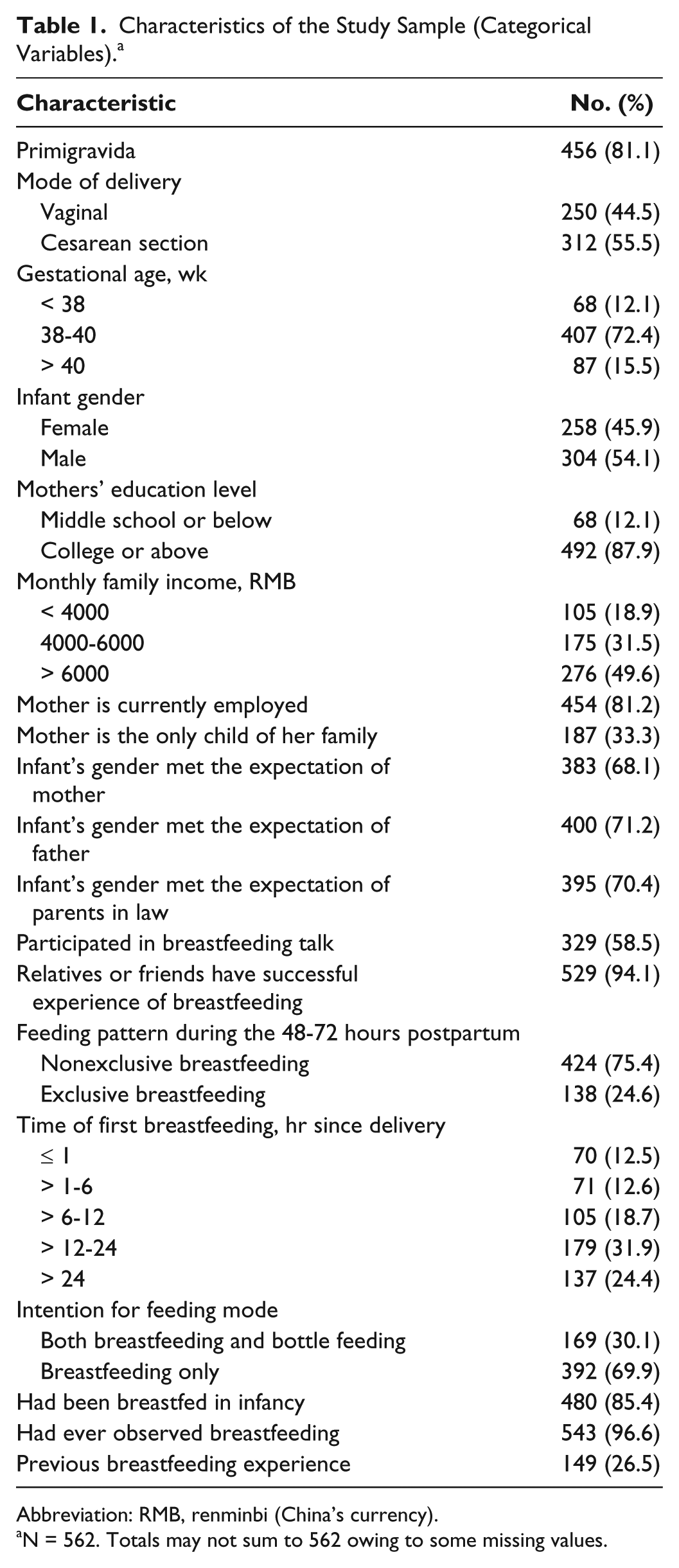
Abbreviation: RMB, renminbi (China’s currency).
N = 562. Totals may not sum to 562 owing to some missing values.
Characteristics of the Study Sample (Continuous Variables). a
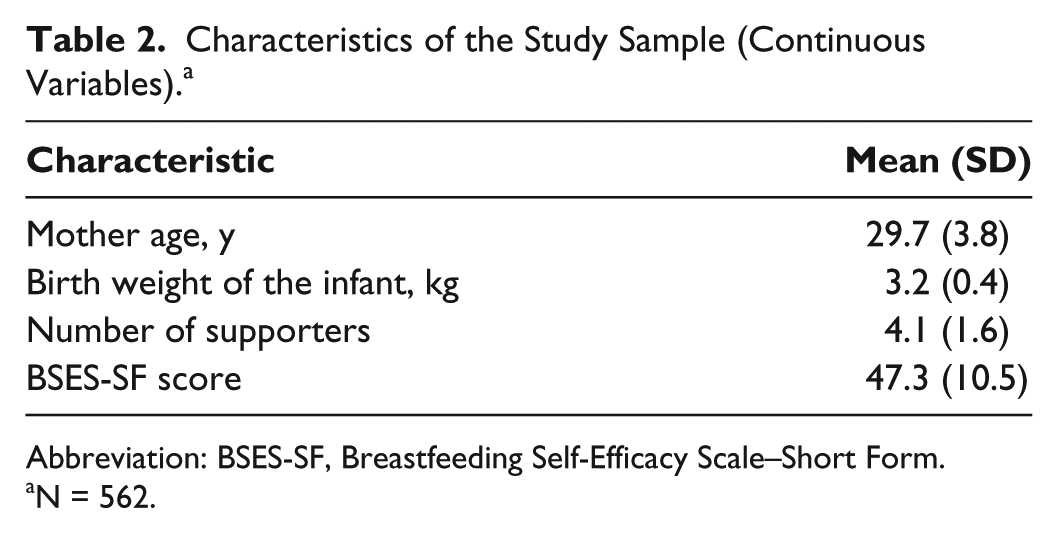
Abbreviation: BSES-SF, Breastfeeding Self-Efficacy Scale–Short Form.
N = 562.
The internal consistency of the Chinese (Mandarin) version of the BSES-SF was assessed by Cronbach’s alpha coefficient and corrected item-total correlation. Confirmatory factor analysis (CFA) was conducted to verify the single factor structure of the Chinese (Mandarin) version of the BSES-SF. The BSES-SF data were fit to the factor model using the maximum likelihood method for model parameter estimation. The goodness of fit of the CFA model was assessed on the basis of the comparative fit index (CFI), the non-normed fit index (NNFI), the root mean square error of approximation (RMSEA), and the standardized root mean square residual (SRMR). Kelloway’s guidelines 32 were adopted for interpretation of the fit indices; values > 0.9 for the CFI and NNFI and values of < 0.10 for the RMSEA and SRMR may indicate an acceptable fit. The CFA was performed using LISREL 8.8 (Scientific Software International, Inc). All other statistical analyses were performed using IBM SPSS 22.0 (IBM Corporation). All statistical tests were 2 sided and the level of significance was set at P < .05.
Procedure
This study was approved by the Survey and Behavioural Research Ethics Committee of The Chinese University of Hong Kong. A trained research assistant (RA) invited eligible mothers to participate in the study within 72 hours after delivery, as this allowed time for mothers to rest and for the establishment of lactation. The RA asked the mothers to sign a consent form after giving details about the purpose and procedure of the study. The consenting mothers were asked to complete the Chinese (Mandarin) version of the BSES-SF and the sociodemographic and breastfeeding questionnaire in a quiet corner of the ward. The mothers were followed up by phone interview at 1 month, 4 months, and 6 months postpartum to assess their infant feeding patterns and the reason for stopping exclusive breastfeeding. This data collection process was completed by 6 months postpartum or when the mothers had stopped exclusive breastfeeding at the previous contact. At least 3 attempts were made to contact the mothers for each telephone interview.
Results
Demographic Characteristics
A total of 562 in-hospital breastfeeding mothers who were within 72 hours postpartum were recruited to the study and followed up by telephone for 6 months or until they stopped breastfeeding, whichever came first. All mothers were married nonsmokers and their mean age was 29.7 ± 3.8 years. Most of them had a college education or above (88%) and were employed (81%). Half of the mothers (50%) had a monthly household income greater than 6000 yuan (US $1000), which was above the average monthly household income in Guangzhou. 33
Most of the mothers were primiparous (81%) and had been breastfed in infancy (85.4%). Almost all of them had observed breastfeeding (97%) and had relatives or friends (95%) with breastfeeding experience. Although more than 40% had not attended any formal breastfeeding talk, 70% of the mothers indicated their intention to breastfeed exclusively.
The majority of the infants had a gestational age of 38 weeks or more (88%), but fewer than half of them were delivered vaginally (45%). More than 50% of the infants received their first human milk after 12 hours, and only 12.5% were breastfed within the first hour after birth. The characteristics of the mothers and their newborns are given in Tables 1 and 2.
Continuation of Exclusive Breastfeeding
A total of 57 mothers (10%) were lost to contact or did not complete the 6-month follow-up. All mothers (N = 562) breastfed their babies within 72 hours postpartum, but fewer than one quarter of them (24.6%) breastfed exclusively. The proportion of mothers who breastfed exclusively after discharge was 14.8%, 2.0%, and 0.2% at 1, 4, and 6 months, respectively (Table 3).
Exclusive Breastfeeding Rates within 72 Hours, at 1, 4, and 6 Months Postpartum. a
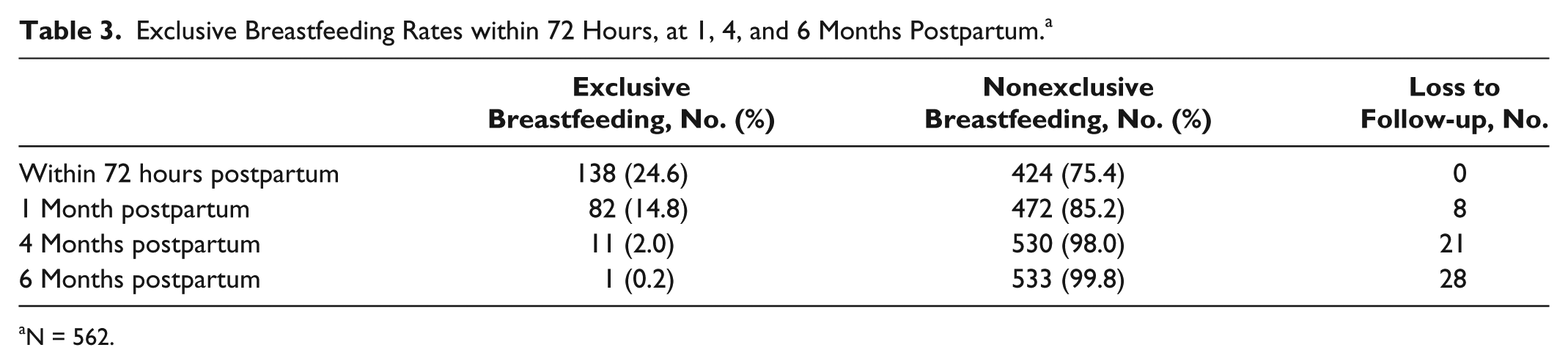
N = 562.
Figure 1 shows the Kaplan-Meier survival plot of continuation of exclusive breastfeeding by the mothers during the 6 months postpartum. The estimated mean survival time of continuation of exclusive breastfeeding of all the mothers was 16.7 (95% CI, 13.7-19.7) days.
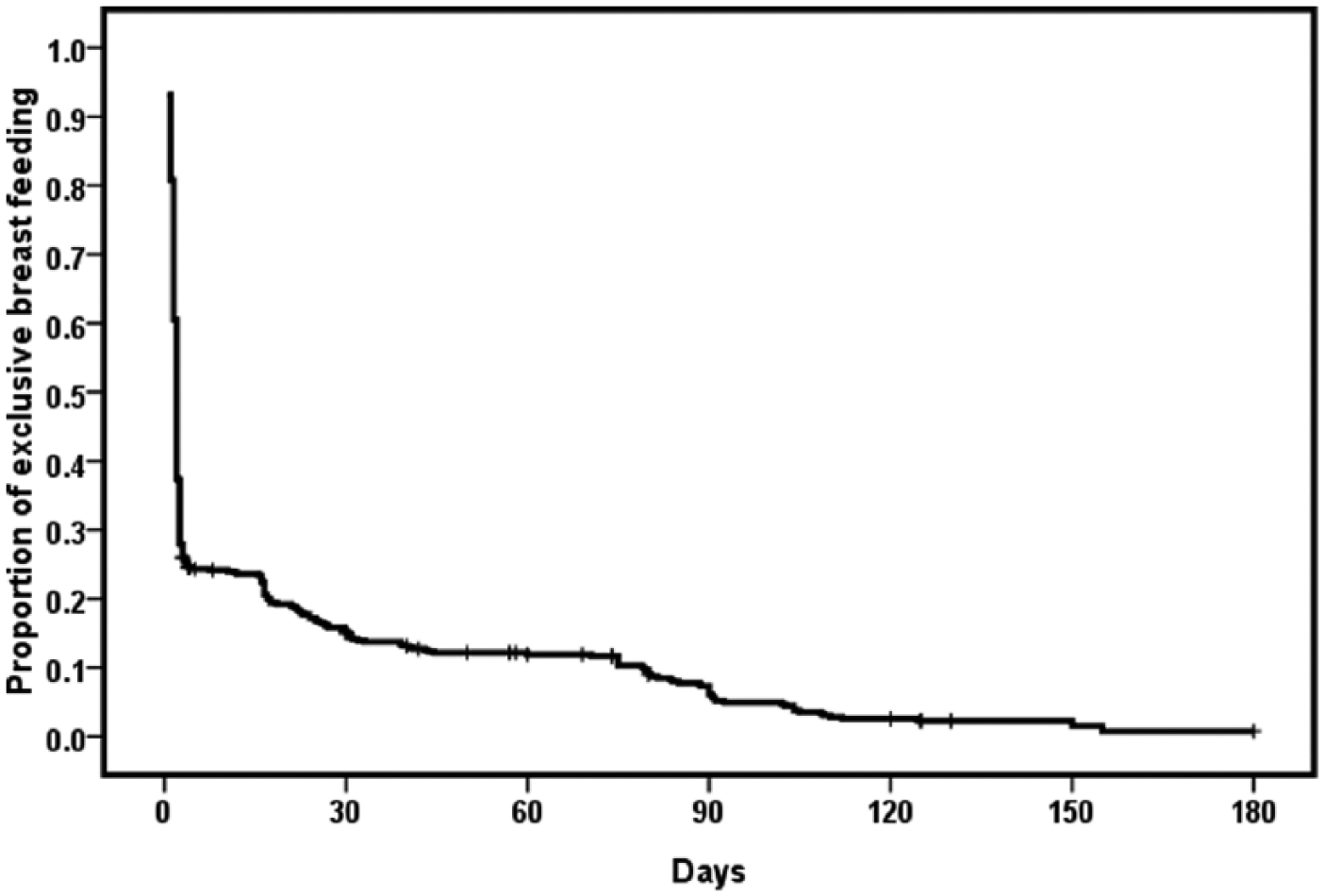
Survival Plots of Continuation of Exclusive Breastfeeding of the Participants during 6 Months Postpartum.
With regard to reasons for stopping exclusive breastfeeding, perceived insufficient human milk was given as the reason by the majority of respondents at 1 month (85.7%, n = 48) and 4 months postpartum (60%, n = 43). Return to work became the second and first most frequently cited reason at 4 (30%, n = 71) and 6 months postpartum (46.8%, n = 5), respectively.
The Chinese (Mandarin) Version of the BSES-SF
The mean score of the Chinese (Mandarin) version of the BSES-SF was 47.3 (SD = 10.5), with an item mean of 3.38 (range, 2.77-3.88) and a mean item variance of 0.97 (range, 0.71-1.27). The Cronbach’s alpha value was 0.94 and was not increased by more than 0.01 if any item was deleted. The corrected item-total correlations for the 14 items were all positive, with all falling within the range of 0.53 to 0.82. The mean inter-item correlation was 0.55 and the values ranged from 0.33 to 0.75.
Confirmatory factor analysis was performed to justify the unidimensional structure of the Chinese simplified version of the BSES-SF. All the items of the BSES-SF had moderate to strong factor loadings (range, 0.6-0.9) on the single factor CFA model, as shown in Figure 2. The chi-square of the model is 252.3 with degrees of freedom = 77, P < .001. The goodness-of-fit indices (RMSEA = 0.099, SRMR = 0.056, CFI = 0.98, and NNFI = 0.98) indicate that the CFA model had an acceptable fit with the data. 32
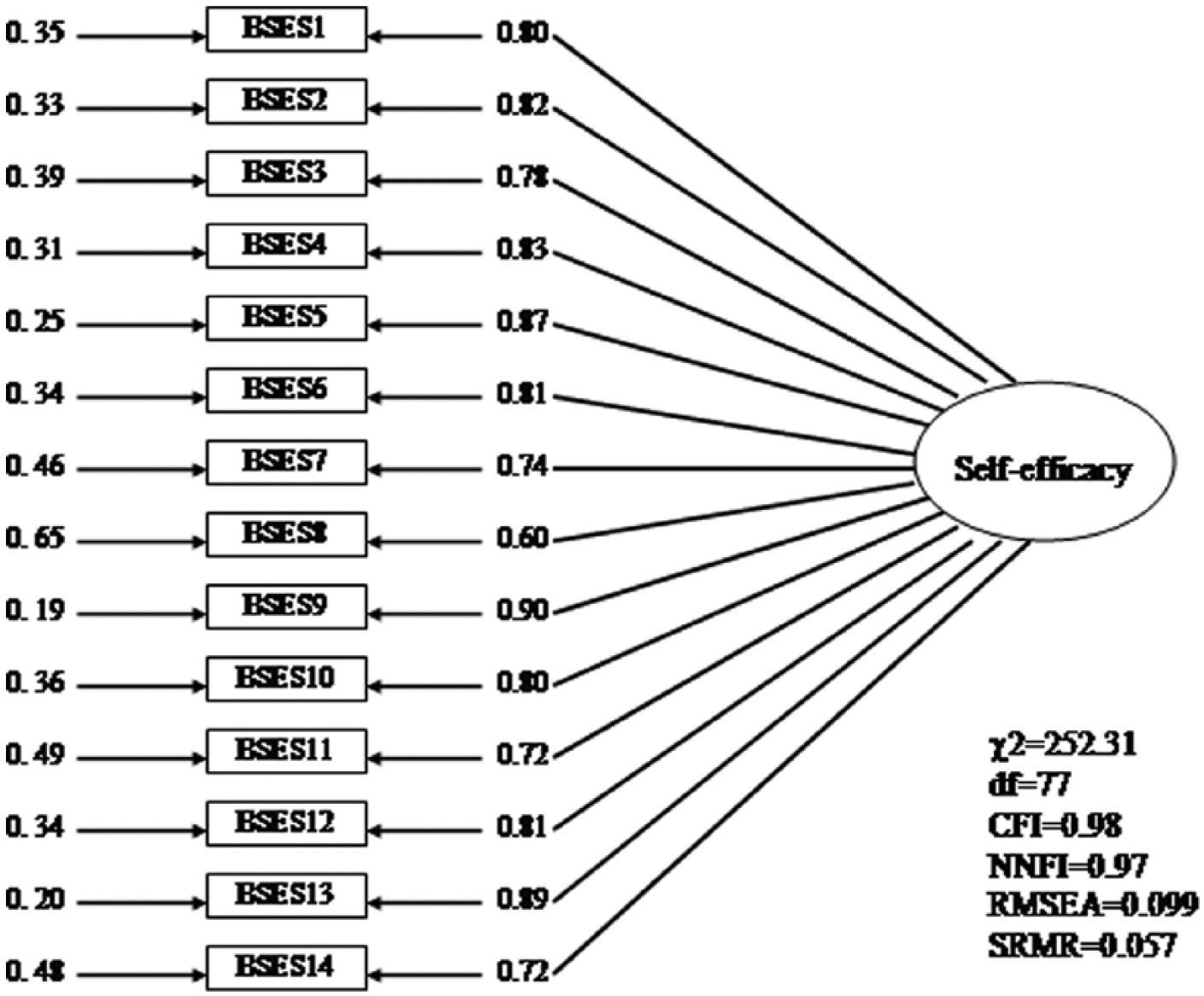
Confirmatory Factor Analysis of the Single Factor Structure of the (Mandarin) Chinese Version of the Breastfeeding Self-Efficacy Scale–Short Form.
Prognostic Factors of Exclusive Breastfeeding Duration
The multivariable Cox regression analysis revealed that (1) the BSES-SF score at the baseline, (2) the breastfeeding pattern within 72 hours postpartum, and (3) the mode of delivery were all significantly associated with exclusive breastfeeding. The mothers who had a higher BSES-SF score (HR = 0.88 [0.81-0.95], P < .001) for every 10-point increase in the score, breastfed exclusively within 72 hours postpartum (HR = 0.43 [0.33-0.55], P < .001), and underwent cesarean section (compared with vaginal) (HR = 0.77 [0.65-0.92], P = .003) were significantly associated with a lower hazard of discontinuation of exclusive breastfeeding (Tables 4, 5, and 6).
Univariate Cox Regression Analysis to Identify Factors Potentially Associated with Discontinuation of Exclusive Breastfeeding.
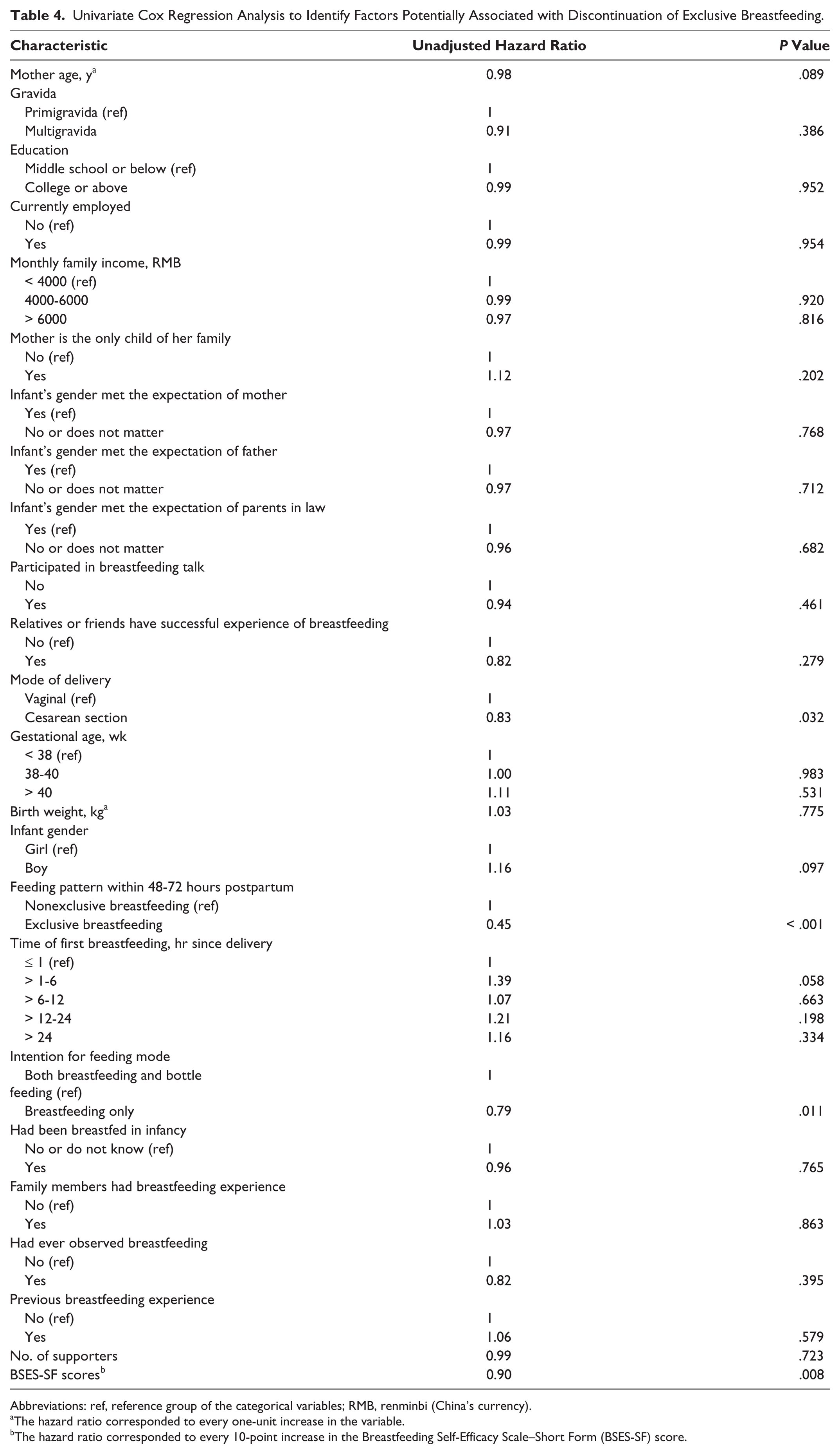
Abbreviations: ref, reference group of the categorical variables; RMB, renminbi (China’s currency).
The hazard ratio corresponded to every one-unit increase in the variable.
The hazard ratio corresponded to every 10-point increase in the Breastfeeding Self-Efficacy Scale–Short Form (BSES-SF) score.
Results of Multivariable Cox Regression Analysis to Identify Factors Significantly and Independently Associated with Discontinuation of Exclusive Breastfeeding.
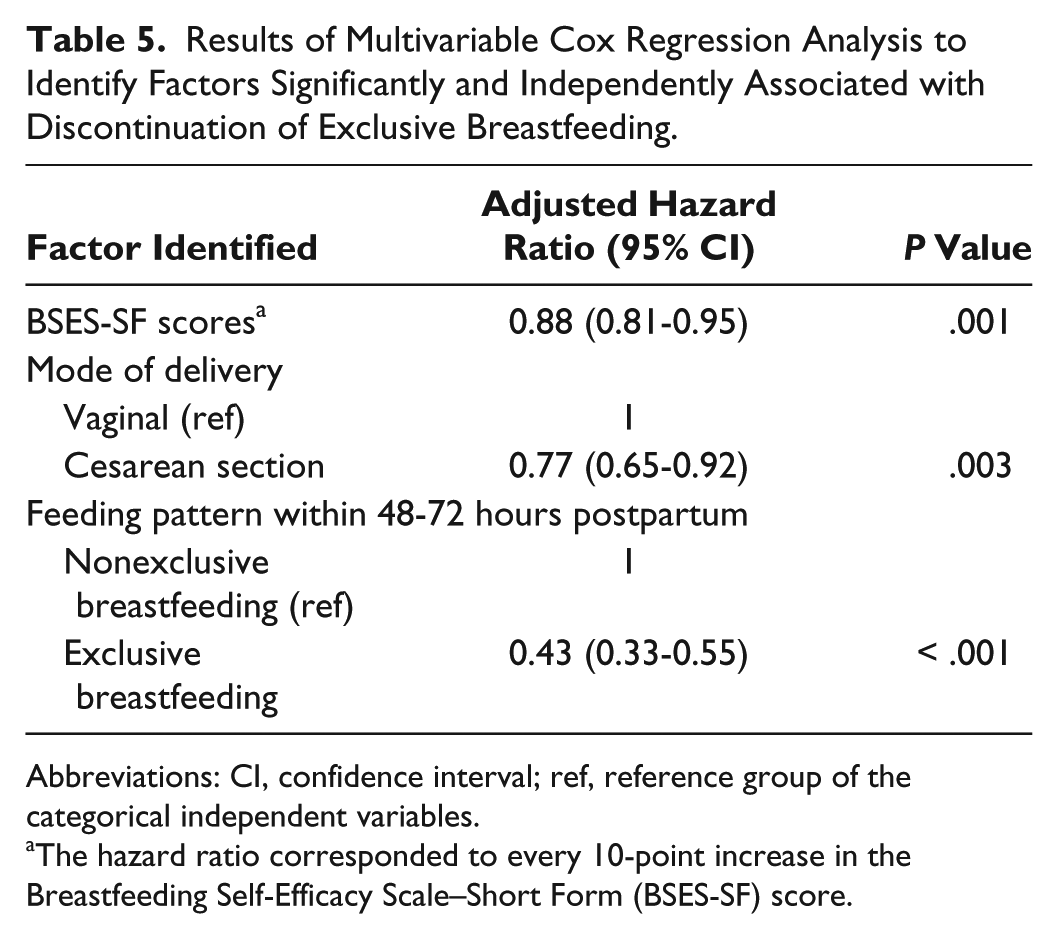
Abbreviations: CI, confidence interval; ref, reference group of the categorical independent variables.
The hazard ratio corresponded to every 10-point increase in the Breastfeeding Self-Efficacy Scale–Short Form (BSES-SF) score.
Discussion
This is the first prospective longitudinal cohort study testing the role of modifiable factors in predicting the duration of exclusive breastfeeding in mainland China. Cox regression analysis revealed that the mothers who had a higher BSES-SF score at baseline, underwent cesarean section, and practiced exclusive breastfeeding within 72 hours after delivery demonstrated a lower hazard of discontinuation of exclusive breastfeeding before 6 months postpartum. Although 70% of the mothers had indicated their intention to exclusively breastfeed, the follow-up findings revealed that only a quarter of the sample before discharge and 0.2% at 6 months could sustain exclusive breastfeeding. This means that the mothers fell short of their goals of exclusive breastfeeding across the follow-up time periods, and the exclusive breastfeeding rates were far below the WHO recommendation.
The translated BSES-SF score at baseline was found to be a significant predictor of exclusive breastfeeding duration. This finding was consistent with previous results found in other ethnic groups,22,23 where lower breastfeeding self-efficacy during the postnatal period has been reported to be a key variable influencing the decision to stop breastfeeding.
Semenic et al 28 found that the BSES-SF mean scores of Canadian mothers were associated negatively with perceived breastfeeding problems and in-hospital formula supplementation. This may explain why perceived insufficient milk supply was consistently cited as the major reason given by the mothers for weaning or adding supplements to breastfeeding.34,35 McCarter-Spaulding and Kearney 36 claimed that mothers’ perception of milk supply can be enhanced by promoting their confidence in breastfeeding. In view of the poor exclusive breastfeeding rate in the 6 months postpartum, the translated BSES-SF would be an important instrument to identify women at risk for appropriate early efficacy-enhancing interventions to improve exclusive breastfeeding outcomes.
According to the theory of breastfeeding self-efficacy, 6 women with higher levels of perceived self-efficacy for breastfeeding are inclined to be more optimistic and are willing to sustain breastfeeding by making more effort to solve the encountered problems. The 4 sources of efficacy-enhancing information are (a) performance accomplishment, for instance, past breastfeeding experience; (b) vicarious experience, for instance, watching other women breastfeeding; (c) verbal persuasion, for instance, encouragement or praise from influential others, including professional nurses and family; and (d) inferences made from one’s physiological and/or affective states. 6 It is believed that the integration of these 4 efficacy-enhancing factors into clinical education interventions can increase the exclusive breastfeeding rate and duration of breastfeeding.11,14,15,37
Another predictor, in-hospital exclusive breastfeeding within 72 hours postpartum, is recognized as a form of efficacy-enhancing experience that helps mothers sustain a longer duration of breastfeeding. In accord with the theory of breastfeeding self-efficacy, 6 the establishment of early successful exclusive breastfeeding before discharge is key to the long-term exclusive breastfeeding behavior of mothers. Although the study hospital has been accredited as a Baby-Friendly hospital, where all newborn babies are expected to be exclusively breastfed soon after delivery, the reported exclusive breastfeeding rate (25%) within 72 hours of birth was unexpectedly low.
The low early exclusive breastfeeding rate (25%) in this study could be partly explained by the deferred time to initiation of breastfeeding. Among the breastfeeding mothers, three-quarters started their breastfeeding after 6 hours postpartum; one quarter even did so after 24 hours. Delayed or infrequent breastfeeding interferes with the supply-meets-demand system of milk production, which can lead to a decreased milk supply.38,39 In addition, using a bottle or formula to feed infants means decreasing breast stimulation and thus adversely affecting the milk ejection reflex. 40
The low exclusive breastfeeding rate within 72 hours postpartum may imply an inconsistency between clinical breastfeeding practice and the recommended 10 steps of the BFHI in health care settings. 41 Midwives, as the key health professionals, are expected to provide adequate bedside support to the mothers in terms of skills coaching and on-time provision of care. However, a recent multicenter survey 42 evaluating the manpower resources of 181 hospitals in mainland China has revealed the low working morale among hospital nursing staff due to a perceived heavy workload and poor working environment. There may be a need to evaluate facilitators and barriers among stakeholders to the promotion of exclusive breastfeeding so as to review the planning of manpower and ward policy to facilitate an in-hospital exclusive breastfeeding culture.
The finding that cesarean section is a predictor of the duration of exclusive breastfeeding is not easy to explain. Researchers43,44 have asserted that once breastfeeding had begun, the delivery method no longer had any effect on the duration of breastfeeding. A systematic review and meta-analysis 45 of 53 studies has also concluded that cesarean section has no significant effect on the breastfeeding rate at 6 months for those postpartum mothers who had initiated breastfeeding before discharge.
Nevertheless, 1 recent Asian study by Suzuki and partners 46 reported a higher rate of exclusive breastfeeding at 1 month after birth in Japanese mothers who had a cesarean section as compared with their counterparts who had a vaginal delivery. The researchers attributed the findings to the longer length of hospitalization for the women who had a cesarean section as compared with their counterparts who had a vaginal delivery, when more guidance and support from midwives about breastfeeding were delivered to the women. This is the same in mainland China, where the cesarean mothers usually stayed in hospital for 3 to 5 days, whereas the mothers who underwent a vaginal birth stayed in hospital for only 2 days. Further studies on the relationships between exclusive breastfeeding rate and cesarean section and the associated factors are warranted.
In traditional Chinese culture, having a male child to continue the family line is an important and revered concept, particularly among members of the older generation. 47 It has been reported that the gender of the infant was a source of stress for Chinese mothers 48 and that mothers with higher levels of stress were more likely to stop breastfeeding earlier. 49 However, in the present study, the infant’s gender and concern of significant others over the infant’s gender were not associated with exclusive breastfeeding duration. This finding may indicate changes in the perceived gender roles across generations of parents in mainland China.
It is important to note that the internal consistency and construct validity of the Chinese (Mandarin) version of the BSES-SF as a unidimensional scale have been established in this study. The findings are consistent with the original English versions 10 and the Chinese (Cantonese) version, 23 which provides support for the reliability and validity of the measure among Chinese Mandarin-speaking female populations. The brevity, self-reported format, and predictive ability of the scale will increase its application in clinical assessment for clients who need support for breastfeeding. Further replicating studies on Chinese Mandarin-speaking women with diverse sociodemographic backgrounds are warranted.
When interpreting the findings of this study, it should be noted that the mothers in the study were highly educated working women who delivered in a cosmopolitan city of southeastern China. Generalization of the findings to populations with different sociodemographic backgrounds or in other geographic regions may be limited.
Conclusion
This study provides initial support for the validity and reliability of the Chinese (Mandarin) version of the BSES-SF, which can be of use in identifying mothers who need more support for exclusive breastfeeding. Moreover, the 2 modifiable variables that have been found to be prognostic factors for exclusive breastfeeding duration, namely, breastfeeding self-efficacy and exclusive breastfeeding within 72 hours postpartum, will help health professionals to set a priority of interventions to promote the success of exclusive breastfeeding. The effect of cesarean section on exclusive breastfeeding duration needs to be further validated among mothers facing different postpartum care. Additional factors that may influence women’s in-hospital decisions to stop exclusive breastfeeding need to be considered in future studies. Further replicating studies on Chinese Mandarin-speaking women with diverse sociodemographic backgrounds are also warranted.
Footnotes
Declaration of Conflicting Interests
The authors declared no potential conflicts of interest with respect to the research, authorship, and/or publication of this article.
Funding
The authors disclosed receipt of the following financial support for the research, authorship, and/or publication of this article: This study was supported by a departmental grant from The Nethersole School of Nursing, The Chinese University of Hong Kong.