






Abstract
Background
Donor milk is the preferred substitute to mother’s own milk, which can protect high-risk infants from many complications. Several milk banks have been established in China. However, the small number of donors and insufficient milk donated have become the primary obstacles for these milk banks.
Research aims
To explore the level of, and the factors influencing, knowledge and attitude about donor milk among currently lactating women across mainland China and to provide a reference for the development of Chinese milk banks.
Methods
A brief, self-reporting, prospective, cross-sectional, online survey was conducted in 2018 using The Knowledge and Attitude Questionnaire of Human Donor Milk for Hospitalized Women. Lactating women aged >18 years and willing to consent to study participation were recruited throughout China.
Results
All completed questionnaires (N = 489) were included. 40.1% (n = 196) of the participants had heard of donor milk or milk banks, and 76.7% (n = 375) were willing to donate their milk. In the multiple linear regression analysis, educational level, cohabitation status, parity, history of delivering preterm or low-birth-weight infants, education provided by health professionals, and infants’ gestational age, weight, and feeding patterns were associated with the participants’ knowledge about donor milk (F = 12.387, p < .001). The parity, delivery mode, mothers’ milk production, history of delivering preterm or low-birth-weight infants, education provided by health professionals, and infants’ age were associated with their attitude (F = 9.420, p < .001).
Conclusion
The participants’ attitudes about donor milk were positive. However, there were gaps in their knowledge about donor milk.
Background
Every year, there are approximately 15 million premature infants and 20 million low-birth-weight infants (LBWIs) born worldwide (Purisch & Gyamfi-Bannerman, 2017; World Health Organization, 2011). These infants have an immature gastrointestinal tract and relatively poor immune function, making them susceptible to various complications, e.g., necrotizing enterocolitis and bronchopulmonary dysplasia (Reduction of Infection in Neonatal Intensive Care Units Using the Evidence-Based Practice for Improving Quality Study Group, 2018; Von Linsingen et al., 2017). Human milk provides the nutrition and immune ingredients that can better protect these infants from many diseases. However, many of these infants fail to breastfeed owing to hospitalization, prematurity, or illness. The World Health Organization (2011) recommends donor milk as the second choice when women feed their infants, especially preterm infants, LBWIs, and other high-risk infants. Compared with formula, donor milk can effectively enhance the immunity of premature infants and LBWIs, reduce the incidence of diseases, improve their quality of life, and save medical costs for their families. (Buckle & Taylor, 2017; Kim et al., 2017; Quigley et al., 2018; Yu et al., 2014).
The first Chinese milk bank was established in Guangzhou in 2013; by 2016, 13 more milk banks had been established in hospitals across mainland China (Figure 1; Liu et al., 2019). However, the small number of donors and insufficient amount of milk donated have become the primary obstacles for milk banks (Han, 2017; Mondkar et al., 2018). The knowledge/attitude/belief/practice (KABP) theory poses that knowledge is the basis of behavioral changes and that attitude is the driving force. However, the KABP theory, in relation to donor milk, has been investigated by only a few researchers. Women who remained hospitalized after childbirth have been the main participants in the several existing studies (Lu, 2018; Qin et al., 2016). Thus, the aim of this study was to explore (1) the level of knowledge and attitudes about donor milk; and (2) the factors influencing these among currently lactating women (LW) across mainland China. We hope to provide a reference for the development of Chinese milk banks.
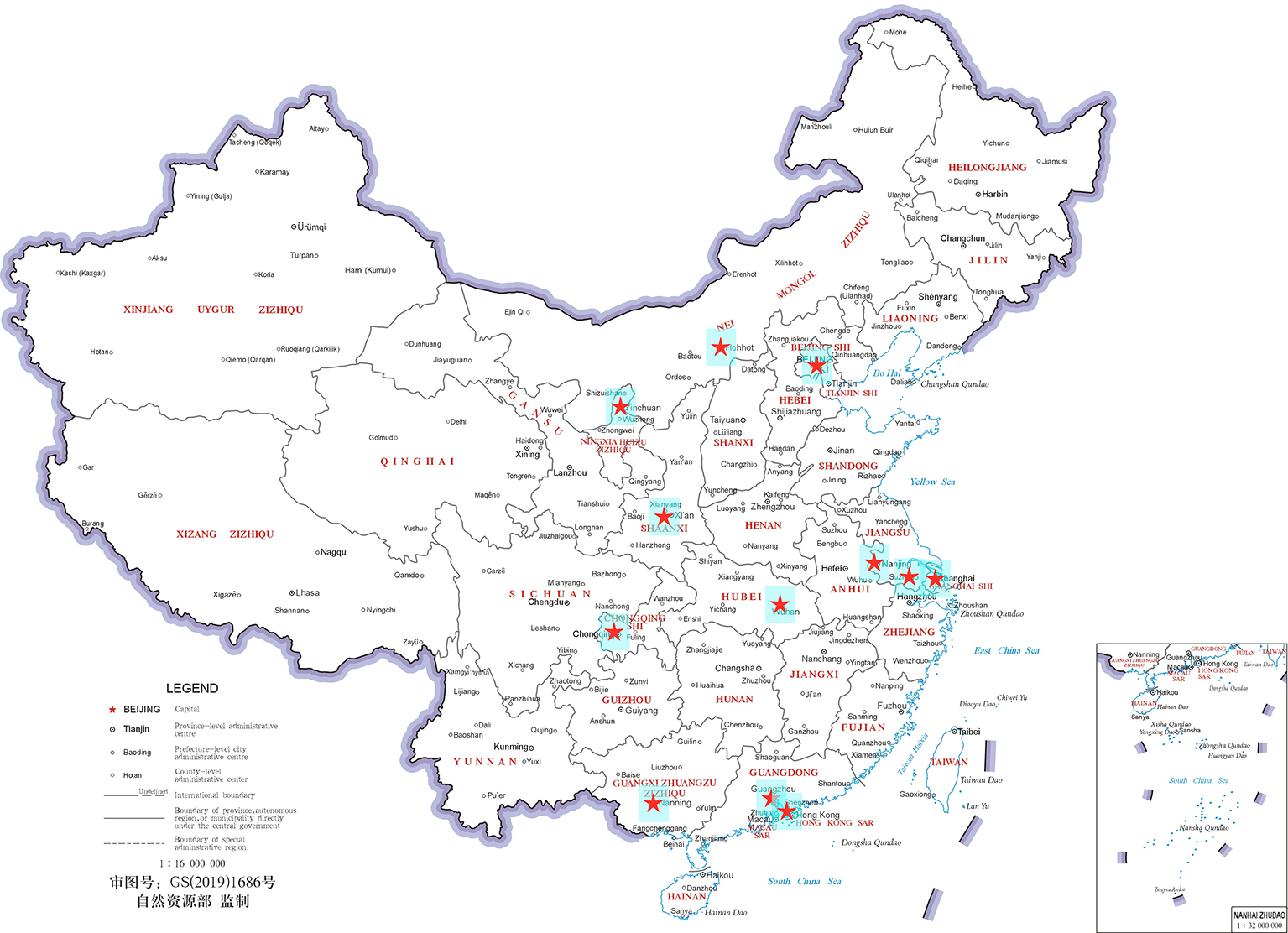
Map of Human Milk Banks in Mainland China in 2016.
Methods
Design
We used a prospective, cross-sectional, self-reporting, online survey design. Surveys are well suited to assess the level and influencing factors of knowledge and attitudes about donor milk among lactating women. The study was performed with the approval of the School of Nursing, Peking Union Medical College, China (No. [2018]02).
Key Messages
Two primary obstacles for milk banks in China exist: a small number of donors and insufficient milk.
Chinese lactating women’s knowledge of donor milk still needs to be strengthened.
Participants’ attitudes about donor milk were positive; however, gaps regarding knowledge of and attitudes about donor milk among lactating Chinese women remain.
Setting
The study was conducted across China, where the exclusive breastfeeding rate at 6 months is 29.2% (n = 2985), which is below the average rate worldwide (China Development Research Foundation, 2019). Breastfeeding rate improvement has been the focus of maternal and child health management in China. Fourteen milk banks had been established in China by 2016 (Figure 1); of them, 13 are in public hospitals and one is in a private hospital. The number of milk banks in China is on the rise. Of the donors in the study by Liu et al., 90.6% (n = 2882) were LW who gave birth at term, and 60.6% (n = 1891) had a bachelor’s degree or above. Of the babies receiving donor milk, 94.8% (n = 3135) were premature (Liu et al., 2019). Most of the human milk banks encounter two main obstacles: a small number of donors and insufficient milk (Han, 2017).
Sample
We used convenience sampling to reach a broad group of LW throughout China. The inclusion criteria were to be currently lactating, aged > 18 years, and to give consent for participation in this study. Lu (2018) conducted a study in China, and the results showed that the proportion of hospitalized women after delivery who wanted to donate their human milk was 0.362. Since our study was conducted among LW, we anticipated there to be a higher proportion (0.500) of LW who wanted to donate their milk. Thus, we believed a sample size of 385 would produce a two-sided 95% confidence interval with a width equal to 0.100 when the sample proportion is 0.500. To ensure questionnaire validity, we anticipated a 20% invalidity rate. Thus, the final sample size was 482 participants. In the end, 489 valid questionnaires were collected, and the sample size was deemed sufficient.
Measurement
“Knowledge” in this context refers to the cognition and understanding of knowledge related to diseases, while “attitude” refers to people’s evaluation and behavioral tendencies based on their own moral values (Li, 2013). In this study, LW’s knowledge and attitudes were assessed by The Knowledge and Attitude Questionnaire of Human Donor Milk for Hospitalized Women. The questionnaire was designed by Qin after consulting available literature, and was evaluated and revised by five experts on the health of mothers or infants, with a content validity index of 0.89 (Qin et al., 2016). Qin administered this questionnaire to 200 hospitalized women and demonstrated a Cronbach’s alpha value of 0.92. Lu (2018) used the knowledge subscale to survey the milk bank knowledge of 240 Chinese puerperia in 2016, which also contributed to the scientific integrity of this questionnaire. In this study, the Cronbach’s alpha coefficients of the knowledge and attitude subscales were 0.83 and 0.79, respectively.
The Knowledge and Attitude Questionnaire of Human Donor Milk for Hospitalized Women consists of 25 items divided into two subscales: knowledge (13 items) and attitudes (12 items). The knowledge subscale includes items on common knowledge, benefits, and the storage of donor milk, and has three possible answers: “yes,” “no,” and “uncertain” (1 point for each correct answer). The total score ranges from 0–13 points. The mean total score for the 13 items was used as the discriminant level of knowledge regarding donor milk. Conversely, the attitude subscale mainly includes items on the advantages, disadvantages, and use and donation of donor milk. The items are answered using a 5-point Likert-type response scale ranging from “strongly agree” at 5 points to “strongly disagree” at 1 point; five items were scored in reverse. The total scores range from 12–60 points, with higher total scores indicating a more positive attitude towards donor milk use.
Data Collection
Participants were enrolled between August and November 2018. A link to the online questionnaire was sent through WeChat (a Chinese mobile social media application that provides instant messaging services to smart terminals). The link included an introductory letter describing the purpose of the survey, inclusion criteria for the participants, instructions for filling in the questionnaire, and the contact information of the investigators. All participants completed the questionnaire after providing their consent. No names, Internet Protocol (IP) addresses, or other identifying information were collected; thus, participants’ responses were anonymous, and no personal information was attached to the data.
All questions had to be completed before submission, and each IP address could only be submitted once. One of the researchers and another individual unrelated to the study recorded the shortest time taken to complete the questionnaire independently. The shortest time was defined as the time taken to complete the survey thoroughly and as rapidly as possible, i.e., 143 and 156 seconds, respectively, with an average value of 149.5 s. Therefore, to ensure that the questionnaire was thoughtfully answered, data from questionnaires with filling times of <150 s were disqualified.
Data Analysis
Data were analyzed using SPSS for Windows (Chinese Version 25.0; Wu & Pan, 2014). Continuous variables were reported as means (M) and standard deviations (SD) and categorical variables as counts and percentages. A univariate analysis using independent samples t-tests or one-way Analysis of variance (ANOVA) was conducted to determine the associations between the demographic data and LW’s knowledge and attitudes about donor milk, with significance accepted at p < .2 (Rozenbaum et al., 2019). Stepwise multiple linear regression was used to identify the influencing factors, and the significant variables on univariate analysis were included in the multiple linear regression, with significance accepted at p < .05.
Results
Participant Characteristics
Of the total of 496 returned questionnaires, 1.4% (n = 7) were disqualified due to time answering the questionnaire being < 150 s. Ultimately, 98.6% (n = 489) were valid for the analysis. The participants were from 23 provinces in China, which has a total of 34 provinces, with 26.8% (n = 131) from Beijing, 13.5% (n = 66) from Liaoning province, and 12.1% (n = 59) from Jilin province. These 23 provinces are within eastern and central China. Most of the residents of the 23 provinces are of Han ethnicity. All participants were 18–57 years old, and most were primiparas LW within 6 months postpartum, and exclusively breastfeeding. The details are summarized in Tables 1 and 2.
Characteristics of the Participants (N = 489).
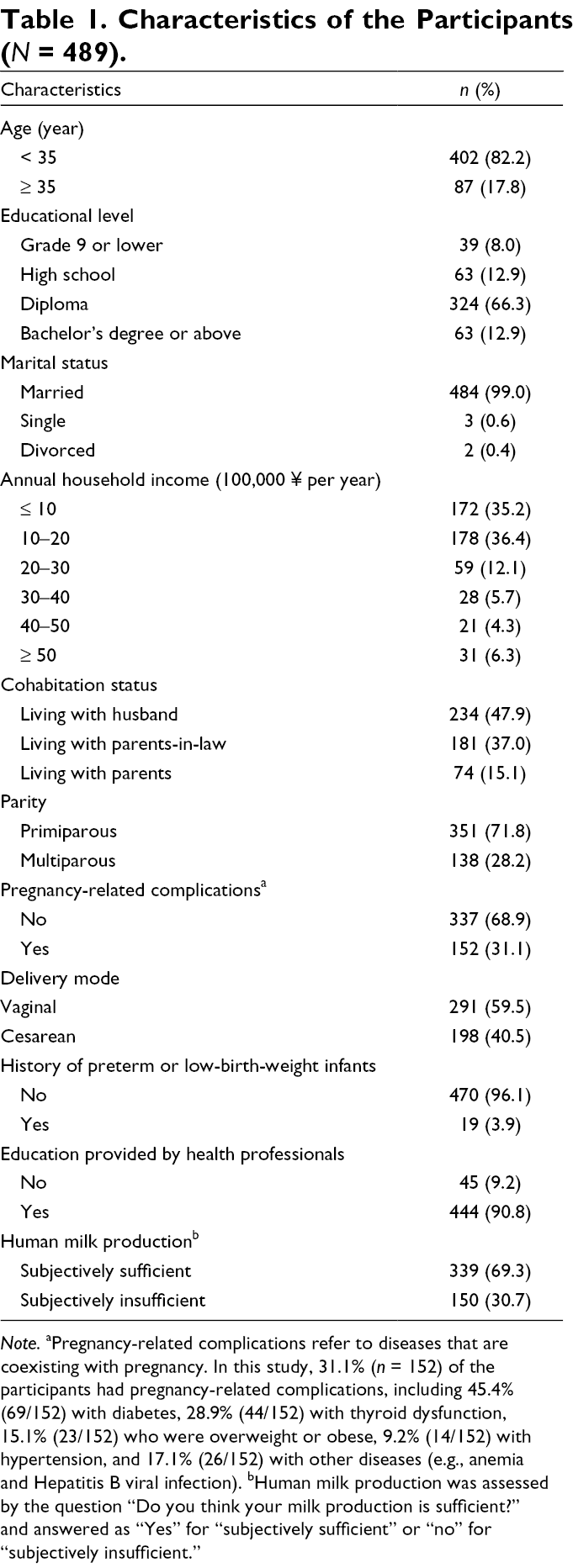
Note. aPregnancy-related complications refer to diseases that are coexisting with pregnancy. In this study, 31.1% (n = 152) of the participants had pregnancy-related complications, including 45.4% (69/152) with diabetes, 28.9% (44/152) with thyroid dysfunction, 15.1% (23/152) who were overweight or obese, 9.2% (14/152) with hypertension, and 17.1% (26/152) with other diseases (e.g., anemia and Hepatitis B viral infection). bHuman milk production was assessed by the question “Do you think your milk production is sufficient?” and answered as “Yes” for “subjectively sufficient” or “no” for “subjectively insufficient.”
Characteristics of the Participants’ Infants (N = 489).
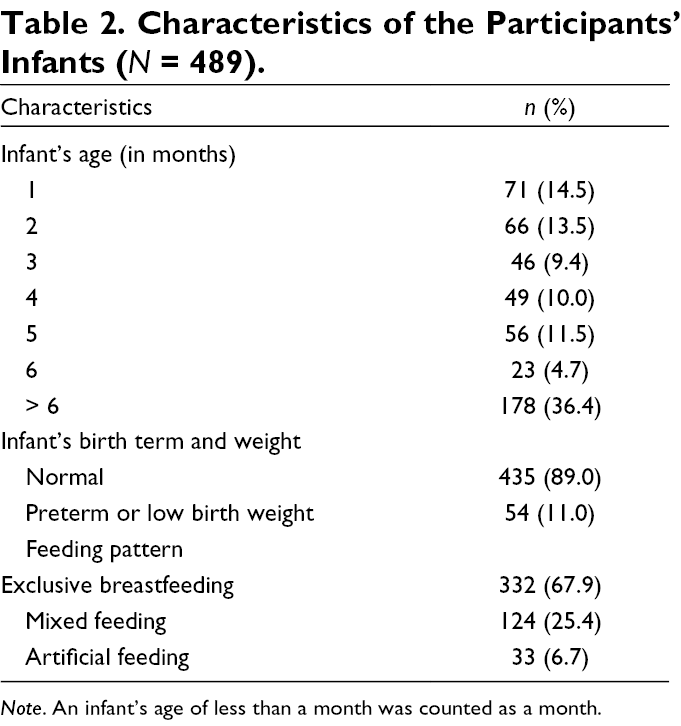
Note. An infant’s age of less than a month was counted as a month.
Knowledge of Donor Milk
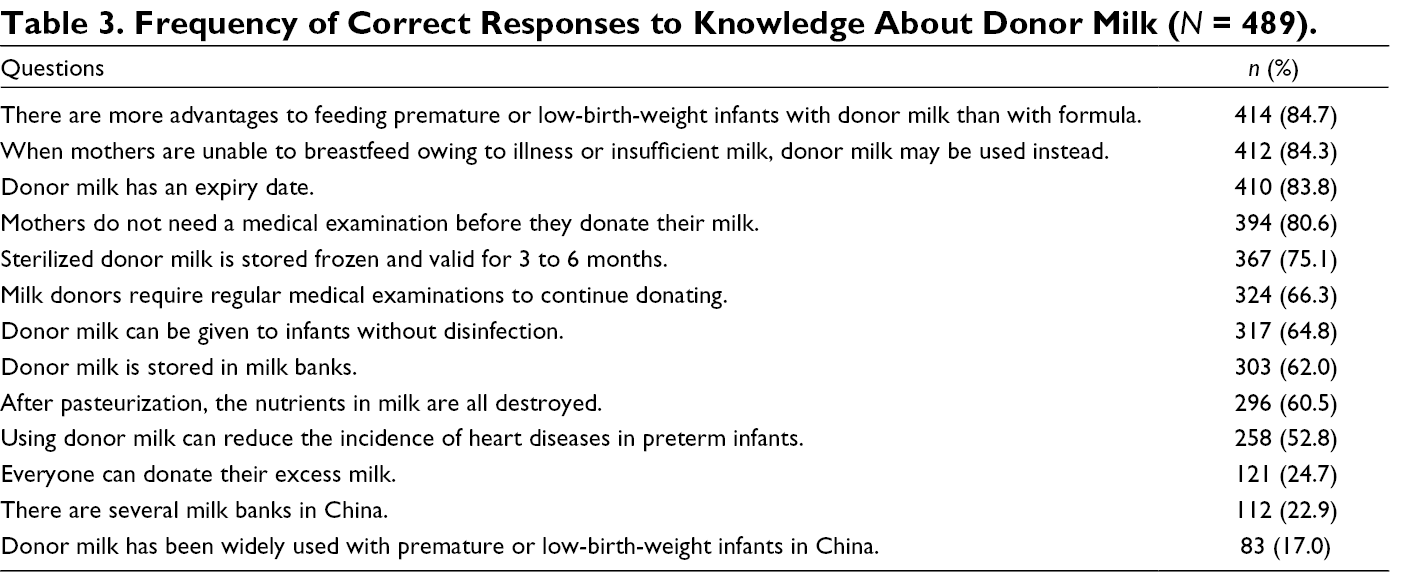
Approximately 40.1% (n = 489) of the participants were aware of donor milk or milk banks. Regarding the 13 items on knowledge, 84.7% (n = 414), 84.3% (n = 412), and 83.8% (n = 410) knew the benefits, use, and expiration of donor milk, respectively. However, only 24.7% (n = 121), 22.9% (n = 112), and 17.0% (n = 83) recognized the requirements for donors, the development of milk banks in China, and the use of donor milk, respectively. The details are summarized in Table 3.
Frequency of Correct Responses to Knowledge About Donor Milk (N = 489).
The total score in relation to the participants’ knowledge about donor milk was M = 7.79 points (SD = 3.01; range, 0–13). In the univariate analysis, the educational level, cohabitation status, parity, delivery mode, mothers’ milk production, history of delivering preterm infants or LBWIs, education provided by health professionals, and infants’ age, gestational age and weight, and feeding pattern were associated with the participants’ knowledge of donor milk (p < .2). In the stepwise multiple linear regression, the educational level, cohabitation status, parity, history of delivering preterm infants or LBWIs, education provided by health professionals, infants’ gestational age and weight, and feeding patterns were the main factors that influenced the participants’ knowledge of donor milk (F = 12,378; p < .001). These variables explained 17.3% (adjusted R2) of the total variation in the scores in relation to the LWs’ knowledge (Table 4). Those who were living with their parents-in-law, who had lower educational levels, were primiparous, or were artificially feeding their infants had a lower knowledge level about donor milk. The participants who had delivered premature infants or LBWIs (this pregnancy or previously) had greater knowledge of donor milk, but the LW who were currently breastfeeding their premature infants or LBWIs had a lower level of knowledge of donor milk.
Factors Influencing Lactating Participants’ Knowledge of Donor Milk (N = 489).
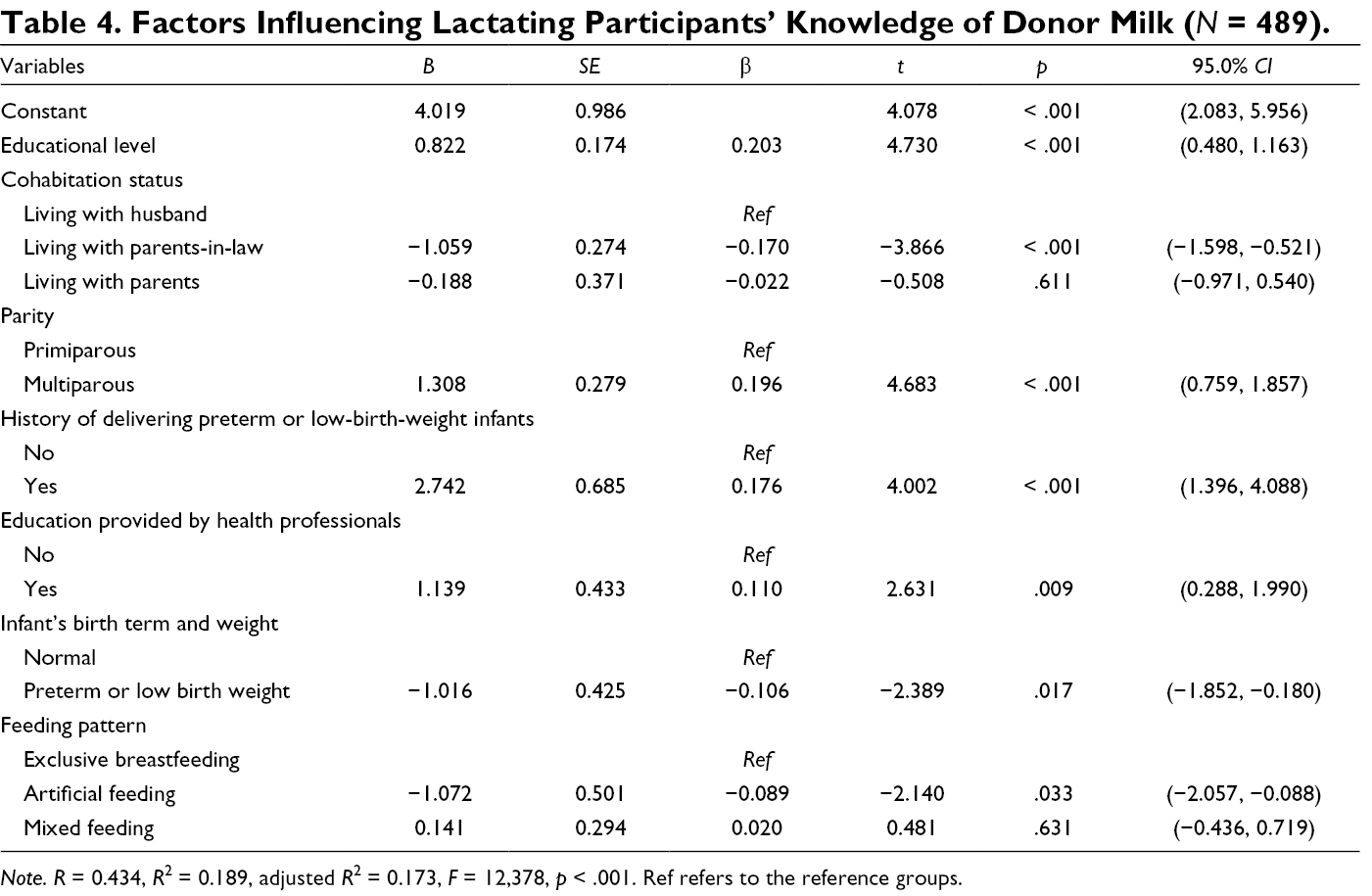
Note. R = 0.434, R 2 = 0.189, adjusted R 2 = 0.173, F = 12,378, p < .001. Ref refers to the reference groups.
Attitudes About Donor Milk
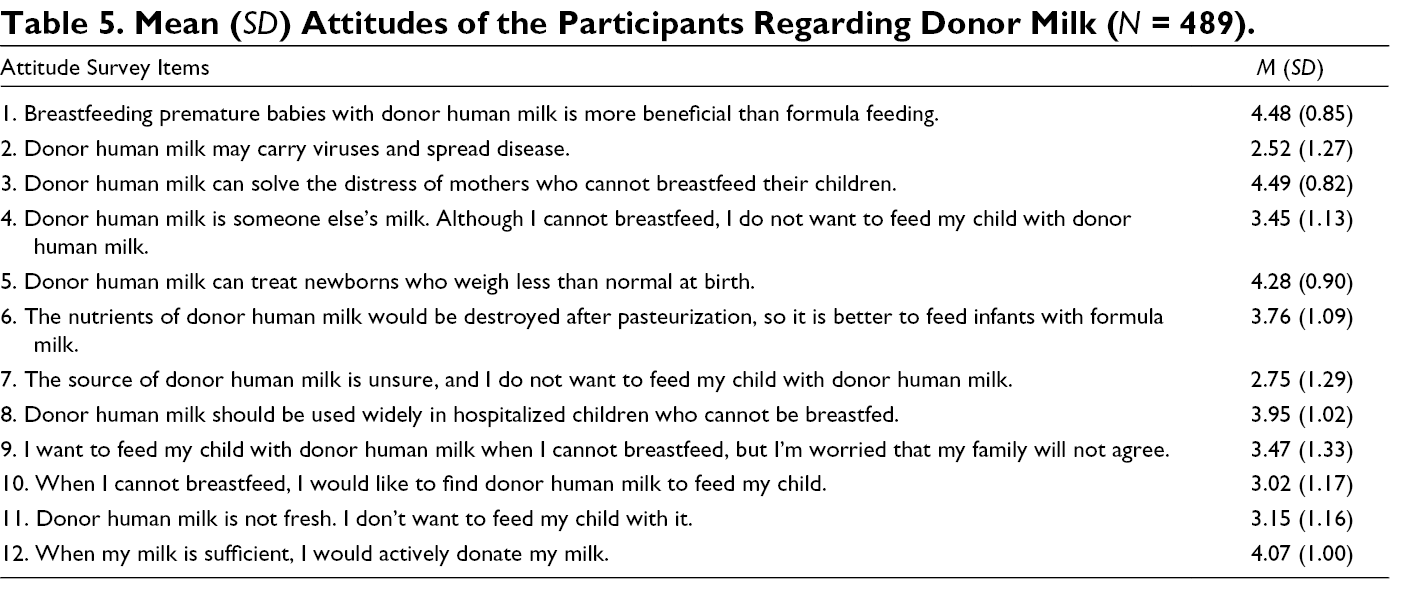
The mean total score in relation to the participants’ attitudes about donor milk was 43.39 points (SD = 7.26; range, 12–60), which was at the upper middle level. The mean scores in relation to the advantages, disadvantages, and use and donation of donor milk were 17.20 points (SD = 2.59; range, 4–20), 15.63 ± 3.53 (range, 5–25), and 10.56 (SD = 2.72; range, 3–15), respectively. The scores in each item are summarized in Table 5. Further, 76.7% (n = 375) and 23.3% (n = 114) of participants were willing or unwilling to donate milk, respectively. The top four reasons for unwillingness to donate given by the 114 participants answering this questions were as follows: concern about insufficient milk for their own infant (40.4%, n = 46), unawareness of how to donate (36.8%, n = 42), worry about the disqualification of milk banks (34.2%, n = 39), and dislike of the tedious donation process (21.9%, n = 25). Only 4.3% (n = 21) had donated their milk, and 4.3% (n = 21) had used donor milk for their infants.
Mean (SD) Attitudes of the Participants Regarding Donor Milk (N = 489).
Based on the t-test findings, the educational level, parity, pregnancy-related complications, mode of delivery, mothers’ milk production, history of delivering preterm infants or LBWIs, education provided by health professionals, the infant’s age, gestational age and weight, and feeding patterns were associated with attitudes about donor milk among the participants (p < .2). In the stepwise multiple linear regression, the parity, delivery mode, mothers’ milk production, history of delivering preterm infants or LBWIs, education provided by health professionals, and the infant’s age were the main factors that influenced participants’ attitudes towards donor milk (F = 9.420, p < .001). These variables explained 12.1% (adjusted R2) of the total variation in the attitude subscale scores (Table 6).
Factors Influencing the Lactating Participants’ Attitudes About Donor Milk (N = 489).
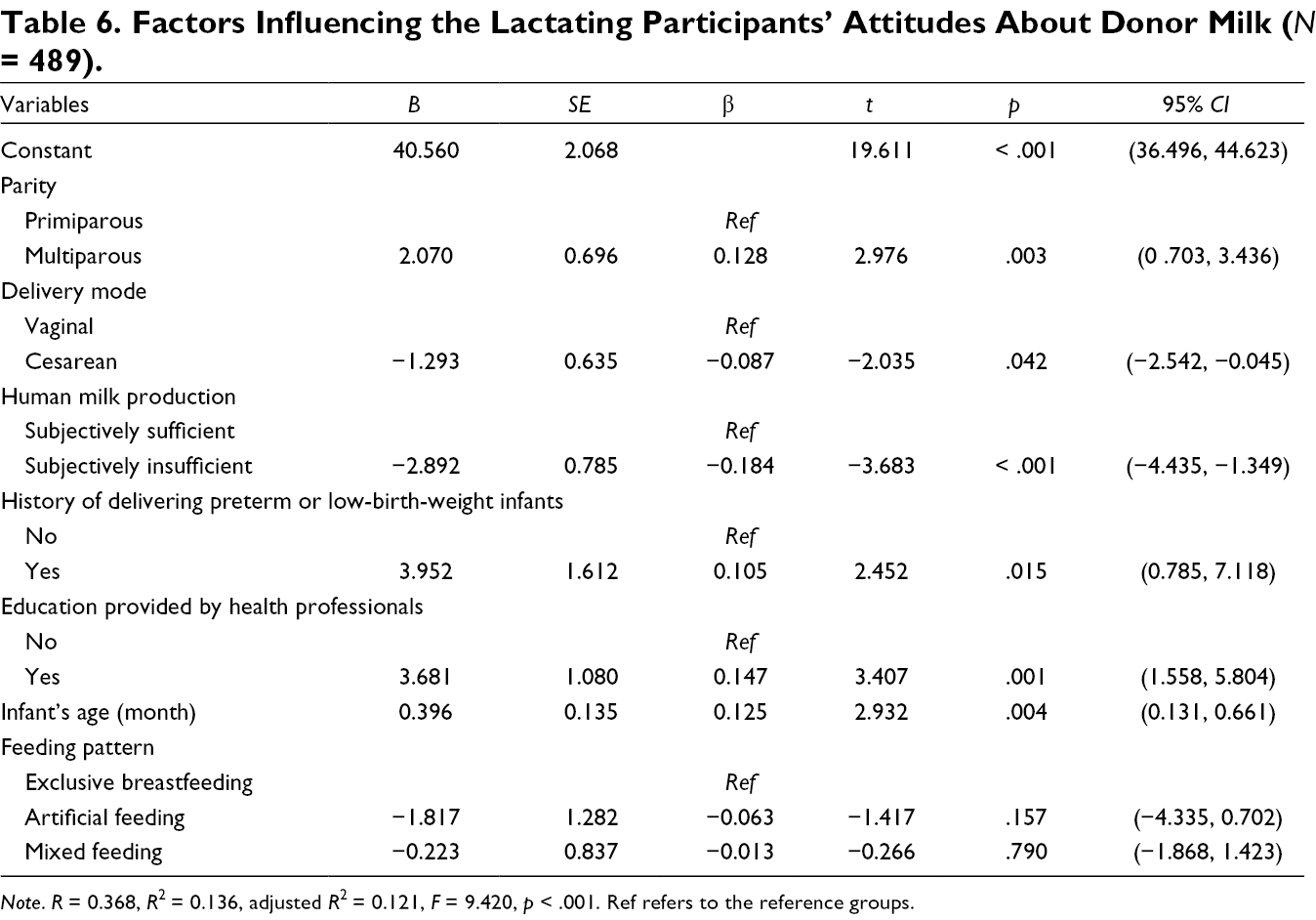
Note. R = 0.368, R 2 = 0.136, adjusted R 2 = 0.121, F = 9.420, p < .001. Ref refers to the reference groups.
Discussion
The composition of LW in our study was similar to other studies among Chinese mothers. In 2016 Xiao et al. conducted a study of the medical records of an obstetrics and gynecology hospital to examine the changes in the cesarean delivery rate in Guangzhou, China, which showed that 13.9% (n = 2373) of the mothers were 35 years or older; 26.7% (n = 4570) were multiparas; and 38.3% (n = 6546) had delivered by cesarean (Xiao et al., 2018). Their results were similar to those of our study, but there were more mothers older than 35 years in our study. The difference may be due to their data being collected at the time of childbirth, while ours were collected at the time of breastfeeding. Otherwise, it could be because the Chinese two-child policy had just been enacted in 2016. In recent years in China, the number of pregnancies of women with advanced maternal age has been increasing. In 2016, Wang and Tan conducted a survey in Nanjing, China, to examine the knowledge and attitudes about donor milk among hospitalized women after delivery and found that 24.0% (n = 60) were multiparas and 39.6% (n = 99) delivered by cesarean (Wang, 2017). These results were similar to our study.
LW’s Knowledge About Donor Milk Still Needs to be Strengthened
In this study, nearly half of the participants had heard of milk banks or donor milk; this proportion was significantly higher than the 16.7% (n = 33) reported in a survey among Chinese women hospitalized after delivery (p < .001; Qin et al., 2016). This may be because the participants in this study were all LW whose infants were aged ≥ 1 month, who may spend more time breastfeeding than hospitalized women, and may benefit from the continuous publicity of milk banks in recent years; thus, they had a higher level of knowledge about donor milk. However, in a Turkish survey previously conducted among women who delivered within 5 years before the study, 62.5% (n = 150) were aware of milk banks or donor milk (Ergin & Uzun, 2018). Compared with that in other countries, Chinese LW’s knowledge about donor milk still needs to be improved.
Among the 13 items related to knowledge, the application of donor milk and development of milk banks in China yielded the lowest correct response rate. Owing to the small number of donors and insufficient milk, the 14 milk banks can only serve a small number of infants (The Group of Human Milk Bank, Committee on Child Health, Chinese Medical Doctor Association, 2017). The majority of LW in our study lacked understanding about the situation of milk banks in China. The correct answer rate to “everyone can donate her excess milk” was also low. There are strict criteria for donors who must be healthy, producing sufficient milk, and without infectious diseases or other diseases harmful to infants (Liu et al., 2014). Some LW failed to comprehend the donation process and management of milk banks. Therefore, hospitals and the government should strengthen the publicity of donor milk, especially the status of milk banks and requirements for milk donors.
LW had Different Levels of Knowledge About Donor Milk
The level of knowledge about donor milk was affected by several factors. The LW who were living with their parents-in-law knew less about donor milk, which may be because of the traditional family culture in China: there may be a power imbalance between parents-in-law and LW. Parents-in-law slightly weaken LW’s power or reduce their time to learn about health care practices. The specific reasons for this require further exploration. However, the families of LW (especially parents-in-law) should also become educational targets for milk banks. Education level is an important factor affecting LW’s knowledge levels regarding donor milk. This may be because of different abilities to accept and understand information among educated LW. Thus, milk bank publicity campaigns should be designed according to educational level, and more attention should be paid to women with lower educational levels. The women who were primiparous or artificially feeding their infants showed a lower level of knowledge about donor milk. This may be attributed to less breastfeeding experience and lack of relevant knowledge and skills regarding breastfeeding.
The participants who delivered premature infants or LBWIs (this time or previously) learnt more about donor milk actively than passively and had a greater knowledge about donor milk. However, the LW who were breastfeeding their premature infants or LBWIs (this time) had a lower level of knowledge about donor milk. This suggests that more attention must be paid to these LW in the future. Education about donor milk by health professionals can increase LW’s knowledge. Health professionals must promote milk banks, and donor milk information can be added to routine postpartum education programs.
LW’s Attitudes About Donor Milk were Positive
In this study, over three quarters of the participants were willing to donate their human milk. In another study in China, it was found that 36.2% of women hospitalized after delivery wanted to donate their human milk; this proportion was lower than that in this study (Lu, 2018). The proportion in this study is also significantly higher than those in three Turkish studies, 19.1% (n = 46), 58% (n = 134), and 56.2% (n = 345), that were conducted among women who had delivered within the last 5 years, women who had given birth at least once, and women breastfeeding their children, respectively (Ergin & Uzun, 2018; Senol & Aslan, 2017; Yılmaz et al., 2018). In our study, the overall score in relation to LW’s attitudes about donor milk was higher than that in the study by Qin et al. (2016), who used the same questionnaire among hospitalized women after delivery, i.e., 18.11 ± 2.73 points. This may be because greater experience with breastfeeding in the postpartum period versus directly after birth may create more opportunities to improve attitudes in LW than with women immediately postpartum.
In our study, the scores in relation to the advantages, disadvantages, and use and donation of donor milk were at the upper middle level. This indicates that Chinese LW have begun to recognize donor milk. However, only a few LW had donated their milk or had used donor milk for their infants. This may be because the participants did not know about the milk banks before completing the questionnaire. Donors are required to go to a hospital’s milk bank to pump their milk on site. The complicated process of donating milk, traveling to the hospital, and spending the time required may hinder change in LW’s attitudes and behavior regarding donor milk. Therefore, staff members of human milk banks should actively optimize the donation process while increasing LW’s knowledge about milk banks.
LW had Different Attitudes About Donor Milk
LW with different demographic characteristics had different attitudes about donor milk. The primiparas, those who had cesarean delivery, those who thought they had lactation deficiency, and those who were breastfeeding younger infants scored lower on attitude about donor milk. The cumulative lactation time and experience were shorter in the primiparas and mothers breastfeeding younger infants. Those who had a cesarean delivery and those who thought they had a lactation deficiency may encounter more difficulty with the feeding process and be less confident about it. This lack of experience could also mean that new mothers would be less likely to know about donor milk, in which case their attitudes about donor milk would score lower (Liu et al., 2014a). In addition, the LW who thought they had milk insufficiency did not have additional milk to donate after breastfeeding their own infants and, owing to the frequent marketing of milk powders by the formula manufacturers, they preferred formula milk over donor milk; thus, they had a negative attitude towards using or donating milk (Kair & Flaherman, 2017). In our study, the LW who had given birth to premature infants or LBWIs were more positive about donor milk. Currently, donor milk is mainly used for premature infants and LBWIs. These LW had experience in feeding premature infants and LBWIs; therefore, they may better understand the significance of milk donation and were more willing to donate their own milk. Health professionals providing education about donor milk are important for improving women’s attitudes about donor milk, which is consistent with the results of a 2008 study in Brazil (Pimenteira et al., 2008). They can also improve LW’s knowledge of donor milk. Therefore, in the future, health professionals should play an active role in the publicity of milk banks in order to recruit more donors.
Limitations
Our study has limitations. First, we did not count the total number of recipients provided with the survey link and calculate the response rate due to the open nature of the internet. This may have produced non-response bias and led to a slightly higher level of knowledge and attitude about donor milk, because participants were completing the questionnaires owing to their interest in or concern about donor milk. Second, the variables in this study were somewhat inadequate. Only demographic data and perinatal information were included, and the factors influencing individuals’ attitudes and behaviors were not included, which may be related to the slightly lower R2 value in the univariate analysis. Thus, we suggest that future studies include more possible influencing factors, such as social support, postpartum mood, self-efficacy, and motivation for milk donation. In addition, maternal ethnicity was not considered in this study, which should also be included in future studies. Finally, the generalizability of these findings in China are limited. Although the participants were from 23 provinces throughout China, there were some differences in sample sizes between regions. Thus, other researchers could increase the sample size from northwestern provinces in further studies.
Conclusion
LW’s attitudes about donor milk were positive. However, there were gaps in knowledge about donor milk, the largest being related to those who were living with their parents-in-law, had lower educational levels, were primiparous, and were artificially feeding their infants.
Footnotes
Acknowledgments
We would like to thank the participants and all the people who forwarded the link of questionnaire in the study.
Authors’ Note
Ce Tian was a postgraduate student at the time the research was conducted.
Declaration of Conflicting Interests
The author(s) declared no potential conflicts of interest with respect to the research, authorship, and/or publication of this article.
Funding
The author(s) received no financial support for the research, authorship, and/or publication of this article.
