







Abstract
Polypropylene (PP) has been increasingly investigated for use in high voltage cable insulation systems due to its superior electrical properties. Nevertheless, PP is too stiff and brittle, causing its difficulties to be extruded as cable insulation. Consequently, PP needs to be modified by blending with copolymers to enhance the flexibility of PP. Recently, many investigations have been carried out on the electrical properties of PP blended with ethylene-based copolymer (EBC) and propylene-based copolymer (PBC). However, the effects of thermal aging on the electrical properties of PP/EBC and PP/PBC blends are far from understood. Therefore, the current work investigates the effects of thermo-oxidative aging on PP/EBC and PP/PBC blends through Fourier transform infrared spectroscopy (FTIR), thermogravimetric analysis (TGA), scanning electron microscopy (SEM), breakdown, and conductivity analyses. The results show that PP experiences up to 10% degradation in breakdown strength upon aging. Nevertheless, blending PP with EBC mitigates breakdown reduction effects to merely 3% upon aging, while blending PP with PBC results in largely unchanged breakdown performance upon aging. These breakdown effects are correlated with changes in the microstructure and conductivity of the materials to gain insights into the structure-property relationships of the materials with respect to aging.
Highlights
• Effects of thermo-oxidative aging on PP blends are investigated • PP experiences up to 10% degradation in breakdown strength upon aging • Blending PP with EBC mitigates breakdown reduction effects to 3% upon aging • Blending PP with PBC results in largely similar breakdown strength upon aging • Breakdown effects are correlated with microstructure and conductivity changes
Introduction
Crosslinked polyethylene (XLPE) has been commonly utilized in power cable insulation industries because of its outstanding electrical characteristics. 1 Specifically, XLPE has high electrical strength, low dielectric permittivity, minimal loss factor, outstanding dimensional stability, good solvent resistance, and favorable thermo-mechanical properties. 2 Nevertheless, XLPE also faces limitations in addressing modern energy needs. 3 For example, XLPE exhibits a rated operating temperature of ∼90°C and a maximum tolerable temperature of ∼105°C. This limits its higher current-carrying capability required for energy expansion. The crosslinking process in XLPE also produces undesirable byproducts, which exaggerate insulation aging. As such, degassing of XLPE is required to minimize crosslinking residues, but this leads to a longer manufacturing time. In addition, crosslinking turns polyethylene into thermoset XLPE, which can be difficult to recycle at the end of its lifespan. 4
Polypropylene (PP), a semi-crystalline polymer, has been extensively used in various applications including packaging, automotive, building and construction, agriculture, and household appliances due to its excellent mechanical characteristics, low density, and better thermal resistance at minimal costs.5,6 PP has recently been extensively explored for use in power cable applications because of its advantageous characteristics over XLPE. Specifically, PP has a high melting temperature of ∼165°C, which transforms into a rated operating temperature of ∼120°C, along with minimal dielectric loss and high volume resistivity compared to XLPE.3,7 The increased melting temperature of PP enhances its electrical properties, hence improving the cable’s capacity to conduct higher currents and operate at higher voltage levels, in line with modern energy needs. 8 Moreover, as a thermoplastic material, PP can be recycled with ease at the end of its lifespan. Since no crosslinking and degassing processes are required for PP, its manufacturing time can be reduced, thus improving manufacturing efficiency.4,9 Therefore, PP has been regarded as a highly potential alternative to XLPE for use in power cable insulation.
PP is, however, too stiff and brittle for power cable extrusion.10,11 Therefore, PP has to be blended with softer polymers to increase the overall mechanical flexibility of the final material. 12 Over the past few decades, polymer blending has widely used as an effective method for fabricating composite materials with properties tailored for various applications. 13 In this regard, thermoplastic copolymers such as ethylene propylene diene monomer (EPDM), ethylene-based copolymer (EBC), and propylene-based copolymer (PBC) have demonstrated the ability to reduce the flexural modulus of PP. 14 This is mainly attributable to their semi-crystalline and elastomeric nature, albeit that materials incompatibility and phase separation remain to be resolved. 15
Based on the literature, 10 blending PP with propylene-ethylene copolymer has offered electrical and mechanical properties equivalent to those of XLPE. Notably, blending PP with copolymers improves the flexibility of polymer molecular chains and intermolecular bonding, leading to a decreased glass transition temperature of PP. 16 In addition, copolymer blending can also reduce crystallinity and spherulite dimensions in the polymer, hence improving impact strength at low temperatures. Significantly, cable insulation composed of PP/PBC and PP/EBC blends has been demonstrated to possess a higher temperature of operation than that of low density polyethylene (LDPE) and high density polyethylene (HDPE) blends. 17 Furthermore, electrical and mechanical properties of PP have been shown to enhance when PP has been blended with up to 30 wt% of polyolefin copolymers. Nevertheless, blending copolymers with PP often adversely affects the breakdown strength of PP blends, especially with increasing copolymer concentrations.9,18 For example, a decrease in breakdown strength has been reported upon the incorporation of polyolefin copolymer 17 and silicone rubber 19 into PP blends. When the amount of copolymers is below 25 wt%, however, the breakdown strength of PP can be higher than 300 kV/mm, exceeding that of XLPE at 300 kV/mm. 19
For PP and copolymer blends to be practically employed as insulation in actual power cables, it is pertinent to assess the electrical properties of the materials under aging conditions. This is because the electrical characteristics of power cable insulation materials need to remain stable for at least 30 years post-construction.20,21 During the operation of electrical cables, the insulation materials may encounter various aging conditions, potentially leading to undesirable insulation breakdown. 22 Since higher rated voltages and operational temperatures can accelerate the thermal aging process, thus affecting the electrical performance of polymeric insulation materials, investigating the impacts of aging, particularly thermal aging, on PP and copolymer blends is vital in assessing the performance of PP blends with respect to practical operation conditions.23,24
The deterioration of power cable insulation due to high-temperature exposure is mostly resulted from heat dissipation from the conductor induced by the electrical current passing through it. 25 For XLPE, many experimental works have been carried out to investigate the deterioration of the materials caused by thermal aging. The rapid degradation of XLPE power cable insulation due to thermal cycling is often attributed to the increased degree of crosslinking in polyethylene and reduced crystallinity with heat cycling, leading to a reduction in electrical strength. 26 Similarly, subjecting pure PP to a temperature of 90°C has resulted in a decrease in both the melting temperature and mechanical properties of PP. 27 For pure PP physically aged at room temperature, modifications in the amorphous areas of the material have been observed, leading to an increase in density and modulus, aligning with the material’s increased brittleness after physical aging. 28 In contrast, relaxation and recrystallisation processes at temperatures over 80°C have improved the heat deflection temperature, impact strength, modulus, and density of PP. 28 These results demonstrate that different aging conditions affect the properties of PP.
From the perspective of dielectrics, scientific investigations on the effects of thermal aging on PP has been scarce as far as we are aware. Most investigations on the effects of thermal aging on PP have been inclined toward pure PP rather than PP blends.29–31 In view of the importance in understanding the thermal aging behavior of PP blends, the thermal properties and space charge behavior of PP blends have been investigated since 2020. 32 The results have shown that the compatibility of PP blends has not been compromised after thermal aging, where no notable phase separation has been observed. This has provided an early insight into the aging performance of PP blends for power cable insulation. Later, the effects of thermal cycling induced aging on PP blends have been investigated, with accelerated charge transport and reduced breakdown strength caused by the oxidation process observed in PP blends. 33 Recently, the effects of thermal aging on PP blends have been further explored and changes in the materials’ breakdown strength have been discussed through changes in thermal decomposition temperature, melt temperature, elongation-at-break, and relative permittivity of the materials. 34
While latest studies on PP blends have provided vital insights into the aging effects of the materials, technical understanding of PP blends’ electrical performance with respect to thermal aging remains limited. Aging effects of PP blends have also hardly been compared to that of the conventional XLPE. Therefore, our current work systematically examines the effects of thermo-oxidative aging on XLPE, PP, PP/EBC, and PP/PBC in an attempt to establish a fundamental understanding of changes in the microstructures and electrical properties of PP blends upon thermo-oxidative aging at 90°C. The selection of the 90°C aging temperature is based on the consideration of the typical cable operating of the current XLPE insulation system, beyond which XLPE will decompose due to severe thermo-oxidative degradation. 35 Although the selected aging temperature appears low for the PP-based materials, previous investigations36,37 have demonstrated that 90°C aging temperature causes elevated crystallinity, increased brittleness, and surface cracking that degrades PP. Consequently, the chosen temperature strikes a balance among the XLPE, PP, and PP blend materials, allowing a comparative evaluation of the materials’ property changes under the same aging condition.
Experimental
Materials
XLPE used was comprised of 98 wt% of LDPE (grade TITANLENE LDF200YZ) produced by Lotte Chemical Titan and 2 wt% of DCP (grade 329541) supplied by Sigma Aldrich. PP used was sourced from Lotte Chemical Titan grade TITAN PRO 6531M. EBC (grade Queo 6800LA), produced by Borealis, and PBC (grade Vistamaxx 6202), produced by ExxonMobil, were utilized as copolymers. PP was blended with 20 wt% of EBC and PBC to obtain balanced electro-mechanical properties, as previously reported.38,39
Sample preparation
An OHAUS Pioneer laboratory balance was used to weigh the XLPE, PP, EBC, and PBC raw materials. The raw materials were subsequently dried at 70°C for 1 day to remove moisture content before blending in a Brabender melt mixer. The temperature, duration, and rotating speed were set at 130°C, 10 minutes, and 50 r/min for XLPE and 180°C, 10 minutes, and 50 r/min for PP, PP/EBC, and PP/PBC. A Carver hydraulic hot press was subsequently utilized to fabricate thin films of the samples. To achieve a thickness of ∼100 µm, XLPE was subjected to melt pressing at a temperature of 130°C and a load of 2.5 tons. The temperature was then elevated to 180°C and maintained for 10 minutes to complete the crosslinking process. The melt-pressed samples were allowed to gradually cool to room temperature in the laboratory, before subjected to degassing in a vacuum oven at 70°C for 72 hours to eliminate crosslinking by-products. PP, PP/EBC, and PP/PBC samples were melt-pressed in a similar way to XLPE, but at a temperature of 180°C and in the absence of the crosslinking and degassing steps. All the samples prepared in such a way are regarded as unaged samples, left at room temperature of 20°C. To produce thermally aged samples, the prepared samples were additionally subjected to a temperature of 90°C and a fan speed of 30% for a duration of 480 hours in an air-circulated Memmert oven. The samples are abbreviated using the general notation P/C/T, where P indicates the base polymer, C indicates the copolymer, and T indicates the thermo-oxidative aging temperature. For example, PP/0/20 represents PP not blended with copolymer and not subjected to thermo-oxidative aging while PP/PBC/90 represents PP blended with PBC and subjected to thermo-oxidative aging at 90°C.
Microstructure characterizations
A Perkin Elmer Spectrum One Fourier transform infrared (FTIR) spectrometer, fitted with a conventional mid-infrared triglycine sulphate (MIRTGS) detector, was utilized to characterize the chemical content of XLPE, PP, PP/EBC, and PP/PBC. The data were collected within a spectral range of 400 cm−1 to 4000 cm−1 for 16 scans at a resolution of 4 cm−1. The thickness of each sample was ∼100 µm.
The thermal profiles of XLPE, PP, PP/EBC, and PP/PBC were characterized utilizing a Perkin Elmer Pyris 1 TGA apparatus. The characterization was conducted between 30°C and 900°C at 10°C per minute scan rate in a nitrogen atmosphere. A 5 mg sample was used for each measurement.
The morphology of XLPE, PP, PP/EBC, and PP/PBC was determined using a Hitachi TM-3000 Tabletop SEM. Prior to that, the samples were fractured using liquid nitrogen and coated with platinum under vacuum using Emitech 21 K550X to improve SEM resolution. Each sample size was 10 mm in length, 7 mm in width, and 3 mm in height. The SEM micrographs were acquired at 15 kV accelerating voltage and 30 mm working distance.
Electrical measurements
A BAUR PGK 110HB high voltage test equipment, with an alternating current (AC) voltage rating of 80 kV and a direct current (DC) voltage rating of 110 kV, was employed in this study for breakdown testing. The AC and DC breakdown tests were performed in accordance with the specifications outlined in the American Society for Testing and Materials (ASTM) D149
40
and D3755
41
standards, respectively, at ambient temperature. For each breakdown measurement, an AC step voltage of 1 kV was applied every 20 seconds until breakdown, while a DC step voltage of 2 kV was applied every 20 seconds until breakdown. Each test specimen possessed a nominal thickness of ∼100 µm. The specimen was placed between two steel ball electrodes, each with a diameter of 6.3 mm, and immersed in silicone oil to prevent surface discharge. The breakdown data were collected and analyzed using the two-parameter Weibull statistical distribution method shown in equation (1).42–44

A Keithley 6517B electrometer was used to determine the DC conductivity of the materials based on the ASTM D257 standard.
45
The applied electric field was 5 kV/mm, and the specimen possessed a thickness of ∼100 µm. Continuous electric field was applied to each sample for 30 minutes, with the steady state value recorded during the final minute utilized as the conduction current result. Each specimen group underwent at least three tests to ensure reproducible results.
46
The Laboratory Virtual Instrument Engineering Workbench (LabVIEW) software program was employed for the measuring operations and the collection of data. The DC conductivity, σ, of the materials was calculated using equation (2).47,48

Results
Chemical analysis
Figure 1 demonstrates the FTIR spectra of unaged and aged samples of XLPE, PP, PP/EBC, and PP/PBC. For the unaged samples, XLPE demonstrated absorption bands at 722 cm−1 and 1464 cm−1, signifying the bending vibration of the -CH group in response to the crosslinking agent within polyethylene chains. The absorption bands ranging from 2840 cm−1 to 2954 cm−1 indicate stretching vibrations of methylene groups inside polyethylene chains.49,50 For PP, the bending vibration of -CH groups in PP can be determined by the absorption peak from 810 cm−1 to 1456 cm−1, whereas the stretching vibration of -CH groups in PP is governed by the absorption bands from 2836 cm−1 to 2972 cm−1.
51
The presence of EBC and PBC in PP can be noticed through the 720 cm−1 absorption peak, which indicates the bending vibration of -CH groups.
52
Notably, the 720 cm−1 absorption peak was more significant in PP/EBC/20 than in PP/PBC/20. This is because the ethylene content in PP/EBC was higher than in PP/PBC.
53
After aging, all the samples, except PP/PBC, demonstrated slightly deeper and wider carbonyl peaks (C=0) between 1693 cm−1 and 1730 cm−1. This indicates the presence of additional oxidized functional groups associated with molecular chains fracture due to oxygen exposure during thermo-oxidative aging.54,55 FTIR spectra of unaged and aged samples.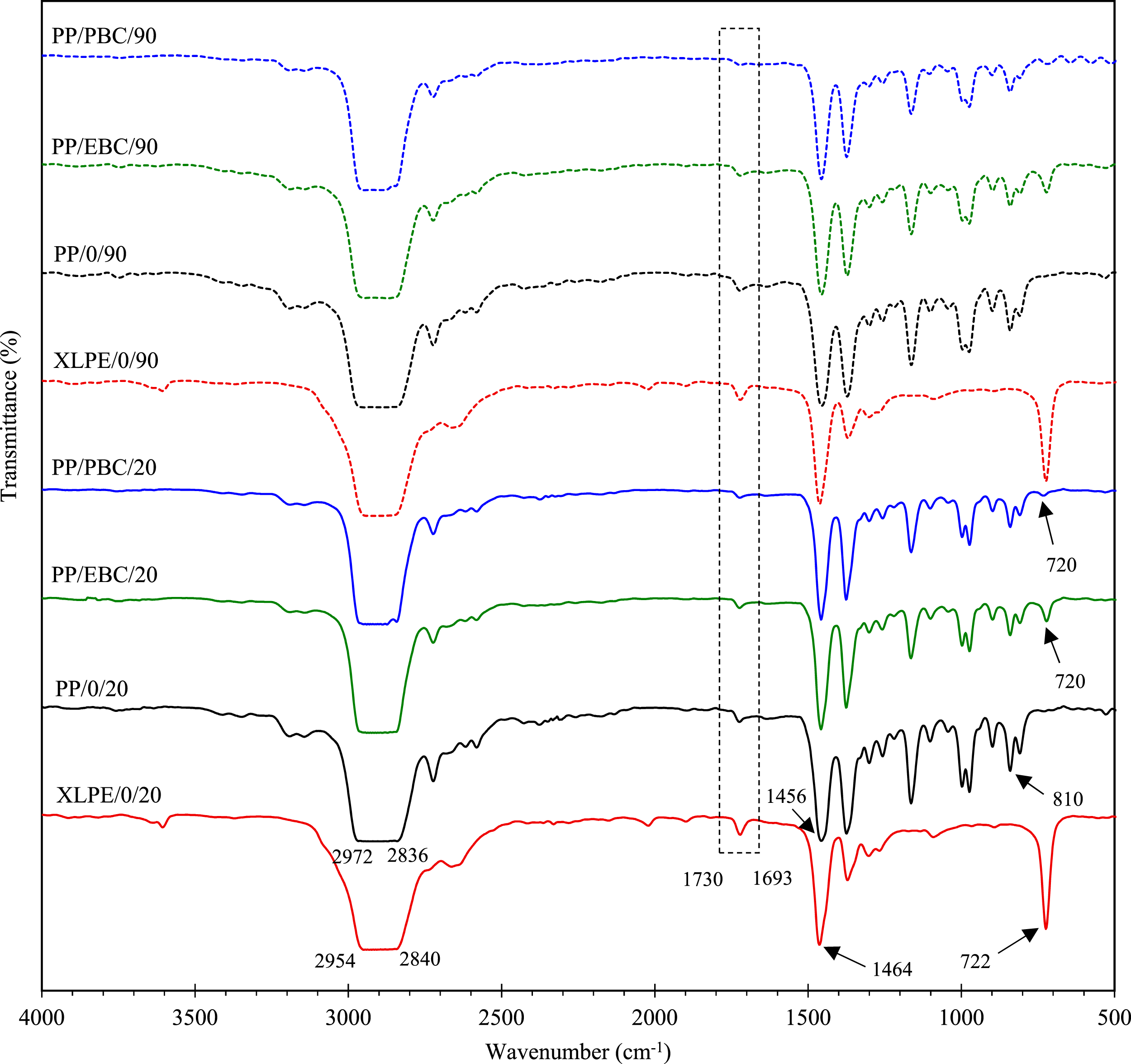
Thermal analysis
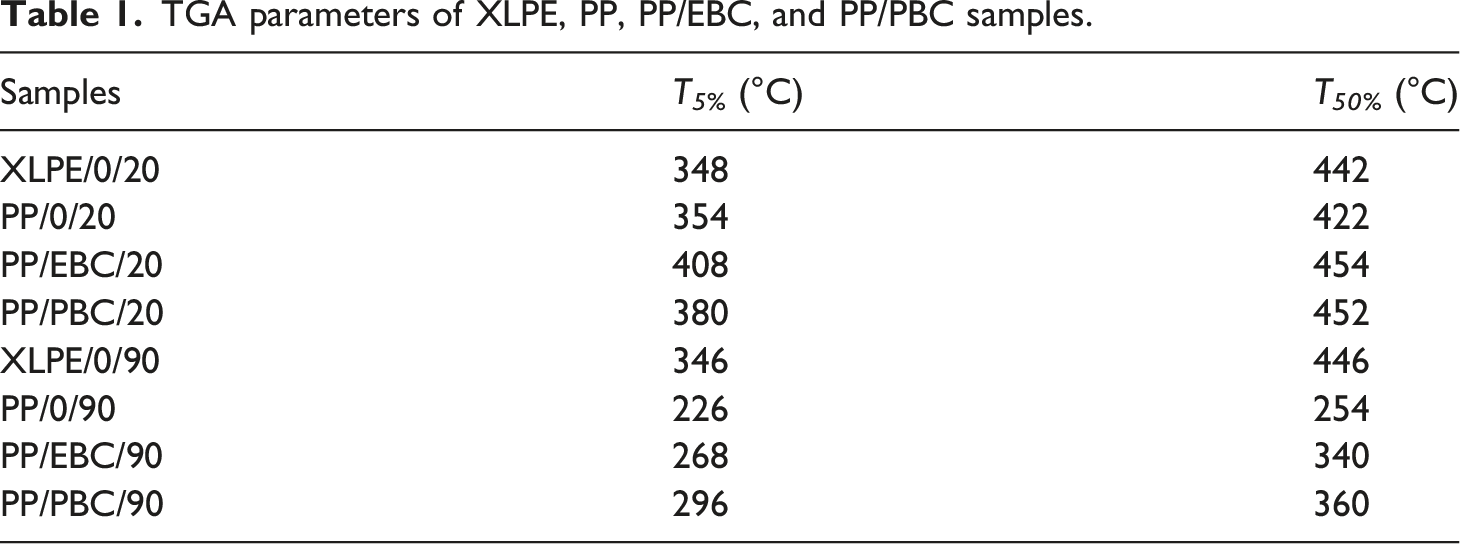
Figure 2 illustrates TGA curves of unaged and aged samples of XLPE, PP, PP/EBC, and PP/PBC, with their TGA data summarized in Table 1. Notably, T
5%
and T
50%
indicate 5% and 50% mass loss with respect to increasing TGA temperatures. The unaged XLPE was characterized by T
5%
= 348°C and T
50%
= 442°C, similar to prior study.
56
The unaged PP demonstrated slightly higher T
5%
of 354°C but lower T
50%
of 422°C compared to the unaged XLPE; a similar observation was reported elsewhere.
57
Blending EBC with PP enhanced the thermal stability of PP, where T
5%
became 408°C and T
50%
became 454°C. Similarly, blending PBC with PP also enhanced the thermal stability of PP, where T
5%
became 380°C and T
50%
became 452°C.
58
After aging, T
5%
and T
50%
values of all the samples reduced, except for XLPE. Specifically, the aged PP experienced 36% and 40% reductions in T
5%
(226°C) and T
50%
(254°C), respectively, compared to the unaged PP. This significant deterioration signifies that thermal aging significantly degraded PP, causing it inferior to extended high-temperature exposure. For the aged PP/EBC, T
5%
reduced by 34% to 268°C while T
50%
reduced by 25% to 340°C, compared to the unaged PP/EBC. Similarly, the aged PP/PBC also experienced a reduction, but to a smaller degree, in T
5%
(22% reduction to 296°C) and T
50%
(20% reduction to 360°C), compared to the unaged PP/PBC. Nevertheless, both the aged PP/EBC and aged PP/PBC possessed higher values of T
5%
and T
50%
compared to the aged PP, indicating better thermal stability of PP/EBC and PP/PBC over PP upon thermal aging. TGA curves comparing unaged and aged samples of XLPE, PP, PP/EBC, and PP/PBC. TGA parameters of XLPE, PP, PP/EBC, and PP/PBC samples.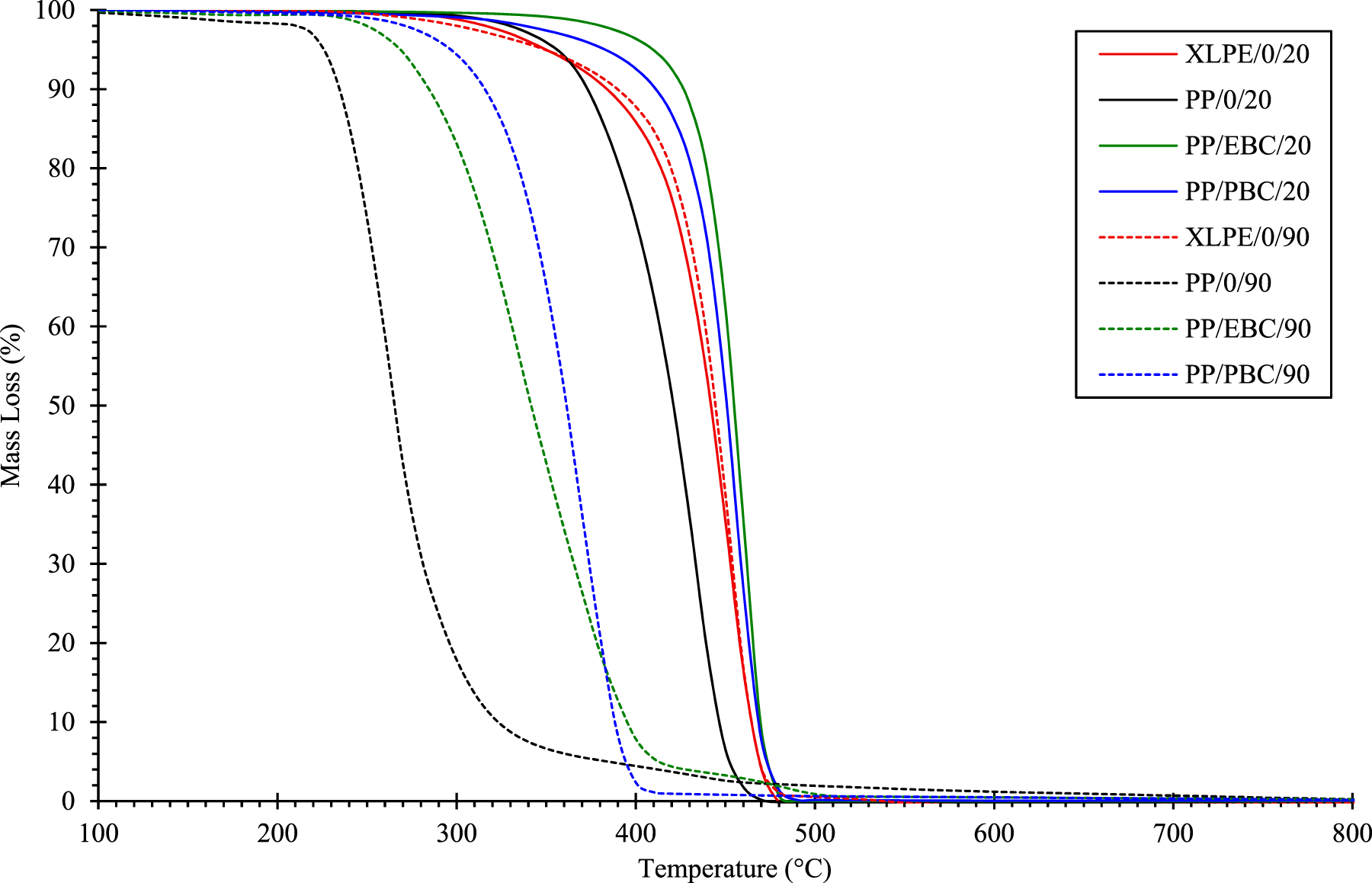
Morphological analysis
Figure 3 shows the morphology of unaged and aged samples of XLPE, PP, PP/EBC, and PP/PBC. For XLPE (see Figure 3(a)) and PP (see Figure 3(b)), no significant morphological characteristics were observed, aside from the fractographic features; similar morphologies were also observed in prior studies.59,60 Morphology of (a) unaged XLPE, (b) unaged PP, (c) unaged PP/EBC, (d) unaged PP/PBC, (e) aged XLPE, (f) aged PP, (g) aged PP/EBC, (h) aged PP/PBC. The arrows indicate “island” structure.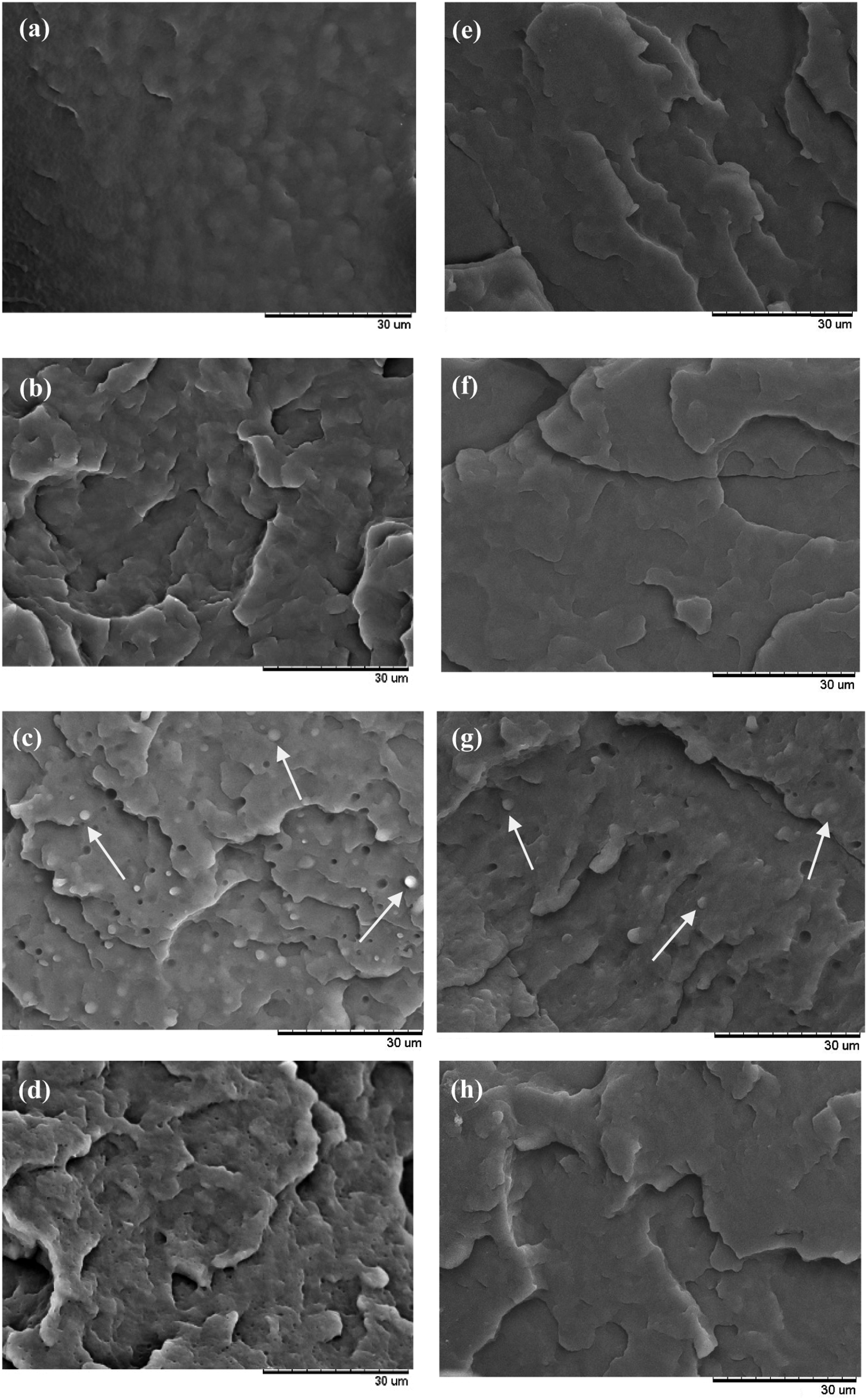
The presence of EBC in PP signifies an “island” structure of separated phases (see the arrows in Figure 3(c)), while the presence of PBC in PP represents a state of securely bonded continuous phase (see Figure 3(d)), as also noted in prior studies. 61 Therefore, the presence of PBC in PP exhibited excellent compatibility, resulting in more effective PBC dispersion compared to the presence of EBC in PP. According to Liu et al., 62 higher propylene content and longer propylene sequences within a copolymer resulted in better compatibility of the copolymer with PP. Upon aging at 90°C, no significant differences in morphologies can be observed for all the samples; this observation is in agreement with previous morphological studies at a similar aging temperature range.32,33
Electrical breakdown strength
Figure 4(a) compares the AC breakdown strengths of XLPE, PP, PP/EBC, and PP/PBC, before and after aging; their Weibull parameters are listed in Table 2. As a reference, the AC breakdown value for the unaged XLPE was 148 kV/mm. The breakdown value slightly reduced by 5% to 140 kV/mm after aging, indicating the slight degradation of the material after aging. Meanwhile, PP shows 10% decline in AC breakdown strength after aging; the AC breakdown value fell from 162 kV/mm to 146 kV/mm. The AC breakdown strength of PP/EBC slightly dropped by 3% from 151 kV/mm (before aging) to 147 kV/mm (after aging). Meanwhile, the AC breakdown strength of PP/PBC (∼153 kV/mm) appeared unperturbed by aging. Breakdown strength of unaged and aged XLPE, PP, PP/EBC, and PP/PBC under (a) AC field, (b) DC field. Weibull parameters for AC and DC breakdown strength.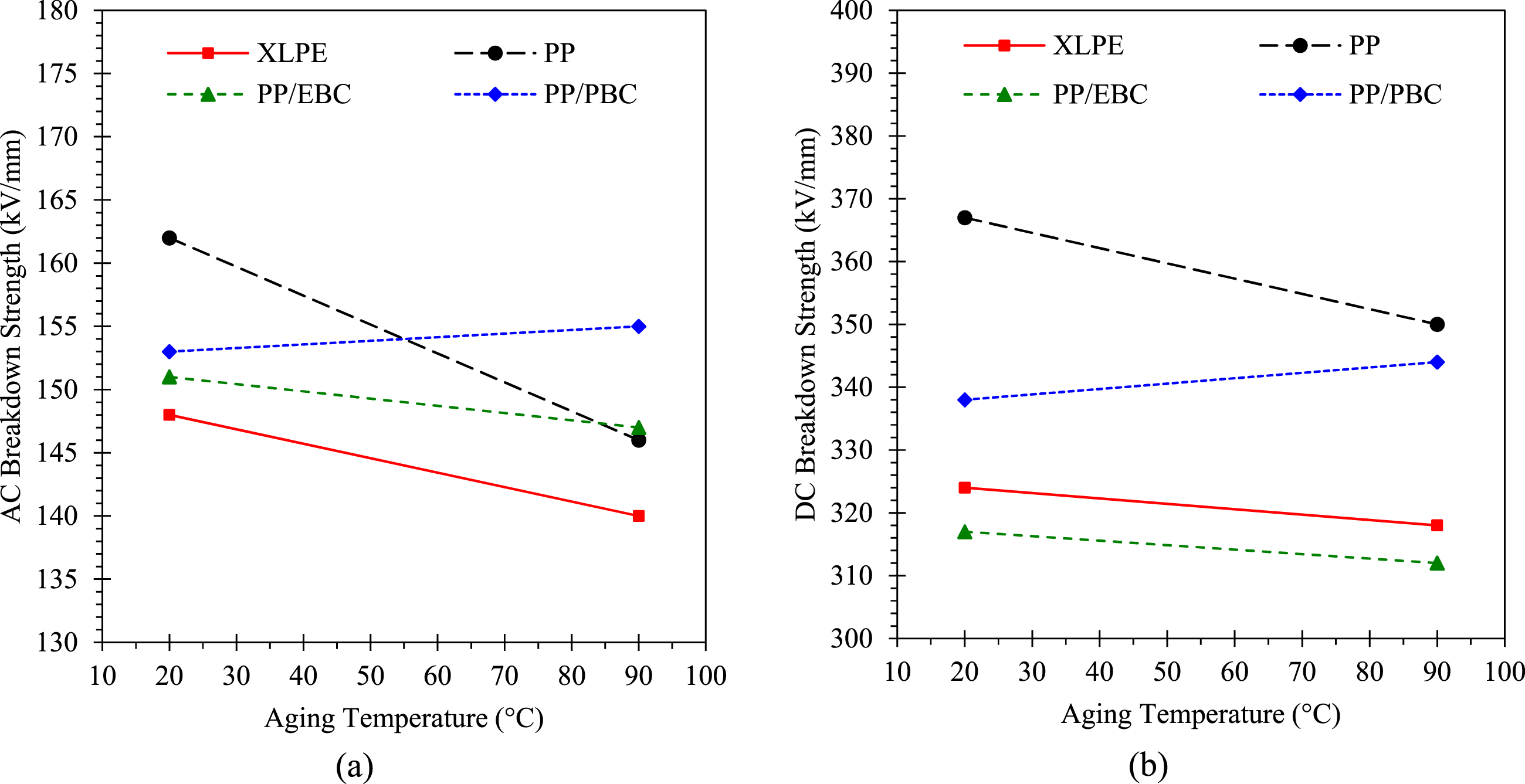
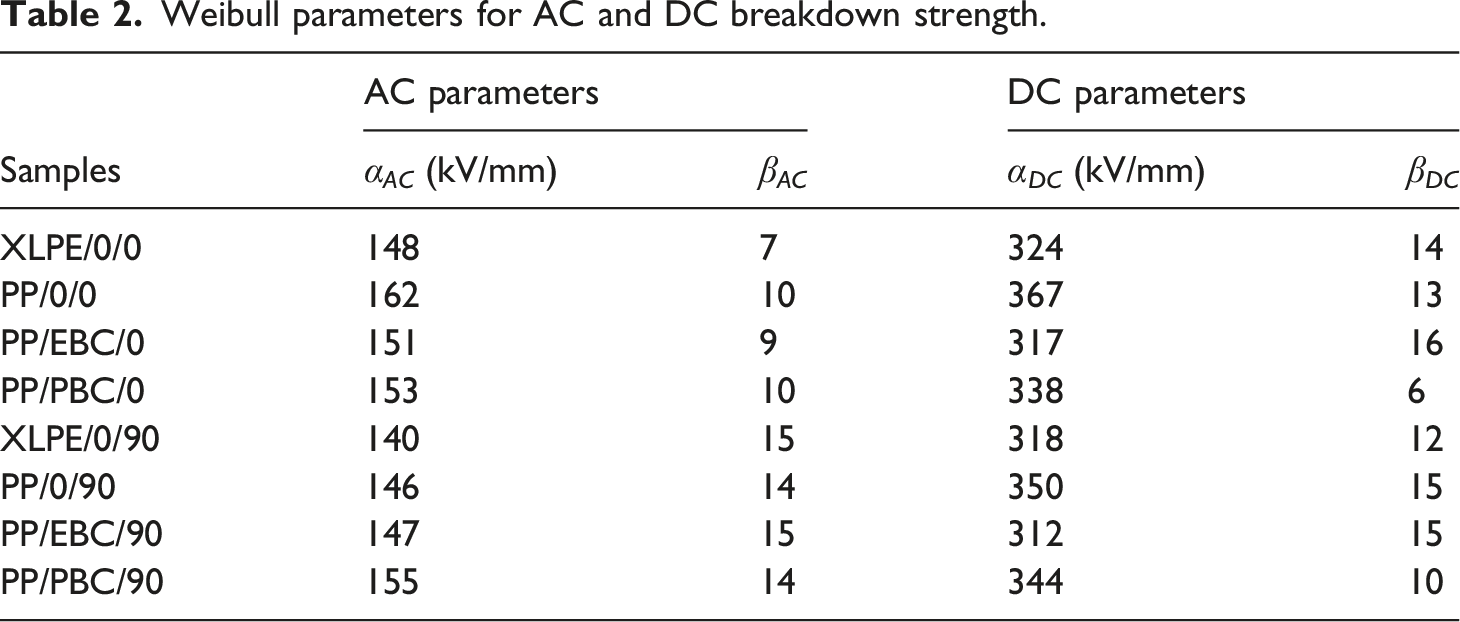
Figure 4(b) compares the DC breakdown strengths of XLPE, PP, PP/EBC, and PP/PBC, before and after aging; their Weibull parameters are, again, listed in Table 2. The DC breakdown value for the unaged XLPE slightly decreased by 2% from 324 kV/mm to 318 kV/mm upon aging. Meanwhile, PP exhibited a notable decrease in DC breakdown strength, with the value declining by 5% from 367 kV/mm to 350 kV/mm. The DC breakdown strength of PP/EBC decreased marginally by 2% from 317 kV/mm (before aging) to 312 kV/mm (after aging). Again, the DC breakdown strength of PP/PBC remained unchanged at ∼338 kV/mm before and after aging. These DC breakdown results reinforce earlier AC breakdown results that, while all the materials, except PP/PBC, experienced reduced breakdown strength after aging, the incorporation of EBC and PBC into PP mitigated breakdown reduction in PP after aging.
Electrical conductivity
Figure 5 displays the DC conductivity of unaged and aged XLPE, PP, PP/EBC, and PP/PBC. The conductivity of the unaged XLPE and the unaged PP were 4.9 × 10⁻¹³ S/m and 3.7 × 10⁻¹³ S/m, respectively. Blending PP with EBC and PBC resulted in conductivity values of 5.1 × 10⁻¹³ S/m and 4.6 × 10⁻¹³ S/m. After aging, XLPE demonstrated 10% higher conductivity value of 5.4 × 10⁻¹³ S/m over the unaged XLPE, indicating degradation in XLPE after thermal aging. Similarly, the aged PP also had 20% higher conductivity at 4.4 × 10⁻¹³ S/m over the unaged PP. PP/EBC also showed 8% increment in DC conductivity to 5.5 × 10⁻¹³ S/m after aging. For PP/PBC, no significant changes in DC conductivity occurred after aging. Significantly, the presence of EBC and PBC in PP mitigated the increase in DC conductivity of PP after thermal aging. DC conductivity of unaged and aged XLPE, PP, PP/EBC, and PP/PBC.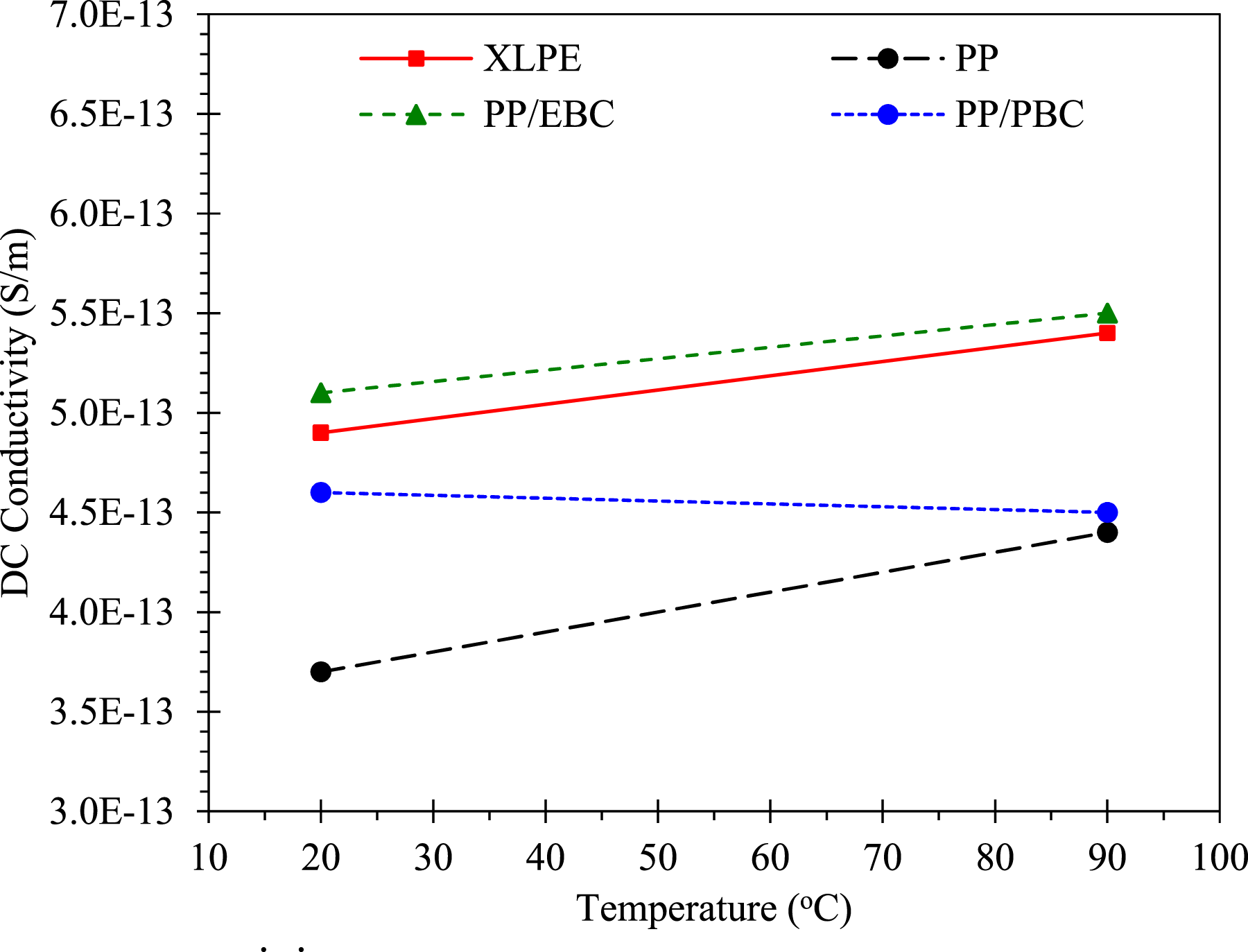
Discussion
From both the AC and DC breakdown results, XLPE, PP, and PP/EBC experience breakdown reduction after aging. In contrast, the breakdown reduction in PP/PBC is less apparent. These observations are in line with the chemical profiles of the materials before and after aging. From FTIR, all the samples, except PP/PBC, show slightly deeper and wider carbonyl peaks around 1693 cm−1 to 1730 cm−1. This indicates thermo-oxidative degradation of XLPE, PP, and PP/EBC when subjected to 90°C aging temperature. The unchanged intensity of carbonyl peaks in PP/PBC in the same FTIR spectral range before and after aging suggests that PP/PBC does not suffer much from 90°C aging temperature. Consequently, the AC and DC breakdown strengths of PP/PBC do not significantly change after aging.
Indeed, the thermal stability effects seen from the TGA mass loss data agree with the thermo-oxidative degradation effects seen in the FTIR measurements. Notably, mass loss in TGA is influenced by two main factors – the generation rate of volatile molecular fractions and their diffusion rate out of the sample. 63 For PP, its increased carbonyl functional groups after aging translates into a massive degradation in its thermal stability (T 50% reduces by 40%), due to factors such as chain degradation, diminished stabilizer content, and the loss of the amorphous area when subjected to heat and oxygen. 64 According to Chen et al., 19 PP is brittle and stiff. Although there is no significant difference in SEM morphological features between unaged PP and aged PP, structural changes within PP upon aging can increase free volume and enhance electron mobility in amorphous regions. 65 Consequently, PP demonstrates a significant increment (20%) in conductivity after aging, which can be related to the most significant reduction in AC and DC breakdown strengths (up to 10%) among all the samples after aging.
Prior to aging, the introduction of EBC and PBC into PP enhances the thermal stability of PP/EBC and PP/PBC blends compared to that of PP. Although both aged PP/EBC and aged PP/PBC suffer from reduced T 50% by 25% and 20%, respectively, after aging, the extent of reduced thermal stability of these blend materials is less than that of PP. Therefore, blending EBC and PBC with PP can improve the thermal stability of the blend materials by reducing the migration of volatile decomposition products from the decomposing solid and the diffusion of oxygen into the system that can result in chain scission upon aging. This behavior may result from the foaming structure in PP/EBC and PP/PBC that generates less free radicals in the presence of oxygen, thus reducing the self-accelerating oxidation process. 66 For XLPE, its unchanged thermal stability after thermal aging is attributed to the crosslinked nature of XLPE, producing a thermoset material that is difficult to decompose compared to the thermoplastic PP, PP/EBC, and PP/PBC. It is noteworthy, however, that the temperature to decompose PP, PP/EBC, and PP/PBC are well above the intended operating temperature of 120°C. 67
Previously, the introduction of PBC has demonstrated good compatibility with PP, resulting in finely and evenly dispersed phases 9 – this is also observed from the SEM micrograph of PP/PBC in the current work. In contrast, PP/EBC has poor compatibility, as seen from the “islands” structure in PP/EBC. The bonding ability between PP and EBC is therefore lower than that between PP and PBC. The poor materials bonding results in pronounced phase separation between PP and EBC during thermal aging, thus negatively affecting the electrical performance of the materials. 33 Often, the amorphous phase in PP demonstrates less inhibition of charge migration than the crystalline phase, resulting in an increased charge mobility in the amorphous phase. 68 This explains the higher conductivity value of PP/EBC than PP/PBC, with PP having the lowest conductivity value among the materials, before aging. Nevertheless, the presence of copolymers having good compatibility with PP will alter the characteristics in the amorphous region, thus forming unique crystalline-amorphous interfaces that limit charge carrier mobility. 69 The enhanced interface interaction between the crystalline and amorphous phases, as well as the physical bonding at these interfaces, result in a raised density of shallow traps, thus affecting charge transport dynamics within the materials. 70 Due to the excellent compatibility between PP and PBC, the crystalline structure of PBC at elevated temperature allows the composites to sustain a high storage modulus, thus significantly reducing the risk of conductor settlement during high-temperature cable operation. 71 According to Liang et al., 72 a composite demonstrating strong interfacial bonding frequently dissipates less energy and requires a higher temperature to commence molecular motion. This alteration thereby enhances the dielectric characteristics by capturing charge carriers and restricting their mobility. In contrast, phase incompatibilities and localized charge accumulation can negatively affect the breakdown strength and long-term electrical stability of PP blends. 73 These explain the superior breakdown performance of PP/PBC over PP/EBC, and less drastic breakdown reduction in PP/PBC especially after aging.
The current finding aligns with previous investigations on other types of EBC and PBC blended with PP.33,74 According to Teyssedre and Laurent, 75 the difference in the breakdown strength of PP/EBC and PP/PBC can be attributed to the enhanced carrier mobility during thermal aging. Indeed, the reduction in the AC and DC breakdown strengths of XLPE, PP, and PP/EBC after aging seen in the current work is consistent with their increased conductivity values after aging. Since the AC and DC breakdown strengths of PP/PBC do not significantly change after aging, the same goes for its conductivity values after aging. To understand the fundamental of this effect, it is essential to mention that the DC breakdown performance of polymeric insulating materials is affected by the disruption of molecular chains generated by high-energy electrons. 76 According to Ford et al., 77 conductivity is directly proportional to the number of free electron, where higher numbers of free electron result in higher conductivity values. Increased free volumes during thermal aging facilitates electron energy accumulation, thus promoting the breakdown process. 33 Appropriately blended materials can otherwise mitigate such effects, as for the case of PP/PBC reported in the current work.
It is noteworthy that changes in electrical properties of the materials are also closely related to the crystallinity of the materials. Based on the literature, 38 the addition of copolymers to PP reduces the overall crystallinity of PP blends – this likely explains the reduced breakdown strength of PP blends seen here, before aging. Meanwhile, increasing the aging temperature can result in enhanced crystallinity of the aged materials compared to the unaged counterparts. 42 As the crystallinity of PP blends before aging is often lower than pure PP, aging is expected have less drastic effects on crystallinity changes of PP blends compared to pure PP – this likely explains the less drastic reduction in the breakdown strength of the PP blends compared to the pure PP seen here, after aging. In the current work, crystallinity data of the materials are not obtained, so no further assertion is made with regard to crystallinity changes of the materials. A such, detailed studies of crystallinity changes of the materials before and after thermal aging can be pursued to gain further insights into the microstructure and electrical properties of the materials with respect to thermal aging.
Conclusions
The current work presents the effects of thermo-oxidative aging on the microstructure and electrical properties of XLPE, PP, PP/EBC, and PP/PBC. Aging XLPE and PP at 90°C reduces their breakdown strengths by 5% and 10%, respectively. The breakdown degradation in PP is associated with 40% reduced thermal stability and 19% increased conductivity, where such effects are less prevalent in XLPE. Nevertheless, blending PP with EBC and PBC mitigates the aging effects through improved materials uniformity and reduced oxidative reactions. Specifically, PP/EBC demonstrates merely up to 3% reductions in AC and DC breakdown strengths after aging. These improved breakdown performances with respect to aging correlate well with improved thermal stability and less notable increase in conductivity (8%) of PP/EBC after aging. These favorable effects are more notable in PP/PBC, where the AC and DC breakdown strengths of PP/PBC remain largely similar after aging. These are ascribed to better phase compatibility between PP and PBC that mitigate oxidative reactions and conductivity changes after aging. Overall, structural modifications of PP through copolymer blending demonstrates favorable effects in preserving the breakdown performances of PP-based insulation materials after aging.
Footnotes
Acknowledgements
The authors acknowledge the Ministry of Higher Education Malaysia for funding the work under the Fundamental Research Grant Scheme (FRGS/1/2023/TK07/UTM/02/5). The authors also acknowledge Universiti Teknologi Malaysia (UTM) for funding the work under the Nexus Young Researcher Scheme.
Declaration of conflicting interests
The authors declared no potential conflicts of interest with respect to the research, authorship, and/or publication of this article.
Funding
The authors disclosed receipt of the following financial support for the research, authorship, and/or publication of this article: The authors acknowledge the Ministry of Higher Education Malaysia for funding the work under the Fundamental Research Grant Scheme (FRGS/1/2023/TK07/UTM/02/5). The authors also acknowledge Universiti Teknologi Malaysia (UTM) for funding the work under the Nexus Young Researcher Scheme.
