







Abstract
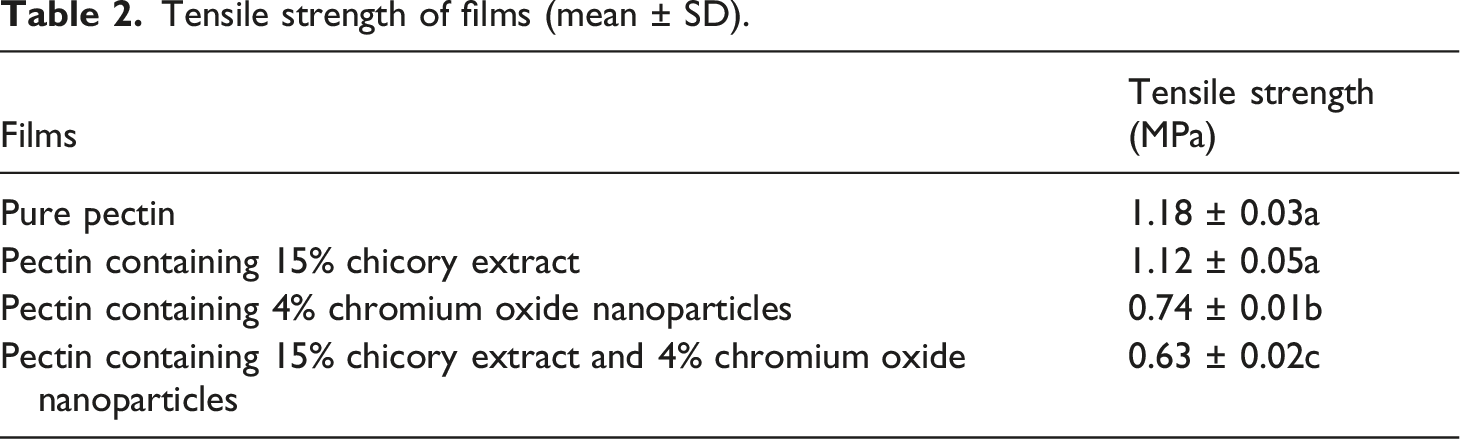
In this study, the impact of chicory extract (0, 7.5, 15%) and chromium oxide nanoparticles (0, 2, 4%) on the physicochemical and structural properties of apple pomace-derived pectin-based edible films were studied using response surface methodology (RSM) and the central composite designs(CCD).The results indicated that with increasing the concentrations of both chicory extract and chromium oxide nanoparticles, the moisture content decreased from 18 % to 14 %, and solubility decreased from 45 % to 30 %, while film thickness increased from 0.4 mm to 0.7 mm (P ≤ 0.05).The tensile strength values ranged from 0.63 MPa to 1.18 MPa, with the pure pectin film showing the highest value (1.18 ± 0.03 MPa) and the film containing 15% chicory extract showing 1.12 ± 0.05 MPa, whereas films containing 4% chromium oxide nanoparticles exhibited 0.74 ± 0.01 MPa, and the combination of 15% extract and 4% nanoparticles resulted in the lowest value (0.63 MPa). Regarding color indices, increasing chromium oxide nanoparticles from 0 to 4% significantly decreased L* (from 71.6 to 52.1) and whiteness index (from 70.2 to 48.4), while increasing a* (from 2.2 to 4.4), b* (from 11.3 to 17.5), and yellowness index (from 19.6 to 47.3) (P ≤ 0.05). SEM and FTIR results indicated minor alterations in the chemical structure, strong molecular interactions within the biopolymer matrix, and effective mixing of pectin with both the extract and nanoparticles. DSC results also showed an increase in the intensity of endothermic peaks, suggesting strengthened intermolecular interactions and enhanced crystallinity within the polymer matrix.The results of the present study demonstrate that apple pomace-derived pectin films enriched with 15% chicory extract and 4% chromium oxide nanoparticles exhibit strong potential as an innovative active edible film system.
Keywords
Introduction
Preservation and protection of food during preparation, transportation, and storage are important functions of food packaging. Improper packaging can cause biological, chemical and physical changes in food. 1 In recent years, the production of large scale by-products in the food industry and the global pollution concerns, has led to increasing interest in utilizing fruit and vegetable by-products as biodegradable film packaging, an alternative to non-biodegradable plastics. This approach not only addresses waste management issues but also offers additional benefits, such as enhancing product properties and reducing production costs.2,3 Apple pomace, a valuable by-product of apple processing, contains 2.5% pectin, 3-5% dietary fiber, and significant amounts of antioxidant and phenolic compounds, making it nutritionally and medicinally important. If not properly managed, this pomace becomes organic waste. 4
Pectin is a structurally complex plant-derived polysaccharide predominantly located in the middle lamella of terrestrial plant cell walls. Apple pulp is a rich source of pectin, which has been widely investigated for its diverse applications in the food, pharmaceutical, and biomedical sectors.5,6 Pectin possesses a backbone primarily composed of α-(1→4)-linked D-galacturonic acid units, defining its fundamental structural framework. 7 Traditional uses of pectin include gelling, 8 thickening, and stabilizing agents. 9 Owing to its biodegradable and edible nature, excellent film-forming capacity, and compatibility with a wide range of complementary materials, pectin represents a promising candidate for the developing sustainable substitutes for conventional non-degradable plastics in targeted applications. 10 Films formulated from pectin demonstrate high resistance to oxygen permeability, makeing them well suited for packaging of fresh produce. By limiting oxygen transfer, these materials can slow respiration processes and consequently prolong the storage life of highly perishable fruits and vegetables. Moreover, the regulated gas exchange provided by pectin-based films helps maintain the visual quality, textural integrity, and nutritional attributes of packaged food products.11,12 In this study, pectin extracted from apple pomace was used as the base for the edible film.
The integration of plant-derived extracts into the polymeric network of edible films has emerged as an effective approach to improve their functional performance, particularly by enhancing antioxidant and antimicrobial activities. 13 Chicory (Cichorium intybus L.), a plant belonging to the Asteraceae family, is rich in bioactive compounds 14 and phenolic compounds that offer several health benefits, including hepatoprotective, antioxidant, antidiabetic, and antimicrobial effects. 15 Chicory contains vitamins (such as vitamins C and A, thiamine, riboflavin, niacin, and pantothenic acid), minerals (such as calcium, magnesium, iron, phosphorus, and potassium), and amino acids (such as tryptophan, leucine, isoleucine, valine, and arginine). 16 Methanolic and aqueous extracts of chicory have demonstrated antimicrobial activity against Staphylococcus spp., Pseudomonas aeruginosa, Klebsiella pneumoniae, and Candida albicans. 17 Chicory extract is also used in dietary supplements and foods for specific nutritional purposes due to its proven appetite-stimulating, and prebiotic properties. Moreover specific phenolic compounds of chicory (such as protocatechuic acid) not only have strong antioxidant activity but are also expected to improve the stability and uniformity of nanoparticle distribution in the pectin matrix by forming physicochemical bonds. 18
Metal nanoparticles have attracted considerable attention as potential biologically active materials in various fields due to their unique properties and diverse applications, especially in biomedical, drug delivery, and food applications. 19 Chromium oxide (Cr2O3) nanoparticles are of great importanceamong metal oxide based nanoparticles because of their unique physicochemical properties. These include a wide band gap (∼3.4 eV), high melting temperature, increased stability, low toxicity, high antimicrobial properties, high antioxidant activity, anticancer properties, wear-resistant catalyst, solar energy storage capability, and high colorability, are of great importance and attention among various metal oxide-based nanoparticles.20,21 Consequently, they have been widely used in various applications, including catalysis, photonics, coating materials, edible films, advanced dyes, etc. Furthermore, research shows that, trivalent Cr2O3 nanoparticles are more stable than other forms due to their improved strength, hardness, and thermodynamic stability. A recent in vivo study on Wistar rats showed that oral administration of Cr2O3 nanoparticles at doses of 30 mg/kg body weight per day for 28 days did not cause any significant genotoxic effects or tissue damage, whereas doses of 300 and 1000 mg/kg body weight per day induced DNA damage, micronuclei, and chromosomal aberrations. 22
Furthermore, no toxicity was observed in NIH-3T3 fibroblast cells exposed to biosynthesized Cr2O3 nanoparticles, confirming their good biocompatibility in vitro. Moreover, research shows that trivalent Cr2O3 nanoparticles are more stable than other forms due to their improved strength, hardness, and thermodynamic stability. 23
On the other hand, the high thermal stability and nanometric size of Cr2O3 make it an ideal filler for improving the mechanical and barrier properties of biopolymer films. 24 Therefore, the use of metal nanoparticles to modify the physicochemical and mechanical properties of edible films has received much attention as a type of active packaging in the food industry. 25
In recent years, numerous studies have focused on developing active edible films based on pectin using natural additives and nanoparticles. For example, Salimi et al. (2025) prepared a film based on pectin extracted from apple pomace and grass pea protein, enriched with propolis extract, which exhibited significant antimicrobial and antioxidant properties and extended the shelf life of black mulberry. 26
Regarding the use of plant extracts, Jaśkiewicz et al. (2020) produced a biodegradable starch-based film containing chicory root extract (along with phytic acid) and confirmed its antimicrobial effects; however, chicory extract has not yet been used in pectin-based films. 15
On the other hand, Ghasemizad et al. (2022) showed that the addition of chromium oxide (Cr2O3) nanoparticles to a biocomposite film based on orange peel and gum Arabic improved tensile strength, thermal stability, and barrier properties. 21
Although previous studies have explored the individual addition of plant extracts or metal nanoparticles to pectin films, the simultaneous combination of chicory extract and Cr2O3 nanoparticles in apple pomace-derived pectin films has not been reported. Therefore, this study aims to investigate the synergistic effects of chicory extract (0, 7.5, 15%) and Cr2O3 nanoparticles (0, 2, 4%) on the physicochemical (thickness, moisture, solubility, color), mechanical (tensile strength), thermal (DSC), structural (FTIR), and morphological (SEM) properties of these films using RSM-CCD. The hypothesis is that increasing both additives will decrease moisture and solubility, increase thickness, reduce tensile strength, alter color (decrease L* and whiteness, increase a, b, yellowness), and enhance intermolecular interactions, leading to an active packaging with superior performance compared to single-additive systems.
Materials and methods
Apple pomace, obtained from Tatao Company (Urmia, Iran), chromium oxide nanoparticles (average particle size: 19 nm), Fine Nano Company, Tehran, Iran), chicory extract (Giya Kala Company, Khorasan Razavi, Iran) and the chemical substances utilized in this study were supplied by Merck (Germany).
Pectin extraction from apple pomace
Apple pomace, obtained from Tatao Company (Urmia, Iran), was dried at 60°C until constant weight. Then, it was grinding and sieved from a 60 micron mesh until a uniform powder was obtained. To extract pectin, the aqueous extraction method was used. For this purpose, apple pomace powder was mixed with diluted acidic water (pH = 2) at ratio of 15:1 and stirred at 70°C for 1 hour. The resulting hot suspension was first filtered and after cooling to room temperature, it was centrifuged (PIT320, Germany) at 2000 rpm (∼450g) for 30 min to separate finer particles. The supernatant was collected, and the pH of the solution was adjusted to two using 0.1 N sodium hydroxide or 0.1 N hydrochloric acid. Then, pectin was precipitated by adding 2 times the volume of 96% ethanol. The sample was allowed to rest for 12 h to allow for phase separation. The precipitated portion was separated by filtration and washed with 96% ethanol for 30 min. Finally, the resulting pectin was dried in a vacuum oven at 40°C until a constant weight was reached. The dried pectin was then stored in the dark at −20°C until use to prevent any potential microbial activity, moisture regain, and long-term thermal or enzymatic degradation of its polysaccharide structure, thereby preserving its molecular weight and functional properties for film formulation. 27
Film preparation procedure
First, 2 g of pectin were added to 100 mL of water at 75°C and stirred using a magnetic stirrer (Heidolph MR 3001, Germany) at 500rpm for 10 min until a clear, viscous solution without any undissolved particles or lumps was obtained, confirming complete dissolution. Then, chromium oxide nanoparticles (Fine Nano Company, Tehran, Iran) were added to the pectin solution at three levels (0, 2, and 4%W/V), and the solution was homogenized (VDI 12، VWR, Germany) for 10 min at 600 rpm to ensure even distribution of the nanoparticles. The homogeneity of this dispersion was verified by the absence of visible aggregates in samples taken from both the top and bottom of the beaker. Then, chicory extract (Giya Kala Company, Khorasan Razavi, Iran) was added to the solution at three levels (0, 7.5, and 15%V/V) and homogenized for 2 min at 10000 rpm to ensure a uniform, macro-emulsion. The resulting mixture was checked for visual uniformity and stable turbidity. Glycerol (Merck, Germany) was added to the film solution at 30% of the dry matter weight. The solation was homogenized again for 10 min at 10000 rpm to ensure a consistent, lump-free matrix and then the solution was then degassed under vacuum for 10 min to remove air bubbles. 10 min of degassing. Immediately after homogenization, the dynamic viscosity of the solution was measured using a rotational viscometer (model: Brookfield DV2T, spindle No. 3, at 60 rpm and 25°C) to ensure batch-to-batch reproducibility; values ranged between 450-500 cP for all formulations. Finally, 15 mL of the prepared solution was poured into a leveled, non-adhesive polystyrene Petri dish (8 cm inner diameter, providing a uniform casting area of approximately 50.3 cm2).The casting volume was precisely controlled using a calibrated pipette to ensure reproducibility. This formulation (2% w/v pectin, 30% glycerol based on pectin weight) was selected based on preliminary optimization trials. As previously reported by Sani et al. (2021), a 2% pectin solution containing glycerol as a plasticizer and cast in a 6 cm diameter Petri dish produced films with a thickness of 0.41 mm when 25 mL of solution was applied. By scaling the casting volume according to the dish area ratio, 15 mL was poured into each 8 cm diameter Petri dish (area ∼50.3 cm2) to achieve a uniform wet film thickness of approximately 0.30 mm, which yielded dry films in the range of 0.4–0.6 mm after drying. This thickness range was found to be optimal for easy handling and subsequent testing. The dishes were then placed in a oven (Memmert, Germany) at 40°C. To control the drying humidity, a saturated solution of magnesium nitrate (Mg(NO3)2) was placed inside the oven to maintain a constant relative humidity (RH) of 30-35% throughout the 24-h drying period. Then, the dried films were carefully separated from the plate and stored in zip-kip bags until further experiment. 28
Experiment methods
Thickness of films
Film thickness was measured at 10 randomly selected locations using a digital caliper with a precision of 0.01 mm (Mitutoyo Co., Japan). 29
Moisture content of films
The moisture content (MC) of the films was measured using the standard oven-drying method (Memmert, Schwabach, Germany). Film samples (2 × 2 cm2) were dried at 105 ± 2°C until a constant weight was achieved, and MC was subsequently calculated according to equation (1).
30

Here, M1 represents the initial sample weight, while M2 corresponds to the weight after drying.
Water solubility of films
Film samples (20 × 20 mm) were accurately weighed and immersed in 50 mL of distilled water, followed by continuous agitation at 100 rpm at room temperature for 24 h. After incubation, a known portion of the film–water suspension was filtered through filter paper to remove excess water. The filter papers containing the residual film were subsequently dried at 105 ± 2°C until a constant weight was achieved. Film solubility in water was then determined according to equation (2).
29

Wi and Wf represent the initial and final weights of the film samples, respectively.
Color indexes of films
Film surface color was measured using a Minolta CR-400 colorimeter (Japan) in Hunter color space under D65 illumination and a 10° observer, with a 2.54 mm aperture. L*, a*, and b* values were recorded at six random points per sample (mean ± SD). Total color difference (ΔE), chroma, yellow index (YI), and whiteness index (WI) were calculated according to ASTM E313.
31




Thermal properties of films
The thermal behavior of the films was analyzed using a Mettler Toledo DSC1 (Schwerzenbach, Switzerland). The instrument was calibrated with silver and indium, and an empty aluminum pan served as the reference under a nitrogen atmosphere. Samples (∼5 mg) were heated from 0 to 500°C at 10°C/min. Glass transition (Tg), melting temperature (Tm), crystallinity, and melting enthalpy (ΔHm) were determined from the DSC thermograms, with ΔHm calculated as the area under the melting peak using the STARe system. 32
Mechanical properties of films
Film tensile strength (TS) was evaluated using a Texture Analyzer (H5KS, Hounsfield, Redhill, England). Prior to testing, samples were equilibrated at 55% relative humidity (using calcium nitrate) for 72 h, then cut into dumbbell-shaped specimens (3 × 1 cm) and mounted between the analyzer jaws. The grip separation and crosshead speed were set to 40 mm and 0.5 mm/s, respectively.
29
The the maximum force at the breaking point (Fmax) and the cross-sectional area of the film (A) were all noted. Then the tensile strength was calculated using the equation (7).
6
Only tensile strength was measured as the mechanical property of interest, as elongation at break and elastic modulus were not within the scope of this study.

Fourier transform infrared (FTIR) spectroscopy of pectin and films
First, 1 mg of pectin or film sample was mixed with 20 mg of completely dry potassium bromide (Merck, Germany). A portion of this mixture was pressed into a special metal mold under approximately 60 kPa pressure for 10 min to form a transparent tablet. Fourier Transform Infrared (FTIR) spectra of the films were recorded using a Spectrum Two spectrometer (PerkinElmer, USA) was used for analysis. The transmission spectrum of the samples was then analyzed in the wavenumber range of 4000 to 650 cm−1 with a resolution of 0.5 cm−1. 32
Scanning electron microscopy (SEM) of pectin and films
The morphology of film samples was studied using a scanning electron microscope (TESCAN, Zach Republic). For this purpose, the samples were first broken in liquid nitrogen, then the broken part was glued to a metal base using carbon double-sided adhesive and coated with gold particles, and then the samples were imaged at different magnifications. 33
Experimental design, statistical analysis and optimization
List of experiments in the CCD.
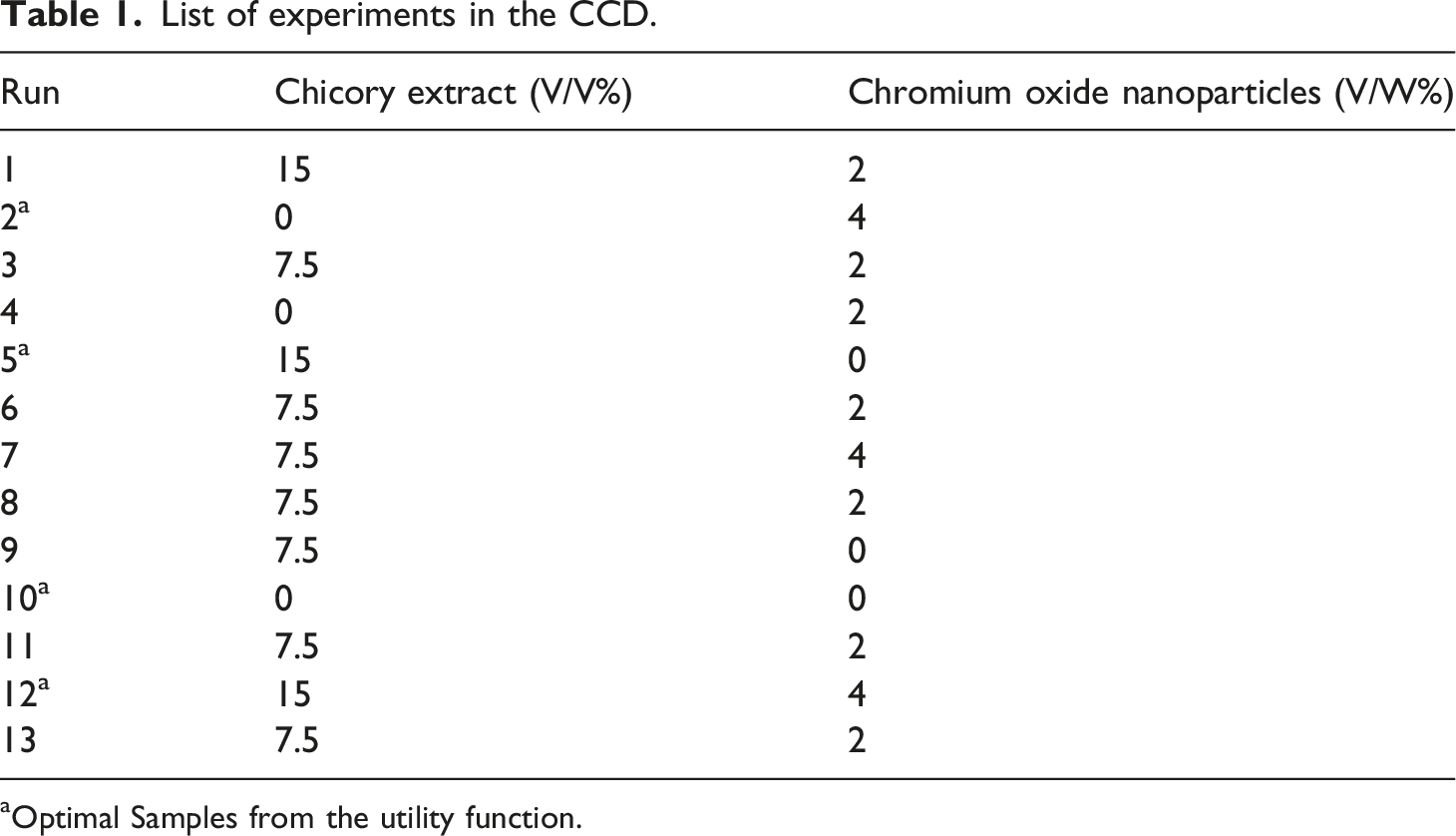
aOptimal Samples from the utility function.
Statistical analysis was performed using Design Expert 11 software. Three-dimensional shapes of this design (response surface curves) were drawn to examine the relationship between the response and the independent variables. A second-order polynomial model (Equation. (8)) was used to predict each response:
Following data analysis, the optimal films were determined using the desirability function method and their structural properties including SEM, DSC, FTIR and mechanical properties were investigated.
Results and discussion
Characterization of nanobiocomposite films
Thickness
According to the results of statistical analysis, the individual and interaction effect of the studied factors on the thickness of the produced active films were significant (P ≤ 0.05). As shown in Figure 1(a), the highest thickness was observed in samples containing the highest concentrations of both chromium oxide nanoparticles and chicory extract. This increase in thickness can be attributed to a higher overall solids content, effective dispersion of the extract and nanoparticles within the biopolymer matrix, and the formation of strong electrostatic interactions between the biopolymer network and these incorporated factors.34,35 Similar results have been reported by Ahmad et al. (2024), by increasing the levels of pomegranate peel extract in a film based on carboxymethyl cellulose/gelatin
36
and Bahar et al. (2023), by adding zinc oxide nanoparticles in an edible film based on gelatin/chitosan.
37
Effect of variables on thickness (a) and moisture; (b) and solubility; (c) of films.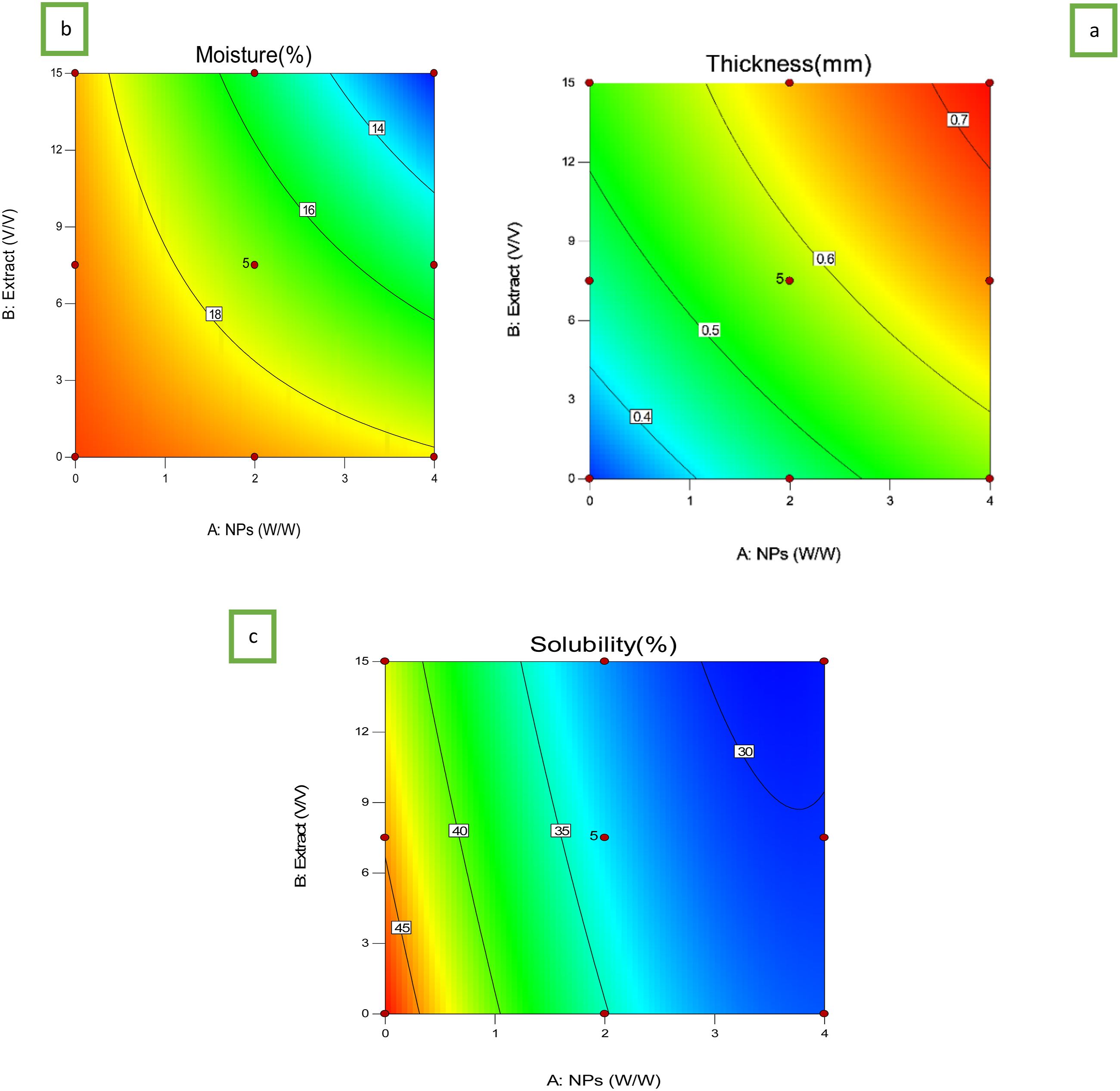
Moisture content and water solubility
According to the results of the statistical analysis, both the individual and interaction effects of chicory extract and chromium oxide nanoparticles on the moisture content and water solubility of the films were significant (P ≤ 0.05). As shown in Figure 1(b) and (c), increasing the levels of chicory extract and chromium oxide nanoparticles led to a significant decrease in both moisture content and water solubility (P ≤ 0.05). The lowest moisture content and solubility were observed in samples containing the highest concentrations of these additives. Pectin, a hydrophilic polysaccharide, typically absorbs moisture; however, the presence of specific compounds in chicory extract such as inulin (a prebiotic fiber), may alter the film structure.Additionally, phenolic compounds in chicory extract can form strong hydrogen bonds with pectin, creating a more tightly packed polymer network, which reduces water absorption. In other words, plant extracts such as chicory can lead to the formation of small holes by reducing the porosity in the film structure, thereby limiting moisture transfer. 38 Similarly, chromium oxide nanoparticles contribute to film densification by forming hydrogen bonds and occupying spaces between pectin chains, resulting in a more compact structure with lower porosity. This structural change decreases water vapor permeability and reduces both moisture content and solubility. 39 These findings are supported by previous studies. Charles-Rodrígue et al. (2020) reported similar reductions in moisture and solubility upon adding phenolic extract from Rhus microphylla fruit to an edible film based on chia seed mucilage. 40 Biswas et al. (2023) observed comparable effects when incorporating ZnO nanoparticles into an edible film composed of carboxymethyl cellulose, taro mucilage, and black cumin seed oil. 41 Further similar results have been reported by Gniewosz et al. (2022), who added propolis extract to a pullulan-based edible film, 42 and by Marandi et al. (2022), who incorporated copper oxide nanoparticles and Acanthopanax senticosus essential oil into a zein-based film. 39
Color Indexes of films
Color is also one of the most important characteristics of an edible film, playing an important role in its appearance and marketability.
According to the Figure 2, with increasing of chromium oxide nanoparticles levels, the a*, b*, yellowness index of samples increased and L* and whiteness index decreased (P ≤ 0.05). Based on studies and investigations, the cause of color changes in edible film depends on the type of compounds used in the formulation of the produced film and also the concentration used. Similar results have been reported regarding the addition of ZnO nanoparticles in edible films based on carboxymethyl cellulose, taro mucilage and black cumin seed oil by Biswas et al. (2023)
41
and the addition of CuO and TiO2 nanoparticles in edible films based on soy protein isolate by Roufegarinejad (2022).
43
In contrast, the individual effect of chicory extract on all color parameters was not significant (p > 0.05) within the tested range (0–15%). Furthermore, no significant interaction between chicory extract and Cr2O3 nanoparticles was detected (p > 0.05), indicating that the presence of chicory extract did not alter the color impact of the nanoparticles. Counterplot of the effect of chicory extract and chromium oxide nanoparticles on the color parameters of pectin-based edible film.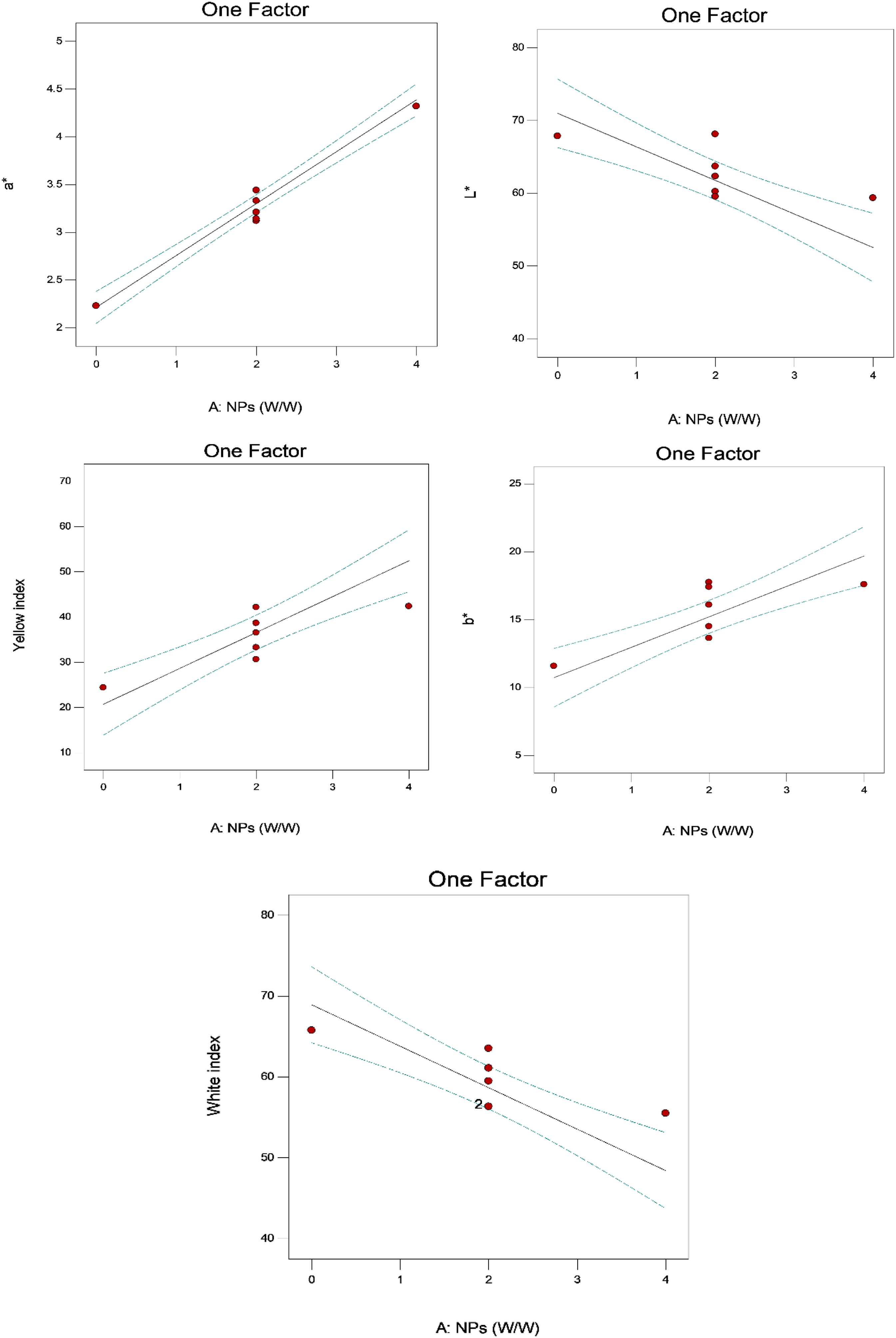
Mechanical Properties
Tensile strength of films (mean ± SD).
Differential scanning calorimetry (DSC)
According to Figure 3, in the pectin-based film, an endothermic peak was observed in the range of 90–100°C, which can be attributed to the water exit from the polymer and the loss of moisture. Another endothermic peak was observed in the range of 160–170°C, which indicates the temperature at which the pectin polymer chains become more flexible and the structure changes from a glassy state to a rubbery state (glass transition temperature, Tg); also, another endothermic peak was observed in the temperature range of 220–230°C, which is related to the temperature of pectin structure degradation. DSC images of films. (a) pure pectin film; (b) pectin film containing 15% chicory extract; (c) pectin film containing 4% chromium oxide nanoparticles and (d) pectin film containing 15% chicory extract and 4% chromium oxide nanoparticles.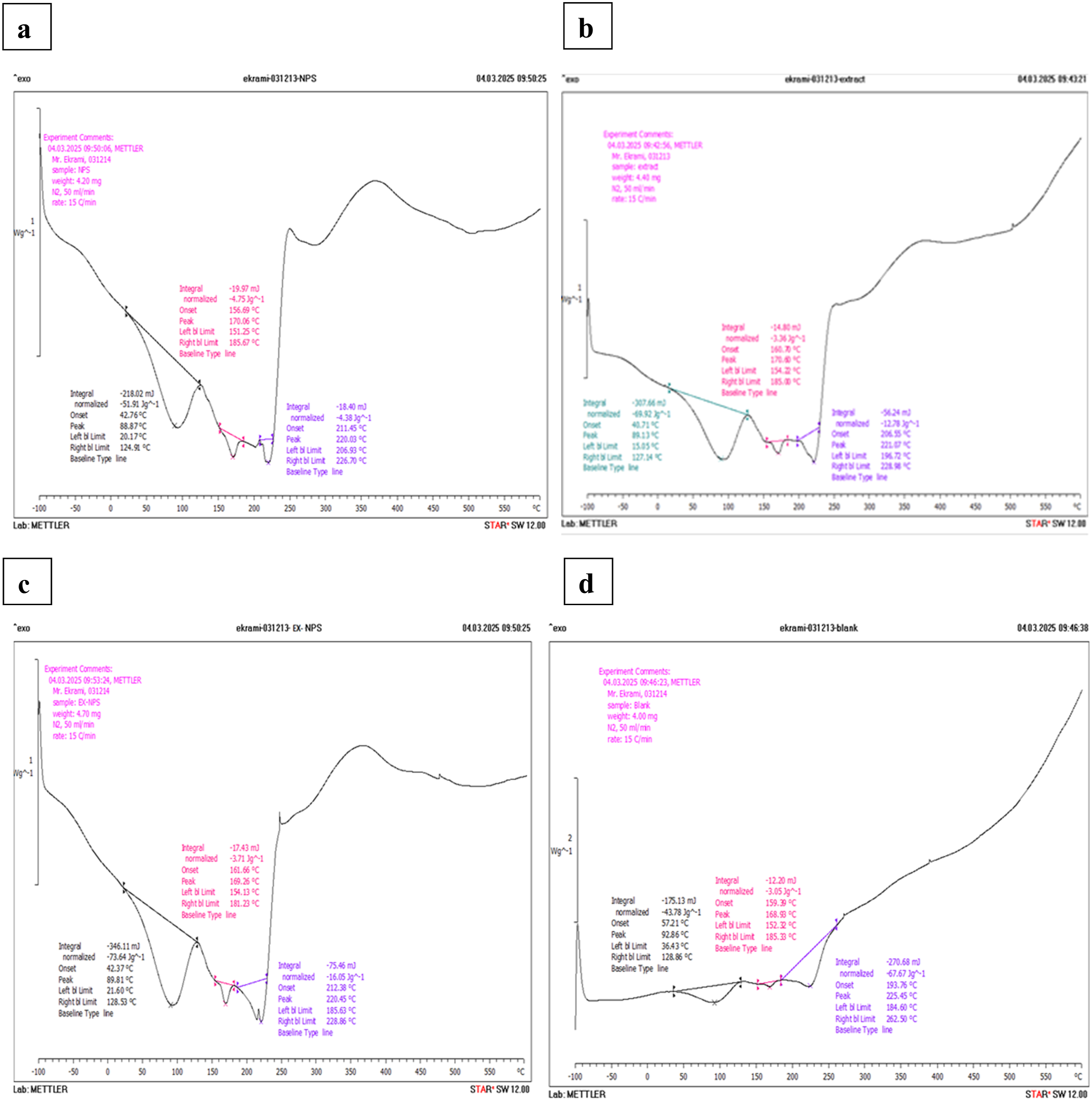
Increasing 15% chicory extract, 4% chromium oxide nanoparticles (both alone and in combination) led to increased intensity of all three endothermic peaks (Figure 3). This suggests stronger intermolecular interactions and increased crystallinity within the polymer matrix. These compounds may act as nucleating agents, promoting a more regular film structure through physical bonds. Furthermore, the enhanced peak intensity indicates that more energy is required for heat transfer during the formation of the edible film.
Scanning electron microscope (SEM)
SEM images of the optimized active edible films are presented in Figure 4. According to Figure 4(a), the pure active edible film based on pectin was observed to have a relatively uniform network, protrusions and fine particles, and few surface cracks in terms of morphology, which could be due to the possible aggregation of pectin in the film matrix.
32
By adding 15% chicory extract (Figure 4(b)), the extract particles uniformly covered the film surface and led to strong molecular interactions between the phenolic compounds of the extract and the biopolymer network, closing the surface cracks, increasing the thickness, and reducing the permeability to water vapor in this film.
45
Also, by adding 4% chromium oxide nanoparticles (4-c), according to the addition of the extract, the thickness increased, the permeability to water vapor decreased, and the surface cracks closed, but the surface of the produced film became rough and rough.41,46 Finally, according to Figure 4(d) (combination of both factors studied), the film surface is relatively coherent and rough; cracks are not visible and the extract and nanoparticles are well dispersed in the polymer matrix, indicating good mixing of pectin, extract and nanoparticles. Similar results have been reported by Moura-Alves et al. (2023), with the addition of olive leaf and bay leaf extracts in an edible film based on sodium alginate,
47
and Motelica et al. (2021), with the addition of ZnO nanoparticles in an edible film based on alginate.
48
SEM images of the films. (a) pure pectin film; (b) pectin film containing 15% chicory extract; (c) pectin film containing 4% chromium oxide nanoparticles and (d) pectin film containing 15% chicory extract and 4% chromium oxide nanoparticles.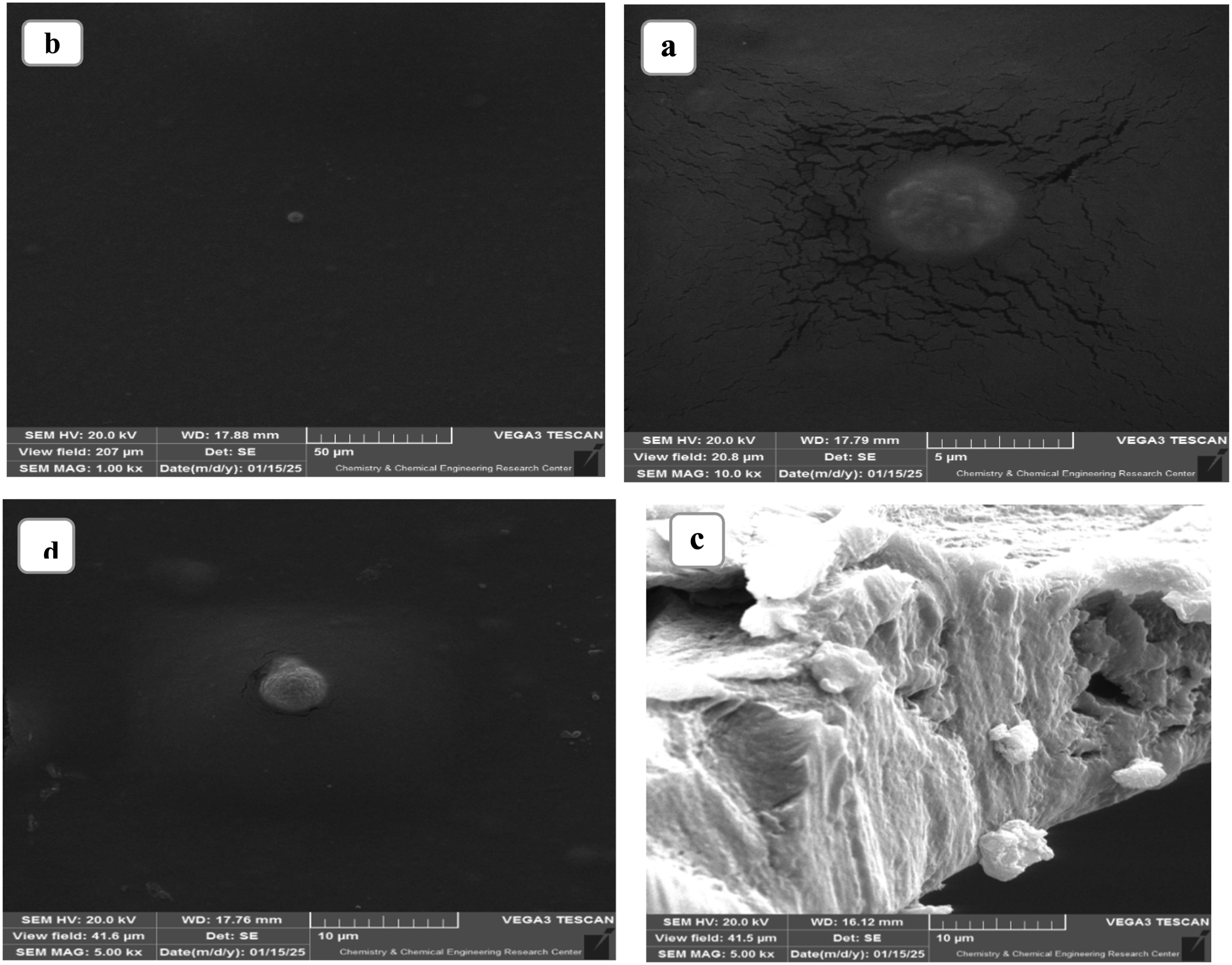
Results FTIR of pectin and films
FTIR spectrum is a method for identifying functional groups present in polymer chains. According to the results of FTIR spectrum (Figure 5(a)), the significant peak at 3254 cm−1 represents the stretching vibrations of OH and NH groups in the pectin structure.
49
Another peak at 12926 cm−1 represents the stretching vibrations of -CH2, -CH3 and -CH2.
33
The absorption peak at about 1739 cm−1, 1602 cm−1 and 1223-1426 cm−1 represents the stretching and strong vibration of carboxyl (C = O) groups in pectin.
50
The peak at about 1009-1145 cm−1 is due to the presence of C-O-H bonds and C-O vibrational bonds of carboxylic acid and ester groups.
51
The visible peak in the range of 681 to 917 cm−1 is also due to the presence of C = C and C-H bonds.
52
FTIR images of pectin extracted from apple pomace (a) and the produced active film: a: pure pectin film; (b) pectin film containing 15% chicory extract; (c) pectin film containing 4% chromium oxide nanoparticles and (d) pectin film containing 15% chicory extract and 4% chromium oxide nanoparticles.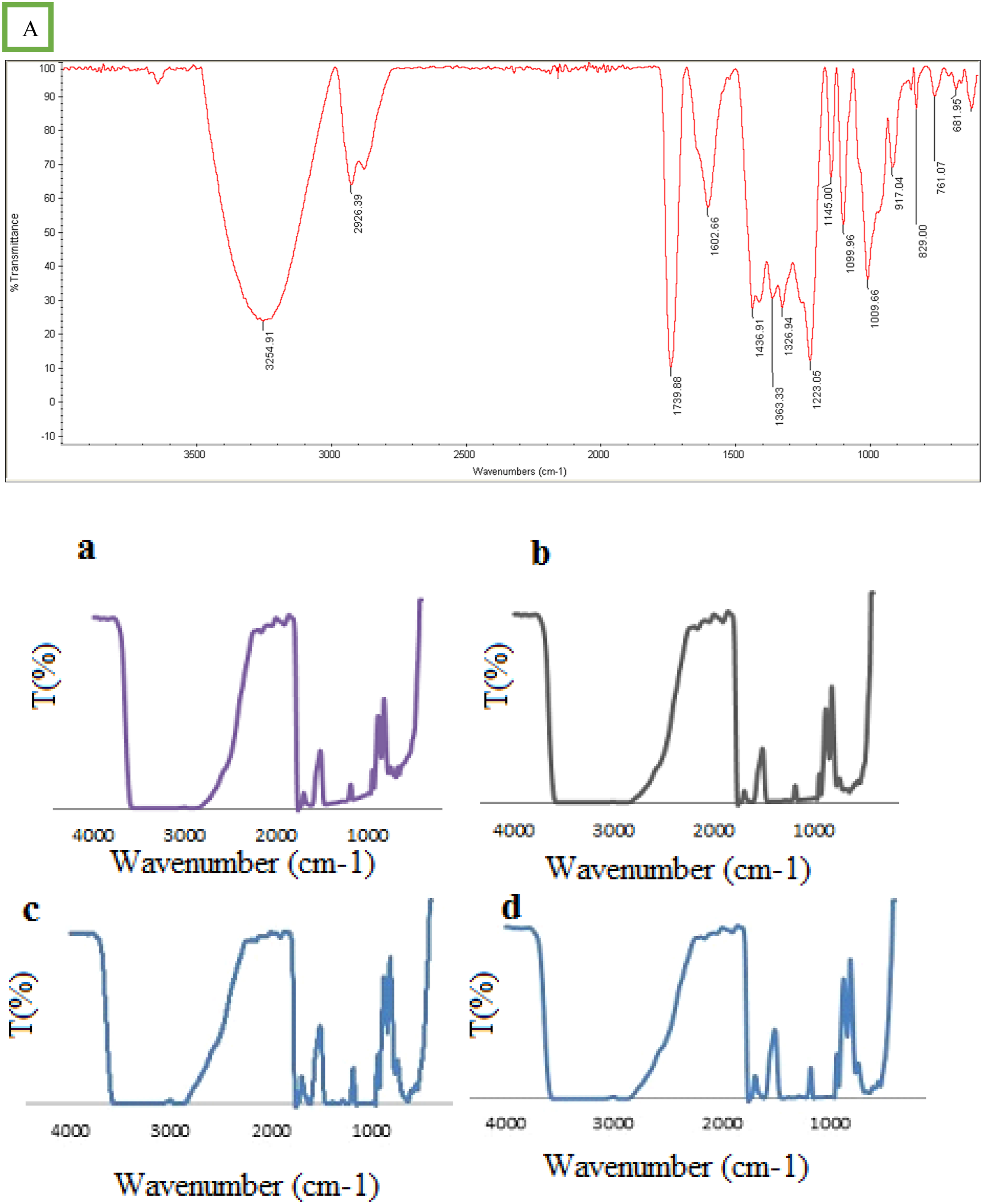
The same results obtained in pure pectin film (Figure 2(a)). The presence of a broad peak in this range indicates the presence of hydrogen bonds between the polysaccharide chains of pectin. This feature strongly affects the mechanical and hydrophilic properties of pectin films.
Based on the spectra observed in 5–b and 5–c, with the addition of the concentrations of both 15% chicory extract and 4% chromium oxide nanoparticles, a slight increase in the intensity of the peaks and the range and position of the peaks was observed, which indicates a strong interaction between the phenolic compounds of the extract and nanoparticles with the pectin biopolymer matrix.53,54
Also, based on the spectrum of 5–d, the combined use of 15% extract and 4% nanoparticles increased the intensity of the peaks, which indicates a strong electrostatic interaction of the factors used together. Similar results were presented by Rachtanapun et al. (2021) with the addition of curcumin extract in a chitosan-based edible film. 55 The results of the study by Vafaei et al. (2025) with the addition of spermidine nanoparticles, zinc oxide, and graphene oxide in a gelatin-chitosan-based edible film 56 were also consistent with the present study.
Conclusion
A new edible film based on pectin extracted from apple pomace was developed by incorporating chromium oxide nanoparticles and chicory extract. The effects of these components on the film’s characteristics were evaluated using response surface methodology and central composite design. The results indicated that increasing the levels of chromium oxide nanoparticles and chicory extract led to decreases in moisture content, solubility, and tensile strength, while film thickness increased. Additionally, higher nanoparticle levels resulted in increased a*, b*, and yellowness index values, whereas the L* and whiteness index decreased. Instrumental analysis confirmed a homogeneous distribution of nanoparticles and strong molecular interactions within the biopolymer matrix. Overall, the incorporation of both components successfully modified key physicochemical properties of the pectin film. These improvements, particularly in terms of reduced moisture affinity and enhanced structural integrity, establish a promising foundation for the further development of this material. Future studies focusing on migration, specific bioactive properties (e.g., antioxidant/antimicrobial activity), and performance in real-food systems are necessary to confirm its potential and efficacy as an active packaging material for shelf-life extension.
Footnotes
Declaration of conflicting interests
The authors declared no potential conflicts of interest with respect to the research, authorship, and/or publication of this article.
Funding
The authors received no financial support for the research, authorship, and/or publication of this article.
