






Abstract
In this study, we have prepared a series of composite materials by using a catechol-based phthalonitrile resin as the matrix, and hexagonal boron nitride (h-BN) nanoparticles as the fillers to improve the toughness and thermal conductivity of the matrix. The surface of nanoparticles was modified with the silane coupling agent (KH550) under mild conditions to enhance the interfacial compatibility, which could be confirmed by Fourier transform infrared spectroscopy and thermogravimetric analysis. The thermal conductivities of composites reached 0.79 W (m·K)−1, which was 3.6 times as much as that of the neat resin, and conformed to the Cheng-Vachon model by fitting the measured values into several heat conduction models. The three-point bending test showed that the toughness and strength were improved at the same time and toughening mechanism was explored by using scanning electron microscope. The h-BN nanoparticles can not only improve the thermal conductivity of the resin but also enhance its mechanical properties.
Introduction
Polyphthalonitrile is a novel class of high-performance thermosetting resin prepared from the addition-type polymerization between adjacent nitrile groups on the phthalonitrile monomer. 1 –3 In recent years, polyphthalonitrile materials have attracted more and more attention for its excellent thermal and thermo-oxidative stability, moisture resistance, flame retardancy, and mechanical properties. 4 –8 However, the polyphthalonitrile resin also has some disadvantages of high brittleness and low intrinsic thermal conductivity, which greatly limit its applications. New resins have been synthesized from the point of view of molecular design to overcome the shortcomings of polyphthalonitrile. For instance, Laskoski et al. introduced the flexible segment to the main chain to improve the toughness of the resin. 9 –11
The composite is expected to not only maintain some excellent properties of the matrix material, but also make up the defects of the material. So it is important and highly feasible to selectively add inorganic fillers to prepare nanocomposites. The characteristics of small particle size, large specific surface area, and good insulativity provide better conditions for improving the properties of polymer matrix. Some common inorganic nanomaterials have been used in the preparation of composite materials, such as SiO2, Al2O3, CaCO3, and boron nitride (BN). 12 –15
The BN with hexagonal lattices (h-BN) possesses high thermal conductivity (240 W (m.K)−1) and excellent thermal stability. Therefore, it is an ideal nano-filling material for composites. The elements of h-BN, boron, and nitrogen are all sp3 hybridization which makes the arrangement of the atoms very similar to the carbon materials represented by graphene. Zhi et al. successfully synthesized BN nanotubes and stripped off BN nanosheets to prepared nanocomposites and achieved good results. 16 –18 Nevertheless, the preparation of BN nanotubes and nanosheets is complex, and there are also limits of high cost, harsh conditions, and low yield.
Another key factor affecting the properties of nanocomposites is the compatibility between the matrix and the filler. Hwang et al. reported that the functionalization of filler surface provides a bridge for interaction between filler and organic matrix, which not only improves its adhesion with polymer but also contributes to the dispersion of the filler in the matrix. 19
In this study, polyphthalonitrile/BN nanocomposites were prepared by using catechol-based phthalonitrile resin as matrix and h-BN nanoparticles as filler materials for the first time to improve the toughness and thermal conductivity. 7,20 The silane coupling agent (KH550) was used to modify the surface of BN to enhance the repulsive force between particles and to enhance adhesion with the matrix, and the thermal conductivity mechanism of nanocomposites was investigated.
Experimental
Materials
4-Nitrophthalonitrile (NPN, >98.0%) was purchased from Wuhan Chifei Chemical Corporation (China). Potassium carbonate (K2CO3, >99.0%) was purchased from Tianjin Fengchuan Chemical Corporation (China). N,N′-dimethylformamide (DMF, >99.5%; with molecular sieves to remove water) and anhydrous ethanol (>99%) were supplied by Tianjin Fuchen Co., Ltd (China). BN nanoparticles (BN, 30–50 nm, >99.9%) were obtained from Shanghai Chaowei Nano Technology Co., Ltd (China). 3-Aminopropyltrimethoxysilane (KH550, >95%) was purchased from Tianjin No.1 Chemical Reagent Factory (China). Hydrochloric acid (37%, solution in water) was obtained from Beijing Innochem Technology Co., Ltd (China). 4,4′-Diaminodiphenyl ether (ODA, >98.0%) was supplied by Shanghai Dibai Chemical Technology Co., Ltd (China). Pyrocatechol (>99.0%) was supplied by Tianjin Hengshan Chemical Technology Co., Ltd (China). All the solvents were used without further purification except DMF.
Synthesis of 1,2-bis(3,4-dicyanophenoxy)benzene
The 1,2-bis(3,4-dicyanophenoxy)benzene monomer (BDB) was synthesized according to the literature. 20 The synthetic steps are as follows and shown in Figure 1. Pyrocatechol (10 g, 90.82 mmol), K2CO3 (18.83 g, 136.23 mmol), and dry DMF (100 mL) were added to a 250-mL three-necked flask equipped with a reflux condenser. The mixture was stirred at 85°C for 30 min. Then, NPN (31.45 g, 18.16 mmol) was added in the flask slowly and the mixture was stirred for further 6 h under nitrogen (N2) atmosphere. Finally, the dark brown product was poured into 500 mL deionized water to precipitate the target material after cooling to ambient temperature. The sediment was washed repeatedly by suction filtration with plenty of deionized water until the filtrate became colorless. The final product was dried at 70°C in a vacuum oven for 24 h.

Synthesis of BDB monomer. BDB: 1,2-bis(3,4-dicyanophenoxy)benzene monomer.
Yield: 93%. Proton nuclear magnetic resonance (1H NMR) (400 MHz, deuterated dimethyl sulfoxide (DMSO-d6; δ): 8.054–8.033 (d, J = 8.82 Hz, 2 H), 7.771–7.764 (s, 2 H), 7.471–7.449 (m, 4 H), 7.383–7.355 (d, J = 8.76 Hz, 2 H).
Surface modification of BN nanoparticle
BN nanoparticles were dried at 110°C for 36 h before surface modification. The modification mechanism is shown in Figure 2. A kind of ternary solution was made by ethanol, deionized water, and KH550 (VC2H5 OH: VH2 O = 9:1, MKH550/MBN > 2 wt%) in a round flask. The pH value of this solution was modulated to 4–5 by diluted hydrochloric acid (0.1 mol·L−1) afterwards. Subsequently, the BN nanoparticle was dispersed into the liquid mentioned above by violent agitation and high power ultrasonic condition for 2 h. The mixture was magnetically stirred at 35°C for 6 h. After that, the flask was kept still at room temperature for 20 h. The sediment was collected by suction filtration and washed 5–6 times by high-speed centrifuge (12,000 r·min−1) with anhydrous alcohol. The white solid at the bottom of the centrifuge tube was gathered and dried under vacuum at 80°C for 48 h in order to remove residual solvent molecules. When the above steps were done, surface modified BN nanoparticles (BN-KH550) had been prepared. BN-KH550 was grinded fully in the agate mortar before the preparation of composites.

The schematic diagram of silane coupling of the BN nanoparticles. BN: boron nitride.
Preparation of P(BDB)/BN nanocomposites
The preparation process was carried out in two steps: (a) aqueous phase blending and (b) curing molding. Aqueous phase blending means that BN nanoparticles and phthalonitrile monomers have to be mixed in deionized water. The specific steps were as follows: A kind of mixture made by deionized water (1.2 L) and BN nanoparticles was stirred violently under the condition of high power ultrasound for 2 h in a 2 L beaker. Phthalonitrile monomers (BDB) were added later into the beaker meanwhile the ratios of the two kinds of solid were 1:0, 1:0.2, 1:0.3, 1:0.4, and 1:0.5 (MBDB: MBN, ratios of weight), respectively. The compound was treated like the previous steps for another 6 h. Then, the compound, turned to be a sort of light brown mash, was filtrated and dried under vacuum to remove all the moisture. The intermediate product here and ODA curing agent were thoroughly blended at a weight ratio of 100:5. The final compound was transferred into an aluminum mold and degassed in a vacuum oven at 200°C for 20 min and then postcured at 220°C for 2 h, 240°C for 2 h, 260°C for 2 h, 280°C for 2 h, 300°C for 2 h, and 320°C for 6 h in a muffle furnace. 21 –25 Consequently, the completely cured P(BDB)/BN nanocomposites were obtained.
Characterization
Fourier transform infrared (FTIR) spectra were taken by using a Bruker Vector 22 FTIR spectrophotometer (Germany) in potassium bromide (KBr) pellets between 4000 cm−1 and 400 cm−1 in air. 1H NMR spectra were measured by a Bruker AV400 NMR spectrometer (Billerica, Massachusetts, USA) at a proton frequency of 400 MHz and the corresponding proton frequency using DMSO-d6 as solvent. Dynamic mechanical analysis (DMA) was performed on a DMA Q800 (TA Instruments (New Castle, USA)) in fixed frequency mode at a frequency of 1 Hz with a heating rate of 5°C min−1 from 35 to 400°C. Flexural tests (three-point bending mode) were carried out by using a SANS CMT6104 series desktop electromechanical universal testing machine (China) at the crosshead speed of 2 mm min−1 with a specimen size of about 50 × 10 × 2 mm3 at 23°C. The morphology of fracture surfaces of the P(BDB)/BN nanocomposites was characterized with a scanning electron microscope (SEM; Nova Nano SEM450; FEI (Oregon State, USA)) operating at 10 kV. The fractured surfaces of composites were sputtered with a layer of gold before scanning to avoid charge accumulation. Thermogravimetric analysis (TGA) was obtained using TA Instruments Q600 thermogravimetric analyzer at a heating rate of 10°C min−1 from 40 to 1000°C under nitrogen with flow rate of 100 mL min-1. Thermal conductivities of P(BDB)/BN nanocomposites were measured by TC 3000 Series Thermal Conductivity Apparatus (China) based on the transient hot-wire technique at room temperature with a specimen size of about 50 × 40 × 3 mm3. The sensor was clamped by two identical plate-like samples and pressed under a 500 g weight.
Results and discussion
Surface modification on BN nanoparticles
It is effective to use FTIR spectrophotometer for characterizing the grafting groups on the surface of the material. Figure 3 shows the FTIR spectra of modified and raw BN nanoparticles. As shown, the characteristic absorption peaks of BN appear at 1396 cm−1 and 805 cm−1 which should be ascribed to B–N stretching vibration and the out-of-plane bending of B–N–B, respectively. 26 For the curve of the raw BN, 3404 cm–1 is the hydroxyl absorption peaks of BN which is the base of surface modification, and the absorption at this position is the amino (–NH2) absorption peak of BN after the modification with KH550. 27

FTIR spectra of raw and silane surface modified BN nanoparticles. FTIR: Fourier transform infrared; BN: boron nitride.
New absorptions at 2974 cm − 1 and 1079 cm−1 are due to the stretching vibration of aliphatic C–H bond and Si–O. 28 Infrared spectra prove that KH550 had been successfully grafted onto the surface of BN. The surface grafting degree can be obtained by calculating the difference of two kinds of final weight loss rate between modified and raw BN through TGA as shown in Figure 4. The final weight loss rates of two kinds of BN are 0.58 wt% (BN-KH550) and 0.15 wt% (raw-BN), respectively, so the grafting rate is 0.43 wt%. It is further proved that the KH550 has been successfully grafted onto BN nanoparticles.
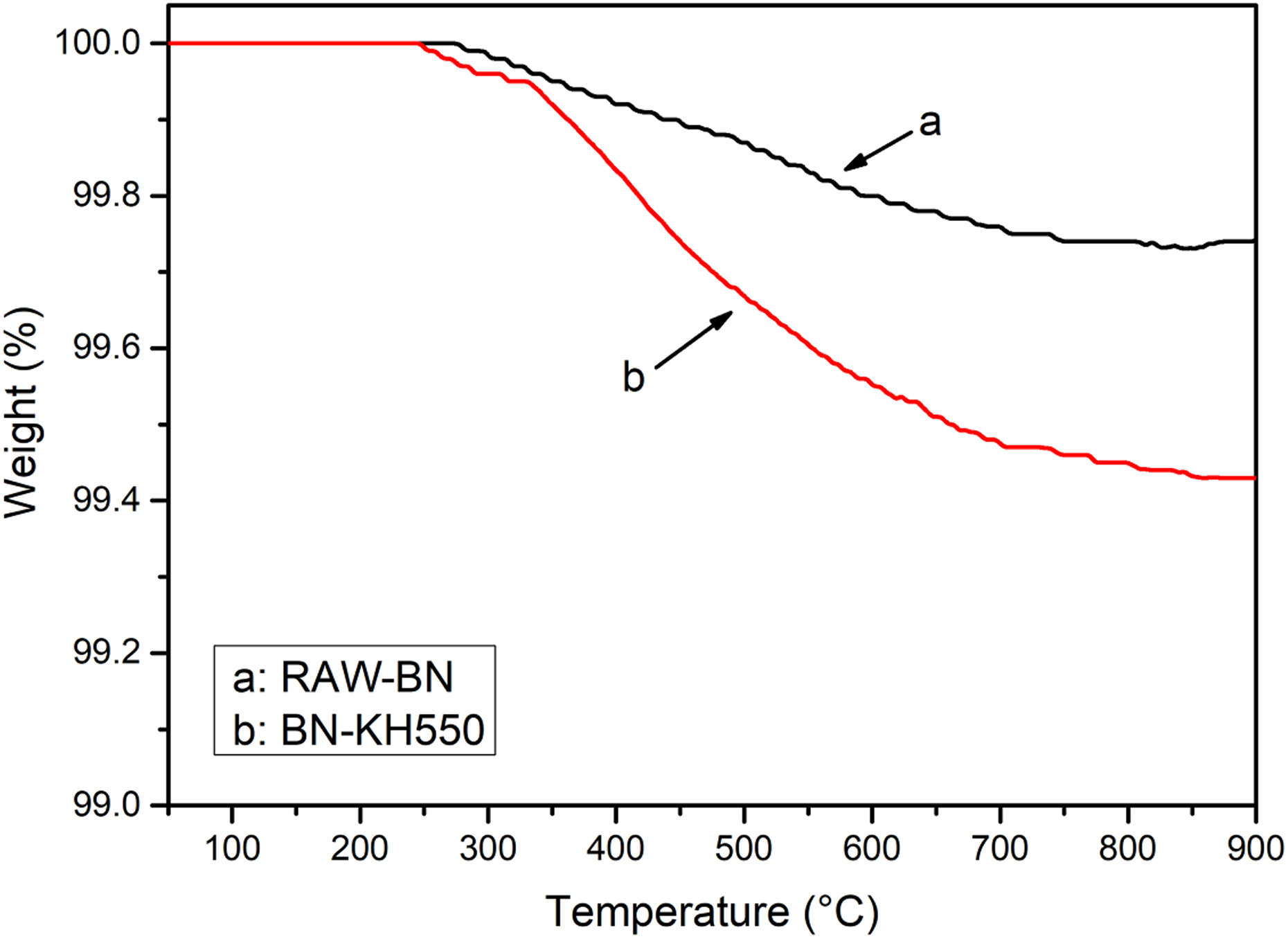
Thermal stability of raw and silane surface modified BN. BN: boron nitride.
Thermal conductivities
The thermal conductivities of the neat resin and composites were measured along the plane between two same plate-like samples and the results are depicted in Figure 5. The thermal conductivity of the neat resin is 0.22 W (m·K) −1, and it soars with the increase of the filling ratio of BN nanoparticles whether modified or not. The composite filled with the highest proportion of BN-KH550 shows the highest thermal conductivity (0.79 W (m·K)−1) which was 3.6 times as much as that of neat resin. The increase of thermal conductivity of composites can be attributed to more thermal conduction paths formed by BN nanoparticles compared with the neat resin. And the composite with modified BN exhibits higher thermal conductivity than that of raw BN as enhanced compatibility caused by more organic groups bonded on the surface of BN reducing the interface phonon scattering which can also improve the dispersion of BN in the resin. 29
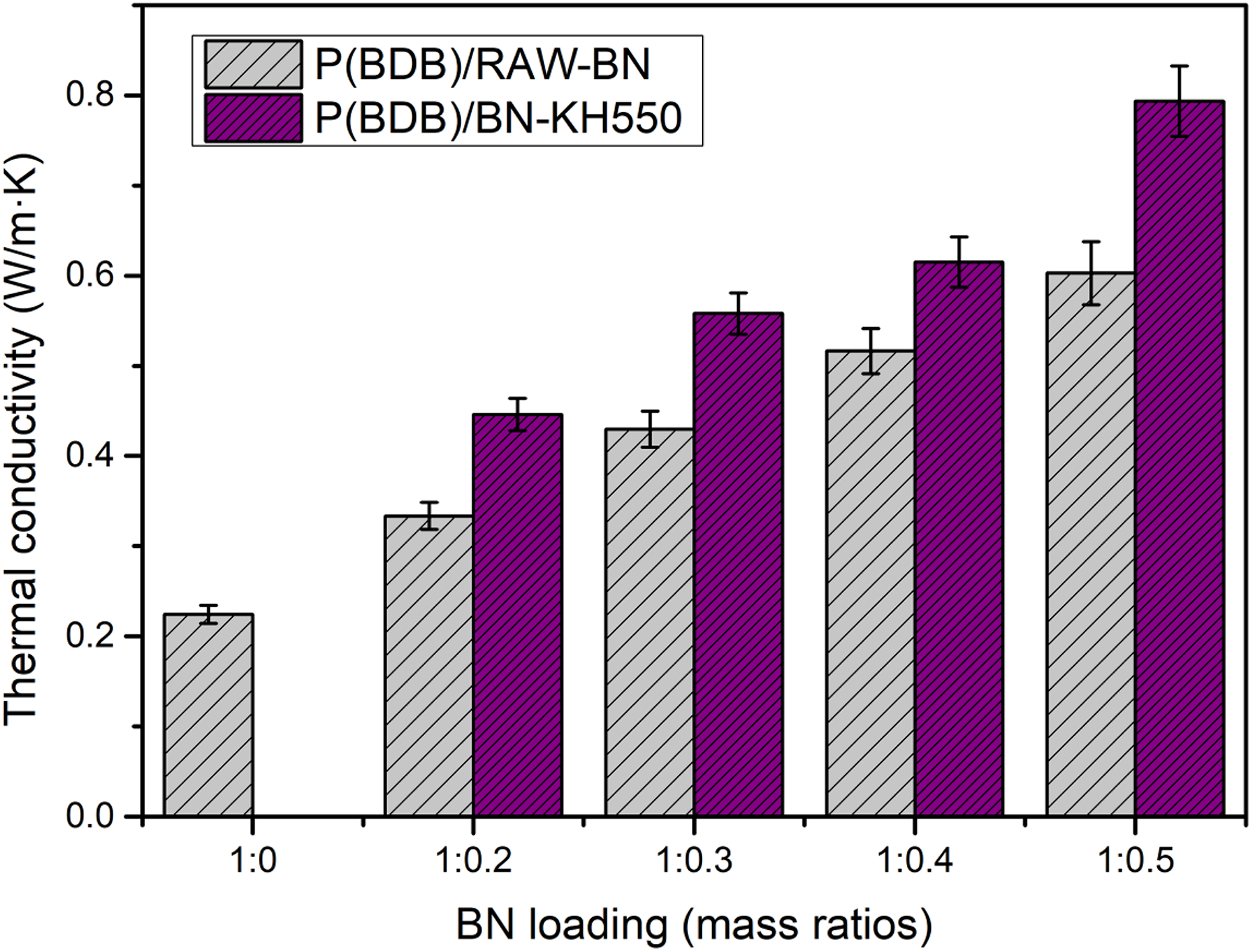
Thermal conductivity of the P(BDB) resin reinforced with different amounts of raw and modified nano-BN. BN: boron nitride.
Thermal conduction model
It is of great significance to fit the measured values into several heat conduction model formulas to match the most suitable one so as to explore the conduction mechanism. The matched model can be used in turn to calculate the thermal conductivity in different proportions which has important guiding significance for composite preparation. Although many models have been reported but the calculation results of some models are quite different in this work, such as Parallel and Series model, Bruggeman model,
30
and Hatta-Taya model.
31
The Maxwell-Eucken model
32
and Cheng-Vachon model
33
are two models closest to the trend of measured values. The former is a model established by Maxwell to calculate the electrical conductivity of composites with spherical fillers which was converted into a thermal conductivity formula by Eucken and is appropriate for the situations that the filled particles in the matrix are covered by polymer and the distribution is relatively sparse. The latter one which established by Cheng and Vachon assumed that the dispersed particles obeyed a parabolic distribution, while the parabolic distribution constant is a function of the volume fraction of the discontinuous phase. The formulas of the models are as follows: 1. Maxwell-Eucken model
where λ is the thermal conductivity of composite (W (m·K)−1), λp is the thermal conductivity of resin matrix (W (m·K)−1), λf is the thermal conductivity of BN nanoparticles (W (m·K) −1), and Vf is the volume fraction of BN particles in matrix (vol%). 2. Cheng-Vachon model
The volume fraction of BN in the composite can be calculated by the following formula:
where ρc and ρp are the densities of composite and pure resin (g cm−3), respectively, which have been measured by drainage method, and Wf is the mass fraction of BN in composite (wt%).
The relevant data were substituted into the two formulas above to obtain two sets of data which were made into a broken line graph (Figure 6) with the measured values in order to analyze the relationship between theoretical values and actual values more intuitively. As shown in Figure 6, the three curves are very close in the lower fill ratio (1:0.2 to 1:0.3, ratios of weight). However, when the BN ratio is higher than 1:0.3, a big gap emerges between the values of Maxwell-Eucken model and actual values. The calculated values of Cheng-Vachon model in different proportions are very close to the actual values and they are in agreement with the measured trends which indicate that the thermal conductivity of the composites conforms to the Cheng-Vachon model and the distribution of BN obeys Gauss distribution. 33
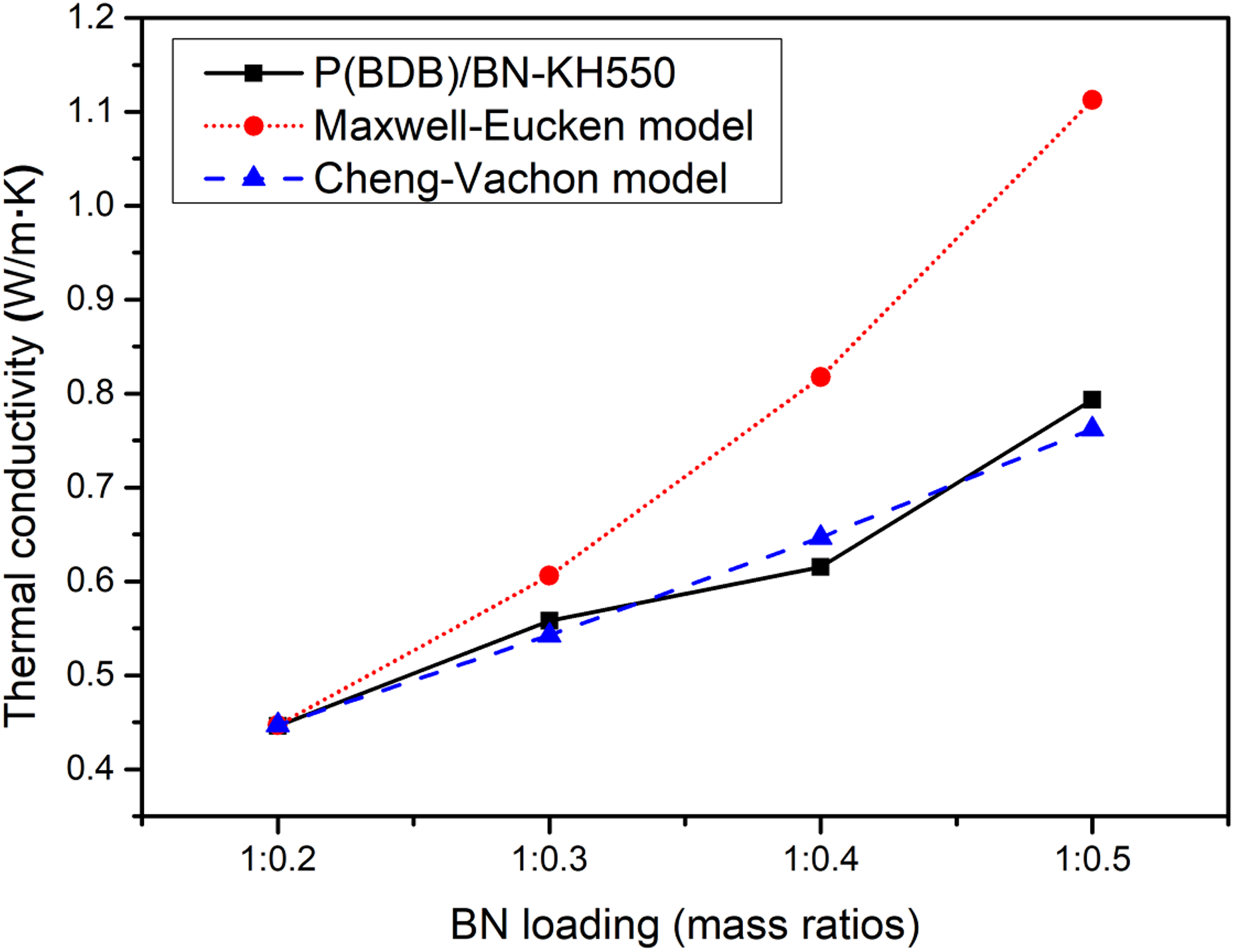
Tendencies of the calculated conductivity values of the heat conduction models and the measured values of P(BDB)/BN-KH550. BN: boron nitride.
Flexural properties
The process of preparing polymer/inorganic substance composites to improve thermal conductivity of materials always accompanies with changes in toughness and strength. Bending test (three-point bending test) is one of the basic methods for characterizing mechanical properties of materials under bending load. As shown in Figures 7 and 8, all the composites were reinforced by filling with nano-BN. The flexural modulus and strength of the composites increased by 2.4 GPa and 71.1 MPa when going from 1:0 to 1:0.5 (ratios of weight) respectively. At the same time, it can be seen obviously that the composites filled with raw BN exhibited some enhancements but lower than those prepared with treated BN at the same ratio. Combined with the results of thermal conductivity, it can be concluded that the surface modification of BN is beneficial to improve the thermal conductivity and mechanical properties simultaneously. Furthermore, it is also proved that the treatment of fillers is a vital step in the preparation of composite materials.
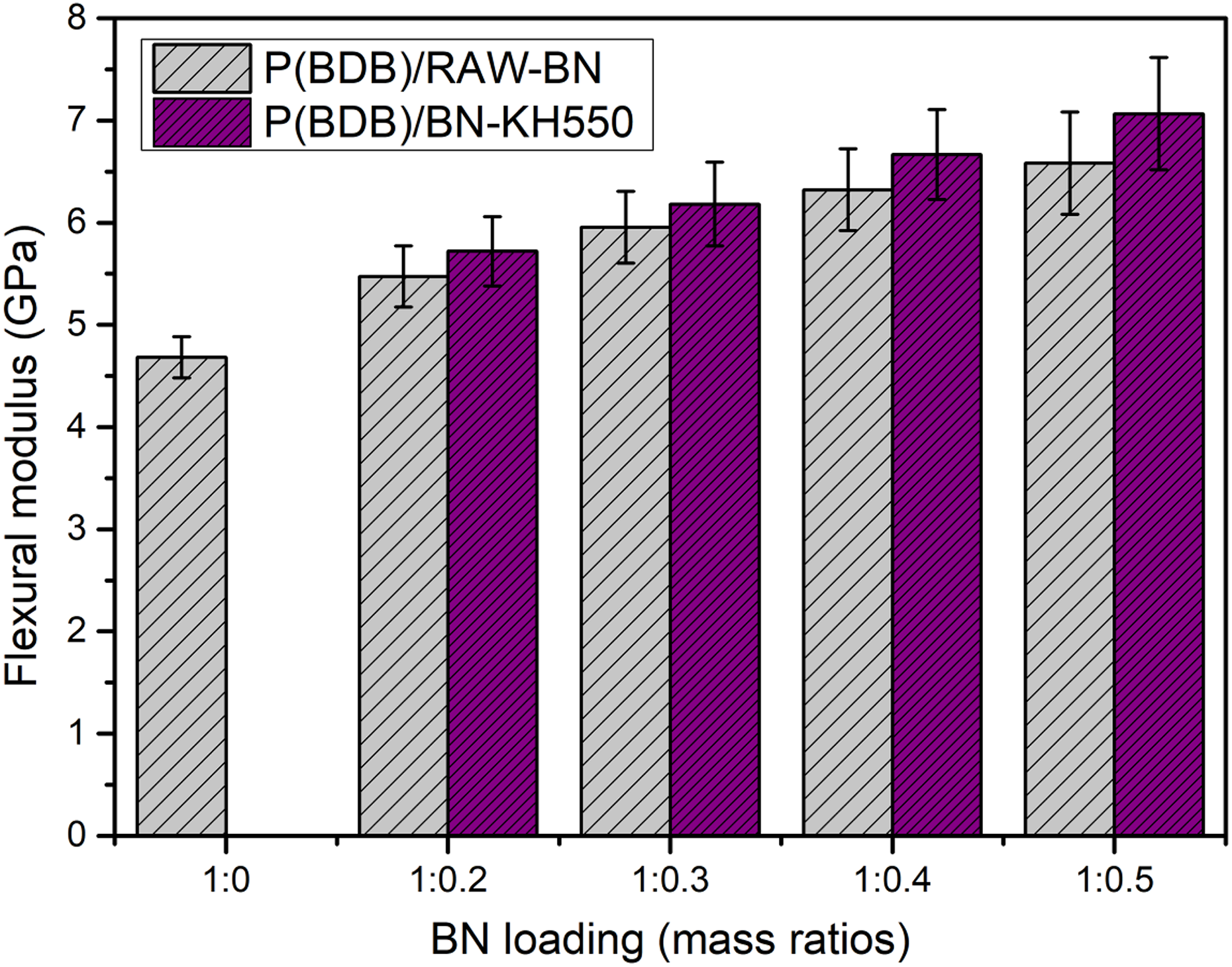
Flexural modulus of the P(BDB) resin and its nanocomposites of raw and modified BN. BN: boron nitride.
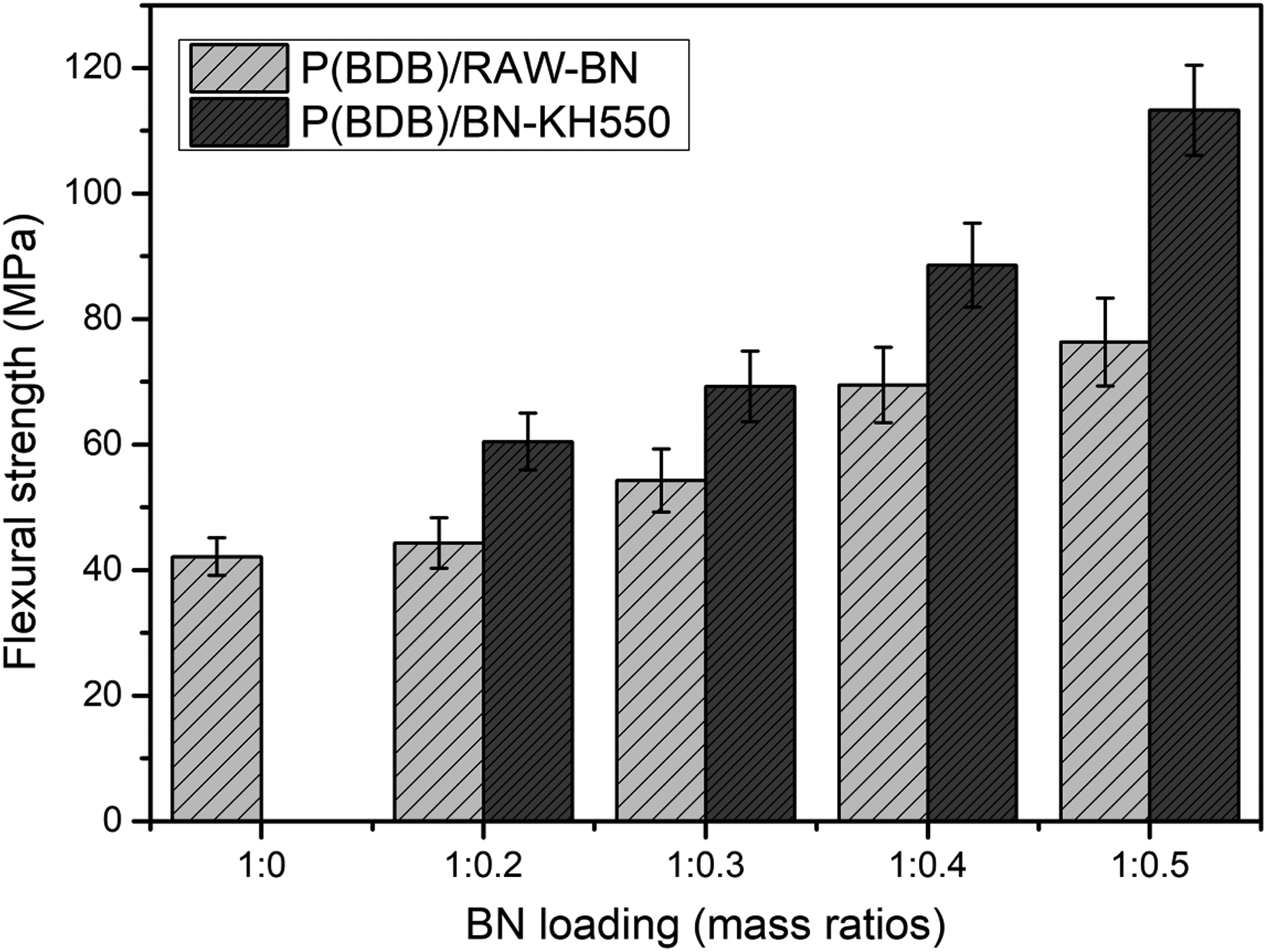
Flexural strength of the P(BDB) resin and its nanocomposites of raw and modified BN. BN: boron nitride.
The mechanism of changes in mechanical properties of materials can be inferred by photographs in fracture surface taken by SEM. The microstructure morphology reflects the real state of materials intuitively after fracture, thus the mechanism of enhancing the strength of the material by nano-BN can be investigated. Figure 9(a) is fracture surface of the pure resin showing a smooth and homogeneous state and cracks are almost parallel indicating the brittleness of phthalonitrile resin. Figure 9(b), (d), (f), and (h) are the SEM photos of composites filled with raw BN, and the filling ratios are 1:0.2, 1:0.3, 1:0.4, and 1:0.5 (ratios of weight). As shown in these pictures, the roughness of the composite sections increases significantly with the increase of the filling ratios compared with that of the pure resin.
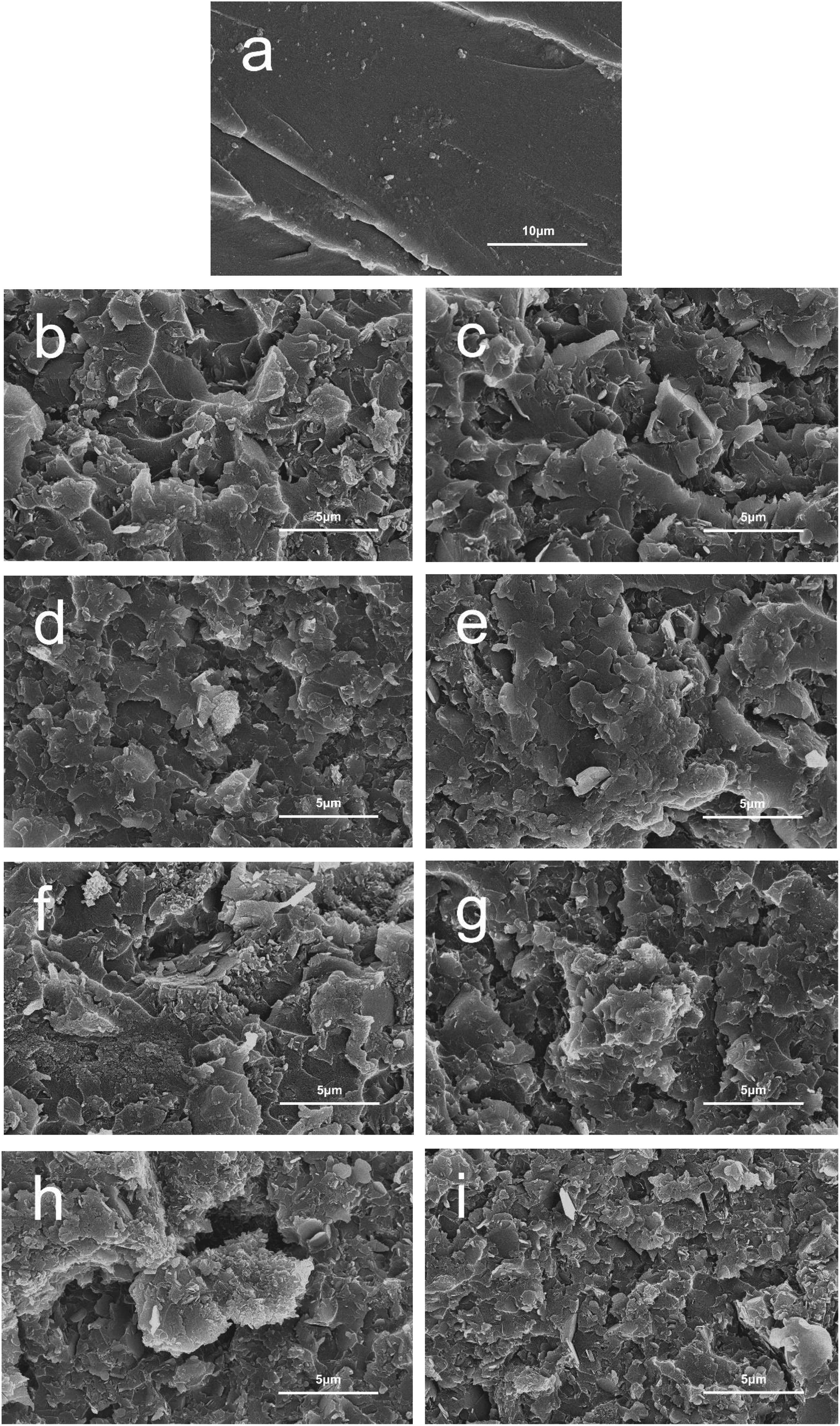
SEM micrographs of fracture surface of P(BDB)/BN nanocomposites at various ratios of weight: (a) 1:0; (b), (d), (f), and (h) 1:0.2–1:0.5, P(BDB): raw-BN; (c), (e), (g), and (i) 1:0.2–1:0.5, P(BDB): BN-KH550. SEM: scanning electron microscope; BN: boron nitride.
When a crack hits a BN nanoparticle in the matrix, it will deviate from the original orientation and may split into more small cracks. As the filling amount of BN increases, the probability of deflection and splitting increases while the energy is continuously consumed step by step in the process. The energy required for fracture is also higher correspondingly. 34,35 This is why nano-BN enhances the toughness and strength of the resin.
Thermal stabilities
The presence of inorganic fillers also has an obvious effect on the thermal stability of composites. The TGA curves of pure P(BDB) resin, P(BDB)/raw-BN, and P(BDB)/BN-KH550 composites were performed in Figures 10 and 11. The composites exhibit different thermal stability at different temperatures from 40 to 1000°C at 10°C min−1 and the detailed results about initial decomposition temperature (Td5%, Td10%) and char yield are shown in Table 1. According to the curves, the thermal decomposition trend of the composites is basically consistent with that of the pure polyphthalonitrile resin, indicating that the addition of BN does not change the thermal decomposition mechanism of the matrix. For the pure resin, the temperatures of weight loss of 5 wt% (Td5%) and 10 wt% (Td10%) are 469 and 520°C, respectively. Due to the presence of nano-BN, the Td5% and Td10% of the composites increased to 501 and 552°C superlatively, which both went up by 32°C, compared to the pure resin. This phenomenon proves that the existence of BN can postpone the pyrolysis process of the matrix so as to improve the thermal stability of materials.
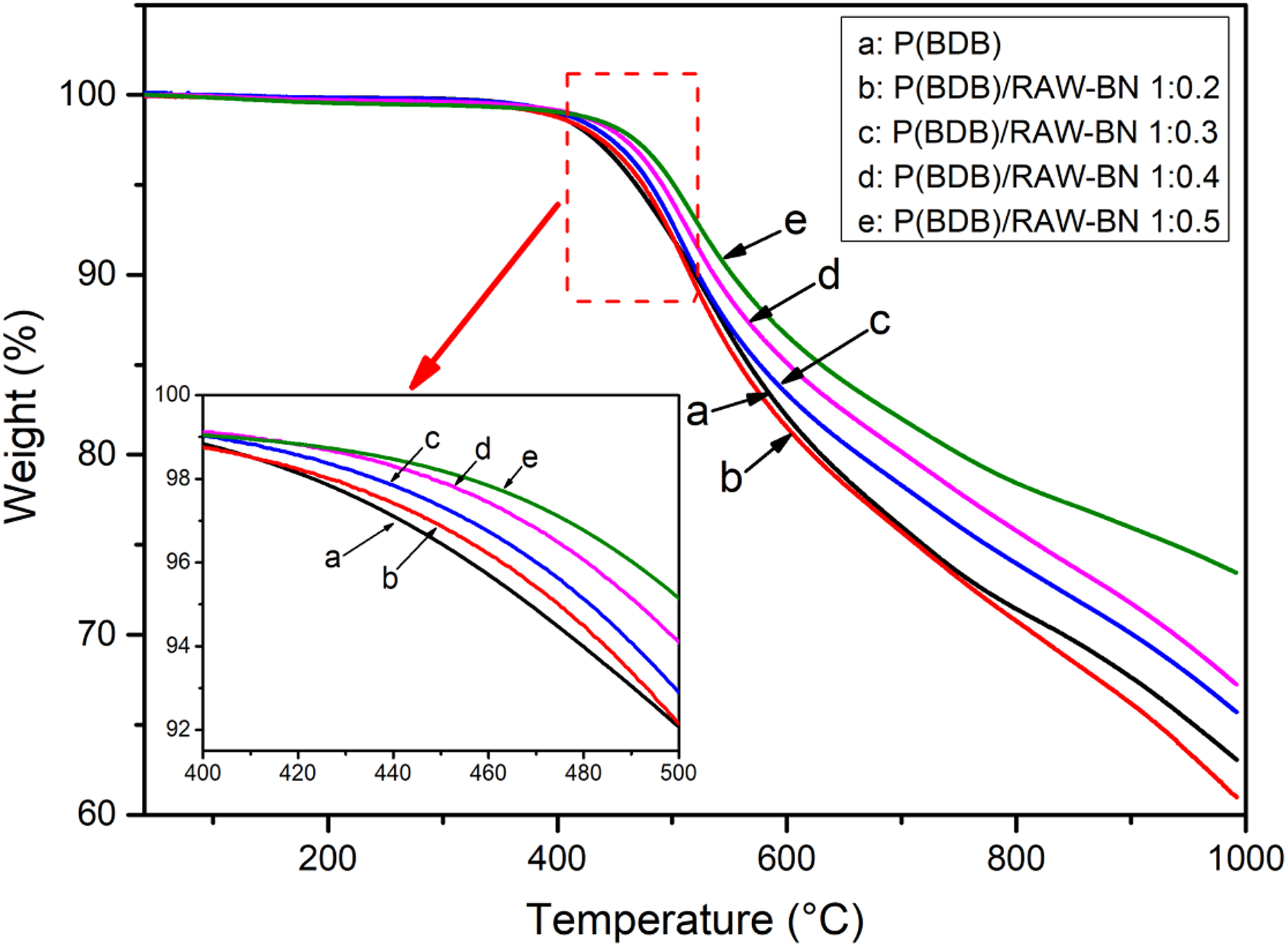
TGA curves of the P(BDB) resin and its nanocomposites of raw BN. TGA: thermogravimetric analysis; BN: boron nitride.
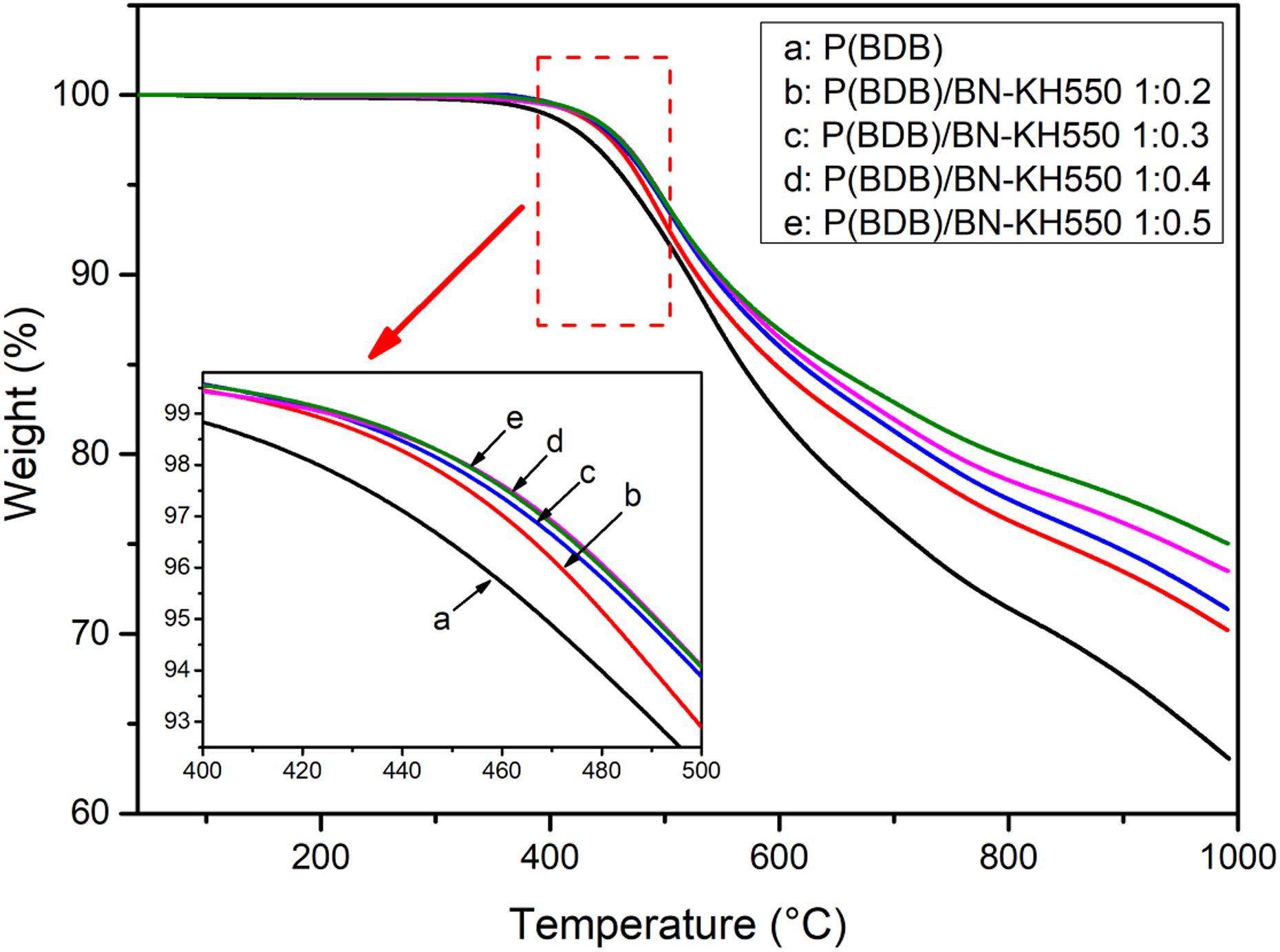
TGA curves of the P(BDB) resin and its nanocomposites of modified BN. TGA: thermogravimetric analysis; BN: boron nitride.
Thermal stabilities of the P(BDB) resin and its composites.

BN: boron nitride; Td5%: decomposition temperature at 5% weight loss; Td10%: decomposition temperature at 10% weight loss.
In addition, it can be seen by comparing the Td5% of the composites after analyzing the data in Table 1 that the Td5% of P(BDB)/raw-BN was higher than the materials with BN-KH550. The organic groups of modified BN are responsible for this situation. Those groups from coupling agents as the part of weak segments are more susceptible to be ruptured from the covalent bond and produce small molecules to escape.
Dynamic mechanical analysis
The curves of storage modulus (E′) dependent on temperature are shown in Figures 12 and 13, and the dependence of tan δ and temperature is shown in Figures 14 and 15. The detailed results of the E′ at 40°C and Tg of the materials are listed in Table 2. It shows that the E′ and Tg of the neat resin reach 3284 MPa and 387°C, respectively. Furthermore, the addition of nano-BN can significantly enhance the strength of resin as shown in Figures 12 and 13. For example, the E′ of composites at 40°C reaches 5196 MPa maximally, which is 1.6 times of that of pure resin. Moreover, the composites filled with modified BN possess higher E′ than those materials with raw BN at same ratio indicating that better compatibility between matrix and BN can also lead to higher stiffness of materials as same as flexural properties.
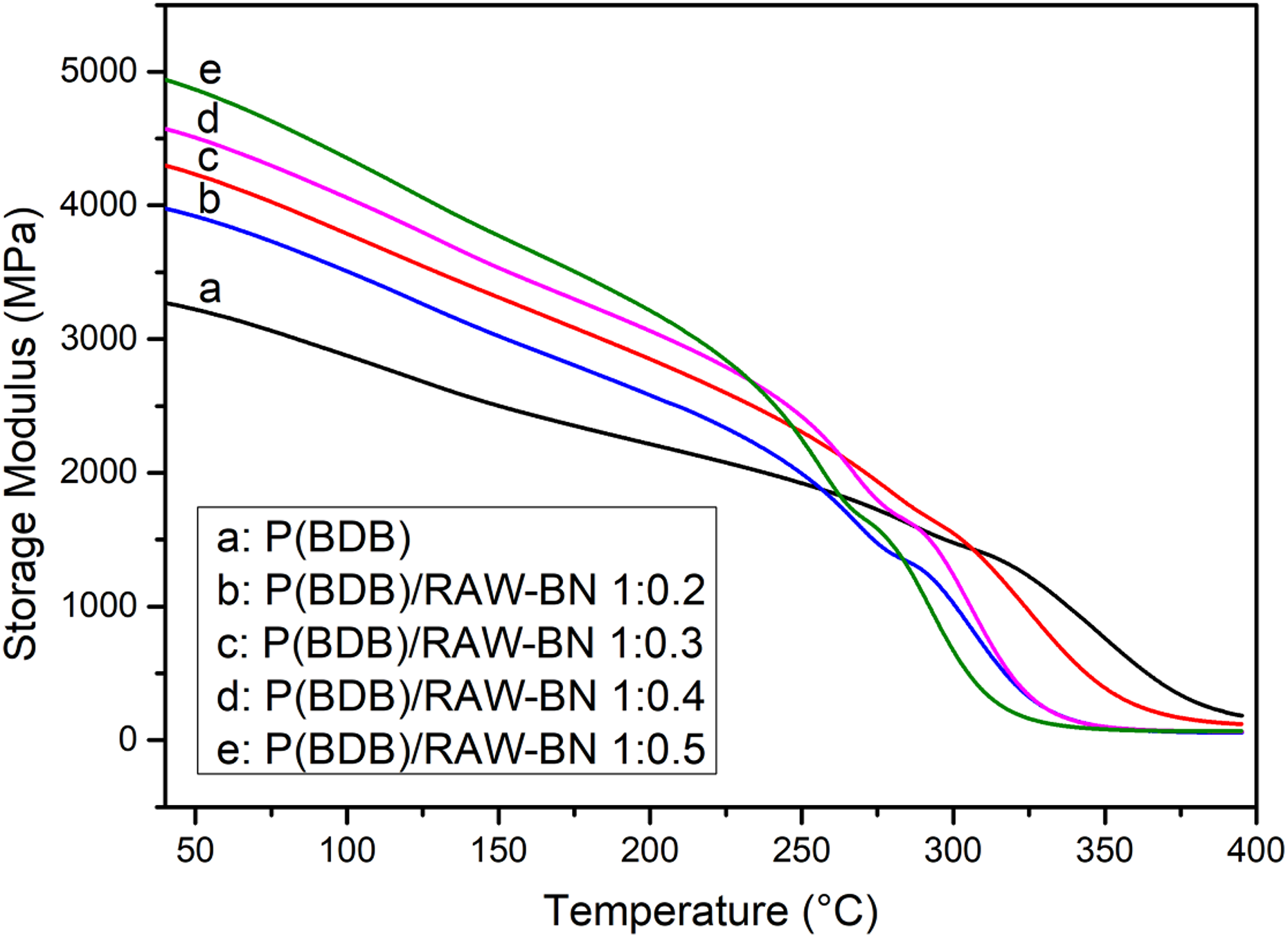
Evolution of E′ of the pure P(BDB) resin and P(BDB)/raw-BN nanocomposites. BN: boron nitride; E′: storage modulus.
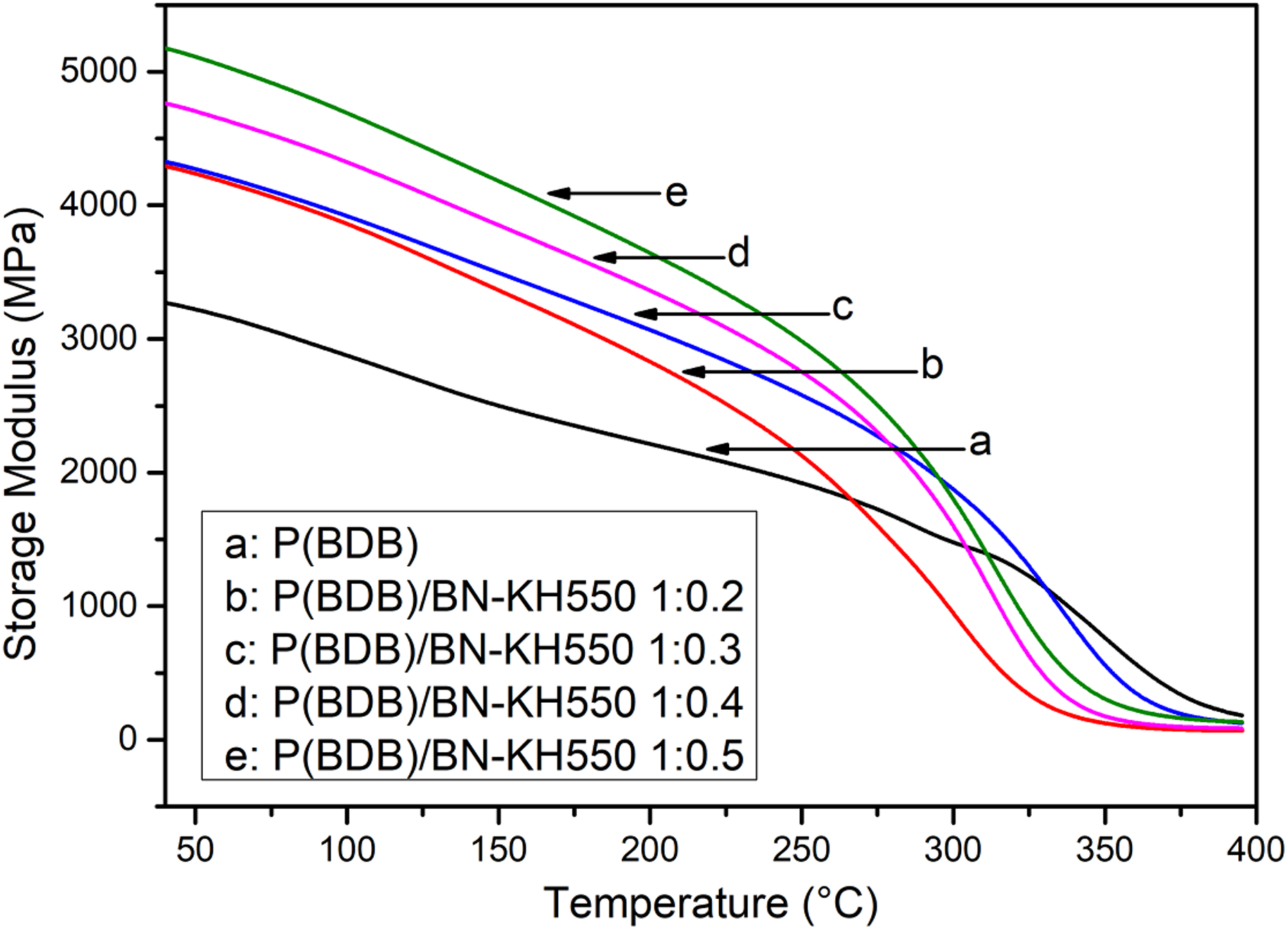
Evolution of E′ of the pure P(BDB) resin and P(BDB)/BN-KH550 nanocomposites. BN: boron nitride; E′: storage modulus.
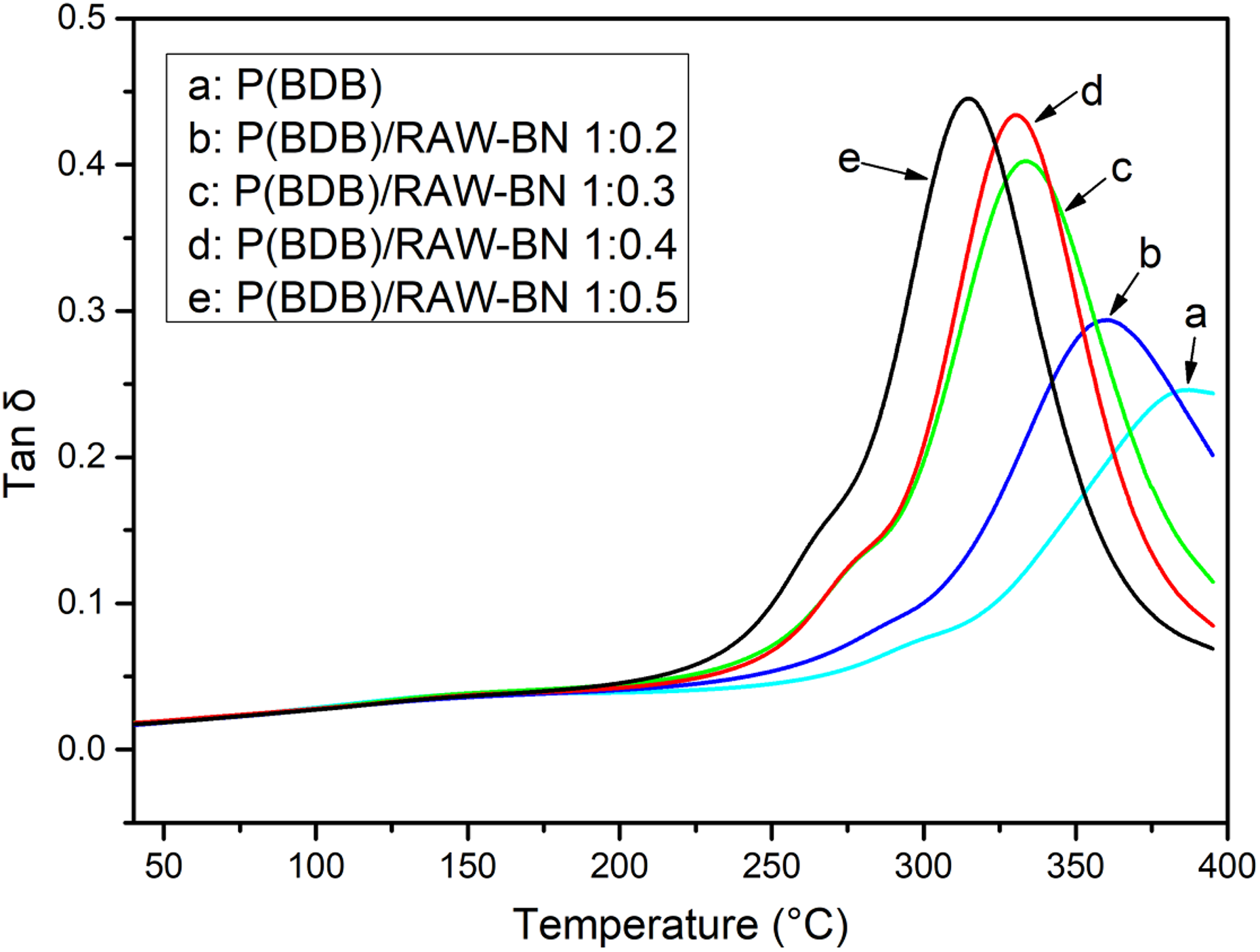
Evolution of tan δ of the pure P(BDB) resin and P(BDB)/raw-BN nanocomposites. BN: boron nitride.
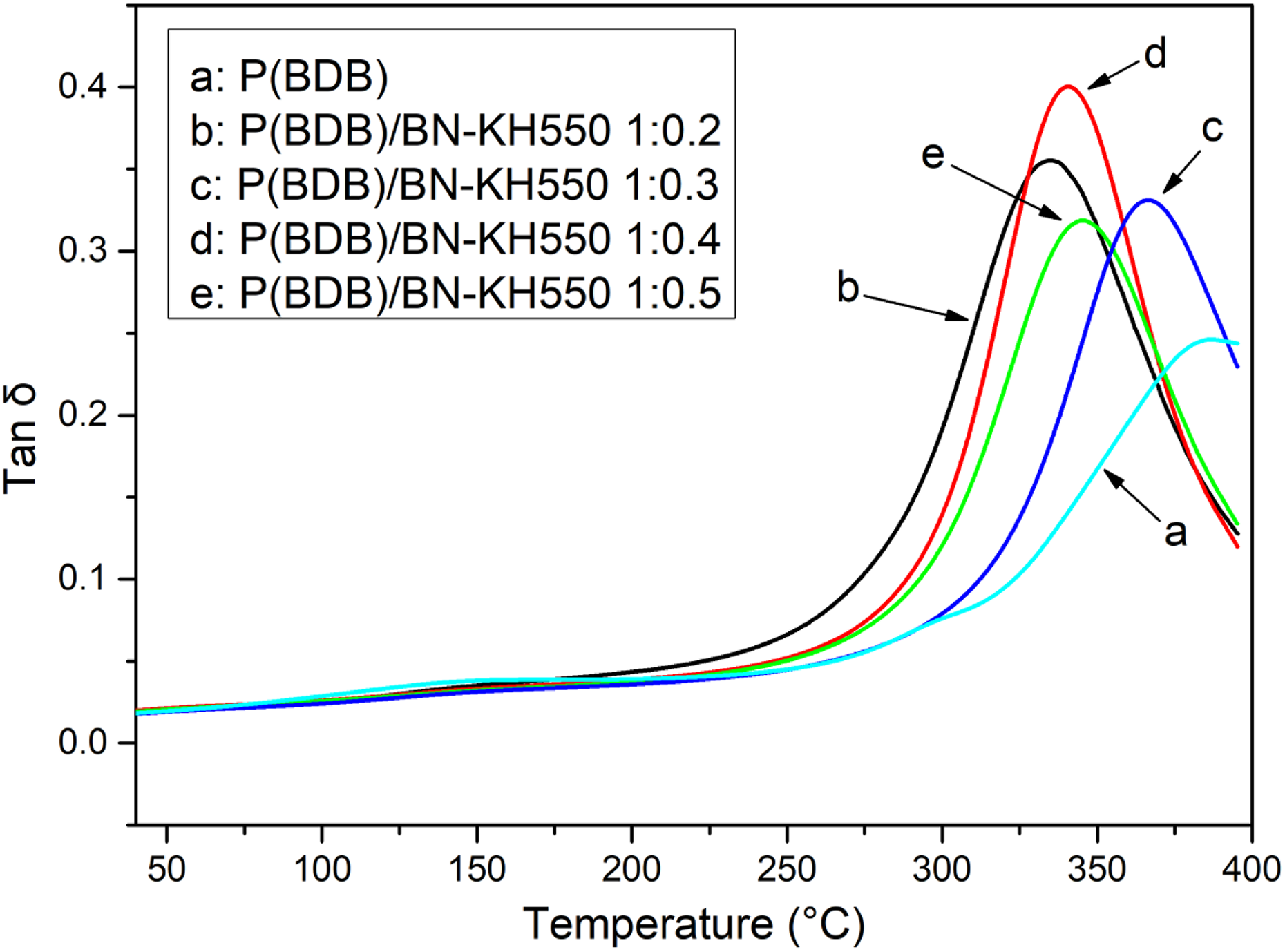
Evolution of tan δ of the pure P(BDB) resin and P(BDB)/BN-KH550 nanocomposites. BN: boron nitride.
E′ at 40°C and Tgs of pure resin and composites.

Tg: glass transition temperature; E′: storage modulus.
All the composites exhibit lower Tg than pure resin, and Tg decreases gradually with the increase of BN proportion. For instance, the Tg of P(BDB)/raw-BN 1:0.5 is 315°C which is 72°C lower than neat resin. The cause is that no matter what method is used to fill the nanoparticles into polymer in the preparation process, the particles will form aggregates in the matrix inevitably, so that there are three different phases formed concurrently which can be named homogeneous, interphase, and embedding. The reactions triggered by curing agent in these phases show different efficiency. 36 –38
The homogeneous phase is the continuous resin where the curing agent is easiest leading to the highest degree of cross-linking in this region. The interphase existed between nanoparticle aggregates and matrix reveals a characteristic of compactness which is unfavorable for the diffusion of the curing agent and reduces the reaction efficiency. The embedding phase is the homogeneous phase surrounded by nanoparticle aggregates. Because of the steric hindrance, the curing agent is the most difficult to get this region, which leads to the lowest reaction efficiency and the lowest degree of crosslinking among the three phases. At the same time, the aggregates also affect the diffusion of the curing agent to the homogeneous phase, and the degree of crosslinking in homogeneous phase can be affected to some extent. In general, the existence of nanoparticle aggregates reduce the crosslinking degree of the overall matrix, thereby reducing the glass transition temperature of the materials. Moreover, the amount of BN filling is a crucial factor affecting this effect. 37,38 In addition, the Tg of P(BDB)/BN-KH550 is higher than P(BDB)/raw-BN (1:0.3–1:0.5, ratios of weight) as a result of more thorough dispersal of nano-BN in matrix.
Conclusion
h-BN was successfully modified with silane coupling agent (KH550). A series of polyphthalonitrile composite materials were prepared with modified and raw BN which can improve the thermal conductivity of the polyphthalonitrile resin effectively, especially for BN-KH550. At the maximum filling ratio of modified BN, the thermal conductivity of the material reaches 0.79 W (m·K)−1, which is 3.6 times of that of pure resin. The flexural and thermo-mechanical properties of P(BDB) resin were also enhanced with the addition of BN. The flexural strength, modulus of rupture, and E′ of the composites filled with BN-KH550 are higher than those of raw BN, but the glass transition temperature decreases with the increase of BN due to the reduction of crosslinking degree, and the modified BN can alleviate this effect. The initial decomposition temperature (Td5%) of composites reaches 501°C, which is 32°C higher than that of the pure resin, while the Td5% of P(BDB)/BN-KH550 is only 491°C. The thermal conduction mechanism of the materials was explored using several thermal conductivity models, and it showed that the Cheng-Vachon model is consistent with the actual trend. To sum up, filling a certain proportion of modified BN is an effective way to improve thermal conductivity and mechanical properties of polyphthalonitrile.
Footnotes
Declaration of Conflicting Interests
The author(s) declared no potential conflicts of interest with respect to the research, authorship, and/or publication of this article.
Funding
This work was supported by National Natural Science Foundation of China (51573037) and Natural Science Foundation of Hebei Province, China (B2017202281, E2014202033).