







Abstract
Honey is a product that is often adulterated by the addition of water. Stingless bee honey naturally has a higher moisture content than that produced by the traditional Apis mellifera. In most countries, there is a lack of quality standards and methods to characterise and assure the authenticity of stingless bee honey, which demands for the development of fast methods to assess its main properties, avoiding potential fraud. Thus, this work aimed to develop a non-destructive moisture determination method for stingless bee honey based on diffuse reflectance near infrared spectroscopy combined with chemometrics. Thirty-two honey samples from four stingless bee species (Melipona quadrifasciata, Melipona marginata, Melipona bicolor and Scaptotrigona bipuncata) were used to develop calibration models using partial least squares regression analyses. Results revealed intense absorption bands in C–H, O–H and C–O vibrations in the spectra of stingless bee honey. The calibration model was used to predict the moisture content in honey from an external group. The prediction of the honey’s moisture showed good correlation (r2 = 0.93) with the refraction index method and an average error of 2.14%. The statistics variables for the calibration (R2 = 0.947, SEP = 1.005 and RPD = 4.3) revealed that this model can be used to predict the moisture from stingless bee honey and that near infrared spectroscopy is a reliable tool to be applied in quality control with rapid, simple and accurate results.
Introduction
Stingless bee honey (SBH) from different parts of the world has been extensively studied in recent years and the results mainly show that this product can present a rich and variable composition.1,2 Although the production of honey by stingless bee is lower (1–5 kg per year) than the traditional Apis mellifera (20 kg per year),1,3 the added value of the former is higher than the latter, prices of which can be as high as US$ 100/kg, 4 which is more than twice as expensive as Apis mellifera honey (US $20–40/kg). 5 Additionally, SBH honey differs from that produced by Apis with regard to color, taste, and viscosity. In stingless bees, the water content ranges from 25 to 56 g/100 g, while legislation states that Apis honey should not contain more than 20 g of moisture/100 g of honey.1,6,7 SBH therefore has a high moisture content, while the bees themselves have a different morphology (absence of sting), a different form of nest construction, and nectar collection.2,8
Because of the low number of studies, there is still a deficiency of identity and quality standards regarding Brazilian SBH. In this sense, for more than a decade, Brazil has been attempting to establish national standards for this product, following the guidelines of international standards of the Codex Alimentarius Commission. 8 However, until now, there is still lack of national legislation aiming to standardize the quality parameters in SBH.
In addition to those characteristics, honey is a hygroscopic food which is able to change its moisture content according to the surrounding atmosphere. This influences its physical properties (e.g. viscosity, crystallization), as well as other parameters such as color, palatability, taste, specific gravity, solubility, and preservation.9–11 Consequently, moisture affects the commercial value of the honey.12,13 In this regard, moisture determination is a necessary and routine analysis applied to establish the quality and the marketability of honey. 14 Subsequently, quality control of SBH demands fast and reliable evaluation right after the collection from the bee-house.
The official methods for moisture determination are gravimetric analysis by oven drying or refractive index (RI) coupled to an evaluation of the moisture percentage by using empirical formulae or relative conversion tables. 15 Nevertheless, oven drying is considered to be laborious and time consuming, while RI, which is the most used method by beekeepers, 16 presents two main difficulties: crystallized honey requires pre-heating to melt the sample prior to the analysis and the empirical formulae or relative conversion tables used for evaluation of moisture content is not reliably correct for every type of honey 14 but have been proposed as an official method for Apis mellifera honey. 16
Near infrared (NIR) spectroscopy is a fast, low-cost, accurate, multi-analytical technique based on the electromagnetic absorption of organic compounds in the wavelength infrared range (780–2500 nm).17,18 This technique comprises both qualitative and quantitative analyses of multiple component samples by a single measurement. Moreover, it is environmentally friendly, because no reagents are required, and no hazardous waste is produced. 19 The NIR technique has been applied in a wide range of fields in the last decades, and several of these applications are currently used for routine analyses, even in online monitoring systems.13,20,21
It is well discussed in the literature that the water content of honey is the most important parameter for the assessment of ripeness and shelf life. In this sense, honey with a moisture content higher than 18 g/100 g can be spoiled by fermentation. 15 For this reason, reliable and faster methods for moisture control are important tools when evaluating SBH. The NIR method developed herein allows an accurate measurement of this critical parameter for the determination of the best process aiming at its conservation and storage, preventing fermentation, crystallization and controlling the increase of its water activity. 22 Although SBH has been widely studied regarding physicochemical parameters during the last 12 years, information on SBH processing in Brazilian industry is still scarce in the literature. 23
No information regarding the evaluation of moisture content from SBH using spectroscopic techniques and multivariate calibration was found in the literature. Quality control methods, combined with multivariate statistical analysis, have been found to classify honey from different geographical regions and floral origin, detect adulteration and describe chemical characteristics.24,25 NIR techniques have also been successfully used in the development of multivariate calibration models for the evaluation of properties, such as moisture,13,26–30 lipids,27,31 sugars, 32 proteins 28 and with predictions made by PLS regression 33 for many food products. According to Evangelista-Rodrigues et al., 34 honey from Africanised and stingless bees differs in terms of moisture content, even when they are produced in the same region. Different from the Apis genera, SBH has an acid character (acid pH and high acidity), a slightly lower level of total carbohydrates, slow crystallization, more fluid texture and high hygroscopicity due to its high content of moisture and high water activity values, requiring higher level of care during harvesting and storage. For these reasons, SBH is different from the traditional product of beekeeping.1,2,8,34 Thus, the aim of this study was to develop a rapid and non-destructive method for SBH moisture determination in different honey samples from the Southern Brazil using diffuse reflectance NIR spectroscopy.
Materials and methods
Honey samples
Thirty-two honey samples were collected from native Brazilian stingless bees, during the 2016 summer, at the geographic region located in Paraná state, in southern Brazil. The samples were collected in different meliponary from the farmed hives for each type of bee. Thus, the collection comprised eight different areas having four different species: Melipona quadrifasciata, Melipona marginata, Melipona bicolor, and Scaptotrigona bipuncata. Afterwards, each sample sourced from a different bee-house was filtered in a nylon sieve (74 µm) to eliminate physical impurities. Then, they were transported to the laboratory and stored at 4℃ in closed glass recipients in the dark until further analysis. The floral source for all honeys was a combination of native and exotic cultivated plant species.
Moisture analysis
The moisture content of the honey samples was determined by measuring the RI using a bench ABBE refractometer with a temperature accuracy of 0.1℃ and estimated error of less than 0.0002, according to the international honey commission methods of analysis and the official method of the Association of Official Analytical Chemists.16,35 The refractometer was turned on and calibrated with ultrapure water (
Near infrared spectroscopy
Near infrared spectroscopy (NIR) was performed at room temperature (25 ± 2℃) using an NIR system (FemWin 900, FEMTO, São Paulo, Brazil), using glass/quartz cuvettes. Spectra were acquired in reflectance in the NIR range 1100–2500 nm with a scan speed of 1400 absorbance values in 70 s. The spectra were recorded at a resolution of 1 nm, performing 64 scans for both the reference and samples, taking approximately 2 h to do all scans. All samples were thoroughly mixed between scans and analyzed in triplicate. The Unscrambler® v10.3 (CAMO Software AS, Oslo, Norway) was used to analyze the data. Figure 1 depicts a scheme for the SBH evaluation using the NIR approach.
Graphical scheme for the evaluation of moisture in SBH using NIRS.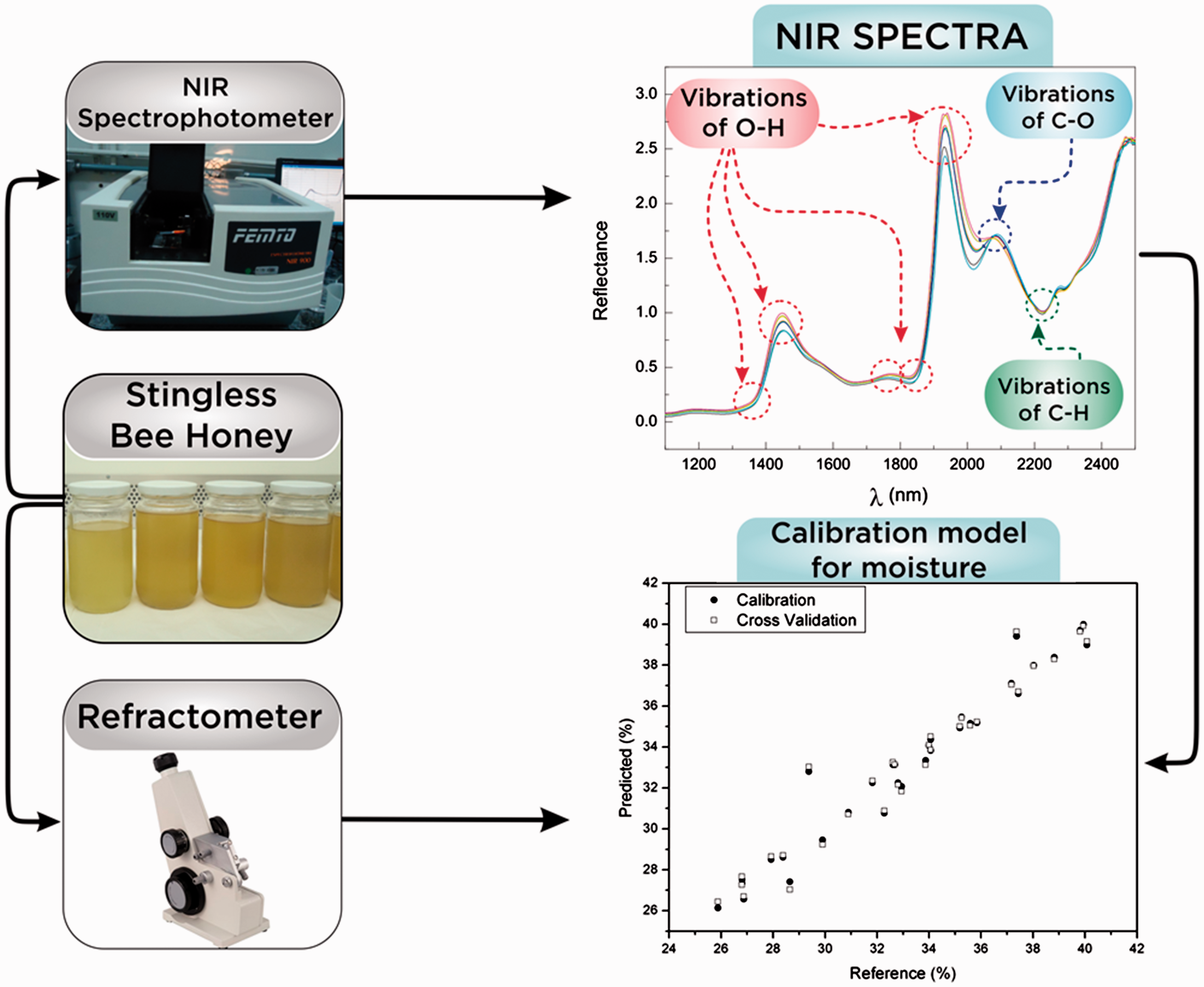
Statistical analyses
The Unscrambler® was applied for data processing and analysis. Principal component analysis (PCA) was performed on each spectral data to describe the basic multidimensional characteristics of the NIR data matrix. 36 Partial least squares (PLS) regression analyses were developed to describe moisture content of SBH. The PLS algorithm was chosen as it is rapid, models have higher precision, and successfully deals with wavelength correlation.37,38
The non-linear iterative partial least squares algorithm with eight-fold Venetian blinds cross-validation on calibration samples sorted according to the known concentration of the response variable (moisture content) was used. Thus, the distribution of concentrations in validation are arranged to be similar to each other in each permutation during cross-validation. To improve the calibration models, it was necessary to remove scattering effects from the raw spectra caused by the diversity of the particle size in the samples. After comparing the performance of the models, the best pretreatment method for the whole sample set was weighted smoothing 39 and standard normal variate (SNV). 40 SNV was used to normalize the spectra processing data, to remove baseline shifts and slope changes and curvilinearity of spectra prior to developing the calibration models. That is, before PLS calculation the SNV transformation centered each spectrum and then scales it by its own standard deviation, correcting shifts in the y-axis. 13
The PLS regression method was used to develop calibration equations. In PLS, the NIR spectral residuals at each wavelength, obtained after each factor has been calculated, were standardized (dividing by the standard deviations of the residuals at each wavelength) before calculating the next factor. When developing PLS equations, the venetian blinds cross-validation is recommended to select the optimal number of factors and to avoid over-fitting. Calibration was set with the maximum number of one latent variable. The validation subgroup was built using additional samples. For the quality estimation of the calibration models, the results of coefficient of determination (R2), root-mean-square error (RMSE), standard error (SE), and ratio of performance to deviation (RPD = standard deviation/standard error) were used.
Results and discussion
The moisture content and results from multivariate method by PLS regression model calculated from 32 honey samples produced by Meliponini and Trigonini tribe.
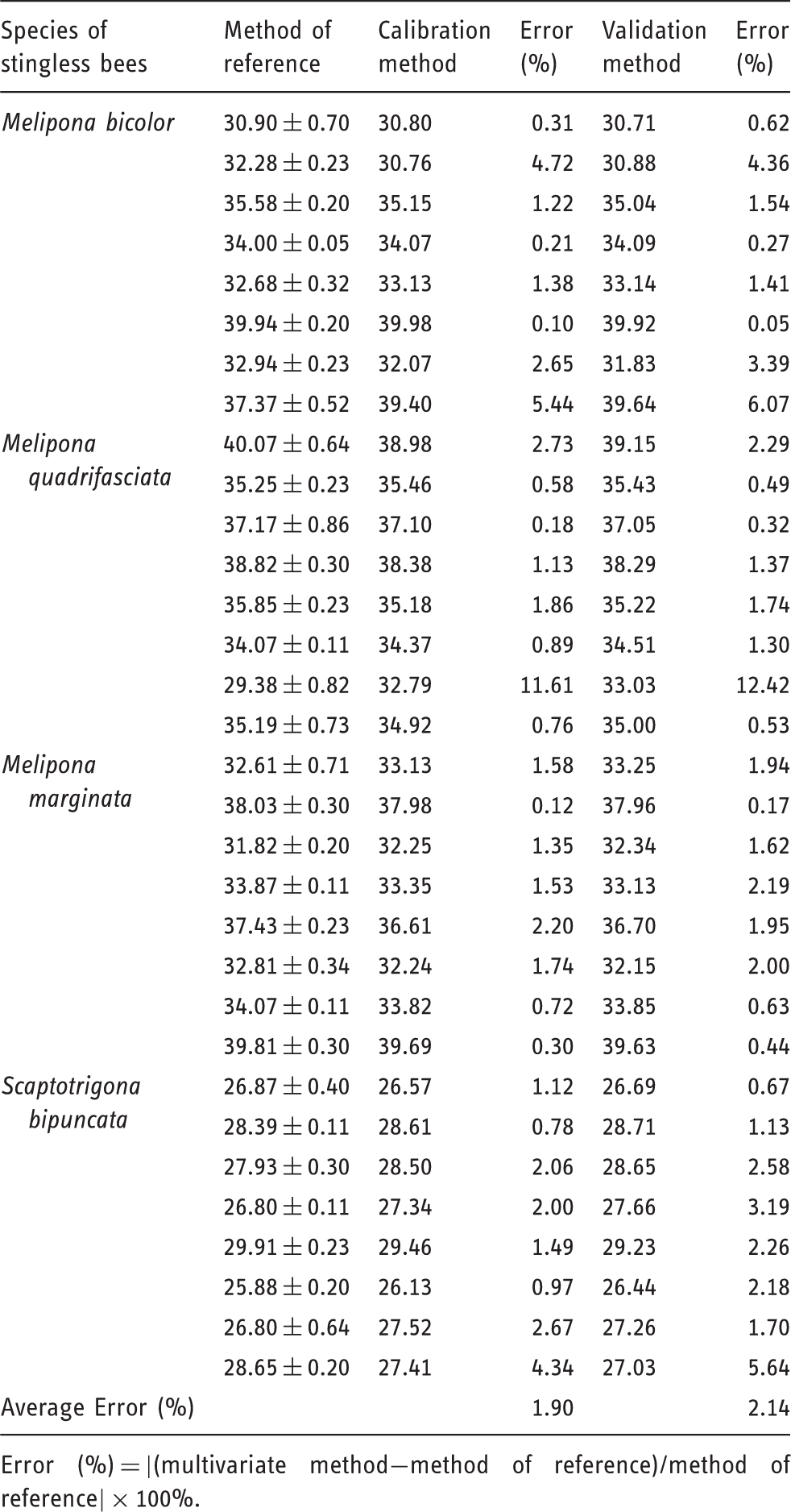
Error (%) = |(multivariate method−method of reference)/method of reference| × 100%.
The NIR spectrum of the 32 SBH samples (Figure 2) shows the typical characteristics for honey, highlighting the O–H absorption regions, the combination and overtone modes of water.
44
The spectral signals correspond to overtones and vibrations combination of C–H, O–H, and C–O. Spectra from SBH showed four intense absorption bands at: 1450 nm related to the first O–H overtone; 1780 nm the first overtone of the O–H stretching; 1935 nm the combination of O–H stretching and deformation; and 2100 nm was the first overtone of O–H deformation and C–O stretching band. Other minor absorption bands at 1202 and 2321 nm were related to C–H bonds. The 1322–1326 nm and 1358–1366 nm regions represent signals of free –OH vibrations dominate.
45
Nevertheless, this area was also correlated to highly organized water in water solvation shell, as it corresponds to the first overtone of those bands described in relation with aqueous protons
46
and free –OH in water clusters.
47
Reflectance NIR spectra of 32 stingless bee honey samples after smoothing and SNV transformations. The marked regions correspond to O–H, C–O and C–H vibrations.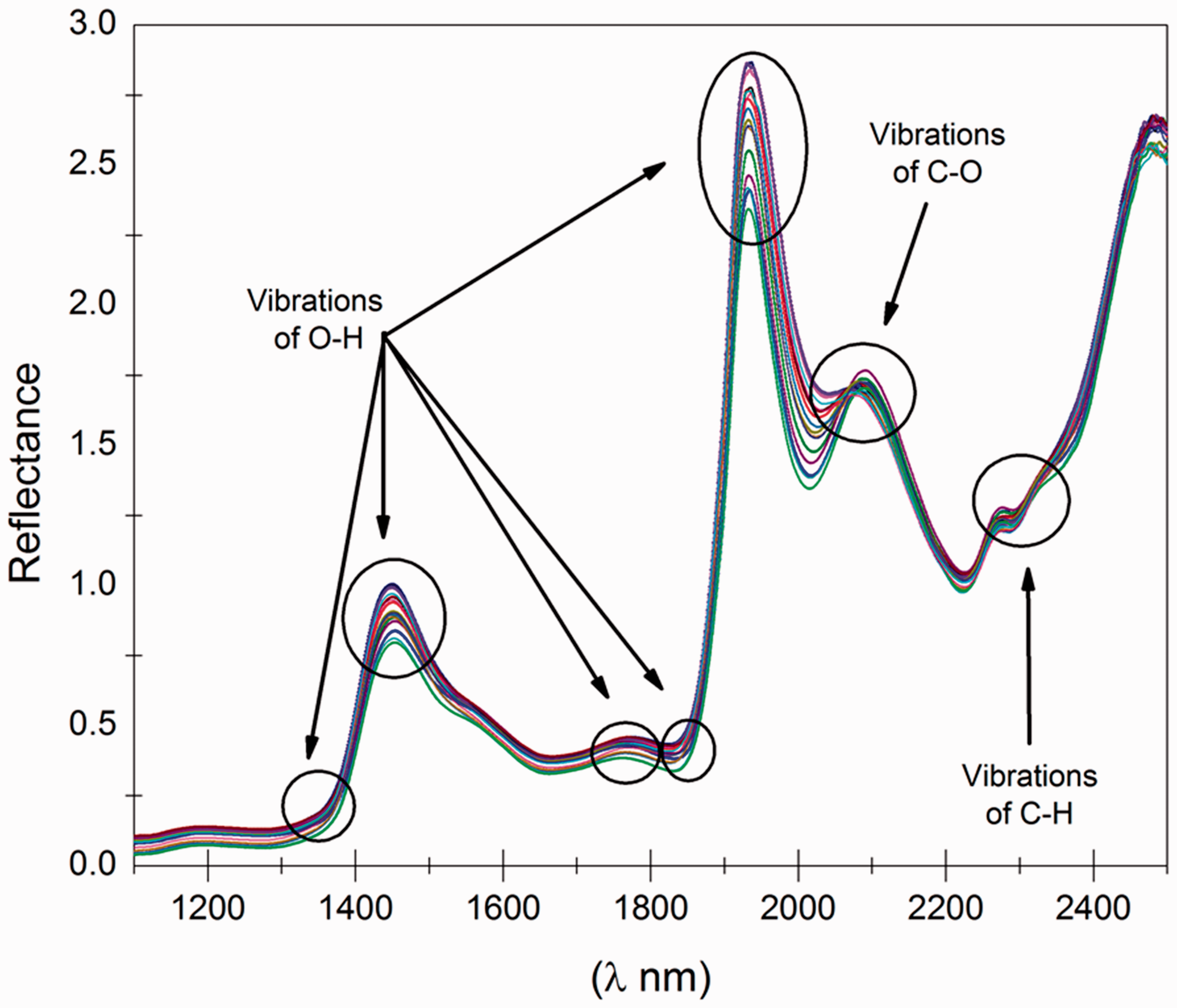
PCA analysis was applied to all spectra on each sample type to evaluate spectral variability and determine population structure. The score plots of untreated and treated moisture percent are shown in Figure 3. The percent of variation explained by each principal component (PC) is indicated in parentheses. The summation of the percent of variation explained by PC1 and PC2 was close to 100%, indicating that two principal components explained most of the variations in SBH.
Principal component analysis (PCA) of stingless bee honey moisture, (a) score plot of the 1st PC calculated on the entire sample set and (b) after smoothing and SNV transformation of the NIR spectra (1100–2500 nm).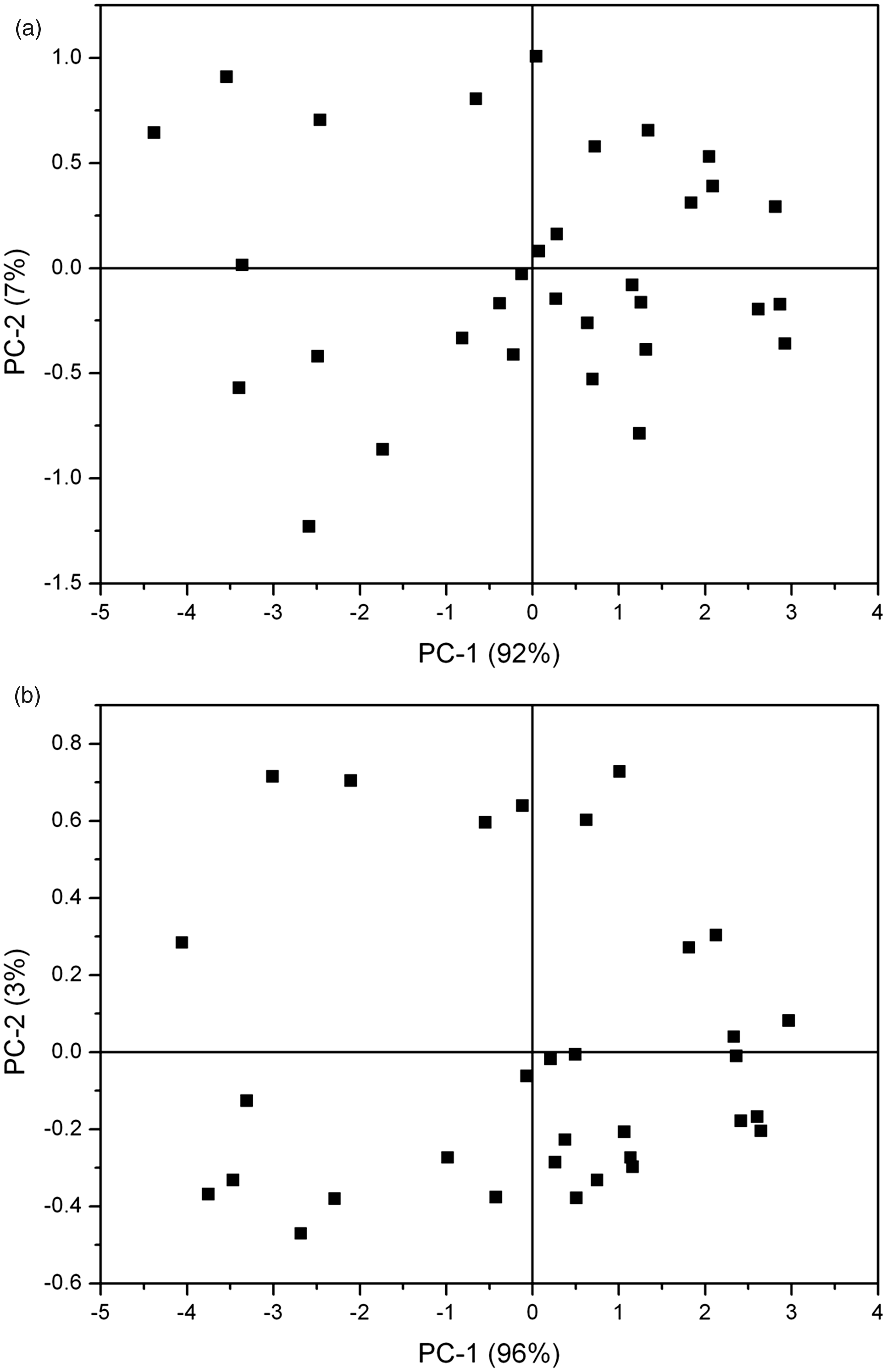
The regression coefficients in function of the wavelength with a 1 factor shown in Figure 4 are related to the main signals observed in Figure 2. The NIR loadings showed that the highest variation in the calibration set for moisture content was associated with a broad band at 1935 and 2100 nm due to the combination of O–H stretching and bending modes of water. The NIRS have little instrumental noise, thus it is suggested the use of the spectral data without preliminary manipulation (pre-process) when constructing the model. However, it has been proposed to use the pre-processing routines focusing on the average (correction of baseline shifts), followed by smoothing derivation (disclosure of evidence of small magnitude) before calculating the PLS model, in order to decrease the detrimental effect on the signal-to-noise ratio. There is also a particular interest in signal processing obtained by diffuse reflectance, SNV, and multiplicative scatter correction (MSC), which minimizes the effects attributable to the scattered light. SNV is probably the second most applied method for scatter correction of NIR data, where each spectrum is being centered and then scaled by the corresponding standard deviation. Multiplicative effects of scattering can be reduced after SNV transformation. Model with pre-process can be more robust to prediction than its rough counterpart.48,49
Regression coefficients obtained in the PLS model to estimate the moisture of stingless bee honey using the reflectance NIR spectra. (a) Without and (b) with pre-processing method.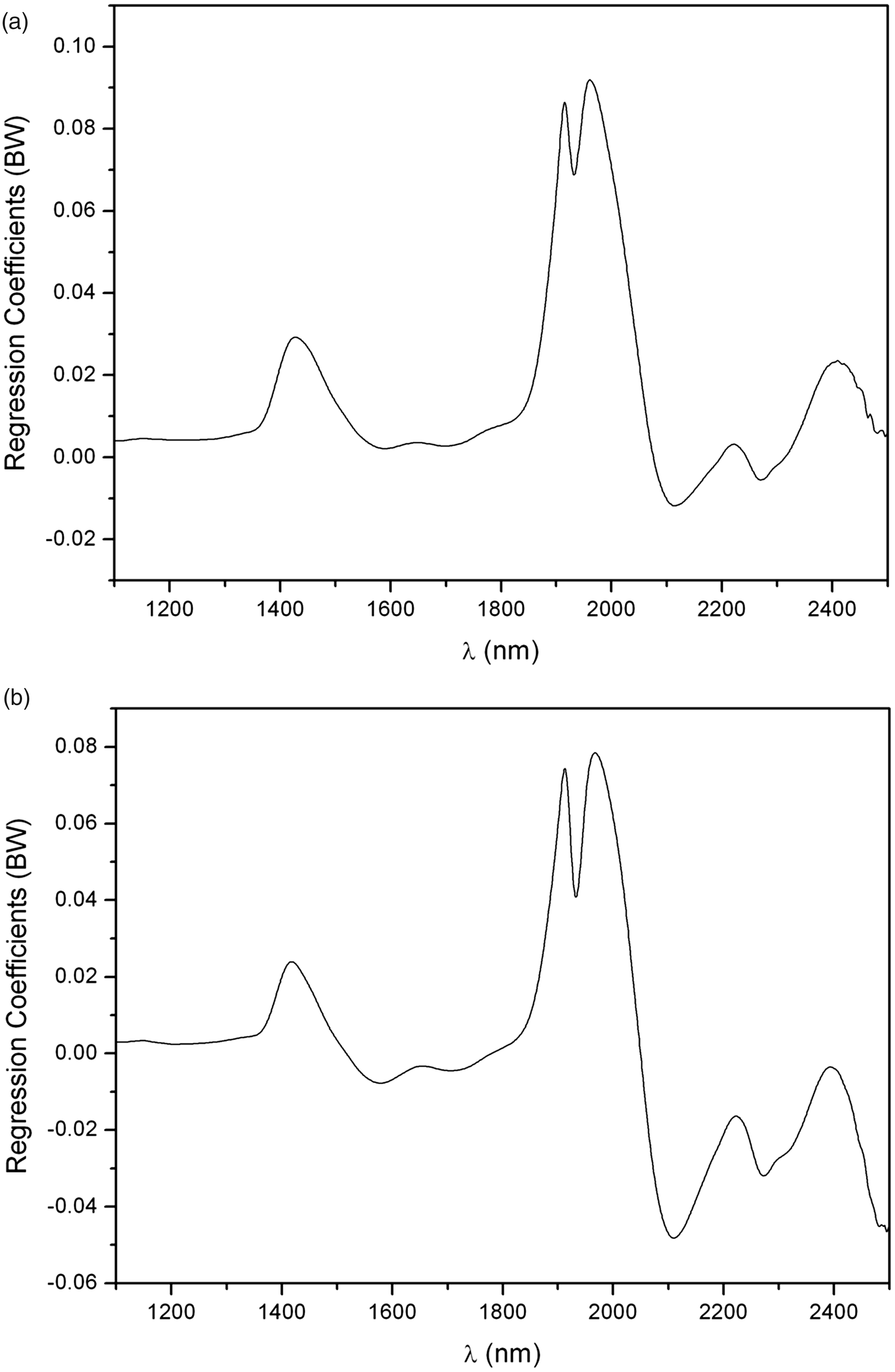
The main advantage of NIRS combined with multivariate calibration algorithms, such as PLS, is the quantitative gain information for the quality control of honey within a short time and in a single measurement. Furthermore, the validation set should contain a mixture of samples of different species of SBH and different botanical origins. These are necessary for specifying the limits between the different honey types and for checking the reliability of the analysis. Stingless bee has a selective floral preference,50,51 and in this sense, the honey was collected in different meliponary for each type of bee species, giving a variability of nectars and pollen from plants of the region. The occurrence of watery honey from these studied bees species may be related with moisture characteristic from tropical environments, in which it is difficult to extract nectar with low water content, as well as other factors like nectar collection from undergrowth flowers and ripe fruits that are rich in water. 52
Partial least squares (PLS) regression results of calibration and prediction sets for moisture contents in stingless bee honey.
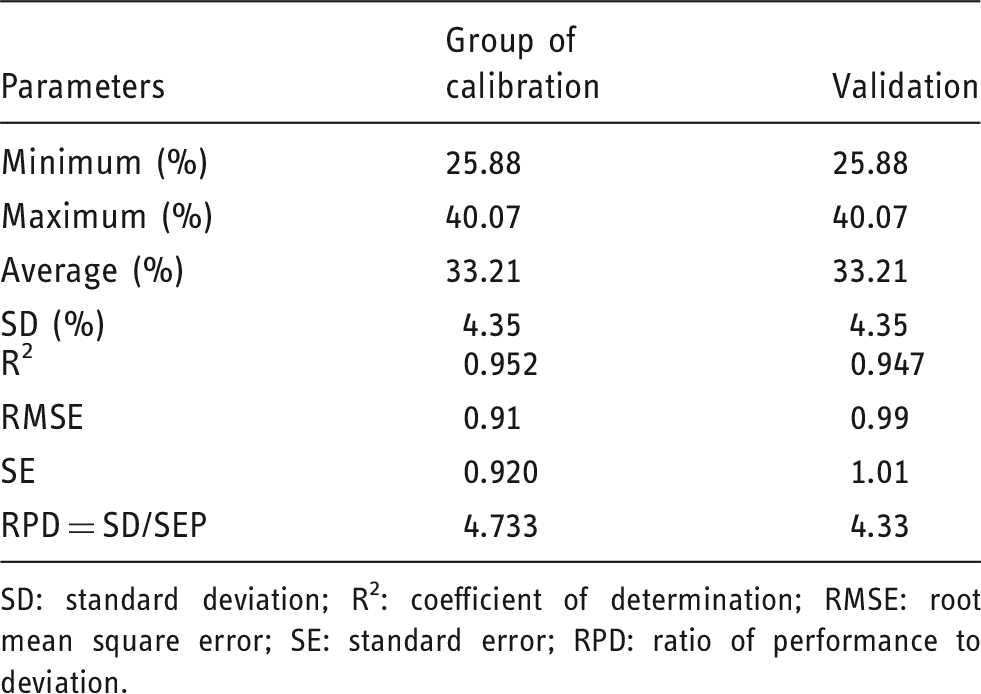
SD: standard deviation; R2: coefficient of determination; RMSE: root mean square error; SE: standard error; RPD: ratio of performance to deviation.
Ruoff et al. 53 evaluated 24 physical and chemical properties in 421 honey samples of Apis aided by NIRS. Their research showed quantitative models with satisfying accuracies for the determination of seven properties. In their study, moisture showed a very low standard error of prediction (SEP = 0.3 g/100 g) and a high coefficient of determination (r2 = 0.970) for the validation group. Williams 54 suggested that values of ratio of performance to deviation (RPD) higher than 3 may be used for screening processes. Likewise, RPD values greater than 5 might be applied for quality control, while values greater than 8 can be used for any application.55,56 Therefore, the RPD value obtained in this work (>7) represents a model which is suitable for quality control and other applications. Moreover, the SEP (4.33) and R2 (0.95) demonstrated that the suggested model can be applied in the routine analysis.
The plots of measured versus predicted contents for moisture are shown in Figure 5. The predicted values showed a strong relationship between the measured values. Furthermore, the predicted values did not show any significant deviation from linear behavior. In order to build a prediction model, it is necessary that the sample set contemplates a broad range of values for moisture. It is noteworthy that the prediction equation must be used within the range of tested values of moisture. In summary, the proposed multivariate method was considered to be a helpful technique for routine quality control of SBH, which can be easily adopted by both small or big producers. Also, this NIR-based technique may represent a fast method for the authenticity and fraud detection by the addition of water in SBH.
Plot of measured versus predicted moisture contents by partial least squares (PLS) regression for honey samples. The calibration group was represented by close circles and the open squares represent the external validation group.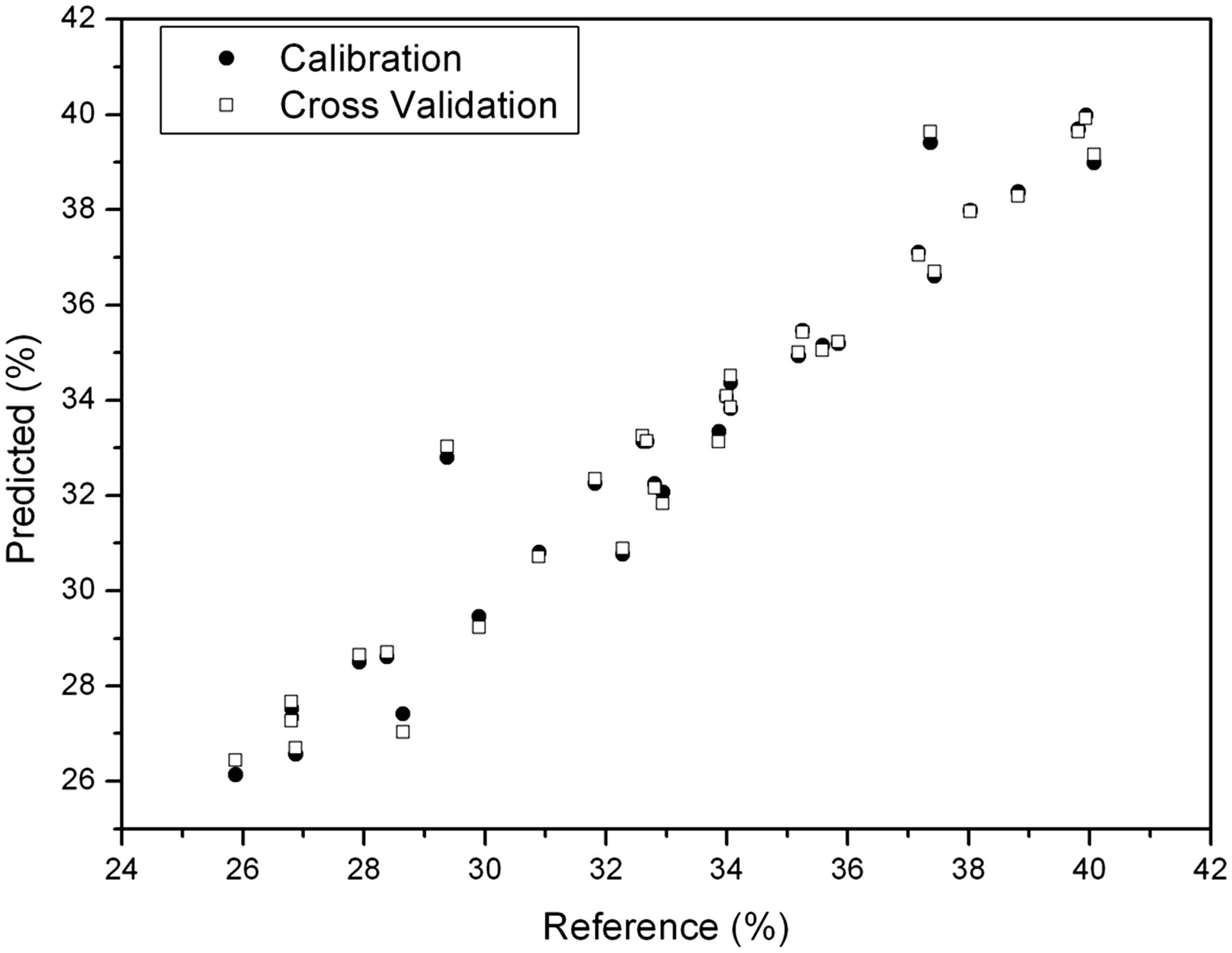
Conclusions
A moisture determination method for SBH was successfully developed using NIR combined with chemometrics, which is then suggested as a helpful tool for scientists and producers to authenticate the product. The NIR prediction for honey’s moisture content showed good correlation (r2(pred) = 0.93) with the reference method (RI) and an average error close to 2%. SBH spectra show mainly four strong electromagnetic absorptions of O−H besides the combination of organic compounds C−H and C−O. The multivariate calibration confirmed that this rapid method may be used as a good tool for moisture control in SBH for human consumption. Since fraud problems in honey by water addition are often reported, this method represents a promising alternative for the quality control of SBH, due to many advantages such as the speed, reliability, non-destructive, no residue generation, and the possibility of online analysis.
Footnotes
Acknowledgement
The authors gratefully acknowledge the Associação de Meliponicultores de Mandirituba (Amamel) for kindly supplying the honey samples.
Declaration of conflicting interests
The author(s) declared no potential conflicts of interest with respect to the research, authorship, and/or publication of this article.
Funding
The author(s) disclosed receipt of the following financial support for the research, authorship, and/or publication of this article: The authors thank the Coordination of Higher Education Personnel (CAPES, Brazil), EMBRAPA Forestry and the Brazilian National Council for Scientific and Technological Development (CNPq) (306930/2016-1) for the financial support to implement the work.