






Abstract
Study Design:
Retrospective Analysis of a Quality Improvement Program.
Purpose:
To describe the development, implementation, and outcomes of an inpatient rehabilitation-based Short Stay Family Training (SSFT) program for patients with life-limiting conditions.
Background:
Patients with terminal illnesses often have functional limitations that prohibit discharge home after hospitalization, but their condition limits their ability to participate in rehabilitation in an inpatient setting.
Methods and Measures:
After a needs assessment, an interdisciplinary team developed an SSFT program to empower patients, caregivers, and family members by giving them the tools to be independent in caring for a patient with a life-limiting condition. Patients qualifying for the program were tracked in terms of acute care physical therapy and occupational therapy discharge recommendations, diagnosis, inpatient rehabilitation unit length of stay (LoS), caregiver involvement, and discharge location. Data were retrospectively analyzed from patients over the first 16 months.
Results:
Since program implementation, 30 patients and their family members participated in the program. Overall, these patients experienced decreased LoS, increased discharge to home, and increased palliative care involvement in the plan of care.
Conclusion:
Short Stay Family Training is a viable alternative to traditional inpatient rehabilitation to allow patients with life-limiting conditions to discharge home safely with caregiver support.
Keywords
Introduction and Background
Patients with advanced cancer or advanced life-limiting conditions are often unable to return home after hospitalization due to limitations in strength, functional mobility, or caregiver support. Burge et al found that 74% of patients with a life-threatening illness preferred to receive care at home in the last months of life; however, only 40% of these patients achieved their goal of dying at home. 1 This disconnect was partially due to the family and patient feeling ill-equipped to manage symptoms and mobility issues at home at the time of hospital discharge.
These patients may consider transfer to an inpatient rehabilitation unit (IPR) or subacute rehabilitation facility (SAR) for rehabilitation; however, the physical demands of these rehabilitation settings may be a limiting factor for patients with advanced illnesses. This is a key challenge in IPR as patients are traditionally expected to participate in 3 hours of physical rehabilitation for 5 to 7 d/wk. In these instances, patients with a terminal illness who participate in intensive physical rehabilitation may experience physical decline, which increases the likelihood of transfer back to acute hospitalization or dying in the hospital. A study by Alam et al reported that patients with cancer had increased chance of transferring off IPR: 21% of patients with neoplasm versus 9.7% of patients with noncancer diagnosis. 2 Guo et al reported that 38% of patients with cancer required a transfer back to the hospital from IPR and 88% of transfers were due to worsening medical conditions. 3 The patients who transferred off to acute care were more likely to die during the hospitalization (15%) as compared to those who did not transfer off (2%). Of note, the patients who transferred off were less likely to discharge home (52%) as compared to those who did not transfer off (90%). These findings reinforce the ideas that traditional inpatient rehabilitation services may not be well tolerated by patients with advanced cancers.
The likelihood of a successful discharge after a transfer off IPR is reduced for this patient population. In 2015, Fu et al reported that 38% of patients with lymphoma in IPR required a transfer back to acute care services. 4 Of those who transferred to acute care service, 34% discharged directly home, 26% died in the hospital, 18% transferred to a SAR, and 11% transferred back to IPR. There was not a long-term follow-up to track if patients who returned to IPR/SAR eventually discharged home or passed away in the IPR/SAR. In 2017, Fu et al reported that 38% of patients with multiple myeloma participating in IPR required a transfer to acute care. 5 Of those who transferred off, the median survival time was 180 days as compared to 550 days for those who did not transfer off IPR back to acute care.
Briggs described a number of practice patterns for rehabilitation professionals treating patients with a life-threatening illness or receiving palliative/hospice care. 6 This includes rehab in reverse, a skilled planning for anticipated decline in function while maintaining safety and maximizing quality of life. In addition, rehab light which refers to providing therapy at a lower intensity and frequency to allow for improvement without depleting energy reserve. A key role of rehabilitation professionals is to provide training to families and caregivers. In a meta-analysis of caregiver training interventions, psychoeducational, skills training, and therapeutic counseling were delivered to patients and caregivers and were found to “significantly reduced caregiver burden, improved caregivers’ ability to cope, increased their self-efficacy, and improved aspects of their quality of life.” 7 The purpose of this administrative case report was to describe the development, implementation, and initial descriptive results of a Short Stay Family Training (SSFT) program in an IPR. The goal of the SSFT was to address key barriers to discharge for patients in the advanced stages of disease and help meet their goal of discharging home.
Method
Needs Assessment and Program Development
As part of an internal quality improvement initiative, Beaumont Health (Troy, Michigan) convened a task force of content experts in order to address staff, patient, and family concerns related to the care of patients with advanced stage disease postacute hospitalization. The task force included a core team of individuals who represented the hospital’s IPR and acute care settings. This needs assessment was conducted through data collection in the acute care and IPR settings to establish the need and scope of a potential new program. These data included case analyses of patient challenges when participating in traditional IPR care who had a goal to discharge home but had a diagnosis of a life-limiting illness. It was noted that these patients were not ideal candidates for success in traditional rehabilitation due to their overall poor prognosis, low physiologic reserve, reduced tolerance for rehabilitation, progressive weakness, unmanaged symptoms that limited participation, or an increased risk of transfer off of IPR. In addition, it was noted that the patients’ and families’ goals frequently did not match the medical trajectory. In addition, these patients were not open to SAR or would not qualify for admission to SAR. Finally, these patients were not able to return home after hospitalization as the patients and families did not have the equipment, skills, or knowledge to manage the patient’s care at home and therefore could not return home immediately after hospitalization.
The SSFT program was created to fill a gap in care for critically ill patients by providing a palliative approach to rehab. The aim was to maximize comfort, meaningful mobility, and quality of life. The purpose of the program was to empower family/caregivers and patients as a team, by providing education and equipment to obtain the tools to be successful at home with their progressive, life-limiting condition. The program differed from the traditional IPR experience in several ways. The average length of stay (LoS) for this IPR was 10 days, whereas the SSFT program was structured for 6 to 7 days. The patients participated in the required 3 hours of therapy a day; however, where the effort in therapy is traditionally placed on the patient with the goal for gradual increased intensity, in the SSFT program, the effort in therapy was shared between the family/caregiver and patient. The patient’s family/caregivers were expected to be present for the daily 3-hour therapy sessions to participate in hands-on training.
The task force identified the following inclusion criteria for SSFT candidates: a diagnosis of advanced cancer or an advanced/end-stage life-limiting condition, medical clearance for acute care discharge, home safety concerns that required substantial family/caregiver training, a key family/caregiver(s) available to both participate in the program and to provide care postdischarge, and inability to succeed in traditional rehabilitation.
Patients would not be eligible for the SSFT program if they clearly demonstrated rehabilitation potential, did not have a defined family/caregiver for training, were actively dying, or preferred an admission to hospice care.
From the initiation of the program in August 2017 to December 2018, data were gathered for the first 30 consecutive patients to examine the following factors: IPR LoS, family/caregiver presence during IPR sessions, patient satisfaction, palliative care involvement, and discharge disposition. In addition, average Functional Independence Measure (FIM) score changes for the SSFT patients were monitored in relation to the IPR unit’s average FIM change score. This retrospective analysis of a quality improvement was not eligible for approval by the Beaumont Health System’s institutional review board. This manuscript was developed utilizing the Standards for Quality Improvement Reporting Excellence reporting guidelines (http://www.squire-statement.org/).
Program Aims
The SSFT program was designed to allow the multidisciplinary team to provide individualized care for each patient and their family/caregiver. The goals of participation were to empower the patient and family/caregivers as a team (PFCT) and address barriers to returning home. The program provided education, demonstrations, and hands-on practice by skilled therapists on home safety, safe modified mobility, safe body mechanics, fall prevention, precautions, and safe modified activities of daily living (ADLs). A key focus was to address both the current functional performance status and prepare for future functional limitations due to the advancing disease process. Hands-on training was provided daily to progressively increase the family/caregivers’ and patients’ skills in safe mobility.
Program Implementation
Acute care process
As depicted in Figure 1, possible SSFT candidates were identified by the acute care therapy team, and a consultation for physical medicine and rehabilitation (PMR) was initiated. These patient cases were discussed in daily multidisciplinary rounding as well as palliative care meetings in order to establish that the goals of care matched the intent of the SSFT program. Once the PMR midlevel provider, in coordination with the IPR PMR physician, deemed the patient a candidate for the SSFT program, the admissions care manager obtained insurance approval for IPR. Prior to admission to IPR, the IPR social worker met with the patient and the designated family/caregiver to discuss program goals and clarify expectations of participation in the SSFT.
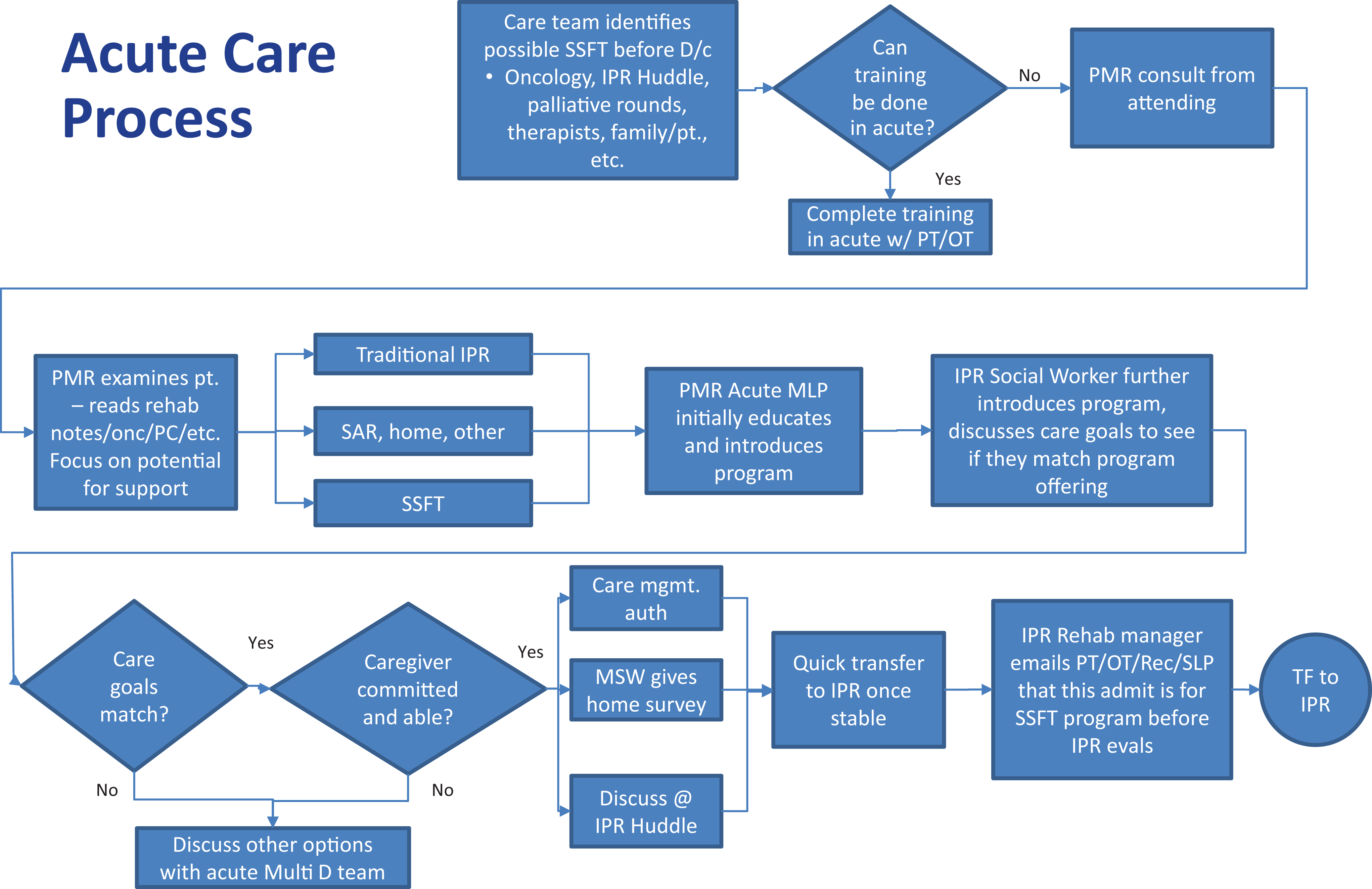
Acute care admission process.
The social worker outlined key points of the SSFT, including the program’s focus on patient and family/caregiver training to prepare for a safe and successful discharge home; strengthening was not the primary goal and the family/caregiver’s presence was required during therapy sessions. Alternative discharge options such as SAR were also presented, and both the patient and family/caregiver were given an opportunity to make a fully informed decision to accept or decline the program before IPR admission. If the PFCT chose the SSFT program, the training was initiated in the acute care setting. If the patient was expected to have an extended hospital stay or if only a brief training was needed to safely return home, this was completed in acute care, eliminating the need for IPR admission. If the patient achieved medical stability and further family/caregiver training was identified that required the skill of the IPR team, the patient was admitted to the IPR SSFT program to address these barriers.
IPR process
After discharge from the acute care setting, the patient was admitted to IPR under the care of the admitting PMR physician with a projected LoS of 7 days (Figure 2). On the day of IPR admission (day 0), the social worker established a daily schedule and provided it to the PFCT (Figure 3). The goal was to have the PFCT progressively achieve increased independence while maintaining the constructs required for an IPR stay, such as executing and scoring the FIM and daily therapy time requirements. The PFCT had the opportunity to meet with the IPR social worker daily for emotional support and problem-solving. The social worker also provided resources for ongoing support and respite for the caregiver. In addition, the IPR nursing team worked with the PFCT to pursue independence in tube feeding, ostomy care, and medication management, if indicated. Finally, speech language pathology services were included if the patient had swallowing or cognitive goals.
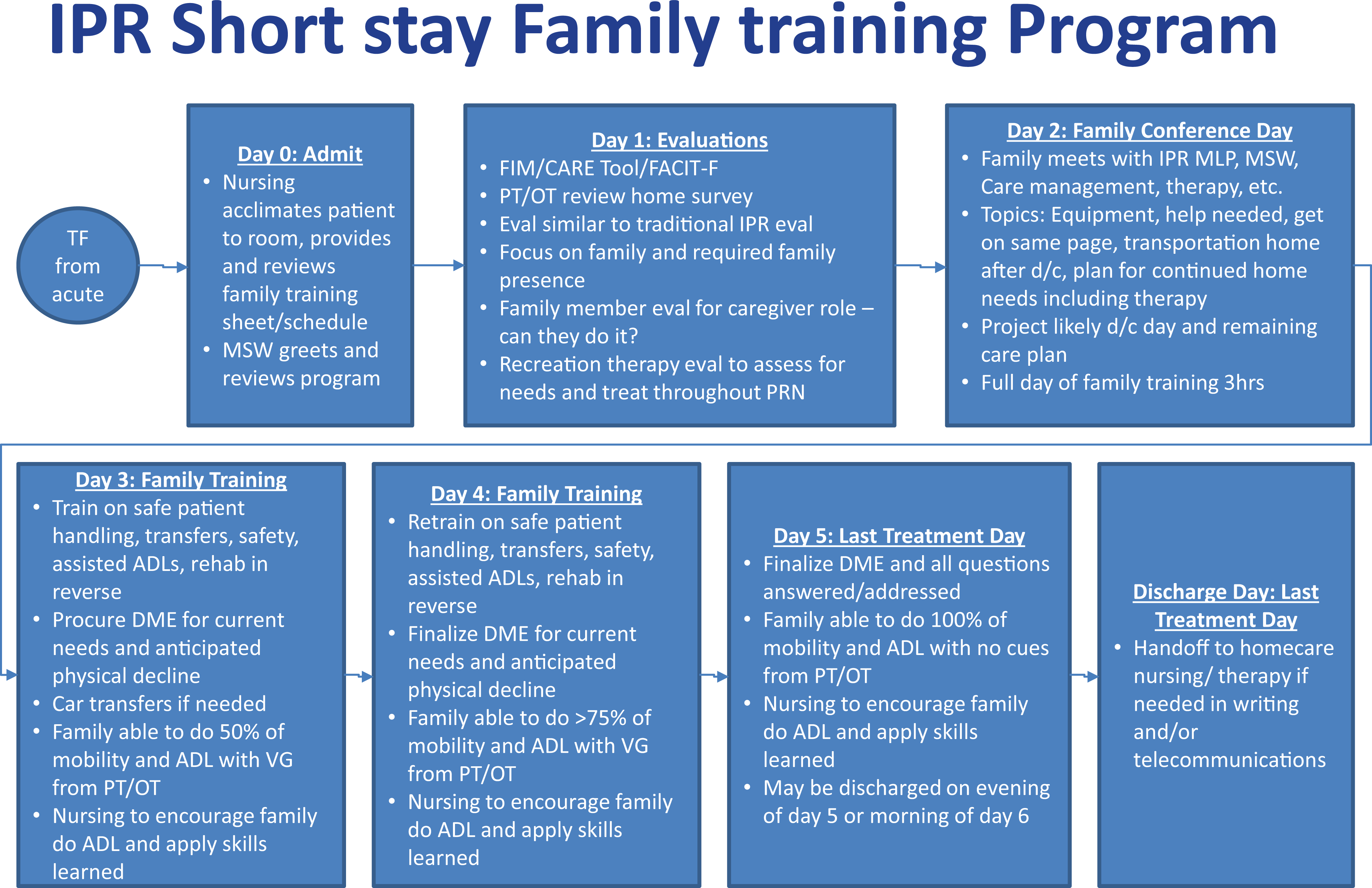
Key events during the Short Stay Family Training admission.
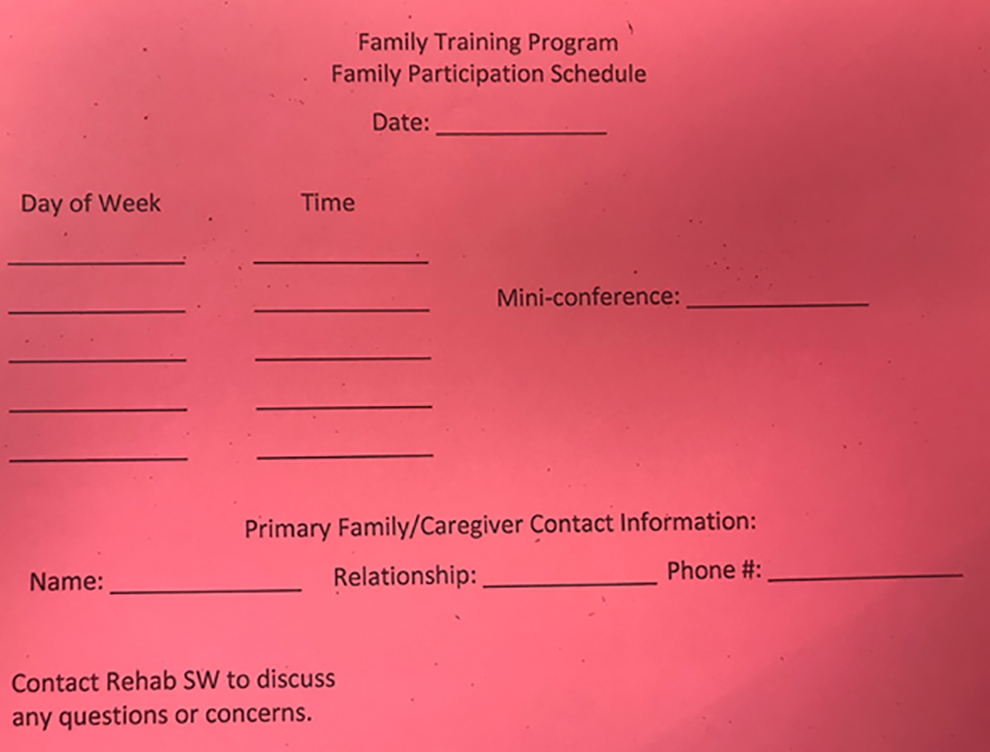
Family training schedule form.
The SSFT program included a team conference with the PFCT and the IPR care team, which included an in-depth discussion of the anticipated discharge plan including level of assist, needed durable medical assistance, and any potential barriers. This was an opportunity for the PFCT and medical team to ensure all barriers to discharge were addressed. The program also offered the PFCT an opportunity to meet with the hospital’s palliative care team on the IPR unit for an informational consultation. Patients typically chose to discharge with palliative home care after this meeting. The goal was by the last therapy day, the PFCT achieved independence in all mobility, care tasks, and ADLs to assure a safe discharge home.
As patients who participated in the SSFT program were at different points of accepting their disease prognosis, the transtheoretical model of behavior change was employed by staff to help facilitate necessary change without negatively affecting a patient’s hope. Prior to the program implementation, a frequent challenge was that the patient’s reality of their situation and how they are going to manage at home collided with their hope for further treatment, cure, or progress. The SSFT program structure, combined with the understanding of the patient’s emotional status and readiness to accept change, allowed for a smoother transition to discharge. The SSFT program empowered both the patient and family/caregiver to understand, choose, and agree to the program before participating. This opportunity to accept or decline the plan of care anecdotally led to less stress, confusion, misunderstanding, and inefficiency. The program maintained the patient and family/caregiver at the center of the model and allows greater success of meeting the patient’s goal—to get home.
On the day of discharge home from IPR, the PFCT was provided discharge instructions, medication prescriptions, and follow-up appointment recommendations. All appropriate equipment was procured in IPR or delivered to the home and the patient was discharged home with the family/caregiver.
Results and Program Outcomes
Components of the program were initiated in 2017, and the full staff education and process was formally implemented in March 2018. Data examined included LoS, family/caregiver presence, patient satisfaction, and discharge location.
Mean IPR LoS was 7 days (standard deviation = 2.1 days) for SSFT participants as opposed to 11 days for the department’s traditional IPR patients. See Figure 4 for LoS for the first 30 consecutive SSFT program participants. During initial program implementation, there was increased variability in LoS with a range of 3 up to 12 days. Since March 2018, family/caregiver presence was 100% during therapy training sessions. Since program implementation, 5 (17%) of 30 participants required readmission to acute care, 4 of which occurred in the first 3 months of program implementation (Figure 5). Since the implementation of the SSFT program, the IPR unit maintained greater than 95% patient satisfaction for the entire unit, utilizing Press Ganey surveys. Although this score included the SSFT patients, data were unavailable to evaluate satisfaction scores for the SSFT patients.
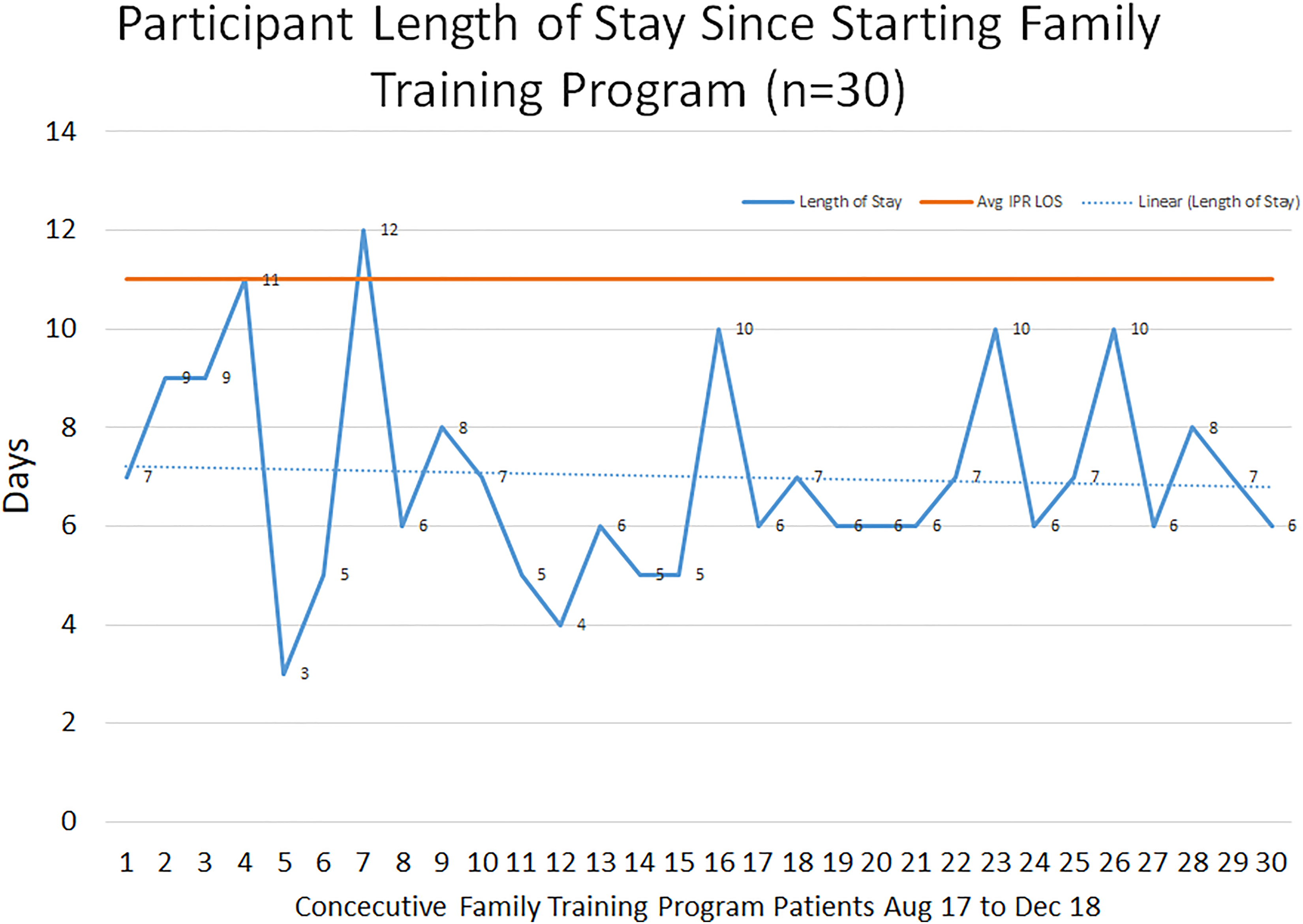
Length of stay of SSFT participants. SSFT indicates Short Stay Family Training.
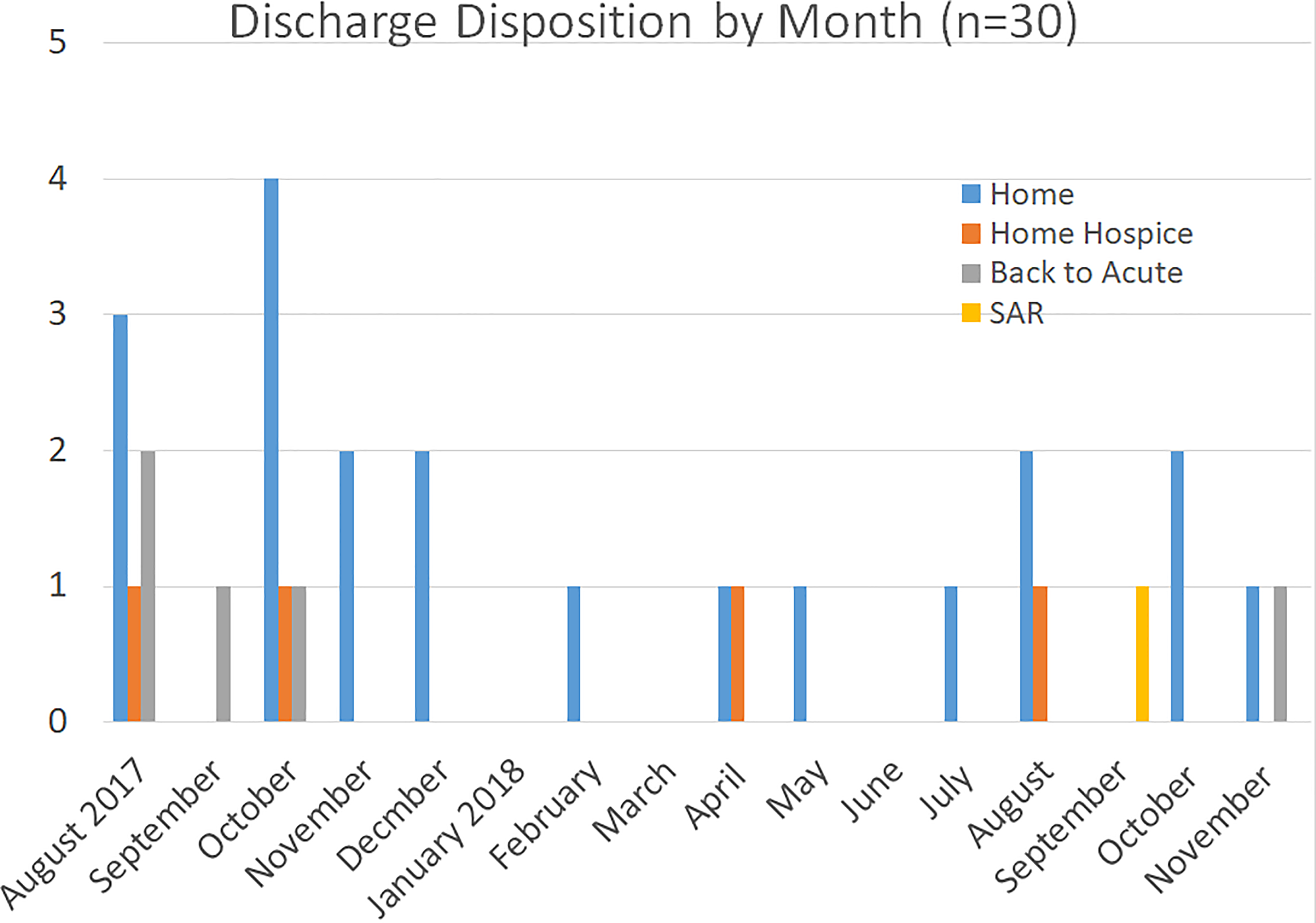
Discharge disposition after SSFT participation. SSFT indicates Short Stay Family Training.
The average FIM score change from admission to discharge for this initial group of 30 SSFT patients was 14.8. This change was lower than the average FIM change for the unit of 26.2. However, overall, the unit showed improved FIM changes the year the SSFT was implemented. Likely, the overall FIM score of the unit was not negatively impacted by this group of patients due to the small sample size.
Although not objectively tracked, there were anecdotal reports in improved care of these individuals and reduced disruption of care. Examples of this reduced disruption in IPR care included improved patient/family consistency with care goals, reduced need for transfers off IPR due to complications from overexerting or excessively challenging patients, and improved consistency with IPR LoS for these critically ill patients. In addition, the acute care discharge planning team reported improved ability to facilitate discharge for earlier LoS as the IPR SSFT program provided another avenue for hospital discharge for these patients.
Discussion
The purpose of this administrative case report was to describe development, implementation, and initial descriptive results of an SSFT program in IPR. The initial results demonstrated that 83% of patients were able to discharge home with an average IPR LoS of 7 days. Patient satisfaction scores for the unit improved the year the program was implemented, indicating that the program did not negatively impact patient satisfaction.
Uniform Data Systems (UDS) is an organization that administers FIM scoring for IPR units on which insurance reimbursement often hinges. It is of note that due to the complex nature of these patient’s cases and their functional limitations, UDS frequently anticipated a longer LoS for these patients than the 6 to 7 days provided during the SSFT. This estimated LoS did not account for these patients’ primary goal of discharge home and medical prognosis, and at times UDS’ anticipated LoS was longer than the duration of the patient’s remaining life. This is an important consideration, as not only is the program reducing expensive prolonged rehabilitation and hospital stays but also assists patients to meet their goals for returning home near the end of life.
Management of late-stage chronic diseases presents a challenge for rehabilitation professionals, as palliative care rehabilitation is not consistently taught within the entry-level training. 8 There are limited best-practice clinical guidelines as it relates to patients with advanced diseases, and rehabilitation professionals often garner best practices from the trial and error of clinical experience. 8 In addition, IPR units depend on clinical documentation for obtaining insurance payment, including establishment of progressive functional goals. Due to the patients’ disease trajectory, rehabilitation professionals’ goal writing presents an additional challenge as skilled services may be required to maintain or even slow a physical decline. As the traditional payment model hinges on improving function, confusion among insurance companies may ensue when goals and patient status demonstrate regression. Wilson and Boright described a series of best practices for clinical documentation and establishing medical necessity in the presence of a palliative situation. 9 These principles were applied during the implementation of SSFT to assist the clinicians in writing achievable, attainable, measurable goals for patients whose prime focus was training the family and maintaining or slowing physical decline.
Currently, this program remains financially sustainable without external funding through insurance reimbursement and general operations of the IPR unit. Most insurance provider guidelines have not traditionally incorporated palliative care concepts in relation to rehabilitation. One notable exception is the Centers for Medicare and Medicaid Services. The Centers for Medicare and Medicaid Services was required to clarify their policy after a 2014 federal court settlement entitled Jimmo versus Sibelius declared that if clinical documentation and patient presentation required the skill of a licensed health-care provider, services could not be denied based on the absence for potential of physical or functional improvement. 10 Despite this ruling, there are private insurances across the United States that do not consistently reimburse for palliative rehabilitation services when functional recovery is not expected. There was concern that the shift in focus of the SSFT program from functional improvement to family/caregiver training provided an increased risk of insurance denials. To curb this risk, staff training emphasized the aforementioned clinical documentation strategies. It may be beneficial to pursue additional funding for the program to provide access to uninsured populations.
As this study was a retrospective analysis of an internal quality improvement program, there are opportunities to improve the research rigor and perform inferential statistics. In addition, the absence of an equivalent control group with similar illnesses limits the ability to demonstrate program effectiveness. Finally, the individual needs of each patient, including social, financial, psychological, and emotional issues, and the small sample size provided added complexity. In future studies, it is recommended to use an objective measure for referral into the SSFT program and potentially provide a method of stratifying the disease process level through an outcome measure such as the Palliative Performance Scale. In addition, continued assessments of patient client satisfaction, readmissions, and other successful palliative or hospice outcomes would be warranted.
Conclusion
The SSFT program was developed out of necessity to fill a gap in care for patients with an advanced disease process and their family/caregivers who had limited capacity to participate in traditional inpatient rehab settings. These patients and family/caregivers often did not have the skills, equipment, and knowledge to achieve a safe discharge home after hospitalization. The initial series of 30 patients demonstrated positive outcomes including patient/family/caregiver satisfaction, reduction in length of IPR stay, and anecdotal reports of less disruption in care which were attributed to clearer expectations among all providers as to the role of rehabilitative services in palliative care situations. The SSFT program is a guided framework that allows for an individualized approach and continues to evolve as a viable alternative to traditional rehabilitation options.
Footnotes
Authors’ Note
Suzette Smith and Christine Lipple completed this study as a partial requirement for graduation from the Beaumont Health Oncology Residency at Beaumont Hospital Troy.
Acknowledgments
The authors would like to thank the task force members of the SSFT development team, including Matthew Trunsky, MD, Ruth Kechnie, RN, Jim Paolucci, RN, Jerryl Birchmeirer, RN, Meagan Hahn, LMSW, Norma Spryszak, RN, Sherine Awad, PA, Jenna Robideau, PA, Nada Kinaya, NP, and Steven Efthyvoulidis, RN.
Declaration of Conflicting Interests
The authors declared no potential conflicts of interest with respect to the research, authorship, and/or publication of this article.
Funding
The authors received no financial support for the research, authorship, and/or publication of this article.
