







Abstract
Nationwide efforts to enhance services for adolescents experiencing commercial sexual exploitation (CSE) in the judicial system have led to the emergence of specialty courts, including human trafficking and girls’ courts. Given that prior research has documented competing stances on the effectiveness of specialty courts for CSE-impacted populations, we conducted a systematic review of the literature to identify key characteristics of programming, profiles of adolescents served, and effectiveness of these courts. To identify relevant research and information, we systematically searched scholarly databases and information sources, conducted reference harvesting, and forwarded citation chaining. Articles presenting primary data with quantitative, qualitative, or mixed methodologies or programmatic descriptions of specialty courts serving adolescents at risk or with confirmed histories of CSE that were published after 2004 were included. We identified 39 articles on 21 specialty courts serving adolescents at risk or with confirmed histories of CSE, including seven specialty courts with evaluation or outcome data. Across specialty courts, adolescents benefited from an increase in linkage to specialized services, improved residential placement stability, and reduction in recidivism—measured by new criminal charges. Specialty court participation was also associated with improved educational outcomes and decreased instances of running away. A lack of empirical data, specifically of evaluation studies, emerged as a weakness in the literature. Still, findings support that specialty courts can be an integral judicial system response to CSE. Multidisciplinary collaboration can help target and respond to the multifaceted needs of adolescents, encourage healthy behaviors, and promote their overall wellness.
Introduction
Emergent efforts to better identify and serve adolescents experiencing commercial sexual exploitation (CSE), also known child sex trafficking, in the judicial system has led to the rise of specialty courts or specialized court programs. In the United States (U.S.), minors (below age 18) who exchange sexual activity for anything of value are federally defined as child sex trafficked (Trafficking Victims Protection Act, 2000). Vulnerabilities to exploitation include having a marginalized identity due to a minority race, ethnic, gender, or sexuality as well as having histories of substance use, running away, homelessness, and adverse childhood experiences (Atteberry-Ash et al., 2019; Choi et al., 2015; Fedina et at., 2016; Franchino-Olsen, 2021; Hernandez, 2021; Naramore et al., 2017; Varma et al., 2015). While there is no decisive estimate of the scope or prevalence of CSE in the United States (Franchino-Olsen et al., 2022; Miller-Perrin & Wurtele, 2017), the overrepresentation of CSE-impacted adolescents in the juvenile justice and child welfare systems (Abrams et al., 2020; Franchino-Olsen, 2021; Gezinski, 2021) highlight a continuum of needs related to abuse and maltreatment (Gies et al., 2020; Hounmenou & O'Grady, 2019; Saar et al., 2015).
CSE-impacted adolescents, including transgender adolescents, face myriad challenges while justice involved such as increased barriers to accessing appropriate care, risk re-traumatization and maltreatment, and poor behavioral health outcomes (Anderson et al., 2016; Hammond et al., 2020; Morash, 2015; Powell et al., 2017; Saar et al., 2015). The justice system often lacks trauma-informed protocols and services to adequately identify and respond to abuse or exploitation (Dierkhising & Branson, 2016; Hoefinger et al., 2019) though adolescents often experience substantial adversity and trauma prior to and during their justice involvement (Charak et al., 2019; Grasso et al., 2016; Saar et al., 2015). Moreover, research has found that CSE-impacted girls and transgender adolescents experience stigmatization, mislabeling, gender-based violence, and a general lack of agency over choices affecting their bodies while in the juvenile justice system (Godoy et al., 2020; Hammond et al., 2020; Saar et al., 2015; Trejbalová et al., 2021). These traumatic events are only compounded by repeated acts of violence (e.g., rape, sexual assault, beaten or hit with objects) and victimization (e.g., emotional abuse, forced substance use) that occur while exploited (Godoy et al., 2020; Hopper, 2017), which often results in negative physical and behavioral health outcomes, such as violence-related injuries, anxiety, depression, post-traumatic stress disorder, and suicidality (Barnert et al., 2017; Cole et al., 2016; Le et al., 2018; Palines et al., 2020). Still, practitioners report limited capacity, feeling unequipped to deliver or refer adolescents to specialized and trauma-informed services, and additional challenges in facilitating and coordinating multidisciplinary care (Anderson et al., 2016; Gonzalez-Pons et al., 2020; Powell et al., 2017). To that end, nonspecialized court treatment and services that do not address CSE-impacted adolescents’ most salient health-related concerns, such as symptoms of depression and self-harm, while using a trauma-informed framework may be ineffective and even harmful by increasing the risk of re-traumatizing the individual (Finklea et al., 2015; Ijadi-Maghsoodi et al., 2016).
Specialty Courts for Adolescents Impacted by CSE
There are currently no databases available to quantify the number of specialty courts for adolescents at risk of or with confirmed histories of CSE in operation nationwide, as there is no formal federal oversight body tracking or monitoring this genre of courts. These specialized courts are often known as girls’ courts or human trafficking courts. Notably, we recognize that not all girls’ courts are specific to adolescents impacted by CSE (Bacharach & Strobel, 2020). In this review, we also included girls’ courts not specific to CSE given the overlap of trauma and histories of sexual victimization among justice-involved girls, the persistent under-identification of CSE-impacted adolescents in institutional systems, and the valuable lessons acquired from gender-specific courts.
Criticisms of Specialty Courts and Potentially Negative Outcomes
Prior research has debated the appropriateness and effectiveness of specialty courts for adolescents impacted by CSE (Kendis, 2019; Kulig & Butler, 2019; Musto, 2013). In particular, specialty courts have struggled with wide variances in frameworks, program length, eligibility and exclusion criteria, goals and objectives, and measurements of success (Luminais et al., 2019). Literature has suggested that as an unintended negative consequence these courts may result in longer lengths of surveillance and system involvement (Bath et al., 2020). Though data are limited, research has found that adolescents involved in specialty courts have shorter lengths of court involvement than their counterparts involved in the traditional court system (Bacharach et al., 2020). Additionally, wide variations in the operational definition of trafficking and ongoing changes in acceptable criminal complaints led to inconsistencies in eligibility criteria, which can be viewed as an overall weakness in the court’s ability to consistently identify potential participants (Luminais et al., 2019). Court personnel may also struggle to delineate the court’s overarching goals, objectives, and definition of success (Luminais et al., 2019), creating additional barriers to ensuring adolescents’ overall safety and wellbeing. Highly restrictive measurements of success, specifically focusing on desistence from commercial sexual activity may be especially problematic, given that many adolescents exhibit cyclical behaviors of desistence and re-entry into CSE.
Current Study
Specialty courts, often referred to as collaborative or problem-solving courts, use a diversion framework to provide alternatives to detention by combining judicial supervision with rehabilitative treatment services (Bacharach & Strobel, 2021; Callahan et al., 2012; Valadez, 2019). The collaborative model of specialty courts offers a unique opportunity for developing targeted approaches to meet the specific needs of CSE-impacted adolescents, between the ages of 10 and 19 (World Health Organization, 2021), involved in the judicial system. Yet, it is unknown as to whether these courts are effective in attaining their goals. While prior research has examined sex trafficking courts nationwide (Kulig & Butler, 2019), girls’ courts in the juvenile justice system (Valadez, 2019), and conducted a process evaluation of girls’ courts and commercial sexual exploitation of children (CSEC) courts across the state of California (Bacharach & Strobel, 2021), to the authors’ knowledge no systematic review on specialty courts for CSE-impacted adolescents has been conducted. This review relied on empirical data gathered from peer-reviewed articles, programmatic descriptions, and gray literature on specialty courts serving girls or CSE-impacted adolescents to identify (1) key characteristics of specialty courts; (2) profiles of adolescents served; and (3) the effectiveness of specialty courts.
Methods
We conducted a systematic review of the literature by using a scientific approach to collect and analyze information focused on answering inquiries that may guide the development of practices within and policies related to specialty courts (Nelson, 2014). Given that prior research has documented competing stances on the effectiveness of specialty courts for this population (Kulig & Butler, 2019), a systematic review was deemed necessary to provide evidence for consensus (Nelson, 2014). The aim of this review was to examine evidence on the characteristics of these courts and the populations served and determine the effectiveness of specialty courts in the U.S. This review was developed using the preferred reporting items for systematic review and meta-analysis protocol (PRISMA-P) guidelines (Shamseer et al., 2015).
Search Strategy
To locate articles and information that met the study aim, we used four search strategies: (a) systematic search of scholarly databases, (b) searches of information sources, (c) reference harvesting, and (d) forward citation chaining. First, the following bibliographic databases were systematically searched from the earliest available dates to May 2021: Embase, Web of Science, PsycINFO (ProQuest), PubMed (includes MEDLINE), and Cochrane Reviews and Trials. NexisUni was also searched with a date limit of January 2004 to May 2021. Final searches were completed on November 2, 2020 and were updated on May 25, 2021. No additional language limiters or filters were placed on the searches.
The search strategies were developed by a health sciences librarian who translated the search strategies using each database platform’s search fields and field tags. For the search terms, MeSH, Emtree, PsycInfo thesaurus, and keywords were used for the concepts of specialty courts, commercial sexual exploitation of minors, and youth. All three concepts were combined with the “AND” Boolean operator.
After completing the database search, we searched information sources (i.e., Google search engine and GoogleScholar) to locate relevant governmental and nongovernmental organization websites to identify technical reports, research briefs, and other salient information. Given that no prior systematic review on this topic area has been conducted, locating gray literature and court descriptions ensured relevant information was captured and helped to reduce publication and reporting bias (Dana et al., 2014; Haddaway et al., 2015). Reference harvesting of the included studies was conducted to identify additional relevant articles and forward citation chaining was used to locate cited articles. References from recently published reviews of similar concepts were also reviewed. These searches were conducted in May of 2021. All references were imported for review and appraisal into Zotero (version 5.0.96), a reference management software.
Study Selection and Screening
Our inclusion criteria were as follows: (a) articles using primary data with quantitative, qualitative, or mixed methodologies; (b) articles with programmatic descriptions of specialty courts; (c) available in English; (d) specialty court was based in the U.S.; and (e) published after 2004. Therefore, we excluded articles not written in English, not based in the U.S., and that did not include programmatic descriptions or empirical data. Given that human trafficking or girls courts were not initiated until 2004 (McGuire, 2016), we excluded all specialty court literature prior to this year.
In total, 1970 articles were identified, including 185 duplicated studies (See Figure 1). Of this, 1337 articles were identified for title and abstract screening. To ensure accuracy and validity, two researchers independently conducted title and abstract screenings, which returned 51 eligible articles for full-text review. These findings were confirmed by a third researcher. Two researchers then independently conducted full-text reviews to assess selected articles for their quality and relevance, and a third researcher checked for accuracy of findings. Discrepancies in findings were discussed and resolved in team meetings. In total, 13 peer-reviewed articles were identified as meeting inclusion criteria after the full-text review. An additional 119 records were identified using reference harvesting and hand searching of websites and organizations known to the authors to contain relevant information, of which 27 records were not available for review. Of the additional 92 records assessed for eligibility through the full-text review, 65 did not meet inclusion criteria. Therefore, 27 additional records were identified for abstraction. Study flow diagram (PRISMA) depicts the three phases of review, including the number of records screened and included in our synthesis.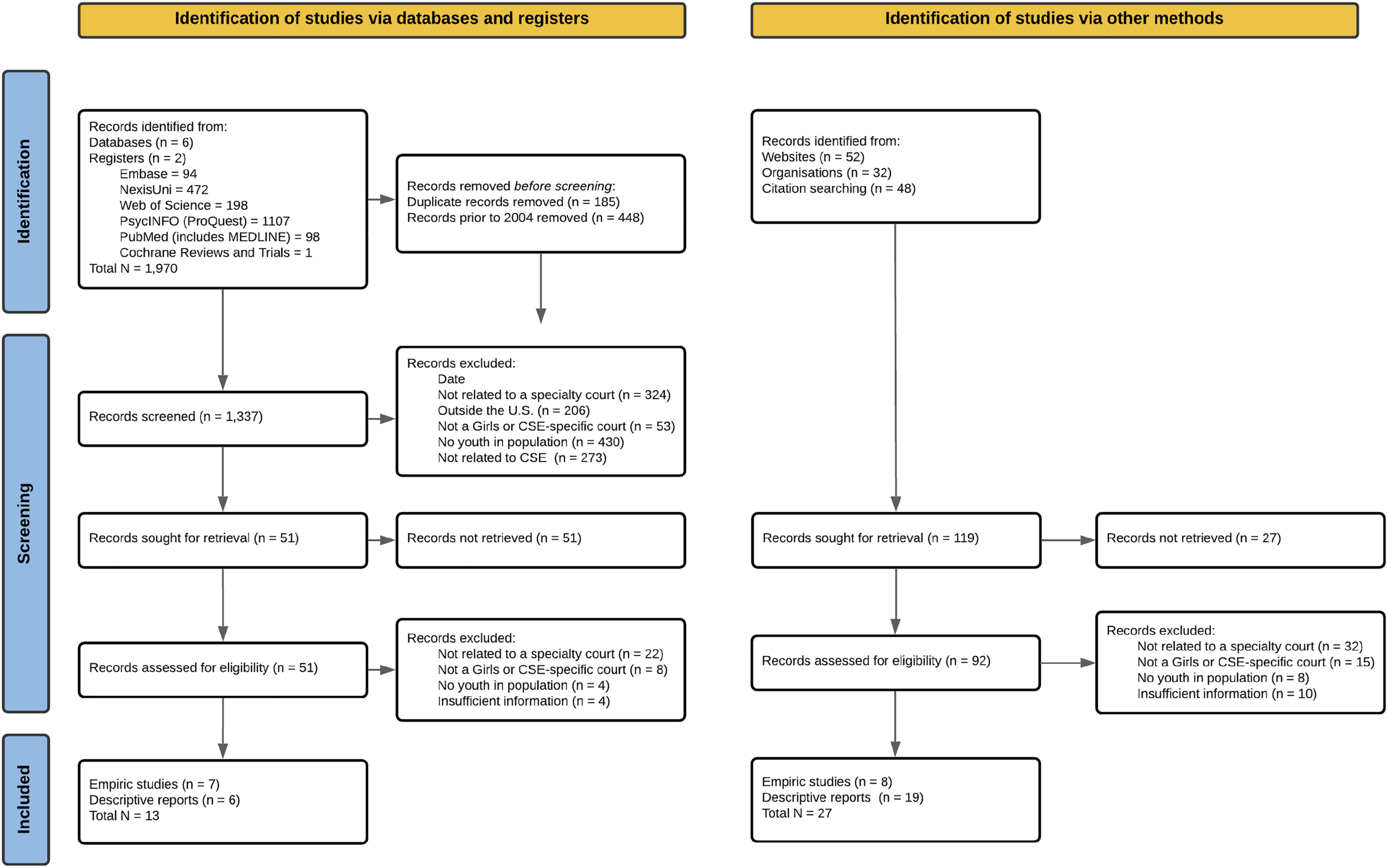
Abstraction and Analysis
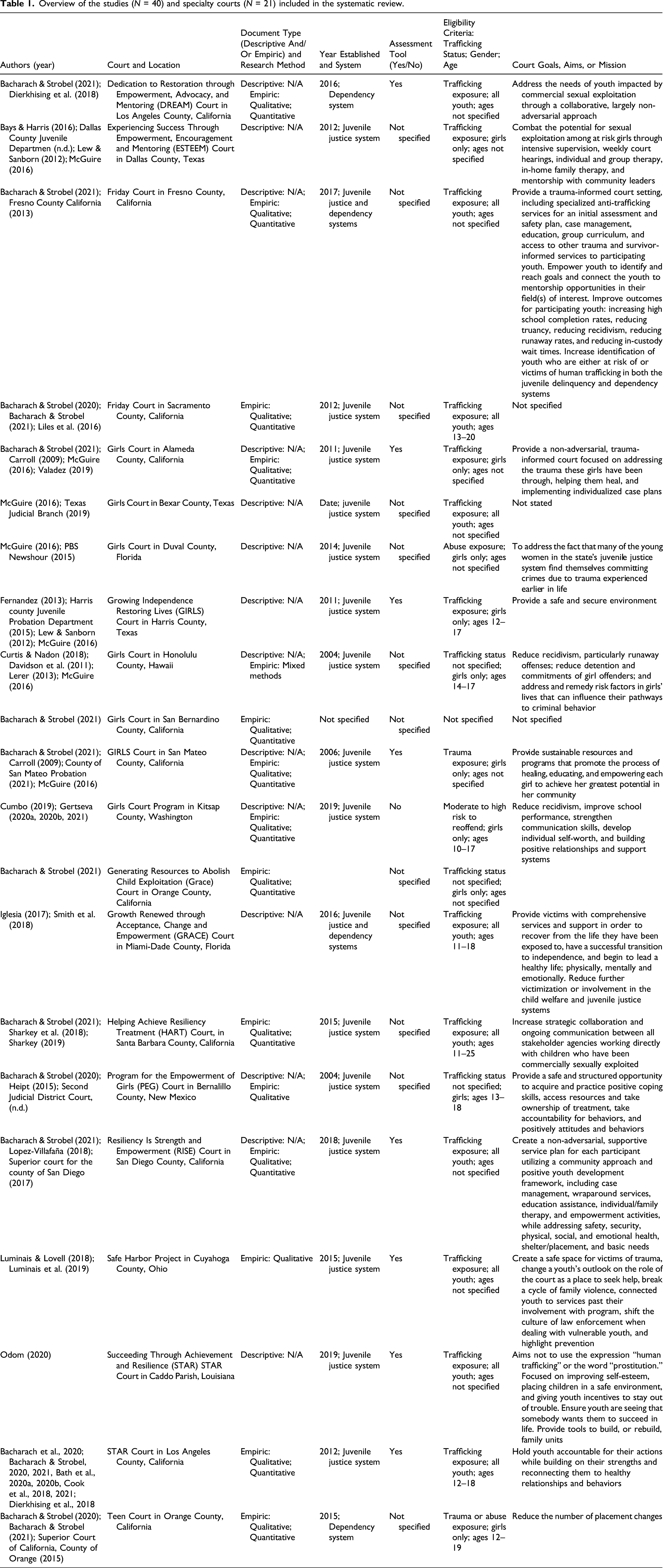
Overview of the studies (N = 40) and specialty courts (N = 21) included in the systematic review.
Results
In total, we identified 40 articles published between 2009 and 2021 that included a total of 21 distinct specialty courts. Fifteen articles presented empirical data on seven specialty courts and 25 reports provided programmatic descriptions of the remaining courts. Table 1 provides an overview of all identified specialty courts, including information extracted from the documents about the year each court was established and eligibility criteria. The specialty courts (N = 21) were located in eight states: California, Florida, Hawaii, Louisiana, New Mexico, Ohio, Texas, and Washington. The highest concentration of specialty courts for adolescents impacted by CSE were located in California (n = 10). Most courts (n = 15) served adolescents involved in the juvenile justice system only; two courts served adolescents in the dependency system only; and two courts served adolescents involved in either system.
Available literature indicates noticeable discrepancies between how these courts operate. For example, some courts offer services through a dedicated court calendar, which meets on specific dates and blocks of time with a dedicated judge and court team, while other courts offer services through a diversion program that may be less structured (Amara Legal Center, 2018, Superior Court of California, Orange County, 2015; Bacharach et al., 2020; Bath et al., 2020; Liles et al., 2016). Generally, these courts provide more in-depth and non-adversarial supervision than traditional courts, as well as linkages to supportive services in lieu of convictions and incarceration (Bacharach et al., 2020; Bacharach & Strobel, 2020; Bath et al., 2020; Liles et al., 2016). We present findings related to the key characteristics of these identified courts, including the demographic profiles of the adolescents served and narrative reviews detailing available outcomes related to the effectiveness of their programming.
Key Characteristics of Specialty Courts for Adolescents Impacted by CSE
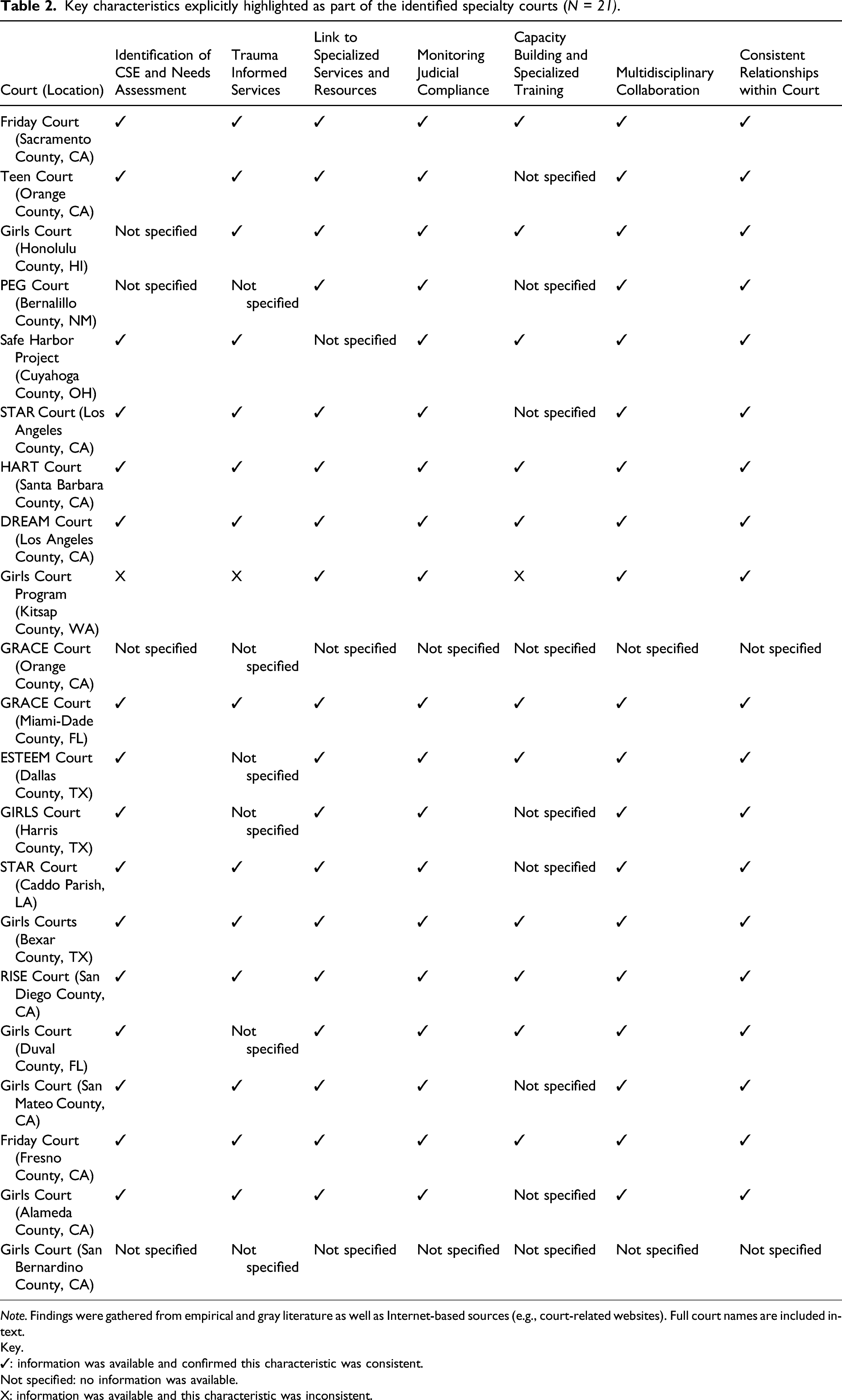
Key characteristics explicitly highlighted as part of the identified specialty courts (N = 21).
Note. Findings were gathered from empirical and gray literature as well as Internet-based sources (e.g., court-related websites). Full court names are included in-text.
Key.
✓: information was available and confirmed this characteristic was consistent.
Not specified: no information was available.
X: information was available and this characteristic was inconsistent.
These courts were largely focused on increasing the identification of CSE, assessing adolescents’ individual needs, and diverting them to culturally-responsive, collaborative, and comprehensive trauma-informed care (Bacharach & Strobel, 2021; Bath et al., 2020a, 2020b; Epstein & Edelman, 2014; Liles et al., 2016; Weller & Martin, 2017). These objectives were operationalized through interagency collaboration with a dedicated calendar and a consistent multidisciplinary team, at minimum consisting of the dedicated judge, prosecutor, defense attorney, probation, and treatment providers (Bacharach et al., 2020; Bath et al., 2020a, 2020b; Liles et al., 2016). The majority of studies did not describe their screening or intake process in-depth. While screening and assessment tools are necessary to determine eligibility and to identify trauma to address, only about half of the courts in California used a screening tool at in-take or while the adolescent was in custody (Bacharach & Strobel, 2021) and an additional five courts documented a process that involved two distinct screening tools. The Commercially Sexually Exploited Identification Tool (CSE-IT) tool was used most often by the courts that had a systematic method for assessing the risk of CSE (Bacharach & Strobel, 2021).
The majority of courts provided specialized treatment, linked adolescents to community resources and services, and held court on consistent days and times. Transportation was identified as a salient challenge to connecting adolescents to community based, specialized services (Gertseva, 2020b). Only one court did not offer specialized services that differed from services offered to adolescents in the traditional judicial system (Luminais et al., 2019). The same court did not have a consistent calendar; as such, adolescents on this docket did not appear in court on consistent days and were seen on the same days as adolescents in the traditional court system (Luminais & Lovell, 2018; Luminais et al., 2019). The majority of California-based courts (n = 8) held court in a private setting away from other adolescents involved in the court; however, two courts had all court participants arrive and wait in the court together as a mechanism to build community among participants (Bacharach & Strobel, 2021). Court supervision varied widely from a minimum of two days to a maximum of about five and a half years, but not all courts documented time limits to court supervision. The frequency of court hearings in California ranged widely from every week to every eight weeks on average.
Interagency and multidisciplinary collaborative efforts, such as coordinated multidisciplinary team meetings, were explicitly described in all courts. Multidisciplinary collaboration and team meetings helped ensure adolescents’ treatment needs were regularly integrated into case plans (Bath et al., 2020). Several courts highlighted that a consistent multidisciplinary teams, including judges, enables court participants to build rapport and trust (Bacharach & Strobel, 2021; Luminais et al., 2019). Five specialty courts explicitly stated maintaining a staff of all women; however, the racial and ethnic identities of the court staff were not reported.
To underscore their commitment to consistent and meaningful interpersonal relationships, one program description listed dignity and respect as core values (Harris County Juvenile Probation Department, 2015), and two studies explicitly stated that adolescents felt respected by their care team (Liles et al., 2016; Luminais et al., 2019). Two courts emphasized a commitment to family-oriented approaches (Harris County Juvenile Probation Department, 2015; Odom, 2020), five courts required parental involvement (Bacharach & Strobel, 2020; Davidson et al., 2011; Heipt, 2015; Odom, 2020; Second Judicial District Court, n.d.), and one court identified family engagement and support as critical to achieving positive outcomes but recognized the challenges associated with navigating family dynamics (Gertseva, 2020b). In particular, three courts documented that parents or guardians unwilling to comply with the court risked negative consequences, such as their child being ineligible for the program or an active warrant for the parents’ arrest and incarceration (Davidson et al., 2011; Heipt, 2015; Second Judicial District Court, n.d.).
Profiles of Adolescents Served by Specialty Courts
Available data describing the demographic profiles of CSE-impacted adolescents within specialty courts are limited. Six specialty courts accepted adolescents of all gender identities and six courts exclusively served cisgender girls. Only two courts explicitly documented serving adolescents who did not identify as cisgender girls. Notably, across all studies with available demographic information, the courts only five boys and two transgender adolescents. Most of the adolescents identified as African American/Black and a large proportion of adolescents identified as Latinx, though several courts did not report race and ethnicity. The courts predominately served adolescents between the ages of 12 and 20 with average ages between 15 to 17 years old. Among courts in the juvenile justice system a commonly identified indicator of CSE were charges related to prostitution or history of exploitation. One court sought out adolescents with less serious citations, such as disturbing the peace, and have since progressed to identify adolescents based on more serious matters, such as major theft and kidnapping (Odom, 2020).
Narrative Review of Specialty Courts with Empirical Data
Critical findings of specialty courts (n = 7) with available empirical data.
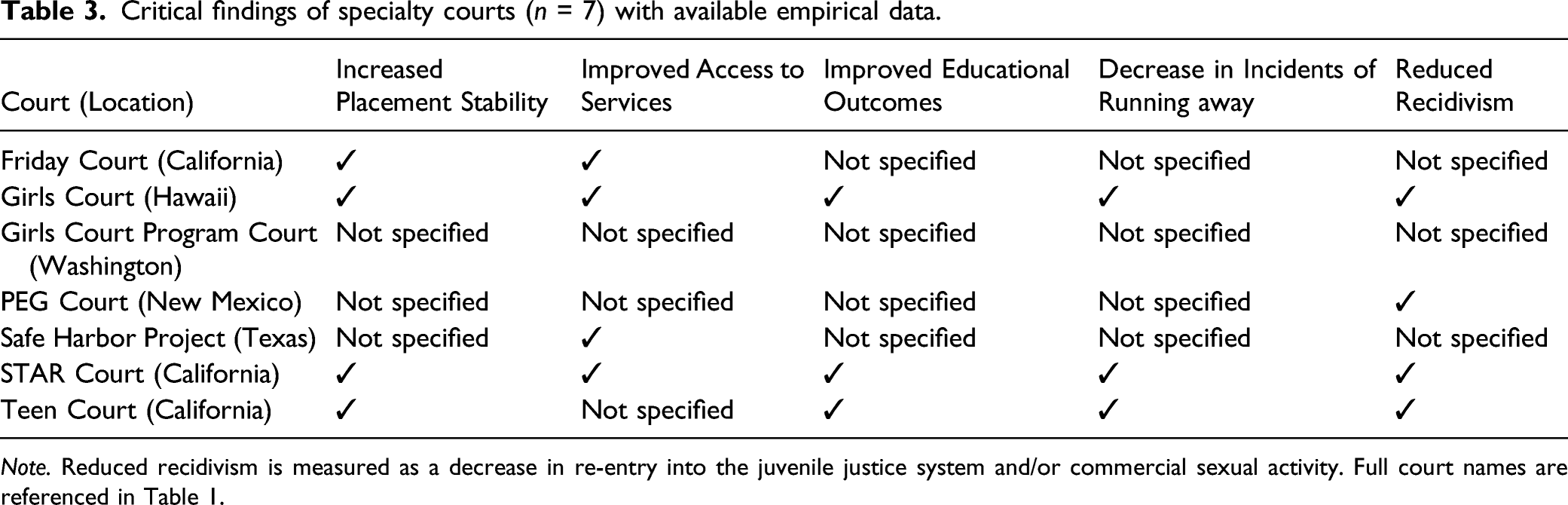
Note. Reduced recidivism is measured as a decrease in re-entry into the juvenile justice system and/or commercial sexual activity. Full court names are referenced in Table 1.
The Friday Court, formerly known as CSEC Court, in Sacramento County, California, serves adolescents between the ages 13 and 20 in the juvenile justice system (Bacharach & Strobel, 2021). Notably, this court was purposely named Friday court to remove or avoid any potentially stigmatizing terminology or labels associated with CSE (Bacharach & Strobel, 2021). Among the 192 adolescents involved in the court, the majority were between 15 and 16 years old, predominately identified as Black or African American, and were almost exclusively girls (Liles et al., 2016). Adolescents participate in weekly probation meetings and monthly court hearings. Among the interviewed primary collaborators and team members, the majority (85%) believed the multidisciplinary team dynamic was beneficial, highlighting that consistency among the judge, district attorney, and public defender allowed adolescents to build relationships and trust in the system (Liles et al., 2016). Additionally, the court increased identification of CSE, increased diversion options, and advanced local initiatives (Liles et al., 2016).
The Girls Court in Honolulu, Hawaii, was established in fall 2004 and serves adjudicated girls between the ages 14 and 17 in the juvenile justice system (Davidson et al., 2011; Heipt, 2015). The court mandates monthly court hearings, compulsory educational requirements, community service, and therapy (Cook et al., 2021). Among girls (N = 70) included in the court evaluation, 44% identified as Hawaiian or part-Hawaiian and the average age was 15.8 years old. Findings showed a statistically significant reduction in recidivism among girls, specifically a 90.4% decrease in law violations and 95.6% decline in status offenses, excluding running away (Cook et al., 2021; Davidson et al., 2011). The girls had a significant decrease in both the frequency and length of detention and incidents of running away (Davidson et al., 2011). Additionally, the girls self-reported positive outcomes, such as the development of healthier behaviors and interpersonal relationships with peers (Davidson et al., 2011).
The Girls Court Program in Kitsap County, Washington (Gertseva, 2020a, 2020b, 2021) was established in 2019 to provide therapeutic and gender-responsive services to girls and young women in the juvenile justice system. As of June 2021, the court uses a pre-adjudication model which enables girls to participate in the program prior to receiving any delinquency charges. Within the first year of the program, the Girls Court Program served 18 girls with moderate to high risk to reoffend. A large proportion of the girls had histories of trauma (56%), sexual abuse (44%), domestic violence (89%), and running away (66%). While the court did not use a standardized assessment tool to identify CSE, the court did implement standardized tools to assess the needs court participants (Gertseva, 2020b). To achieve their stated goals, the program links the girls to community resources, social service agencies, and mentors. This extensive community outreach component enables girls to be served in their local communities, instead of relying solely on services available in the juvenile justice system. The court, however, lacked an empirically supported, trauma-focused screening tool. Program evaluators noted that not all staff and treatment providers associated with the court received formal training on trauma-related topics, such as identifying trauma-related needs and the implications and impact of trauma. Further, recommendations included that the specialty court monitor and evaluation of the effectiveness of treatment services and enhance ongoing collaboration with providers to ensure participants are appropriately referred to the program. Notably, collaboration between healthcare professionals and social work providers appeared to be lacking.
The Program for the Empowerment of Girls (PEG) Court located in Bernalillo County, New Mexico, is the longest operating girls court (Heipt, 2015). PEG Court is an intensive juvenile probation and therapeutic program for girls with histories of trauma or violence between the ages of 13 and 18 (Second Judicial District Court, n.d.). The program mandates weekly hearings and programming for a minimum of twenty weeks followed by a step-down transition period (Heipt, 2015; Second Judicial District Court, n.d.). As of February 2013, about 200 girls completed the program with a 90% completion rate (Heipt, 2015). The PEG program manager reported participants had more access to educational programs and behavioral health services and lower recidivism rates, although recidivism is not explicitly defined (Bacharach & Strobel, 2020).
The Safe Harbor Project in Cuyahoga County, Ohio, is a program within the Juvenile Court (Chesney-Lind, 1999; Heipt, 2015). Between 2015 and 2016, the project identified 100 potentially exploited justice-involved adolescents and consistently maintained about 20 active cases. This specialty court did not mandate terms or offer any court-related services that were different to the terms and services available to adolescents in the traditional juvenile courts. The program length is a maximum of 270 days, but the court evaluation identified high attrition rates. Within the study period, only four girls successfully completed the program, and the court had no significant decrease in recidivism rates overall (Luminais et al., 2019). Negative findings were largely attributed to limited state regulation or guidance from established models. Notable successes include the multidisciplinary advisory board’s community outreach and trainings. Indeed, one of the young women who completed the program felt that staff respected her agency and offered shared decision-making whenever possible (Luminais et al., 2019).
The Succeeding Through Achievement and Resilience (STAR) Court in Los Angeles County, California, is a voluntary program in the juvenile justice system. Between 2012 (court initiation) and 2018, STAR Court approximately 550 adolescents were referred to STAR Court (Dierkhising et al., 2018). STAR Court served 360 girls, two transgender adolescents, and two boys, most of whom were of racial or ethnic minority backgrounds—70% identified as Black or African American and 43% Latinx—between 2012 and 2016 (Bath, Barnert et al., 2020). Studies have found that STAR Court participants showed an overall improvement in stability, as evidenced by fewer child welfare allegations and instances of running away while in court (Bacharach et al., 2020; Bath et al., 2020a, 2020b; Cook et al., 2018). The participants also had an increase in linkages to health-related treatment referrals, improved educational outcomes, and a reduction in new citations (Bacharach et al., 2020; Bath et al., 2020). Despite these positive outcomes, preliminary data involving a sample of participants involved in STAR Court (n = 181) between 2012 and 2014 found that those entering the juvenile justice system at younger ages received more citations and bench warrants than older adolescents—an association that may indicate that involvement within the judicial system at younger ages may lead to worse outcomes (Cook et al., 2021).
The Teen Court in Orange County, California, served 38 girls between the ages of 12 and 19 in the dependency system within their first year. The majority of girls (78%) were between the ages of 14 and 16 years old and identified as Latinx (66%; Superior Court of California, Orange County, 2015). While court-involved there was an overall increase in placement stability, decrease in incidents of running away, and improvements in educational attainment. The number of new placements decreased by almost 42% and the proportion of girls running away from care decreased by 57% from baseline to case closure (Superior Court of California, Orange County, 2015). Further, there was a 58% improvement in grade point averages (GPAs)—with an average increase from a 2.36 to 2.52 GPA (Superior Court of California, Orange County, 2015).
Summary. Among the seven specialty courts that provided descriptive and outcome data, most courts (n = 4) exclusively served girls. While the remaining courts (n = 3) did not exclude adolescents of varying genders, only one court (i.e., STAR Court in California) presented data which included boys and transgender. Girls Court in Washington served the youngest girls (i.e., age 10), but did not serve girls beyond age 17—similar to Girls Court in Hawaii. There was no explicit standard of care implemented across the courts, though most of the courts shared several characteristics. Friday Court was the only court to report all seven key characteristics outlined in Table 2 (e.g., multidisciplinary collaboration, consistent relationships within court). The majority of courts (n = 5) provided trauma-informed services; however, PEG Court did not specify the use of trauma-informed services. Notably, not all service providers involved with Girls Court in Washington received specialized training in trauma-informed approaches; therefore, not all services were trauma-informed. Teen Court, PEG Court, and STAR Court did not specify capacity building or specialized training among staff, though these efforts may increase staff’s ability to recognize trauma and improve services (Gertseva, 2020b).
Discussion
Implications for Practice, Policy, and Research.
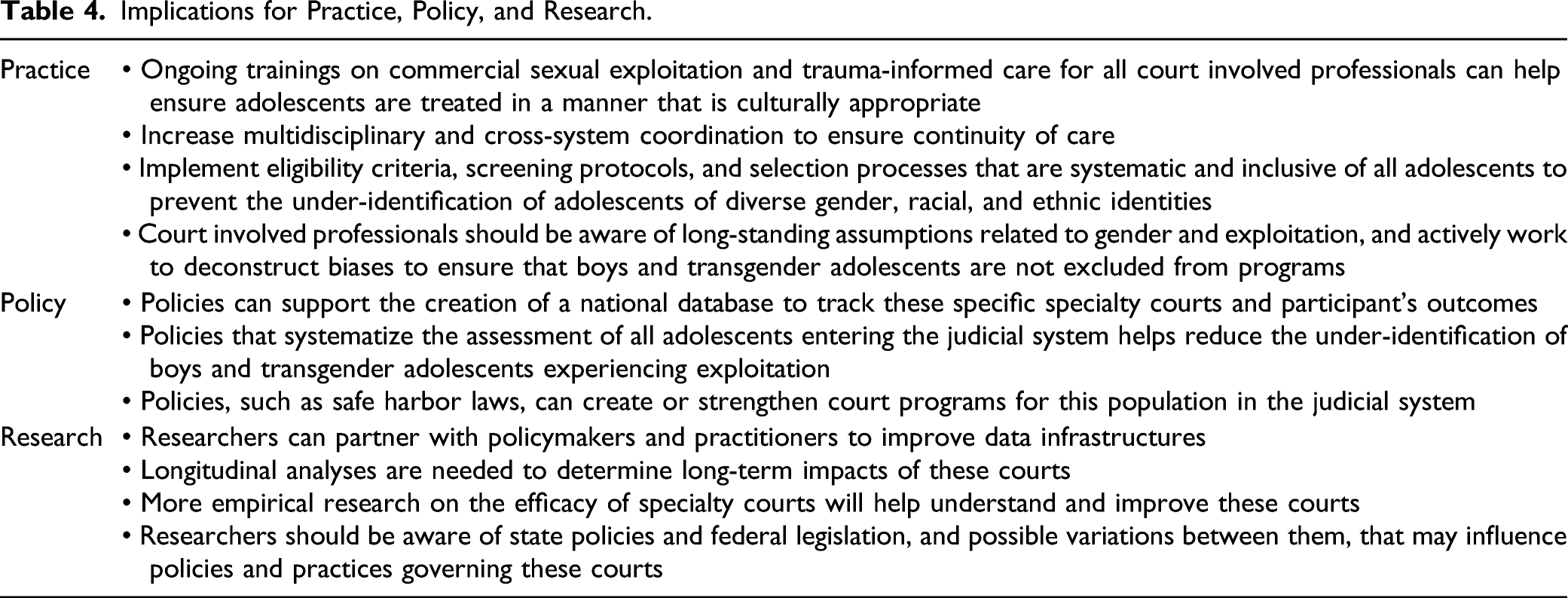
Multidisciplinary professionals involved in specialty courts should participate in ongoing trainings and capacity building that focus on developing trauma-informed systems to better understand the complex needs of CSE-impacted adolescents, larger implications of trauma and sexual exploitation, and ways to appropriately support participants as they access services (Gertseva, 2020b; Hopper, 2017; Ijadi-Maghsoodi et al., 2016; Powell et al., 2017). Assessment of individual needs and targeted treatment that use person-centered, culturally-appropriate, and trauma-informed approaches are necessary to reduce the risk of re-traumatizing participants and increase their overall safety and stability (Finklea et al., 2015; Ijadi-Maghsoodi et al., 2016; Miller-Perrin & Wurtele, 2017). Increasing multidisciplinary and cross-system coordination helps ensure that adolescents benefit from timely and structured referrals, comprehensive services that are easily accessible, and consistency in services and providers (Hopper, 2017; Miller-Perrin & Wurtele, 2017; Powell et al., 2017). Further, as courts refer participants to services, it is necessary that these treatment and services are closely monitored and their effectiveness is evaluated (Gertseva, 2020b; Miller-Perrin & Wurtele, 2017). Additionally, maintaining a consistent court team has been demonstrated to be an important mechanism for continuity of care, building trust, and assists adolescents with developing healthy interpersonal relationships and prosocial skills, which may have positive long-term effects (Bacharach & Strobel, 2020; Hopper, 2017, McCoy et al., 2018; Superior Court of County of San Mateo Probation, 2021).
The identified specialty courts almost exclusively served cisgender girls and young women of color with services rarely accessed by boys or transgender adolescents. This gendered-gap is likely influenced by the assumption that the quintessential victims present as girls and young women with histories of abduction and myriad vulnerabilities (Vijeyarasa, 2016). This narrative is tied to a historical and long-standing “rescue” approach aimed at saving women and their “purity” which less often targets boys and transgender individuals (Vijeyarasa, 2016, p.31). Therefore, court officials and multidisciplinary collaborators should be mindful of their underlying assumptions and potential biases related to CSE and gender, and implement more inclusive strategies. Our findings support prior research that recommends the development and expansion of more inclusive screening tools and programming that increases the identification of CSE (Watson & Edelman, 2013) and decreases stigma among adolescents with diverse sexual and gender identities (Amara Legal Center, 2018), especially for cisgender boys and transgender adolescents who continue to be underidentified (Hammond et al., 2020). Policies that require judicial staff to screen all adolescents entering the court system for potential histories of CSE may increase diversity among participants served and ensure that no adolescents go unidentified. Implementing eligibility criteria, screening protocols, and selection processes that are objective and inclusive of diverse races, ethnicities, and gender identities can help ensure that these programs are accessible to individuals most in need (Amara Legal Center, 2018; Luminais et al., 2019).
Specialized court programming offers adolescents an alternative to the traditional justice system that is often punitive in nature and lacking trauma-informed care, which can result in negative health outcomes (Hoefinger et al., 2019). As individuals experiencing CSE continue to be criminalized across the U.S.—often due to gaps in protections due to varying state legislation (Barnert et al., 2016)—we recognize that full decriminalization and community-led prevention and intervention efforts remain important mechanisms for supporting adolescentsoutside of the justice system (Gies et al., 2020; Hoefinger et al., 2019; Valadez, 2019). Further, adolescents and their families may experience protracted engagement with the judicial system as a result of their involvement in a specialty court. Given the pervasive racial disparities within the U.S. criminal justice system (Hinton et al., 2018), prolonged surveillance may have particularly negative implications for Black, Indigenous, and other people of color. Importantly, specialty courts are designed to offer participants an alternative to traditional judicial involvement and should be aware of the implications of prolonged engagement. Moreover, CSE-impacted adolescents involved in the justice system for matters not directly related to their exploitation, such as nonrelated citations, or within the child welfare system may especially benefit from specialty courts.
Finally, we recognize that states often establish policies to protect adolescents impacted by CSE that may not comport with federal legislation. This review does not account for those variations in state legislation, which may have implications for understanding the distinct policies and practices governing the administration of these courts across jurisdictions.
Gaps in the Literature
The lack of a national database of these types of girls’ courts and human trafficking courts presents challenges in systematic analysis of the number and scope of specialty courts in operation annually. Although some governmental entities track courts across their state, there is wide state-to-state variance on documentation. To our knowledge, there are no federal policies that support a systematic method for tracking data and infrastructure of courts nor systematic data collection processes within the judicial system which can help determine the number of participants involved in these courts. Additionally, there is no systematic way of monitoring progress or success rates across courts as there is no consistent measurement of success. Policy supporting the creation of a national database for specialty courts that serve adolescents at-risk or with confirmed histories of CSE would be beneficial to track and monitor courts and help streamline measurements related to success. It may be necessary that practitioners diversify key outcomes by capturing incremental progress and any positive change, rather than results such as graduation rates (Heipt, 2015). Researchers can partner with policymakers and practitioners to improve data infrastructures and conduct longitudinal analyses to determine long-term impacts of these courts.
Largely absent from literature was mention of health-related outcomes within coordinated care and the role of healthcare professionals in specialty courts. Given the myriad physical, reproductive, and behavioral health needs and outcomes impacting these adolescents, healthcare professionals can play a meaningful role by increasing their access to tailored health-related services. Specialty courts offer a unique opportunity in which health officials, such as public health nurses and health educators, can partner with these programs to help identify and ensure health-related needs are met in a timely and consistent manner.
Strengths and Limitations
The main limitations of the reviewed articles were the lack of a comprehensive list of specialty courts currently in operation or data across courts. Given that there is no mechanism to track specialty courts nationally, there is no way to monitor if the courts are currently in operation. Therefore, some court programs may have ended due to funding or other reasons that are not reflected in this review. Only one-third (n = 7) of the identified courts presented any type of data, and few reported participant outcomes using longitudinal data. The courts presented relatively small sample sizes, and some courts did not quantify participants served. Thus, the generalizability of these outcomes is limited. Still, this review offers important findings and implications that can guide practice, policy, and research.
To our knowledge, this is the first systematic review examining specialty courts for adolescents at-risk or with confirmed histories of CSE. Our findings provide an important contribution to the literature by synthesizing available knowledge of varying methodological quality. Among specialty courts with available empirical data, participants benefited from an increase in housing placement stability (n = 4), improved access to services (n = 4), and reduced recidivism (n = 4). Fewer courts reported that participants had an improvement in educational outcomes (n = 3) or a decrease in incidents of running away (n = 3). These findings offer important insight into participants’ outcomes while also highlighting the need for a more systematic method of evaluating court processes and their overall efficacy.
Conclusion
Our findings support the notion that specialty courts can be an integral system response for adolescents at risk of or experiencing CSE. The literature suggests that specialty courts are a viable mechanism for increasing access to specialized services and assisting in the overall stability of CSE-impacted adolescents. Still, more empirical data and rigorous evaluations of courts are required to better understand their overall and long-term effectiveness and guide future service provision.
Footnotes
Acknowledgments
We would like to thank Donna Strobel for her initial support of this article.
Declaration of Conflicting Interests
The author(s) declared no potential conflicts of interest with respect to the research, authorship, and/or publication of this article.
Funding
The author(s) disclosed receipt of the following financial support for the research, authorship, and/or publication of this article: This work was supported by funding from the National Institute on Drug Abuse and National Institutes of Health under the AACAP NIDA K12 2016–2020 program [Grant #K12DA000357]; UCLA CTSI UL1TR000124; NIDA K23 [Grant #DA045747-01]; and a seed grant from the UCLA Children’s Discovery and Innovation Institute (2015–2016).
