







Abstract
This study explores potential correlates of youth sex trafficking (YST) within the exosystem and macrosystem of the social-ecological model (SEM). A literature review of studies (n = 25) published between 2012 and 2024 identified factors linked to YST vulnerability and demand, including factors related to land use, concentrated disadvantage, the digital environment, and the built and social environment. Protective factors in the exosystem and macrosystem, such as strong community ties and anti-trafficking education and legislation, were also noted. Findings highlight the need for broader research on environmental predictors of YST, as predictive variables have the capacity to inform YST prevention strategies.
Keywords
Sex trafficking is defined as the recruitment, transportation, transfer, harboring or receipt of persons by threat, force, coercion, abduction, fraud, deception, and abuse of power for commercial sexual exploitation (United Nations Office on Drugs and Crime [UNODC], 2021). The Trafficking Victims Protection Act of 2000 further articulates that any person under the age of 18 who is induced to perform a sex act in exchange for money or services, even in the absence of force, fraud, or coercion, is considered a victim of youth sex trafficking (YST). For the purposes of this review, we use the terms YST and the “commercial sexual exploitation of youth” (CSEY) interchangeably, although slight variations exist between the concepts.
In this review, we propose using the social-ecological model (SEM) as a framework for synthesizing current and emerging research related to both established and hypothesized correlates of YST. Since this study explores a nascent line of inquiry, we take a broad approach to examining these correlates. Some of the correlates identified in the review’s findings have emerged from research on adult sex trafficking and prostitution, as YST, adult sex trafficking, and prostitution are interconnected and may correlate with one another (Brown et al., 2012; Cho et al., 2013; Roe-Sepowitz et al., 2012). YST is likely driven by a variety of factors that exist within the SEM’s concept of the microsystem, exosystem, and macrosystem (Bronfenbrenner, 1977; Franchino-Olsen, 2021). The SEM explains how contexts shape behavior, and it is a frequently used heuristic for identifying multilevel correlates and/or predictors of public health concerns (Belsky, 1980; Bronfenbrenner, 1977; Centers for Disease Control and Prevention, 2022; Washington Coalition of Sexual Assault Programs, 2022). The SEM suggests that behavior is influenced by (a) the microsystem, which includes individual characteristics and the relationships between people with whom there is daily interaction, (b) the exosystem, which refers to community and neighborhood characteristics, and (c) the macrosystem, which includes societal values, laws, and cultural norms. Levels in the model are connected and reinforcing (Bronfenbrenner, 1977). In Figure 1, we illustrate how the SEM could be used to organize and illustrate some of the established and/or hypothesized correlates of YST in the microsystem, exosystem, and macrosystem. Importantly, many of the factors suggested in Figure 1 may be understood as either risk and protective factors, or vulnerability and demand factors for YST. In this review, we emphasize the importance of describing them as vulnerability and demand factors. Shifting our attention toward vulnerability and demand, and away from risk and protection, produces a paradigm shift. Instead of emphasizing microsystem-level risk and protective factors, the language of vulnerability and demand offers a multilevel and holistic view of YST that centers an individual within a constellation of microsystem, exosystem, and macrosystem factors that may contribute to or mitigate YST. It also brings the results of the review into alignment with the emerging consensus that sex trafficking exists at the intersection of vulnerability and demand (Committee on National Statistics, 2019). Thus, vulnerability and demand factors ought to be centered in discussions of YST prevalence and prevention.
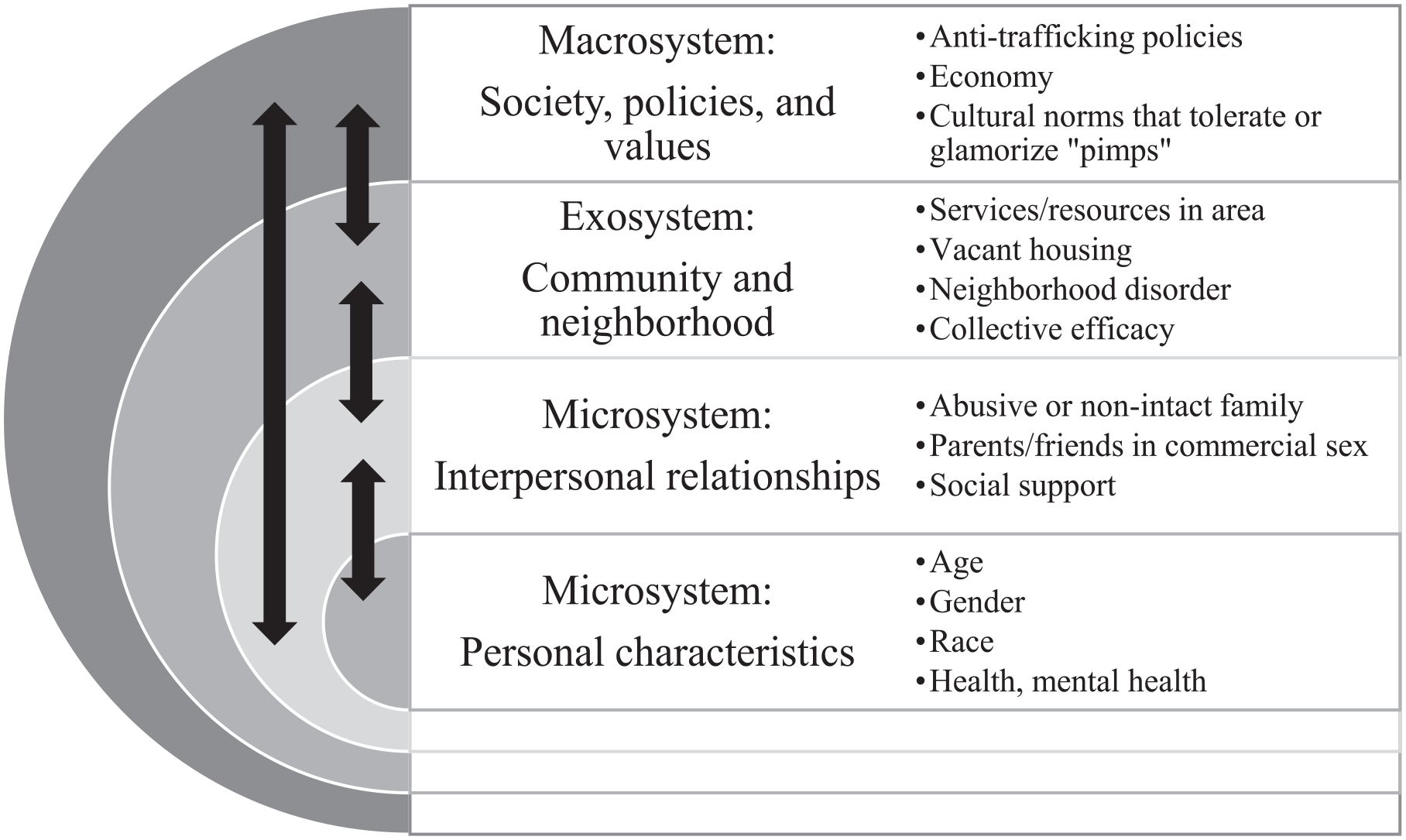
The SEM explains how personal and environmental contexts may increase or decrease vulnerability and/or demand for YST. Arrows indicate between-level connections and interactions.
Unfortunately, most of the existing research on YST vulnerability and demand in the United States is focused on microsystem factors, even though vulnerability and demand extend far beyond individual and familial characteristics. Currently, YST vulnerability tends to refer to microsystem factors that make children and youth vulnerable to, or resistant to, sex trafficking (e.g., risk and protective factors). Demand, meanwhile, tends to focus on individuals’ demand for commercially sexually exploited youth. Additional research suggests, but has not thoroughly established, evidence of YST vulnerability and demand factors in the exosystem and macrosystem. These factors are thought to include features of the built and social environment (BSE). The built environment refers to physical spaces where people live, work, and play, such as structures and neighborhood conditions like dilapidation, vandalism, and crime. The social environment refers to societal conditions, laws, and cultural norms. BSE factors, like social determinants of health, are understood to shape disparities in health, mental health, crime, violence, and even sex trafficking. While BSE factors are currently under-researched in the anti-trafficking field, considering the environment’s role in YST is common. Sex trafficking is a spatial phenomenon (Cockbain et al., 2022). It sometimes involves moving people within or between locations for exploitation or hiding the crime to evade detection, thereby making the exploration of BSE vulnerability and demand factors highly relevant for the advancement of YST prevention and intervention efforts.
By applying the SEM to existing literature about YST vulnerability and demand factors in the BSE, we intend to advance a framework by which researchers and anti-trafficking advocates can identify and understand BSE correlates of YST in the United States. We focus exclusively on the United States in this review because cultural norms, national laws, and commercial sex markets vary widely by national context, and thus are likely to create unique factors that shape vulnerability and demand. The primary objective of the review is to synthesize the limited extant literature on vulnerability and demand factors for YST into the SEM. This review adds to existing YST literature related to vulnerability and demand, in that it focuses entirely on YST correlates that can be found in the exosystem and macrosystem, rather than within the microsystem. Microsystem vulnerability factors are already well established in the literature and are usually narrowly described as risk and protective factors. In the sections that follow, we will describe the methods used in this review, and then articulate how proposed correlates of YST may be situated within the SEM as vulnerability and demand factors. The review concludes with suggestions for future epidemiological research and interdisciplinary collaborations that can broaden the strategic impact of new and existing YST prevention and intervention efforts in the United States.
Methods
A systematic literature review was conducted to identify scholarly publications that either hypothesized or established correlations between built and social environmental factors and commercial sex. The search was initially conducted in August 2022 using the following terms: (“sex trafficking” OR “youth sex trafficking” OR “child sex trafficking” OR “prostitution” OR “sex work” OR “sex trafficking demand”) AND (“spatial” OR “global information system” OR “GIS” OR “environment* risk” OR “built environment*” OR “social environment*”). These search terms captured studies related to YST, as well as adult sex trafficking and prostitution, given the interrelatedness of these terms and our broad approach to the inquiry. Inclusion criteria were established prior to the study as: (1) English-only, (2) full-text availability only, and (3) published between 2012 and 2022. The search was conducted again in August 2024 to capture additional records that may have been published between 2022 and 2024, which were considered for inclusion. Exclusion criteria were: (1) books, capstone projects, and master’s theses, (2) non-US settings, and (3) articles that exclusively focused on microsystem factors (i.e., must include findings related to exosystem and macrosystem factors) or otherwise irrelevant to the study purpose. We considered empirical research studies, literature reviews, and conceptual pieces that identified social and environmental risk factors for sex trafficking (including comparisons between trafficked and non-trafficked youth and adult commercial sex) and/or used geographical information to characterize various sex markets in the United States (e.g., illicit massage, strip clubs, areas known for prostitution, or other similar areas). We first searched PubMed, which only returned 68 publications, more than half of which were focused on locations outside of the United States. To further identify relevant studies and capture gray literature (e.g., unpublished reports, government documents, and dissertations), we performed the same search in Google Scholar (n = 14,700 articles). We limited the search results in Google Scholar to the first 100 returns, in order to approximate a similar range of articles as PubMed. Five articles were excluded because they were not available in full text, leaving a total of 163 articles for title and abstract review.
The second author performed the title and abstract screening of 163 articles, of which 137 were excluded for failing to meet inclusion criteria. Of the 26 articles that were selected for full-text review, three records could not be located by DOI, so they were excluded from the review. The first author then conducted full-text review of the remaining 23 articles and excluded another 17 due to their record type, a location outside of the United States, topical irrelevance, or their focus on microsystem risk factors, leaving six total articles for analysis. The authors discussed the records to ensure agreement on the final set of records to be included in the review. Finally, to increase the number of relevant articles included in the review, we used a snowball method of reviewing the reference list of articles that were selected for inclusion following full-text review. The snowball method yielded an additional 19 records to include in the review. In total, 25 articles were selected for inclusion in the analysis. A PRISMA chart for the review process is available in Figure 2.
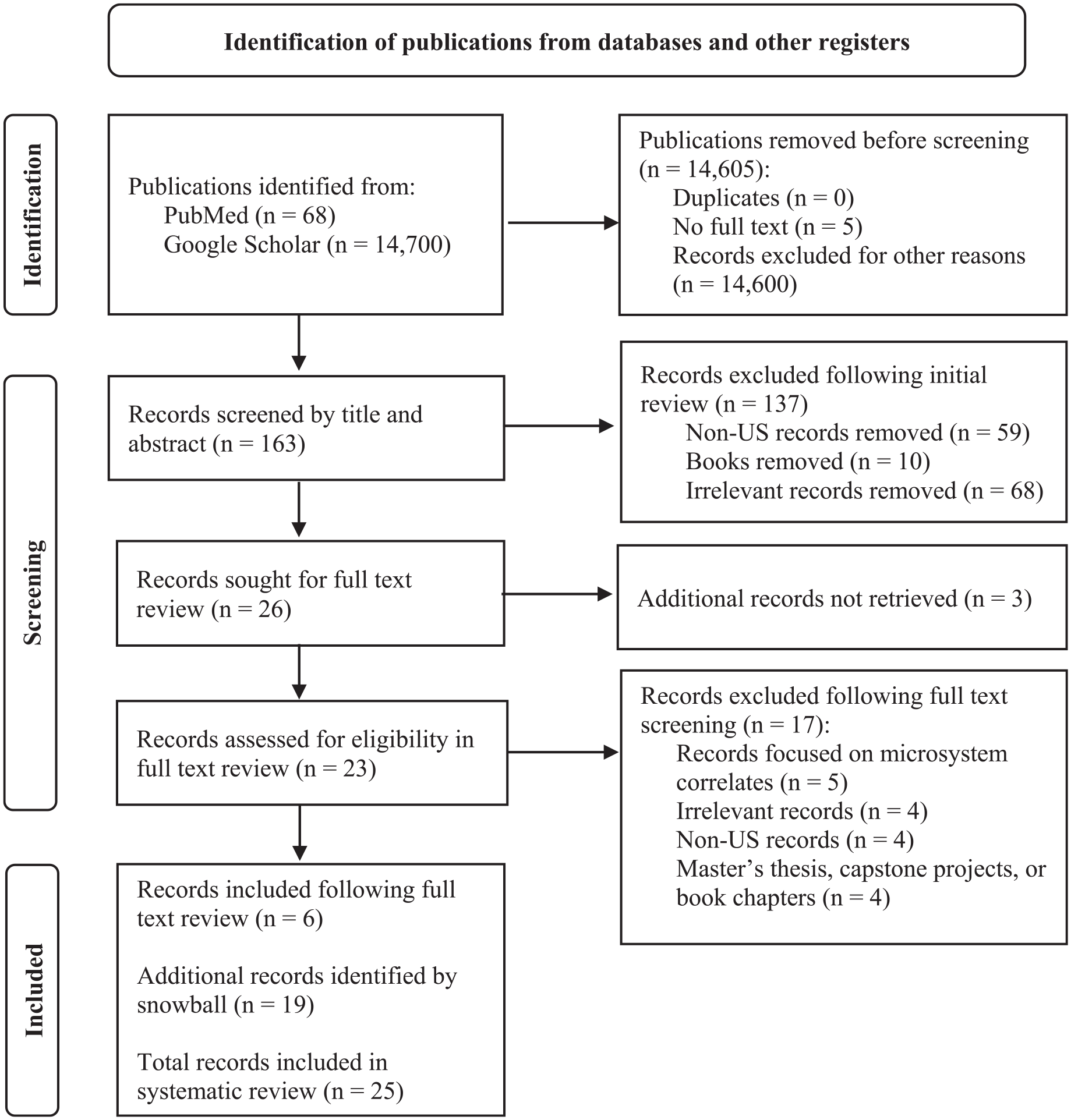
PRISMA chart: Screening process for publication inclusion in the systematic review.
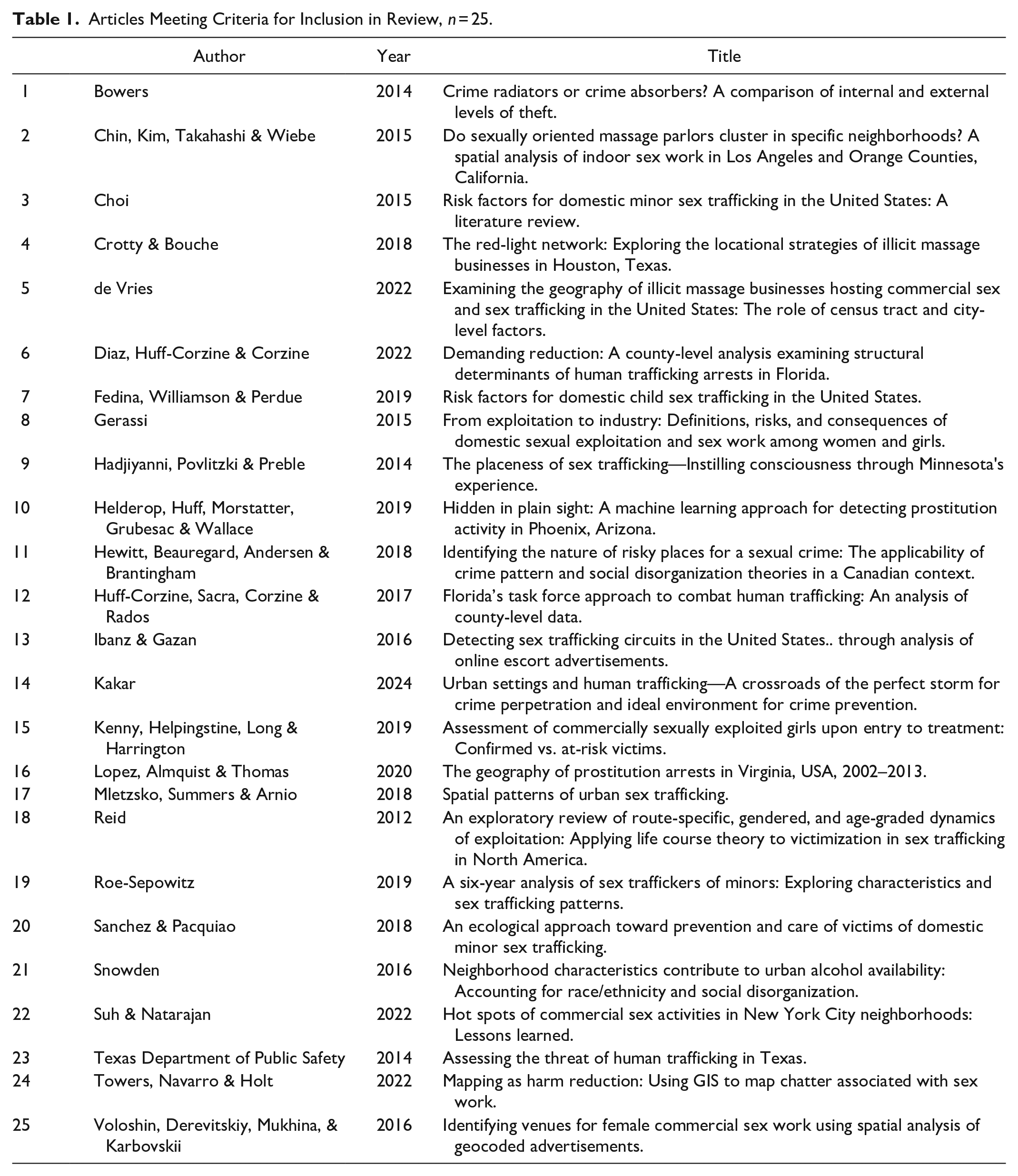
For a summary of the records included in the review, see Table 1.
Articles Meeting Criteria for Inclusion in Review, n = 25.
Results
Table 2 summarizes literature review findings organized by the SEM; findings drawn from research studies focused on prostitution and/or adult trafficking are noted with an asterisk. (The inclusion of these articles is a limitation of the study, and results should be interpreted with caution; we further describe the review’s limitations in the discussion section to follow.) In keeping with the scope of the review, the table excludes potential YST correlates that can be found in the microsystem. Many of the vulnerability and demand factors described below should be understood as connected and mutually reinforcing across all levels of the SEM.
Potential Built and Social Environmental Risk and Protective Factors Associated with YST in the United States. Factors Hypothesized by the Authors as Vulnerability Factors (V), Demand Factors (D), or Combined (V, D).
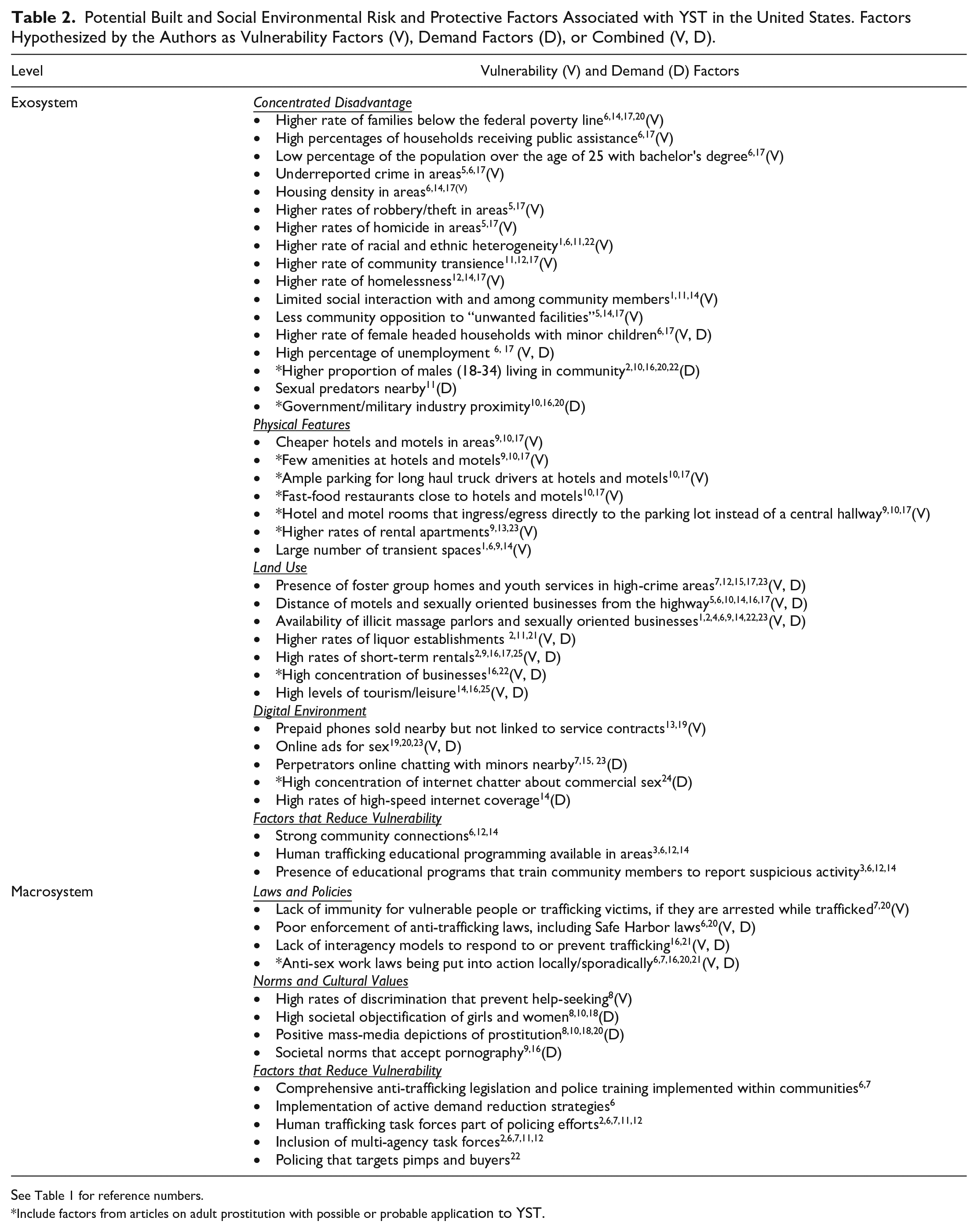
See Table 1 for reference numbers.
Include factors from articles on adult prostitution with possible or probable application to YST.
A summary of this review’s most salient ideas, as well as its critical findings, can be viewed in Table 3 below.
Summary of Critical Findings.
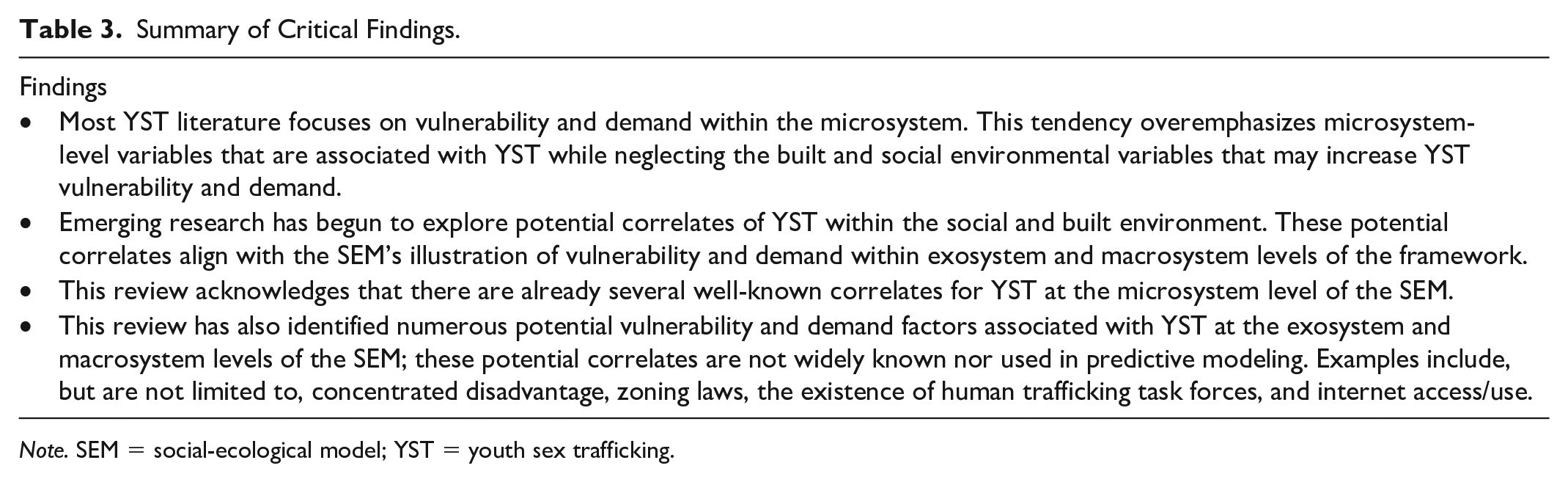
Note. SEM = social-ecological model; YST = youth sex trafficking.
Vulnerability and Demand Factors in the Exosystem
Concentrated Disadvantage
Multiple studies demonstrate a statistically significant association between sex trafficking arrests and concentrated disadvantage (Diaz et al., 2022; Mletzko et al., 2018). The concentrated disadvantage is marked by communities with a high percentage of families living below the poverty line, female-headed households with minors present in the home, households receiving public assistance, high unemployment, racial and ethnic heterogeneity, rental units, and housing density, as well as a low percentage of persons over the age of 25 with a bachelor’s degree (Diaz et al., 2022; Hewitt et al., 2018; Kakar, 2024; Mletzko et al., 2018; Sanchez & Pacquiao, 2018).
Where concentrated disadvantage exists, community dynamics may “impede social cohesion by reducing the capacity for residents to organize and establish informal social control” (Mletzko et al., 2018, p. 88). Communities with low social control (i.e., low group self-regulation of shared beliefs, principles, and values) are at increased vulnerability for sex trafficking, as community members are “less likely to share a strong sense of crime-free community values, which then foster conditions for increased levels of criminality” (Diaz et al., 2022, p. 42). Additionally, communities with high housing density, high racial/ethnic heterogeneity (contributing to cultural and language barriers), and high crime rates can obstruct a community’s ability to create bonds and close-knit communities, which can allow crimes like trafficking to persist (Bowers, 2014; Diaz et al., 2022; Hewitt et al., 2018; Kakar, 2024). Limited community ties can further prevent residents from organizing against YST (Bowers, 2014; Hewitt et al., 2018; Kakar, 2024), or result in less community opposition to sexually oriented businesses, such as massage parlors, which increases vulnerability to YST (de Vries, 2022; Mletzko et al., 2018).
Communities with concentrated disadvantage tend to have high rates of violent crime (e.g., robbery, theft, aggravated assault, rape, and homicide) and also tend to underreport crime in the area (de Vries, 2022; Mletzko et al., 2018). Diaz and colleagues (2022) found an inverse relationship between concentrated disadvantage and human trafficking arrests. Their study showed that with “every unit increase in the concentrated disadvantage index, there was a predicted 70% decrease in the number of human trafficking arrests, controlling for all other variables” (Diaz et al., 2022, p. 41). This finding suggests that sex trafficking in these communities may not be reported or addressed. On the demand side, scholars suggest that YST offenders may interpret certain community cues (e.g., neighborhoods containing an abundance of single, adult females or female-led, single-parent homes with children) as areas favorable to finding vulnerable victims (Hewitt et al., 2018). Further, a socially disorganized community is “less likely to have a police department with a dedicated human trafficking unit” (Diaz et al., 2022, p. 44). These communities also attract a high proportion of released sexual offenders (Hewitt et al., 2018).
Disproportionate rates of males to females in a neighborhood or region can also be an underlying demand factor for sex trafficking. When there is a greater number of males compared to females in a population, the imbalanced ratio drives the demand for sex trafficking, sexually oriented businesses like massage parlors, and related markets like bars and liquor stores (Chin et al., 2015; Lopez et al., 2020; Sanchez & Pacquiao, 2018; Suh & Natarajan, 2022). Some of the causes for imbalanced gender ratios include the presence of military bases and industries that tend to hire more men than women (Helderop et al., 2019; Lopez et al., 2020; Sanchez & Pacquiao, 2018). Moreover, when male-dominated industries are highly represented in a neighborhood or community, there are typically higher rates of risk-taking behaviors, criminal activity, and/or illegal sexual behaviors (Lopez et al., 2020).
Physical Features
Other vulnerability factors associated with YST include physical features of the environment, like the presence of cheap hotels and motels with few amenities, rooms that egress directly to a parking lot, nearby fast-food restaurants, and ample parking for long haul truck drivers (Helderop et al., 2019; Mletzko et al., 2018). The physical design of motels can allow trafficking to go unnoticed. For example, a motel consisting of separate parking lots allows the victims, traffickers, and purchasers to move to and from motel rooms without traveling through the lobby, thus allowing for relative anonymity (Hadjiyanni et al., 2014). Rooms that are located on the ground floor further provide traffickers with the ability to remove window screens for anonymous room entry and exit (Hadjiyanni et al., 2014). Similarly, back doors that enter an establishment without going through a front lobby can provide additional transaction speed (Hadjiyanni et al., 2014).
Communities with a high concentration of additional transient spaces, such as trailers, airports, inner-city bus stops, truck stops, gas stations, and leisure/tourist attractions further increase YST vulnerability (Hadjiyanni et al., 2014; Diaz et al., 2022; Kakar, 2024; Voloshin et al., 2016). Trafficking networks are often mobile and use ordinary, local, and unassuming businesses to move victims between multiple cities (Texas Department of Public Safety, 2014; Hadjiyanni et al., 2014). Other authors have noted that a high concentration of businesses in commercial districts may correlate with sex work (Kakar, 2024; Suh & Natarajan, 2022). Transient spaces enable traffickers to isolate victims, as frequent movement and short stays both prevent victims from establishing social support systems and limit their familiarity with a specific location (Ibanz & Gazan, 2016). Illicit massage parlors have also become a space for transient traffickers to travel to and reside while they exploit victims (Bowers, 2014; Chin et al., 2015; Diaz et al., 2022). Further, Kakar (2024) notes that urban environments may be a correlate for sex trafficking because they offer anonymity, the ability to rapidly absorb victims into existing illicit businesses, and a concentration of potential sex buyers.
Land Use
Regional and community land use plays an integral role in sex trafficking. Land use refers to zoning, design, and the physical distance between structures. For instance, the distance between motels and sexually oriented businesses from the highway can be related to sex trafficking occurrences; the shorter the distance, the greater the area’s vulnerability to sex trafficking (Diaz et al., 2020; Helderop et al., 2019; Kakar, 2024; Lopez et al., 2020; Mletzko et al., 2018; de Vries, 2022). Highways create opportunities for traffickers to travel from city to city, further opening and increasing the pool for demand. de Vries (2022) also notes that the predictability of routine travel by motivated offenders and/or buyers offers consistent demand. This dynamic can explain the relationship between sex trafficking vulnerability and the location of motels, sexually oriented businesses, and highways (de Vries, 2022). Tourism can also increase both vulnerability and demand for YST, in that it increases foot traffic by anonymous individuals around communities and highly concentrated businesses that may already be experiencing high rates of transience (Lopez et al., 2020; Kakar, 2024; Suh & Natarajan, 2022). The location of youth-oriented services and resources (e.g., schools, playgrounds and group homes) in high-crime areas may also increase YST vulnerability and demand. Exploiters can easily find and target vulnerable youth there (Fedina et al., 2019; Huff-Corzine et al., 2017; Kenny et al., 2019; Mletzko et al., 2018; Texas Department of Public Safety, 2014).
Several studies have found that massage parlors are associated with a higher number of recorded human trafficking offenses compared to low-priced motels (Crotty & Bouché, 2018; Diaz et al., 2022; Suh & Natarajan, 2022) and can thus be understood as potentially representative of both vulnerability and demand. The location of massage parlors has also been positively correlated with poverty (Mletzko et al., 2018). Easy access to and the availability of massage parlors should cause concern because both illicit and legitimate massage parlors can be front operations for trafficking (Crotty & Bouché, 2018; Diaz et al., 2022; Hadjiyanni et al., 2014; Texas Department of Public Safety, 2014). Often, illicit massage parlors hide behind a banner of legitimacy, when in reality they may serve as trafficking hubs (Hadjiyanni et al., 2014; Crotty & Bouché, 2018). Legitimate businesses, on the other hand, may operate as massage parlors while allowing trafficking to occur behind the scenes. Sometimes, trafficked individuals may have a professional massage certification to assist with the coverup (Chin et al., 2015), allowing these victims to hide in plain sight.
Land devoted to liquor establishments—and the ways in which these establishments are clustered—may also make an area vulnerable to YST. Liquor establishments include both on-premises destinations (i.e., bars, cantinas) and off-premises outlets (i.e., beer barns, liquor stores). According to Hewitt and colleagues (2018), the spatial clustering of liquor establishments in big cities or poverty-stricken areas is a correlate for trafficking and sexual crimes alike. In two separate studies, higher numbers of liquor establishments were associated with a higher number of sexual crimes (Hewitt et al., 2018; Snowden, 2016), suggesting that the number of liquor establishments in an area may also promote demand. In Snowden’s (2016) dissemination area, the availability of alcoholic businesses was further associated with violent crimes, child abuse and neglect, and intimate partner violence. Taken together, the clustering of numerous establishments in impoverished areas may increase rates of sexual violence and create a high vulnerability and demand environment for sex trafficking (Chin et al., 2015).
Finally, multiple studies found a positive relationship between sexual crimes and the percentage of short-term rental units within an area. Short-duration rental units allow for greater mobility, making it hard to track or disrupt traffickers, as there are fewer requirements for background checks (Lopez et al., 2020; Mletzko et al., 2018; Voloshin et al., 2016). Additionally, lower rental rates are inversely related to the number of massage parlors and sexually oriented businesses in neighborhoods, which may decrease an area’s vulnerability and demand (Chin et al., 2015).
Digital Environment
We included digital factors in the exosystem level of the SEM because of the ways in which technology is an integral part of the environment in which youth live their lives and interact with others. With advancements in online communication and social media, digital vulnerability factors are an increasing concern for anti-trafficking advocates. Sex buyers and sellers perceive anonymity in online interactions, and can easily connect with each other and with victims in online spaces (Chin et al., 2015; Kenny et al., 2019; Texas Department of Public Safety, 2014). Kakar (2024) suggests that high rates of high-speed internet coverage, often existing in urban environments, may increase the number of people who enter commercial sex markets through online platforms. Minors are highly present on the Internet and have smartphones that allow exploiters to recruit youth through text messaging and social media platforms, thus creating vulnerability to grooming and victimization (Fedina et al., 2019; Kenny et al., 2019; Texas Department of Public Safety, 2014). Prepaid mobile phones are an additional vulnerability factor for YST. These devices are easily accessible at local convenience or retail stores and do not require a service contract, which means exploiters can use them without being traced (Ibanz & Gazan, 2016). Indeed, in a review of trafficking prosecutions across the United States, Roe-Sepowitz (2019) found that traffickers frequently provided cell phones to their victims.
A high rate of online sex ads in an area is another factor associated with YST (Texas Department of Public Safety, 2014; Roe-Sepowitz, 2019). Advertisements consist of graphic images of young people, which are used by their traffickers to seek potential customers (Texas Department of Public Safety, 2014). Online advertisements create an atmosphere of easy access and demand, as well as privacy and perceived anonymity, since “any purchaser can secure their transaction from the privacy of their home” (Hadjiyanni et al., 2014, p. 10). One example of how the sex industry has adapted to the internet is the availability of websites that charge fees for using the website, on top of the price of purchasing time with a sex worker (Hadjiyanni et al., 2014). While online sexually oriented businesses are not necessarily indicative of YST, minors have been identified as exploited in these spaces (Texas Department of Public Safety, 2014). Further, Towers and colleagues (2022) found that the density of online chatter about commercial sex is potentially correlated with offline sex work encounters, thereby suggesting that the features of the digital environment may be associated with offline sex trafficking.
Factors that Reduce Vulnerability in the Exosystem
There is relatively scant literature on BSE factors that can reduce vulnerability to YST. Some authors have noted that strong community connections may offer protection against YST vulnerability among at-risk youth (Diaz et al., 2022; Huff-Corzine et al., 2017). Awareness and education campaigns about human trafficking in vulnerable communities may decrease YST vulnerability and demand, as community members are trained to both recognize signs of trafficking and to intervene (Choi, 2015; Diaz et al., 2022; Kakar, 2024). Educating communities about sex trafficking creates a stronger communal bond and may help community members “achieve a collective set of community values” (Diaz et al., 2022, p. 42). Community education programs serve multiple purposes, including (a) raising community awareness, (b) building community cohesion, and (c) preventing crime (Huff-Corzine et al., 2017; Kakar, 2024).
Vulnerability and Demand Factors in the Macrosystem
Laws and Policies
Anti-trafficking legislation is a relatively recent addition to the anti-trafficking landscape (Fedina et al., 2019). Even with legislation in place, efforts to combat trafficking and exploitation are implemented to varying degrees (Diaz et al., 2022; Sanchez & Pacquiao, 2018). Smaller police agencies or agencies without specialty training in trafficking response that are tasked with enforcing anti-trafficking protocols might not be able to accurately identify or recognize trafficking activity (Diaz et al., 2022). Scholars have also noted that agencies without specific trafficking response training tend to concentrate on more familiar criminal activity, such as drug use, that occurs in communities where trafficking is present (Diaz et al., 2022). Because some law enforcement agencies do not receive proper education or training on trafficking or YST, officers may misidentify trafficking victims as individuals participating in familiar criminal activities like prostitution or theft (Diaz et al., 2022). Misidentification can traumatize vulnerable people and increase vulnerability to victimization if detained or arrested (Fedina et al., 2019). Along with misidentification, a lack of police training to identify signs of trafficking can lead to inaccurate recording of trafficking prevalence in a specific area (Diaz et al., 2022). With inaccurate estimates and spotty enforcement, traffickers may feel empowered to continue to exploit victims. Additionally, although Safe Harbor laws have been passed in many states, these laws are implemented to varying degrees (Sanchez & Pacquiao, 2018), suggesting that both the existence of these laws and measures of their implementation may correlate with YST vulnerability and demand. These laws are intended to ensure that YST victims receive comprehensive rehabilitation services and that criminal charges are dropped or expunged when crimes were committed while being trafficked. Even if they exist, however, their effective implementation and enforcement are necessary in order to achieve their intended impact on YST rates and revictimization. Finally, few inter-agency models for trafficking prevention and response are available to law enforcement officials, which can further lead to inconsistency in the enforcement of anti-trafficking laws (Lopez et al., 2020; Snowden, 2016). Therefore, poor enforcement, unspecialized education, and sporadic implementation of local anti-trafficking laws may indicate both vulnerability and demand for YST.
On the other hand, when implemented effectively, communities with comprehensive anti-trafficking policies may have less YST. For instance, scholars have noted that the implementation of human trafficking task forces within communities can significantly predict human trafficking arrests (Diaz et al., 2022; Huff-Corzine et al., 2017; Kakar, 2024). When arrests regularly occur, deterrence is more likely, thereby driving down demand. In addition, the implementation of active demand reduction strategies, most commonly the use of reverse stings, is also effective at increasing arrests (Diaz et al., 2022). Suh and Natarajan (2022) also found that increased policing of commercial sex markets, in which pimps and buyers are targeted by law enforcement (rather than sex workers), may drive down demand for commercial sex work in entire communities. Research suggests that the (a) implementation of active demand reduction strategies, (b) education of police agencies on sex trafficking dynamics, and (c) establishment of multi-agency anti-trafficking task forces (Chin et al., 2015; Diaz et al., 2022, Fedina et al., 2019; Hewitt et al., 2018; Huff-Corzine et al., 2017) can reduce vulnerability and demand for sex trafficking.
Norms and Cultural Values
Societal norms and cultural values that objectify and sexualize women and girls, as well as “patriarchal gender arrangements” that support the victimization of women and girls through “machismo and pimping culture”, may increase both vulnerabilities to sex trafficking and the demand for commercial sex (Reid, 2012, p. 266). Societal norms and values may further devalue women and girls by positioning them as economic burdens on their families, or otherwise regarded as property (Reid, 2012; Sanchez & Pacquiao, 2018). Institutionalized discrimination, including racism, sexism, and homophobia or transphobia, may discourage vulnerable populations from seeking help from available services, both before and after YST victimization (Gerassi, 2015; Sanchez & Pacquiao, 2018). Finally, mass media depictions of sex work—especially depictions that glamorize sex work and pornography—may normalize the objectification of women and girls, and perpetuate discrimination against women (Reid, 2012; Gerassi, 2015; Helderop et al., 2019).
Discussion
This review used the SEM to identify characteristics of the built and social environment (BSE) that may be associated with YST. The review specifically focused on BSE vulnerability and demand factors that exist within the exosystem and macrosystem levels of the SEM. Current YST scholarship has primarily focused on microsystem vulnerability and demand factors and has tended to neglect potential correlates of YST that exist within other levels of the SEM. Incorporating BSE factors in research on YST is a novel and commonsense approach, given that YST vulnerability and demand operate at multiple SEM levels.
Shifting how the anti-trafficking field understands YST vulnerability and demand can broaden strategic prevention efforts in three essential ways: First, researchers will be able to test whether and to what extent BSE vulnerability and demand factors improve YST prediction. Second, upon learning the key BSE factors associated with YST, strategies can be developed to target modifiable characteristics of the environment that may reduce YST risk and enhance YST resilience for entire communities. Finally, the SEM provides researchers with a novel and likely more reliable, framework by which to estimate YST and drive down its occurrence through epidemiologically informed interventions. Below, we briefly describe the potential impact of these strategies.
Prediction that Leads to Prevention
Epidemologists maintain that predictable problems are preventable—and where prediction research falters, so too do prevention efforts. Despite some advances in the past five years, the anti-trafficking field lacks validated and uniform YST risk assessments, particularly those that combine individual and environmental factors. Improved risk assessments might be able to identify vulnerable populations prior to victimization, thereby making YST prevention more achievable. In 2017, Author noted that the field’s “failure to adequately assess risk prior to victimization is a failure to effectively prevent [YST]. . .[and] a failure to effectively prevent is a failure to carry out one-third of the anti-trafficking community’s mandate to protect victims, prosecute traffickers, and prevent the crime” (p. 15) (TVPA, 2000, UNODC, 2021).
A holistic, multilevel risk assessment that incorporates microsystem, exosystem, and macrosystem BSE vulnerability and demand factors may improve opportunities to predict YST victimization. Following the development of such a risk assessment, advocates and policymakers will be better equipped to target prevention strategies at the microsystem, exosystem, and macrosystem levels of the SEM. Unfortunately, since little effort has been made to investigate exosystem and macrosystem predictors of YST, the anti-trafficking field lacks a well-defined understanding of how BSE vulnerability and demand factors relate to prevalence, nor how these factors may relate to microsystem vulnerability and demand factors.
Another benefit of taking a multilevel approach to YST inquiry is that many of the indicators we have posited as potential YST correlates can be measured directly or indirectly at the population level rather than just the individual level. For example, the US Census Bureau collects indicators of concentrated disadvantages like poverty and racial/ethnic heterogeneity, the Bureau of Justice Statistics collects crime statistics, and Child Protective Service (CPS) agencies collect records on childhood maltreatment. Using population-level indicators of YST in research, rather than just individual indicators of YST, has the advantage of overcoming ethical and logistical barriers to conducting primary research with child victims of crime. Because conducting research with children is challenging, much of the current literature on YST is based on small-scale, retrospective studies with adult survivors of YST that (a) describe microsystem risks and consequences, (b) take place ex situ, and (c) rely on purposive or snowball sampling that lacks generalizability (Tyldum, 2010). As a result, the delay in data collection between childhood and adulthood means that the anti-trafficking research-to-practice pipeline is delayed for many years or sometimes fails to materialize at all. Using population-level indicators of YST to inform large-scale research studies, rather than primary data collected from survivors, may help overcome this challenge within the anti-trafficking research field.
Prevalence Estimation
Another gap in the anti-trafficking research field is the lack of what the US Department of State calls “focused prevalence estimates” (Richmond, 2020). Focused prevalence estimates are necessary to measure the effect of justice interventions that are intended to reduce YST prevalence. Rather than a rate, current YST prevalence estimates are victim/survivor counts within a region or state (Barrick & Pfeffer, 2024; Busch-Armendariz et al., 2016; Fedina, 2015), which means that available estimates are not adjusted to population size, and their generalizability is limited (Richmond, 2020). Additionally, available estimates often rely on data that was intended for other purposes beyond establishing YST prevalence rates (White, 2020). For instance, some prevalence studies have relied upon The Polaris Project’s National Human Trafficking Hotline, electronic health records, and census data from high-risk sectors like shelters or correctional facilities (see, for instance, Busch-Armendariz et al., 2016). While these studies can provide a good starting point for understanding YST prevalence, they can also be biased in various ways, including the usage of inconsistent definitions of YST based on state-specific laws. More sophisticated strategies use respondent-driven sampling (Swaner et al, 2016), multiple systems estimation, or referral-based sampling techniques (Shively et al., 2012). These strategies use weights to reduce bias, or mathematical models to estimate “dark figures” otherwise uncaptured (White, 2020). However, results may not be replicable (Kangaspunta, 2003), and the research is often dependent on partnerships with service providers or law enforcement agencies, where data sharing and collaboration can be difficult to secure (White, 2020). As a result, available research may be missing out on factors that can triangulate prevalence and inform justice policies and programs.
Understanding YST correlates throughout all levels of the SEM can lead researchers to apply spatial epidemiology methods to YST prevalence and estimate research. Spatial epidemiology methods have the ability to predict disease prevalence by determining how much of a geographic area’s features can be explained by variations in the distribution of microsystem, exosystem, and macrosystem vulnerability and demand factors (e.g., age, sex). These factors are often measurable at the population level. Spatial epidemiology methods map disease clustering or hot spots and use multilevel regression models to evaluate associations between population-level prevalence of a specific public health concern and BSE covariates of interest (Deering et al., 2014; Rezaeian et al., 2007). If these same procedures were applied to YST research, mapping could provide more precise YST estimates, reveal recruitment and trafficking hotspots, and uncover buyer dispersion and concentration patterns. Further, predictive modeling would be able to identify high-, medium-, and low-risk environments, as well as communities most in need of preventative services (McCoy, 2019). With longitudinal data, predictive models could even reveal crime mobility patterns over space and time. Many criminological theories support place-based, spatial, and temporal approaches to explain variations in crime, focusing less on individual actors (Gillis & Hagan, 1982; Jacobs, 1992; Schweitzer, Kim & Mackin, 1999). With the development of spatial epidemiology methods using BSE vulnerability and demand factors across the SEM, YST research questions could evolve into “. . .wheredunit, rather than just whodunit” (Sherman, 1995, p. 36-37).
Primary Prevention through Modifiable Characteristics of the Environment
Once predictors of YST at all levels of the SEM are well-established, policymakers and community organizers can focus on identifying modifiable characteristics of the environment and then implementing multilevel prevention strategies to match. This process is sometimes referred to as “Crime Prevention Through Environmental Design” (CPTED). For example, city planners can consider the impact of land use decisions on YST, such as the distance of hotels from highways, or the proximity of transient spaces to high concentrations of young people. Policymakers can prohibit licensing of liquor establishments or sexually oriented businesses near youth resources and services, such as playgrounds or group homes. Other environmental interventions include designing a built environment to reduce crime, such as utilizing strategic lighting, reducing vegetation to improve surveillance, reorienting restroom entrances, or revitalizing problem facilities or areas (Crowe & Fennelly, 2013; Johnson, 2005). A truly collaborative approach would bring together YST advocates, policymakers, and other local community stakeholders to develop practical prevention strategies that decrease YST while maintaining the well-being of marginalized communities. By inviting the public into conversation about plans of action for victim services, recommendations for victim identification and trafficking prosecution, and future policy directions, protection against sex trafficking is enhanced across entire communities (Diaz et al., 2022). For a summary of proposed changes to research, policy, and practice (see Table 4).
Summary of implications for research, policy & practice.
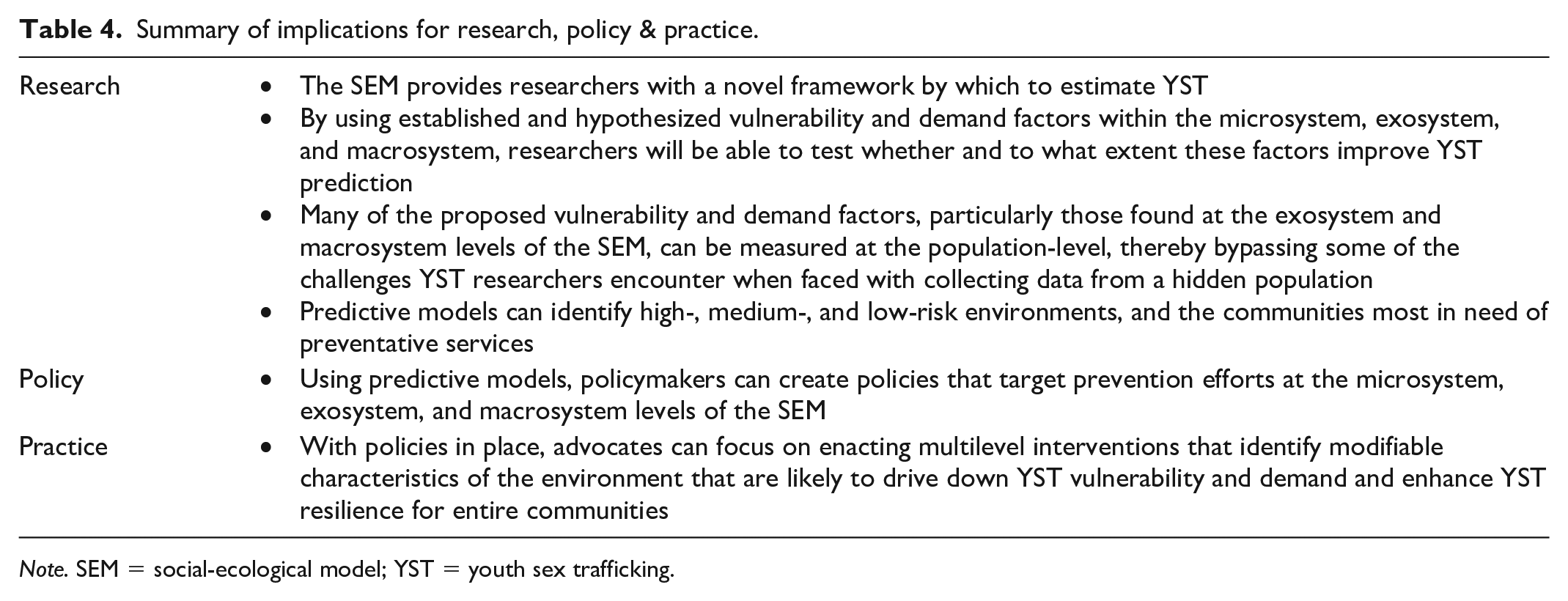
Note. SEM = social-ecological model; YST = youth sex trafficking.
Limitations
This systematic review has several limitations and thus the results of the review should be interpreted with due caution. There are few published, peer-reviewed studies that have investigated the built and social environmental correlates of YST. For this reason, we selected broad criteria that allowed for the inclusion of gray literature, conceptual pieces, and studies related to prostitution rather than solely YST. It is possible that some of the correlates described in this review apply only to prostitution rather than YST since we included some articles that were related to adult sex work or adult sex trafficking rather than solely exploring YST. Additionally, some of the suggested factors may not, in fact, be associated with YST once they are tested in empirical studies. We chose to include all potential correlates in this review because we have clearly indicated that the described risk and protective factors require further testing. As research in this area is still nascent, there may be additional built and social environmental factors not identified in this review. Future research is needed to investigate whether these and other factors are associated with YST.
Methodologically, the review is also limited in several ways. First, the purpose of this review was not to assess the quality of the research studies included in the review; therefore, it is possible that the methods and/or conclusions of the included articles have introduced biases or flaws in our own results. Second, our search terms may have restricted our sample of articles, as not all articles related to social or environmental correlates of YST would be indexed under “social environment”. Limitations were further produced by the databases we used for the search. Our sample was drawn from several social science databases, but it is possible that the search terms did not capture all of the publications that could have been included in the sample, thus restricting our findings. Finally, it is limited by the fact that the first author conducted the title and abstract review without the other authors’ triangulation. With the selected approach, it is possible that some articles were marked for exclusion that should have been included, and vice versa. Future research should continue to explore extant literature for potential correlates of YST in the built and social environment. Additional identified correlates ought to be considered for inclusion in future research on YST prediction and prevention.
Conclusions
Drawing from extant literature, and utilizing the SEM as a framework, this review identified and described vulnerability and demand factors for YST that are found within the exosystem and macrosystem levels of Bronfenbrenner’s (1977) SEM. These factors can to be understood as potential correlates of YST. By expanding prevention research to investigate vulnerability and demand factors beyond the microsystem, researchers will be able to identify characteristics of the environment that may be modified to reduce vulnerability and demand and promote YST protection for entire communities. Further, research that includes built and social environmental (e.g. exosystem and macrosystem) variables, in addition to individual (e.g. microsystem) variables, may provide researchers with innovative and accessible pathways by which to estimate YST,thereby enhancing the YST prevention strategies.
Footnotes
Declaration of Conflicting Interests
The author(s) declared no potential conflicts of interest with respect to the research, authorship, and/or publication of this article.
Funding
The author(s) received no financial support for the research, authorship, and/or publication of this article.
