






Abstract
Online self-disclosure of personal information is widely seen as making people more attractive targets for cyber offenders. However, inconsistencies in its conceptualization and measurement have led to heterogeneous findings regarding its association with interpersonal cybervictimization. Guided by Routine Activity Theory (RAT), this meta-analysis aimed to synthesize empirical evidence on the association between online self-disclosure of personal information and interpersonal cybervictimization, and to examine the potential moderators of this relationship. A systematic search was conducted across Web of Science, PsycInfo, Scopus, EBSCOhost, and IEEE Xplore, resulting in 34 eligible studies (n = 91,620). A random-effects meta-analysis revealed a significant positive correlation between online self-disclosure and interpersonal cybervictimization (r = .20, 95% CI [0.16, 0.24], p < .001). Subgroup analyses showed that this association was stronger when self-disclosure was measured by the frequency of sharing personal information on public platforms (r = .27, I2 = 97.4%) and smaller but more consistent when measured by the amount of information shared publicly (r = .16, I2 = 37.71%). The strength of the association did not differ significantly across subtypes of interpersonal cybervictimization but was stronger among younger participants, non-Western samples, and students. Theoretically, this study introduces a two-dimensional framework for conceptualizing online self-disclosure of personal information—considering both content and audience—and identifies the amount of personal information shared publicly as a potentially more robust indicator of target attractiveness. The findings extend the RAT’s application to digital contexts, highlighting the need for standardized self-disclosure measures, and advocate for cybersecurity interventions in future research.
Introduction
As internet usage rises globally, so does the prevalence of interpersonal cybervictimization (Gen Digital, 2023). This victimization occurs when individuals are targeted by interpersonal cybercrimes intended to inflict harm, fear, or vulnerability (Clevenger et al., 2018). Common forms of this victimization include cyberbullying, cyberstalking, and online sexual victimization (Navarro, 2019; Navarro & Clevenger, 2017). In response, a substantial body of research has sought to identify risk factors that make individuals vulnerable to such victimization. Among these, the voluntary online self-disclosure of personal information, such as sharing photos, locations, or contact details, has received growing scholarly attention as a potential behavioral antecedent.
However, empirical findings on the relationship between online self-disclosure and interpersonal cybervictimization remain mixed. While some studies report a positive association, suggesting that disclosure increases accessibility to offenders (Akgül, 2023; Bossler et al., 2012), others find weak or even nonsignificant correlations (H. Chen et al., 2025; Masur & Trepte, 2021). Given these mixed findings and the absence of a quantitative synthesis to date, a meta-analysis is needed to integrate the dispersed evidence. The present study addresses this gap by (1) quantifying the overall association between online self-disclosure of personal information and interpersonal cybervictimization, (2) examining whether this association varies across different operationalizations of self-disclosure and subtypes of interpersonal cybervictimization, and (3) testing key contextual moderators.
Routine Activity Theory in the Digital Context
Originally developed by L. E. Cohen and Felson (1979) to explain spatial and temporal trends in predatory crime, Routine Activity Theory (RAT) posits that a criminal event occurs when three elements converge in time and space: a motivated offender, a suitable target, and the absence of a capable guardian. Rather than seeking to explain why offenders are motivated, RAT focuses on how the routine activities of daily life create opportunities for crime by shaping target suitability and guardianship availability (L. E. Cohen & Felson, 1979). Central to this framework is the concept of target attractiveness, which reflects both the perceived value of a target to the offender and its vulnerability or ease of exploitation (Clarke & Webb, 1999; L. E. Cohen et al., 1981). In terrestrial criminology, target attractiveness has traditionally been operationalized through economic indicators such as family income, social class, ownership of portable valuables, or nocturnal absence from home (Miethe & Meier, 1994).
Applying RAT to technology-facilitated crimes, however, poses significant conceptual challenges. Yar (2005) argued that the theory’s requirement for offenders and targets to converge in physical time and space conflicts with the “chronically spatio-temporally disorganized” nature of cyberspace (p. 424), where offenders can post threatening messages while victims are offline, or target individuals thousands of miles away. In response, Reyns et al. (2011) reconceptualized spatio-temporal convergence in digital environments by proposing that online places (e.g., social network sites) function as proxies for physical locations, and that convergence occurs via networks rather than geographic proximity. Under this framework, the transaction is completed when the victim experiences the offender’s act, even if not instantaneously (Reyns et al., 2011). This adaptation has enabled researchers to apply RAT to cybervictimization, yet the operationalization of its core constructs, particularly target attractiveness, remains contested.
In traditional RAT research, the proxies used to measure target attractiveness (e.g., personal income, financial assets) consistently fail to predict cyber abuse victimization (Leukfeldt & Yar, 2016; Ngo & Paternoster, 2011). Scholars have therefore called for a fundamental reconceptualization of what makes a target “attractive” online, moving beyond material or demographic indicators toward behavioral manifestations of visibility and accessibility (Vakhitova et al., 2016, 2019). One such behavioral manifestation that has gained increasing empirical attention is the voluntary self-disclosure of personal information.
In cyberspace, self-disclosure of personal information has emerged as a key behavioral manifestation of target attractiveness (Reyns et al., 2011). By sharing details such as photos, locations, or contact information, users become more visible and accessible to potential offenders, which may be associated with an elevated risk of interpersonal cybervictimization. Within the framework of RAT, this increased visibility enhances the perceived value of the target and reduces the effort required for exploitation, thereby offering a theoretical explanation for this elevated risk. However, the measurement of online self-disclosure of personal information remains operationally ambiguous. Moreover, interpersonal cybervictimization itself encompasses distinct forms, such as cyberbullying, cyberstalking, and online sexual victimization, each of which may involve different offender motivations and behavioral patterns. Consequently, variations in the operationalization of self-disclosure and the specific subtype of interpersonal cybervictimization examined may function as moderators of the association between the two constructs.
Possible Moderators
Existing studies vary considerably in how online self-disclosure is operationalized and measured, which may partly explain inconsistencies in its associations with interpersonal cybervictimization. Online self-disclosure measures have been operationalized using two dimensions in the previous studies. The first dimension concerns the content of self-disclosure, referring to how extensively individuals engage in disclosure behaviors. This dimension is operationalized as the frequency (i.e., how often self-disclosure occurs; Akgül, 2023), occurrence (i.e., whether personal information is disclosed at all; Antoniadou et al., 2016), or quantity (i.e., amount of personal information disclosed; Aizenkot, 2020). Notably, frequency-based measures reflect deeper and more sustained engagement in disclosure behaviors compared to occurrence-based measures, which may involve higher levels of exposure and associated risk. The second dimension involves the audience of self-disclosure, referring to the target or recipient of personal information, which can be categorized as public (i.e., making their information publicly accessible to a broad audience; Aizenkot, 2020), stranger (i.e., actively disclosing information to strangers through direct interactions or private messages; Akgül, 2023), or mixed/unclear audiences.
Although we conceptually distinguish between the content and audience of self-disclosure, these dimensions are rarely measured independently in empirical research. Instead, they are typically combined within individual items (e.g., frequency +stranger or quantity + public). Given this measurement heterogeneity, it remains unclear whether different operationalizations of online self-disclosure yield comparable associations with interpersonal cybervictimization. Therefore, the present meta-analysis examines whether the magnitude of the association between online self-disclosure and interpersonal cybervictimization varies across combined content–audience operationalizations.
The relationship is further complicated by the diverse nature of interpersonal cybervictimization itself. Rather than a unitary construct, interpersonal cybervictimization encompasses multiple types of online harm, including cyberbullying (i.e., bullying behavior via electronic means; Kasturiratna et al., 2025), cyberstalking (i.e., the repeated pursuit of an individual using electronic devices; Reyns et al., 2011), and online sexual victimization (i.e., internet-initiated unwanted sexual action; Aljuboori et al., 2021). Each type may involve distinct mechanisms and situational contexts, suggesting that the relationship between online self-disclosure and victimization may vary across these forms. Therefore, the present meta-analysis examines whether the magnitude of the association between online self-disclosure and interpersonal cybervictimization varies across various subtypes of interpersonal cybervictimization.
The Current Study
To date, no meta-analysis has systematically synthesized empirical findings on how different operationalizations of online self-disclosure of personal information relate to diverse subtypes of interpersonal cybervictimization and possible moderators. The present study seeks to address this gap.
Specifically, we hypothesize that (1) there will be a significant positive association between online self-disclosure and interpersonal cybervictimization; (2) the magnitude of the association between online self-disclosure and interpersonal cybervictimization will vary across combined content–audience operationalizations of online self-disclosure; (3) the association will differ across various subtypes of interpersonal cybervictimization, including cyberbullying, cyberstalking, and online sexual victimization; (4) sample characteristics, including sample mean age, percentage of female participants, geographical region (i.e., Western vs. non-Western), and sample type (i.e., community-based vs. student) and study characteristics, including publication year, will moderate the association between self-disclosure of personal information and interpersonal cybervictimization. Findings from this study will advance theoretical understanding of online risk mechanisms and inform practical interventions to promote safer online behaviors and environments.
Method
Search Strategy
This meta-analysis was conducted in accordance with the Preferred Reporting Items for Systematic Review and Meta-Analysis guidelines (Page et al., 2021) and was registered with PROSPERO (CRD420251022561). Searches were conducted on April 7, 2025, using Web of Science, PsycInfo, Scopus, EBSCOhost, and IEEE Xplore without date restrictions. Search terms were developed to capture studies related to (1) online or cyber contexts (e.g., “cyber”), (2) cybervictimization (e.g., “cybervictimization”), and (3) self-disclosure of personal information (e.g., “self-disclosure,” “personal information,” “privacy”). The search strategy combined terms covering these three domains. The full search strings for each database are provided in Supplemental Material: Protocol Appendix A. Manual searching of the article reference lists was also conducted to identify additional papers.
Selection Process
Identified studies were imported to a Microsoft Excel spreadsheet and automatically deduplicated. Title and abstract screening were conducted by HW and JHH, followed by full-text screening. All discrepancies were resolved through discussion between HW and JHH. The screening instructions are provided in Supplemental Material: Protocol Appendix B.
Eligibility Criteria
Inclusion criteria included: (1) quantitative studies measuring self-disclosure of personal information and cybervictimization; (2) peer-reviewed journal articles; (3) studies that reported effect sizes (correlation, regression coefficients, odds ratios, etc.); (4) studies that clearly showed how to measure self-disclosure of personal information and cybervictimization; (5) that the disclosure of personal information must be privacy-related, such as name, contact details, location, birthday, photos, private life details, or financial, health, security-related information; (5) English-language studies; (6) that the personal information in the study must be shared intentionally and voluntarily. Exclusion criteria included: (1) qualitative studies; (2) non-empirical papers, such as theoretical papers, reviews, commentaries, or anecdotal reports; (3) non-peer reviewed work such as books, book chapters, conference papers, or thesis; (4) studies that exclusively assessed identity-based (e.g., political beliefs, gender identity, sexual orientation) or opinion-based self-disclosures (e.g., political views on social media leading to harassment), as these constructs, while important, differ qualitatively from privacy-related self-disclosure and could introduce excessive heterogeneity; (5) studies that assessed the self-disclosure of personal information solely for purposes of account creation, login, or authentication (e.g., data provided in app registration that are supposed to remain private); (6) Studies that did not report extractable effect sizes (e.g., zero-order correlations or convertible statistics) for the relationship between self-disclosure and cybervictimization, even after attempting to contact authors.
Data Extraction
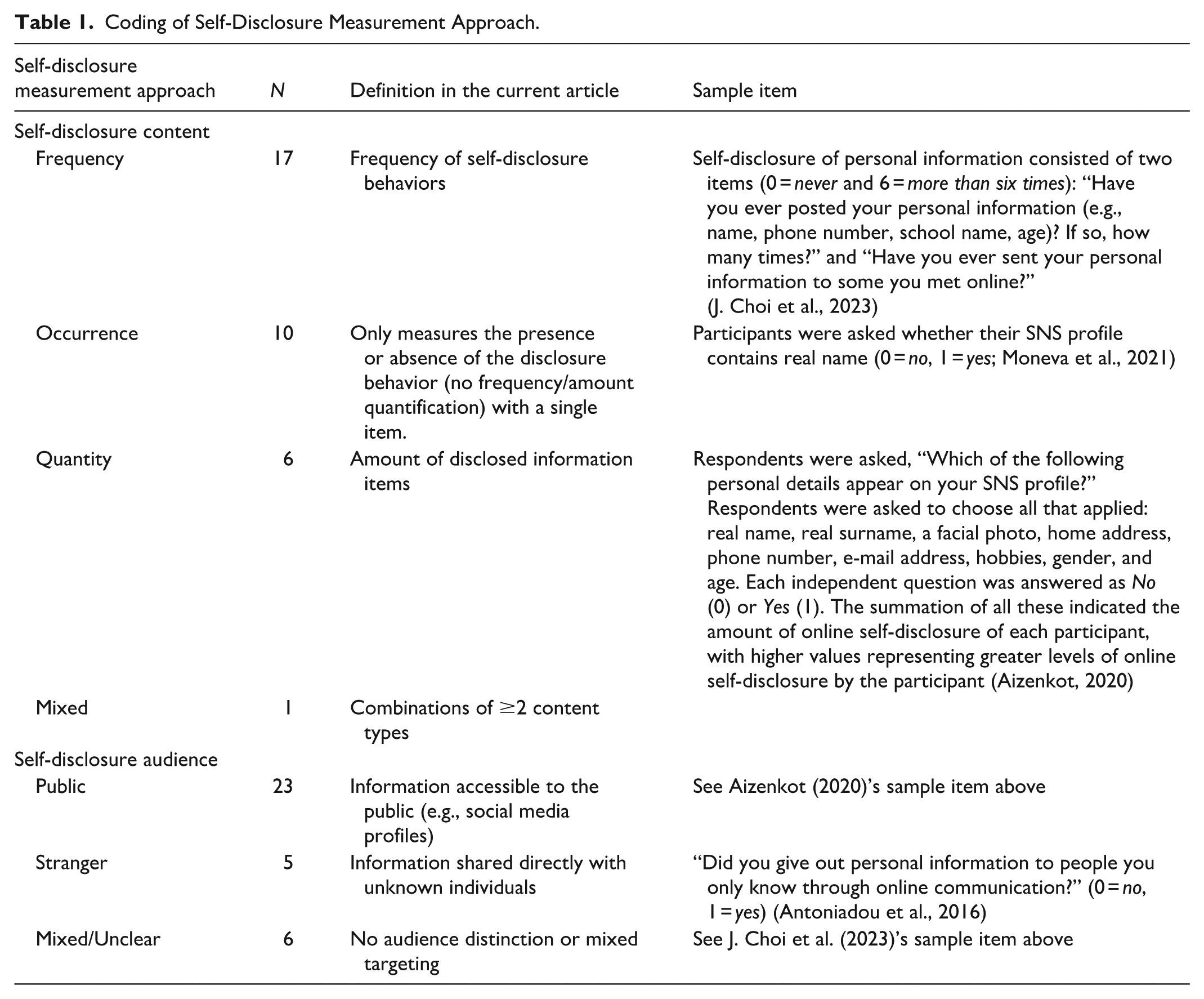
Data were extracted independently by two reviewers (HW and JHH) using a standardized form in Microsoft Excel. Any discrepancies were resolved through discussion between HW and JHH. The following information was extracted from each included study: (1) study characteristics, such as author(s), publication year; (2) sample characteristics, such as country of data collection, sample size, sample type (i.e., community vs. student), female percentage, age (i.e., mean and SD); (3) key variables, including measurement approaches of self-disclosure of personal information (i.e., self-disclosure content type and self-disclosure audience, see Table 1), interpersonal cybervictimization type (i.e., cyberbullying, online sexual victimization, cyberstalking, general victimization), and effect size. For longitudinal studies, only baseline data were included. When critical information was missing, study authors were contacted via email. In total, six authors responded and provided supplementary data, including Al Habsi et al. (2023), Festl and Quandt (2016), Marret and Choo (2017), Ponte et al. (2021), Reyns et al. (2011), and van ’t Hoff-de Goede et al. (2024). 1
Coding of Self-Disclosure Measurement Approach.
Quality Assessment and Risk of Bias
As most studies were cross-sectional, we used the AXIS quality appraisal tool (Downes et al., 2016) to assess quality. HW and JHH independently assessed each study, resolving any disagreements through discussion. The AXIS tool evaluates five domains: introduction (objectives), methods (sample size, population, etc.), results (internal consistency, nonresponse bias, etc.), discussion (conclusions justified, limitations outlined, etc.), and ethical issues (conflicts of interest, informed consent) using 20 yes/no/don’t know questions. “Yes” responses scored 1, while “no” or “don’t know” scored 0, except for items 13 and 19, which were reverse-scored. “Not applicable” items were also given 1 point to avoid penalizing studies for irrelevant criteria. As Downes et al. (2016) do not provide guidance on scoring, we followed the procedures used by Oliver et al. (2024) and White et al. (2024), categorizing total scores as low (0–7), medium (8–14), or high quality (15–20).
Data Analyses
All statistical analyses were conducted using R (version 4.5.1; R Core Team, 2025) with the metafor package (version 4.8-0; Viechtbauer, 2010) and jamovi (version 2.6, 2025). We calculated random-effects model estimates to account for anticipated heterogeneity across studies, with effect sizes expressed as correlation coefficients (r) and their 95% confidence intervals. Forest plots were generated to visualize effect size distributions and study weights. Following J. Cohen’s (2013) conventional thresholds, effect magnitudes were interpreted as weak (r = .10–.29), moderate (r = .30–.49), or strong (r ≥ .50).
Heterogeneity was assessed using Cochran’s Q statistic and the I2 index. Following Higgins et al.’s (2003) guidelines, I2 values exceeding 25%, 50%, and 75% were interpreted as indicating low, moderate, and high heterogeneity, respectively, and Q-statistic p-values < .05 was considered as evidence of significant heterogeneity. Publication bias was evaluated through three complementary approaches: visual inspection of funnel plots, Egger’s test (significance threshold p < .05; Egger et al., 1997), and Duval and Tweedie’s (2000) trim-and-fill procedure. The fail-safe N test was also computed to estimate the number of null studies required to nullify the observed effect.
Several special cases were addressed. For studies reporting multiple effect sizes for distinct disclosure subtypes (e.g., Dredge et al.’s [2014] separate estimates for name, phone number, etc.), we computed composite estimates using sample-size weighted averaging prior to inclusion. For studies reporting multiple effect sizes for different interpersonal cybervictimization subtypes (e.g., Wachs et al.’s [2021] sexual victimization subscales), we aggregated these effects into a composite estimate. Studies that provided independent effect sizes for male and female subgroups (Erdur-Baker, 2010) were treated as separate independent samples.
Moderator analyses were conducted in Jamovi. We implemented two distinct analytical approaches to examine sources of heterogeneity. First, two subgroup analyses were performed for categorical moderators by partitioning studies into homogeneous subsets. The first analysis categorized online self-disclosure along two dimensions—content (i.e., frequency, quantity, occurrence, and mixed measurement) and audience (i.e., public, strangers, and mixed audiences) and calculated their associations with interpersonal cybervictimization. The second analysis focused on the subtypes of interpersonal cybervictimization (i.e., cyberbullying, online sexual victimization, cyberstalking, and general cybervictimization) and calculated the correlation between self-disclosure and subtypes of interpersonal cybervictimization. Second, mixed-effects meta-regression models were fitted to examine continuous and categorical moderators, including sample mean age, percentage of female participants, publication year, geographical region, and sample type. Between-subgroup heterogeneity was quantified using Q-between statistics with associated p-values.
Results
Figure 1 outlines the search and screening process. A total of 45,989 studies were identified through database searches. One additional study was found through hand searching the references cited by the included studies. After deduplication and screening, a total of 33 articles met the inclusion criteria. One study (Erdur-Baker, 2010) contained two independent samples, resulting in a final 34 samples for inclusion.
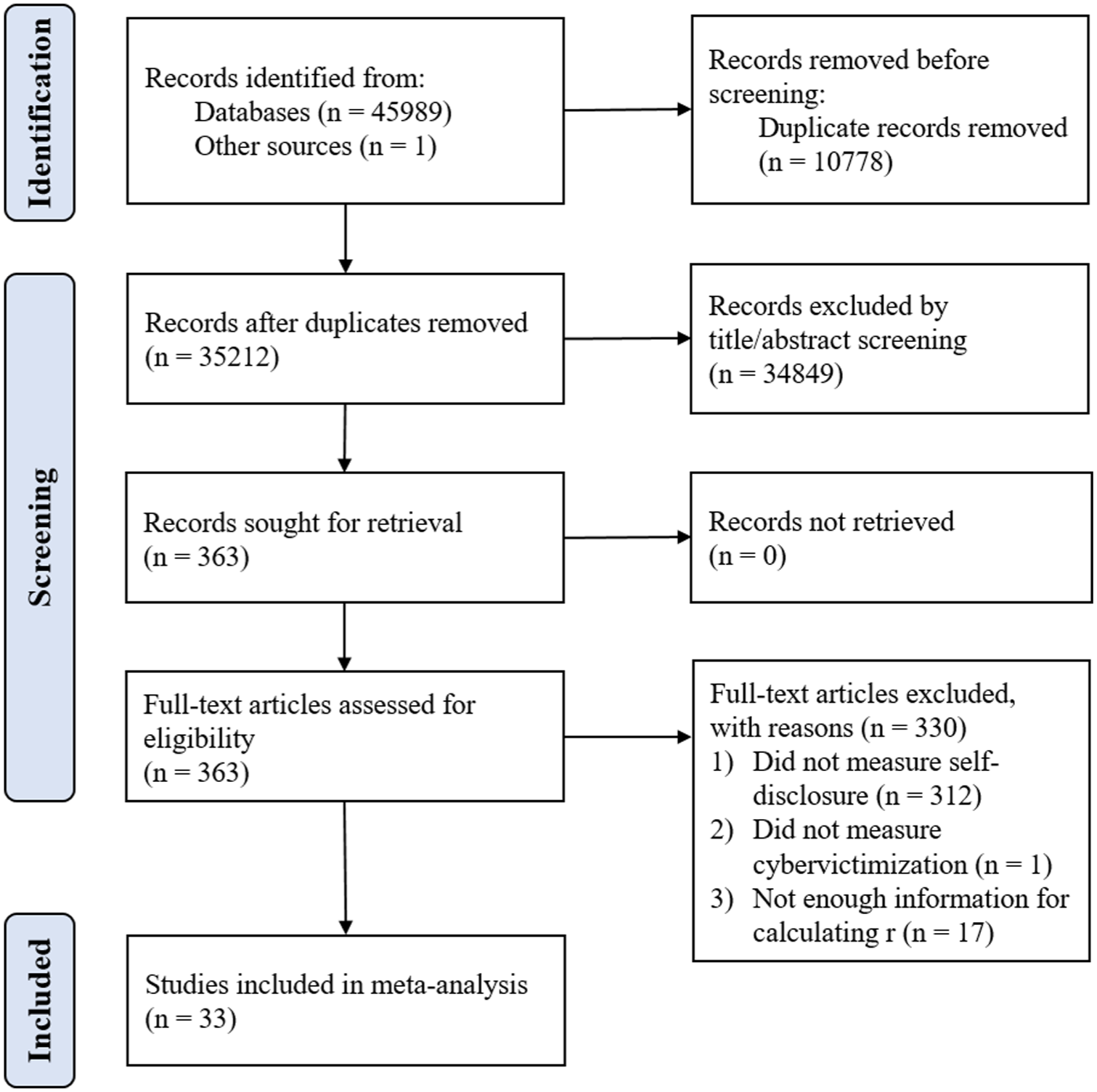
Preferred reporting items for systematic reviews and meta-analyses (PRISMA) flow diagram of the study selection process.
Sample and Study Characteristics
Notably, our search did not identify any studies that examined the relationship between voluntary self‑disclosure of personal information and computer‑focused cybervictimization (e.g., malware, hacking, identity theft) while also meeting all other eligibility criteria. This absence is not due to deliberate exclusion but reflects the current state of the literature, in which self‑disclosure has rarely been operationalized as a risk factor for technology‑driven victimization. We therefore focus our synthesis on interpersonal cybervictimization, for which sufficient empirical evidence exists.
Table 2 summarizes the sample characteristics of the included studies. All studies were completed between 2007 and 2025. Participants in the included studies were recruited from a wide range of countries. The United States (k = 6) and Spain (k = 5) were the most frequently represented, followed by Turkey (k = 4), Germany (k = 4), and South Korea (k = 4). Australia (k = 2), Greece (k = 2), India (k = 2), and Thailand (k = 2) were also represented in multiple studies. Other countries included Israel, Oman, Chile, China, Vietnam, Sweden, Iran, Singapore, Tanzania, Malaysia, Portugal, Cyprus, and Belgium, each represented in a single study. In addition, some studies recruited participants from multiple countries, including one study spanning 19 European countries (Ponte et al., 2021) and another covering 25 European countries (Staksrud et al., 2013). This broad geographic representation enhances the generalizability of the meta-analysis findings.
Characteristics of the Included Studies.
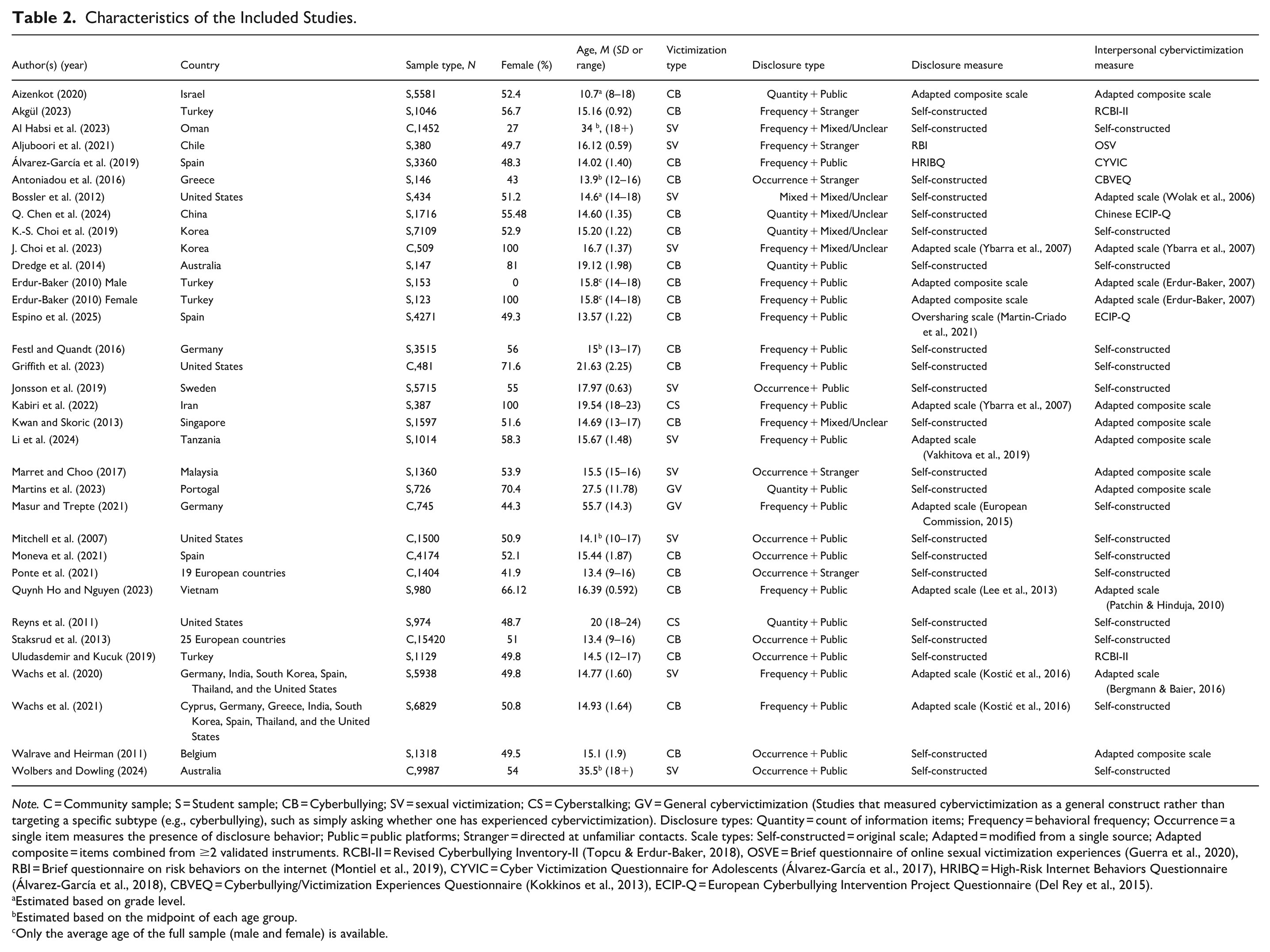
Note. C = Community sample; S = Student sample; CB = Cyberbullying; SV = sexual victimization; CS = Cyberstalking; GV = General cybervictimization (Studies that measured cybervictimization as a general construct rather than targeting a specific subtype (e.g., cyberbullying), such as simply asking whether one has experienced cybervictimization). Disclosure types: Quantity = count of information items; Frequency = behavioral frequency; Occurrence = a single item measures the presence of disclosure behavior; Public = public platforms; Stranger = directed at unfamiliar contacts. Scale types: Self-constructed = original scale; Adapted = modified from a single source; Adapted composite = items combined from ≥2 validated instruments. RCBI-II = Revised Cyberbullying Inventory-II (Topcu & Erdur-Baker, 2018), OSVE = Brief questionnaire of online sexual victimization experiences (Guerra et al., 2020), RBI = Brief questionnaire on risk behaviors on the internet (Montiel et al., 2019), CYVIC = Cyber Victimization Questionnaire for Adolescents (Álvarez-García et al., 2017), HRIBQ = High-Risk Internet Behaviors Questionnaire (Álvarez-García et al., 2018), CBVEQ = Cyberbullying/Victimization Experiences Questionnaire (Kokkinos et al., 2013), ECIP-Q = European Cyberbullying Intervention Project Questionnaire (Del Rey et al., 2015).
Estimated based on grade level.
Estimated based on the midpoint of each age group.
Only the average age of the full sample (male and female) is available.
A total of 91,620 participants were included. Across the included studies (k = 34), the majority utilized student samples (k = 26), while a smaller number of studies were conducted among community samples (k = 8). Sample sizes varied widely, ranging from 123 to 15,420 participants. Regarding gender distribution, most studies reported relatively balanced female representation, with 19 studies having female percentages between 45% and 56%. Five studies had female proportions above 70% (including 3 with 100% female participants), whereas two studies had female representation below 30%. The mean age across studies ranged from 10.7 years to 55.7 years.
The majority of studies (k = 20; 58.8%) used self-developed measures to assess self-disclosure, 9 studies (26.5%) used various specifically adapted scales from previous validated questionnaires, and 5 studies (14.7%) used adapted composite scales. The operationalization and measurement of self-disclosure of personal information shows high heterogeneity (see Table 1 for definitions and sample items). Regarding the self-disclosure content, 17 studies (50%) measured self-disclosure behavior in terms of frequency (i.e., how often self-disclosure occurs), 10 studies (29.4%)measured self-disclosure behavior in terms of occurrence (i.e., whether there is self-disclosure behavior), 6 studies (17.6%) measured self-disclosure behavior in terms of quantity (i.e., the amount of disclosed information items), and 1 study (2.9%) measured self-disclosure behavior using mixed content measurements. Regarding the self-disclosure audience, 23 studies (67.6%) measured self-disclosure behavior to the public (i.e., making their information public to a broad audience), and 5 studies (14.7%) measured self-disclosure behavior to the stranger (i.e., showing personal information to unknown individuals online voluntarily), and 6 studies (17.6%) did not distinguish audience type.
The most prevalent combination of self-disclosure content and audience was “Frequency + Public” exposure assessment, appearing in 12 studies (35.3%), followed by “Occurrence + Public” (k = 7; 20.6%), “Quantity + Public” (k = 4; 11.8%), and “Occurrence + Stranger” configurations (k = 3; 8.8%). Less common were “Frequency + Mixed/Unclear” (k = 3), “Frequency + Stranger” (k = 2), “Quantity + Mixed/Unclear” (k = 2), and “Mixed + Mixed/Unclear” (k = 1). Notably, 23 studies (67.6%) assessed self-disclosure in terms of public exposure paradigms (i.e., Quantity + Public, Frequency + Public, Occurrence + Public), substantially outnumbering stranger-directed exposure assessments (k = 7, 20.6%).
Regarding interpersonal cybervictimization types, cyberbullying was the most extensively investigated category, represented in 20 studies (58.8%), followed by online sexual victimization, examined in 10 studies (29.4%). Less prevalent categories included cyberstalking in 2 studies (5.9%) and general victimization in 2 studies (5.9%). Measurement approaches for interpersonal cybervictimization demonstrated substantial methodological diversity. Self-constructed scales were most commonly used in 14 studies (41.2%). Adapted composite scales—integrating items from multiple existing instruments—were utilized in 7 studies (20.6%), whereas various specifically adapted scales accounted for the remaining measurements (k = 13, 38.2%).
Quality Assessment and Risk of Bias
The quality assessment ratings of all included studies are provided in Supplemental Material. The average rating across studies was M = 16.03, SD = 1.55, indicating that, overall, the studies were of high quality. Of the 33 studies, 11 studies (33%) did not justify the representativeness of their samples, 26 studies (79%) did not report or address non-respondents, and 22 studies (67%) did not use instruments or measurements that had been trialed, piloted, or previously published. This issue of using self-constructed measures is common in cybercrime studies, indicating an urgent need for consistency in operationalization and measurement (Kasturiratna et al., 2025). Despite these limitations, the overall study quality ranged from medium to high quality and thus all studies were included in the meta-analysis.
Meta-Analysis
Figure 2 displays the forest plot for the overall meta-analysis. A total of 34 effect sizes were included in the overall random-effects meta-analysis, revealing a significant, small, positive relationship between online self-disclosure of personal information and interpersonal cybervictimization (r = .20, 95% CI [0.16, 0.24], p < .001). Heterogeneity between the studies was high (Q = 1,480.36, p < .001, I2 = 97%, Tau2 = .11).
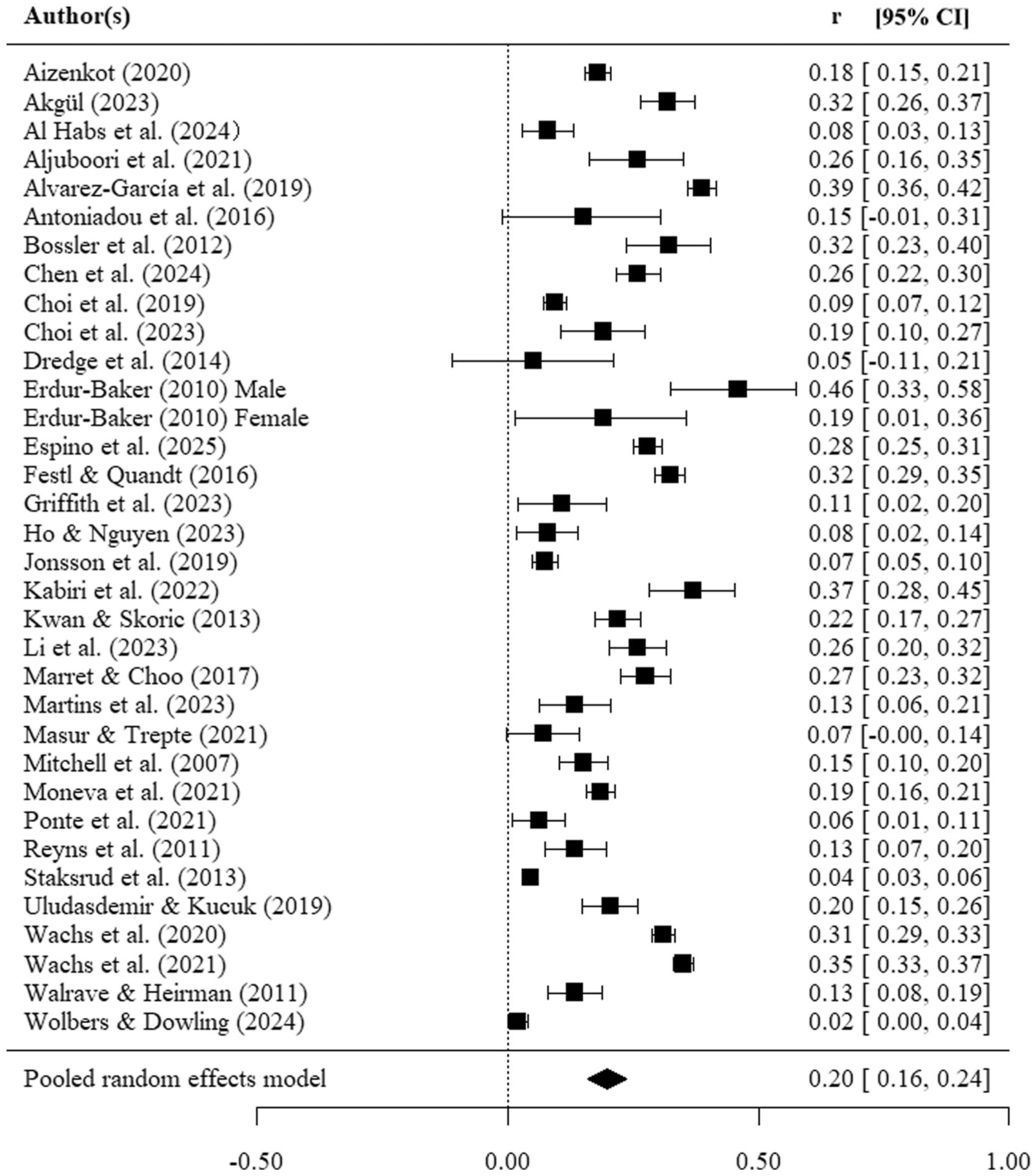
Forest plot.
Overall, the strength of the relationship between self-disclosure of personal information and interpersonal cybervictimization differed between self-disclosure measurement approaches (QM = 16.681, p = .019; Table 3). Post hoc pairwise comparisons with Bonferroni correction revealed a statistically significant difference in effect sizes between “Quantity + Public” and “Frequency + Stranger” (z = 4.12, p = .001). No other subgroup comparisons reached statistical significance (all p > .05). Among these, the “Frequency + Public” combination demonstrated the strongest effect size (r = .27, 95% CI [0.20, 0.35], p < .001), though accompanied by extremely high heterogeneity (I2 = 97.14%). In contrast, the “Quantity + Public” subgroup showed a smaller but statistically significant effect (r = .16 [0.12, 0.19], p < .001) with substantially lower heterogeneity (I2 = 37.71%), suggesting greater consistency across studies measuring public disclosure of information quantity. The “Occurrence + Public” approach yielded the weakest effect (r = .11 [0.06, 0.17], p < .001) but maintained very high heterogeneity (I2 = 95.97%), while “Occurrence + Stranger” (r = .17) and “Frequency + Mix/Unclear” (r = .16) produced intermediate effect sizes with high heterogeneity levels (I2 = 91.19% and 85.31% respectively). For subgroups with only two studies, pooled estimates are presented in Table 3 for completeness but should be interpreted with caution due to limited reliability and precision.
Subgroup Analyses Presenting Effect Size Estimates for Each Disclosure Measurement and Victimization Type.
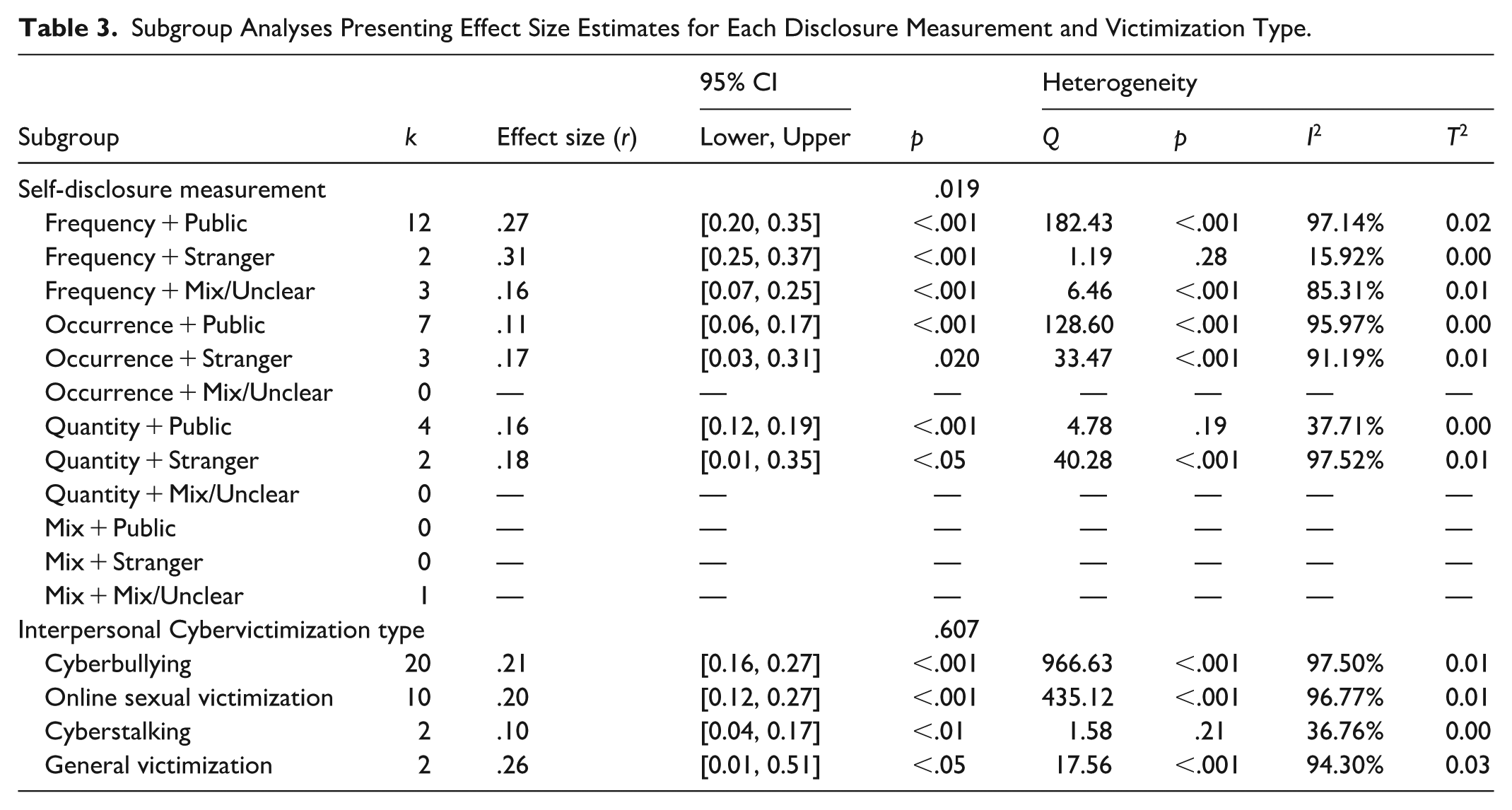
For victimization types, overall, the association between self-disclosure of personal information and interpersonal cybervictimization did not significantly differ across different subtypes (QM = 1.838, p = 0.607; Table 3). Cyberbullying (k = 20, r = .21, 95% CI [0.16, 0.27], p < .001) and online sexual victimization (k = 10, r = .20 [0.12, 0.27], p < .001) exhibited similar effect sizes, and similar heterogeneity (I2 = 97.50% vs. 96.77%). Notably, several theoretically relevant subgroups including cyberstalking and general victimization contained insufficient studies (k < 3) for meaningful analysis. The exceptionally high heterogeneity (I2 > 85%) persisting across nearly all subgroups indicates substantial residual variation beyond the measured moderators, potentially attributable to unmeasured methodological or contextual factors.
The moderator analyses (Tables 4 and 5) identified several significant contextual factors influencing the relationship between online self-disclosure of personal information and interpersonal cybervictimization. The moderating analysis showed that age negatively moderated the relationship (b = −0.005, SE = 0.002, 95% CI [−0.010, −0.001], p = .013), indicating that the association became weaker as age increased. This age effect accounted for 15.71% of observed variance. In contrast, neither female participant percentage (b < 0.001, p = .634) nor publication year (b < 0.001, p = .842) significantly moderated the relationship.
Analysis of Continuous Moderators (k = 34).

Analysis of Categorical Moderators (k = 34).
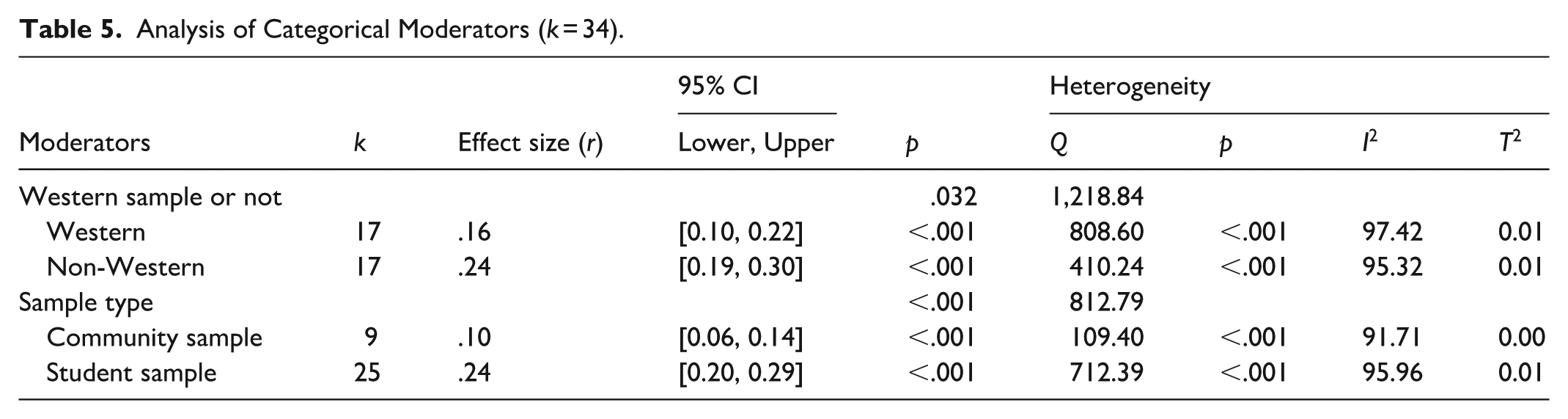
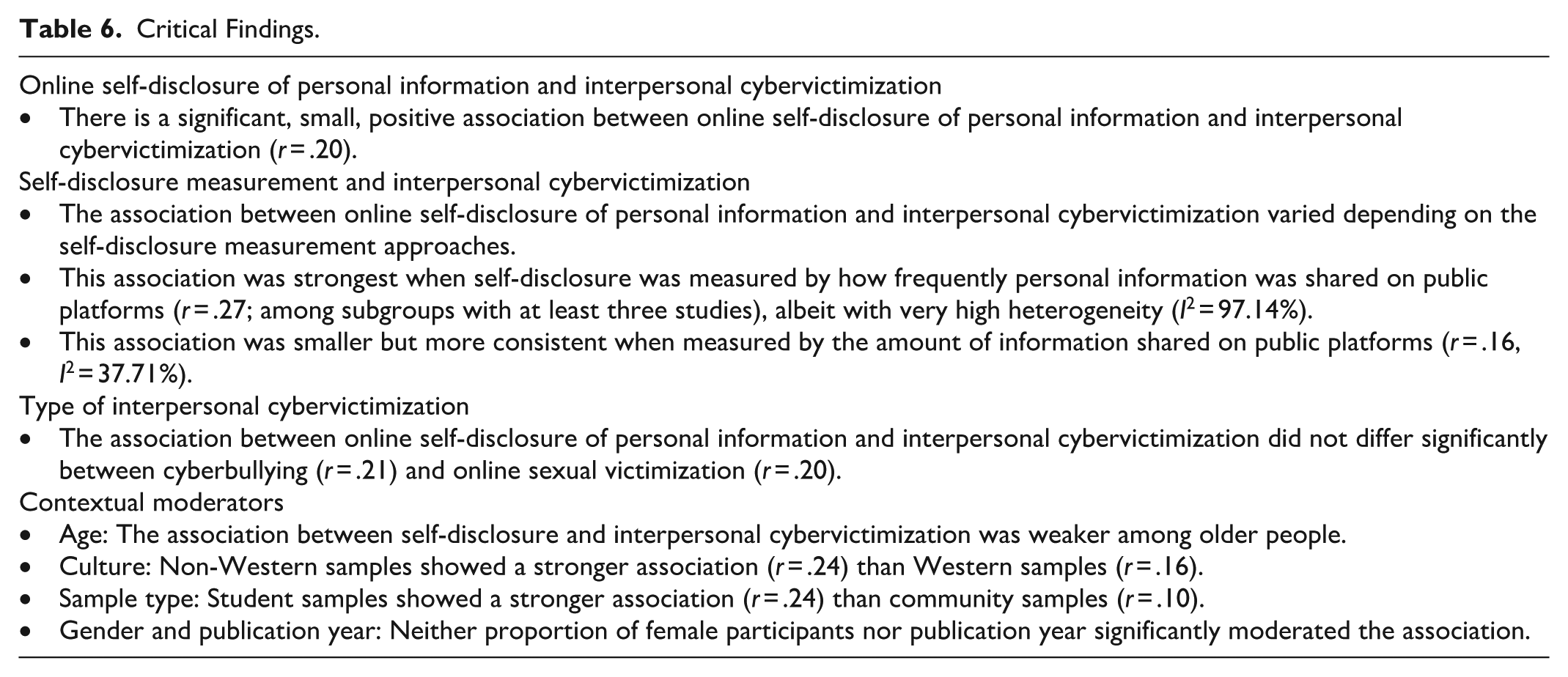
Geographical (p = .032) and sample type (p < .001) significantly moderated the association between self-disclosure and interpersonal cybervictimization. Non-Western samples exhibited significantly stronger associations (r = .24, 95% CI [0.19, 0.30]) than Western samples (r = .16 [0.10, 0.22]). Student samples demonstrating a higher effect size (r = .24 [0.20, 0.29]) than community samples (r = .10 [0.06, 0.14]). Critical findings are summarized in Table 6.
Critical Findings.
Publication Bias
Figure 3 shows the funnel plot for the main analysis, which was inspected visually to assess for publication bias. There was some mild asymmetry; however, no study unduly impacted the overall results as indicated by a leave-one-out analysis. When each study was removed, a significant, weak, positive relationship remained between online self-disclosure of personal information and interpersonal cybervictimization with effect sizes ranging from r = .195 to r = .208. Further, Egger’s regression test was nonsignificant, indicating no evidence of publication bias (Egger’s intercept = 0.64, p = .523). A Duval and Tweedie (2000) trim-and-fill analysis showed that no studies were required to be trimmed from the funnel plot. Finally, the classic fail-safe N method indicated that 30,190 nonsignificant studies would need to be missing to affect the findings of this meta-analysis. Given that only 34 studies were identified for inclusion, it was considered unlikely that 30,190 studies were either unpublished or otherwise undetected by the systematic searching of this review.
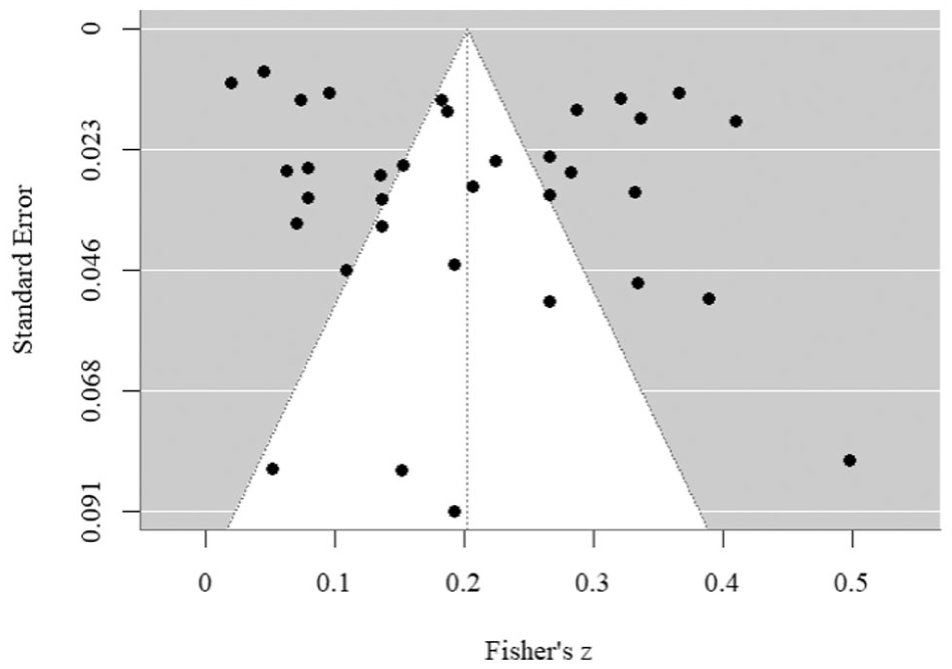
Funnel plot for all included effect sizes.
Discussion
To the best of our knowledge, this is the first comprehensive meta-analysis examining the association between online self-disclosure of personal information and interpersonal cybervictimization. The review included 34 effect sizes from 33 studies, including 91,620 participants from 22 countries. The meta-analysis found a weak but significant positive association between online self-disclosure of personal information and interpersonal cybervictimization (r = .20), with substantial heterogeneity (I2 = 97%). The strength of this association varied by self-disclosure measurement, but not by interpersonal cybervictimization subtypes. Moderator analyses indicated stronger associations among younger participants, non-Western samples, and student populations, while gender and publication year had no significant moderating effects.
Overall Association Between Self-disclosure and Interpersonal Cybervictimization
The results supported Hypothesis 1, indicating a positive association between online self-disclosure of personal information and interpersonal cybervictimization. This finding provides robust empirical support for the central tenet of RAT in the digital context that individuals who disclose more personal information online enhance their suitability as targets by increasing their visibility and accessibility to motivated offenders. On the other hand, it should be noted that the heterogeneity is extremely high (I2 = 97%). This reflects the ongoing challenges in the interpersonal cybervictimization field, where definitional and operational inconsistencies of self-disclosure and interpersonal cybervictimization—often due to widespread use of self-constructed scales—produce high heterogeneity. This issue was also highlighted in an umbrella review by Kasturiratna et al. (2025), which reported I2 values of 95%–97%. These findings highlight the need for greater operational clarity and standardized self-disclosure measures to improve replicability and reliability.
Explaining Heterogeneity With Moderator Variables
The association’s strength depended on how self-disclosure of personal information was measured, supporting Hypothesis 2. The “Quantity + Public” approach, which quantifies publicly visible personal information, produced a more consistent association with interpersonal cybervictimization (r = .16, I2 = 37.71%). This relatively lower heterogeneity may be attributed to the measurement approaches. Specifically, the “quantity” measure assesses the amount of personal information disclosed on an individual’s profiles, whereas the “frequency” measure captures how often an individual discloses personal information. The former is relatively more objective, while the latter is more susceptible to recall bias and social desirability effects. Empirical evidence shows perceived and actual online behavior often diverge (Ellis et al., 2019; Parry et al., 2021). The “Quantity + Public” method offers a balance of objectivity and consistency, though only a small number of studies (k = 4) used this measurement method. In addition, van ’t Hoff-de Goede (2024) used objective measures by creating a fictional online risk situation and assessing whether the respondents entered actual personal information. Their objectivity and theoretical clarity make them strong candidates for future standardization of self-disclosure measurement.
The association’s strength did not differ significantly across different types of interpersonal cybervictimization, rejecting Hypothesis 3. This finding suggests a potentially generalizable risk mechanism. One possible explanation is that cyberbullying, online sexual victimization, and cyberstalking have conceptual overlaps, and victims may experience multiple forms simultaneously. Also, cyberbullying is overrepresented (k = 20), and all forms of cybervictimization examined in this study are person-based (e.g., cyberbullying) rather than computer-based (e.g., malware, hacking). These two categories of cybercrime may operate through different mechanisms. For instance, Reyns et al. (2019) found that self-control predicted person-based cybervictimization but not computer-based cybervictimization. Our findings are therefore specific to interpersonal victimization and should not be generalized to computer-focused offenses. Future research should further clarify the boundaries between the concepts of various interpersonal cybervictimization or consider measuring them together in a comprehensive questionnaire that captures different aspects of interpersonal cybervictimization. Also, future research should include computer-based crimes and draw from cybersecurity and digital privacy literature to better capture the full range of cybervictimization.
The moderating analysis showed that there was a stronger association between self-disclosure and interpersonal cybervictimization among younger and student samples, partially supporting hypothesis 4. This finding suggests that younger individuals are more vulnerable to interpersonal cybervictimization when disclosing the same amount of personal information compared to older users. The finding is consistent with previous reviews, showing that the risk of cybervictimization rises in childhood and adolescence, then plateaus or declines in adulthood (Kasturiratna et al., 2025). Future research and prevention programs should therefore prioritize younger populations to enhance their digital literacy and safeguard them from cyber risks. In addition, self-disclosure was a stronger predictor of interpersonal cybervictimization in non-Western samples, possibly due to cultural differences in digital literacy, platform regulation, or privacy norms. For example, lower digital literacy and less stringent privacy regulations in some non-Western regions may increase individuals’ vulnerability to online risks (James, 2021).
Theoretical Contributions and Methodological Implications
This study makes two theoretical contributions to the application of RAT in cyberspace. First, it introduces a two-dimensional framework for online self-disclosure of personal information, distinguishing the content of information shared and the audience. This framework clarifies the concept of target attractiveness in digital contexts by specifying not only what personal information is revealed but also to whom it is disclosed. Despite a limited sample size, post hoc pairwise comparisons supported the validity of this approach: a statistically significant difference in effect sizes was found between the “Quantity + Public” and “Frequency + Stranger” approaches. These two configurations differ across both dimensions—content and audience—highlighting that each plays a distinct role in shaping online vulnerability. By integrating content and audience as core aspects of online self-disclosure of personal information, this research extends RAT by demonstrating that individuals’ sharing patterns directly affect their visibility, accessibility, and susceptibility to exploitation in digital environments. Second, this meta-analysis systematically evaluates the heterogeneous approaches used to measure online self-disclosure of personal information as a behavioral manifestation of target attractiveness. While the “Frequency + Public” measurement showed the largest effect size (among subgroup categories that have k > 2), this may be attributable to recall bias associated with the frequency measure. In contrast, the “Quantity + Public” approach, though yielding a smaller effect size, demonstrated lower heterogeneity, suggesting its potential as a more objective and methodologically robust measure. These findings advance the theoretical and empirical foundation of RAT in digital contexts by clarifying that self-disclosure behaviors—as a key manifestation of online target attractiveness—should be conceptualized along both content and audience dimensions, and by proposing a more consistent measurement approach for future research.
Practical Implications for Education, Policy, and Research
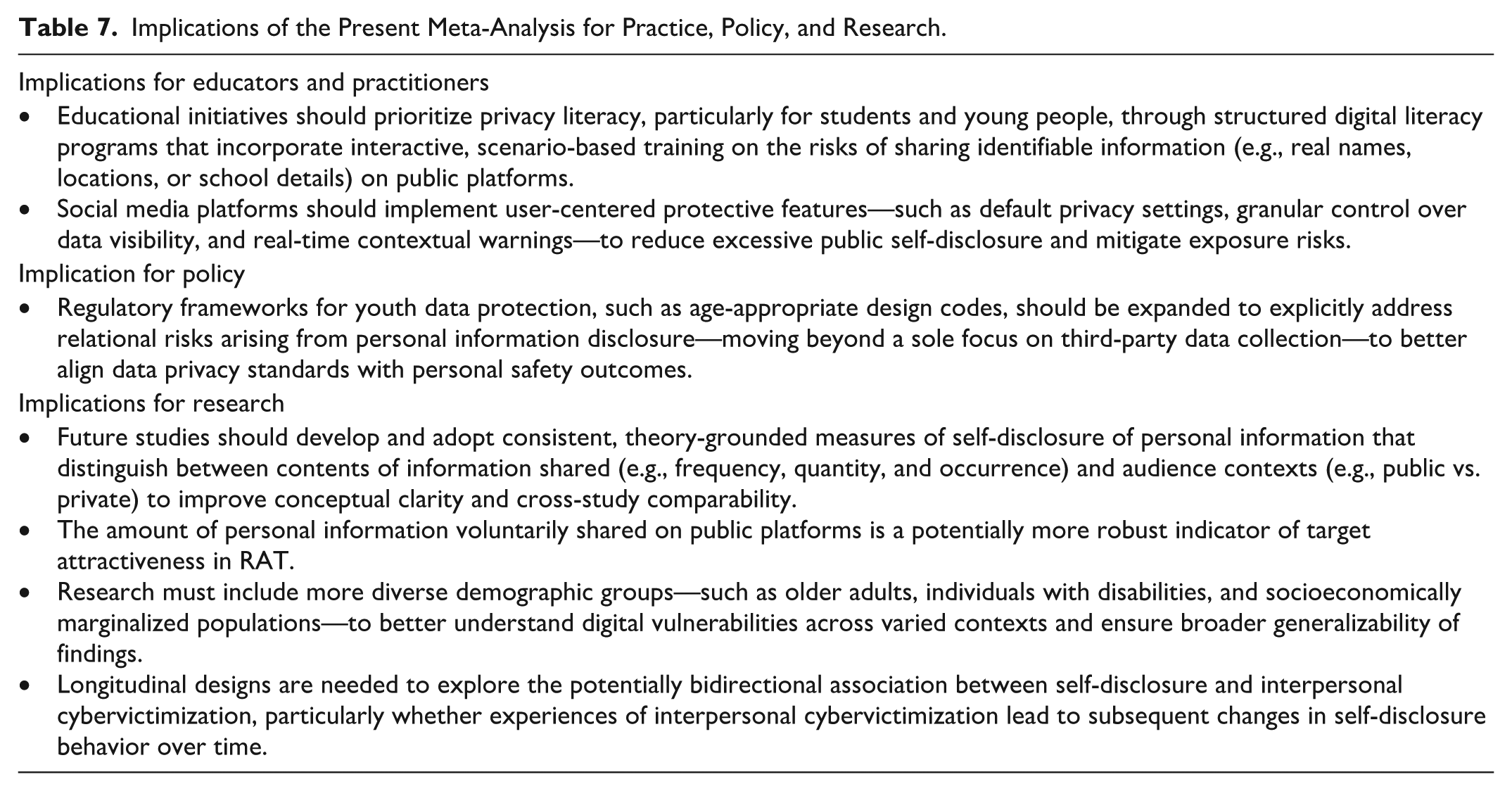
The findings have several implications for educators, practitioners, and policymakers. For educators, this underscores the need to integrate privacy literacy and critical awareness of online risks into digital citizenship curricula, particularly for young people and students. Social media platforms should implement design-level changes such as default privacy settings, granular visibility controls, and real-time contextual prompts that alert users to potential risks—for example, by warning against sharing location data or excessive personal details—while algorithmic systems could identify profiles with high levels of public personal data as part of vulnerability assessments. At the regulatory level, these results underscore the importance of strengthening youth data protection frameworks, including updating age-appropriate design codes to address relational risks arising from personal data exposure—not merely third-party data collection—and extending cyber-safety guidelines to include underrepresented groups such as older adults or individuals with health conditions, whose vulnerability patterns may be less visible and underreported. A summary of the implications is presented in Table 7.
Implications of the Present Meta-Analysis for Practice, Policy, and Research.
Limitation and Future Directions
This meta-analysis has limitations. First, despite standardized inclusion criteria, definitions, and operationalizations of “self-disclosure of personal information” varied, contributing to heterogeneity. Frequency-based assessments inherently capture more sustained or repeated disclosure behaviors, which likely involve greater exposure and risk compared to occurrence-based measures that merely assess whether a behavior has ever occurred. Thus, the variation in effect sizes may reflect differences in behavioral severity embedded in the measurement approaches rather than purely methodological distinctions. Future research should carefully consider the conceptual distinctions and the varying levels of exposure risk inherent in different self-disclosure measures, and avoid treating different operationalizations as interchangeable indicators of self-disclosure. Second, samples were skewed toward students, limiting generalizability to other populations, including seniors, people with chronic conditions and disabilities, who are consistently at higher risk of being targeted (Alhaboby et al., 2019; H. Chen et al., 2025). Third, the findings for several subgroups (e.g., cyberstalking and certain measurement approaches) are based on only two studies, limiting the reliability and generalizability of these specific results. Hence, in this paper, these results are presented for completeness and are not discussed as main findings. Fourth, the scope of this meta-analysis is limited to interpersonal cybervictimization. Our initial search was not restricted to the subtypes of interpersonal cybervictimization; however, we were unable to locate any studies that examined voluntary self-disclosure of personal information in relation to computer-focused victimization while also meeting other inclusion criteria. This absence highlights a significant gap in the literature. It remains unknown whether, and to what extent, routine self-disclosure of personal information increases the risk of technical attacks or financial fraud. Future research should investigate this risk factor when extending the RAT framework to these victimization types. Such studies are essential for a comprehensive understanding of how online behaviors shape victimization risk across the full spectrum of cybercrimes.
Conclusion
This meta-analysis shows a positive association between online self-disclosure of personal information and interpersonal cybervictimization. Measures assessing the quantity of publicly accessible information provided a more robust effect estimate and showed lower heterogeneity, supporting their use in future research. Moderator analyses demonstrated that age, cultural context, and sample type significantly shape the association between self-disclosure and interpersonal cybervictimization. By systematically quantifying effect sizes and identifying methodological best practices, this study advances both theoretical understanding and measurement in the field. Future research should adopt standardized, theory-informed measurement of self-disclosure of personal information, expand investigations to understudied populations and other cybervictimization forms, and employ longitudinal designs to clarify causal pathways.
Supplemental Material
sj-docx-1-tva-10.1177_15248380261436842 – Supplemental material for Online Self-Disclosure of Personal Information and Interpersonal Cybervictimization: A Meta-Analysis
Supplemental material, sj-docx-1-tva-10.1177_15248380261436842 for Online Self-Disclosure of Personal Information and Interpersonal Cybervictimization: A Meta-Analysis by Han Wang and Jinghan Hu in Trauma, Violence, & Abuse
Footnotes

Ethical Considerations
Ethical approval was not required for this study because it is a meta-analysis of previously published studies.
Consent to Participate
This study does not involve any new data collection with human participants.
Funding
The authors disclosed receipt of the following financial support for the research, authorship, and/or publication of this article: This work is supported by the China Postdoctoral Science Foundation (2025M773444, GZC20252271).
Declaration of Conflicting Interests
The authors declared no potential conflicts of interest with respect to the research, authorship, and/or publication of this article.
Data Availability Statement
The data and study materials are available from the corresponding author upon reasonable request.*
Supplemental Material
Supplemental material for this article is available online.
Notes
Author Biographies
References
Supplementary Material
Please find the following supplemental material available below.
For Open Access articles published under a Creative Commons License, all supplemental material carries the same license as the article it is associated with.
For non-Open Access articles published, all supplemental material carries a non-exclusive license, and permission requests for re-use of supplemental material or any part of supplemental material shall be sent directly to the copyright owner as specified in the copyright notice associated with the article.
