






Abstract
Animal-derived foodstuffs are essential for human nutrition but may harbor pathogens responsible for foodborne diseases. In Maghreb countries (Algeria, Libya, Morocco, and Tunisia), data on foodborne pathogen hazards are often limited and fragmented. To address this gap, the present systematic review and meta-analysis aimed to estimate the overall prevalence of foodborne pathogens in animal-derived foods in the Maghreb region from 2004 to 2025. A systematic literature search was conducted in two electronic databases (PubMed and Scopus) following PRISMA guidelines. A total of 80 studies met the inclusion criteria. Data were analyzed using the meta package in R software, applying a random-effects model. The pooled prevalence of pathogens in foods of animal origin was 26.6% (95% CI: 20.0–33.8), with high heterogeneity (I2 = 98.9%). The highest contamination was observed in raw poultry meat (36.1%). Eleven foodborne bacterial species were reported. Salmonella spp. was the most frequently reported (n = 18), with a pooled prevalence of 14.2%, followed by Staphylococcus aureus (28.3%, n = 16) and Escherichia coli (36%, n = 16). Most studies were conducted in Algeria and Morocco, with country-level prevalence ranging from 22.1% to 38.1%. This review reveals a substantial burden of foodborne pathogens in the Maghreb region. Enhanced surveillance and targeted control measures are essential to improve food safety and protect public health.
Introduction
Animal-derived foodstuffs are recognized sources of foodborne diseases, particularly when consumed raw, undercooked, or improperly handled (Heredia and García, 2018; Issa et al., 2024). Foodborne bacteria contaminate food at any stage along the production continuum, from the farm to the dining table (Chen and Alali, 2018). Foodborne diseases may result from infections, intoxications, or toxi-infections associated with the consumption of contaminated food (Bintsis, 2017; Gupta et al., 2019). The zoonotic potential of foodborne bacterial pathogens and their ability to produce toxins represent significant threats to public health (Heredia and García, 2018). Major bacteria associated with foodborne outbreaks include diarrheal pathogens such as Salmonella spp., Escherichia coli, Campylobacter spp., Shigella spp., and Vibrio spp.; toxin-producing bacteria such as Staphylococcus aureus and Bacillus cereus; as well as invasive pathogens including Listeria monocytogenes, Brucella spp., and Mycobacterium bovis (Havelaar et al., 2015; Hennekinne, 2018; Osimani et al., 2018). These pathogens can lead to clinical manifestations spanning mild gastroenteritis to severe systemic disease and death, particularly in vulnerable populations (Bintsis, 2017; CDC, 2025). Foodborne pathogens cause millions of sporadic infections, long-term sequelae, and large, complex outbreaks that may spread within and across national borders (Heredia and García, 2018). Globally, foodborne diseases are widespread and constitute a major threat to public health and national economies, as emphasized by the World Health Organization (WHO, 2017). In 2021, the WHO estimated the regional burden of diarrheal disease cases attributable to 14 foodborne pathogens at 699,100 cases in the African region and 234,500 cases in the Eastern Mediterranean region (Colston et al., 2026). Economically, foodborne diseases lead to productivity losses and diminished consumer confidence, with an estimated economic burden of USD 110 billion in low- and middle-income countries (Khairullah et al., 2024; Piovani et al., 2024).
According to the WHO classification, Maghreb countries, such as Algeria and Mauritania, belong to the African Region, whereas others, including Libya, Tunisia, and Morocco, are part of the Eastern Mediterranean Region. Despite the launch of the Initiative to Estimate the Global Burden of Foodborne Diseases by the WHO in 2006, food safety programs in Maghreb countries remain underdeveloped and fragmented. Moreover, estimating the prevalence of foodborne diseases in these regions is challenging due to underreporting, weak food surveillance, limited laboratory capacity, poor coordination among stakeholders, and persistent data gaps (Anelich and Lues, 2024; Issa et al., 2024; WHO, 2024). In the Maghreb region, research on foodborne bacteria in foods of animal origin has increased over the last decade (Amajoud et al., 2018; Bellil et al., 2025; Khemiri et al., 2019; Kriem et al., 2015; Rebbah et al., 2018); however, there is currently no comprehensive quantitative synthesis of their prevalence in animal-derived foods across the region. The available studies are scattered and methodologically heterogeneous, highlighting the need for a systematic review and meta-analysis to consolidate evidence and identify knowledge gaps.
The main objective of this study was to estimate the prevalence of foodborne pathogens in animal-derived foodstuffs in Maghreb countries and to examine their geographical distribution.
Materials and Methods
Study design
This systematic review and meta-analysis was conducted in accordance with the Preferred Reporting Items for Systematic Reviews and Meta-Analyses (PRISMA 2020) guidelines (Page et al., 2021).
Search strategy
A comprehensive search was performed using two electronic databases, PubMed and Scopus, covering studies published up to March 26, 2025. The search strategy included combinations of the following keywords: (Occurrence OR prevalence) AND (Staphylococcus* OR Salmonella* OR Shigella* OR Vibrio* OR Listeria* OR Campylobacter* OR Escherichia* OR Clostridium* OR Bacillus* OR brucell* OR tuberculos* OR foodborne OR “food microbiology” OR “food safety” OR “food pathogens”) AND (milk OR meat OR egg OR fish OR seafood OR honey OR “foods of animal origin” OR “dairy products” OR “food products” OR “foodstuffs”) AND (Algeria OR Morocco OR Tunisia OR Libya OR Mauritania OR “Western Sahara”) NOT mastitis. Duplicate records were first identified and removed using EndNote 5, and any remaining duplicates were manually deleted.
Eligibility criteria
Studies were included if they were peer-reviewed articles published in English, reported the prevalence of foodborne bacteria, and focused on foods of animal origin intended for human consumption in Maghreb countries. Studies not meeting these criteria were excluded.
Data extraction
From each eligible study, data were extracted and organized in a Microsoft Excel. The extracted variables included the authors’ names, year of publication, country, type of food product, sampling site, sample size, number of positive samples, identified bacterial species, and the laboratory methods used for their detection.
Meta-analysis
Extracted data were analyzed using the meta package in R version 4.3.1. The “PFT” transformation, as described by Chen et al. (2023), was applied to stabilize variances. A random-effects model was used for both overall and subgroup analyses, following standard methodological guidelines (Chen et al., 2023; Schwarzer and Rücker, 2022). Heterogeneity across studies was assessed using Cochran’s Q test and the I2 statistic. I2 values of 25%, 50%, and 75% were interpreted as indicators of low, moderate, and high heterogeneity, respectively, in accordance with established thresholds (Higgins et al., 2002, 2003).
A meta-regression analysis was conducted to explore potential sources of heterogeneity among the studies and to assess the influence of selected explanatory variables on prevalence rates. The models included three moderators: bacterial species, country, and publication year. The proportion of variability explained by each model was quantified using the R2 statistic.
Publication bias assessment
Publication bias was assessed using several methods, focusing on Salmonella spp., E. coli, and S. aureus, as only these pathogens had a sufficient number of studies (n ≥ 7) to perform the analysis. First, we utilized funnel plots, which are graphical representations commonly used to detect potential publication bias. Asymmetry in these plots can indicate the presence of bias. Additionally, we applied Egger’s test, a statistical test that provides a quantitative measure of publication bias. Specifically, we considered an Egger’s test p value <0.10 as indicative of the presence of bias, in accordance with established criteria (Egger et al., 1997). In instances, where bias was identified through either funnel plot asymmetry or a significant p value in Egger’s test, we took corrective measures. To address the potential impact of missing studies, we employed the trim-and-fill method, a statistical approach introduced by Duval and Tweedie (2000).
Results
Study selection and characteristics
From an initial pool of 267 articles retrieved from two databases, 206 articles remained after removing duplicates and were screened based on titles and abstracts. Of these, 100 articles were excluded. The remaining 106 articles were assessed in full text, leading to the exclusion of 26 articles for the following reasons: full text not available (n = 6), not meeting the inclusion criteria (n = 20). Ultimately, 80 eligible articles spanning a 21-year period (2004–2025) were included in this systematic review and meta-analysis (Fig. 1; Supplementary Table S1).
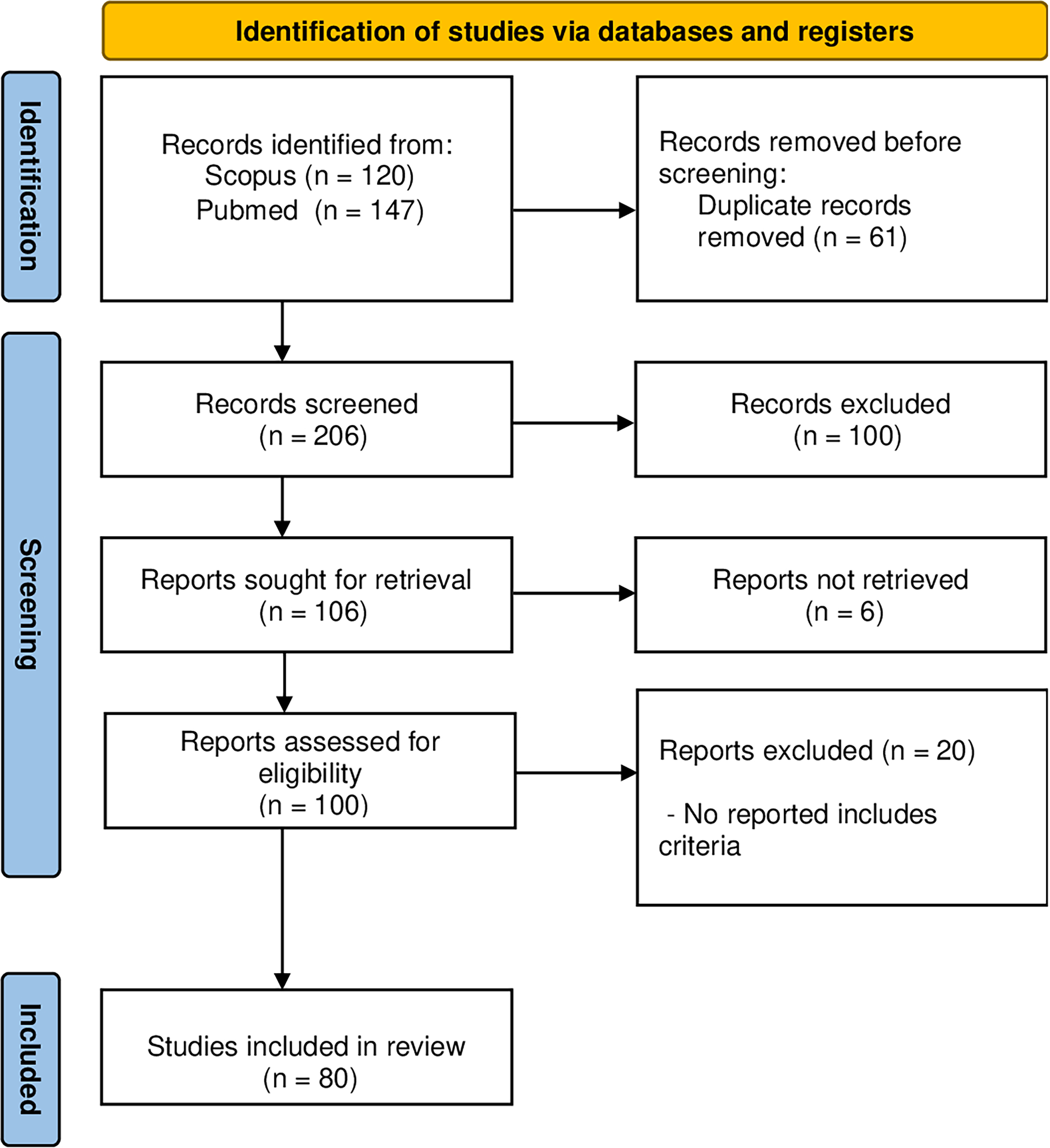
Flowchart illustrating the search and study selection process.
Different types of foods of animal origin were tested for multiple pathogens in the reviewed publications conducted in Maghreb countries (Fig. 2). The studies included varied considerably in terms of sampling points, sample sizes, and detection methods. The most common sampling locations were production sites (farms, slaughterhouses, and processing units), markets (supermarkets, local markets, retail markets, butcher shops), and the catering sector (hotels and hospitals) (Supplementary Table S1).
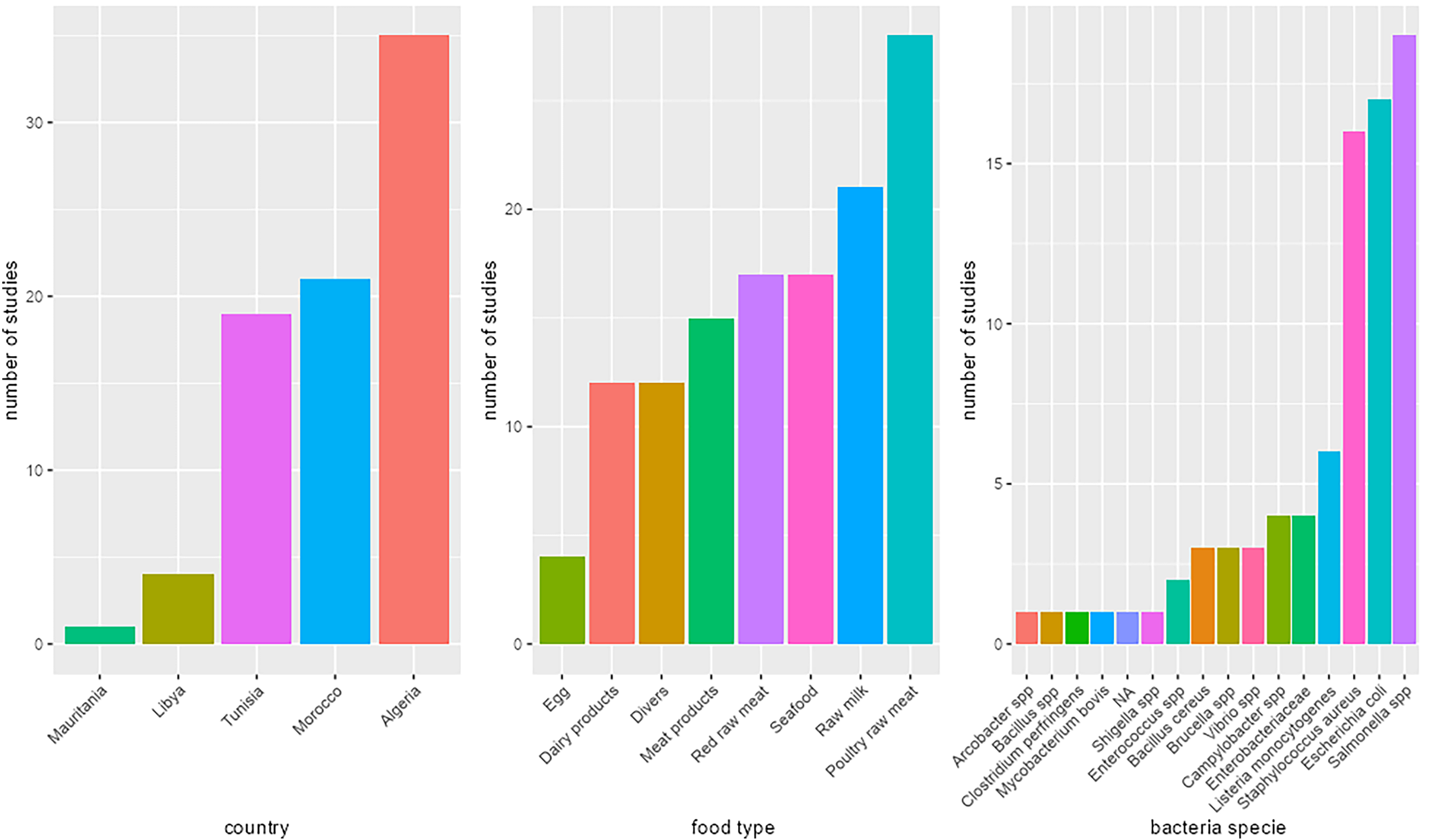
Number of studies assessing different types of foods of animal origin for multiple pathogens in Maghreb countries.
Standard microbiological methods were used in all studies except one. These were frequently combined with serological tests, such as agglutination and ELISA, MALDI-TOF mass spectrometry, or molecular techniques, including polymerase chain reaction (PCR), enterobacterial repetitive intergenic consensus, pulsed-field gel electrophoresis, and sequencing (Supplementary Table S1).
Meta-analysis
Overall prevalence
This study covered Maghreb countries (Algeria, Morocco, Tunisia, and Libya). A total of 68 studies, including 19,464 food samples, were analyzed to estimate the overall prevalence of foodborne pathogens between 2004 and 2025. The meta-analysis revealed substantial variability among studies (τ2 = 0.1043; I2 = 98.9%; p = 0). The pooled prevalence of pathogens in animal-derived foods was 26.6% (95% CI: 20.0–33.8) (Supplementary Fig. S1).
Temporal analysis revealed fluctuations in the prevalence of foodborne pathogens over the years. From 2004 to 2009, the pooled prevalence was 25.6% (95% CI: 2.4–61.5%). This declined to 13.4% (95% CI: 1.9–32.5%) during 2010–2014, and subsequently increased to 31.5% (95% CI: 19.8–44.5%) in 2021–2025 (Supplementary Table S2).
At the country level, most studies were conducted in Algeria and Morocco. Reported prevalence rates varied among Maghreb countries, ranging from 22.1% (95% CI: 12.7–33.2) to 38.1% (95% CI: 0.4–90) (Supplementary Table S2; Supplementary Fig. S1).
The highest contamination rate was observed in raw poultry meat (n = 27), at 36.1% (95% CI: 24.9–48.1). The lowest contamination rate was recorded in eggs (n = 4), at 5.1% (95% CI: 0.3–14.3) (Supplementary Table S2; Fig. 3).
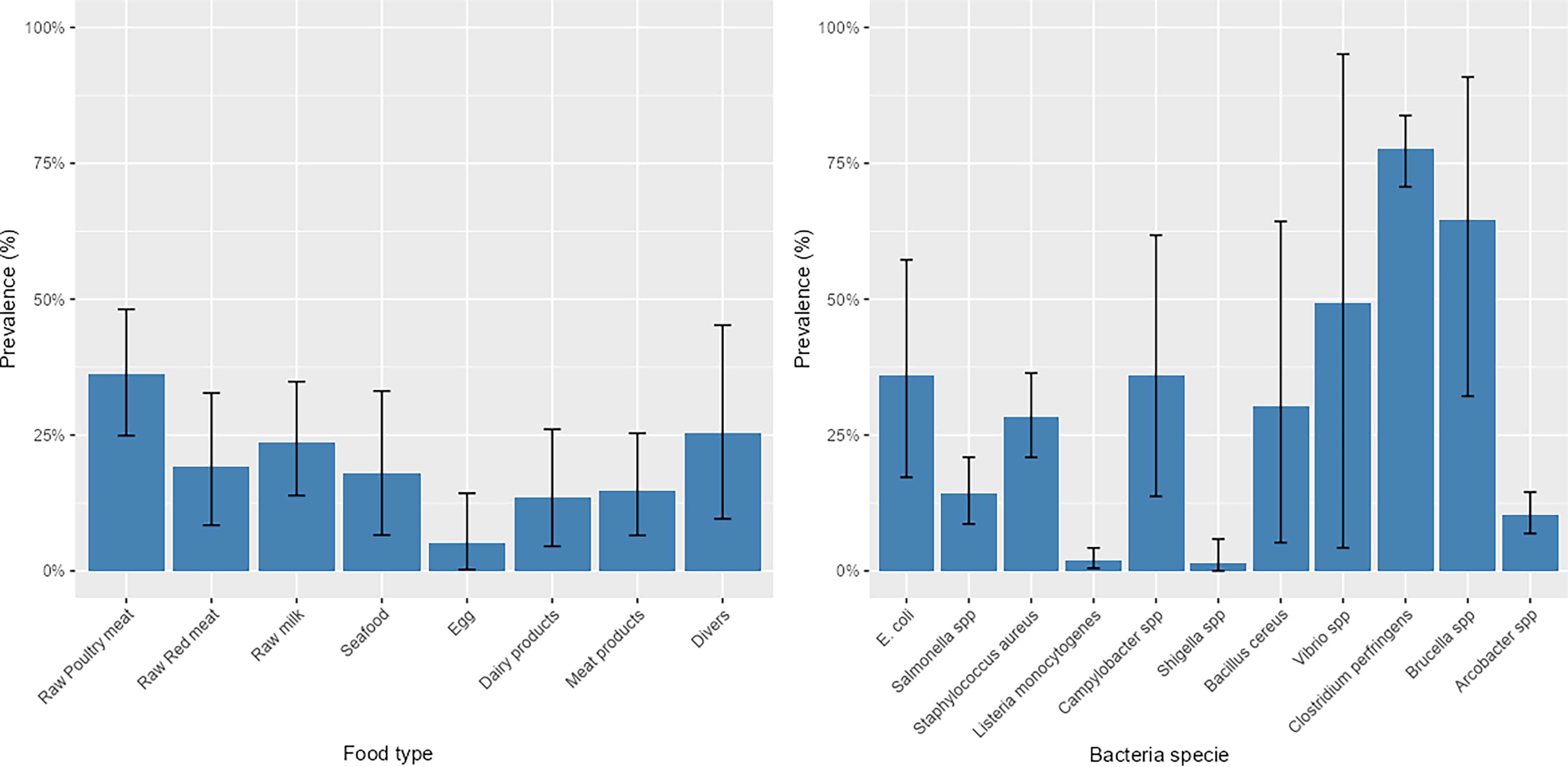
Prevalence of foodborne bacteria detected in foods of animal origin in Maghreb countries.
Several foodborne pathogens were screened in different foods of animal origin. The most frequently studied bacteria were Salmonella spp. (n = 18), E. coli (n = 16), and S. aureus (n = 16), with contamination rates of 14.2% (95% CI: 8.6–20.9), 36% (95% CI: 17.2–57.2), and 28.3% (95% CI: 20.9–36.4), respectively (Supplementary Table S2).
Subgroup analysis
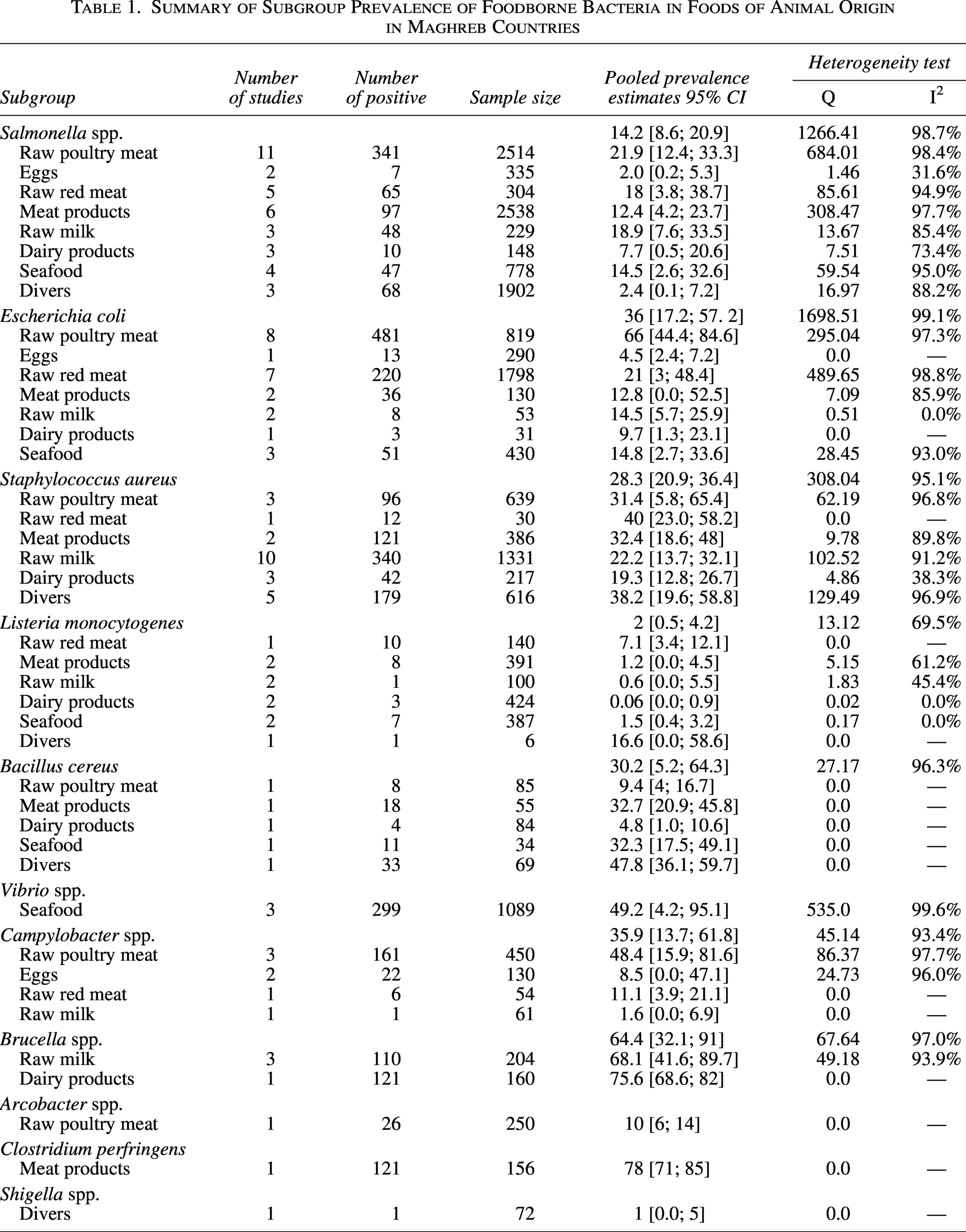
Based on 18 studies, Salmonella spp. was detected in all food types. Among the most frequently investigated food types, particularly raw poultry meat, the reported prevalence ranged from 2.0% to 22% (Table 1). Marked differences were observed between countries, with Tunisia reporting the highest prevalence (24.4%) and Morocco the lowest (7.9%) (Table 2). Variation was also evident by sampling site, with contamination highest in slaughterhouses (29.6%) and lower in market samples (16.1%) (Table 2). Regarding detection methods, studies using confirmatory techniques reported a slightly higher pooled prevalence (15.1%) compared with those employing the standard method (Table 2).
Summary of Subgroup Prevalence of Foodborne Bacteria in Foods of Animal Origin in Maghreb Countries
Subgroup Prevalence of Foodborne Bacteria by Country, Sample Points, and Detection Method in Maghreb Countries
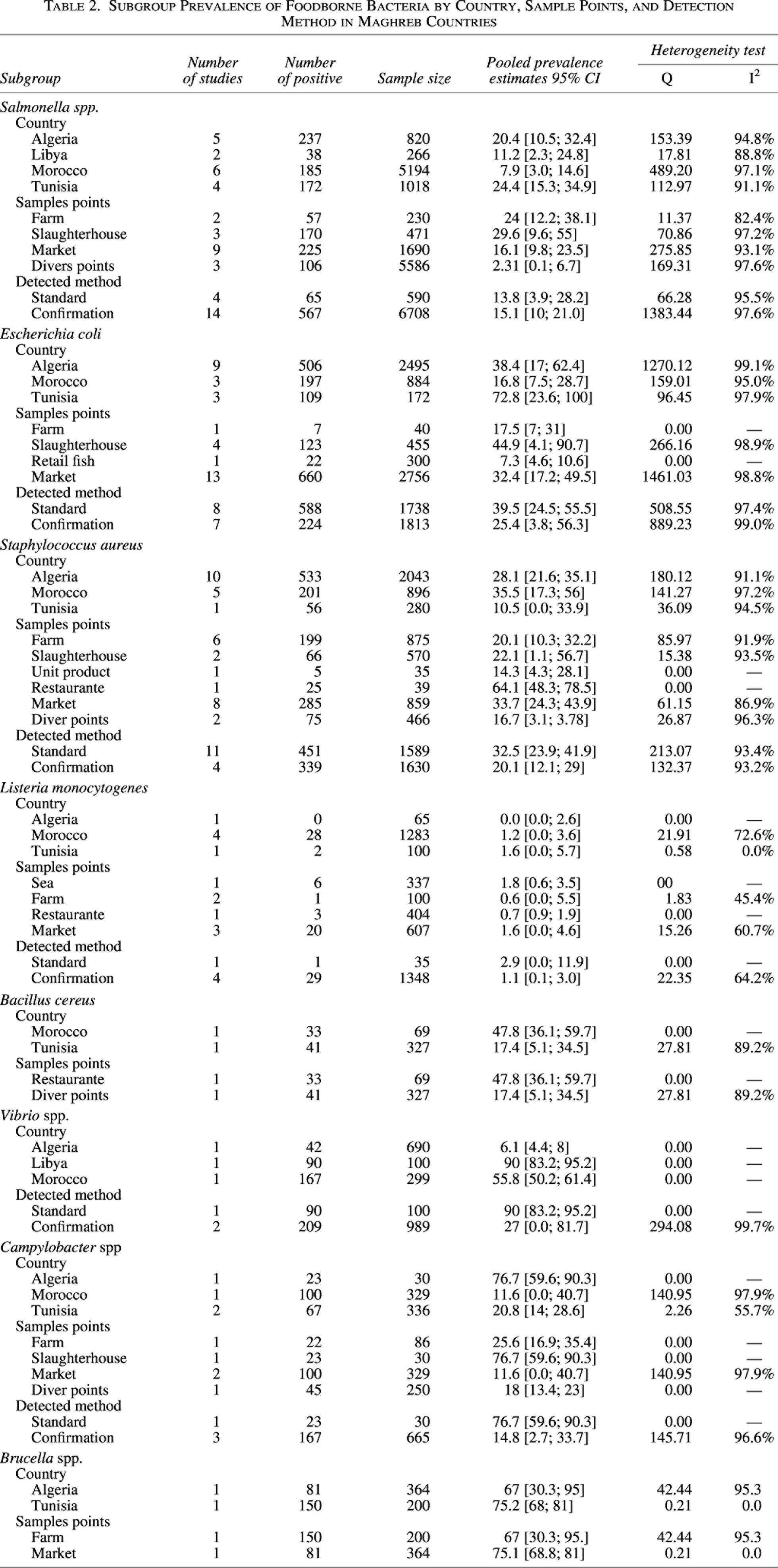
The overall prevalence of E. coli was calculated from 16 studies. Raw poultry meat exhibited the highest contamination rate, with a prevalence of 66% (Table 1). The prevalence of E. coli showed substantial heterogeneity across Maghreb countries. Tunisia exhibited the highest prevalence (72.8%), while Morocco reported the lowest prevalence (16.8%) (Table 2). Across sampling points, samples from slaughterhouses had the highest pooled prevalence (44.9%) (Table 2). When stratified by laboratory methods, studies using the standard technique reported a higher prevalence of 39.5% (Table 2).
The contamination rate of S. aureus was assessed based on 16 studies. More than half of these studies focused on raw milk and dairy products, reporting prevalence rates of 22.2% and 19.3%, respectively. Additionally, a higher prevalence of 31.4% was observed in poultry meat (Table 1). The prevalence of S. aureus also varied across the region; Morocco recorded the highest pooled prevalence (35.5%), whereas Tunisia reported the lowest estimate (10.5%) (Table 2). Among sampling points, samples from the restaurant showed the highest contamination level (64.1%), although this was derived from a single study. Market samples also exhibited a relatively high prevalence (33.7%), whereas slaughterhouses (22.1%) (Table 2). Regarding detection methods, studies using the standard technique reported a pooled prevalence of 32.5% (Table 2).
L. monocytogenes was recorded in six studies, with an overall prevalence of 1.99% (Fig. 3). Prevalence rates ranged from 0.06% to 7.1% in different animal source foods (Table 1). At the country level, L. monocytogenes prevalence was reported as 1.6% in Tunisia and 1.2% in Morocco (Table 2). Analysis of sampling points showed that prevalence was highest in sea samples 1.8%; however, this estimate was based on a single study. Market samples also relatively high prevalence of 1.6% (Table 2).
The prevalence of Campylobacter spp., estimated from four studies, was (35.9%) (Fig. 3). The highest prevalence was observed in raw poultry meat at 48.4% (Table 1). At the country level, Algeria reported the highest prevalence (76.7%), whereas Morocco exhibited markedly lower levels 11.6% (Table 2).
According to three studies, Vibrio spp. was investigated in seafood products, yielding an occurrence rate of 49.2% (Fig. 3). The pooled results further show marked variability across countries; Libya reported the highest prevalence at 90%, whereas Algeria exhibited substantially lower prevalence at 6.1% (Table 2).
Bacillus cereus was recorded in two studies, with a prevalence of 30.2% (Fig. 3). The prevalence in analyzed animal source foods ranged from 4.8% to 32.7% (Table 1). Country-level estimates revealed substantial variability, with Morocco reporting the highest prevalence (47.8%) (Table 2).
Brucella spp. was reported in three studies, with contamination assessed in milk and dairy products. The prevalence ranged from 68.1% to 75.6% (Table 1).
Meta-regression
Among the tested factors, bacterial species had a significant effect on prevalence rates (p = 0.0013), accounting for 22.4% of the observed variation between studies. In contrast, neither country (p = 0.80) nor publication year (p = 0.14) had a significant effect on prevalence rates. Although the regression line indicated an upward trend over time (Fig. 4), this increase was not statistically significant.
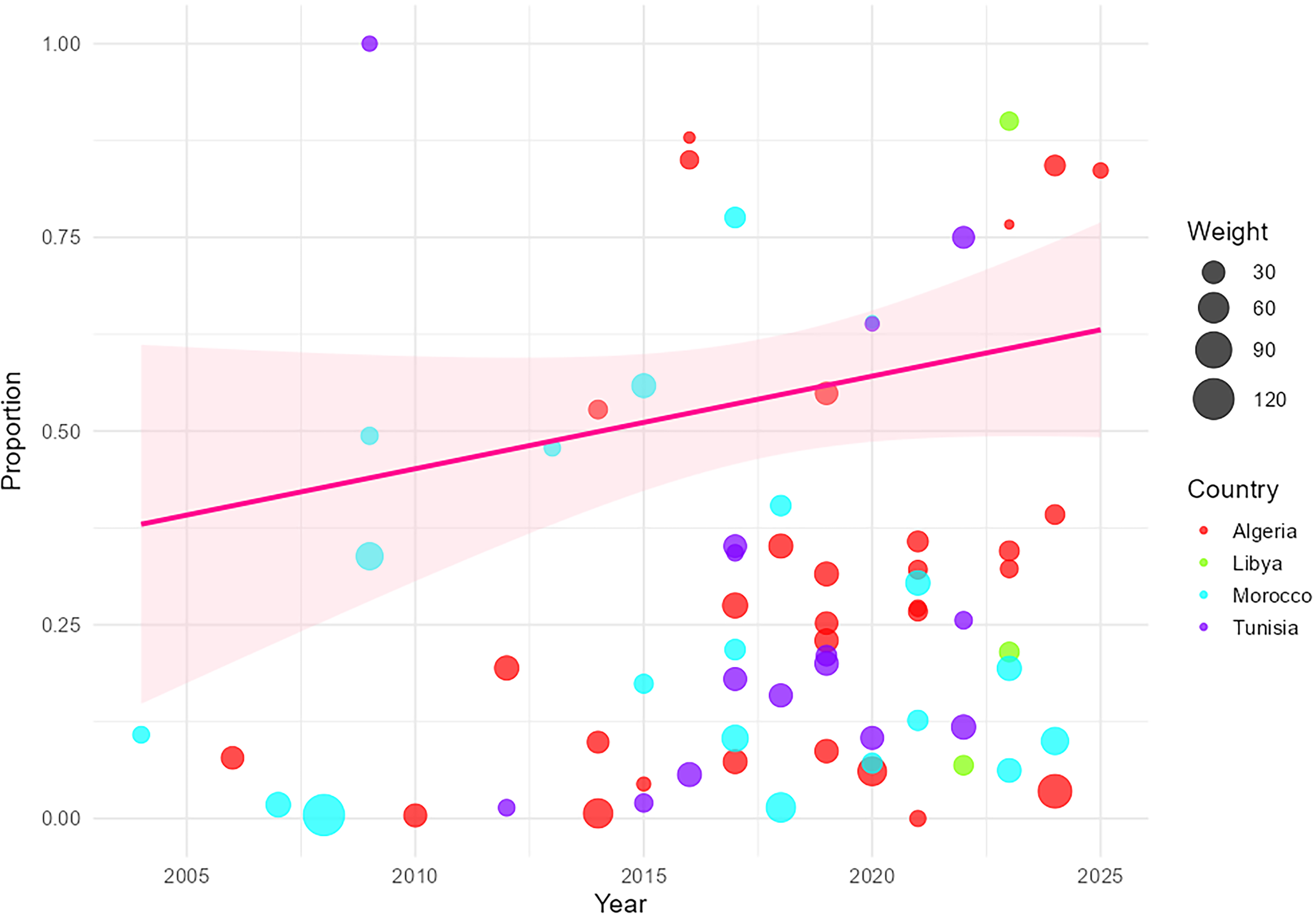
Meta-regression of foodborne bacteria prevalence by year of publication in Maghreb countries. The pink line represents the fitted regression line. Bubbles represent individual studies, with colors indicating countries and sizes proportional to study precision (1/standard error).
Publication bias assessment
The interpretation of the funnel plot suggested potential publication bias in studies assessing the prevalence of E. coli, Salmonella spp., and S. aureus in food products. To address this, a trim-and-fill analysis was conducted, resulting in the imputation of additional studies, E. coli (n = 6), Salmonella spp. (n = 9), and S. aureus (n = 6) (Supplementary Fig. S2). However, Egger’s test revealed that publication bias remained statistically significant for the pathogens tested (p < 0.01).
Discussion
Our study provides valuable insights into the prevalence and distribution of foodborne pathogens in animal-derived foods across Maghreb countries. Interest in this topic has increased markedly over the past decade, as reflected by the rising number of publications from the region. Overall, the pooled prevalence of pathogens in animal-derived foods was 26.6%, with most studies conducted in Algeria and Morocco. The meta-analysis revealed a high heterogeneity (I2 = 98.9%) for the overall pooled prevalence of foodborne pathogens, indicating substantial variability among the included studies. Despite performing subgroup analyses by bacterial species, food categories, country, and publication year, heterogeneity remained high across all groups. To further investigate its sources, a meta-regression analysis was conducted, which identified bacterial species as a significant contributor to the observed heterogeneity. Such a high level of heterogeneity reflects real differences rather than random variation. These differences likely arise from variations in study design, sampling frameworks, laboratory protocols, types of food analyzed, and the underlying prevalence of pathogens across different settings.
Reported prevalence rates varied considerably between countries, a pattern consistent with the findings of Paudyal et al. (2017), who similarly documented substantial between-country differences in their meta-analysis of selected African nations (Benin, Botswana, Ghana, Kenya, Nigeria, Sudan, and Uganda).
In this study, 11 foodborne pathogens were reported in foods of animal origin. These include Salmonella spp., E. coli, S. aureus, L. monocytogenes, Campylobacter spp., Vibrio spp., B. cereus, Brucella spp., Shigella spp., C. perfringens, and Arcobacter spp.
The prevalence of Salmonella spp. was highest in poultry meat (21.9%), followed by raw milk (18.9%), red meat (18%), seafood (14.5%), meat products (12.4%), dairy products (7.7%), and eggs (2.0%). Comparisons with other African studies show varying trends; for example, in Burkina Faso, chicken accounted for 26.5% of Salmonella isolates, followed by fish (23.9%), red meat (7.9%), and milk (1.2%) (Dinede et al., 2023). Furthermore, Wambui et al. (2019) in a meta-analysis on African indigenous fermented milk, reported low contamination levels (3%). At the global level, a European meta-analysis reported a lower prevalence in poultry meat (7.1%) (Gonçalves-Tenório et al., 2018). Considerable contamination levels have also been documented in aquatic and meat products elsewhere, including fish in Bangladesh (24%) (Amin et al., 2024) and meat (71%) and seafood (64%) in Cambodia (Huoy et al., 2024). Overall, poultry remains the most frequent source of foodborne salmonellosis in both the United States and the European Union (Guo et al., 2011; Pires et al., 2014). Differences in Salmonella prevalence between food types and regions are commonly attributed to variations in biosecurity measures, slaughtering and processing conditions, fecal contamination, hygiene practices, and food handling procedures, as well as differences in study design and sampling strategies (Thomas et al., 2020).
The prevalence of E. coli indicates a considerable level of contamination in animal-derived foods in the Maghreb region. Among the analyzed food categories, raw poultry meat exhibited the highest prevalence (66%), followed by raw red meat (21%), while eggs showed the lowest prevalence (4.5%). Comparable findings have been reported in other African countries. In Egypt, the prevalence of E. coli reached 40% in poultry meat and 28% in beef (Ibrahim et al., 2023), while Rashwan et al. (2025) reported an even higher prevalence in poultry meat (76%), with molecular characterization revealing the presence of virulence genes (fimH and eaeA) in all isolates and stx2 in 40% of strains. In fish products, E. coli was detected in 11% of samples from Cameroon (Moffo et al., 2024). At the global level, a European meta-analysis found extended-spectrum β-lactamase (ESBL)-producing E. coli prevalence of 40% in chicken meat, 3% in beef, 2% in seafood and milk, and 3% in eggs (Damianos et al., 2025). A worldwide meta-analysis reported an overall prevalence of E. coli in table eggs of 18.5%, with higher contamination on eggshells (25%) than in egg contents (7.9%) (Hinson et al., 2025). Additionally, in dairy products, Shiga toxin–producing E. coli (STEC) was detected at relatively low levels in raw sheep milk (4.8%) and goat milk (4.3%), as well as in goat milk cheeses (4.3%) and sheep milk cheeses (2.8%) (Gonzales-Barron et al., 2017). These differences may be attributed to variations in slaughtering practices, hygiene standards, monitoring systems, and methodological approaches used in the studies.
The prevalence of S. aureus was reported at 22.2% in raw milk and 19.3% in dairy products. Higher prevalence rates, around 32%, have been observed in poultry meat and meat products. Comparable prevalence rates have been reported elsewhere. In Ethiopia, a systematic review revealed pooled prevalence of S. aureus of 30.7% in raw cow milk, 19.3% in camel milk, 13.6% in goat milk, and 3.8% in pasteurized milk, while dairy products such as soft cheese and traditional fermented milk showed prevalence of 18.6% and 14.9%, respectively (Deddefo et al., 2022). In Europe, a Portuguese study identified S. aureus as the most frequently occurring pathogen in meat products, with an occurrence of 22.6% (Xavier et al., 2014), and a European meta-analysis reported that it was the predominant pathogen in poultry meat, with a pooled prevalence of 38.5% (Gonçalves-Tenório et al., 2018). Global meta-analyses have highlighted substantial S. aureus contamination across multiple food matrices. In meat products, pooled prevalence rates reached 29.7% in beef and 34.5% in chicken (Ou et al., 2017). In dairy products, contamination was also significant, with pooled prevalence estimates of 33.4% in raw milk, 16.8% in dairy products, and 11.1% in pasteurized milk (Zhang et al., 2022). Another meta-analysis covering studies published between 2012 and 2022 reported pooled prevalences of 21.7% in raw and cooked meat and 18.5% in dairy products, with particularly high contamination rates in turkey (42.8%), beef (34.5%), and chicken (31%), while lower levels were observed in seafood (3.3%) and egg products (4.3%) (Léguillier et al., 2024). These findings emphasize that the presence of S. aureus, an indicator of contamination from human handling, reflects poor hygiene practices, particularly inadequate hand hygiene. In addition, animal health may contribute, as S. aureus can infect the mammary glands of dairy animals and be shed into milk.
L. monocytogenes was detected in all examined food samples, although overall contamination levels remained low. The highest prevalence was observed in raw red meat (7.1%), followed by seafood (1.5%), meat products (1.2%), raw milk (0.6%), and dairy products (0.06%). At the country level, L. monocytogenes prevalence in Maghreb countries was low. Algeria reported no positive samples, likely due to limitations in the detection method, where molecular testing was performed without an enrichment step, potentially reducing sensitivity. Morocco (1.2%) and Tunisia (1.6%) showed similarly low prevalence estimates. When comparing with international data, Tunisia and Morocco show relatively low L. monocytogenes contamination. Across Africa, Paudyal et al. (2017) reported pooled prevalence at 19.5% in raw foods and 6.7% in ready-to-eat foods, while Wambui et al. (2019) documented 6% prevalence in fermented milk. In Spain, Panera-Martínez et al. (2022) found 56% prevalence in raw poultry preparations. In Turkey, Cufaoglu et al. (2021) observed marked differences among food categories, including 19.1% in chicken meat, 2% in raw bovine milk, 2.4% in fish, 5.2% in seafood, 4.7% in cheese, and 6.5% in deli meats. In Brazil, Cavalcanti et al. (2022) reported 14% prevalence in cattle meat and 16% in poultry meat. A recent global meta-analysis by Li et al. (2024) reported substantial variability in Listeria occurrence, with prevalence estimates of 3.4% in raw milk, 0.6% in pasteurized milk, 23.4% in semifinished cheeses, and 9.1% in cheeses.
Campylobacter spp. was detected across multiple food categories derived from land animals. Contamination was highest in poultry meat (48.4%), followed by red meat (11.1%), eggs (8.5%), and raw milk (1.6%). These findings align with global evidence. A worldwide meta-analysis reported the highest Campylobacter prevalence in broiler meat (47.8%), while the lowest levels were found in milk (3.5%) and eggs (4.0%) (Zbrun et al., 2020). Similarly, a global meta-analysis of milk reported a pooled prevalence of 4% (Taghizadeh et al., 2022). Continental evidence also indicates that poultry is the major reservoir of Campylobacter in Africa (Thomas et al., 2020). The levels of Campylobacter spp. contamination in animal-derived foods are often influenced by slaughtering and processing practices, fecal contamination, hygiene standards, and food handling procedures.
The prevalence of Vibrio spp. in seafood varied widely across the Maghreb countries. Libya reported the highest prevalence in fish at 90%, which may be due to the use of low-sensitivity detection methods, followed by Morocco at 55.9%. In contrast, Algeria showed substantially lower prevalence at 6.1%. Globally, Vibrio spp. contamination in seafood is a significant concern. For example, Amin et al. (2024) reported that V. cholerae was present in 62% of fish samples from Bangladesh. In a global meta-analysis, Ma et al. (2023) estimated pooled prevalence rates of V. cholerae (9.6%), V. parahaemolyticus (24.8%), and V. vulnificus (5.3%) in fish. Several factors influence Vibrio prevalence, including geographic region, season, temperature, salinity, and sampling origin (e.g., farmed, market, or wild-caught seafood) (Di et al., 2017; Froelich and Daines, 2020; Ma et al., 2023).
B. cereus was reported in Morocco and Tunisia. Contamination levels varied by food category, with the highest prevalence observed in meat products and seafood (approximately 32%), followed by raw poultry meat (9.4%) and dairy products (4.8%). In Egypt, the prevalence of B. cereus was reported at 30% in beef, 42.5% in minced meat, and 12.5% in sausages collected from commercial supermarkets (Algammal et al., 2024). Globally, the prevalence of B. cereus in meat and meat products has been estimated at 11.9%, with notably higher levels reported in specific products, such as sausages (70%) (Rahnama et al., 2023). In milk and dairy products, the estimated global prevalence is 19.8% (Sun et al., 2025). Several factors contribute to B. cereus contamination in food. High bacterial loads in cattle feces can lead to carcass contamination during unhygienic slaughtering practices (Doyle et al., 2020). Contamination is not limited to raw meat; processed meat products may also become contaminated due to the persistence of B. cereus in processing environments (Soleimani et al., 2018). Additionally, the presence of B. cereus is often associated with the quality of the initial raw materials (Fouad et al., 2022), indicating that initial contamination of raw meat is a key determinant of contamination levels in meat products. In dairy products, contamination can occur via soil, grass, or contact with cattle udders (Doyle et al., 2020).
Brucella spp. was reported in dairy products with a prevalence of 75.6% and in raw milk at 68.1%. Globally, contamination levels appear lower than those reported in the Maghreb. For instance, a worldwide study reported a prevalence of 21.2% in milk and dairy products (Islam et al., 2023). More recently, a global meta-analysis estimated that Brucella melitensis prevalence was 2.2% in goat milk and 11.9% in sheep milk (Das et al., 2025). In Iran, prevalence in raw milk was reported as 27% in goat milk and 15% in camel milk, while traditional cheese, ice cream, and cream had estimated prevalence rates of 9%, 2%, and 9%, respectively (Shahbazpour et al., 2025). Additionally, in Mongolia, 33.1% of milk samples tested positive for Brucella spp. using qPCR (Naranchimeg et al., 2025). These findings underscore the importance of raising consumers' awareness about the risks of consuming raw dairy products and of strengthening surveillance programs to reduce the risk of Brucella spp. infection in the Maghreb region.
The prevalence of foodborne bacteria varied markedly by sampling site and detection method. Slaughterhouses consistently exhibited the highest contamination for Salmonella, E. coli, and Campylobacter, reflecting global trends in which slaughterhouse samples show significantly higher positivity than those from retail outlets or farms (Ansarifar et al., 2023; Hessel et al., 2022; Miao et al., 2022). Market samples also showed substantially elevated contamination; for example, retail foods exhibited markedly increased prevalence of E. coli and salmonella spp. compared with slaughterhouse samples (Damianos et al., 2025; Miao et al., 2022). Furthermore, S. aureus contamination was notably high in market samples, consistent with global observations in raw milk (Deddefo et al., 2022; Ou et al., 2018). Milk samples collected at farms and processing companies also exhibited substantially higher contamination than those obtained at the market level (Deddefo et al., 2022; Ou et al., 2018; Zhang et al., 2022). Overall, contamination increased from farm to market, highlighting persistent weaknesses in hygiene practices, handling procedures, cold chain management, and surveillance systems.
Methodological differences further contributed to variability; standard culture-based technique consistently showed higher prevalence than confirmatory methods, consistent with global findings for E. coli (Assefa and Bihon, 2018) and S. aureus (Zhang et al., 2022), while Ma et al. (2023) whereas molecular techniques were reported to detect higher prevalence than the standard culture-based method for Vibrio spp.
In Maghreb countries, beyond overall prevalence estimates, understanding the diversity of foodborne bacterial pathogens and their virulence profiles is essential for accurately assessing public health risks. Identifying specific pathogenic species, pathotypes, and serotypes provides critical insights into disease severity, transmission pathways, and emerging antimicrobial resistance patterns.
Among these, pathogenic E. coli strains have been reported in foods of animal origin across the Maghreb, highlighting their significant public health relevance. Notably, STEC, which is frequently implicated in severe gastrointestinal disease and hemolytic uremic syndrome, has been documented in multiple studies (Badri et al., 2009; Benkerroum et al., 2004; Chahed et al., 2006; Salih et al., 2014). Other diarrheagenic pathotypes, including enterotoxigenic E. coli, enteropathogenic E. coli, and enterohemorrhagic E. coli, have also been identified, underscoring the diversity of virulence profiles circulating in food matrices (Badri et al., 2009). Of particular concern is the detection of ESBL-producing E. coli, reflecting the increasing challenge of antimicrobial resistance in the food chain (Ben Said et al., 2017; Hassen et al., 2020; Rebbah et al., 2018).
More than 50 of Salmonella serotypes have been reported in animal-derived foods, among which S. enteritidis, S. typhimurium, and S. heidelberg are of particular public health concern. These serovars are globally recognized as leading causes of human foodborne salmonellosis and have been consistently reported in studies from the Maghreb region (Bellil et al., 2025; Ed-dra et al., 2017; Hassena et al., 2019; Samia et al., 2021). Of additional concern is the detection of ESBL-producing Salmonella, reflecting the growing challenge of antimicrobial resistance in the food chain (Oueslati et al., 2022).
Regarding S. aureus, enterotoxin-producing strains and methicillin-resistant S. aureus have been isolated in foods of animal origin, highlighting the risk of resistant Gram-positive bacteria entering the food chain (Chaalal et al., 2018; Mairi et al., 2019; Titouche et al., 2019).
Regarding Campylobacter spp., the species most commonly associated with human infections, C. jejuni and C. coli were frequently identified in food matrices, particularly poultry products (Bouhamed and Hamdi, 2023; El Baaboua et al., 2021; Gharbi et al., 2022; Jribi et al., 2017). Their presence is of concern due to their low infectious dose and prominent role in bacterial gastroenteritis worldwide.
The detection of Vibrio species, including those of public health importance such as V. cholerae and V. parahaemolyticus, in fish samples from Algeria and Morocco (Arab et al., 2020; Kriem et al., 2015) highlights the potential risk associated with seafood consumption, particularly in coastal regions.
Limitations
This study provides a comprehensive synthesis of foodborne pathogens' prevalence across Maghreb countries, systematically analyzing multiple bacterial species and diverse food categories over the past two decades. However, several limitations should be noted. Some regions, including Mauritania and Western Sahara, were not represented, and coverage in Libya was limited. Key pathogens, including L. monocytogenes, Vibrio spp., Campylobacter spp., B. cereus, Shigella spp., C. perfringens and Brucella spp., were underreported, thereby reducing the strength of the evidence base and limiting the robustness of pathogen-specific inferences. Furthermore, substantial variability in study design, sampling strategies, laboratory methods, and food types further contributed to heterogeneity. Therefore, pooled prevalence estimates should be interpreted with caution, as they reflect highly variable data rather than uniform outcomes.
Conclusions
This comprehensive systematic review and meta-analysis highlight the pooled prevalence of foodborne pathogens in animal-derived foods across Maghreb countries. Various food types were tested for a range of foodborne pathogens, with Salmonella spp., E. coli, and S. aureus being the most frequently detected, showing notably high contamination rates in animal source foods. These findings highlight the urgent need to enhance hygiene by implementing international food safety standards, providing continuous training for food handlers, and establishing effective traceability systems. Strengthening regional surveillance of foodborne pathogens is also essential to reduce disease burden and improve overall food safety. Additionally, raising public awareness about the health risks associated with consuming raw or undercooked foods of animal origin remains essential.
Authors’ Contributions
A.N: Conceptualization, methodology, investigation, software, formal analysis, visualization, writing original draft, validation, review, and editing. S.T: Writing. All authors have read and approved the final article.
Availability of Data
All data are available within the article and its Supplementary Materials files.
Footnotes
Acknowledgments
The authors would like to thank all authors whose articles are included in this study. We also sincerely thank the reviewers for their valuable suggestions, which helped improve the quality of the manuscript.
Disclosure Statement
No competing financial interests exist.
Funding Information
No funding was received for the conduct of this study.
Supplemental Material
Supplemental Material
Supplemental Material
Supplemental Material
References
Supplementary Material
Please find the following supplemental material available below.
For Open Access articles published under a Creative Commons License, all supplemental material carries the same license as the article it is associated with.
For non-Open Access articles published, all supplemental material carries a non-exclusive license, and permission requests for re-use of supplemental material or any part of supplemental material shall be sent directly to the copyright owner as specified in the copyright notice associated with the article.
