






Abstract
Using 2018, pre-pandemic survey data, this study provides the first Chilean portrait of university climate. A structural model shows that mattering and validating interactions with faculty are primary forces in cultivating students’ sense of belonging. Even though the broader institutional climate was a weak predictor of persistence plans, these immediate, human-scale relationships were central to explain students’ sense of belonging. This research offers a new framework for understanding early student perceptions of climate at Chilean universities.
Introduction
Research across various global contexts underscores the profound impact of institutional environments on student belonging, retention, and academic success (Centra & Rock, 1971; Haynes et al., 1997; Oseguera & Rhee, 2009; Zysberg & Schwabsky, 2021). Perceptions of inclusion, validation, and support during the initial university year are relevant for students’ long-term educational trajectories (Barnett, 2011; Palmer et al., 2009; Porter & Swing, 2006; Wintre & Bowers, 2007; Woosley, 2003). While these connections have been explored extensively in the existing literature that is centered around North American higher education systems (Berger, 1997; Berger & Braxton, 1998; Berger & Milem, 1999; Hurtado et al., 2012; Milem & Berger, 1997; Rendón, 1994; Upcraft & Gardner, 1989) there remains a notable absence of comprehensive research exploring these dynamics within Latin American contexts (Chiarino et al., 2024). In the research that focuses on Chilean higher education institutions, few of the existing studies focus explicitly on how first-year students in Chile perceive their university climate (De los Ríos, 2023), or the subsequent impacts of these perceptions on their academic behaviors and persistence (Espinoza et al., 2025).
Considering the importance of reducing student dropout in Chile, which averages 25% after the first year (Servicio de Información de Educación Superior [SIES], 2023), and noting that completion rates for new entrants to bachelor’s programs rank among the lowest among the Organization for Economic Co-operation and Development (OECD) countries (13%, rank 32/33) (OECD, 2020), this work proposes to address this knowledge gap by exploring localized student experiences. This approach aims to inform institutional policies and practices focused on improving first-year student success and retention. To reduce the aforementioned gap, this study proposes a primary question: Do student perceptions of Chilean university climate affect their enrollment plans for the following academic period (first semester of the second year)?
This study addresses this question by specifically investigating the experiences of first-year students regarding the university climate at two private research universities in Santiago, Chile (one with a religious affiliation), during 2018, a year marked by feminist protests (Reyes-Housholder & Roque, 2019; Silva-Tapia & Fernández Ossandón, 2022).
Utilizing a theoretical framework based on Hurtado et al.’s (2012) Multicontextual Model for Diverse Learning Environments (MMDLE), this study examines various dimensions of the university climate—curricular, co-curricular, and interpersonal—to provide detailed insights into the factors influencing students’ perceptions about university climate during their first academic year. In addition, this work proposes the inclusion of sense of mattering as a relevant construct to further inform the study of students’ perceptions of university climate in Chile, as a way to improve the analysis of the potential relation between these perceptions and their intent to persist. By establishing the link between these perceptions and students’ intent to persist, the ultimate goal of this research is to identify the specific relational mechanisms through which institutions can effectively intervene in the first-year transition process. In doing so, it offers a roadmap for institutions that shifts the focus from structural limitations toward the relationships in higher education institutions, which if improved, can facilitate student experiences in the first year.
The article is structured as follows: I first contextualize Chilean higher education massification and review dropout literature alongside the MMDLE framework. After detailing the methodology, the paper presents the descriptive and structural results. I discuss the findings, then the findings are translated into a praxis roadmap organized across four critical levels: institutional leadership and its value-signaling, the role of faculty and staff, and the formalization of social support networks (peers and family). Finally, before concluding, the paper addresses the study limitations.
The Chilean Higher Education Context
To understand student persistence in this study, one must situate it within the rapid massification of the Chilean system. Over the last three decades, enrollment for young adults (18–24 years) rose from 15% in 1985 to over 50% in recent years (Bernasconi & Sevilla, 2017; SIES, 2018). This expansion shifted the system from elite to universal access, driven largely by the introduction of state-guaranteed loans (Crédito con Aval del Estado, CAE) and, more recently, the Gratuidad (free tuition) policy for lower-income students (Espinoza & González, 2015). Consequently, a “new student” profile has emerged: first-generation students from lower-income families, who often face distinct cultural and academic barriers compared to the traditional elite (Arango et al., 2016). Additionally, as high levels of perceived conflict characterize the Chilean university not as an ivory tower, but as a permeable institution deeply embedded in the country’s polarization process and social conflicts (Kim & Celis, 2021; Von Bülow & Bidegain Ponte, 2015), existing social tensions outside campuses may permeate the university climate and further complicate the transition into college for these new students.
Unlike the U.S. context, where residential campus life is common, Chilean universities are predominantly commuter institutions, making the on-campus climate and classroom interactions the primary—and often sole—sites for social and academic integration. In this sense, it is important to note that, because of the campus being the main site for student interaction, and due to local tensions permeating campuses, the experience of university climate for the cohort who responded to this study’s survey was heavily marked by the events of late 2018—a year defined by historic, student-led feminist mandates (el mayo feminista) that challenged university institutionalized patriarchal practices. In connection to university students’ connection with broader social and/or political processes, it is pertinent to note that a relevant body of research has focused on student-led social movements in Chile, but its primary foci are the interactions of such movements with national politics and larger historical processes, rather than the impact of these movements on student’s academic experiences. While access has widened during the last decades, retention remains a critical challenge; historically, nearly 25% of students drop out during their first year (SIES, 2023).
Literature Review
This section explores dropout research in both Chile and the U.S., offering comparative insights into student retention and the factors influencing dropout. In Chile, research on dropout is relatively new. Initial studies by González and Uribe (2002) focused on quantifying dropout rates and estimating their financial impact, laying the groundwork for future inquiry. Subsequent studies, such as the qualitative research on dropout by Canales and De los Rios (2007) and the analysis of financial aid’s effects on retention by Catalán and Santelices (2014), have underscored the importance of socio-economic status in students’ decisions to persist or leave higher education.
Despite these advances, few Chilean studies have focused on the psychological and social integration processes that contribute to dropout. Notable exceptions include works by Himmel (2002) and Donoso and Schiefelbein (2007), who highlight the need for a broader theoretical framework to understand college dropout and persistence that considers the interplay between individual, institutional, and social factors. These scholars argue that dropout cannot solely be attributed to personal failings; instead, it results from structural inequities in the higher education system, particularly for historically marginalized students.
In the U.S., research on dropout has developed significantly, particularly in relation to campus climate. Pioneering models by Spady (1971) and Tinto (1975, 1993) drew connections between students’ social and academic integration and their persistence in college. These models have since been refined to account for the experiences of underrepresented groups, emphasizing the psychological dimensions of campus climate, including validation and sense of belonging (Hurtado & Carter, 1997; Locks et al., 2008).
Also, research by Hurtado et al. (2012) and Oseguera and Rhee (2009) have shown that a negative campus climate, particularly those perceived as hostile by minority students, significantly increase dropout rates among those social groups. Scholars such as Fischer (2007) and Museus et al. (2008) have further demonstrated that positive perceptions of campus climate can improve student retention by fostering a sense of belonging and increasing institutional commitment. These findings are especially pertinent for underrepresented student populations, as a welcoming and inclusive environment is linked to better persistence rates and overall student success.
College climate research identifies validation and sense of belonging as pillars for student persistence. According to Rendón’s (1994) validation theory, institutional agents must actively affirm and recognize students—especially those from marginalized groups—to ensure their full engagement within the academic sphere. Parallel to this, sense of belonging, as defined by Hurtado and Carter (1997), evaluates the depth of a student’s social and academic connectivity to the broader university community. Both facilitate students social and academic transition into university life (Barnett, 2011; Crawford et al., 2024; Hoffman et al., 2002; Strayhorn, 2018; Swanson & Cole, 2022).
Additionally, research has suggested that mattering—students’ feeling that they are important to others—is a relevant aspect to comprehensively assess students’ relation to college climate (Rosenberg & McCullough, 1981; Schlossberg, 1989). This concept, originated in Rosenberg and McCullough’s (1981) work, is distinct from belonging, as students may feel they “belong” to a campus organization (membership) without feeling they “matter” to the specific individuals within it (significance) (Flett et al., 2019). Similarly, mattering is different from validation, as mattering reflects a student’s internal perception of significance (Swanson & Cole, 2022), whereas validation describes the active, enabling process initiated by educators to affirm a student’s academic capabilities and strengths. (Dueñas & Gloria, 2020; Swanson & Cole, 2022). Examining mattering to specific agents—faculty, peers, and staff—may provide granular insight into why students persist even when broader institutional climates feel hostile.
The comparison between Chilean and U.S. research underscores the need for Chilean higher education institutions to adopt a more holistic approach to understanding dropout, especially considering its increasingly diverse student population (Bernasconi & Sevilla, 2017). While Chilean studies have made strides in addressing financial and socio-demographic variables, U.S. research highlights the critical role of campus climate—specifically the psychological dimensions of validation and sense of belonging—over student academic success. It is precisely for this reason that the framework guiding this study is centered around college climate, as detailed in the next section.
Theoretical Framework
The theoretical framework guiding this research is grounded in the MMDLE, as developed by Hurtado et al. (2012). This framework is designed to predict student outcomes, such as persistence and dropout, by examining various dimensions of the college climate. The MMDLE integrates the institutional, individual, curricular, and co-curricular contexts to understand the complex dynamics influencing student success. At the institutional level, the model addresses historical legacies of inclusion and exclusion, and organizational structures that perpetuate privilege and marginalization. The diversity of the student body, faculty, and staff is another critical institutional-level component, as it reflects the broader institutional commitment to equity.
The framework’s individual-level analysis centers on two components of campus climate: the behavioral, which covers formal and informal intergroup contact, and the psychological. The latter captures students’ subjective interpretations of their environment, including their satisfaction with campus diversity and their appraisal of the institution’s dedication to an inclusive community. The curricular and co-curricular contexts are also integral to this framework. The curricular context considers how course content, teaching methods, and the inclusion of diverse perspectives contribute to a student’s academic experience. Meanwhile, the co-curricular context includes the diversity-related programming and institutional support mechanisms—such as mentorship programs and campus organizations—that enhance student engagement outside the classroom.
Additionally, within the MMDLE framework, validation and sense of belonging are identified as pivotal psychological mechanisms directly linked to student persistence. While validation theory highlights the necessity of active recognition from institutional agents for student integration, sense of belonging captures the subjective depth of a student’s social and academic connectivity to the campus community. Empirical evidence demonstrates that a strong sense of belonging is a strong predictor of the intention to persist (Ellison & Braxton, 2023; Hausmann et al., 2007), whereas validation experiences are essential for the retention of historically marginalized and first-generation students (Barnett, 2011; Kelly et al., 2021; Kezar et al., 2024).
An additional component introduced in this study is the concept of mattering, which reflects the subjective sense of being important to others (Rosenberg & McCullough, 1981; Schlossberg, 1989). Its inclusion was explicitly advised by the team of experts and collaborators aiding in the Diverse Learning Environment (DLE) survey adaptation, who suggested that mattering could better capture the idiosyncratic characteristics of the Chilean university climate compared to broader belongingness constructs. In this regard, based on the experiences of Chilean students, the construct to measure mattering was specifically designed for this study with the aid of these collaborators, and it was shared with other scholars in recent studies involving Chilean engineering students, demonstrating that it is a reliable measure for understanding student experience in Chilean universities (Hilliger et al., 2022). By assessing whether students feel they matter in both curricular and co-curricular environments, this study’s model deepens our understanding of the psychosocial processes that impact first-year students’ plans for continuing their education within the Chilean context. The MMDLE, complemented by the introduction of the mattering component, offers a multidimensional approach to understanding the complex interactions between students’ perceptions of campus climate and their persistence decisions.
Methodology
This study employed a quantitative, survey design to examine how first-year students at Chilean universities perceive their campus climate, and how these perceptions influence their intentions to persist. A survey approach was deemed appropriate for this research because it allows for the efficient collection of data on a wide range of variables from a large sample, thus facilitating a better understanding of a phenomenon that has been scarcely studied in the Chilean context.
Sample
The final sample comprised first-year students from two private, research-oriented universities located in Chile’s Metropolitan Region (where the Capital, Santiago, is located). In total, 5,484 students were invited to participate in the survey between November 2018 and January 2019, and the final sample included 2,381 valid responses. This resulted in response rates of 43.4% at one university and 35.2% at the other, calculated using the American Association for Public Opinion Research guidelines (AAPOR, 2019). As detailed in Table 1, the sample was predominantly female (56.36%) with a mean age of 21.53 years, closely mirroring the demographic profile of the national cohort. Regarding educational background, half of the participants studied at private subsidized high schools (50.99%), followed by public (21.67%) and private (19.61%) institutions. Although the study was geographically restricted to the Metropolitan region, the sample’s composition regarding sex, age, and secondary education type remains largely consistent with the characteristics of the 2018 national university entrance context (SIES, 2018).
Portrait of 2018 University Entrance Cohort in Chile and of the Final Sample.
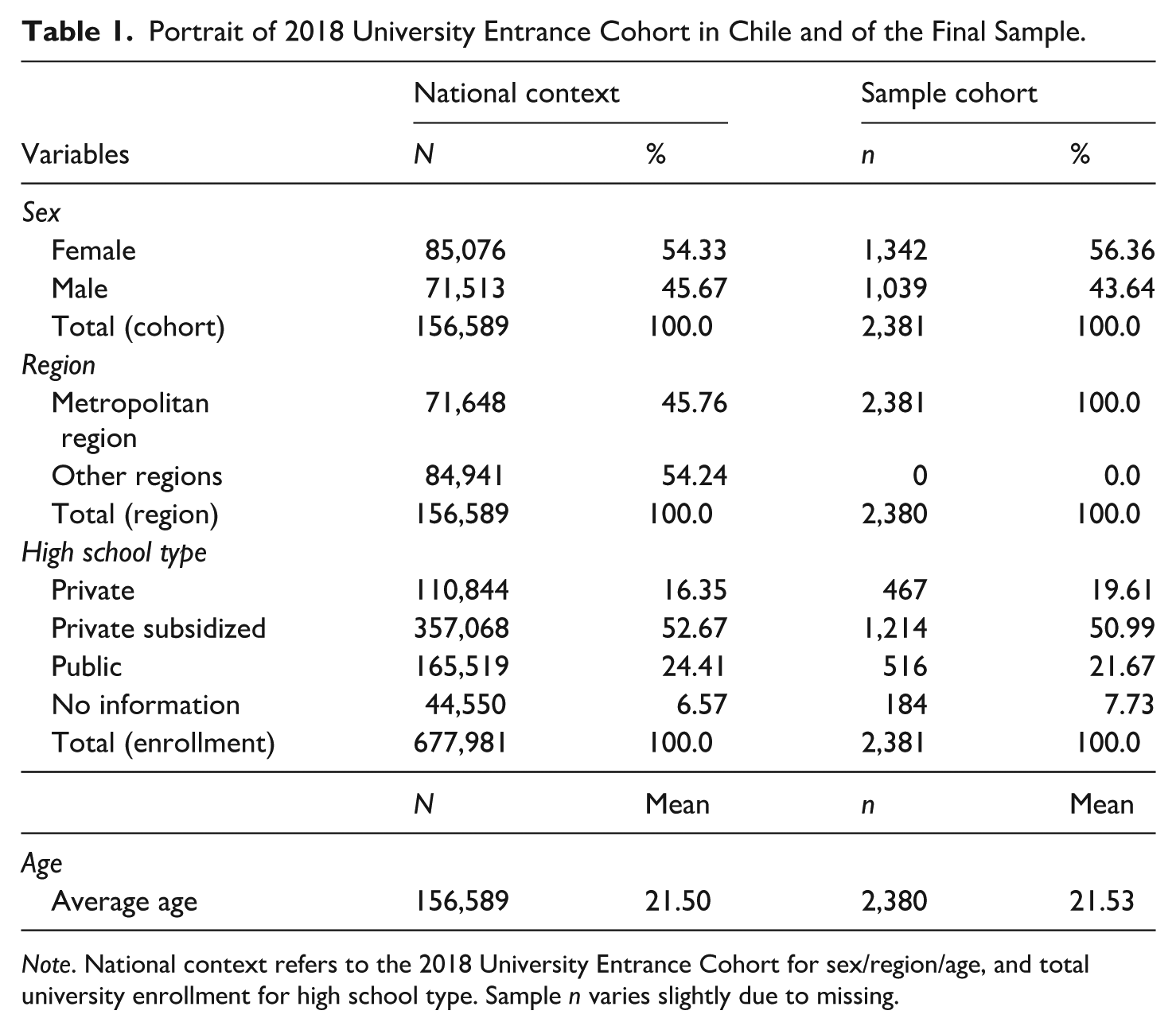
Note. National context refers to the 2018 University Entrance Cohort for sex/region/age, and total university enrollment for high school type. Sample n varies slightly due to missing.
Data Sources
This study utilized two primary data sources. The first was survey data, collected through the administration of an adapted version of Hurtado et al.’s (2012) DLE survey between November 2018 and January 2019. This instrument gathered information on students’ perceptions of the university climate, their psychological experiences (e.g., sense of belonging, mattering), and their enrollment plans for their second year.
The second source was student administrative records data, provided by the participating universities. These records contained demographic, socioeconomic, and pre-college academic variables, including high school GPA, standardized test scores (PSU), and students’ major of enrollment. The two datasets were linked using a unique student identifier to allow for a comprehensive analysis.
Survey Methodology
This study was informed by the Total Survey Error (TSE) approach, which emphasizes maximizing data accuracy by minimizing coverage, non-response, measurement, and random error (Dillman et al., 2014). A web-based, self-administered questionnaire was used, as this mode yields higher participation rates among college students and reduces interviewer-related biases (Shih & Fan, 2008). Incentive strategies varied by institution and included prize drawings with online gift cards—a strategy known to boost response rates (Tuten et al., 2004)—as well as the use of informational videos shared on social media, alongside personalized invitations and reminders.
I utilized the DLE survey (Hurtado & Guillermo-Wann, 2013), adapting it for the Chilean context through a rigorous team translation process consistent with cross-cultural survey best practices (Harkness et al., 2010). This involved independent translations, reconciliation by a panel of bilingual higher education experts, and a pilot test with 60 bilingual undergraduates using a split-ballot method to ensure semantic equivalence. The survey then underwent significant adaptation to improve its conceptual coverage and cultural relevance.
To ensure construct validity and cross-cultural equivalence, the survey underwent a systematic adaptation process from the original DLE survey. The core scales measuring the DLE dimensions—including sense of belonging, institutional commitment to diversity, and general interpersonal validation—were retained from the original framework to maintain validity and comparability with existing literature. Adaptations to the instrument were introduced in two main areas: adapting the survey to fit the local context and demographics, and improving conceptual coverage.
First, the demographic and university enrollment sections were modified to align with the data structures of Chilean universities and national census categories, particularly regarding indigenous populations. Second, five key conceptual modifications were made to reflect the salience of socioeconomic and gender-related issues in Chilean higher education. Because socioeconomic segregation, classist, and gender discrimination are critical issues in the local context (Vera Gajardo et al., 2025) three items regarding classist remarks and three items regarding gender-related remarks were added to measure ambient hostility. It is important to note that the inclusion of these items was also informed by my interactions with the diverse experts who aided in this process, all of whom are particularly knowledgeable of the Chilean higher education context. In addition, two new items were incorporated to gauge student satisfaction with the gender diversity of faculty and staff, and a single item assessing the level of political tension on campus was included to reflect the sociopolitical climate of 2018.
Modifications were also made to the co-curricular diversity activities factor. Two original items measuring participation in ongoing campus-organized discussions on racial/ethnic issues and participation in campus center activities were replaced with two contextually relevant items regarding university-organized forums and student-organized activities on socioeconomic equity, gender, religious, ethnic, or political issues. According to the experts aiding in the survey adaptation process, this adjustment accommodates the distinct Chilean university environment, since formal campus centers and university-organized intergroup dialogues are less common than student-led activities, as local research shows (De los Ríos, 2023).
Additionally, a measure of subjective social class was added for capturing students’ self-identification within social class groups (Jones & Vagle, 2013). Finally, I included a new six-item scale measuring mattering. As mattering refers to the perception that “we are a significant part of the world around us” (Schlossberg, 1989, p. 5), its concrete expression consists of feeling noticed (attention), feeling cared for (importance), and feeling that others look to us for support (reliance). In this sense, to measure mattering, the aforementioned new items ask students about their level of agreement on whether their classmates, friends, faculty, program leadership, student affairs professionals, and staff would worry about their situation if they were to leave the institution (the full adapted instrument is available upon request).
To ensure the psychometric properties of the adapted instrument within the Chilean context, I conducted Confirmatory Factor Analyses (CFA) for all latent constructs. As presented in Table 2, the reliability coefficients ranged from 0.64 to 0.92, demonstrating acceptable to excellent internal consistency. Regarding construct validity, the model fit indices generally indicated a strong fit to the data. Most factors exhibited Comparative Fit Indices (CFI) and Tucker–Lewis Indices (TLI) well above the 0.95 threshold (Hu & Bentler, 1999). While the “Satisfaction with University Climate” and “Conversations Across Diversity” factors showed marginal RMSEA values (0.098 and 0.113, respectively), their CFI values remained acceptable (0.988 and 0.946). Given their theoretical centrality to the MMDLE framework and prior validation in existing literature (Hurtado & Guillermo-Wann, 2013), these constructs were retained for the structural model.
Psychometric Properties and Example Items of Latent Constructs.
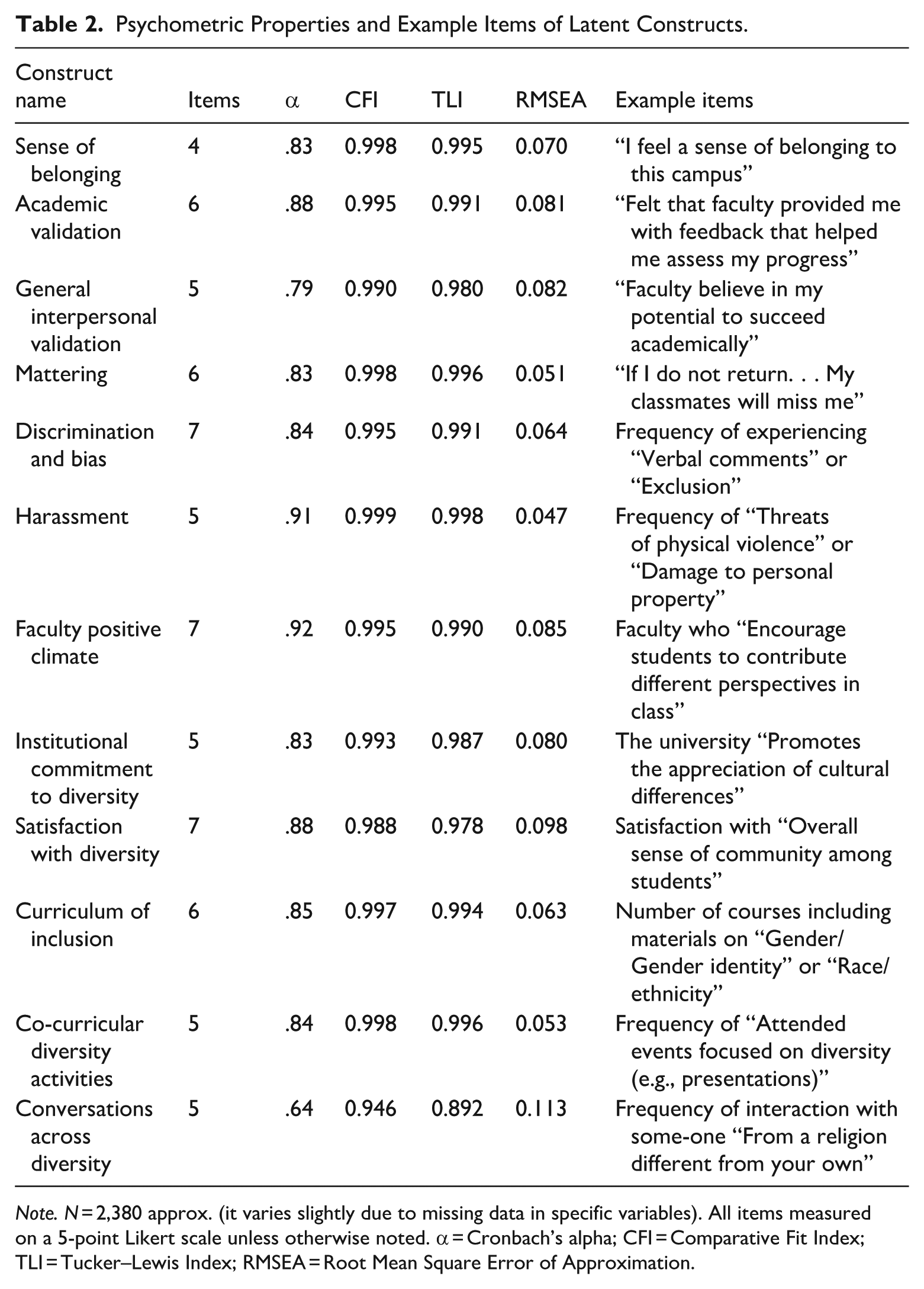
Note. N = 2,380 approx. (it varies slightly due to missing data in specific variables). All items measured on a 5-point Likert scale unless otherwise noted. α = Cronbach’s alpha; CFI = Comparative Fit Index; TLI = Tucker–Lewis Index; RMSEA = Root Mean Square Error of Approximation.
Data Analyses
The data were analyzed in two sequential stages. First, to answer the question regarding students’ perceptions of the university climate, weighted descriptive analyses were employed. Then, a structural equation model (SEM) was utilized to test the hypothesis that these climate perceptions affect students’ enrollment plans.
I utilized Structural Equation Modeling (SEM) in Mplus 8.8, and I selected the Maximum Likelihood Robust (MLR) estimator to account for the non-normality inherent in Likert-scale survey data (Muthén & Muthén, 1998–2017). SEM is an efficient method for examining complex interrelations among latent factors and observed variables while accounting for measurement error (Schreiber et al., 2006). The constructs utilized in the measurement model were first validated via CFA (See results in Table 2). In the second stage, the factor structure of the tested constructs was preserved, ensuring that the structural paths represent relationships between reliably measured latent constructs, which is different from measurement error. The model specifies relationships between eleven latent climate constructs and the observed outcome of enrollment plans, controlling for student identities and academic backgrounds (Wang & Wang, 2019). Due to the limited number of Level-2 units (only two universities), a multilevel model was not feasible; however, I controlled for background characteristics to mitigate selection bias.
Results
The descriptive analysis provides a comprehensive portrait of the students participating in the study. The students exhibit a balanced gender composition with visible non-binary representation (2.2%), alongside a significant presence of Mapuche indigenous students (13.2%). This profile is further defined by a prevailing secular orientation (56.1%) and a strong identification with left-wing politics (45.7%), characterizing the cohort as culturally and ideologically plural.
The data show that the first-year student experience at the two participating Chilean universities of this study is characterized by its structural vulnerability, institutional paradoxes, and a mode of integration that is strongly peer-anchored. For instance, the descriptive results of this study show that financial fragility was affecting 80% of the students—these figures are particularly striking considering that by 2018, the year of data collection, the free tuition policy (Gratuidad) was already fully operational, covering the bottom 60% of the income distribution. The persistence of such widespread financial anxiety—even in a context of historic public investment—suggests that financial fragility remains a defining and structural feature of the Chilean student experience. In this sense, data shows that this sample of students entered the university bearing significant external pressures in 2018. While 57.2% of them subjectively identify as middle or upper-middle class, this status conceals a pervasive financial fragility: 79.8% express concern regarding the financing of their education, with nearly one-third (32.8%) classifying this concern as “major”. Along with this, financial concerns extend beyond paying for tuition for 7.8% of the participants, as they report excessive credit card liabilities—a non-trivial burden for students at the very onset of their academic trajectory (see Table 3; for a detailed view see De los Ríos, 2023).
Weighted Descriptive Statistics of Student Characteristics.
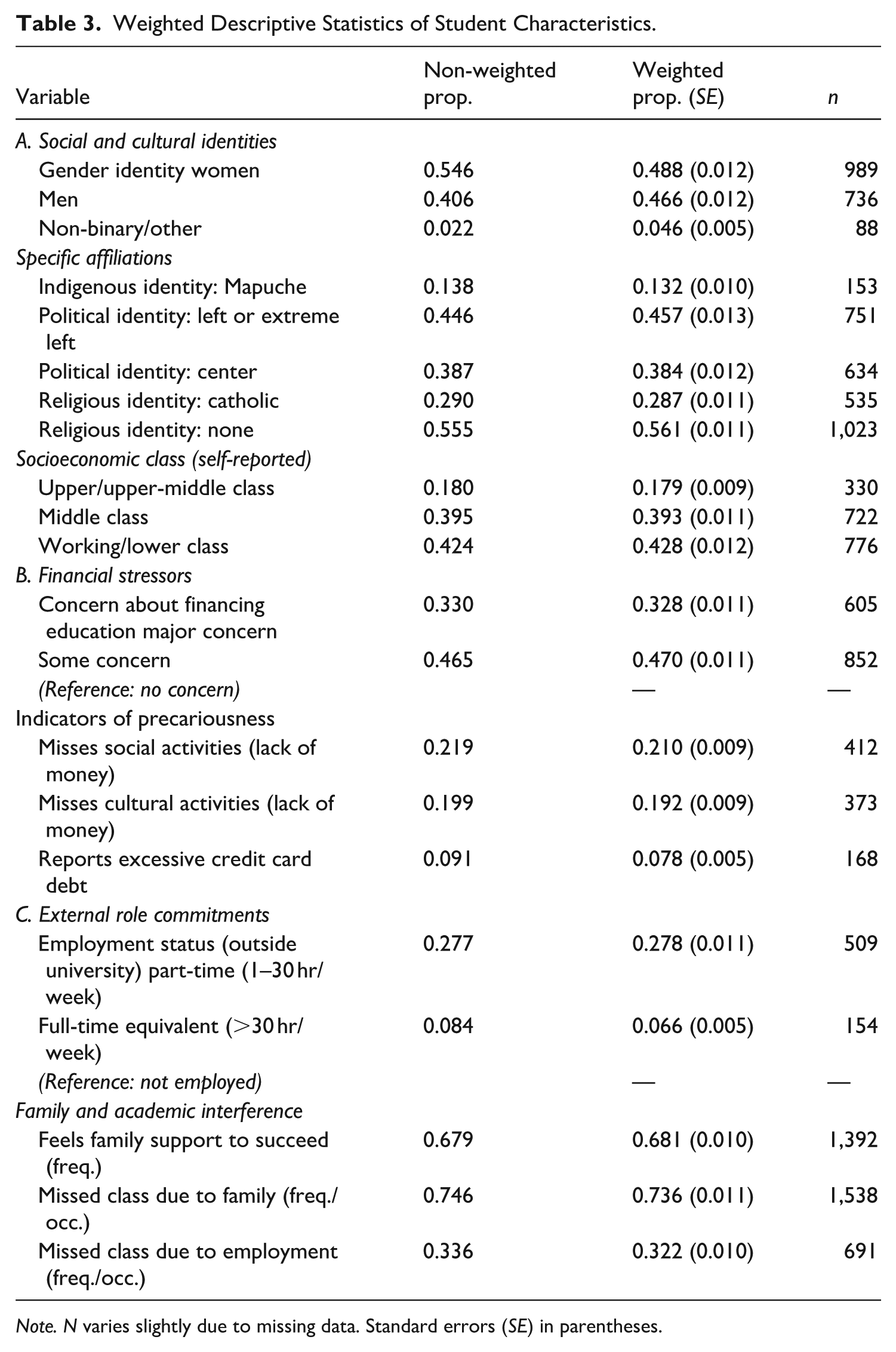
Note. N varies slightly due to missing data. Standard errors (SE) in parentheses.
Additionally, the descriptive data reveals a profound duality within the domestic sphere. This evidence portrays the family unit not as a static background variable, but as a complex site of interaction that functions simultaneously as a source of structural strain and essential emotional support and validation. This pattern suggests a departure from classic models, such as Tinto’s (1993), which emphasize a student’s need to dissociate from past communities to incorporate into the campus culture.
The Dynamics of University Climate and Persistence: A Structural Equation Model Analysis
To empirically test the complex relationships between university climate dimensions, integration outcomes, and students’ persistence plans, a Structural Equation Model (SEM) was specified, grounded in the theoretical tenets of the MMDLE framework (see Figure 1). The specified model was a hybrid structural model, integrating eleven latent constructs—representing various dimensions of the university climate and psychological processes—with eight observed exogenous variables, including student background characteristics and social identities. The final model with standardized path coefficients is presented in Figure 1.
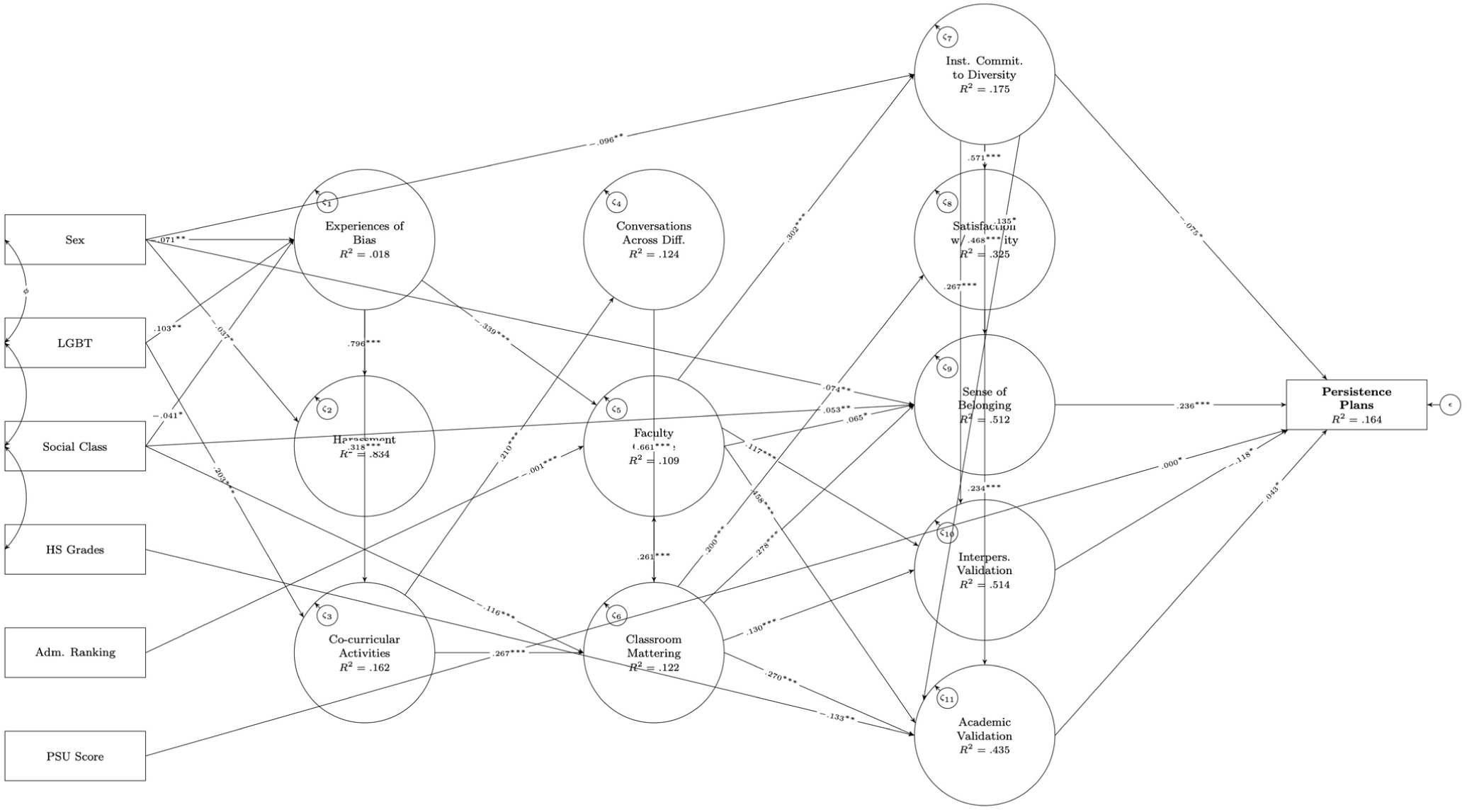
Final structural equation model for MMDLE + Mattering for students at 2 Chilean universities.
The proposed model demonstrated a satisfactory fit to the data (χ2 = 1,245.3; RMSEA = 0.034; SRMR = 0.057). While the incremental fit indices were slightly below the most stringent traditional thresholds (CFI = 0.89; TLI = 0.90), these values are considered acceptable given the high degree of model complexity and the large sample size (Shi et al., 2019). As noted by Little (2013), incremental fit indices like the CFI can be overly conservative and tend to “punish” complex models that integrate a large number of latent variables (in this case, 11) and numerous indicators. In such instances, absolute fit indices like the RMSEA are more reliable indicators of model parsimony and fit. The RMSEA of 0.034—well below the 0.05 threshold—confirms that the model effectively captures the underlying structure of the data without over-specification, providing a robust foundation for the structural path analysis.
The Predictive Power of the Structural Model
The model demonstrates exceptional explanatory power for the core psychological dimensions of integration. Specifically, the predictors account for over 51% of the variance in both Interpersonal Validation (R2 = .514, p < .001) and Sense of Belonging (R2 = .512, p < .001), and 44% in Academic Validation (R2 = .435, p < .001). These high values suggest that the psychological variables of the MMDLE, in addition to the perception of institutional commitment to diversity, are a highly relevant variables for understanding students’ integration processes during their first year.
In contrast to the high explanatory power observed for integration mediators, the structural model only explained 16% of the variance in Persistence Plans (R2 = .164, p < .001). However, this result must be contextualized by the high baseline persistence of the sample, where 89% of students report their intention to remain at the institution.
Internal Climate Dynamics
This section presents the path coefficients, which represent the predicted change in a dependent variable for every one-standard-unit change in a predictor, while controlling for all other variables in the model. Consistent with the emphasis on peer-anchored integration found in the descriptive analysis, Sense of Belonging emerged as the primary psychological driver of persistence plans (β = .236, p < .001). While this log-odds coefficient might suggest a modest marginal gain in probability, its practical significance is substantial given the high baseline persistence of the sample. Specifically, a one-unit increase in Sense of Belonging predicts an increase in persistence plans to 91%. Although this represents a gain of two percentage points, it effectively reduces the pool of students at risk of dropping out by nearly 20% (moving from an 11% attrition risk to 8.9%).
Similarly, Academic Validation exhibited a significant positive direct effect on persistence plans (β = .043, p = .02), confirming that feeling recognized as a capable learner by faculty increases student’s intent to persist. Unexpectedly, General Interpersonal Validation (β = −.118, p = .031) and perceived Institutional Commitment to Diversity (β = −.075, p = .018) showed small but significant negative associations with persistence plans. These findings likely reflect a “critical student” phenomenon, where highly engaged students develop higher expectations and a more analytical stance toward their environment while maintaining their intent to persist.
The structural model suggests that, for first-year students in Chilean universities, sense of belonging is primarily constructed through a combination of classroom-based recognition and institutional signaling. The strongest path in the entire model identifies Institutional Commitment to Diversity as the most powerful predictor of belonging (β = .468, p < .001), suggesting that students’ belonging is deeply rooted in their perception of the university’s ethical and inclusive stance. This is complemented by Mattering inside the classroom (β = .278, p < .001), which is a recognized conduit for integration.
While demographic factors such as being female (β = .074) and having a higher social class (β = .053) provide a slight advantage in this process, the influence of institutional and classroom-level variables underscores the university’s agency in fostering an environment where students feel that they belong (see Table 4).
Path Coefficients from Each Independent to Each Dependent Variable in the SEM.
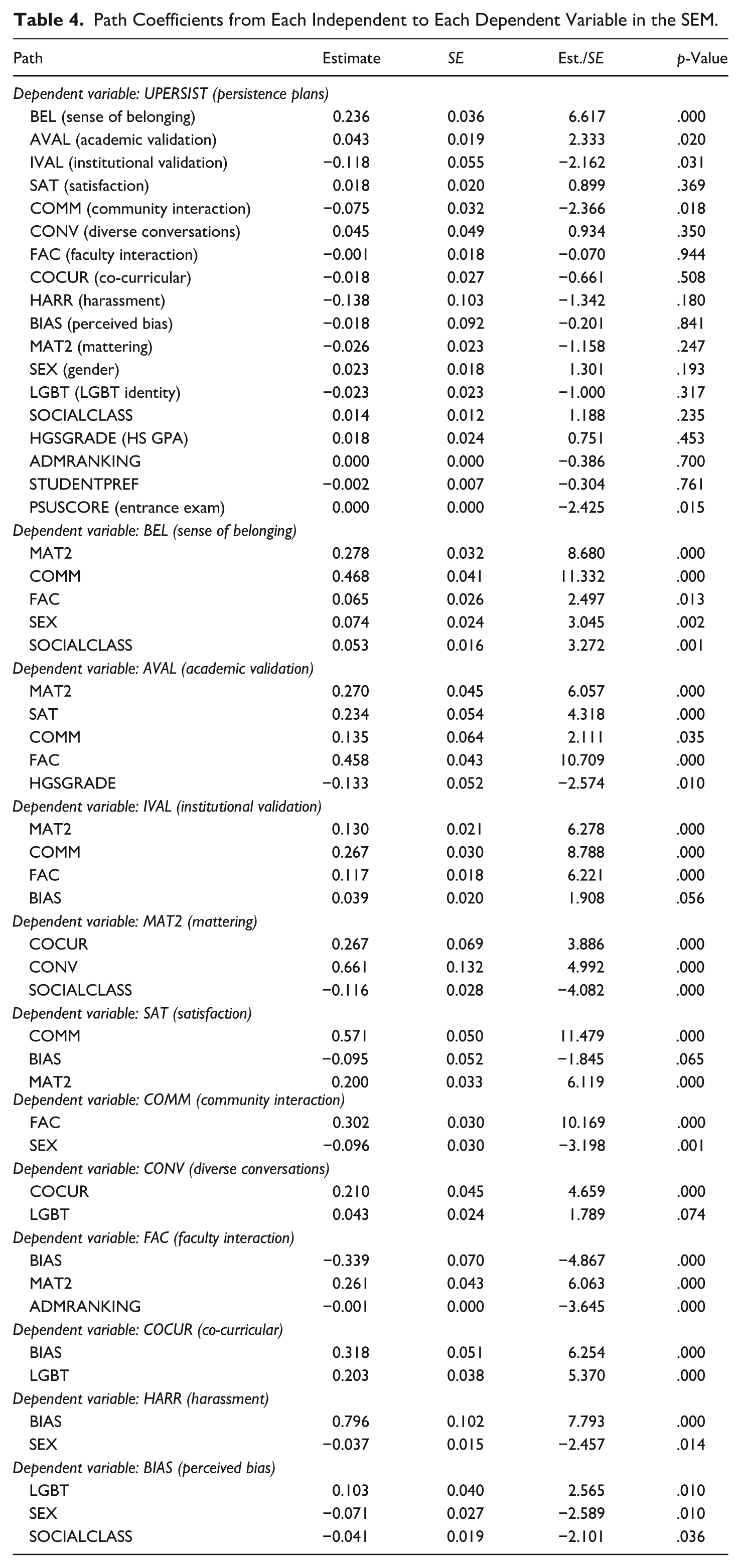
In line with theoretical expectations regarding academic validation, the findings identify students’ perceptions of faculty’s capacity to facilitate a positive classroom climate as the fundamental gatekeeper of students’ academic validation by the end of their first year (β = .458, p < .001). This strong association underscores the pivotal role of first-year instructors in shaping the academic self-concept of students within the instructional space. Academic validation is further reinforced when students feel they matter to their classmates and faculty (β = .270) and report satisfaction with the campus climate for diversity (β = .234). Notably, the model reveals that High School Grades are negatively associated with academic validation in the first year (β = −.133, p = .010).
Finally, according to the results, Institutional Commitment to Diversity emerges as the primary predictor (β = .267, p < .001) of General Interpersonal Validation, indicating that students interpret a diverse and inclusive institutional policy as a form of personal affirmation. Furthermore, mattering inside the classroom (β = .130) and perceiving that faculty creates a positive classroom climate (β = .117) contribute to this sense of human-scale recognition.
Indirect Effects
Indirect effects represent the underlying pathways through which independent variables influence distal outcomes via intermediate mediators. Calculated as the product of path coefficients along a causal chain, these effects reveal how influence is transmitted through the structural model’s internal mechanisms rather than simple direct associations (see Table 5). The model revealed a significant negative indirect effect of social class identity on academic validation via classroom mattering (β = −.031, p < .001). Students from lower perceived social class backgrounds reported lower levels of mattering in the classroom, which in turn diminished their sense of academic validation.
Total Indirect and Specific Indirect Effects for Key Pathways.
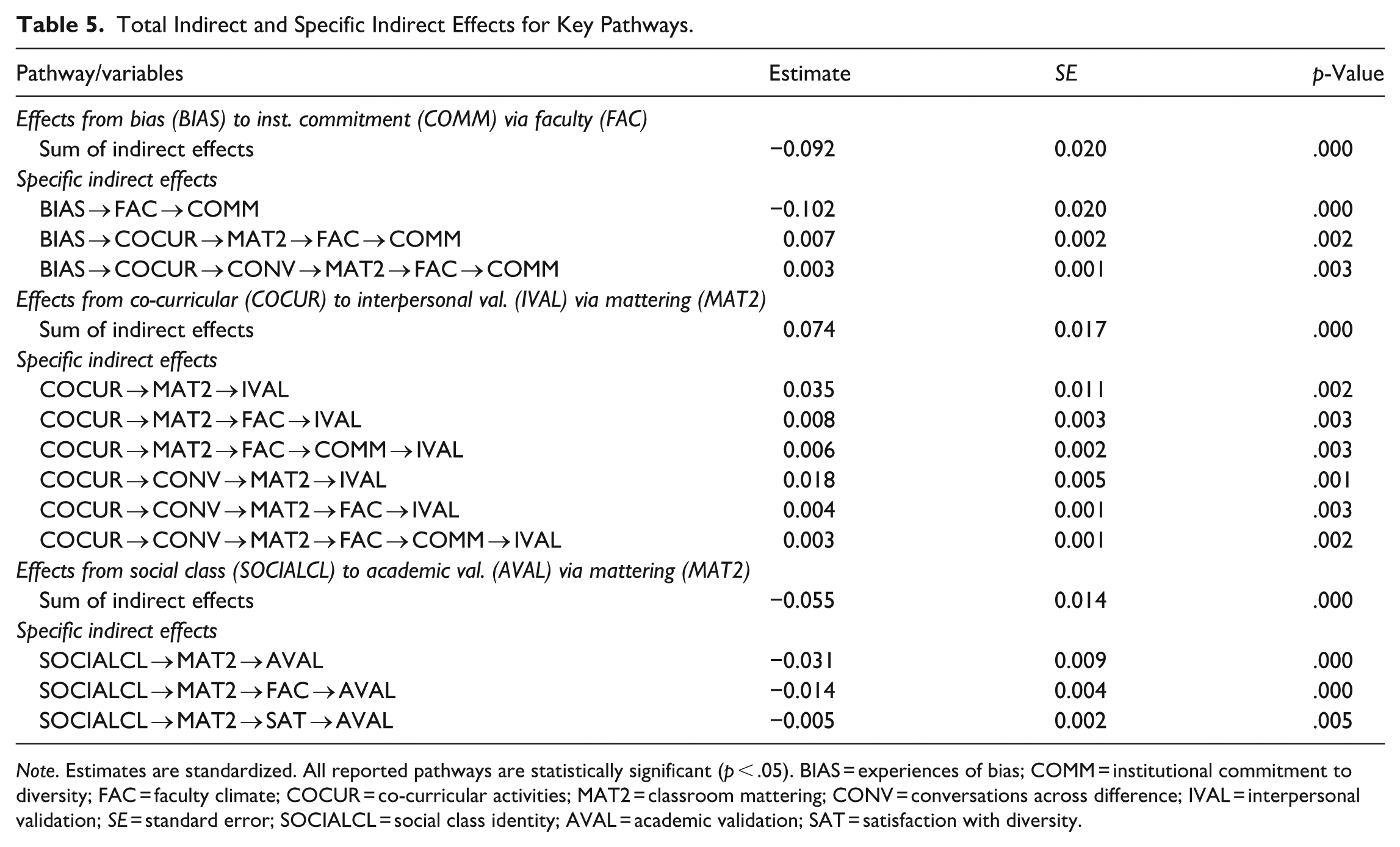
Note. Estimates are standardized. All reported pathways are statistically significant (p < .05). BIAS = experiences of bias; COMM = institutional commitment to diversity; FAC = faculty climate; COCUR = co-curricular activities; MAT2 = classroom mattering; CONV = conversations across difference; IVAL = interpersonal validation; SE = standard error; SOCIALCL = social class identity; AVAL = academic validation; SAT = satisfaction with diversity.
Participation in co-curricular diversity-related activities had a significant positive indirect effect on general interpersonal validation (β = .035, p < .01), mediated specifically by classroom mattering. This finding suggests that engagement outside the classroom does not impact validation in isolation; rather, it enhances the student’s sense of mattering within the classroom, which subsequently reinforces their perception of interpersonal validation.
Finally, experiences of bias exerted a strong negative indirect effect on students’ perception of the institution’s commitment to diversity (β = −.102, p < .001), mediated by perceptions of the climate created by faculty in the classroom.
Discussion
The results of this study, interpreted through the MMDLE, provide a roadmap for institutional intervention in the massified Chilean higher education system. Although the structural model explained 16% of the variance in persistence plans, this finding must be understood in consideration of the fact that 89% of students intended to remain at their institution. In this sense, the explanatory power of the model must be understood within the multi-causal nature of student departure in Chile. Often, external factors—such as financial instability, field-of-study mismatch, academic performance during the first two semesters, health problems, and family obligations—supersede university climate perceptions in the final decision to persist.
The findings show that approximately one-sixth of the variance in persistence can be traced back to the model, which underscores that universities possess a powerful—albeit partial—lever to influence student success. While institutional agency is bounded by students’ external social and financial factors, these results help identify the specific relational mechanisms through which institutions can effectively reduce part of the gap between initial access and meaningful integration and graduation.
Crucial to institutional efforts to facilitate the transition from first year of university and persistence is addressing the specific frictions that arise when a student’s prior academic identity meets the new demands of the university environment. The model reveals a paradoxical relationship with prior achievement, and this negative association highlights a critical ‘reality shock’ in the Chilean transition. This finding suggests that grade inflation in secondary education—often driven by the high weight of GPA in national admissions—creates a baseline of expectations that is frequently unmet by the rigor of the first year. Furthermore, due to the high heterogeneity in school resources, students who were top performers in low-resource institutions may become low-end performers when entering competitive university settings, leading to a significant drop in their perceived academic capability despite their past success.
The findings regarding drivers of persistence suggest a nuanced hierarchy of influence within the student experience, with sense of belonging emerging as the primary driver of persistence plans. This underscores that, for students in the Chilean massified system, the feeling of being part of a community is not a secondary outcome but a relevant requirement for retention.
Sense of belonging is a constructed outcome driven by institutional signaling rather than student background. The dominance of the Mattering inside the classroom and Institutional Commitment to Diversity constructs as predictors of sense of belonging suggests that students’ integration is deeply rooted in the university’s ethical stance and their daily recognition within the university space. Additionally, the marginal influence on students’ integration that demographic factors—such as gender and social class—have in comparison to institutional variables underscores a significant degree of institutional agency. This indicates that the university possesses the capacity to foster a supportive climate that facilitates the emergence of belonging regardless of the social and economic capital students bring from their past.
The results also underscore that integration in Chile is overwhelmingly peer-anchored, rather than vertically attached to the institutional hierarchy. Aligning with Spady’s (1971) emphasis on the psychological sense of compatibility and the importance of collective affiliation, most students relied on informal study groups for academic progression, significantly outpacing the utilization of formal academic support or faculty office hours for this purpose. In this regard, Chilean institutions should pursue to formalize these organic peer networks through structured mentoring programs. As suggested by Nuñez (2009), facilitating such ‘Conversations Across Difference’ directly boosts a student’s sense of belonging.
The significant positive effect of the Academic Validation construct on persistence confirms that recognition of a student’s capability by faculty directly bolsters the intent to persist. In this regard, the structural model identifies students’ perception of how faculty facilitate—or not—a positive classroom climate as the most potent predictor of academic validation. Following Rendón’s (1994) validation theory, faculty development should move beyond technical instruction toward relational strategies that acknowledge the academic self-concept of students. This is particularly critical for first-year students who, as this study reveals, experience a ‘reality shock’ during their first year at the university. Similarly, this study suggests that first-year students from lower socioeconomic backgrounds perceive they “matter less” to peers and faculty, which subsequently erodes their validation process. This perception highlights a “stratification of the academic validation” where the psychological benefits of the academic climate are unequally distributed based on students’ socioeconomic background, which further advances the argument that faculty should develop relational strategies to improve first-year students’ academic validation and retention.
The finding that outside-classroom engagement positively affects students’ interpersonal validation by enhancing their mattering within the classroom suggests the need for a shift toward an integrated engagement model. Institutional policy should move away from siloed student affairs and academic departments, instead incentivizing collaborative initiatives that bridge the two. Rather than treating cocurricular activities as auxiliary or isolated services, they should be strategically designed as mechanisms to build the social capital and confidence that students then “spend” during instructional interactions.
In the same vein, the results show that, when students encounter bias, their trust in the classroom and faculty inclusiveness is damaged. This specific rupture with faculty then serves as the primary mechanism that erodes students’ belief in the institution’s broader commitment to diversity. In this sense, the classroom serves as the stage where the university’s broader values are humanized and experienced on a personal level.
Ultimately, these data suggest that within a higher education landscape characterized by structural precarity and non-residential campuses, institutional integration capacity is contingent upon relational quality rather than administrative bureaucracy. Validating interactions with peers and faculty operate as a critical buffer against the exogenous pressures inherent to the Chilean massified system. While Chilean local post-pandemic trend data remains scarce, recent findings from the U.S. context indicate a persistent decline in overall study time—both in and outside of class—as well as a significant drop in research engagement, particularly in students assisting faculty (Chirikov et al., 2025). If this “new normal” of diminished academic and relational involvement holds true within Chile’s structurally vulnerable system, the risks of student departure are likely to be exacerbated.
Consequently, these findings suggest that institutions must improve students’ first-year experiences by reconceptualizing the classroom as more than a mere instructional venue, transcending transactional teaching models in favor of frameworks centered on academic validation, belonging, and active methodologies like service learning or intergroup dialogue.
Implications
Identifying the specific relational mechanisms through which institutions could effectively intervene in the school-to-university transition process was the central focus of this analysis. To operationalize these findings, the following implications are organized across four different levels of intervention. At the institutional leadership level, I address the structural scaffolding and value-signaling required to foster a protective climate. At the practitioner level, I examine the specific roles that faculty and student affairs staff could potentially play as primary validating agents. Finally, at the social level, I discuss the integration of students’ horizontal networks and family units as critical components of the persistence ecosystem.
Institutional Leadership
The identified institutional agency points toward leadership’s role in providing the structural scaffolding required for relational agency. Because institutional commitment to diversity serves as a powerful predictor of belonging, university leaders might prioritize concrete, value-driven signaling practices that transcend mere rhetoric. This could involve reallocating resources toward permanent faculty development—with a strategic focus on the first-year experience rather than relying on contingent instructors—to better manage observed campus tensions and peer-based biases. Such a shift might ensure that the students support during the first year is supported by a stable, institutionally-backed faculty and professionals capable of fostering a protective climate.
Faculty
The finding that the classroom is the primary site of sustained contact for commuter students suggests that faculty could play a central role as validating agents. Faculty practices might transform the instructional space into a locus of integration by prioritizing early, formative feedback that affirms the academic self-concept of first-year students, potentially mitigating the “reality shock” of the university transition.
Also, as mentioned before, a “stratification of academic validation” could occur because socioeconomic inequality may erode the sense of mattering of students from lower socioeconomic backgrounds. Consequently, adopting targeted validation strategies might be necessary to ensure equitable drivers of persistence for all. Additionally, there is an opportunity for faculty to implement active learning strategies, such as service-learning and structured dialogue among diverse peers. These pedagogical approaches could facilitate “Conversations Across Difference” (Nuñez, 2009), providing students with the necessary collaborative tools to navigate a complex and often polarized social environment.
Staff and Administrators
The observed “mattering gap”—the difference between students’ perceptions of their mattering to peers and to the rest of the institutional agents—suggests a potential transition for administrators and staff from transactional service roles to proactive integration. Staff might consider transitioning into “relational agents” by adopting advising protocols that proactively affirm a student’s sense of belonging, rather than waiting for individuals to advocate for themselves.
Students and Families
Regarding students, the findings point toward the potential benefits of institutionalizing horizontal networks. Since students depend heavily on informal peer groups for survival, universities might consider formalizing these networks through structured mentoring to ensure they foster inclusive dialogue rather than replicating societal biases. For families, the evidence suggests a departure from dissociation models, presenting an opportunity for institutions to develop engagement strategies that treat the home as a strategic partner. Recognizing the family as a validating agent could leverage the domestic sphere as an emotional buffer against the structural strain of financial fragility and other challenges of students’ transition into the university.
Limitations
While this study offers a significant portrayal of the Chilean first-year experience, its findings are subject to several limitations. First, the survey design and reliance on a purposive sample of two research-oriented universities restrict the generalizability of the results and preclude causal inferences. Also, a limitation of this study is that the analysis does not address potential variability at the program or faculty level, which is particularly relevant for understanding student experiences more deeply. With only two Level-2 units (universities) included in the structural model, estimating a multilevel model that controls for the program or faculty level is statistically unfeasible without over-specifying the model. Consequently, the aggregated format of the data restricts the exploration of differences between specific disciplines or academic units. Future research with larger samples and a greater number of institutions will be necessary to disaggregate these dynamics at a more granular level and assess how the disciplinary context interacts with students’ sense of belonging.
Furthermore, because the data were collected in 2018, the findings reflect a pre-pandemic climate. The latter is particularly relevant because the COVID-19 pandemic significantly altered perceptions of institutional belonging, particularly within digitally-mediated environments (Kelly et al., 2026). Consequently, the relational dynamics of post-pandemic cohorts may differ from those presented here. Nevertheless, recent literature indicates that rather than outgrowing the need for integration, current students are actively struggling with a deficit of authentic connection and validating interactions, making the relational imperatives identified in this 2018 cohort even more vital for contemporary retention efforts (Chirikov et al., 2025).
Measurement constraints also warrant consideration, as climate perceptions are inherently subject to error and potential “carryover effects” within the survey instrument. Specifically, the use of persistence intentions as a proxy for actual behavior represents a limitation, as these self-reported plans may not always align with effective enrollment. Consequently, future research should prioritize longitudinal designs to track actual dropout rates and employ mixed-methods approaches to further validate the construct of “mattering” and its cross-cultural nuances within the Latin American context. Finally, specific methodological and theoretical constraints delimited the scope of the analysis. Due to data limitations, key dimensions of the MMDLE framework (Hurtado et al., 2012), such as an institution’s historical legacy of inclusion, were omitted. Statistically, the SEM did not account for the nested structure of the data or specific strategies for item non-response. Given the insufficient variability at the institutional level, subsequent studies might utilize multilevel modeling to more accurately capture the complex, multi-dimensional nature of the student experience within the broader university ecosystem.
Conclusion
This study provides the first comprehensive structural analysis of university climate and student persistence in Chile using the MMDLE framework and an adapted version of the DLE survey that includes a Mattering construct. The disparity between the variance explained for university climate outcomes and the distal outcome of persistence reveals a characteristic of the first-year experience in Chile: while the university possesses significant agency to shape how students feel and perceive their environment, their final decision to persist is influenced by a broader array of external factors that lie beyond the relational scope of the institution. However, by successfully explaining more than half of the variance in Sense of Belonging and Interpersonal Validation, the model identifies the specific “relational levers” that institutions can pull to foster integration and therefore facilitate persistence.
Footnotes

Funding
The author received no financial support for the research, authorship, and/or publication of this article.
Declaration of Conflicting Interests
The author declared no potential conflicts of interest with respect to the research, authorship, and/or publication of this article.