







Abstract
Paternal filicide is the deliberate killing of one's child by the father. It is a rare form of homicide that is complex and disturbing, as it might involve child domestic violence in its course. It reflects on the underlying psychodynamic and socio-economic stressors. We report a case of a paternal filicide by smothering involving a 4-year-old male child, associated with chronic child abuse. Autopsy examination revealed bluish discolouration of the nail beds, multiple abrasions and contusions present over the bilateral cheeks, nose, lips, submandibular region, right lateral aspect of the body, front and back of the body, indicative of physical abuse. Internally, blood in the peritoneal cavity was present. Multiple petechial haemorrhages are present over the heart and lungs. A haemorrhagic area was present over the mesentery. Death was due to asphyxia, consistent with smothering, in a background of multiple blunt force injuries suggestive of chronic child abuse. This case highlights the intricacies in determining the cause and manner of death in filicide cases that were associated with child abuse based on the chronology and mechanism of fatal injuries.
INTRODUCTION
Maltreatment, often known as child abuse, is when a child under the age of 18 is abused or neglected. It covers all forms of sexual, emotional and/or physical abuse, neglect and commercial or other forms of exploitation (1). According to the WHO (World Health Organisation) estimates, 400 million children, or approximately six out of 10 children under the age of 5, frequently endure physical abuse and/or psychological abuse at the hands of their parents and other caregivers (2). Such forms of chronic child abuse sometimes culminate in death. A 2003 report by UNICEF states that annually, 3500 children aged 15 and under lose their lives due to abuse or neglect in 27 affluent nations (3). Filicide is defined as the killing of one's child up to the age of 18 by their biological parent or guardian, or stepparent (4). When the father is the perpetrator, it is called paternal filicide, which is particularly linked to extreme aggressiveness and frequently demonstrates features of overkill or excessive violence (5). Similarly, in the maternal filicide, the perpetrator is the child's mother. Maternal filicide is typically linked to mental health conditions, including psychosis or post-partum depression, but paternal filicide is more often motivated by revenge, control, or psychopathic tendencies (6). The present case is unique due to the coexistence of chronic child abuse, substance abuse (opium addiction), and socio-economic vulnerability in an Indian setting, culminating in fatal smothering. Such combined contextual factors are rarely documented in existing literature. It also highlights the various risk factors associated with filicide and child abuse that can help in the early detection and prevention of such murders.
CASE REPORT
A 4-year-old male child with an alleged history of abuse by his father was brought to the emergency department. Upon arrival, the child was unresponsive with absent vitals and declared dead. As per information furnished by the police, the accused father had an opium addiction and often assaulted the deceased child for the last 2 years for trivial matters or otherwise, as the father was suspicious about the legitimacy of the child. Over the last two days, the father had engaged in multiple incidents of physical abuse, including slapping and punching the child. On that fateful day, the father was allegedly slapping and punching the child, and he was covering the child's mouth to suppress his voice. Following this, the child became unconscious.
The body was subjected to post-mortem examination. Before the autopsy, the radiological examination was conducted, which did not show the presence of any skeletal injury (
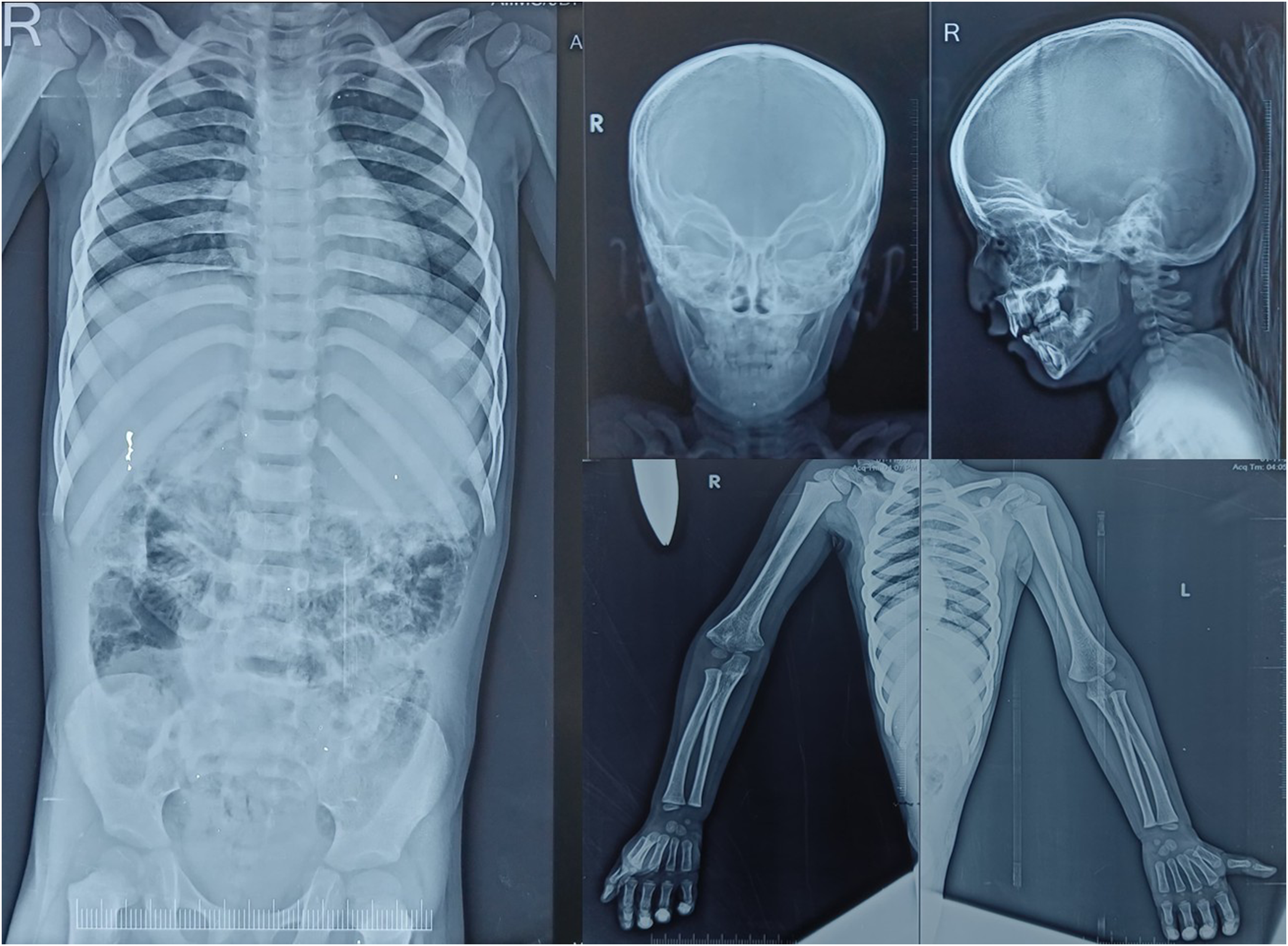
Pre-autopsy radiological examination revealed no fractures.
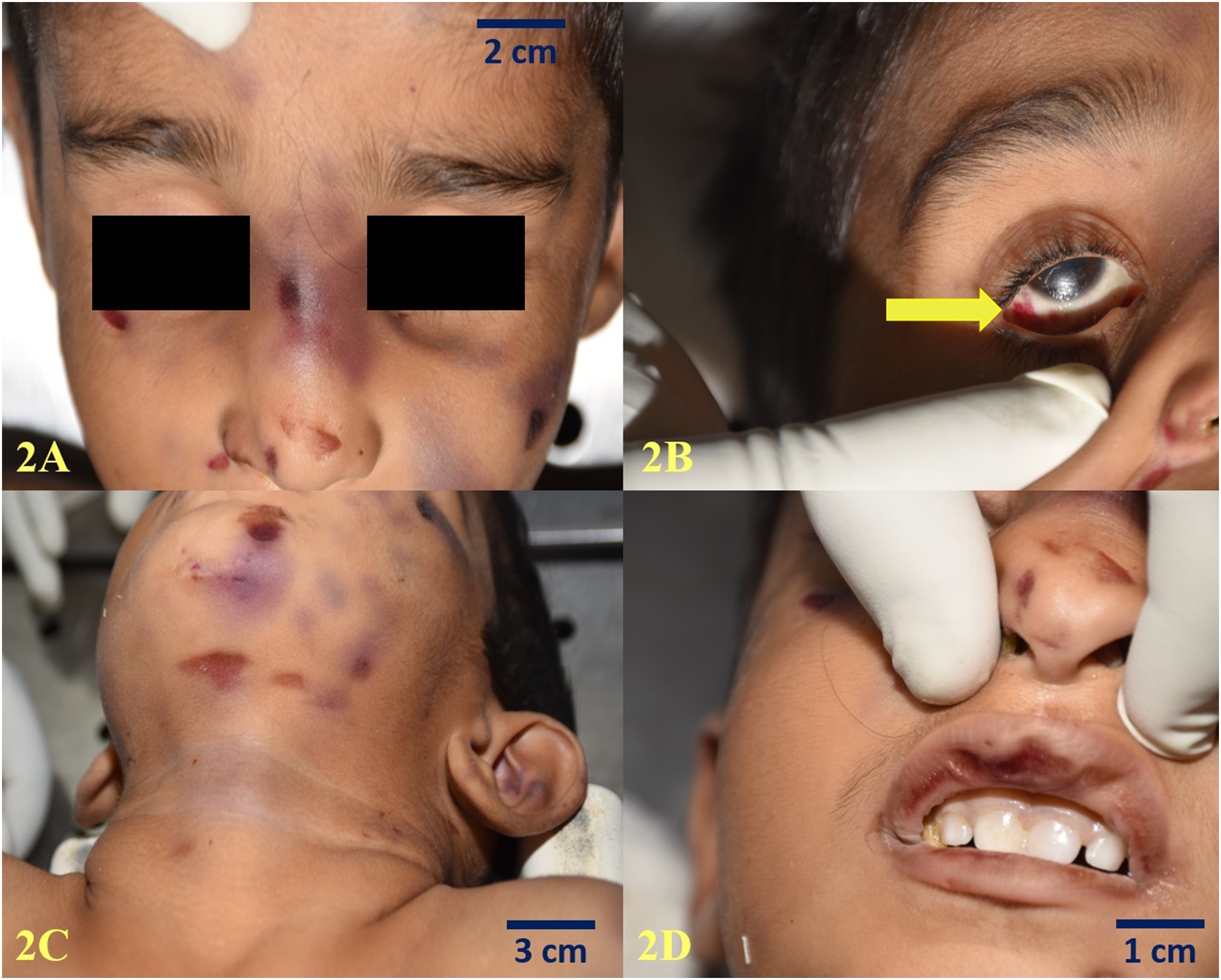
(A) Multiple abrasions and contusions over the face, particularly over the dorsum and root of the nose; (B) Subconjunctival haemorrhage in the right eye (Yellow arrow); (C) Multiple abrasions and contusions over the chin and submandibular region; and (D) Abrasion over the upper lip.
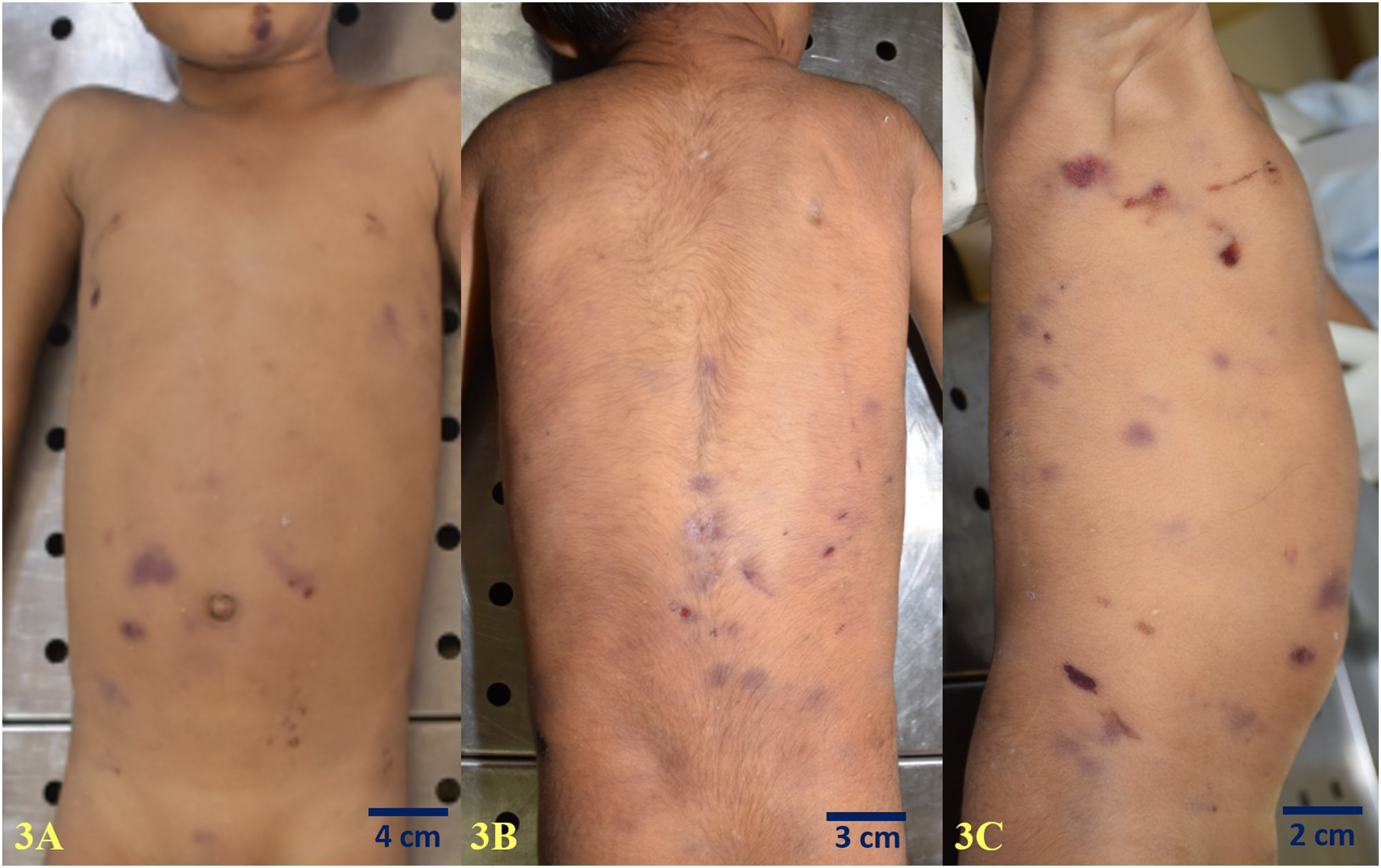
(A) Multiple abrasions and contusions over the front of the abdomen; (B) Back; and (C) Right lateral aspect of the trunk.
On internal examination, a Y-shaped incision was made to open the thoracic and abdominal cavities, whereas a bi-mastoid coronal incision was made to open the scalp and subsequently the skull cap. All three body cavities were examined. Multiple patchy subgaleal haemorrhages were present over the bilateral frontal and parietal regions (more pronounced on the right side). There were no skull fractures nor brain haemorrhage noted. The thoraco-abdominal organs were removed en masse (Letulle's technique), weighed individually, examined and dissected after removal. The subcutaneous tissues of the right submandibular region and the right digastric muscle were contused (
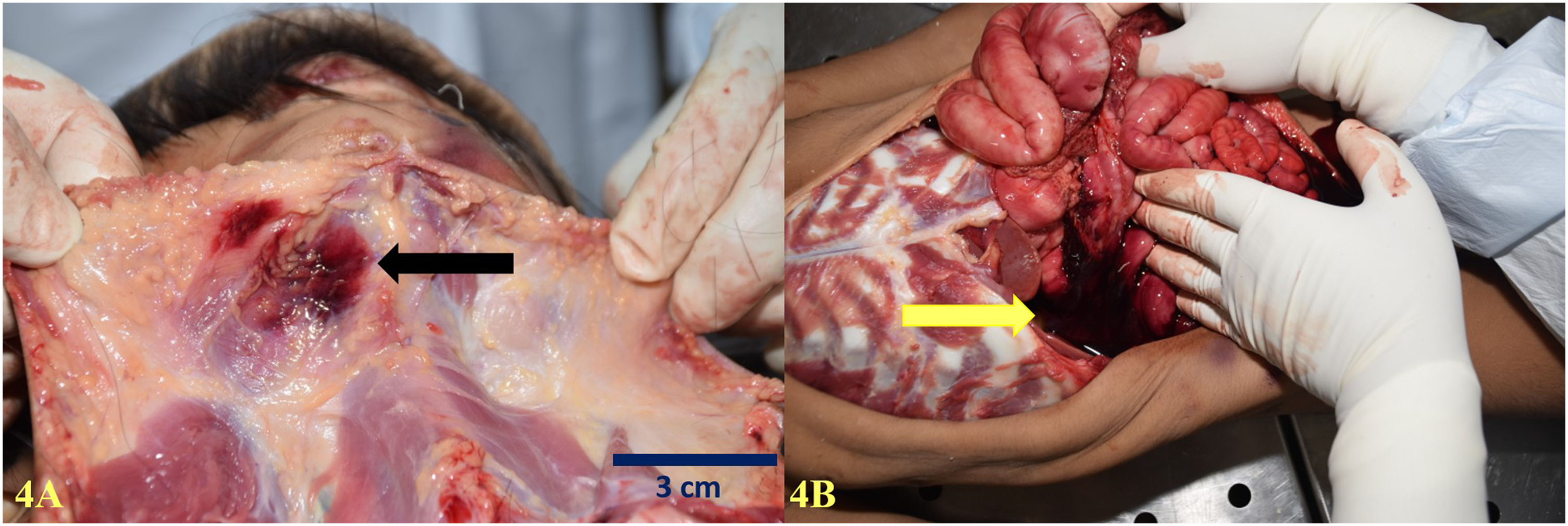
(A) The right submandibular region showed contused subcutaneous tissue and the digastric muscle (Black arrow); and (B) Presence of blood in the peritoneal cavity (Yellow arrow).
DISCUSSION
Child homicide numbers are rising worldwide, with parents being the common perpetrators. It is estimated that approximately 95 000 children are murdered each year globally, with nearly 60% of these cases classified as filicide. Also, child homicide rate in low- to middle-income nations is two to three times greater than that of high-income countries (7). Child abuse is defined as any act or omission on the part of a parent or guardian that causes harm to a child or raises the possibility of harm, even if unintentional (8). According to a Ministry of Women and Child Development (2007) survey, there is a very high prevalence of child abuse in India, with 66% of cases being physical, 50% being sexual and 50% being emotional abuse (9). Different countries have different labels for child abuse. Commonly used terminology includes ‘non-accidental injury’, ‘the syndrome of child abuse and neglect’, ‘child battering’ and ‘battered child’ (3).
Most filicides occur as a result of chronic child abuse. However, they are linked to several other factors like mental illnesses, low socioeconomic level, unemployment, jealousy, family instability and illiteracy (10). Children under the age of five are more likely to become victims of filicide. This is probably due to young children's physical vulnerability and near-total dependence on their parents. The likelihood of child abuse and neglect is also higher among young children, which may help to explain why they are more likely to become victims of filicide (11). Similarly, in the present case, the father was an illiterate, unemployed, with a low socioeconomic status.
In the present case, according to information furnished by the police and the mother, the child was being frequently subjected to physical abuse by the father for the last two years. However, none of the previous episodes had resulted in the severe injuries that could have been evident by the presence of old healed fractures or scars. The majority of the injuries were fresh, but a few of the bruises were reddish to bluish in colour, and a few of the abrasions were reddish to reddish brown, which correlates with different stages of healing and is suggestive of repeated physical abuse. The distribution and pattern of injuries suggest mechanisms such as slapping, punching and blunt force impact. Injuries over the cheeks, lips and submandibular region are consistent with forceful covering of the mouth and nose, supporting smothering.
Filicide was classified by Resnick into five categories (12):
Altruistic: In this instance, the parent takes his ailing child's life to spare him from his agony out of sympathy. The parent usually commits suicide following this. Acute psychosis: During a psychotic episode, the parent has imperative hallucinations that manifest as commands and thus kill their child. Unwanted child: To get rid of an unwanted child from an illegitimate pregnancy or the burden of the unexpected child. Accidental/unintentional: Usually seen in a child who has been chronically abused. Spouse revenge: Seen in cases of jealousy or conflict between the parents, leading to filicide.
Among these five categories, accidental filicide is often associated with fatal outcomes of chronic child abuse, where homicidal intent may not be primary, but death results from repeated violence (12). In the present case, the pattern of repeated injuries of various ages along with a history of constant abuse for 2 years strongly supports chronic abuse, suggesting that the fatal act may represent an escalation of ongoing abuse rather than an isolated event.
Paternal filicide is less common than maternal filicide. Mothers are disproportionately represented in cases of infant homicide, particularly neonaticides, which are almost exclusively committed by mothers. In contrast, older children (4–15 years of age) are primarily involved in paternal filicides (13). Fathers who commit filicide are mostly elderly, jobless, substance abusers and have a history of violence or criminal activity. According to the literature, fathers are more likely to kill boys, while mothers are more likely to kill girls (14). Furthermore, fathers kill their children following maltreatment more frequently than women do (15). In the present case, the age (4 years) and gender of the child murdered are considerably older compared to those of children involved in maternal filicides, which are committed within 1 year of age, usually involving a female child. Also, the father had an opium addiction, which, according to literature, plays a significant role in child maltreatment (14).
Previous studies have demonstrated that homicidal parents are frequently exposed to significant psychosocial stressors, low socio-economic conditions and substance abuse, all of which contribute to increased risk of filicide. In particular, paternal filicide has been associated with personality-related problems, including impulsivity and violent behaviour, often occurring in the absence of overt psychosis (6). In the present case, the father's opium dependence, unemployment and suspicion regarding paternity likely acted as cumulative stressors, leading to repeated violence and ultimately resulting in fatal assault. The motive in the present case appears to overlap between categories described in the literature. While elements of spouse-revenge filicide may be inferred from the father's suspicion regarding the legitimacy of the child, the repetitive nature of abuse and lack of clear intent to kill suggest closer alignment with accidental filicide secondary to chronic abuse. Such overlap between categories has been acknowledged in the literature, where strict classification is often difficult due to multifactorial influences (6,12).
The paternal filicide usually involves more violent methods such as physical assault, asphyxiation, stabbing, neglect, poisoning or drowning (16). Utilisation of methods depends on various factors; men frequently act out of rage and/or jealousy, and they tend to cause domestic violence to their own children as a form of retaliation against their spouses. Several men murder their children to cause psychological distress to their partners (17). In the present case, the father was suspicious about the legitimacy of the child; as a result, there was chronic abuse for trivial or no reason for a while. On the night of the incident, he was in a rage and started beating the child cruelly. While assaulting, he restrained the child by putting his hand over the nose and mouth of the deceased to suppress his voice. The act culminated in smothering. The fatal outcome in this case may be interpreted as accidental due to a sudden outburst rather than a premeditated act. Smothering is a form of mechanical asphyxia that often lacks pathognomonic findings and requires diagnosis by exclusion and circumstantial correlation. In the present case, the following features support smothering: perioral and nasal injuries (indicating external airway obstruction); submandibular soft tissue contusion (suggesting forceful restraint); subconjunctival haemorrhage; visceral petechiae; cyanosis; visceral congestion and a circumstantial history of occlusion of the nose and mouth. In the absence of an alternative fatal injury, these findings, although individually non-specific, collectively support a diagnosis of smothering when interpreted in the appropriate medico-legal context.
The presence of haemoperitoneum (150 ml of fluid blood) raised the possibility of haemorrhagic shock. However, in paediatric trauma, clinical features of haemorrhagic shock typically manifest only after loss of more than 20% of circulating blood volume, and significant mortality is associated with massive or ongoing haemorrhage (18). In the present case, the volume of intraperitoneal blood, mesenteric haemorrhagic patch and perinephric haematoma was relatively small, and no major vascular or solid organ injury was identified. Therefore, the intra-abdominal bleeding was insufficient to cause immediate fatal hypovolemic shock and was considered contributory rather than causative. Although multiple blunt force injuries were present, none were individually or collectively sufficient to cause death. Traumatic asphyxia was also ruled out, as there are no classical features such as marked facial congestion, oedema and extensive petechiae over the cervicothoracic region. Instead, the injury pattern was predominantly localised to the perioral and submandibular regions, which is more characteristic of external airway occlusion rather than thoracic compression. Also, there was no evidence of fatal head injury, cervical spine trauma or massive internal haemorrhage. Hence, death due to blunt force trauma, traumatic asphyxia or haemorrhagic shock was excluded. Thus, the cause of death was determined based on a composite assessment of autopsy findings, exclusion of other lethal causes and correlation with investigative history. This case report emphasises familial and psychosocial background and other factors responsible for filicide and the importance of early abuse detection and understanding of various risk factors involved for better tackling and prevention of such tragedies in the future.
CONCLUSION
Filicide has remained an unsettling problem because of the intricate medico-legal components involved. This case demonstrates the spectrum of violence against children, where the child had chronic unreported abuse that culminated in filicide. The autopsy played a vital role not only in determining the cause and manner of death but also in establishing the maltreatment sustained. The case also illustrates the need to interpret filicide beyond traditional psychiatric classifications by incorporating socio-economic and behavioural factors. To prevent such filicides, there should be stringent child protection reforms aimed at early identification of abuse and providing parental mental health support.
Footnotes
CONSENT FOR PUBLICATION
Written informed consent for publication was obtained from the next of kin of the deceased. No personal data or identifiable photographs of the individual were used.
DECLARATION OF CONFLICTING INTERESTS
The authors declared no potential conflicts of interest with respect to the research, authorship and/or publication of this article.
FUNDING
The authors received no financial support for the research, authorship and/or publication of this article.

Authors