







Abstract
Mineral resource and ore reserve estimates are founded on two sources of data: tonnage and grade. The tonnage is a product of volume and density; both of which are estimates. Density impacts numerous operational factors, which include, but are not limited to, mine design, mine planning, equipment selection and operational performance. Hence, density is a significant parameter and its determination requires similar care as the measurement of grade. This paper provides an overview of methods used to determine density within the Anglo American Group. It is not the purpose of this paper to identify a preferred method, but to highlight the importance of choosing the best suited practice for a project or mine site. In addition, a case study comparing two different density determination methods applied to the same rock samples from the Los Bronces Copper mine in Chile was undertaken and the results of that study are presented here. Selecting the most appropriate method to determine density and comparing results from two or more techniques against each other, together with other suitable quality control procedures, is considered to be essential for mining operations and exploration projects in order to reduce risk and to improve operational performance, which in turn increases profit margin.
Introduction
The estimation of mineral resources and ore reserves requires the estimation of grade, or some other quality, and tonnes. In order to estimate tonnes it is necessary to measure volume and density, thus density is a critical parameter to be determined and requires similar care as measuring grade (Arseneau 2014). In order to convert volume estimates to tonnage estimates, a density factor (the dry bulk density) is applied (Lipton 2001). The definition of dry bulk density, according to Lipton (2001) and Abzalov (2013) is the mass per unit volume, including porosity but excluding any natural water content.
Anglo American is a diversified mining company with more than 50 operations and projects across South and North America, Africa, Australia and Europe. These operations exploit nine different commodities, consisting of copper, nickel, metallurgical and thermal coal, platinum, diamonds, iron ore, niobium and phosphates within commodity-specific Business Units. Different Business Units and sites within the company utilise varying practices to determine density; these different practices recognise certain practical limitations such as the physical characteristics of the orebody, local conditions and past practices. Also, individual operations or projects sometimes execute the same method in a slightly different way, which may also affect the outcome of the measurements. In order to gain a better understanding of how density is determined at various projects and operations across the Group, a compilation of these techniques was done and the results are discussed here. The objective of the exercise was to identify and share good practices across the company and to look for improvement opportunities, where applicable.
All relevant information relating to density determination methodologies was obtained from the Business Units and operations. Ten different methods were identified across the company (Table 1), being applied to many different types of orebodies. An additional methodology is the core pycnometer, which is an instrument developed at Anglo American Technical Solutions Research in collaboration with Micromeritics. The core pycnometer measures helium or nitrogen gas pressure to calculate the volume of materials placed within a large-diameter chamber of the apparatus. Such materials may include intact drill core, rock or chip samples.
Methods for measuring density in Anglo American
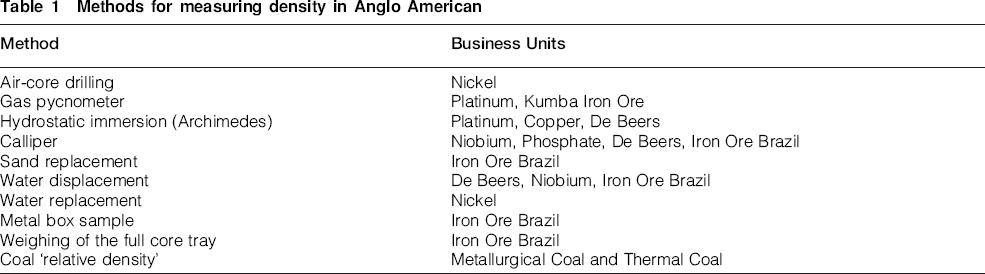
This paper describes the methods that are being practiced within the Anglo American Group, including quality assurance and quality control (QAQC) validation in the specific Business Units and is aimed at demonstrating the wide spectrum of available methods and possibilities to determine density. Each practice comes with its own limitations and challenges, but is generally chosen to support the type of orebody and the practical conditions available at a given site. It is not the purpose of this paper to identify a preferred method, but to highlight the importance of choosing the best suited practice for a project or mine site. A case study comparing two different density determination methods applied on the same rock samples from the Los Bronces Copper mine is also presented here.
Current practices
The following section describes density determination methods currently practiced in the Anglo American Business Units.
Platinum
Anglo American Platinum operations and projects in South Africa use two methods to determine density, namely, the helium gas pycnometer method for pulps, and the hydrostatic immersion (Archimedes) method for drill core. The gas pycnometer measures the pressure difference between an empty sample cell and the cell including pulped sample material. The increase in pressure is directly related to the volume of gas displaced. The immersion (Archimedes) method entails measuring the weight difference of a sample in air and immersed in water. Gas pycnometer densities are determined on every single assay sample submitted to the laboratory. In addition, the very same pieces of half core that are sent to the laboratory for assaying and gas pycnometer measurements are also measured using the immersion method at the geological core logging facility as a quality control measure against the laboratory pycnometer results. Both sets of results are routinely compared to each other using strict tolerance levels.
The rock types that make up the Merensky and UG2 Reefs and their immediate hanging wall and footwall within the Bushveld Complex of South Africa are made up of interlocking tightly fitting cumulate mineral grains. There are typically no visible pore spaces in the core samples. However, a small percentage of closed pores in fractures within the internal structure of the rock (Jarman 2011) and partially open fractures exist that may contribute towards a small difference between the gas pycnometer and the immersion density results.
Apart from comparing immersion to gas pycnometer results, Anglo American Platinum uses standard reference materials to ensure accuracy and precision of both measurements and duplicate immersion tests on at least 10% of all samples for QAQC.
Iron Ore Brazil
Minas Rio is a large iron ore project in Brazil with a wide variety of material types, requiring more than one method to determine density. Material types vary from friable and semi-compact to compact ore and the density methods applied are dependent on the material types. Five different methods are used: water displacement method for compact ore, calliper method for compact and semi-compact ore, metal box for friable and semi-compact ore, in-situ sand replacement density measurements on friable ore, and weighing of the full core tray. Samples collected for density measurements using the sand replacement method are weighed before and after drying to calculate the dry density. This data is also used to compare wet and dry densities to estimate the impact of rainy seasons on operational productivity.
When using the water displacement method, pieces of drill core are wrapped in thin plastic cling-film to prevent water from penetrating through cracks and/or fissures. The sample is weighed before it is immersed in a water-filled container with an outlet nozzle. Once the sample has been inserted, displaced water flows from the outlet into a measuring flask. The displaced water is allowed to stop flowing before taking the volume reading on the measuring flask. The displaced water is also weighed and the result compared to the measured volume. The density is determined by relating the sample mass to the volume of displaced water.
Using a vernier calliper, two or more measurements are taken of the length and diameter of the piece of core for which the volume is to be obtained. These measurements are done on opposite sides of the sample and averaged. The sample can be weighed before or after the measurements.
The sand replacement method done at Minas Rio involves excavating a 13 cm diameter hole to a depth of 20 cm at a selected sample site. The recovered sample material is immediately weighed and reweighed after drying. The excavation is then filled with uniform sand of a known density (1·275 g cm−3) making use of a sand bottle pre-filled with 7 kg of sand. The plastic bottle containing the sand has an hour-glass shaped funnel with a closing valve, which can be used to stop the flow of sand when the hole is full. Once the hole is filled with sand, the bottle with the remaining sand is weighed. The weight of the sand in the hole together with sand remaining from the lower part of the funnel up to the closing valve is then calculated by the difference between the initial 7 kg and the remaining sand in the bottle. The excess cone of sand from the funnel, which remains on top of the hole, is normally assumed to be a constant weight of 576 g. Thus knowing the density and mass of the sand in the hole, the volume of the hole can be calculated. The density of the sample is determined by using the volume of the hole filled with sand and the weight of the excavated sample.
The metal box method is a variation of the calliper method as both techniques assume the drill core to be a cylinder of known diameter, but different techniques are used to determine the length of the sample. The metal box is used to measure the volume of soft drill core samples (e.g. semi-compact itabirite ore) with an open metal frame that is pressed or hammered into a core box. The volume of the sample is assumed to be a perfect cylinder, with a known diameter (e.g. 5·3, 6·3, 7·09 or 7·6 cm depending on the drilling configuration) confirmed by calliper measurements and with a standard length of 20 cm. The mass of the sample is measured by weighing the material remaining inside the metal frame.
Weighing a full core tray is a method normally done in the core storage area to validate densities determined with a calliper or metal box technique, which are done on selected samples representing a small subset of the total core length. Full tray measurements involve measuring the weight of a tray of core that holds a single lithology only. The weight of core is calculated by subtracting the weight of the empty tray. The actual length of the drill core is measured. The volume is calculated assuming a constant geometry (perfect cylinder), with a known diameter based on the drilling configuration, which is confirmed by using a calliper. The density is then determined by assigning the total weight of the interval, divided by the interval lithology volume. This method has the advantage of providing a more representative density measurement than density measurements using the calliper or metal box methods on short pieces of drill core. However, the core tray technique only accounts for recovered material and, hence, does not address missing core.
Densities obtained from any of the above methods at Minas Rio are compared and cross validated to ensure quality control.
Kumba Iron Ore
South African-based Kumba Iron Ore uses a gas pycnometer method for pulps similar to the Platinum Business Unit. Measurements are done by Anglo American Technical Solutions Research. Iron ore has variable porosity depending on the rock formation, which needs to be taken into account when bulk density is determined. Because the gas pycnometer method uses milled material the physical characteristics of the sample are changed, specifically any porosity that may have been present. Thus the method may tend to overstate the true bulk density. Kumba Iron Ore has identified this potential risk and is currently considering the core pycnometer, which analyses a complete rock or core sample.
Copper
The Copper Business Unit with operations and projects in Chile and Peru determines density by use of the Archimedes method. The application is similar to the technique used at Platinum and at De Beers (discussed below), but samples are being coated with paraffin wax to prevent water penetration through cracks and pores or absorbed within clay-rich alteration minerals. Sample mass is determined before and after wax immersion to establish the mass of wax applied. Density samples are preferentially selected from intact core. This sampling bias may lead to a bias in density. Some of the Anglo Copper sites use a second laboratory to determine immersion densities on 5% of samples to validate the original density results.
De Beers
The three most commonly used methods in De Beers are the Archimedes, calliper and water displacement methods. Kimberlites are often porous and can easily break up. Hence, samples are sometimes coated with Dulux varnish during the Archimedes and water displacement methods to avoid water absorption and disintegration of the sample. The decision on whether or not to use the varnish depends on the condition of the sample. De Beers weighs all samples before and after oven drying in order to determine the moisture content.
It is standard practise to apply two different methods and to cross correlate the data as a validation check.
Niobium and phosphate
The Niobium and Phosphates operations in Brazil mainly use the calliper method to determine density. For quality control, 5% of the samples are measured again using the water displacement method. Samples are wrapped with plastic to prevent water penetration into pores. Results from both methods are cross validated to ensure quality control.
Nickel
Nickel laterite ores are very soft and disintegrate easily when brought into contact with water. Hence, the water replacement method is used at Anglo American's nickel operations and projects in Brazil to determine density. Pits are dug on mining benches and a hole measuring 30×30×20 cm depth is excavated at the bottom of each pit. All excavated material is geologically described and packed and sealed in a plastic bag. The interior of the excavation is carefully lined using a thin plastic membrane. The volume of the hole is then measured by filling the hole with a known volume of water. The excavated material is weighed before and after drying to determine the wet and dry density. When applying this method it is critical to ensure the plastic lining fits tight against the walls of the hole without significantly reducing the actual hole volume and that there is no water loss upon filling.
Because of the relatively thick laterite profile found in some deposits, pit excavations can sometimes be up to 30 m deep, which could potentially be a significant safety risk. Hence, some projects use samples obtained from air-core drilling for density determination. The volume for density determination is calculated from the diameter and length of a 1 m PVC pipe that is used to recover the material drilled. The weight is obtained by weighing the material recovered from the PVC pipe after drying.
Coal
Coal is a porous substance, characterised by extensive pores, joints, cracks and voids. Hence, coal densities cannot be accurately measured by submerging the coal sample in water (Zhou and Esterle 2008). At Anglo American's metallurgical coal operations in Australia, drill core is analysed for apparent relative density (ARD) and moisture holding capacity in a laboratory. The ARD results are then adjusted to an in-situ density using the Preston & Sanders equation (Preston and Sanders 1992). The methods used to determine ARD at the metallurgical coal operations include making use of density bottles for pulp and volumetric procedures and/or weighing the sample in air and water for raw coal samples (Australian Standards 2002, 2005, 2008). This measurement is done on the complete coal seam interval as received by the laboratory, which improves sample representivity. It is therefore possible to directly relate density measurements to other parameters measured in the laboratory on that same coal seam. All drill core coal layers are analysed for raw relative density and moisture holding capacity, which has the potential to significantly impact density.
Anglo American's thermal coal operations in South Africa currently do not measure density directly. It is determined indirectly via the measured ash content, using a previously defined linear relationship between ash content and in-situ density. Geophysical instruments (gamma–gamma downhole logs) are used to measure downhole density as a check against logged lithologies, specifically for the top and bottom seam contacts, but this data is not calibrated and, hence, cannot be used to obtain in-situ density.
The moisture basis for any measurement on coal can be significant, no less so for density estimates. It is however important to note that South African coal is generally low in total moisture and, hence, the in-situ moisture is taken to be equal to the measured air dried moisture.
The thermal coal operations are currently looking at various analytical methods of density determination in order to assess the suitability of the historical relationship between ash content and in-situ density for the various coalfields in which Anglo American is operating.
Case study
The case study presented here will demonstrate the impact of density differences on tonnage estimates in a mining operation. Using samples from the Anglo American Los Bronces Copper mine in Chile, this was achieved by applying two different methods of measuring density to the same samples; i.e. Archimedes (or immersion) and core pycnometer methods. The latter is a large-diameter gas pycnometer tool developed by Anglo American Technical Solutions Research in collaboration with US instrumentation supplier Micromeritics (Dry and Pelo 2013). The core pycnometer consists of a reference chamber and a sample chamber, which is encased within the reference chamber. The reference chamber is filled with helium or nitrogen gas to a certain pressure (generally 19·5 psi). A valve between both chambers is then opened to allow the gas to flow into the sample chamber until equilibrium is reached (approximately 12 psi). The volume of the sample in the sample chamber is then calculated from the observed pressure change and the known volumes of the two chambers (Fig. 1). The capacity of the core pycnometer sample chamber is 2000 cm3, which can hold a solid piece of up to 280 mm full PQ (85·0 mm diameter) drill core, 1 m of half HQ (63·5 mm diameter) drill core in three fragments, 1 m of solid NQ (47·6 mm diameter) drill core in four pieces, or drill chips, rocks and/or crushed material. The measuring time for one sample using the core pycnometer is about 5 to 10 min, during which room temperature must be maintained between 18 and 25°C. The Archimedes measurements used during this study are similar, but not identical, to those described for Anglo American Copper sites.
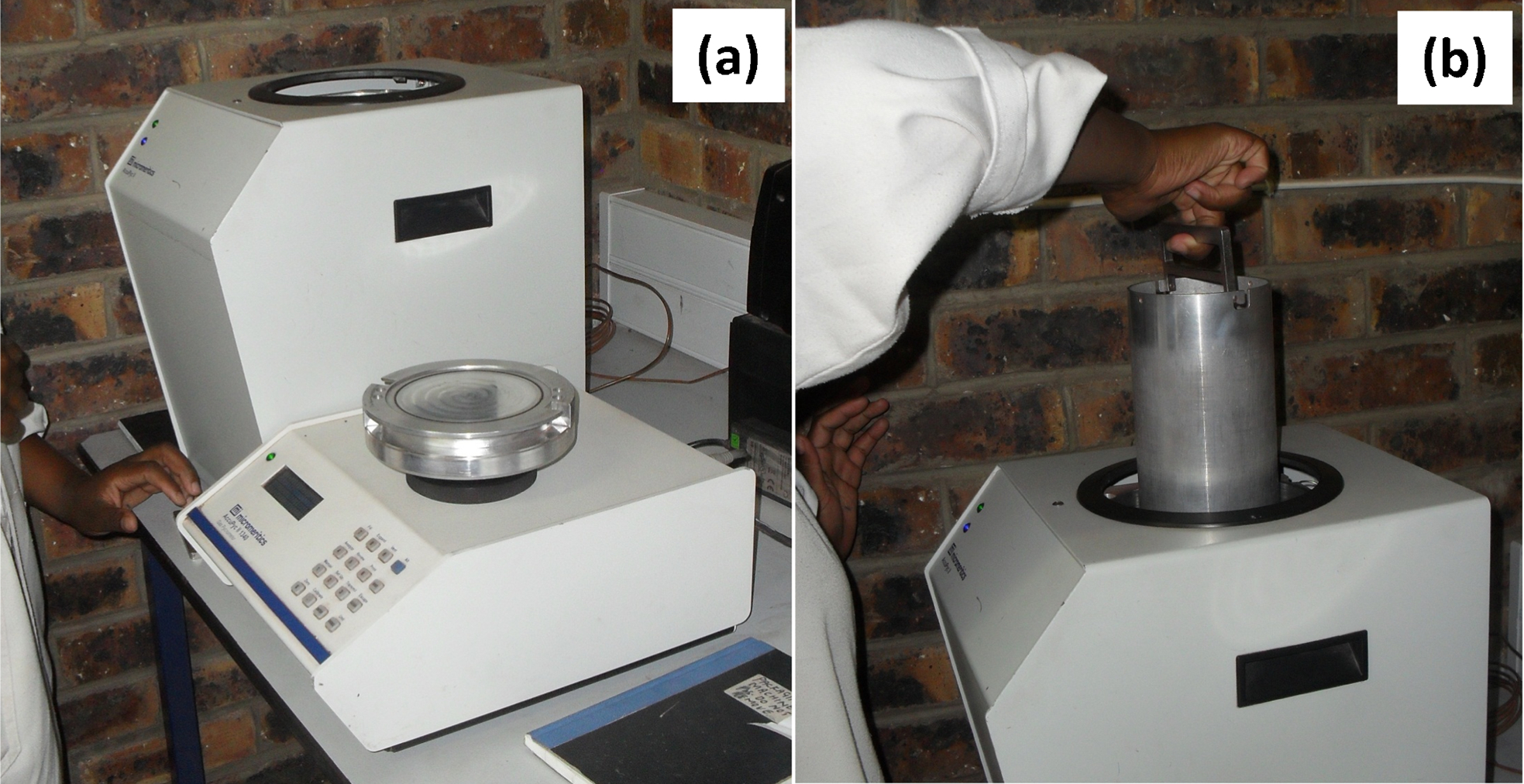
a core pycnometer instrument and b sample cup being inserted into sample chamber
Both techniques have benefits and disadvantages, which are briefly summarised here:
Advantages of the Archimedes method:
low cost
easy to perform
no technological complications;
can be used for any shaped sample
simple and easy to set up
reliable when applied to competent non-porous samples and when following a strict work protocol.
Disadvantages of the Archimedes method:
time consuming, especially if coating with wax or plastic wrap is included
not suitable for porous or weathered samples
pore spaces that are accessible to water will be excluded from the estimated volume of a sample that is not sealed. This affects dry bulk density
subject to human errors
softer samples can easily disintegrate in water.
Advantages of the core pycnometer:
easy to use
less time consuming than the Archimedes method
suitable for all material types (e.g. solid core or rock samples, chips etc.)
sample remains intact
repeatable on the same sample, irrespective of material competence
no sample preparation required.
Disadvantages of the core pycnometer:
pore spaces that are accessible to probe gas will be excluded from the estimated volume of the sample, which affects dry bulk density
temperature needs to be maintained for calibration and all subsequent measurements that use the same calibration
higher cost of the instrument.
The work presented here only compares Archimedes and core pycnometer densities obtained for this study, with the objective to determine potential differences and their possible impact on a mining operation. Due to differences between Archimedes determinations made on site and during this study, as described below, these two data sets are not related and, hence, no conclusions specific to the Los Bronces mine can be drawn here.
Geology of Los Bronces Mine
Los Bronces mine is located 70 km northeast of Santiago in central Chile and is part of the Rio Blanco – Los Bronces Cu–Mo porphyry copper deposit. Host rocks are the volcanic sequence of the Farellones Formation (21–11 Ma) and the plutonic rocks of the San Francisco Batholith (20·1–7·4 Ma), which intrude the Farellones Formation. Copper mineralisation is associated with emplacement of a complex system of porphyry intrusions and hydrothermal breccias dated at 4 to 7 Ma, which host hypogene sulphide mineralisation of chalcopyrite, pyrite, molybdenite and bornite. Early copper and molybdenum mineralisation is hosted in the porphyry stock, in high-grade breccia bodies, and is disseminated throughout the bordering country rocks. This early mineralisation is overprinted by later structurally controlled and erratic copper-arsenic mineralisation locally confined to parts of the deposit. On a regional scale the main breccia complex is oriented N10° to 15°W, with a distance of 9 km between the two largest known breccia bodies.
Breccia bodies of the Los Bronces deposit are hosted primarily by intrusive units of the San Francisco Batholith. The Los Bronces deposit is predominantly associated with quartz monzonites and quartz monzodiorites. These lithologies occur as both unmineralised wall rock and mineralised and altered ore material. The large scale intrusions of the San Francisco Batholith are cross-cut within the Los Bronces deposit by a number of porphyry sills and dykes.
The main ore zone at Los Bronces is related to at least seven hydrothermal breccia pipes, which form a large elliptic body 2 km in length, 0·7 km in width and 1·0 km deep. The shape of the breccia system is ‘funnel-like’, in sharp contact with the host rocks in the upper part of the system and in transitional contact at depth.
The N10°W orientation of the Los Bronces breccia complex and associated mineralised bodies such as Sur-Sur and Los Sulfatos indicate that a similarly orientated fault or fault zone played an important part in controlling mineralisation. Principal structures identified at the mine are sub-vertical N60°E to east-west faults and veins that are the main source of arsenic-bearing minerals, and which cross-cut all important lithologies. These faults frequently display vertically and shallowly-dipping striations indicating both vertical and sub-horizontal movement, suggestive of strike-slip faults. These structures, which cross-cut and off-set early fault sets such as those oriented between N20°W and N20°E, are interpreted as a pre-mineral conjugate set of structures.
Los Bronces operation mines approximately 75 Mt of ore and an equal amount of waste annually using conventional truck and shovel methods. Ore is processed in one of two separate processing lines to produce copper concentrates by grinding and flotation or copper cathodes by heap-leaching, solvent extraction and electro-winning.
Densities of ore and waste lithologies are determined using the immersion or Archimedes method on wax-coated drill core samples from resource definition drilling. For each lithology, all available density results are averaged for use in the resource model.
Density measurements
All drill holes that are relevant for the 2014 production plan were selected for this study. This included NQ and HQ size half core samples. After sample selection, the samples were packaged and sent to Anglo American Technical Solutions Research in South Africa.
The first set of measurements was done using the core pycnometer, following a procedure developed by Anglo American Technical Solutions (Dry and Pelo 2013). Samples were first weighed in air to obtain their dry mass and then placed in a sample cup for insertion into the core pycnometer sample chamber (Fig. 2). Different cup sizes are available depending on the size of the sample. If sample cups were changed, the instrument was re-calibrated. Once the sample is inside the instrument, volume was measured. The entire process took between 5 and 10 min to measure one sample.
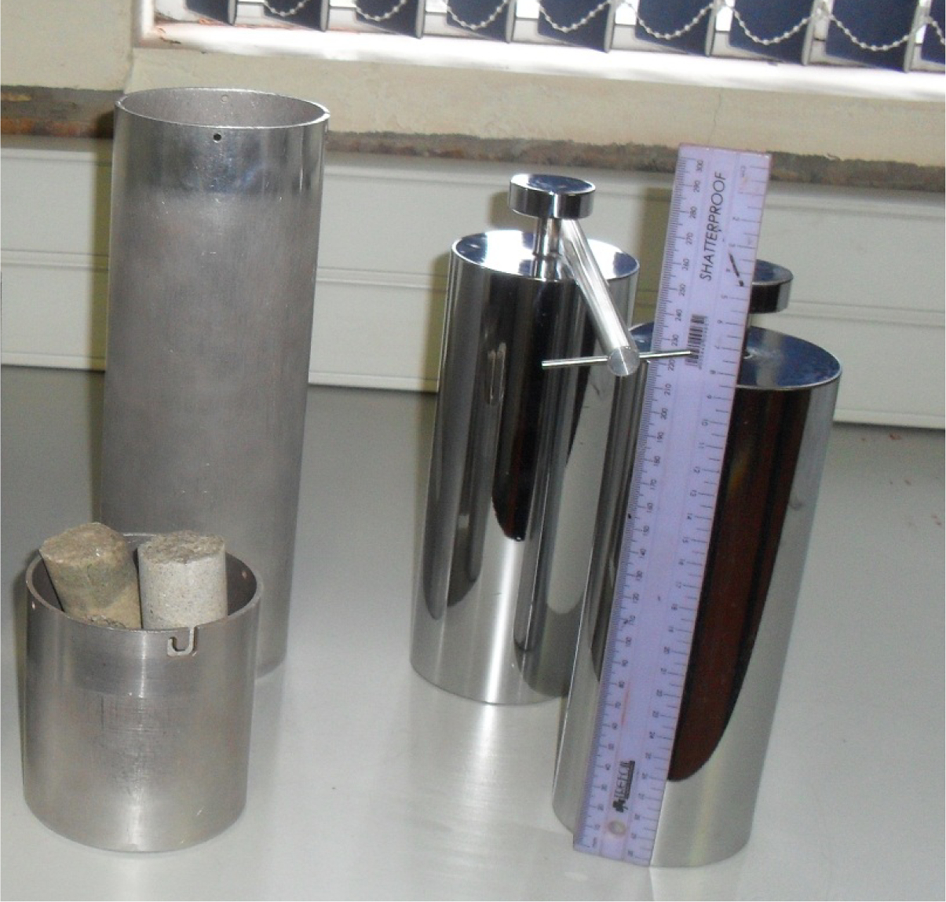
Sample cups (left) and certified reference materials (right) used for core pycnometer density determinations
Once densities on all samples were determined with the core pycnometer, the same samples were measured for density using the Archimedes method. The principles of the Archimedes method are similar to those described above. However, the methodology used during this study differed somewhat from the procedure followed in the Copper Business Unit:
drill core samples used for density determination at Los Bronces are 10 to 20 cm long, but sample lengths of 0·5 to 1·0 m were used during this study
no paraffin wax coating was used during this study
while Los Bronces uses full core samples, only half core samples were used in this study for density measurements.
Both methods used during this case study were undertaken in a controlled laboratory environment at Anglo American Technical Solutions Research using trained staff and stable environmental conditions. Compared to a field-based Archimedes method, measurements in a controlled environment should help improve both accuracy and precision of the density measurements.
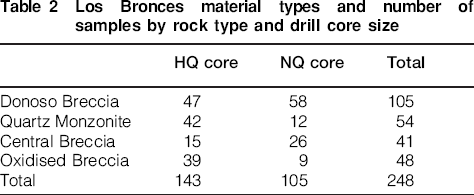
A total of 248 samples, from 181·69 m of drill core were measured using the Archimedes and core pycnometer methods, for a total of 496 density determinations (Table 2).
Los Bronces material types and number of samples by rock type and drill core size
Data validation
Density measurements using the core pycnometer and Archimedes methods were validated with Certified Reference Material (CRM) standards (Fig. 2). Three specially manufactured CRMs were available for quality control purposes. They contain various proportions of aluminium, brass and other metals to cover a range of densities from 2·740 to 6·429 g cm−3. While these CRMs were primarily produced for use in the core pycnometer, they are also suitable for the Archimedes method.
Using all three CRMs, 69 measurements were performed with the core pycnometer and 65 for the Archimedes method, i.e. 28 and 26% of the sample population, respectively. Certified Reference Material standards were measured at the start of each sample batch and at regular intervals in between. The water used for the Immersion measurements was changed as required to maintain water quality, but at least after every 10th sample.
Results from the CRMs demonstrate good accuracy for both techniques. Average relative differences between the certified values of the CRMs and actual results were 0·35 and 0·02% for the Archimedes and core pycnometer measurements, respectively. Maximum relative differences between certified values and actual results were 0·52 and 0·21%, respectively (Fig. 3). While core pycnometer densities are essentially unbiased, the immersion results indicate a bias of 0·35%, with measured values being slightly higher than expected (Fig. 3). A number of possible reasons could explain this difference as detailed in the following section.
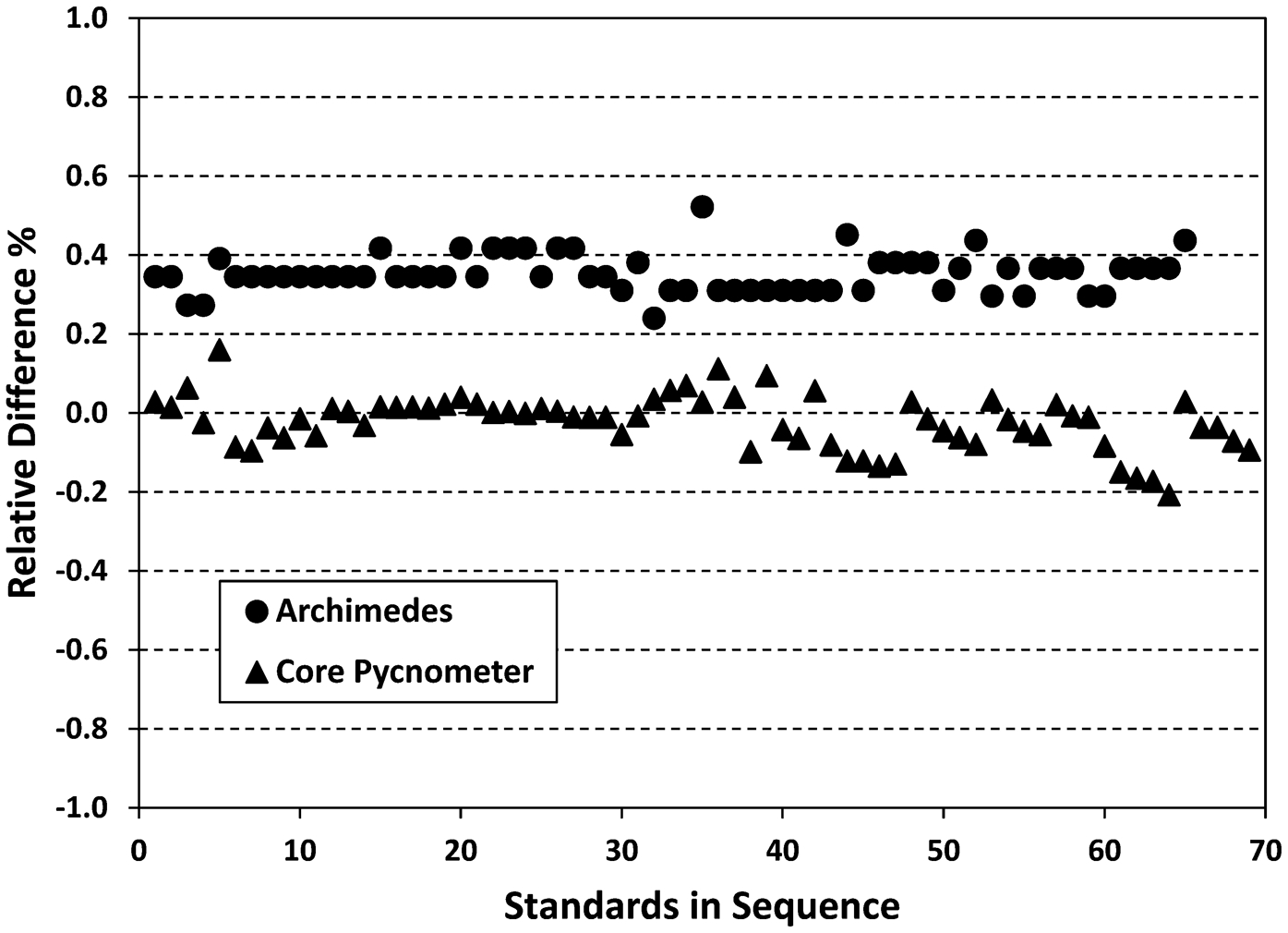
Relative difference of expected versus measured densities for Certified Reference Materials (CRMs). Archimedes densities are on average 0·35% higher than the accepted CRM value
Duplicate measurements were undertaken for both core pycnometer and Archimedes methods on a random selection of 12 and 13% of the sample population, respectively, to evaluate the repeatability (precision) of the results. Duplicates indicate very good precision for both, the Archimedes and the core pycnometer measurements, the latter returning slightly better correlation (Fig. 4). Relative differences between two density determinations on the same sample using the core pycnometer technique are consistently below 2% and 90% of duplicate pairs have a relative difference of less than 1%. Precision for Archimedes determinations are slightly inferior, but relative differences between the measurements on the same sample also did not exceed 3% and 90% of the duplicates have a relative difference of not more than 1·1% (Fig. 5).
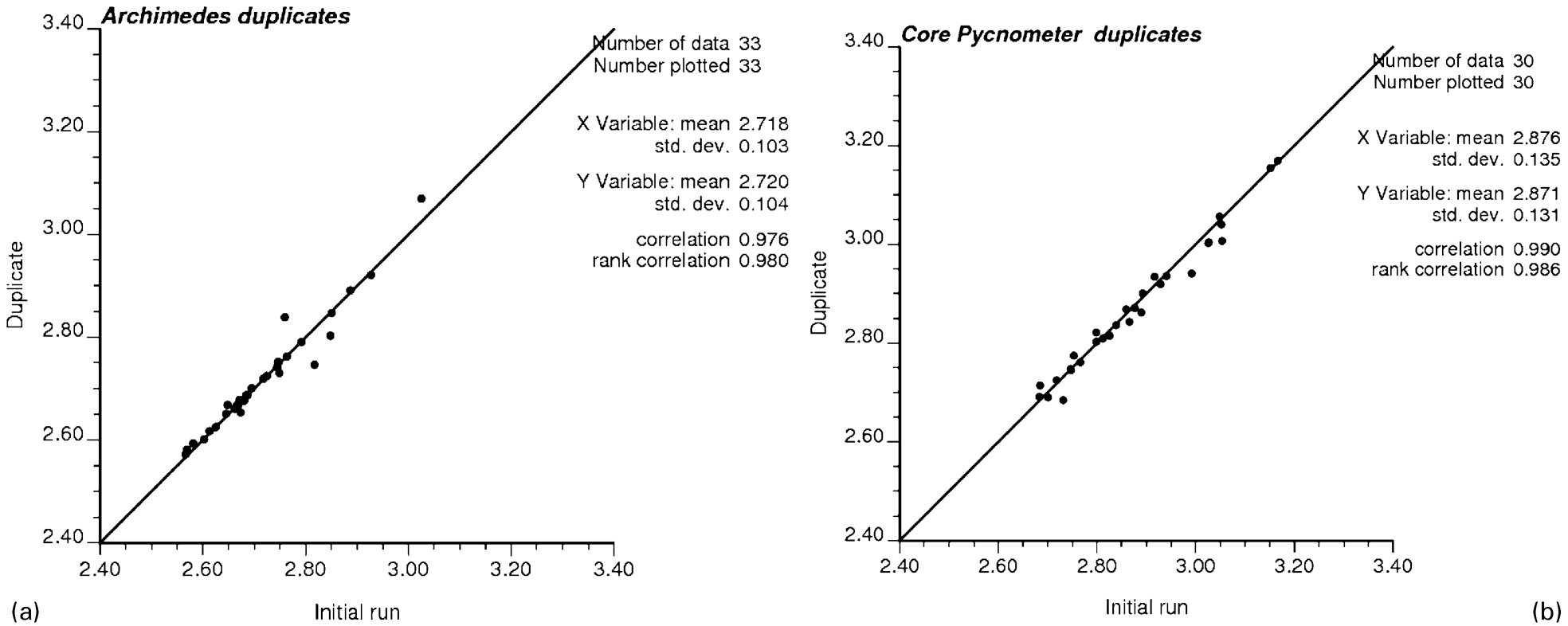
a Archimedes original versus duplicate plot and b core pycnometer original versus duplicate plot
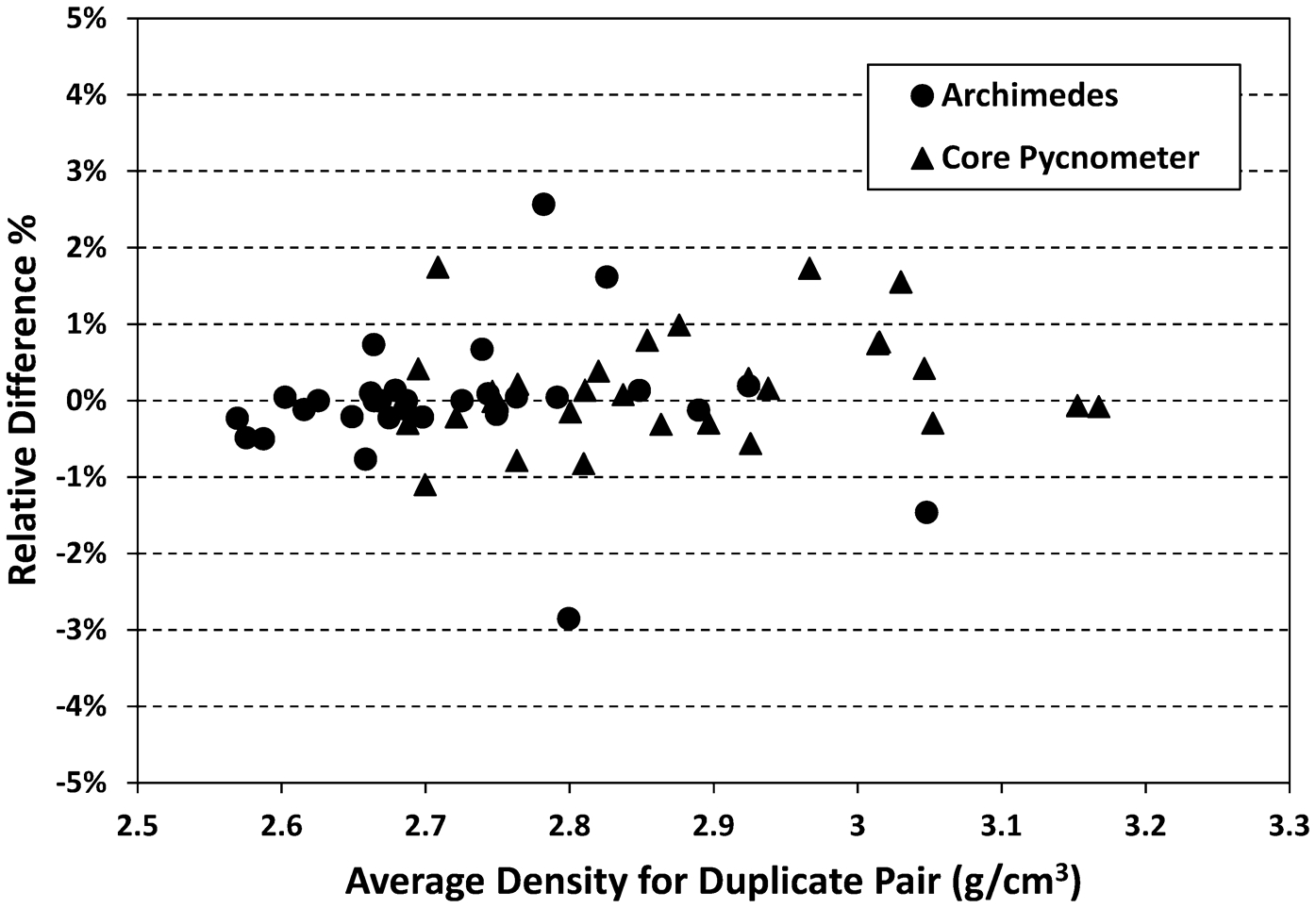
Relative percentage difference plot of Archimedes and core pycnometer duplicates. Positive difference indicates that first measurement is higher than repeat determination
Results and discussion
Overall, there is acceptable agreement between densities determined with the two techniques as 90% of samples return relative differences of less than 10%. However, a bias is also apparent (Figs. 6–8). Average densities for the Archimedes and core Pycnometer methods from the entire sample population are 2·69 and 2·82 g cm−3, respectively. Hence, core pycnometer densities are 4·7% higher than Archimedes densities, on average, and this difference is fairly consistent throughout all samples (Fig. 8). If the small accuracy bias determined from quality control measurements of CRMs with the immersion method is taken into account as well, the two density determination methods return differences of about 5% for the drill core samples used in this study.
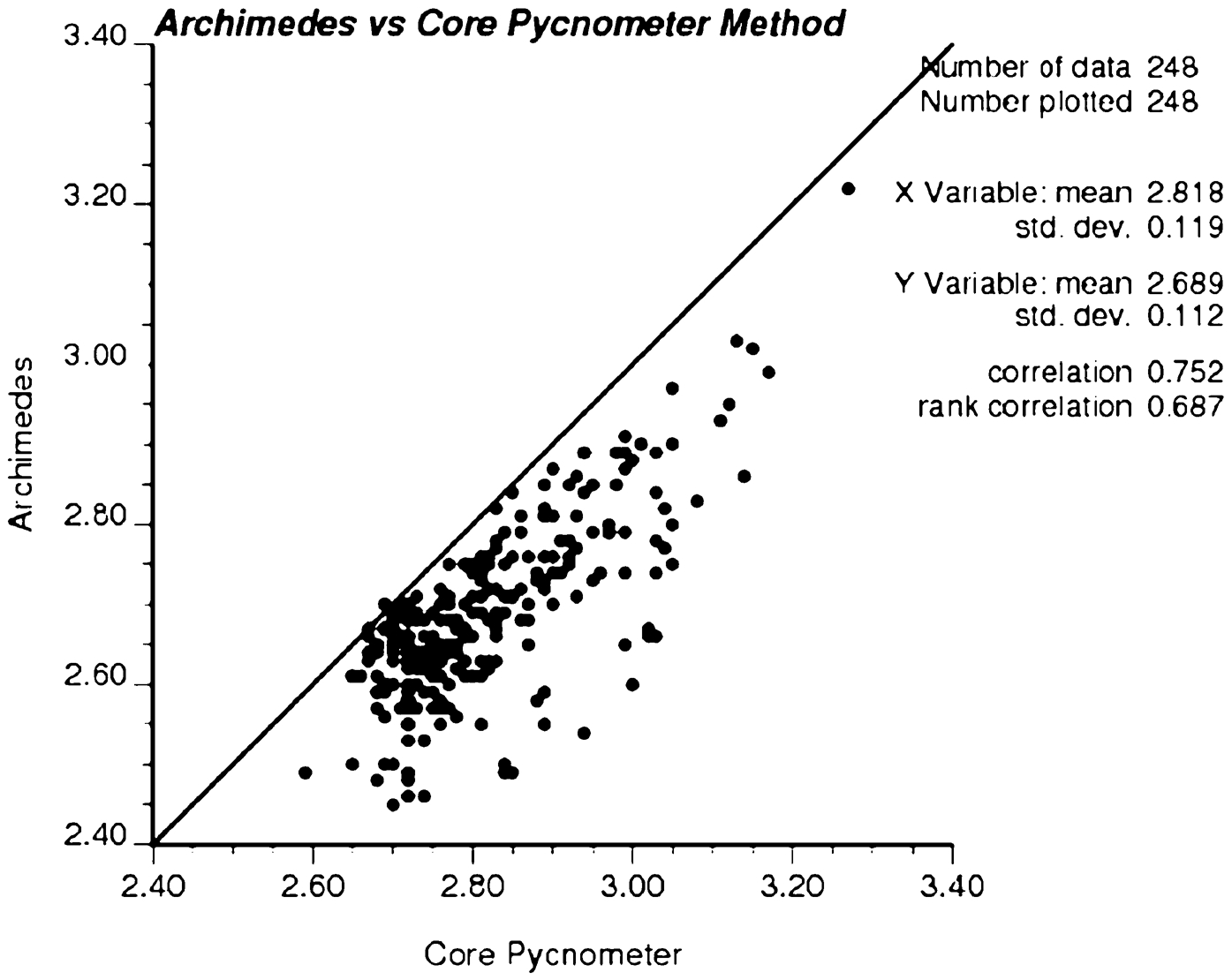
X–Y plot of core pycnometer versus Archimedes density determinations
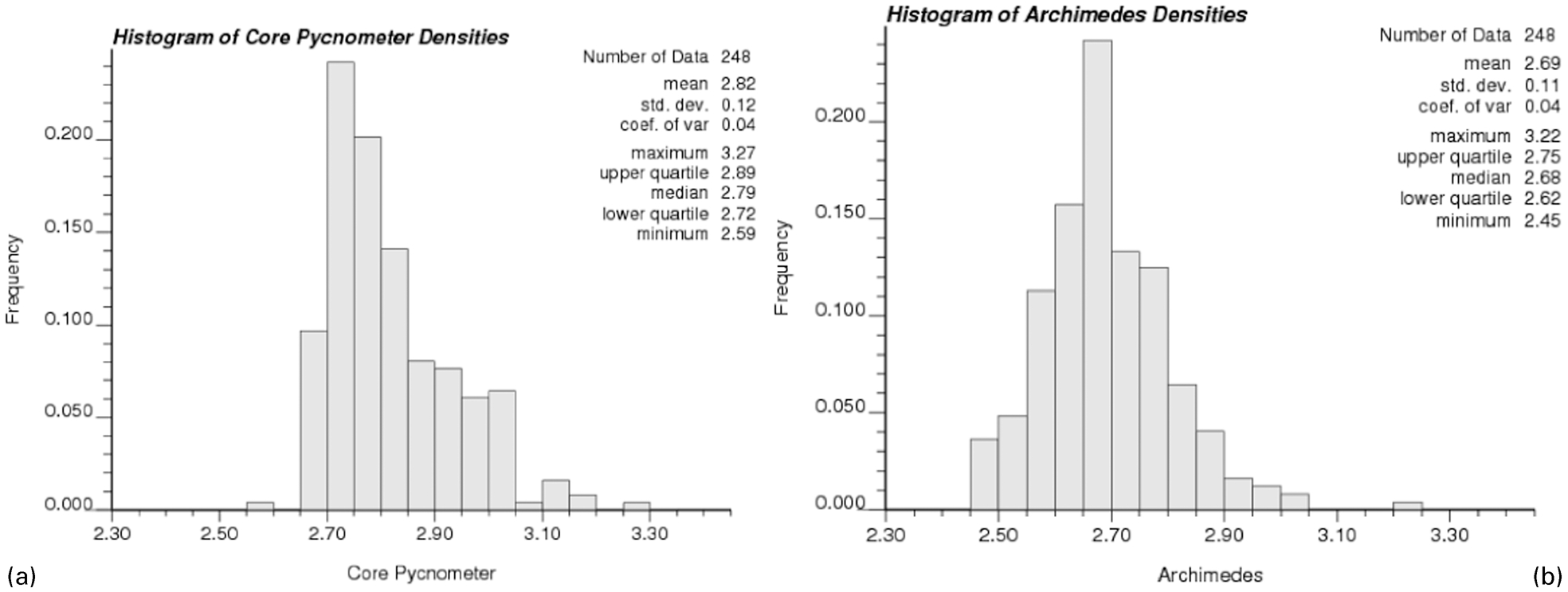
Histogram and statistical results for density measurements obtained using a core pycnometer and b Archimedes methods
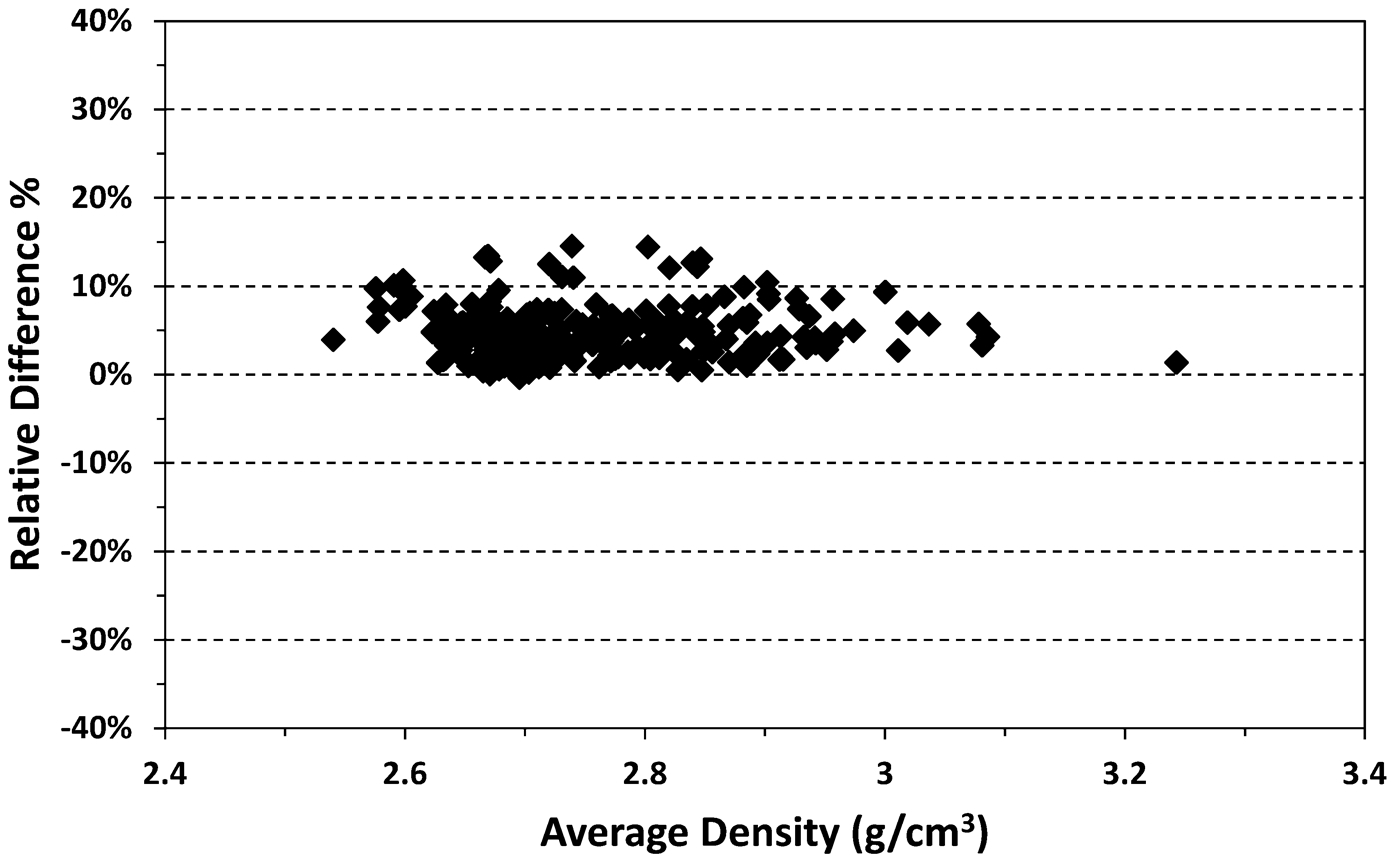
Relative percentage difference plot of Archimedes versus core pycnometer density measurements. Positive difference indicates that core pycnometer density is higher than Archimedes density
Similar observations were made when the entire sample population is separated by rock type. The drill core samples include four main rock types, i.e. Oxidised Breccia, Central Breccia, Donoso Breccia and Quartz Monzonite. Density measurements for all four rock types return similar correlations and similar density variances of 3·5 to 6% between the two measurement techniques (Table 3).
Average core pycnometer and Archimedes densities by rock type at Los Bronces

As mentioned earlier, Archimedes measurements were carried out under controlled laboratory conditions, which led to good precision. Similar conditions are unlikely to be found in the field or in a core store, which would reduce the generally reasonable correlation with core pycnometer measurements and may result in larger differences between the two methods.
There are a number of possible reasons that could explain the observed differences between core pycnometer and Archimedes densities. Abzalov (2013) mentions several potential causes for error that apply to the immersion method. These include contamination of the sample basket with rock chips from previous measurements, insufficient drying of samples before weighing, improper calibration of the balance or changes in physical or chemical characteristics of the sample during drying or water immersion. Additional errors could be introduced by not including all small sample fragments of the material to be measured and through partial disintegration of soft materials in water. Also, the temperature of the water used during the Archimedes method could lead to a small bias (Lipton and Horton 2014). Careful attention was paid to these possible sources of error during the measurements, and ideal laboratory conditions plus a limited number of well-trained laboratory staff have helped to largely eliminate these sources of error.
According to Lipton (2001), methods related to the Archimedes principle are only recommended for competent, non-porous rocks. Some of the Los Bronces samples display more intense alteration and a few had a tendency to break up when placed in water. While this may explain some of the larger density variances observed between the two techniques, this does not explain the fairly consistent difference that applies to the entire sample batch (Figs. 6 and 8).
Temperature and gas flow variations could possibly introduce instrument drift during core pycnometer measurements. However, these measurements were tightly controlled in a dedicated laboratory and the success of these control measures was clearly demonstrated by the high accuracy and precision as determined from quality control checks.
Most of the Los Bronces samples exhibit some porosity and voids in mineralised zones and veins. The gas used for the core pycnometer determinations might penetrate such pore spaces more easily than water. Core pycnometer results may thus understate the real volume of the drill core samples and, hence, may not have measured true bulk density as defined by Lipton (2001) and Abzalov (2013).
Although both density determination methodologies were applied under strict laboratory conditions, they both have potential disadvantages as outlined above. Currently, it is not clear which of the two methods tested here produces the correct dry bulk density. More test work is required, including sealing of the samples with wax, paraffin or varnish, and application of alternative methods, to establish the most suitable technique. Some of this work is currently being done by Anglo American Technical Solutions as part of an ongoing more detailed research program.
The study presented here highlights that two different methodologies can produce different density results. A similar outcome can probably be expected when comparing any two density measurement techniques, emphasising the need for appropriate validation of density results, which should include more than one measuring method.
As pointed out earlier, dry bulk density is one of three critical parameters in the estimation of mineral resources and ore reserves, the other two being grade, or quality, and volume. Density measurements and estimation should therefore attract the same amount of attention and level of effort as that given to grade assays or distance measurements used to determine volume. Density determinations should not be an after-thought to the resource estimation process. Poor density measurements and errors significantly impact mineral resource tonnage and metal or product content estimates. This can lead to downstream errors in mine design, mine planning and equipment selection decisions.
The results obtained from the core pycnometer and Archimedes density measurements on 248 samples from Los Bronces can be used to illustrate potentially significant impacts on ore and waste tonnage, operational parameters and the life-of-mine determination.
Los Bronces currently has a reserve of approximately 2·0 Bt at an average grade of 0·52% TCu (total copper, including acid soluble and insoluble copper). Annual scheduled production is around 75 Mt of ore and an equal amount of waste. A difference of 5% between two different sets of density data could increase or reduce reserves at such an operation by some 100 Mt, equivalent to more than a full year's ore production tonnage. Also, the same difference could increase or reduce daily material movement from the open pit by approximately 20 000 t according to the current mine plan. In the case of Los Bronces, which uses trucks with a payload of 225 t, this relates to about 90 truck cycles per day. While these density sensitivity calculations are certainly simplified, they nevertheless highlight the importance of determining density values just as accurately as volume and grade or material quality in order to make appropriate business decisions.
Principles of density determination
Different orebodies have varying characteristics, which have an impact on deciding which method should be used and how it should be applied when measuring density. Several methods exist, each with different challenges and preferred processes, to obtain correct and accurate results. Nevertheless, some general rules were identified as part of this project, which are regarded as the basic principles that need to be adhered to when measuring density.
Samples used for density measurements must be representative of the materials for which the resource and reserve estimates are to be determined. Representative sampling should be carefully considered, particularly for ore deposits that have variable porosity and/or mineral composition. Density domains need to be determined, which are likely to be related to aspects such as lithology, alteration, weathering, mineralisation, etc. Within Anglo American, density domains are well delineated at Minas Rio where different methods are used for each different material type. It is also important to maintain a constant sample length to reduce sample size bias. Ideally the whole sample from the assay interval should be used when measuring density to avoid bias introduced from local geological or structural features.
The number of density measurements is important in determining the local variability of density throughout a mineral deposit. Ideally, density should be determined for each assay or quality sample, and the results should be used to estimate density values for each block in the resource model rather than applying average values to rock types or the entire deposit.
As mentioned above, each orebody is different and may require a somewhat different approach for measuring density. Hence, there is no single preferred methodology to apply. Selecting an appropriate method depends on the type of mineral deposit and the associated material characteristics for the various ore, product and waste lithologies.
Care must be taken to remove moisture before measuring density so that a dry density is reported. Moisture content is determined by weighing a sample before and after it has been dried for a specific period. The difference between the two weights is then assumed to be related to the moisture content. When sampling takes place it is important to ensure that the moisture content as sampled is representative of the in-situ material. Furthermore, it is important to control the temperature used for drying samples to minimise changing material properties.
When making use of the gas pycnometer method for pulps, crushing and milling of the rock sample destroy the original rock properties. Hence, only rocks that have very low porosity and do not absorb liquids will be able to yield results comparable to the in-situ bulk density as measured using non-destructive techniques.
Selection of an appropriate density measurement method also depends on the size and physical characteristics of the available samples. The use of at least two methods is recommended to obtain reliable results (Lipton 2001). Irrespective of the chosen methodology, it is important to develop suitable work procedures and to document those in detailed written protocols. Such protocols must include all relevant steps of the density measurement process, including related activities such as calibration of the balance with certified weights and appropriate QAQC checks (e.g. standards, duplicates, repeat measurements, etc.). Written operating procedures must be well understood by all operators through appropriate training. Compliance to these procedures must be verified through routine audits and observing the work being done. Last, but not least, there should be high level management supervision by a professional geologist for any density measurements done in a core yard or laboratory.
Conclusions
Density has a significant impact on the estimation of tonnes of ore, product or waste mined, and ultimately affects reserves, mine design, production targets and operational performance, which all impact on the financial performance of an operation. Several methods are used to determine density within the Anglo American Group, each with different challenges and preferred processes to ensure adequate results for specific commodities or rock types. Selecting the most appropriate method to determine density and comparing results from two or more techniques against each other, together with other suitable quality control procedures, is of utmost importance for all mining operations or exploration projects.
Footnotes
Acknowledgements
The authors would like to thank all colleagues who helped to describe the various methods of density determination used across Anglo American. Susan Dry, Jeremiah Pelo and Mooketsi Pheto are specifically thanked for their assistance during the Los Bronces density study at Anglo American Technical Solutions Research. Constructive comments on earlier versions of this paper from Michael Harley, Susan Dry, Manuel Diaz, Kean McCallum and John Vann are gratefully acknowledged.
Anglo American plc is thanked for support and approval to publish this paper.
Furthermore, constructive criticism on the manuscript by AES reviewers is also acknowledged.
This paper has been reproduced with the kind permission of the Australian Institute for Mining and Metallurgy from the 9th International Mining Geology Conference, 18–20 August 2014, Adelaide, Australia.
†
An earlier draft of this paper was published at the 9th International Mining Geology Conference in Adelaide, Australia, in August 2014.