







Abstract
A new cerium salt sealing method for anodic film on aluminium alloy using pulse electric field was introduced in this paper, and the corrosion behaviours of the sealed aluminium were comparatively studied in neutral, acidic and alkaline NaCl solutions by means of polarisation curve and electrochemical impedance spectroscopy measurements. The results show that the corrosion resistance of anodic film sealed with the method is better than that sealed with boiling water and potassium dichromate. The sealing mechanism of Ce salt under bidirectional pulse electric field was also proposed. Owing to its low energy consumption and low toxicity, this method could be an alternative to potassium dichromate or boiling water sealing.
Introduction
Aluminium and its alloys are widely used in the transport and electricity industries and in architecture due to their low density, favourable mechanical properties, good surface finish and relatively good corrosion resistance. However, the corrosion resistances of aluminium and aluminium alloys in many environments are not adequate. Anodising could greatly improve the corrosion resistance of aluminium. The anodic film commonly consists of two layers: a thick porous layer and a thin barrier layer. The porous structures are usually sealed in boiling water, nickel acetate solution, dichromate solution or some other solutions to improve the corrosion resistance. The anodic films sealed by dichromate possess excellent corrosion resistance, but Cr(VI) is recognised as toxic both for environment and for humans.1 The development of chromium free anodising and sealing baths is therefore attracting much attention.
Cerium salts for the corrosion protection of aluminium alloys have been widely researched since Hinton et al.2 used them for the first time in 1984. It was widely recognised as an attractive alternative to chromate conversion coatings because cerium compounds are non-toxic and relatively cheap. To date, several methods have been developed to form cerium rich film on aluminium alloys. Typical processes include:
exposure to aerated aqueous solution of 1000 ppm CeCl3 for up to 1 week2
immersion of the aluminium alloys in an aerated solution containing cerium salts and film formation accelerant such as H2O2 and KMnO4 for various times, which are usually <30 min depending on different processes3 – 5
Ce–Mo process described by Mansfeld and co-workers,6 – 9 which consists of immersion in hot Ce(NO3)3 and CeCl3 followed by anodic polarisation in Na2MoO4, or immersion in boiling Ce(NO3)3, anodic polarisation in Na2MoO4 and immersion in boiling CeC13 or immersion in hot cerium acetate, anodic polarisation in Na2MoO4 and immersion in hot Ce(NO3)3 for various aluminium alloys
electrodeposition treatment, which involves immersion of aluminium alloys in an aerated solution containing cerium salt under the application of dc power.
Hinton10 proposed a method based on galvanostatic treatment with cathodic currents from 0 to 0·2 mA cm−2 in solutions containing CeCl3. Johnson et al.11 performed an electrolytic deposition of the cerium oxide with a current density of 0·1 mA mm−2 during 90 s, and recently, Pardo et al.12 performed Ce electrolysis treatment under a dc voltage action of 3 V in ethylene glycol mono-butyl ether solution, with 1·5 wt-%NaCl as the solvent. These approaches showed that electrodeposition process is a promising method with several advantages, such as low processing temperature, normal handling pressure, high purity of deposition and controlled thickness of the film.
Pulse electrodeposition is one of the most effective methods in electrodeposition of metals and alloys. 13 13,14 It has been reported that pulse electrodeposition can improve the deposition process and deposit properties, such as porosity,15 ductility,16 hardness,17 surface roughness18 and corrosion resistance.19 However, there were very limited studies on the pulse electrodeposition of rare metal on anodic film of aluminium and aluminium alloys. The idea of cerium sealing anodic film under the application of a pulse field was proposed by the authors.20 In this paper, corrosion behaviours of the anodic film sealed by Ce salt under the pulse field were studied using potentiodynamic polarisation and electrochemical impedance spectroscopy (EIS). The results were compared with those traditional methods such as boiling water sealing and dichromate sealing.
Experimental
Material
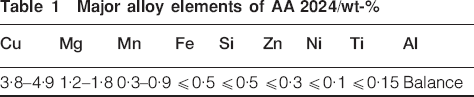
The material studied was 2024 aluminium alloy plate; its major alloy elements are listed in Table 1. The samples were cut to the size of 20×10×1 mm before use.
Major alloy elements of AA 2024/wt-%
Anodising process
The surfaces of the alloy samples were finished using SiC abrasive paper up to 1000# and cleaned with water and acetone. A degreasing treatment was carried out for the samples in 50 g L−1 NaOH solution for 3 min. After water cleaning, the samples were chemically polished in 200 g L−1 HNO3 solution for 3 min, and then anodising was carried out in 200 g L−1 H2SO4 solution at a current density of 2·0 A dm−2 for 60 min at room temperature (∼20°C). After that, the samples were cleaned with water and dried. The thickness of the anodic film was ∼16 μm.
Sealing methods
Cerium salt sealing
The samples were immersed in Ce3(NO3)3 solution (the concentration of Ce3+ was 1·5 g L−1, pH 6-7) for 60 min under the application of a pulse power at room temperature (20°C). Pb sheet was used as the auxiliary electrode. The pulse frequency was 50 Hz, the pulse voltage was 0·8 V, the pulse ratio was 1∶1, the negative duty cycle was 60% and the positive duty cycle was 35%. The wave of the bidirectional pulse voltage is shown in Fig. 1.
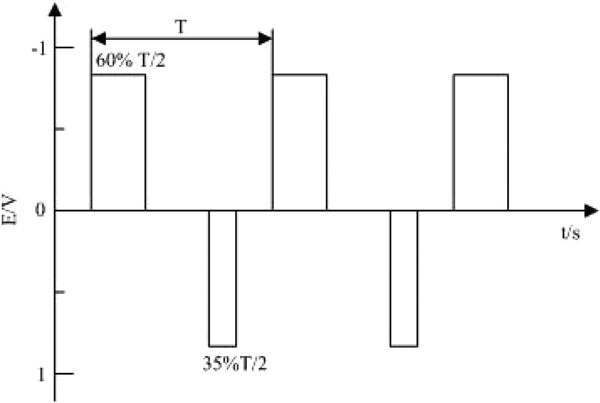
Wave of bidirectional pulse voltage with pulse period of 20 ms, negative pulse time of 6 ms and positive pulse time of 3·5 ms
Dichromate sealing
The samples were immersed in 50 g L−1 potassium dichromate solution (90-95°C, pH 6-7) for 30 min.
Boiling water sealing
The samples were put into boiling water (pH 6-7·5) for 30 min.
After sealing, the samples were rinsed with water and dried in air. All the solutions were prepared by analytical reagents and deionised water.
Electrochemical measurements
Corrosion behaviours of the anodised samples were studied using potentiodynamic polarisation and EIS. The test electrolyte was 1M NaCl solution. The pH value of 1M NaCl solutions was adjusted using HCl or NaOH reagents. The samples for electrochemical tests were sealed with epoxy resin, leaving an area of 0·5×0·5 cm exposed to the solution. A saturated calomel electrode was used as the reference electrode, and the counter electrode was platinum. Electrochemical impedance spectroscopy measurements were performed with PARSTAT 2273 advanced electrochemical system at the open circuit potential with a 10 mV perturbation, and the frequency range was from 100 kHz to 0·01 Hz. Polarisation curves were measured using a model 273A potentiostat, and the potential scanning rate was 1 mV s−1.
Characterisation of anodic films
The surface morphology of the anodised sample sealed by cerium salt under pulse current was observed with SEM (Cambridge S240). X-ray photoelectron spectroscopy (XPS) analysis was performed on a VG Scientific ESCALAB 250 spectrometer with a monochromated Al Kα source (1486·6 eV), and the base pressure in the experimental chamber was <2×10⁻⁸ Pa. Curve fitting was carried out using the XPSPEAK4·1 processing software (Chemistry Ltd, CUHK). The binding energies of the peaks of the components were calibrated by fixing the peak of adsorbed carbon at 284·6 eV.
Results and discussion
Polarisation curves of anodised 2024 aluminium alloy sealed by cerium salts, dichromate or boiling water respectively are presented in Fig. 2. It can be seen from Fig. 2 that all of the anodic curves show passive behaviour, and no pitting occurs for the sealed aluminium even in higher potential (up to 2 V). In neutral (pH 7) 1M NaCl solution, the anodic current density of unsealed anodic film is about 10−5–10−6 A cm−2; in alkaline (pH 12) solution, it is ∼10−4 A cm−2; and in acidic solution, it increases to ∼10−2 A cm−2. The results indicate that the corrosion resistance of unsealed anodic film decreases in the following order: in neutral (pH 7) solution>in alkaline (pH 12)>in acidic. Alkaline and acidic solutions show a higher corrosive activity to the anodic film. After sealing by boiling water, potassium dichromate and Ce salt, the anodic current densities decrease dramatically to 10−7–10−8 A cm−2; this indicates that the corrosion resistance of anodic films is greatly improved. According to the anodic current density, the corrosion resistance of anodic film follows the sequence: Ce salt sealing>boiling water sealing>dichromate sealing in pH 7 solution; Ce salt sealing≈dichromate sealing>boiling water sealing in pH 3 solution; and boiling water sealing>Ce salt sealing>dichromate sealing in pH 12 solution.
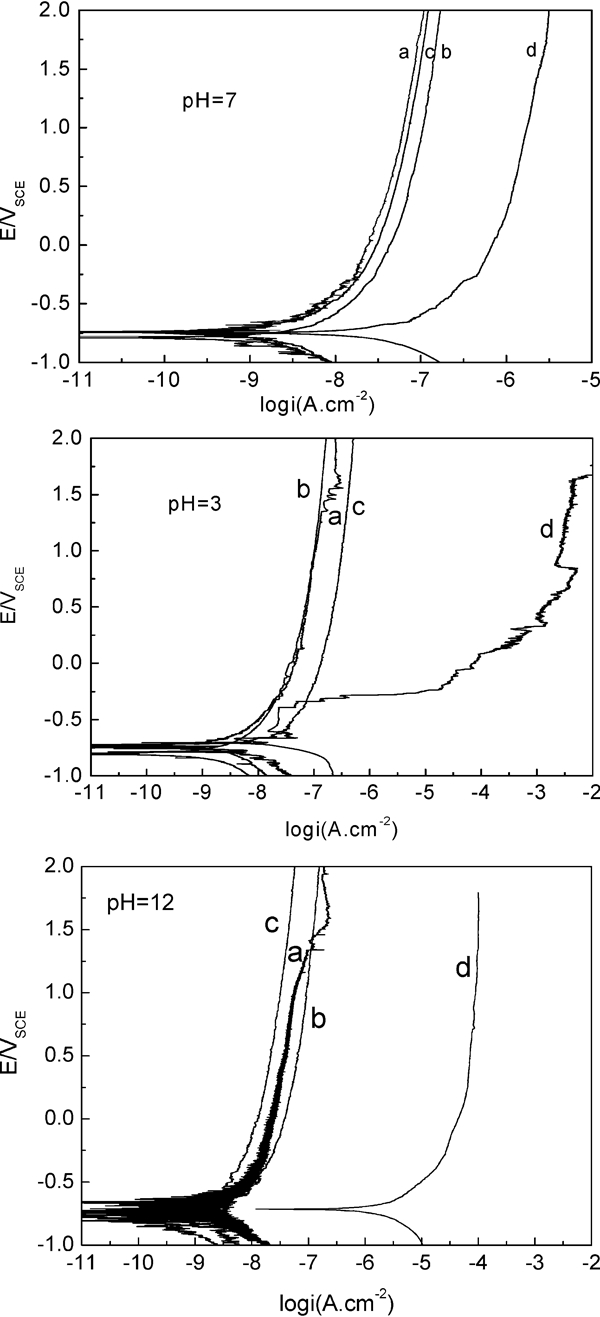
Polarisation curves of anodised aluminium in neutral (pH 7), acidic (pH 3) and alkaline (pH 12) 1M NaCl sealed by different methods
Therefore, the anodised aluminium sealed by cerium salt shows better or comparative corrosion resistance than that sealed by the boiling water and potassium dichromate. In our previous work, the aluminium by boiling water sealing also shows better corrosion resistance than by dichromate sealing.21
Many researchers used EIS to study the performance of anodic films on aluminium alloys, and different models and equivalent circuits were proposed for anodic films.22 – 24 In general, the anodic film commonly consists of two layers: a thick porous outer layer and a thin non-porous layer, which is called the barrier layer. The equivalent circuit of anodised aluminium shown in Fig. 3 is widely accepted, where C p and R p represent the capacitance and resistance of the porous layer respectively, C b and R b are the capacitance and the resistance of the barrier layer respectively and R sol is the solution resistance. The corrosion resistance of anodic films depends mainly on the sealing quality of the porous layer, so R p and C p are particularly paid more attention. Higher R p values indicate more difficult penetration for the electrolytes into the anodic films and better corrosion resistance. On the other hand, because the permittivity of hydrated alumina is lower than those of alumina and free water, lower C p values indicate that there is less free water in the porous layer of anodic films and a better protectiveness of the porous layer from the corrosion solution.
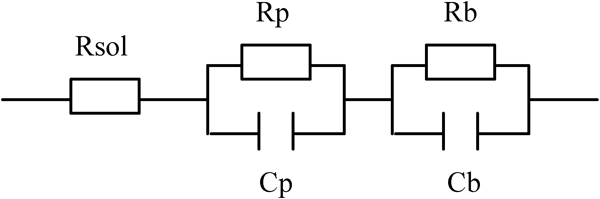
Equivalent circuit of anodic films
Electrochemical impedance spectroscopy plots of the anodised aluminium sealed by cerium salt, potassium dichromate and boiling water are shown in Fig. 4; these plots are also measured in acidic, neutral and alkaline 1M NaCl solutions respectively. It is evident from Fig. 4 that the impedance spectra at high and medium frequency portions vary from the sealing method, which reflect the anticorrosive properties of the porous layer of anodic film.22 Table 2 shows the C p and R p values fitted using the equivalent circuit shown in Fig. 3. It can be found from the table that for the anodic films sealed by cerium salt, no matter in neutral, acidic or alkaline NaCl solutions, R p values are always higher than the values by boiling water or potassium dichromate sealing, and the C p values are lower. This result is in agreement with the results from polarisation test, showing that better corrosion resistance is obtained by cerium salt sealing.
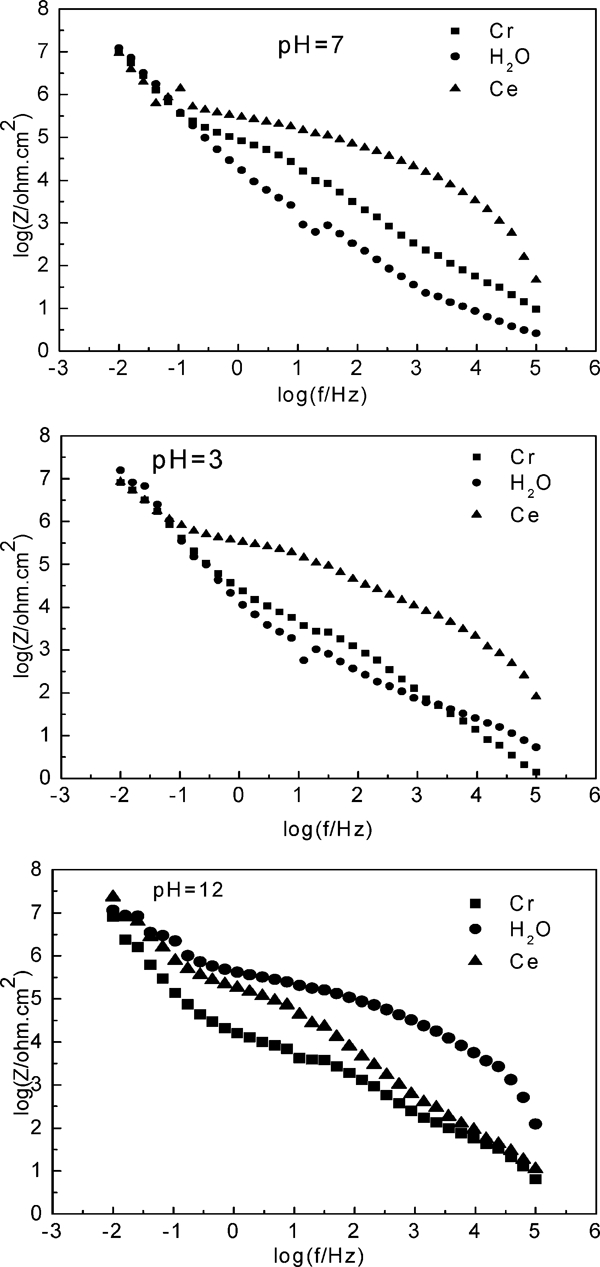
Electrochemical impedance spectroscopy plot of LY12 aluminium alloy sulphuric anodic oxide film sealed by different methods in 1M NaCl solution: Cr, potassium dichromate sealing; H2O, boiling water sealing; and Ce, Ce salt sealing
Fitted parameters for porous layers of anodic films sealed by different methods


It is noted that the polarisation curves show a very similar behaviour for all sealed samples. However, in Table 2, the R p value for the Ce sealed sample at pH 3 is two orders of magnitude higher than for the other sealed samples. This seems not in agreement with the polarisation curve. The reason is that the polarisation curve, reflecting the current response to the applied voltage, represents the resistance of the total anodic film consisting of the porous layer and the barrier layer in the aggressive solution. In most cases, the resistance of barrier layer is significantly bigger than that of porous layer even for the sealed one. Therefore, the increment in the resistance of porous layer resulted from sealing will slightly affect the polarisation curves. Electrochemical impedance spectroscopy as a sensitive technique and an ideal tool can show detailed information about the characteristics of the barrier and porous layers.25 For example, Hitzig et al.22 have shown that the high and medium frequency portions of the impedance spectra reflect the porous layer properties of the anodic film, while the low frequency portion characterises the barrier layer properties. It can be seen from Fig. 4 that the resistances at low frequency portion that represents R b values are very high and change slightly with sealing methods.
During the sealing process in boiling water, boehmite is formed according to the reaction Al2O3+H2O→2AlO(OH) (boehmite) when the temperature is above 80°C.26 This hydrated alumina occupies a greater volume and fills the micropores in the porous anodised films. The ingress of chloride ions, water and oxygen is suppressed and corrosion resistance of the film is improved. However, boiling water sealing mainly results in physical filling of the pores, which has only limited improving effect on corrosion resistance of the alloy.
For dichromate sealing, dichromate will react with the alumina, and aluminium oxydichromate and aluminium oxychromate are formed at temperatures above 90°C.26 The reaction may be expressed as

The sealing mechanism of cerium salt under pulse power is postulated as follows: at the negative cycle, oxygen reduction reaction takes place in the micropores or on the surface of anodic film: 2H2O+O2+4e→4OH−, which helps form an alkaline environment in the micropores. Meantime, the immigration of cerium ions from solution to the porous layer may be speeded, and the following processes may occur27


When at the positive cycle, the OH− ions generated at the negative period may transfer into the micropores easily. Hence, the pH value in the micropores increases further, which should be a reason for better corrosion resistance of anodic film sealed with cerium salt under pulse electric field.
Figure 5 shows the surface morphology of the anodised aluminium sample sealed by cerium salt. It is obvious that the layered deposition existed on the sample surface. X-ray photoelectron spectroscopy analysis was performed in order to identify the existence and the states of Ce element in the deposition. Figure 6a shows the wide scan XPS spectra on surface. The surface composition of the deposition includes mainly Ce, O and C. The raw peak of Ce3d from 875 to 915 eV should be the overlapped result of Ce(IV) and Ce(III). Figure 6b shows the high resolution XPS spectra of Ce3d. The relative contents of Ce(IV) and Ce(III) could be estimated from the area ratio of Ce(IV)/Ce(III) at binding energies of 882 and 886 eV respectively. It was found that ∼75·2% of cerium was present as Ce(III) in the deposition. Figure 6b, the high resolution XPS spectra of O1s, shows that Ce(OH)3 and CeO2 are the dominant species among the deposition with a little amount of Ce2O3.
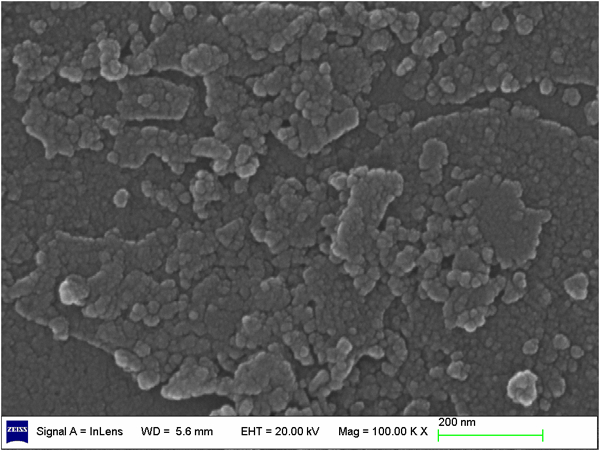
Surface morphology of anodised aluminium sealed by cerium salt
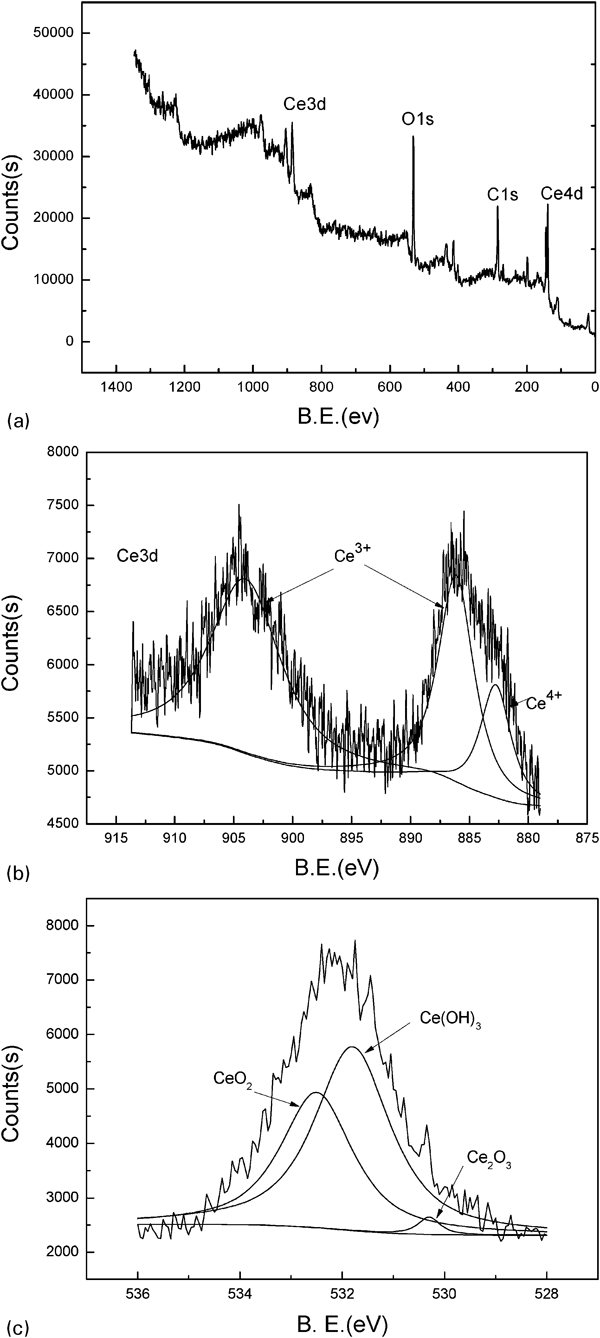
X-ray photoelectron spectroscopy spectra of anodised aluminium sample sealed by cerium salt
Conclusions
The anodised aluminium sealed by cerium salt under the bidirectional pulse power shows better corrosion resistance in neutral, acidic and alkaline NaCl solutions compared with the films sealed by boiling water and potassium dichromate.
A possible sealing mechanism of cerium salt under bidirectional pulse power was proposed, in which the ion transformation is speeded and an alkaline solution in micropores is formed, which helps the deposition of cerium ions.
Electrochemical impedance spectroscopy can provide the detailed information about the characteristics of the barrier and porous layers and is a more powerful tool to investigate the corrosion resistance of sealed aluminium than polarisation technology.
Footnotes
Acknowledgements
The authors are grateful to the National Natural Science Foundation of China (contract no. 50971014) for support to this work.