







Abstract
This paper investigates the role of monomers of lignin on the corrosion inhibition of mild steel and their main and interaction effects on the corrosion parameters. A combination of statistical analysis and interaction contour plots has been employed to obtain an in depth understanding of the corrosion variables. Electrochemical tests were performed on three lignin monomers namely p-coumaric acid (CA), ferulic acid (FA) and hydroxybenzaldehyde (HB) on mild steel in near neutral solution. The CA and FA showed better inhibition of more than 70%, especially at higher concentrations. A full factorial method was used to study the main and interaction effects on these monomers. P-coumaric acid and FA have shown good inhibition with the greatest interaction effect with each other on the inhibition efficiency. Although HB had the lowest effect on inhibitor efficiency (%IE), its interaction with other monomers was significant. An empirical equation has been derived from test results to describe the relationship between the variables. Analysis of variance on the corrosion parameter shows a normalised distribution and confirms the suitability of this model. Scanning electron micrographs also showed an increase in inhibition with the metal surface with increasing inhibitor concentration.
Introduction
The structure of wood lignin has been studied extensively by a variety of methods, including analytical and degradative methods.1,2 The various components of lignin depend on its origin and the extraction method applied to obtain it. Some of the important methods for pulping lignin are the soda and kraft processes. These both initially use hot sodium hydroxide to denature the lignin, followed then by pulping with either a hot aqueous solution of sodium hydroxide (soda) or of sodium sulphide (kraft). Lignin is a phenolic polymeric network that results from three dehydrogenative radical of monolignols as shown in Fig. 1, with the monolignoles connected via carbon–carbon and ether linkages.3 A previous study4 has been reported to employ nitrobenzene oxidation as a method to the breaking down of lignin into monomers. Eight components are generally found from degraded soda lignin. They are vanillin, syringaldehyde, syringic acid, 4-hydroxybenzaldehyde (HB), 4-hydroxybenzonic acid, vanillic acid, p-coumaric acid (CA) and ferulic acid (FA) (Fig. 2). Lignin is insoluble in water at acidic pH values and is rather hydrophobic.5 As corrosion inhibitors, lignin based compound contains plenty of hydroxyl, carboxyl or methoxy groups that can adsorb onto iron or other metal surface by sharing their lone pair or π-electron with free d-orbital of metal.6 It has been reported that the effectiveness of lignin and its modifications as inhibitors is due to the increase in the number of OH and COOH groups in the macromolecule.7 An interaction effect occurring when two or more potential inhibitors act simultaneously is extremely complex and is often difficult to interpret. These interactions generate either a synergistic or antagonistic material loss effect on a particular material in a certain environment.
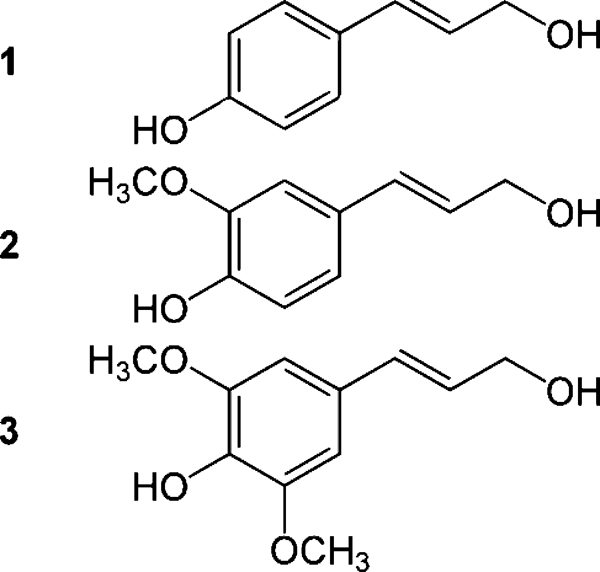
Three common monolignols: 1: paracoumaryl alcohol; 2: coniferyl alcohol; 3 sinapyl alcohol
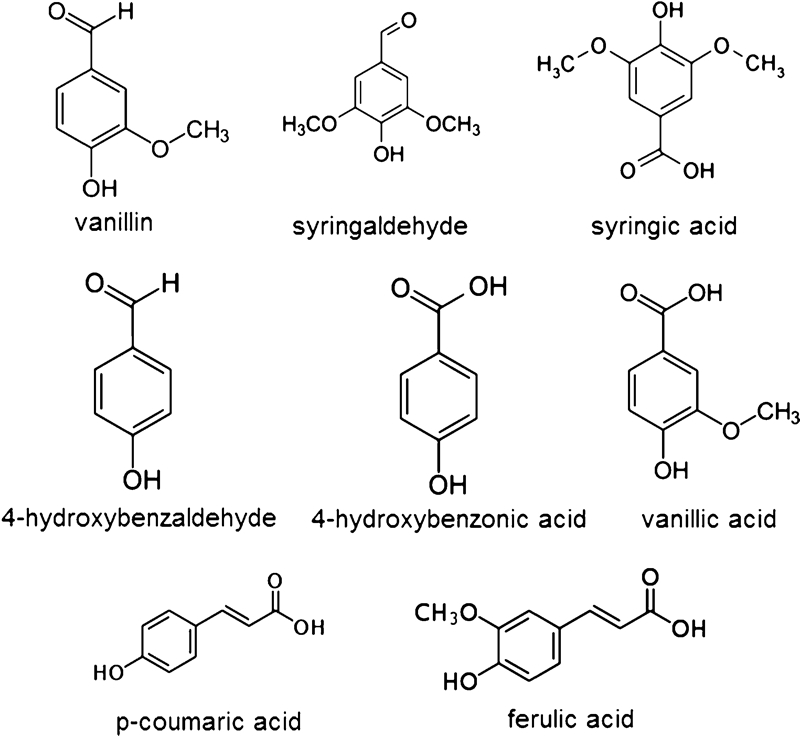
Monomers of lignin resulted from degradation of soda lignin
The corrosion of metals in aqueous solutions can be inhibited by various types of substances such as organic compounds or inorganic base materials. Therefore, the predominate mechanism of an inhibitor in corrosive media may vary with different factors such as inhibitor concentration, the pH of corrosive media, presence of other species in solution, temperature, type of metal and the extent of reaction to form secondary inhibitors. Once the inhibiting substances have adsorbed on the metal surface, they can affect the corrosion reaction in different ways:
introducing a physical barrier to the ions diffusion or molecules to/from the metal surface
blocking the anodic and/or cathodic reaction sites directly
hindering the reaction of corrosion intermediates
increasing electrical resistance between metal and corrosive media
changing the makeup of the electrical double layer on the metallic/solution interface
The design of experiment (DOE) methodology is a powerful technique used for exploring new processes and optimisation for improved performance.10 Design of experiment is a mathematical tool used to define the importance of specific processes and optimise system performance while maximising properties. It can be used to determine whose factors or interaction effects are significant in contributing to the effect being measured.11 Design of experiment methods produce a lower number of experiments rather than traditional methods and decrease the cost and time for running the experiments.
The good inhibition efficiency of soda and kraft lignin has been reported12 in near neutral solution to be due to the monomers and functional groups present in lignin. This study investigates individually the significant monomers of lignin with different functional groups to find out their corrosion mechanism and the significant effect on corrosion.
Experimental
Three monomers of lignin namely as CA, FA and HB have been selected from eight identified monomers (Fig. 2)4 based on their solubility in water and content in lignin. All reagents are of analytical grades. First, the corrosion measurement was conducted for different individual concentrations of monomers. This was followed by a DOE method with full factorial analysis. All electrochemical experiments were executed and kept at 25°C with initial pH adjusted to neutrality (pH 7) and the electrolyte solution stagnant in air. Mild steel was used throughout the experiments with the chemical composition of 0·2C–0·047S–0·06Si–0·039P–99·65Fe (wt-%). The rectangular mild steel coupons (size 2·5×2·5×0·25 cm) were first abraded with emery paper of different grades, 200 and 400, degreased with ethanol, washed with distilled water and dried under a flow of air. The fresh and new steel samples were prepared before running each trial.
Comparison of inhibitory action of monomers of lignin
The solutions were prepared at four different levels of concentration (100, 200, 400 and 800 ppm) for each monomer at pH 7 in 3·5% w/v NaCl. The best pH value for the best solubility of monomers in water was selected at pH 7. Potentiodynamic measurements were carried out over a potential range from −800 to −500 mV with respect to the open circuit potential E ocp with a scan rate of 1 mV s−1. Various corrosion kinetic parameters were calculated and tabulated as described previously. Corrosion current density was measured by the intersection of the extrapolated Tafel lines to the E corr of the mild steel electrode. Inhibition efficiency can be calculated from the following equation13,14
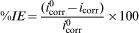
 and i corr are uninhibited and inhibited corrosion current densities respectively.
Linear polarisation resistance (LPR) method was employed to further confirm the protection efficiency of the inhibitors. Linear polarisation curves for mild steel were plotted for the absence and presence of the respective monomers in 3·5%NaCl solution and pH 7 and a sweep range from −20 to +20 mV(SCE) with respect of open circuit potential and the scanning rate of 1 mV s−1. Polarisation resistance R p was measured from the slope of E (mV) versus i (A cm−2) curve in the vicinity of corrosion potential.15 Inhibition efficiency %IE can be calculated with the achieved polarisation resistance R p inhibition by equation (2)16,17
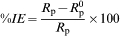
 are polarisation resistance with and without inhibitors respectively.
Corrosion study of selected monomers via DOE method
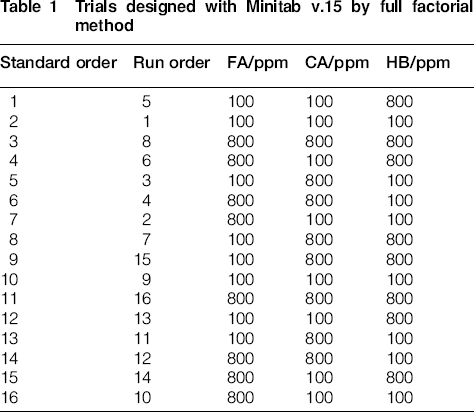
Design of experiment method was employed to distinct the main and interaction effects of the monomers in the presence of other monomers on the inhibition of corrosion of mild steel in 3·5%NaCl solution. In the section on ‘Comparison of inhibitory action of monomers of lignin’, each experiment just contains different levels of concentration of each monomer in the absence of other monomers to study the effect of each monomer on corrosion processes. With DOE method, both main and interaction effects of monomers were studied in presence of other monomers. A two level full factorial (2k experiments where k is the number of factors) method of DOE was employed to design and prepare solution at two levels of monomer concentration (100 and 800 ppm) using MINITAB software. All solutions were prepared with specific concentrations of each monomer (Table 1) in 3·5% w/v NaCl on mild steel at room temperature (25°C) and pH 7. The conventional three electrode electrochemical tests (potentiodynamic polarisation and LPR) were carried out as described in the section on ‘Comparison of inhibitory action of monomers of lignin’ to obtain the corrosion parameters. All trials were measured based on run order sequence to decrease the probable errors and were repeated twice for reproducibility of results. Similarly, two blank samples in the absence of all monomers were treated as reference. Mean value of corrosion parameters of blank samples were calculated and utilised for further calculations. Various corrosion kinetic parameters such as inhibition efficiencies (equations (1) and (2)), polarisation resistance were calculated and inserted into the software for further statistical analysis. The final achievements are shown as Pareto or interaction diagrams or counter plots of each response against paired combination factors.
Trials designed with Minitab v.15 by full factorial method
Results and discussion
Comparison of inhibitory action of monomers of lignin
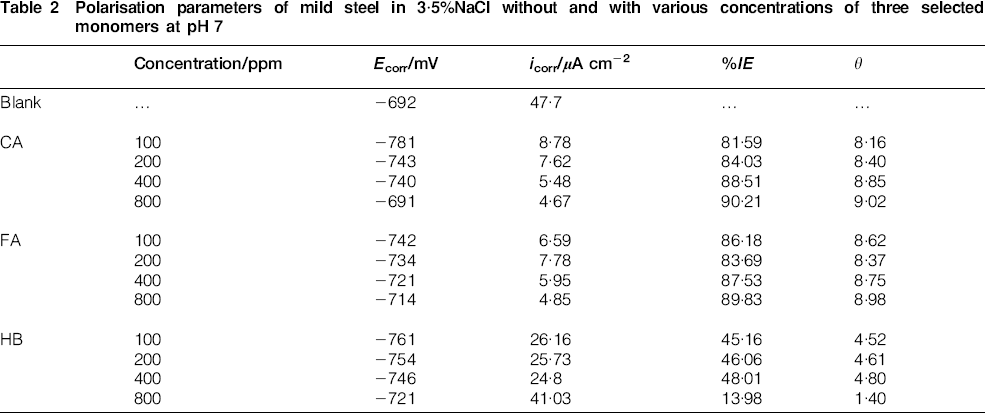
Lignins, consisting of polyphenolic monomers (Fig. 1), are expected to adsorb onto the metal due to the presence of the oxygen electron donating groups via the different adsorption modes described. Different individual monomers induced varying inhibition action. Polarisation curves for mild steel in 3·5%NaCl at various concentrations of CA, FA and HB are presented in Fig. 3. Values of corrosion current densities i corr, corrosion potential E corr and inhibition efficiency %IE as functions of CA, FA and HB concentrations were calculated from the polarisation curves and presented in Table 2. It reveals that the corrosion current density decreased prominently for CA and FA and inhibition efficiency increased with increasing inhibitors concentration, whereas for HB, the current density has not changed effectively. Presence of inhibitors initially shifted the E corr to the cathodic direction, but E corr was shifted to anodic direction when inhibitor concentrations were increased indicating the significant effect on the anodic reaction. Anodic Tafel slopes changed slightly, but the changes in cathodic Tafel slopes are larger, hence, showing mixed type inhibition in 3·5%NaCl. This means that molecules are adsorbed on both sites, but under predominant cathodic control resulting in the inhibition and cathodic oxygen reduction reaction. In addition, if the displacement in E corr is > 85 mV, only then the inhibitor can be seen as a cathodic or anodic type inhibitor.18 As observed from the results, displacement of E corr is <85 mV, the inhibitor is seen as a mixed type. It can be assumed that the modifications of the corrosion reaction of these inhibitors are due to the formation of a protective film on the electrode surface rather than a simple adsorption on the active sites; this would result in a reduction of the current densities without changing the anodic slope. The adsorbed film seems to inhibit effectively the metal dissolution reaction at the corrosion potential effectively as well as in its vicinity.19 Polarisation curves of CA and FA respectively (Fig. 3a and b) are shifted towards lower current density values compared with that of the blank solution, but the current densities were not changed remarkably for HB (Fig. 3c). The obtained results showed that the reduction of the corrosion current densities by CA and FA can be attributed to the monomers structure, functional groups and their electron donating capability. In contrast, HB produced relatively low inhibition efficiency due to the absence of carboxyl groups in its monomer structure. It has been reported that the effectiveness of lignin and its modifications as inhibitors is due to increase in number of OH and COOH groups in the macromolecule or monomer. Consequently, they showed better inhibition efficiency (%IE between ranges of 60-80), but not as well as soda and kraft lignin.12
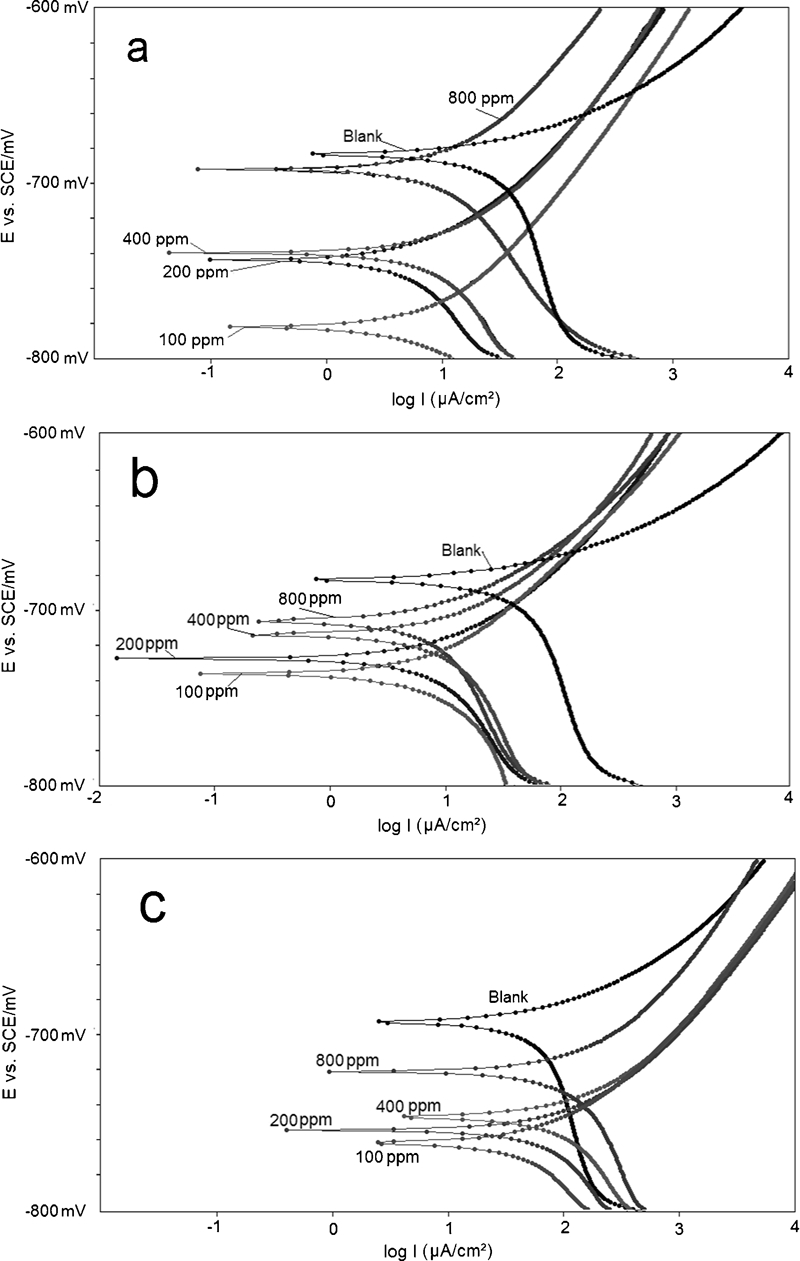
Polarisation curves of mild steel in 3·5%NaCl at various concentrations of a CA, b FA and c HB
Polarisation parameters of mild steel in 3·5%NaCl without and with various concentrations of three selected monomers at pH 7
The electron transfer can be expected with inhibitors having relatively loosely bound electrons.20 Hydroxide ions are produced as a result of the cathodic reaction

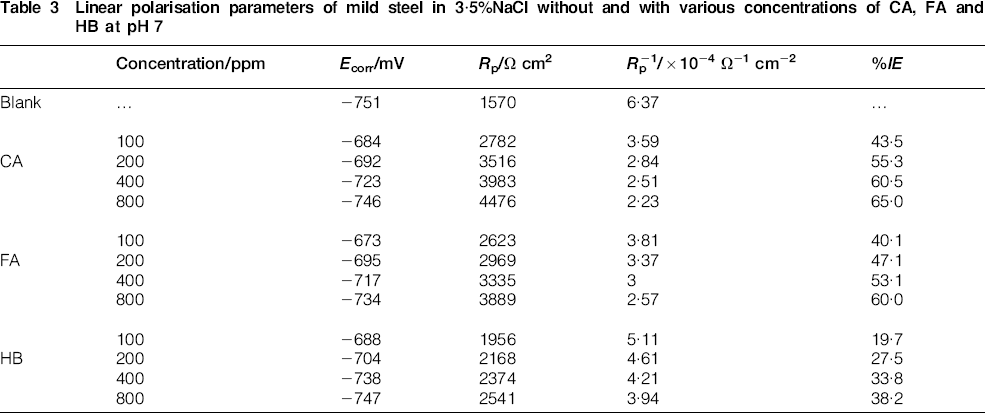
The polarisation resistance R p curves of mild steel in 3·5%NaCl for blank and electrolyte solutions containing various levels of concentrations of the three selected monomers were tabulated in Table 3. Linear polarisation resistance analysis was used to compare the polarisation resistance values of individual monomer in contrast with DOE experiments, which contain different levels of all monomers. Increase in the R p values suggests that the inhibition efficiency increased with the increase in the inhibitor concentration. The R p could have increased by the formation of a resistant film resulted from the adsorption of the inhibitor onto the metal surface. Inhibition efficiencies %IE were calculated from R p values obtained at different inhibitor concentrations, using equation (2).22,23 Polarisation resistance values in the presence of CA and FA proved the adsorption of inhibitors onto the metallic surface and the formation of a protective film that increased the electrical resistance.24 It might be in consequence of the weak ionisation of the organic acid in water, displacement of the ionisable protons (H+) with metal ions when the metallic organic compounds were formed on the surface, so the inhibitor became attached to the metal surface. In the contrast, HB did not behave like CA and FA due to the different functional groups present and thus produced low polarisation resistance values. Inhibition efficiency was calculated by using both potentiodynamic polarisation and LPR methods which showed the same trend of %IE with increasing inhibitor concentrations that confirms relatively good agreement between the two methods. The two methods have shown relatively good inhibition action for CA and FA but not HB in 3·5%NaCl solution at pH 7 on mild steel samples.
Linear polarisation parameters of mild steel in 3·5%NaCl without and with various concentrations of CA, FA and HB at pH 7
Corrosion study of selected monomers via DOE method
Lignin constitutes eight monomers as described before and these monomers have different functional groups which perform different inhibition degrees in corrosive media. Statistical methods such as full factorial or mixture design were widely utilised in corrosion studies.25,26 Lignin macromolecules consist of eight monomers with varied effects on inhibitory action were used in this study. In this study, the main and interaction effects on corrosion values were considered at different concentrations of three monomers in the presence of all inhibitive substances in corrosive media. The specific effects of individual monomer in absence of other monomer have been studied in the final part. The interactions between monomers occur when they are present simultaneously in solution, so their considerations are extremely complex and very difficult to analyse. These interactions generate either a synergistic or antagonistic effect on a particular response in a certain situation. All variable combinations with their responses (including kinetic corrosion values) were calculated from electrochemical studies and were utilised in this study. This study is focused on some corrosion parameters such as inhibition efficiency and polarisation resistance in order to reduce the number of responses and results. The objective of this analysis is to calculate the main effects and interactions and to determine which inhibitor is more significant on the response with the appropriate errors. When duplicate experiments are run, the analysis of variance (ANOVA) can be determined for the entire set of data and the standard error may be found. Table 4 shows the values of ANOVA for %IE calculated from potentiodynamic curves. The ANOVA table gives the sums of the squares (SS), the degrees of freedom (DF), the mean squares (MS), the F ratio (F), and the probability values P for each effect as well as the error. The effects with extremely low probability values are the relevant effects and these effects lie outside of the experimental error.
Analysis of variance values for %IE calculated from potentiodynamic results of full factorial design of three monomers concentration in 3·5%NaCl on mild steel as inhibitor (coded units)
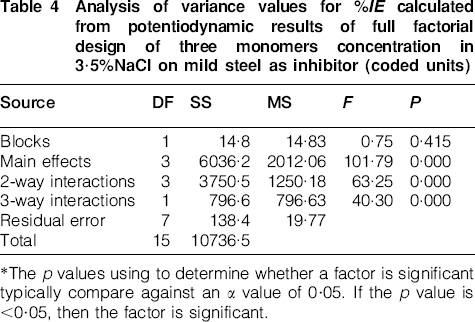
*The p values using to determine whether a factor is significant typically compare against an α value of 0·05. If the p value is <0·05, then the factor is significant.
The main effect plots exhibit intensity effect of each variable on a favourite response. Figure 4 displays the relation of monomer and its concentration on %IE and R p respectively has been calculated from potentiodynamic and LPR methods based on current densities and polarisation resistance of inhibited and blank samples. Each point on the plot represents the mean value of %IE at that level of the factor. The factor which has the strongest influence on %IE shows the greatest slope. Therefore, the most effective monomer on corrosion inhibition is CA. Similarly, FA exhibits good protection from corrosion, as has been expected. It is mentioned in the last section that CA and FA can inhibit the mild steel corroding in 3·5%NaCl solutions with acceptable efficiencies, but HB could not hinder corrosion effectively. Polarisation resistance was increased considerably by FA and CA in contrast to HB (Fig. 4b) due to carboxyl functional group which exists in CA and FA structure. It can be found by the capability of the first two monomers in forming of protective film produced by reaction of carboxyl groups with iron ions on metal surface and increase the electrical resistance of working electrode. The main effects proved the inhibition results of monomers which have been carried out in last part of this study.
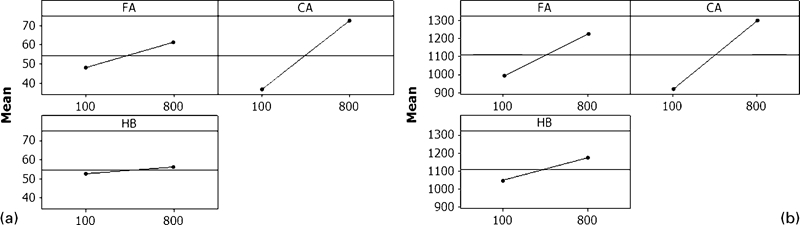
Main effect plot of three variables on a %IE and b R p
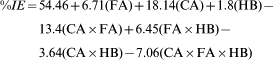
The linear regression equation may be used to determine which of the factors has the greatest effect on the responses and to detect any significant interaction between the factors. A multiple linear regression model in the following form was derived from the experimental results27

In this study, the linear regression model introduced on each of the variables in the experiment that may be expressed in the following form

The graphical observation of more significant effects can be seen in Pareto chart in Fig. 5. The purpose of the Pareto chart is to highlight the most effective factors or to compare the relative range and the statistical significance of both main and interaction effects.25 The sequence of effective variables on %IE of three selected monomers on inhibitory action is already similarly achieved from different surveys. The factor which has the strongest influence on corrosion efficiency is CA, followed by CA×FA, CA×FA×BH and FA stood in later steps as most significant effects. It was seen that correlation between three monomers provides high inhibition so it can be distributed for lignin and its high inhibition effect on mild steel. Some dissimilarity of the details in Pareto charts can be attributed to the instrumental errors, difference in calculation or curves fitting. Consequently, the Pareto plot shows the significant values of main and interaction effects on corrosion efficiency and some of substances performed most effective like CA, but most of the significant effects combined two or three factors in this model. In a word, the synergistic effect monomers increase corrosion inhibition efficiencies on mild steel.
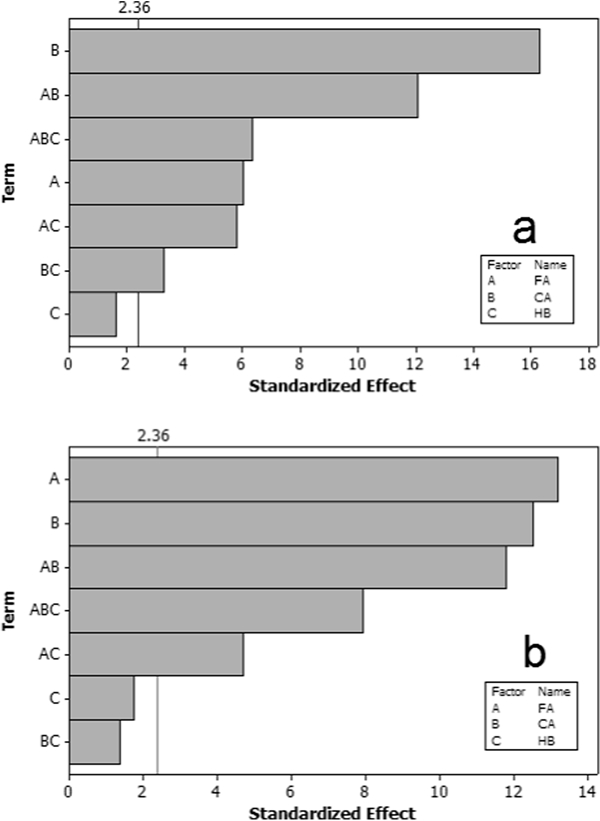
Pareto chart of effective parameters on %IE resulted from a potentiodynamic and b LPR measurements of selected lignin monomers on mild steel at 3·5%NaCl
The statistically significant interactions between variables have been conducted in an interaction plot for inhibition efficiencies of three selected monomers on mild steel corrosion in 3·5%NaCl solutions as shown in Fig. 6. This figure summarises the interaction between the minimum and maximum values for each parameter. The vertical axis gives the corrosion efficiency (%IE), while the horizontal axis gives the variation of test parameters according to factorial design. Three variables, CA, FA and HB concentrations in electrolyte solutions generate a total of six interaction plots, each of them shows a distinct interaction, which can be analysed by the slope of the curve and the distance between the maximum and minimum values. It shows the presence of monomers in electrolyte solution that may interact with each other which are positive to increase the efficiency of inhibition or not. Interaction between two second term factors occurs when the difference in the mean response (%IE) between the levels of one variable is significantly different at each level of the other variable. Therefore, if there is any interaction, the lines connecting to the points at the same level will not be parallel and the parallel lines indicate that the interaction between parameters is not significant. From these interaction plots, it can be observed that the largest interaction occurred between CA and FA, indicated by the largest gradient. Two plots in Fig. 6 that pertain to the CA×FA interaction show that the effect of CA is stronger for a lower amount of FA and that effect of FA is greater for lower concentration of CA. It may be attributed to the competitive action of two inhibitors to adsorb onto the metal surface. For example, at a lower amount of FA, CA can absorb onto more anodic site and hence give more inhibition efficiency. Another way of representing the interaction shows that the %IE is the least for corroding with lower concentrations of both inhibitors. The CA×HB interaction is the second largest. As shown in Fig. 6 the CA effect is greater than HB otherwise the effect of HB is not more pronounced for the CA on inhibition efficiency. The %IE for CA is well above average for either HB concentrations; thus it is reasonable to conclude that increasing HB cannot change the response effectively due to high affinity of CA to bonding with metal cations. The FA×HB interaction is less significant than the other two. The influence of FA is slightly greater at the higher concentration of HB and the effect of HB is negative for a lower amount of FA. Different inhibitory actions and their interactions between monomers may be resulted to uncertain value of %IE for organic macromolecular of lignin in corrosive media.
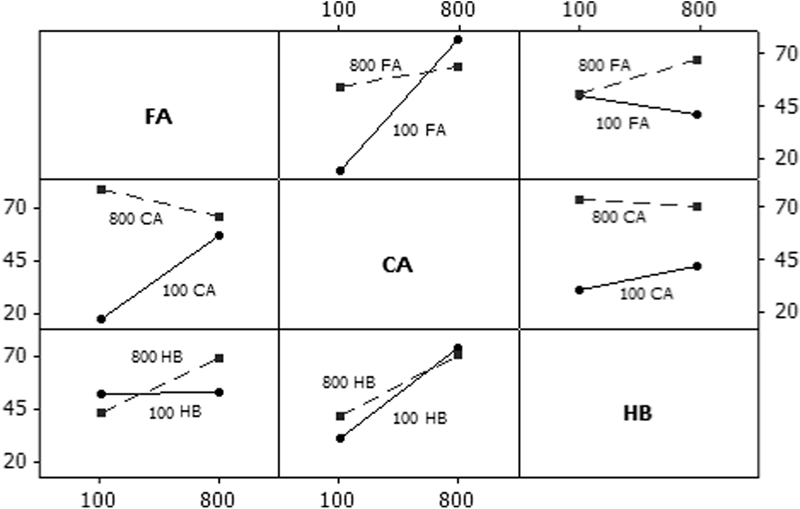
Interaction plots for CA−FA, CA−HB and FA−HB interactions: data points are mean %IE values on mild steel at 3·5%NaCl
Fig. 7 shows contour plots of the interaction between CA×FA, FA×HB and CA×HB, the resultant corrosion efficiency levels arising from the variation of these parameters. Figure 7a shows CA against FA was observed highest inhibition efficiency but the increase in FA concentration causes no comparable changes at the specific value of CA. The higher protection occurred throughout CA magnitude compared with the increase in FA as shown by the variation in contour. As it was expected, highest %IE will be executed at high levels of both FA and HB, whereas good protection was produced at high concentration of CA in any range of HB. The trend of increasing in polarisation resistances are the same for all interaction plots, with the highest values occurred in the region of the highest levels of pair variables (Fig. 7b). It has been discussed earlier that the increase in FA increases the R p of the system as the corrosion rates decrease with increase in CA and/or HB. The highest and varied gradient to increase in polarisation resistance occurred at CA×HB composition due to synergistic action between them to form protective film or absorption onto mild steel surface at 3·5%NaCl solution. On the other hand, the increase in R p hinders the anodic or cathodic reaction rates of the corrosion process. Statistical analysis can be implemented for optimisation of variables at the favourite magnitudes of responses. For example, the organic polymers such as lignin or tannin containing different monomers could be studied and modified based on properties of each its components.
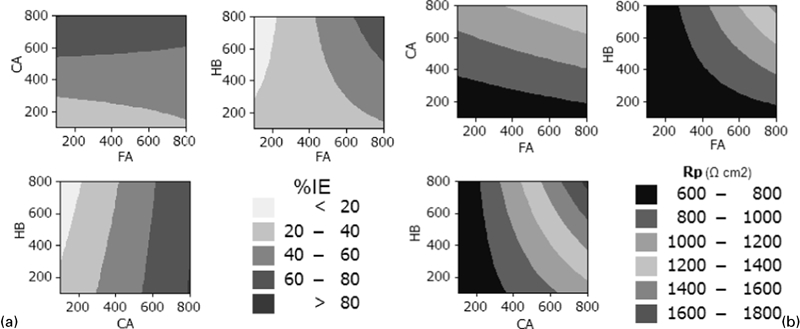
Contour plots of interactions between CA, FA and HB on a %IE and b R p in Ω cm2
Figure 8 shows SEM images of the rust surfaces of mild steel in near neutral solution of sodium chloride without inhibitor. Figure 8a shows the homogenous rust on the mild steel samples at 1000× magnification. The corroded surfaces with homogeneous distribution of rust show better converter behaviour due to the conversion layer that follows the distribution of the rust layer. At higher resolutions, Fig. 8b exhibits needle-like flakes and flower-like structures respectively. Oxygen content in this case measured via EDX was ∼20·72 wt-%. In agreement with the X-ray diffraction, the surface of prerusted samples is covered by small crystalline aggregates characteristic of lepidocrocite and goethite: flakes of lepidocrocite randomly oriented.28 It was observed that in the scraping process, it was easy to remove the orange coloured layer at the top of the rusted coupons and a relative more adherent layer attached to the steel surface which had a black colour. Figure 9 shows the SEM morphologies of mild steel samples which are immersed in corrosive solution in presence of highest level of three types of inhibitors (selected lignin monomers) in pH 7 and ×6000 magnification. In Fig. 9a the integrated thin film of inhibitor on the surface could be seen as barrier against further corroding and provides highest inhibition whereas in Fig. 9b the discrete protective film has been covered steel surface especially on lepidocrocite phase as anodic site of corrosion. Lower adsorption of HB on steel samples provides the lower inhibition and some rust phases such as lepidocrocite can be seen in background (Fig. 9c).
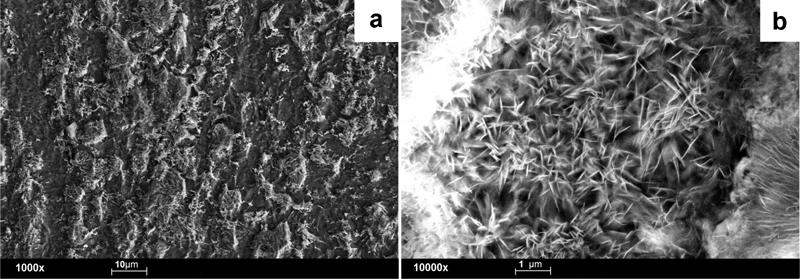
Scanning electron microscopy morphology of steel samples without inhibitor at a ×1000 and b ×10 000
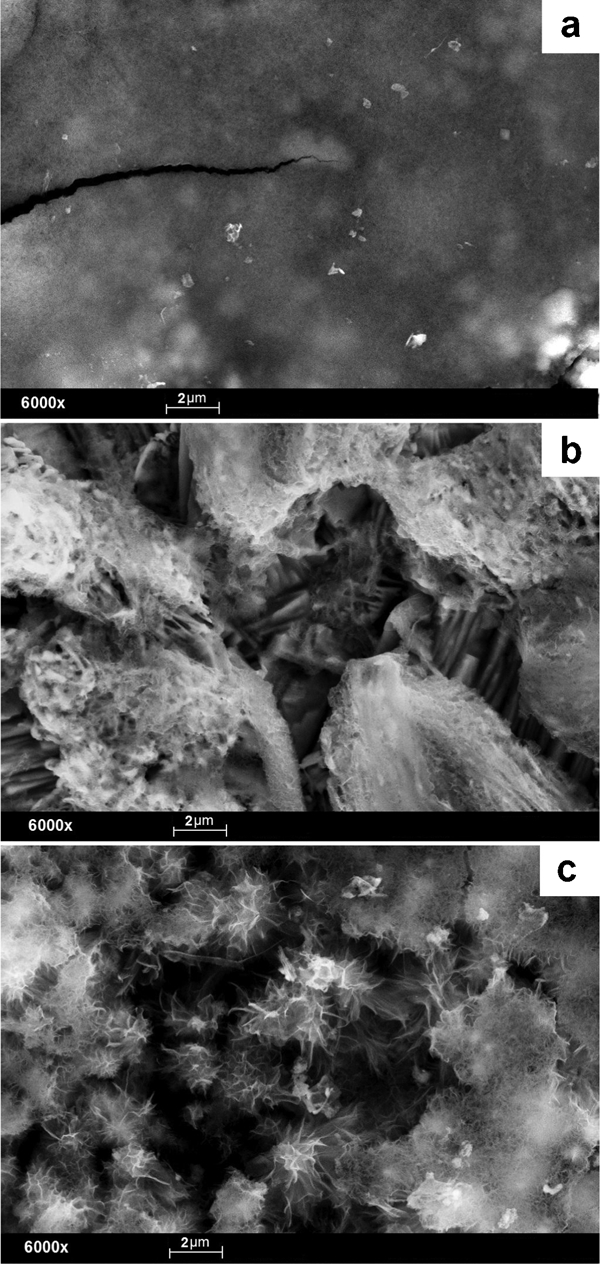
Scanning electron microscopy morphology of steel samples with inhibitor at ×6000
Conclusions
All electrochemical studies have shown that the three selected monomers that constitute lignin are potential inhibitors for steel in near neutral media with different levels of inhibition related to their structures. Inhibition efficiencies decrease in order of CA>FA>HB whereas they acted as mixed type inhibitors on the steel corrosion and its inhibitive performance depends on their functional groups inside them.
Adsorption of monomers onto the metal surface can increase the electrical resistance of steel surface and increase the polarisation resistance. It might be due to weak ionisation of organic acid in water, and reaction of ionisable protons with iron ions when metallic organic compound were formed. The HB is less adsorbed than CA and FA; it might be related to the different functional groups and their ability of electron donation.
The full factorial method used to analyse the inhibition effect of the three selected monomers in the presence of all of them in corrosive conditions. Linear regression model with 0·987 resolution introduced the three interaction effects.
The CA has shown the best inhibition efficiency and polarisation resistance whereas HB has not good inhibition effect on mild steel in 3·5%NaCl. It has been found that interaction effect between CA and FA has the greatest effect on %IE. The synergistic interaction of all three monomers also has the major effect on corrosion rate. It can be proven that functional groups of lignin improve their inhibitory action in presence of each other. Contour plots predicted from statistical methods exhibit values of inhibition efficiency and polarisation resistance resulted from each couple of monomers. The lowest values of R p were achieved at lower concentration of FA and HB.
The SEM images approve the adsorption of inhibitors on the mild steel in near neutral solution in pH 7 with different levels of protection and adsorption.
Footnotes
Acknowledgements
The authors are indebted to Universiti Sains Malaysia for financial support of this project through Research University grant scheme (grant no. 1001/PKIMIA/854002).