







Abstract
Titania–tungsten trioxide (W-TiO2) films were in situ fabricated by the electrochemical anodising of titanium in a non-aqueous electrolyte solution containing sodium tungstate as the tungsten source. Glycerol was used as a green solvent. The morphology, structure and composition of synthesised films were characterised by SEM, X-ray diffraction, energy dispersive X-ray spectroscopy and UV–visible respectively. The results indicated that sodium tungstate concentration in anodising solution significantly influenced the morphology of the surface, structure and photocatalytic activity of these films. So to access an optimum morphology, a proper concentration of sodium tungstate is required. Photocatalytic activity of samples was evaluated by testing the solar water splitting. The W1-TiO2 sample exhibited better photocatalytic activity than the bare TiO2 film and other W-TiO2 samples.
Introduction
An effective way to solve the increasing global energy crisis and pollution problems is to develop a renewable and environmentally friendly energy. 1 Hydrogen has emerged as a potential energy carrier in various low greenhouse gas energy applications due to its harmless and renewability to the environment. Fossil fuels and biomasses are some of the essential sources of hydrogen; however, their utilisation for energy production is not only capital intensive but also involves the emission of carbon dioxide that contributes to the adversities of the greenhouse effect and global warming.2,3 Currently, the majority of hydrogen demands are sourced from steam reforming of natural gas; however, this process does not mitigate dependence on fossil fuels and generates a large amount of carbon dioxide. Alternatively, the generation of hydrogen from water is a more sustainable approach that provides a means through which renewable sources such as solar energy can be harnessed effectively, and most importantly, this process is carbon neutral, thus preventing environmental pollution. Harvesting of solar energy is still a challenging venture, and the constraints associated to this process necessitate improved methods and advanced technologies for production. 3 The ability of semiconductor materials to utilise photons of light for the generation of electrons and holes has attracted a great deal of attention and has found potential application in different fields.4–13 Many scientists believe that the use of photocatalytic water splitting system is one of the most promising technologies for producing hydrogen gas to secure a clean and sustainable supply of energy. Photocatalysis is defined as the chemical reaction induced by photoirradiation in the presence of a catalyst or, more specifically, a photocatalyst. Such material will facilitate chemical reactions without being consumed or transformed. The basic working principle of photocatalysis is simple. First, irradiation of light with energy greater than the band gap of photocatalyst, separating the vacant conduction band (CB) and filled valence band (VB), excites an electron in VB into CB to result in the formation of an electron–hole pair. These electron and hole reduce and oxidise respectively chemical species on the surface of photocatalyst, unless they recombine to give no net chemical reaction. The original structure of photocatalyst remains unchanged if an equal number of electron and hole is consumed for chemical reaction and/or recombination. 14 In a photocatalytic water splitting reaction, photocatalyst plays a crucial role. Until now, TiO2 has been a widely used photocatalyst for photocatalytic water splitting because it is stable, non-corrosive, environmentally friendly, abundant and cost effective. More importantly, its energy levels are appropriate to initiate the water splitting reaction. 15 In other words, the CB of TiO2 is more negative than the reduction energy level of water (EH+/H2 = 0 V), while the VB is more positive than the oxidation energy level of water (EO2/H2O = +1.23 V). Despite the many advantages of TiO2, its photocatalytic water splitting efficiency under solar energy is still quite low, mainly due the wide band gap of TiO2 limits its application within the ultraviolet region. In order to increase the utilisation efficiency of TiO2 on solar energy, researchers do much work from decreasing the band gap of TiO2 and suppressing the recombination of electrons and holes. 16 At present, the modification methods mainly include surface sensitisation, noble metal deposition, metal ion doping and non-metal ion doping and so on.17–21 Tungsten trioxide doped TiO2 has generated considerable interests as a photocatalyst showing optical response in the visible region. Different methods were used to prepare W doped TiO2, but most of these methods were multistage, time consuming, expensive with weak reproducibility and, in some cases, dangerous for the environment. Therefore, a simple, facile and inexpensive method of synthesising W doped TiO2 is necessary.
Herein, a facile, convenient and low cost method was used to synthesise W-TiO2 films by anodising of titanium substrate in a non-aqueous bath containing various amounts of sodium tungstate as the tungsten source. We used glycerol as a green solvent in the present study. W-TiO2 films with different amounts of tungsten were obtained by controlling the concentration of sodium tungstate in anodising electrolyte. The influence of tungsten trioxide concentration on the hydrogen evolution of fabricated films has been systematically investigated. The morphology and structure were characterised by scanning electron microscopy (SEM), energy dispersive X-ray spectroscopy (EDS) and X-ray diffraction (XRD). Optical properties were investigated by UV–visible (vis) diffuse reflectance spectra.
Experimental
All the used chemicals were of analytical grade without further purifying before experiment and solutions were prepared with distilled water.
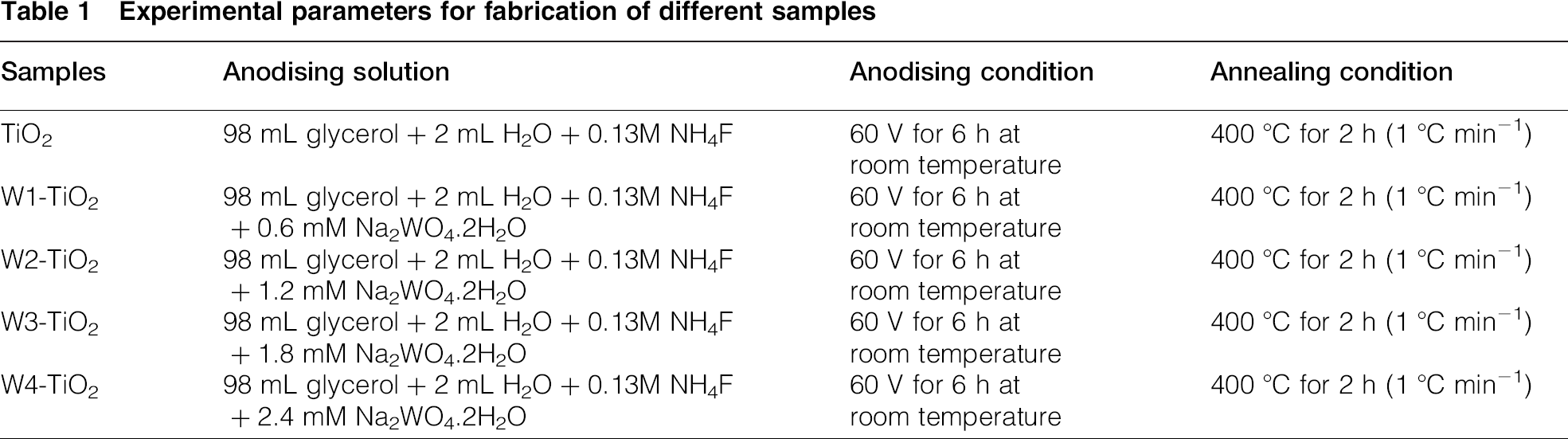
W-TiO2 films were synthesised by anodising of titanium in a mixture electrolyte, which was mixing glycerol and NH4F, followed by the dissolution different concentrations of sodium tungstate. Before anodising, a piece of titanium sheet (99.99% purity, 1 mm thick) was cut into desired dimension, and the titanium electrodes were first mechanically polished with different emery type abrasive papers (with the following grades: 80, 240, 800, 1200 and 2400), rinsed in a bath of distilled water and then chemically etched by immersing in a mixture of HF and HNO3 acids for 30 s. The ratio of components HF/HNO3/H2O in the mixture was 1:4:5 in volume. The last step of pretreatment was rinsing with distilled water. The anodising experiments were carried out using a two-electrode system with titanium foil as anode and platinum foil as cathode respectively. A controlled DC power source (ADAK, PS405) supplied the required constant voltage. Anodising was carried out in mentioned solutions under a constant voltage of 60 V for 6 h at room temperature. After anodising at constant potential, the as formed samples were annealed in the air at 400°C for 2 h (1°C min− 1) to obtain crystalline film. In the present work, we compared the photocatalytic performance of bare TiO2 and W-TiO2 films with varied weight loading percentage of 0.3, 0.5, 0.8 and 1.0% of tungsten referred to as W1-TiO2, W2-TiO2, W3-TiO2 and W4-TiO2 respectively. Table 1 summarises the experimental conditions for five different samples. A schematic of the pretreatment method of titanium and process of producing W-TiO2 films on titanium is shown in Fig. 1.
Experimental parameters for fabrication of different samples
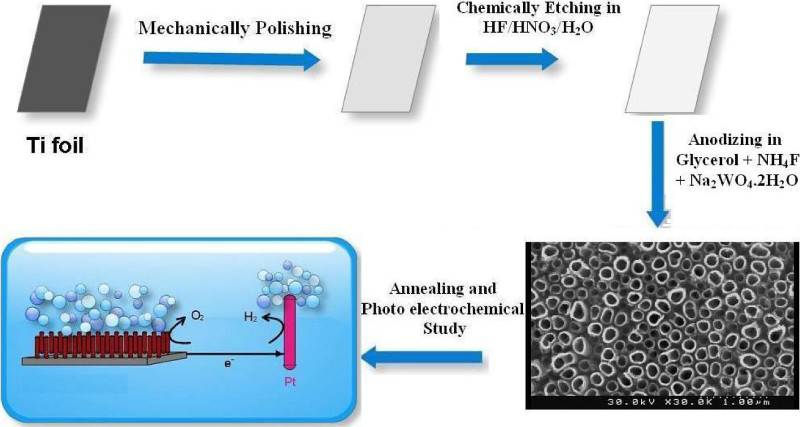
Schematic presentation of pretreatment method of titanium sheets and process of producing W-TiO2 films on titanium foils
The surface morphology of all samples was characterised by field emission scanning electron microscopy (Hitachi S-4160, Japan), and the elemental composition was estimated by energy dispersive X-ray spectroscopy (EDX). The crystalline phases were identified by XRD with Equinox 3000 diffractometer (Inel, France). Diffraction patterns were recorded in the 2θ range from 20 to 80o at room temperature. The optical absorption of the samples was determined using a diffuse reflectance UV–vis spectrophotometer (JASCO V-570).
Photocatalytic water splitting to generate hydrogen was carried out in a three-branch quartz cell. A 200 W xenon lamp was used as the light source. The luminous intensity of the xenon lamp was 100 mW cm− 2. The bare TiO2 and W-TiO2 samples was fixed in the cell containing 1.0M NaOH (pH 13.6) solution facing the lamp. Hydrogen evolution was measured for 360 min, and H2 gas was collected using the water displacement technique. A Pt coil served as the cathode. The cathode was inserted into a burette where the hydrogen was collected via electrolyte displacement. The volume of hydrogen was measured by directly reading the variation of the electrolyte level in the burette for various times.
Results and discussion
Figure 2 shows top view field emission scanning electron microscopy images of different samples, which clearly shows formation of various films on the surface of titanium. In Fig. 2a and b, different samples displayed nanotube arrays wherein their surface was open. In Fig. 2a, highly ordered and vertically aligned nanotubes were formed on the titanium substrate. The average pore diameter of these nanotubes as calculated from SEM images is 90–100 nm and wall thickness is 20–25 nm. In Fig. 2b, a combined structure of nanotubes and nanohoneycombs was formed. It can be seen that nanoparticles (40–70 nm) are distributed on the surface of the titania nanostructures. The internal diameter of the tubes is around 50–90 nm. In Fig. 2c, a combined structure of nanotubes and nanoporous was formed. It seems on the surface of the nanotubes, a porous structure is emerging. In Fig. 2d and e, no nanostructure formed. Compact films, without porosity, were formed on the surface of titanium. It can be said that when sodium tungstate concentration in anodising solution increased to 1.8 mM, surface is covered with a compact layer and thereafter not formed regular nanostructures, implying that an appropriate concentration of sodium tungstate is important for the structure of nanotube or nanoporous films.
Top view images (SEM) of bare TiO2 and W-TiO2 samples with different magnification (insets: cross-sectional images of corresponding samples) (a bare TiO2; b W1-TiO2; c W2-TiO2; d W3-TiO2; e W4-TiO2)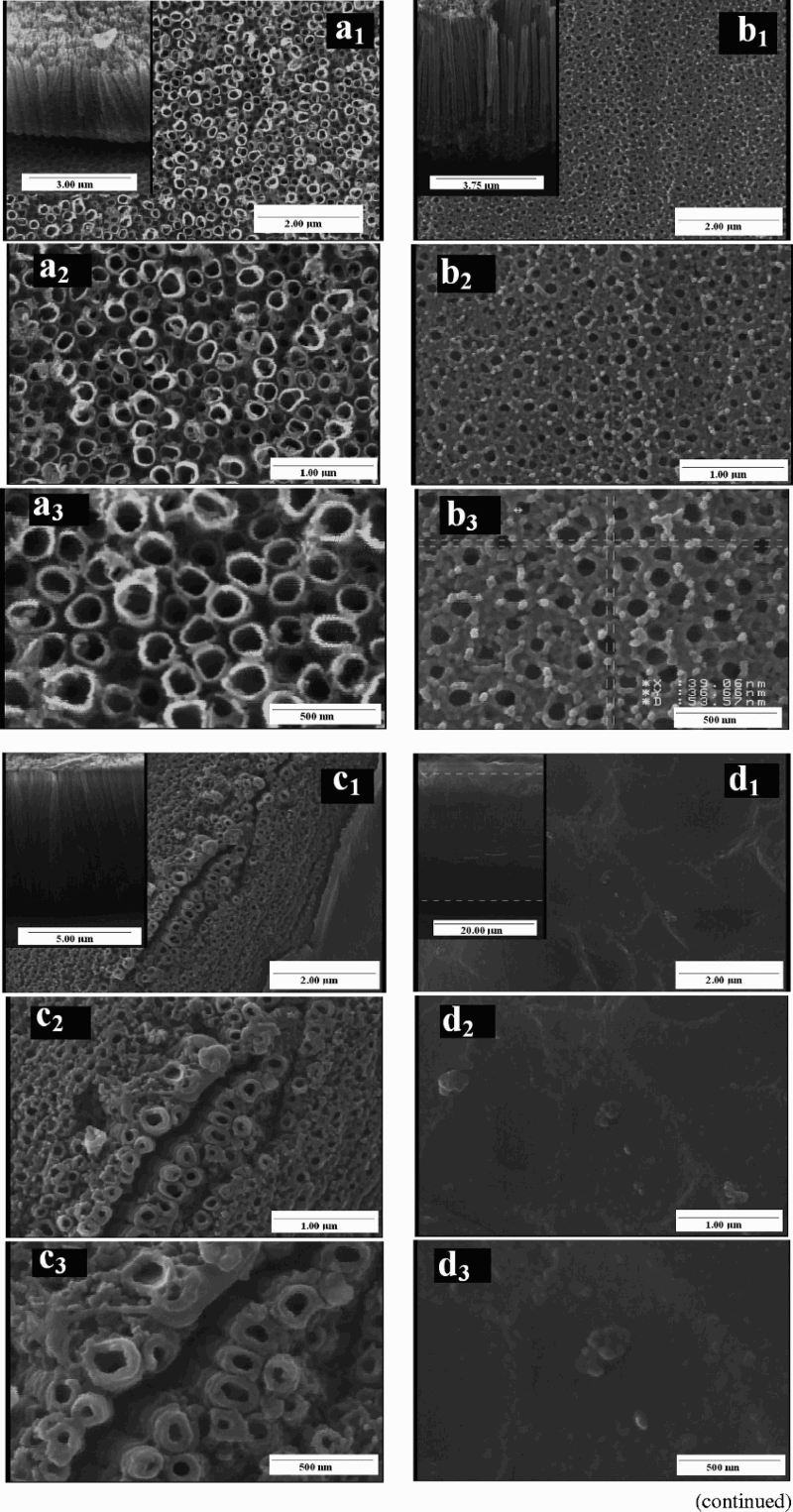
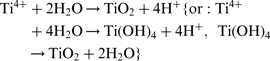
Cross-sectional views of different samples show that with increasing sodium tungstate concentration in anodising solution, the length of the films will increase. In Fig. 2a1, it can be seen that the nanotubes are parallel aligned and are very regular. The tubes are well separated, and their length is in the range of 2–2.5 μm. The regular structure can be seen in Fig. 2b1. Compared to Fig. 2a1, the length of formed structure has increased and is in the range of 3–3.5 μm. In Fig. 2c1, the arrangement of the structure is reduced but their length is increased and is in the range of 5–6 μm. In Fig. 2d and e, that compact films were formed on the surface of titanium; again, the film thickness has increased. To explain this phenomenon, it can be said that the growth of nanotube is accompanied by three stages: the formation of barrier layer of TiO2, oxide growth and dissolution and the balance of growth and chemical dissolution.22,23 The process of chemical dissolution is related to the concentration of fluorine ions (F− ). The formation of TiO2 nanotube films can be expressed using the following equations
(i) Oxidation of the metal tjat releases Ti4+ ions and electrons

(ii) Combination of Ti4+ ions with water
(iii) Fluorine ions attack to the oxide layer

(iv) Coordination reaction between tungsten ions and fluorine ions

The XRD patterns of the bare TiO2 and W1-TiO2 samples are shown in Fig. 3. Diffractions that are attributable to anatase TiO2 are clearly observed in the annealed sample. The Ti peaks were due to the titanium substrate. The XRD pattern of the W1-TiO2 show the diffraction peaks of both WO3 and TiO2, and two diffraction peaks of WO3 are found in this sample. The presence of tungsten on the films was also confirmed through EDX spectrum obtained from W1-TiO2 sample (Fig. 3). It was seen that the films mainly consisted of Ti, O and W. The analysis revealed that the surface presents similar composition with presence of Ti as main energy E = 4.5 kV and 4.9 kV, W at E = 1.7 kV and O at E = 0.5 kV, which confirms the presence of the tungsten in the films. The occurrence of traces of contaminants such as carbon and nitrogen from precursors is also observed. The presence of the C species is favorable to the absorption of carbon from the organic glycerol. 21
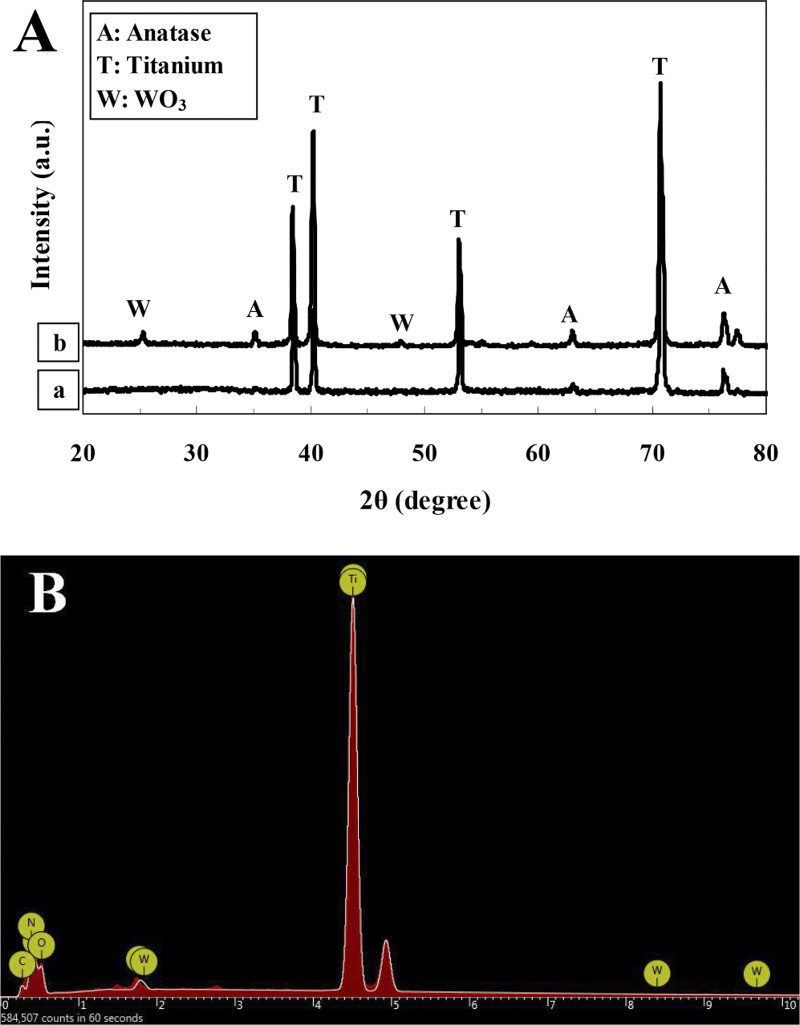
a X-ray diffraction patterns of bare TiO2 and W1-TiO2; b EDX spectrum of W1-TiO2
The optical properties such as band gap energy of samples were studied. Figure 4 shows the optical band gap energy of bare TiO2 nanotubes and W1-TiO2 films annealed at 400°C respectively. The value of band gap of samples was estimated using the following equation 21
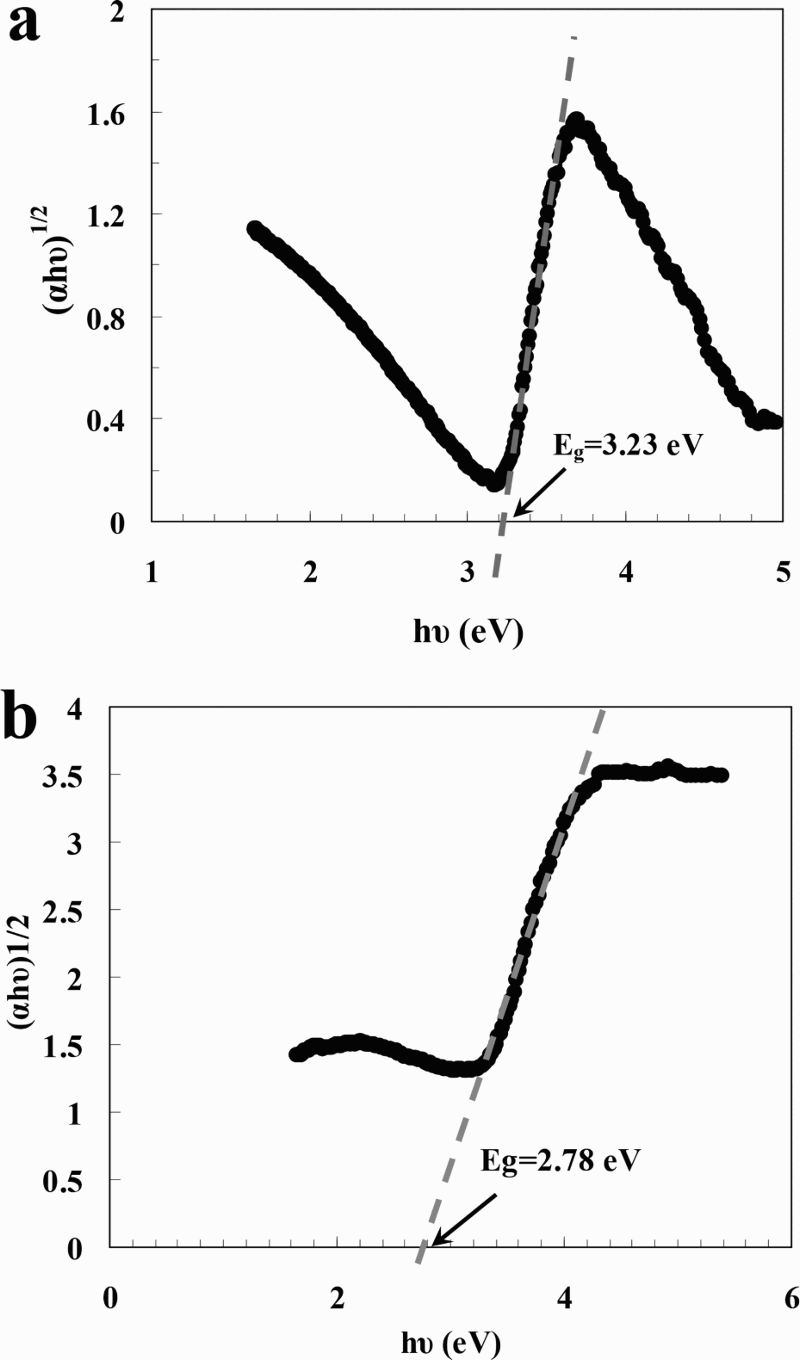
Plots of (αhυ)1/2 versus hυ employed to calculate band gap value of a bare TiO2 sample and b W1-TiO2 sample

The primary purpose of this work is investigating the activity of TiO2 modified with different amounts of tungsten trioxide through water splitting over these samples. Figure 5 shows the amount of hydrogen generated as a function of time using bare TiO2 and W-TiO2 samples under Xe light illumination. Control experiments indicated that no appreciable hydrogen production was detected in the absence of either light irradiation or photocatalyst, suggesting that hydrogen was produced by photocatalytic reactions on samples. In all samples, hydrogen evolves steadily over extended periods of time. It can be found that W1-TiO2 sample performed the highest photocatalytic activity under light irradiation. The total amount of H2 evolved on the W1-TiO2 sample was 49 mL cm− 2 after 6 h, which is ∼1.32 times higher than that on the sample W2-TiO2 (37 mL cm− 2), 4.45 times higher than that on the sample W3-TiO2 (11 mL cm− 2), 5.44 times higher than that on the sample W4-TiO2 (9 mL cm− 2) and 24.5 times higher than that on the bare TiO2 sample (2 mL cm− 2).
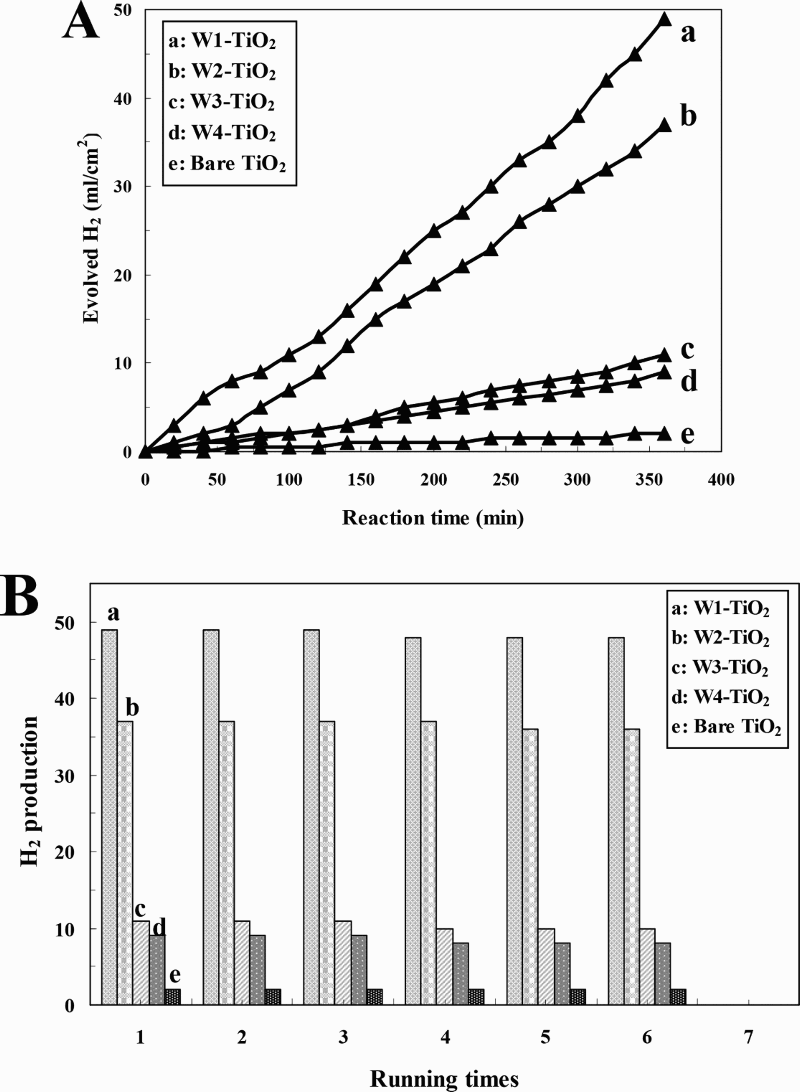
a H2 production by water splitting over different samples under irradiation, and b H2 evolution for different samples as function of running times
The higher photocatalytic activity of W-TiO2 samples can be attributed to the combined effect of several factors: the tungsten trioxide dopant in the TiO2 film, the one dimensional nanostructure and the increased light harvesting ability (capability to absorb visible light and higher light absorption, compared to bare TiO2 sample). According to literature, it can be said that tungsten trioxide dopant can induce more effective visible light harvesting, which is caused by photoexcitation of the extrinsic absorption band of the catalyst. The extrinsic absorption comes from the photoionisation of original or newly formed defects and the excitation of surface states. Furthermore, the extrinsic absorption can create oxygen vacancies to enhance the photocatalyst ability of the W-TiO2 samples. 24 Such absorption requires less energy to activate. Thus, W-TiO2 probably generates more free charge carriers to induce surface chemical reactions than pristine TiO2 under visible light irradiation. Therefore, the photocatalytic activity of W-TiO2 samples is larger than that of undoped TiO2 sample in our study. However, the unique one-dimensional nanostructure of the nanotubes also contributes to its high photocatalytic ability. The one-dimensional morphology allows for electrons move axially along the length of the nanotubes providing direct and faster electron transport to the back to the contact, while photogenerated holes are separated and collected over relatively short distances in an orthogonal direction. Nanotubes are believed to have exceptional electron transport properties and have been considered as alternatives to nanoparticles. It has been reported that nanotubes can reduce intercrystalline contacts between grain boundaries and its stretched grown structure to the specific directionality makes a slightly favorable contribution to the electron transport and the significant improvement of electron lifetime by the degraded charge recombination through experiencing the less frequent trapping/detrapping events.17,24,25 For this reason, photocatalytic activities of nanotubes (W1-TiO2 and W2-TiO2) are greater than those of compact samples (W3-TiO2 and W4-TiO2). In addition, the nanotube architecture has a large internal surface area and can be easily filled with liquid, thus enabling intimate contact with electrolyte. In other words, the surface area of the nanotubes is higher than the nanoporous, and the surface area of nanotubes and nanoporous is higher than that of the compact films. Therefore, we can expect such behaviour in photocatalytic activity of samples.
One important feature of the catalyst to reduce the cost of the process is its ability to be reused. The recyclability of W-TiO2 samples was tested during six runs of photocatalytic reaction under Xe light illumination. Figure 5b shows the hydrogen production of W-TiO2 samples as a function of sequence of reaction time, and the hydrogen production volume has no obvious decay after six continuous running, which indicates that the these samples are a relatively stable photocatalyst and can keep the activity for a period of time.
Conclusions
The major conclusions from the present work are as follows.
Bare TiO2 and W-TiO2 films were successfully synthesised using a facile anodising method. Glycerol was used as a green solvent. Sodium tungstate was used as the tungsten source in anodising process. The sodium tungstate concentration in anodising solution plays an important role in the morphology and thickness of these films. By changing sodium tungstate concentration, nanotubes, nanoporous, nanohoneycombs and compact films are created on the titanium surface. The XRD and EDX analyses showed presence of tungsten on the W-TiO2 films. UV–visible spectroscopy data show that the band gap decrease with increasing sodium tungstate from ∼3.23 eV for bare TiO2 to ∼2.78 eV for W1-TiO2. The photocatalytic testing of these films through solar water splitting revealed that tungsten trioxide dopant in the TiO2 film can significantly improve the H2 production amount of these materials, so the total amount of H2 evolved on the W1-TiO2 sample was ∼24.5 times higher than that on the bare TiO2 sample.