







Abstract
The decay resistance of acetylated rattan was compared to beech and pine wood. Calamus manan grown under rubber tree canopy of different ages (10 and 13 years) was acetylated to different levels by reaction times (0·25–24 h) and was subjected to decay against the white and brown rot fungi, T. versicolor and C. puteana. Protection against decay occurred at 13·4 and 9·0% weight gains (WGs) against T. versicolor and 13·5 and 10·3% WG against C. puteana for 10 and 13 years old rattan respectively.
Introduction
Rattan can be considered as a lignocellulosic material and has become a source of revenue to rural populations in many producer countries. It has been used for many applications ranging from traditional items such as fish traps, crossbow strings and basketry, to modern furniture, handbags and sports equipment. However, rattan is vulnerable to attack by fungi and this may restrict its uses in moist conditions. In industrial practice, one of the reasons for boiling rattan in oil is to sterilise it before utilisation, effectively eliminating fungi and other organisms. In addition, the treatment also enhances cane texture, flexibility and colour quality, and removes waxy materials, resins and gums (Silitonga 1987). The stem of C. manan is usually boiled in oil at temperatures ranging from 60 to 150°C for 10 to 30 min (Mohd Ali and Raja Shaari 2002). This treatment has been shown in laboratory tests to be insufficient to protect the cane from subsequent fungal degradation (Hisham and Uyup 2005). More severe oil treatments have been shown to reduce decay in wood (Sailer et al. 2000), but treatment with acetic anhydride improves both the decay resistance and dimensional stability of wood (Rowell 2006).
The efficacy of acetylation in wood decay protection varies by both wood and fungus species, which is referred to as the protection threshold and it is often expressed as the percentage weight gain (WG) above which no microbial degradation occurs. General comparisons between studies are difficult, due to differences in test protocols, wood species and fungal test strains (Hill 2006a).
There are several factors that contribute to the decay protection mechanism of acetylated wood. Stamm and Baechler (1960) examined the decay resistance of acetylated spruce against the brown rot fungus Gloeophyllum trabeum and they suggested that the protection was due to blocking of OH groups by acetyl, which prevents the enzymatic attack. Peterson and Thomas (1978) conducted decay tests of acetylated loblolly pine, green ash and yellow poplar against G. trabeum and Coriolus ( = Trametes) versicolor. They found that the acetylation gave a high level of carbohydrate protection against white and brown rot fungi, and the unavailability of carbohydrate as an energy source may have effected protection of the lignin component. Hill et al. (2005) linked the cell wall micropore structure of acetylated Corsican pine to the decay resistance. They concluded that acetylation reduced decay by either reducing the cell wall moisture content or blocking of cell wall micropores or through a combination of these two factors. In a later study with the brown rot fungus Coniophora puteana, Hill et al. (2006) confirmed that cell wall bulking rather than hydroxyl substitution was a principle of decay protection mechanism.
This study aims to evaluate the resistance of acetylated rattan against white and brown rot decay and examine the factors responsible for the decay protection.
Materials and methods
Source of materials
Calamus manan, aged 10 and 13 years, was studied. The rattans were obtained from a small holder of rubber tree plantations at the Felda Mempaga, Pahang (about 3°31′N and 101°55′E, East Peninsula Malaysia) and Baranang, Selangor (about 2°56′N and 101°52′E, West Peninsula Malaysia) respectively. The two sites had similar climatic conditions, as the characteristic features of the Malaysian climate are uniform temperatures, high humidity and copious rainfall all year round. The soil type was also similar at the two sites, as indicated by the establishment of rubberwood plantations at both locations.
Determination of chemical composition
One whole stem of each rattan age was used for investigating the chemical composition. They were divided into five different portions of the total stem length, namely basal, upper basal, middle, upper middle and top. Transversely, the middle internode of each portion was divided into three different sections, namely periphery, intermediate and centre. The rattan particles were oven dried at 60°C for 24 h and ground with a hammer mill. The rattan flour was equilibrated to 15% moisture content, passed through sieves to retain the fraction of 0·4–0·1 mm. The methods used to determine the holocellulose, α-cellulose and lignin contents were in accordance to Wise et al. (1946), Cross-Bevan (TAPPI T9m-54:1954) and Klason lignin (TAPPI T222 om-83:1983) respectively. Six replicates of each chemical element were analysed for each rattan age.
Preparation of specimens for acetylation
Stems having a diameter of more than 35 mm and having been classified as weak rattan (MoR less than 45 MPa) were prepared for the larger dimension. Each middle and upper middle stem portion was cut into blocks of 20×20×5 mm (r×t×l) and referred to as block rattan. All the rattan specimens were marked, Soxhlet extracted with toluene/methanol/acetone mixture (4∶1∶1) for 8 h and oven dried at 103°C for 24 h. Specimens were transferred into desiccators and allowed to cool at ambient temperature over silica gel, weighed to 0·1 mg and the volume measured with a digital bed micrometer (Mitotoyo, Kawasaki, Japan).
Acetylation reaction
Block rattans were vacuum impregnated in acetic anhydride at 0·7 kPa for 1 h and were kept submerged overnight before being transferred into acetic anhydride at 110°C. The reaction was continued for various time intervals (0·25, 0·5, 1, 4, 10, 15 and 24 h) to give a range of per cent WGs. For the longest reaction time, the blocks were inserted at the start and other specimens were subsequently added giving the shorter reaction times. At the end of the reaction period, the reaction was quenched in ice until the liquid temperature reached 20°C. The residue was drained off and replaced with acetone and cooled in ice for 1 h, shaken a few times, discharged and refilled with fresh acetone. The procedures were repeated twice. The acetylated rattan was finally Soxhlet extracted with toluene/methanol/acetone mixture (4∶1∶1) for 8 h and oven dried at 103°C for 24 h. Dry specimens were cooled, weighed and measured as above.
Determination of physical properties of acetylated rattan
The WG (%) and bulking coefficients (%) were calculated using the standard formula (Rowell 1991; Hill 2006b)
WG = [(Wm– Wum)/Wum]×100
Bulking coefficient = [(Vm–Vum)/Vum]×100
In addition, the void volume changes (%) due to acetylation were calculated as adapted from the formulae (Bowyer et al. 2003a)
Void volume = [1−(SGod/SGcw)]×100
Void volume changes = [(VMm−VMum)/VMum]×100
where Wm is mass of modified rattan, Wum is mass of unmodified rattan, Vm is volume of modified rattan, Vum is volume of unmodified rattan, SGod is specific gravity of modified or unmodified rattan, VMm is void volume of modified rattan, VMum is void volume of unmodified rattan and SGcw is specific gravity of dry cell wall rattan, 0·655 (Ashaari 1995).
Determination hydroxyl group content of acetylated rattan
The OH substitution (mmol g−1) and theoretical molar volumes (cm3 mol−1) were calculated using the formulae (Hill and Jones 1999; Hill et al. 2006).
OH groups substitution = [(Wm–Wum)/Wum](MW–1)×100
Theoretical molar volumes = [(Vm–Vu)/M]
where MW is molecular weight of acetyl group and M is number of moles of adduct.
Decay test
Acetylated and untreated rattan were leached in water following EN 84 (1997), dried and weighed as above. They were γ irradiated and exposed to decay over 4% malt extract agar in vented 500 mL squat jars following procedures in EN 113 (1996). For these purposes, 60 mL of 4% malt agar (40 g L−1 Oxoid powdered malt extract, 20 g L−1 Oxoid no. 3 agar, deionised water) was dispensed into 500 mL squat jars. These were sealed with lids vented with non-absorbent cotton wool plugs and the jars were autoclave sterilised. Trametes versicolor (CTB863A) and Coniophora puteana (FPRL 11E) were allowed to grow on the medium at 22°C, 65% relative humidity for 2 weeks before exposure of the blocks. The blocks, one reacted and one untreated, were exposed over a sterilised polypropylene mesh in each jar. Five replicates were used for each reaction period and age. In addition, similarly sized Scots pine (Pinus sylvestris) sapwood and European beech (Fagus sylvatica) blocks were exposed, six jars each with two blocks as reference specimens. All blocks were incubated for 16 weeks as above.
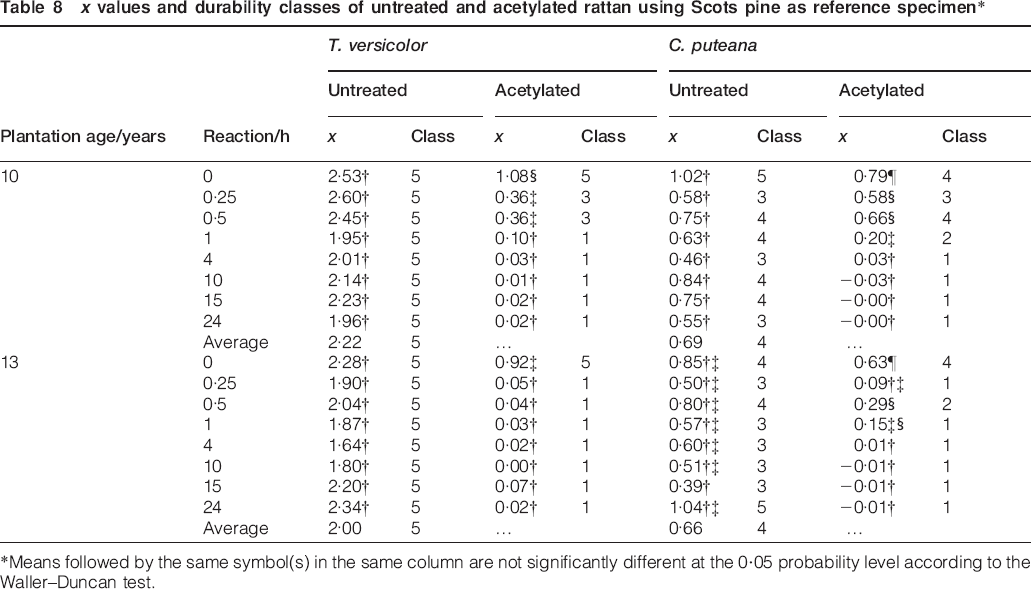
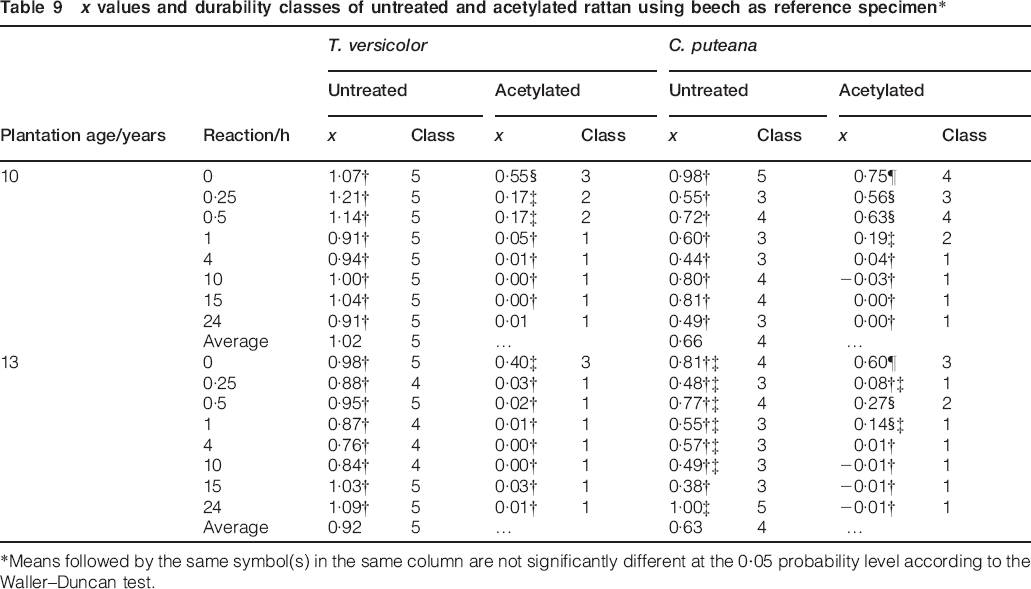
At the end of the test, excessive mycelium was removed and the moisture content and mass loss due to decay were determined (EN 113:1996). The durability classification was then determined following the guidance given in EN 350–1 (1994) where a ratio, expressed as the ‘x value’ is determined in comparison to the reference species, i.e. Scots pine or beech, i.e. x = average mass loss of test specimens/average mass loss of reference species. In this case, x value using both reference species was calculated. Durability classes were assigned according to EN 350-1, where class 1 refers to very durable with an x value of x≤0·15, 2 is 0·15<x≤0·03, 3 is 0·3<x≤0·60, 4 is 0·60<x≤0·9 and the not durable class is x>0·9.
All the results were analysed with analysis of variance (ANOVA), the Waller–Duncan (post hoc test) and correlation tests using SPSS (version 14) for statistical purposes.
Results and discussion
Physical properties of acetylated rattan
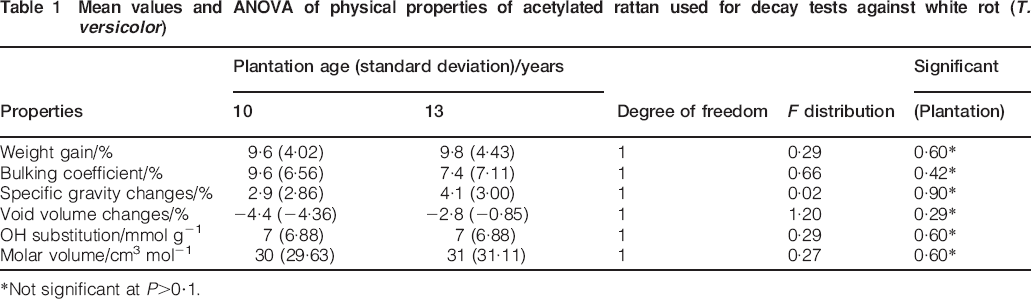
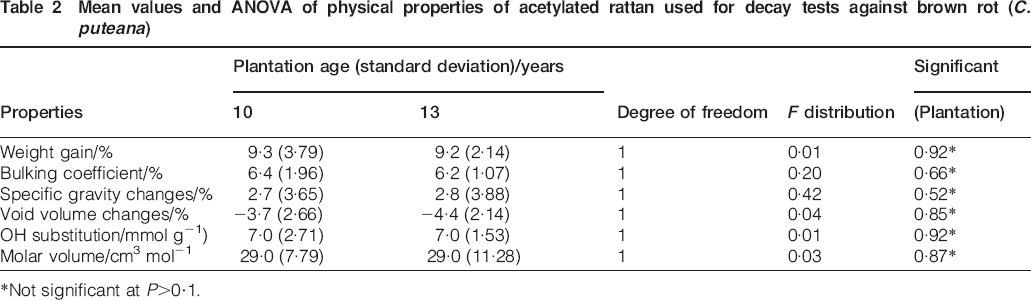
All the physical properties of acetylated rattan were not influenced by the ages, but varied significantly with the reaction periods (Figs. 1 and 2, Tables 1 and 2). In the younger acetylated rattan, all the physical properties of the specimens for both fungi testing were levelled off or achieved maximum values after 10 h reaction, except the theoretical molar volume.
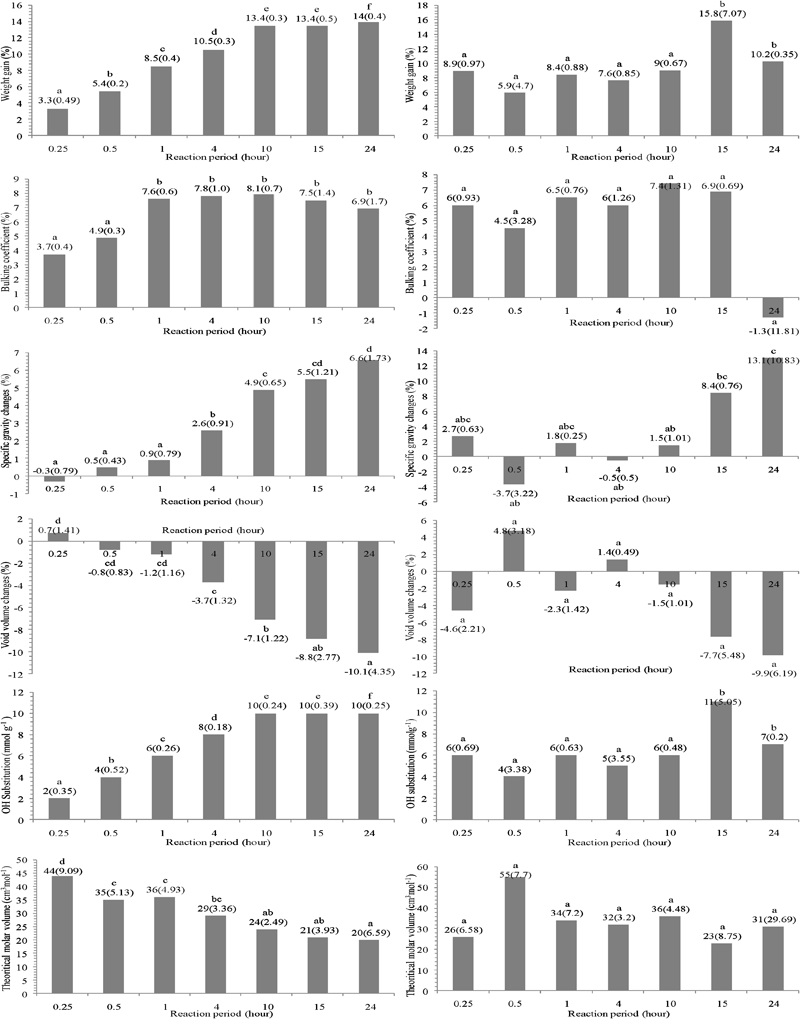
Physical properties of acetylated rattan used for decay test against white rot (T. versicolor). Left column: aged 10 years; right column: aged 13 years. Figures in the parentheses are standard deviations. Means followed by the same letter(s) in the same bar are not significantly different at the 0·05 probability level according to the Waller–Duncan test
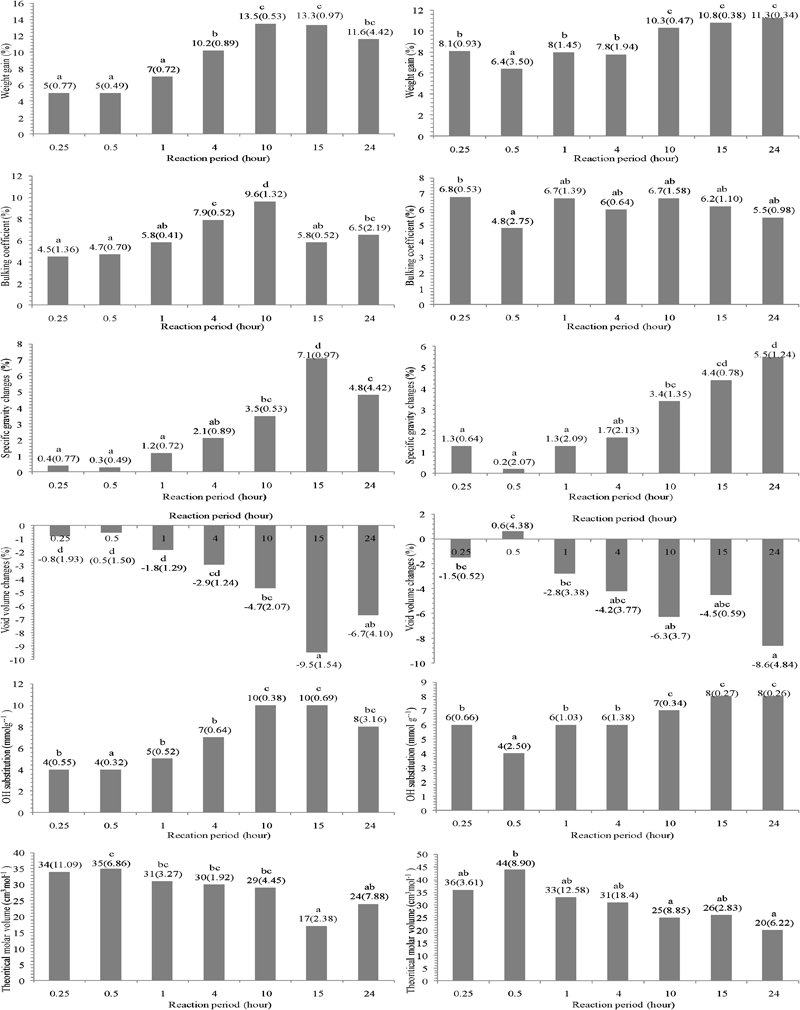
Physical properties of acetylated rattan used for decay test against brown rot (C. puteana). Left column: aged 10 years; right column: aged 13 years. Figures in the parentheses are standard deviations. Means followed by the same letter(s) in the same bar are not significantly different at the 0·05 probability level according to the Waller–Duncan test
Mean values and ANOVA of physical properties of acetylated rattan used for decay tests against white rot (T. versicolor)
*Not significant at P>0·1.
Mean values and ANOVA of physical properties of acetylated rattan used for decay tests against brown rot (C. puteana)
*Not significant at P>0·1.
The older acetylated rattan behaved differently where the bulking coefficient, void volume changes and theoretical molar volume were not significantly different by the reaction periods in the specimens for white rot testing; but OH substitution was the highest after 15 h reaction. The bulking coefficient of acetylated older rattan was maximum after 1 h reaction, but the specific gravity changes and void volume changes were maximum after 24 h reaction in the specimens for brown rot testing. The OH substitution levelled off after 10 h reaction and the theoretical molar volume behaved transversely, achieving maximum value in a lower reaction period (0·25 and 0·5 h) (Fig. 2). Hill and Ormondroyd (2004) also found a lower theoretical molar volume at a lower weight per cent gain or in a shorter reaction period in acetylated Corsican pine. The true cell wall volume changes can be measured accurately using pycnometry technique. However, the volume changes measured using helium pycnometer was much higher than the data measured by external dimension using a calliper in acetylated and hexonolated rubberwood. This is because the data between the two measurements were not exactly comparable as each dataset was based on a different initial volume (Karim et al. 2006).
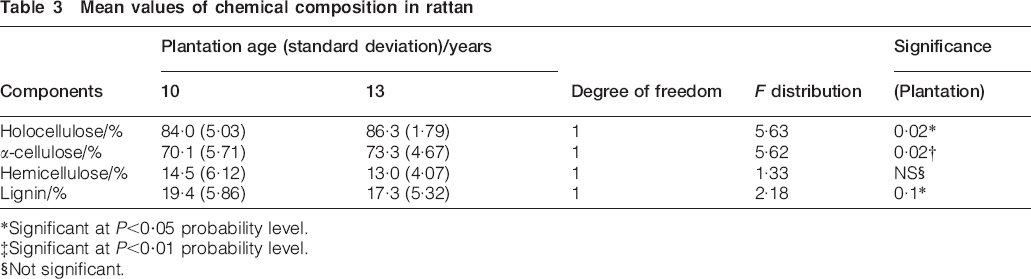
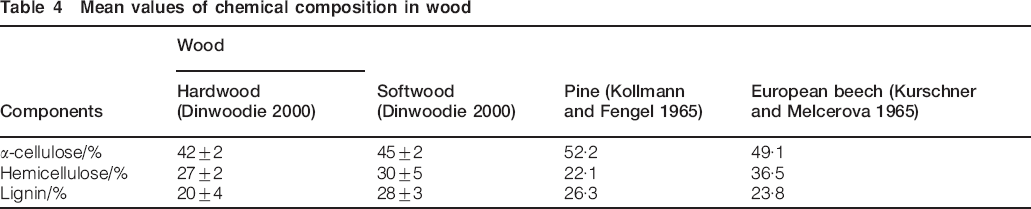
The maximum WG of acetylated rattan either age, 15·8%, was lower than acetylated wood (∼25%) as reported by Hill (2006a). This is probably caused by higher cellulose (70·1–73·3%) but lower hemicellulose (13·0–14·5%) and lignin (17·3–19·4%) contents in rattan than those of wood (Tables 3 and 4). As much of the cellulose is likely to be crystalline, it is inaccessible within the crystalline core for reaction. The time for levelling off WG of rattan either age (10 h) was faster than in the case of hinoki wood (uncatalysed, ∼25 h) reacted at 125°C (Li et al. 2000), but not as fast as Sitka spruce (uncatalysed, ∼2·5 h) reacted at 120°C (Minato and Ogura 2003). This can be explained by the kinetic perspective that resulted from different modification procedures. The kinetics of the reaction depends on the access of the reagent to the reaction site and the real chemical reaction (Minato and Ogura 2003).
Mean values of chemical composition in rattan
*Significant at P<0·05 probability level.
‡Significant at P<0·01 probability level.
§Not significant.
Mean values of chemical composition in wood
Fungal colonisation
The white rot, T. versicolor was more aggressive in attacking the untreated rattan than the brown rot, C. puteana as seen by the greater mycelia biomass and better colonisation. This occurred for both ages (Figs. 3 and 4). The mycelial colonisation was greater over the untreated rattan than the acetylated rattan for both fungi. The colonisation between untreated rattan and acetylated rattan was greater in the case of T. versicolor than of C. puteana. The inhibition of mycelial colonisation by T. versicolor was seen for the 0·5 and 0·25 h reactions in 10 and 13 years old rattan respectively. For C. puteana, the inhibition of mycelial colonisation was apparent at the 0·5 h reaction of both ages. This indicates that the acetylation process inhibited the mycelial colonisation of the treated rattans.
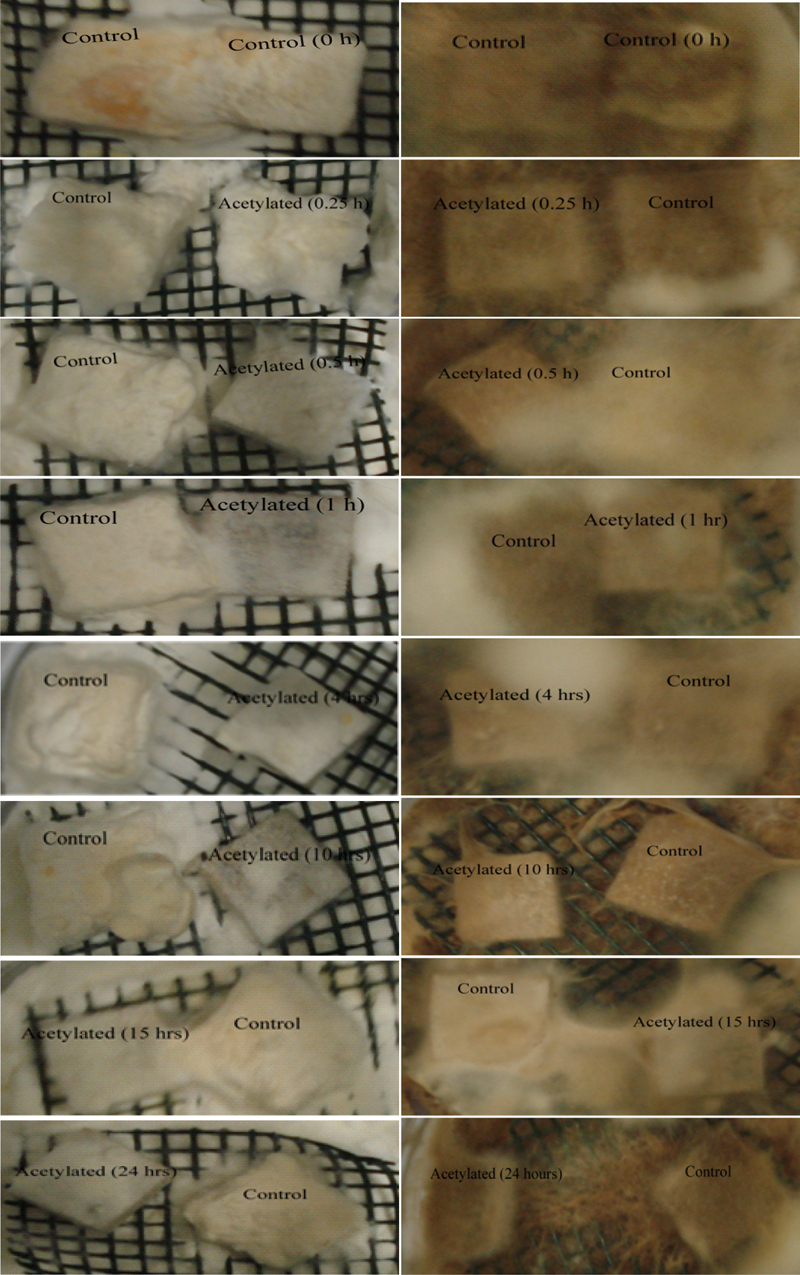
Colonisation of acetylated and untreated rattan (aged 10 years) by Trametes versicolor (left column) and Coniophora puteana (right column)
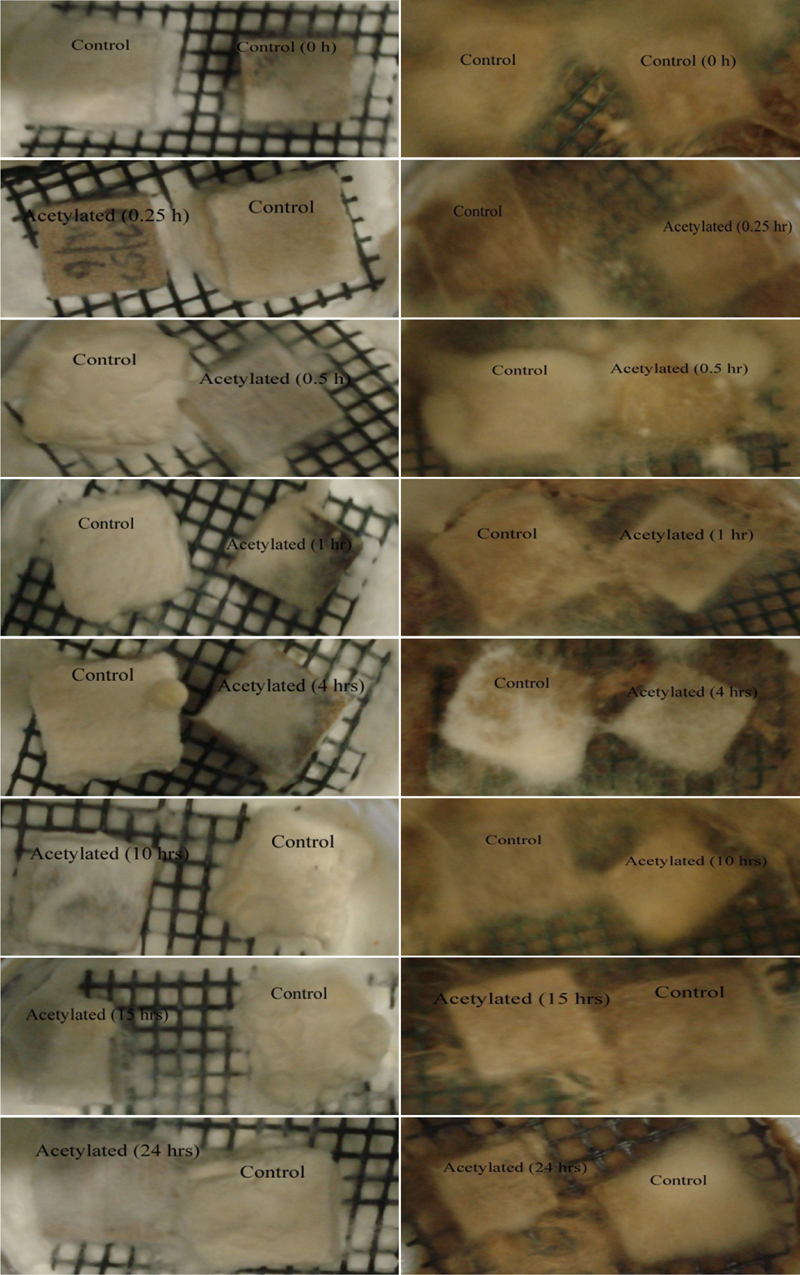
Colonisation of acetylated and untreated rattan (aged 13 years) by Trametes versicolor (left column) and Coniophora puteana (right column)
Decay resistance of acetylated rattan
The untreated rattan was more susceptible to decay by T. versicolor than wood, although similar to beech wood. It was much less susceptible to decay by C. puteana than wood. There was no difference in susceptibility between the ages. The weight loss caused by T. versicolor on rattan was twice that of C. puteana. Rattans reacted for 10 h or more gave no decay (Figs. 5 and 6).
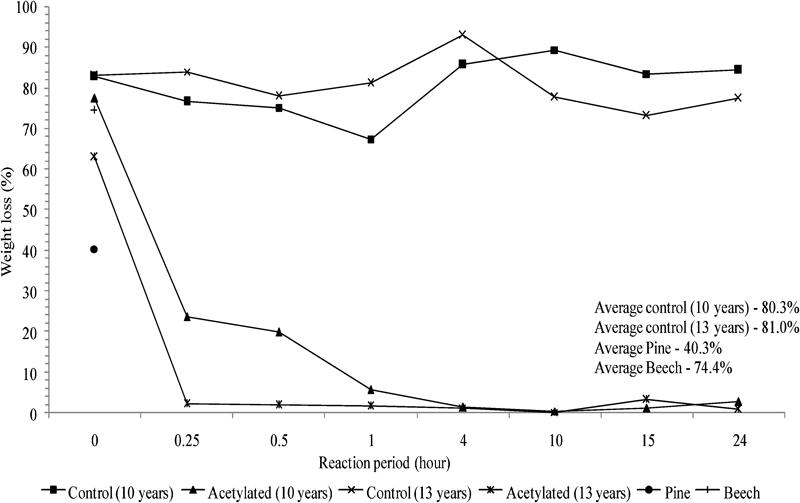
Mean values of per cent weight loss against white rot (T. versicolor)
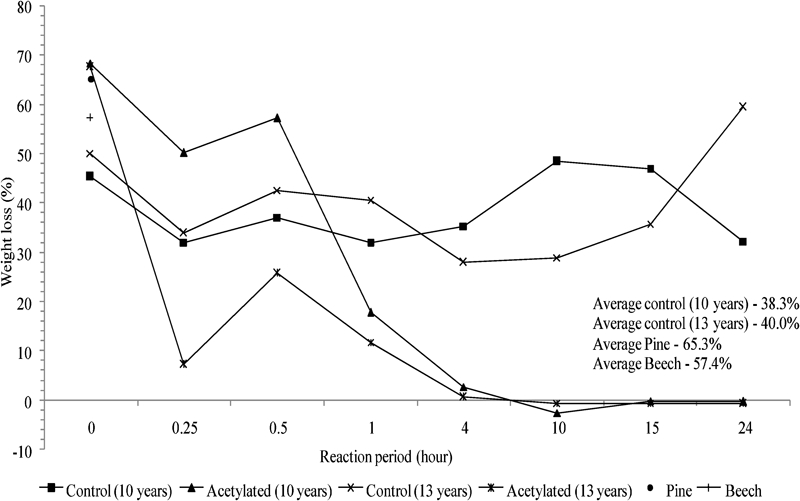
Mean values of per cent weight loss against brown rot (C. puteana)
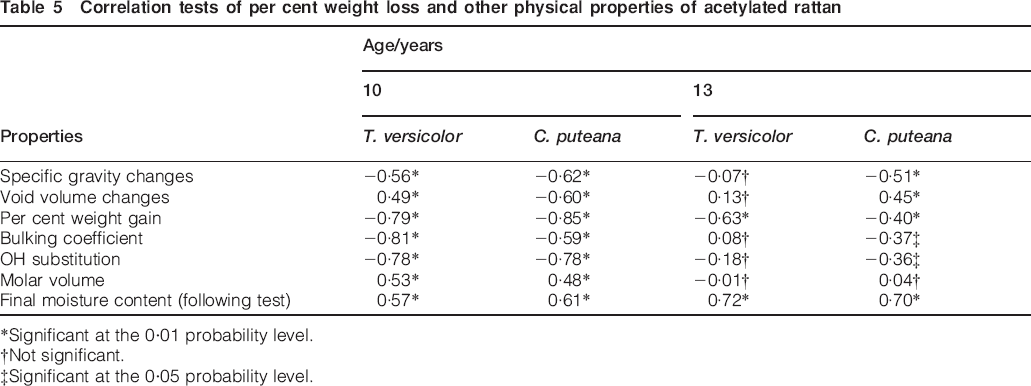
The results of correlation test (Table 5) show that WG was negatively correlated with per cent weight loss by T. versicolor (r2 = −0·79 and r2 = −0·63 for rattan aged 10 and 13 years) and C. puteana (r2 = −0·85 for rattan aged 10 years). Although the bulking coefficient and OH substitution were negatively correlated with per cent weight loss of both fungi for the younger rattan, this was not significantly different with lower r2 values for the older rattan. Statistically, the WG can be considered as the main factor which protected the acetylated rattans against both fungi.
Correlation tests of per cent weight loss and other physical properties of acetylated rattan
*Significant at the 0·01 probability level.
†Not significant.
‡Significant at the 0·05 probability level.
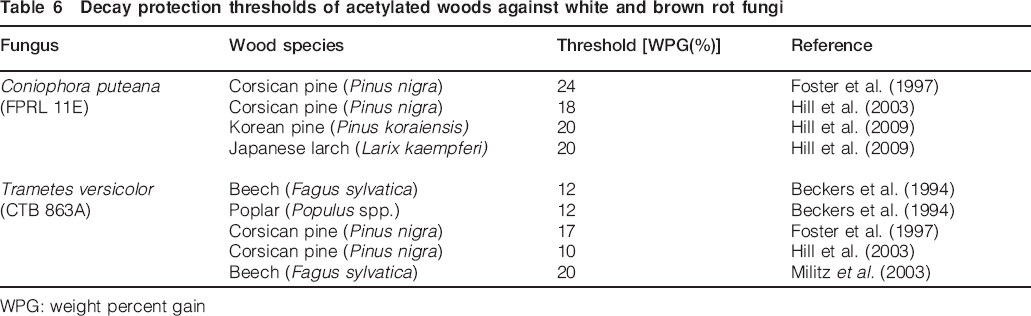
The acetylated younger rattan gave a slightly higher decay protection threshold than the older rattan to protect against either fungus. Decay protection thresholds of 13·4 and 13·5% WGs were sufficient for the younger rattan, while it was 9·0 and 10·3% WGs for the older rattan with T. versicolor and C. puteana respectively (10 h reaction, Figs. 1, 2, 5 and 6). This indicates a significantly lower decay protection threshold of acetylated rattan against brown rot and a slightly lower (or similar) against white rot as compared to woods (Table 6).
Decay protection thresholds of acetylated woods against white and brown rot fungi
WPG: weight percent gain
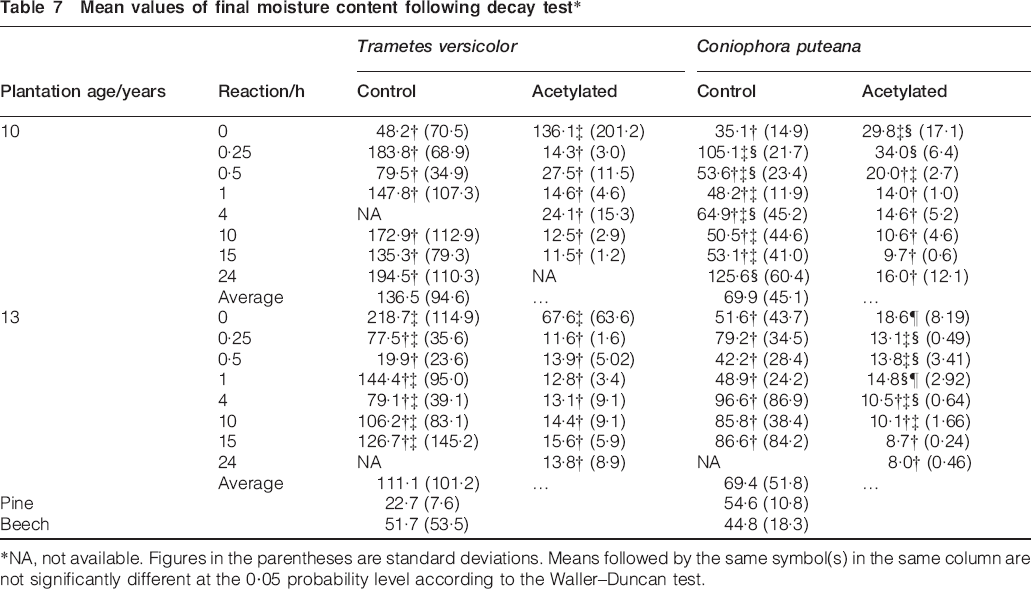
The reduction of moisture content due to the decrease in cell wall void volume following modification may be the next factor which is reducing the fungal attack. In all cases, the moisture content of acetylated rattan was lower than the untreated rattan. The moisture contents at the decay protection threshold were 12·5 and 14·4% for acetylated rattan aged 10 and 13 years against T. versicolor respectively, while they were 10·6 and 10·1% for acetylated rattan aged 10 and 13 years against C. puteana respectively (Table 7). The average moisture contents of untreated control rattan aged 10 and 13 years decayed by T. versicolor were 136·5 and 69·9%, while they were 111·1 and 69·4% when decayed by C. puteana respectively. Bowyer et al. (2003b) stated that some water must be present for enzymes and other cell wall degrading metabolites to diffuse into the cell walls and for the breakdown products to enter the hyphae, in addition for the breakdown process catalysed by enzymes. Low moisture content in acetylated rattan may slow down this process and increase the resistance against fungal attack. Acetylation reduced the cell wall moisture content by replacing hydroxyl groups with acetyl groups, and this changed the hydrophilic nature of untreated rattan to more hydrophobic property of acetylated rattan. In the case of acetylated rattan, this study agreed with the conclusion made by Hill et al. (2005), in which acetylation reduced decay by reducing the cell wall moisture content. Blocking of cell wall micropores was excluded because the correlation was considered low between per cent void volume changes and per cent weight loss for both fungi and ages (Table 8). However in wood, Rowell (2006) mentioned that the mechanism of decay protection may also be blocking specific enzymatic reactions as a result of changes in configuration and confirmation of the polymers in the cell wall.
Mean values of final moisture content following decay test*
*NA, not available. Figures in the parentheses are standard deviations. Means followed by the same symbol(s) in the same column are not significantly different at the 0·05 probability level according to the Waller–Duncan test.
x values and durability classes of untreated and acetylated rattan using Scots pine as reference specimen*
*Means followed by the same symbol(s) in the same column are not significantly different at the 0·05 probability level according to the Waller–Duncan test.
Durability classification
When pine sapwood or beech are used as the reference species (Tables 8 and 9), the untreated rattans were classified as not durable (class 5) against T. versicolor and slightly durable (class 4) against C. puteana for both ages. The younger rattans reacted for 1 h (8·5% WG) and 4 h (10·2% WG), and longer were classified as very durable to T. versicolor and C. puteana respectively. The older rattans reacted at 0·25 h (8·9% WG) and 1 h (8·0% WG), and longer were classified as very durable against T. versicolor and C. puteana respectively.
x values and durability classes of untreated and acetylated rattan using beech as reference specimen*
*Means followed by the same symbol(s) in the same column are not significantly different at the 0·05 probability level according to the Waller–Duncan test.
Conclusions
The white rot fungus decomposes untreated rattan faster than the brown rot fungus. The per cent WG due to substitution of hydroxyl groups by acetyl groups is inversely correlated with the per cent weight loss of decaying fungi. The decay protection threshold against both white rot and brown rot fungi is obtained at the levelling-off WG and it is slightly lower in older rattan than the younger rattan. The moisture content of acetylated rattan decayed by fungi is lower compared to untreated rattan, and it is higher when decayed by white rot than those of brown rot fungi. This is mainly true for the untreated rattans but not generally for the treated ones. Acetylated rattan at the decay protection threshold is classified as very durable against white rot and brown rot fungi.
Footnotes
Acknowledgements
The authors would like to thank Ministry of High Education, Malaysia and Universiti Putra Malaysia for the scholarship award.