







Abstract
Background
The number of disaster-related deaths recorded by vital statistics departments often differs from that reported by other agencies, including the National Oceanic and Atmospheric Administration-National Weather Service storm database and the American Red Cross. The Centers for Disease Control and Prevention (CDC) has launched an effort to improve disaster-related death scene investigation reporting practices to make data more comparable across jurisdictions, improve accuracy of reporting disaster-related deaths, and enhance identification of risk and protective factors. We conducted a literature review to examine how death scene data are collected and how such data are used to determine disaster relatedness.
Methods
Two analysts conducted a parallel search using Google and Google Scholar. We reviewed published peer-reviewed articles and unpublished documents including relevant forms, protocols, and worksheets from coroners, medical examiners, and death scene investigators.
Results
We identified 177 documents: 32 published peer-reviewed articles and 145 other documents (grey literature). Published articles suggested no consistent approach for attributing deaths to a disaster. Researchers generally depended on death certificates to identify disaster-related deaths; several studies also drew on supplemental sources, including medical examiner, coroner, and active surveillance reports.
Conclusions
These results highlight the critical importance of consistent, accurate data collection during a death investigation. Review of the grey literature found variation in use of death scene data collection tools, indicating the potential for widespread inconsistency in data captured for routine reporting and public health surveillance. Findings from this review will be used to develop guidelines and tools for capturing disaster-related death investigation data.
Keywords
Introduction
Death certificates are often considered the primary source of information used by public health officials to attribute deaths to natural or human-induced disasters (1). Data collected at the death scene, including the location and condition of the body and detailed information provided by the hospital or the decedent's personal contacts, are taken into account when the medical examiner or coroner determines cause and manner of death. The majority of the death scene information is used to complete the death certificate. Experts in medicolegal death investigation have long discussed the need to understand what data are frequently collected at death scenes and to increase the consistency in death scene investigation and reporting for all causes of death (2, 3).
A disaster is defined as a serious disruption of the functioning of society, causing widespread human, material, or environmental losses that exceeds the local capacity to respond and results in calls for external assistance. The focus of this review article will be fatality-inducing natural disasters including tornadoes, hurricanes, and earthquakes, as well as weather events like snow storms, heat waves, and lightning. Such hazards have increased in scale and scope in recent decades (4). For public health, this adds greater urgency to the need to develop a consistent approach to collecting and reporting death scene data to accurately quantify the human health impact of disasters. Improved consistency would allow for better understanding of the cause and circumstances of these deaths to guide the development of evidence-based prevention strategies. The Centers for Disease Control and Prevention (CDC) assessed the number of deaths recorded after several recent federally declared disasters, including Hurricane Ike in 2008, the 2011 tornado outbreak in the Southeast, and Hurricane Sandy in 2012 (5, 6). These assessments found significant disparities between the final number of deaths recorded by public health and vital statistics departments, the Federal Emergency Management Agency (FEMA) funeral benefit claims database, the American Red Cross mortality surveillance system, and the National Oceanic and Atmospheric Administration (NOAA)-National Weather Service (NWS) storm database
Number of Disaster-Related Deaths Reported by Response Agencies
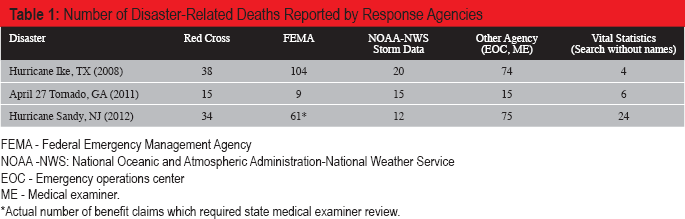
FEMA - Federal Emergency Management Agency
NOAA - NWS: National Oceanic and Atmospheric Administration-National Weather Service
EOC - Emergency operations center
ME - Medical examiner.
Actual number of benefit claims which required state medical examiner review.
Data collected at the death scene are the building blocks for identifying cause and manner of death. If the key circumstance data are not collected at the scene, it is likely it will be missed or not reported. Without these data, the medical examiner or coroner may not be able to attribute the death to the disaster and would therefore not reflect this information on the death certificate. Because disaster-related death scenes can be chaotic, it is crucial to provide death scene investigators with guidance about a consistent approach for collecting and reporting data. Public health researchers, including epidemiologists at CDC, have frequently collaborated with epidemiologists, vital statistics, medical examiners, and coroners to improve disaster-related mortality surveillance (1). Since the 1990s, these researchers have developed more consistent approaches to identifying, collecting, and reporting disaster-related deaths to improve surveillance (3). The Centers for Disease Control and Prevention and collaborators recognize that by improving disaster death scene data, the accuracy and quality of reporting disaster-related deaths may increase. The framework used in this work is broadly based on the successful sudden unexplained infant death (SUID) investigation project, which developed guidelines and reporting forms that have improved data collection at infant death scenes and promoted uniform classification and reporting of SUID cases (7).
The Centers for Disease Control and Prevention has launched a similar effort to the SUID investigation project to improve data collection and reporting during the investigation of disaster-related deaths. As a first step in this project, we conducted a literature review of peer-reviewed articles and unpublished articles, guidelines, forms, toolkits, and protocols to examine what disaster-related data are being collected at the death scene and how the data from the death scene investigations are being used to determine disaster-relatedness. Disaster-related data include weather, flood conditions, and the functionality of warning or mitigation systems like mandatory evacuation orders and air conditioners. This literature review is the first step in a broader effort to identify existing practices that could be adapted and scaled to create more consistency in how disaster-related deaths are identified, classified, and reported. Improving the consistency of death scene data collection during and after a disaster will provide mortality data that are more comparable across jurisdictions. It will also increase the ability of public health agencies to accurately assess the burden of disasters and identify risks and protective factors. In addition, understanding the causes and circumstances of deaths directly or indirectly related to a disaster is important for public health messaging. Improved data collection practices at the scene might help local and state officials better target response and recovery efforts by rapidly identifying people at greater risk for morbidity and mortality and help to refine strategies to prepare, respond, and recover from future disaster events.
By raising awareness of risks associated with certain types of disasters, we might prevent unnecessary deaths. The purpose of this literature review was not to conduct an exhaustive assessment of all death scene investigation materials, but to summarize published peer-reviewed and “grey” (unpublished) literature recommendations, variations in death investigation data collection practices, and to identify disaster-specific mortality tools in use.
Methods
Overall Approach
We used a two-pronged approach to scan the grey literature, consisting of 1) unpublished state-level resources and documents obtained from key stakeholders and 2) a sample of published peer reviewed literature, to provide context. Both sets of materials were reviewed to identify relevant data
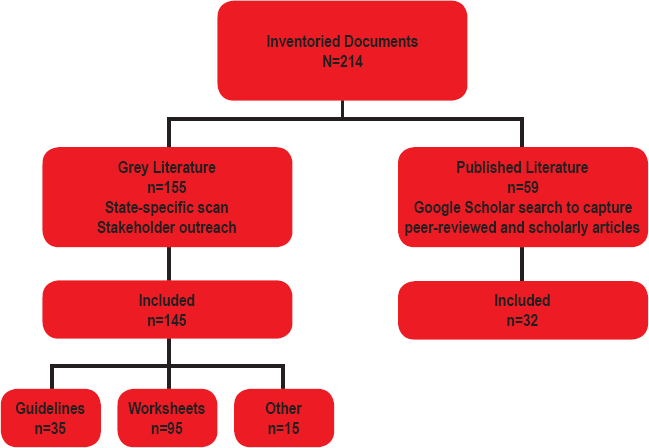
Approach to searching the literature for death scene investigation related to disasters and flow chart of documents included in the review.
Grey Literature Search
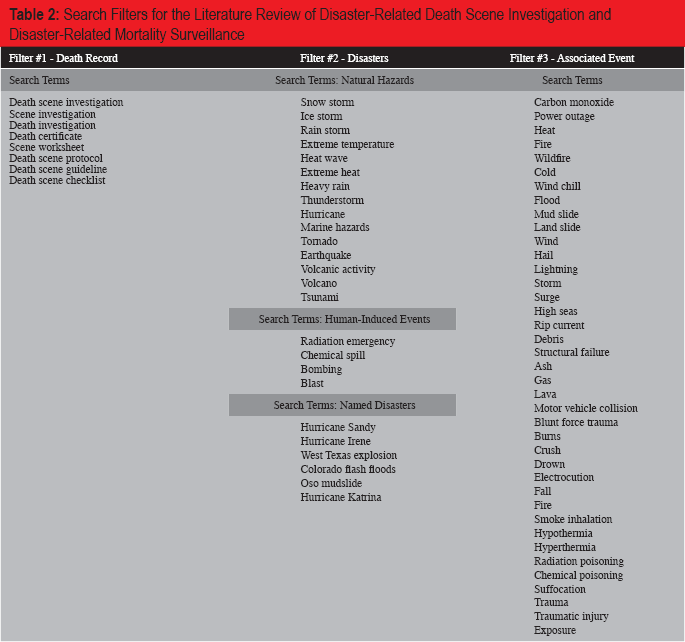
To identify real-world practices and lessons learned, we searched the grey literature (i.e., documents produced or published by organizations outside the typical academic or commercial channels). Because documents in the literature related to medicolegal death investigation are typically not publicly available, we used a two-step method to gather the relevant information. First, we used Google to conduct a state-specific search using each state name (“State” = “Arizona”) and a variety of death record terms spanning natural hazards and human-induced acts
Search Filters for the Literature Review of Disaster-Related Death Scene Investigation and Disaster-Related Mortality Surveillance
After completing the state-specific search, we solicited national medical examiner, coroner, and death investigator organizations and associations for best practices. Solicitations for available death scene forms, protocols, and worksheets went to two key listservs administered by the National Association of Medical Examiners and the International Association of Coroners and Medical Examiners. The American Board of Medicolegal Death Investigators and the Society of Medicolegal Death Investigators also sent our request to their subscribers. We also sent personalized emails asking approximately 30 persons identified as leaders in medicolegal death investigation from state and local jurisdictions to send copies of death scene investigation forms and guidelines. Those persons included practicing medical examiners, coroners, and death investigators.
Published Peer-Reviewed Literature Search
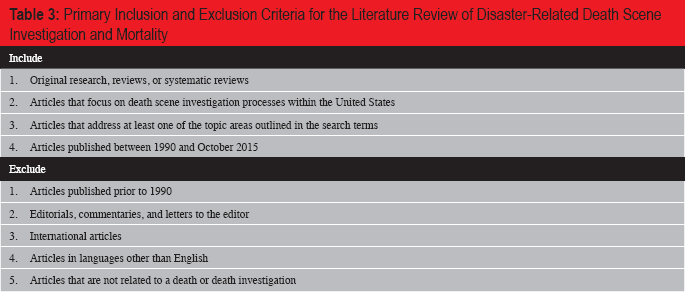
A focused search of the published, peer-reviewed literature was designed to provide context to the grey literature search, identifying the ways in which death scene investigation data are used and how deaths are attributed to a disaster. We used Google Scholar to search for available published articles pertaining to disaster-related death scene investigation and mortality reporting. The search engine allowed us to capture articles and literature in non-indexed journals that were unavailable in more traditional search tools (PubMed, Social Sciences Citation Index, etc.), which was important given the topic under review. In addition, we developed inclusion and exclusion criteria to create boundaries for our search
Primary Inclusion and Exclusion Criteria for the Literature Review of Disaster-Related Death Scene Investigation and Mortality
To determine appropriate search terms, we conducted a preliminary review of articles and protocols and held several discussions with subject matter experts. Ultimately, we created three filters (categories) for our search. Filter #1 included death record search terms, filter #2 was the disaster search term, and filter #3 was the associated event search term
Document Inventory and Final Literature Review
After we completed the published and grey literature searches (including solicitation of best practices), we inventoried the resulting documents in a spreadsheet summarizing the source, topic, and relevance. Conditions for inclusion included: original research, review, or systematic review; focus on death scene investigation processes within the United States; focus on at least one of the topic areas outlined in the search terms; and publication between 1990 and October 2015. Exclusion criteria included: publication prior to 1990; editorial, commentary, or letter to the editor; international focus; publication in a language other than English; and unrelated to a death or death investigation
Results
A total of 177 documents were included in this review; 145 were grey literature and 32 were published peer-reviewed articles.
Grey Literature
The 145 unpublished documents identified in this review included guidelines (n=35), death scene investigation worksheets (n=95), and other documents (n=15), including scene operations documents and mass fatality plans currently used by specific jurisdictions or created as a template of a form or protocol that could be used. In general, the documents found in the grey literature search included 1) those used at or during a death scene investigation and 2) those completed after a scene investigation.
Documents Used at or during a Death Scene Investigation
We identified four general types of worksheets and protocols in the grey literature that are intended for use at the scene of a death investigation or during a disaster. These included 1) general death scene investigation guidelines and protocols, which provide information on how to conduct a safe and thorough investigation of the scene; 2) mass fatality scene operations and protocols that could be used at the scene of some disasters; 3) death scene investigation worksheets, which are typically data collection forms that scene investigators complete as they are investigating the death; and 4) disaster mortality surveillance reports, which allow personnel involved in disaster response or surveillance to record information on each decedent from data gathered at the scene or from medical examiner and coroner offices.
General Scene Investigation Guidelines and Protocols
The identified death scene investigation protocols often described 1) the types of deaths that require a scene investigation (e.g., accidental deaths, homicides, suicides, sudden unexplained infant deaths, motor vehicle); 2) procedures for arrival at the scene (e.g., ensuring scene safety, establishing command, establishing chain of custody and involvement of different agencies, interviewing witnesses, determining time of death); 3) recommendations for documenting and evaluating the scene in writing or by photography; and 4) suggestions for working with witnesses and families (8–19). Most of the identified guidelines focused on general death scene scenarios. We did not identify any guidelines for specific disaster scenarios; however, some guidelines have specific protocols that could be applied during disaster situations, such as protocols for environmental exposure and drowning (9, 10, 13, 14).
Select General Scene Investigation Guidelines and Protocols, Identified Through the Literature Review of Disaster-Related Death Scene Investigation and Mortality
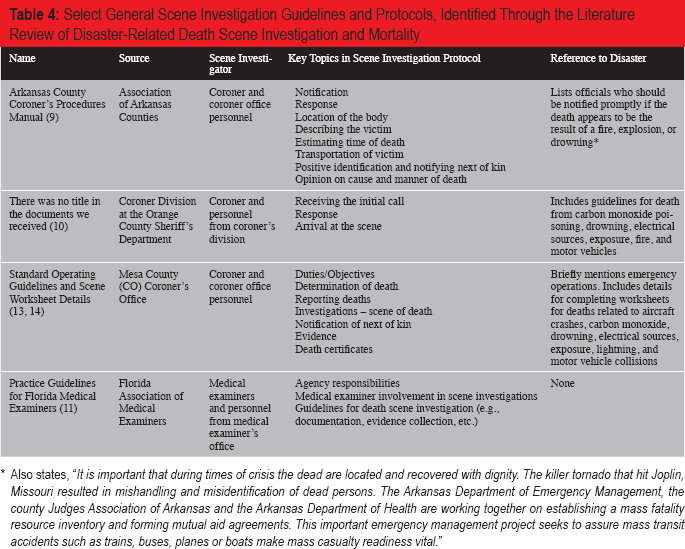
Also states, “It is important that during times of crisis the dead are located and recovered with dignity. The killer tornado that hit Joplin, Missouri resulted in mishandling and misidentification of dead persons. The Arkansas Department of Emergency Management, the county Judges Association of Arkansas and the Arkansas Department of Health are working together on establishing a mass fatality resource inventory and forming mutual aid agreements. This important emergency management project seeks to assure mass transit accidents such as trains, buses, planes or boats make mass casualty readiness vital.”
Mass Fatality Scene Operations and Protocols
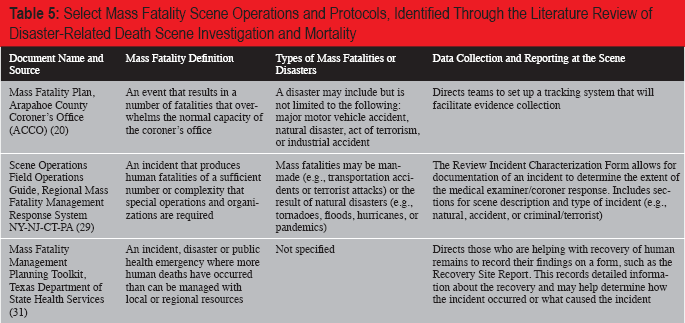
We identified 15 mass fatality protocols and plans that provided guidance about conducting death scene investigations. Most of these documents define a mass disaster as an incident resulting in a number of deaths that exceeds the response capacity of the medical examiner, coroner, emergency services, or law enforcement staff (20–32). That definition of mass fatality will not include all disasters related to weather and associated events, only those that result in sufficient deaths to overwhelm local medicolegal systems. The identified mass fatality plans do not always explain the definition of a disaster, although many specify that the plan applies to human-induced and natural disasters. Mass fatality plans generally included sections that describe incident command staff and their responsibilities, search and recovery operations, scene safety, scene management, and postmortem identification (20–32).
Select Mass Fatality Scene Operations and Protocols, Identified Through the Literature Review of Disaster-Related Death Scene Investigation and Mortality
Death Scene Investigation Worksheets
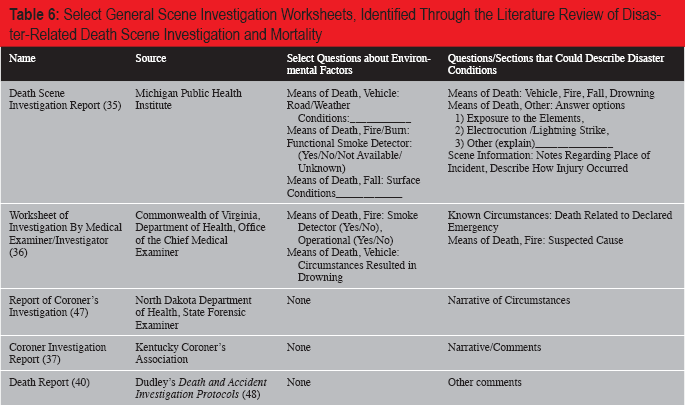
The death investigation worksheets found in the review could be categorized into general scene worksheets that apply to a wide range of scenarios and more tailored scene worksheets for specific events (e.g., fire, drowning), settings (e.g., hospitals, nursing homes), and ages (e.g., infant, child, teenager). General scene worksheets typically captured information about the decedent in relation to the scene, the person's medical history, a description of the body, and a narrative summary of circumstances surrounding the death (33–38). Some forms have specific sections about disaster-related risk factors that could contribute to the cause of death. These include tobacco use as cigarette smokers have elevated blood levels of carbon monoxide, alcohol use because impairment can hinder proper disaster preparedness, chemical exposure resulting from the event itself, and motor vehicle accident details (35–44). Most of the identified worksheets (n=11) include a narrative section allowing the death investigator to describe how a disaster contributed to a death, rather than dedicated disaster-specific questions or checkboxes (33–38, 40–42, 45, 46). Few forms explicitly ask the investigator if the death is related to a disaster (35, 36).
Select General Scene Investigation Worksheets, Identified Through the Literature Review of Disaster-Related Death Scene Investigation and Mortality
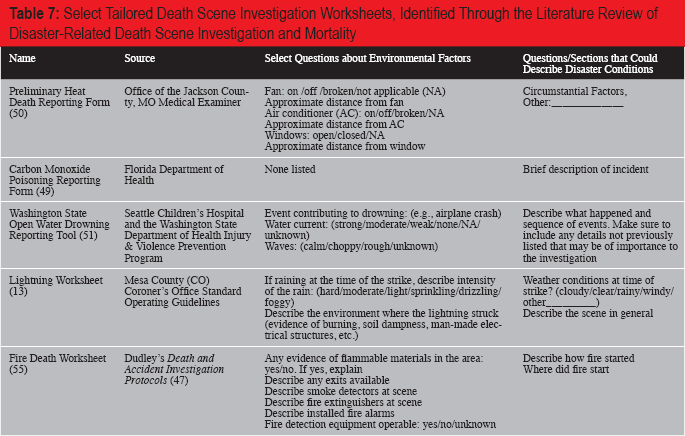
The tailored worksheets varied widely in scope and format. We identified worksheets for a range of potential disaster-related situations and causes of death including aircraft crashes, blunt and sharp force trauma, carbon monoxide poisoning, drowning, contact with electrical current, exposure, extreme temperature (hypothermia and hyperthermia), falls, fires, infectious diseases, lightning, and motor vehicle crashes (13, 48–54).
Tailored worksheets typically asked targeted questions about the circumstances surrounding the death. Similar to the general worksheets, the tailored worksheets allow the investigator to describe disaster circumstances in a narrative format, but lack specific questions or checkboxes related to disasters.
Select Tailored Death Scene Investigation Worksheets, Identified Through the Literature Review of Disaster-Related Death Scene Investigation and Mortality
Disaster Mortality Surveillance Reports
Only one worksheet, from the Mesa County (CO) Coroner's Office standard operating guidelines, is designed to allow the scene investigator to record an initial overall disaster evaluation (e.g., weather conditions) and assessment (e.g., estimated number of fatalities) (13).
Documents to be Completed after a Scene Investigation
We identified four general types of worksheets and protocols in the grey literature that are intended for use after a death scene investigation. These include 1) mass fatality plans and procedures that describe operations after a death scene investigation; 2) guidelines for reporting deaths and completing death certificates, which focus on instructing medical certifiers on the correct way to fill out the cause and manner of death; 3) death certificate worksheets, which are forms that medical certifiers fill out to complete the death certificate; and 4) disaster mortality surveillance worksheets, which allow personnel involved in disaster response or surveillance to record information related to the victims of the event.
Mass Fatality Plans and Procedures
Most of the mass fatality plans reviewed (n=13) described protocols for operations after the death scene investigation was completed. These plans typically addressed morgue operations, family assistance procedures, public communications, and logistics for releasing the bodies of decedents (21–25, 27, 29–32). In addition, most mass fatality plans included some information about issuing death certificates during a mass fatality and working with state or national offices of vital records and statistics, but did not include information about how to report the disaster as a contributing factor among the circumstances of the death (20–23, 25, 27, 30, 32).
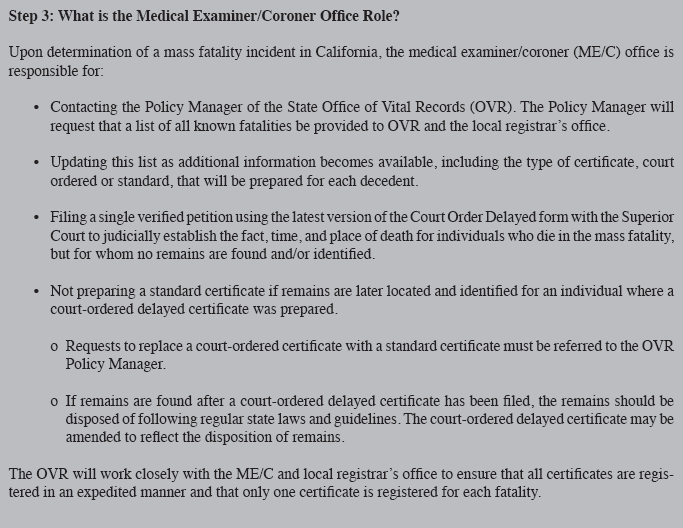
Issuing death certificates during a mass fatality event, excerpt from “Death Certificates and Permits for Disposition of Human Remains” in Managing Mass Fatalities: A Toolkit for Planning (22).
Guidelines for Reporting Deaths and Completing Death Certificates
Eleven documents in the grey literature provided guidance on improving cause of death reporting and accurately completing death certificates (56–66). Some guidelines instructed medical certifiers on how to accurately identify the manner of death for the decedent, which generally fell into six categories: 1) natural, 2) accident, 3) suicide, 4) homicide, 5) could not be determined, or 6) pending investigation (56, 57, 63–65). When discussing accidental manners of death, some guidelines outline factors that could be related to a disaster, including crushing by a falling object, drowning, electrical shock, explosion, exposure, falls, carbon monoxide poisoning, and heat exhaustion (56, 57, 63, 65). However, few death certificate guidelines that we reviewed provided explicit instruction on identifying, certifying, and reporting deaths associated with a disaster.
Although most of the documents that addressed approaches for reporting information on disaster-related deaths were found in the grey literature, one key article in the published literature proposes a matrix to help systemize how disaster-related deaths are defined and classified (3). This paper defines a natural disaster as a “time- and place-specific event that originates in the natural environment and [results in the] disruption of the usual functions and behaviors of the exposed human population” (3). The authors define direct deaths as those caused by the physical forces of the disaster and indirect deaths as those caused by unsafe or unhealthy conditions that occured because of the anticipation or occurrence of the disaster. They then create a flow chart that enables a medical examiner or coroner to determine whether the death was a result of a disaster and a classification matrix to identify the disaster and circumstances of the death.
Death Certificate Worksheets
We identified seven death certificate worksheets in the literature that were generally intended to be completed by a physician, medical examiner, or coroner. Most worksheets (n=6) asked for information about potential contributing factors to the cause of death, such as pregnancy, injuries, or tobacco use (67–72). Although the identified death certificate worksheets did not have specific sections to denote the involvement of a disaster, most included a “Describe how injury occurred” section that could be used to indicate the role of a disaster (68–73).
Disaster Mortality Surveillance Worksheets
Our search yielded several documents that highlighted disaster-related surveillance forms and systems. First, CDC has a “Disaster-Related Mortality Surveillance Form” that allows medical examiners, coroners, hospitals, nursing homes, or funeral homes to identify the number of deaths related to a disaster and provide basic mortality information to a designated public health officer (74). This form has a “Type of Disaster” section that allows the respondent to check one of eight choices: hurricane, heat wave, tornado, technological disaster, flood, terrorism, earthquake, or other. Some states, such as Kentucky, are using the CDC form for their own disaster operations (75). Other states, such as Texas and North Carolina, are using disaster mortality surveillance forms that do not contain the disaster checkboxes, but still allow the user to describe the circumstances of death (76, 77). Second, the American Red Cross has a “Disaster Health Services Mortality Report Form” that allows disaster relief operations staff to record information about the disaster and the decedent, including whether the death was directly or indirectly caused by a disaster (78).
Published Peer-Reviewed Literature
Of the 32 peer-reviewed journal articles included in this review, 19 examined mortality associated with a specific disaster, such as Hurricane Katrina or the Chicago heat wave, where researchers used various methods to estimate the number of disaster-related deaths and mortality rates (79–97). Additionally, most of the studies examined the circumstances surrounding the death to better characterize risk factors for these disaster-related deaths and to develop public health messaging to prevent deaths. The other peer-reviewed journal articles identified included systematic reviews on carbon monoxide and high ambient temperature (98–100) and guidance to medical examiners and coroners on a variety of related topics (101–104).
No consistent approach for determining deaths attributable to a disaster was found among the identified articles in the published literature.
Data Sources Used in Disaster-Related Death Studies, Identified Through the Literature Review of Disaster-Related Death Scene Investigation and Mortality
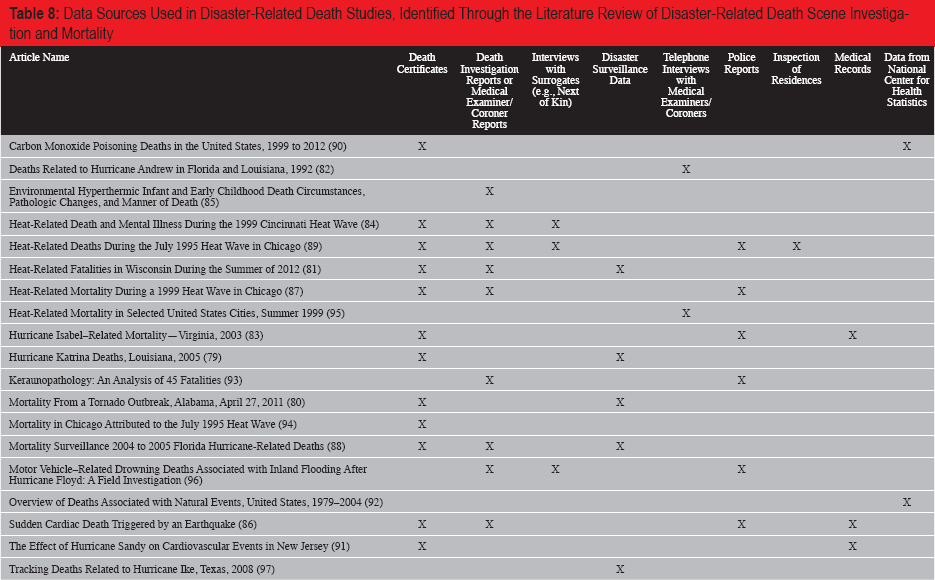
Most (12 of 19) of the published studies that examined the mortality associated with a specific disaster used death certificates as a primary data source. Cases were identified in vital statistics databases by using a specific period and searching for cases with cause of death consistent or reported as associated (either directly or indirectly) with the disaster. Depending on the type of disaster, the method to identify the deaths varied by inclusion of certain International Classification of Diseases, 10th Revision (ICD-10) codes and specific key words. For example, in a heat wave, heat or heatstroke might be listed as the cause of death (81, 84, 87, 89, 95). For a hurricane, deaths might be included if they were coded as a victim of cataclysmic storm (ICD-10 code X37) during the study (disaster) period (79, 83).
Five of the studies relied on active or passive surveillance systems as one of the data sources used to track disaster-related deaths (79–81, 88, 97). Two studies evaluated the use of these systems. New York City used its electronic death registration system to conduct active mortality surveillance during and after Hurricane Sandy, and the Texas Department of State Health Services pilot tested an ad hoc active mortality surveillance system during Hurricane Ike in 2008 (6, 105). These studies described how mortality surveillance systems successfully identified hurricane-related deaths and allowed jurisdictions to rapidly direct their public health response. In addition, the detailed information collected as part of the disaster surveillance system was a valuable resource for assessing disaster-related deaths because it includes more information about the circumstances of the death than reported on the death certificates (6).
Using a variety of data sources to identify disaster-related deaths can cause inconsistent reporting of disaster-related mortality. This inconsistency was described in a 2005 study that reviewed heat- and cold-related deaths in the United States (106). The study found that results can vary depending on the database used to identify these deaths (106).
Discussion
This literature review yielded a wide range of forms and documents used to collect death scene information, but few of those captured comprehensive disaster-specific information. Death certificates were the most common data source to identify and count disaster-related deaths. Our review found, however, that officials and researchers often relied on other data to supplement the death certificates, including medical examiner and coroner reports, for additional evidence to attribute the death to the disaster and to better understand the circumstances and risk factors surrounding the disaster-related death. For example, one tailored worksheet for drowning directs the investigator to “Describe what happened and sequence of events. Make sure to include any details not previously listed that may be of importance to the investigation” (51). The reliance on supplemental data was an important finding that highlights the critical importance of consistently and accurately collecting and documenting death scene information, which is typically included in medical examiner and coroner reports. Review of the grey literature further confirmed the lack of available death scene investigation tools that could be used to investigate suspected disaster-related deaths. This also increases the difficulty of aggregating data to identify population-level trends in risk and protective factors.
When opportunities in worksheets and tools existed to encourage medical examiners, coroners, and other certifiers responsible for completing death certificates to record disaster-related information, the wide variety of guidelines available may make it difficult to do so consistently. For example, tools that could be adapted for investigating a death during a disaster, such as carbon monoxide (CO) death reporting forms, differed significantly in the data collected. The heterogeneity of these CO reporting forms indicates the potential for widespread inconsistency in collecting and reporting of CO deaths across jurisdictions and events. A guide, CDC's Medical Examiners' and Coroners' Handbook on Death Registration and Death Reporting, has examples for describing circumstances of injury or violence in the “how the injury occurred” section of the death certificate when the death was the result of an external cause (65). One of these examples states, “Slipped and fell while shoveling snow,” which demonstrates how a weather-related disaster could be recorded on the death certificate. However, individual investigators may record this information differently.
Understanding the current variation in death scene data collection during and after a disaster supports the development of tools to improve the consistency of this process. In addition, there is a public health need for information about risk and protective factors, and comprehensive data collection after disasters can provide such evidence. Recognizing the considerable public health benefits to having this information, CDC will facilitate the development of a disaster-related death scene investigation toolkit. Many of the tools in this review can be adapted and combined to create disaster-specific death scene investigation resources. For example, the mass fatality plans we reviewed did not emphasize the importance of recording disaster-relatedness on the death certificate. However, it could be added to sections that detail the death certificate process if applicable. Additional resources that could be developed include death scene investigation forms for common types of disasters (e.g., hurricanes, tornadoes) and guidelines for completing these forms by death scene investigators.
Although this literature review has many strengths, it also has several limitations. The primary limitation is that it is not a systematic literature review as we did not follow the Preferred Reporting Items for Systematic Reviews and Meta-Analyses guidelines and did not analyze the objective merits or weaknesses of each piece of identified literature. A systematic approach was used to identify grey and peer reviewed literature, but the scope of the literature review was narrowly focused. Therefore, our results are only reflective of the literature we reviewed in this study; potentially relevant mortality epidemiologic study articles may have been excluded. The grey literature search may have also missed some existing guidelines; however, we endeavored to minimize this risk by sending out requests for tools to two major professional listservs.
Conclusion
This literature review was a first step toward understanding what information is collected at the death scene after a disaster. The Centers for Disease Control and Prevention has convened a workgroup composed of medical examiners, coroners, death scene investigators, forensic pathologists, epidemiologists, and law enforcement officials to develop guidelines and supplemental forms for disaster-related death scene investigations. These disaster-specific data collection tools might improve the ability of death scene investigators to gather consistent information on disaster deaths and consequently allow the medical certifier to link deaths to particular disasters in their case management systems and on the death certificate. In addition, these tools will allow for additional data, such as information on risk and protective factors, to be collected immediately after a disaster-related death. This will help public health officials develop strategies for reaching at-risk persons and preventing disaster-related deaths.
Footnotes
Acknowledgements
The authors would like to thank Margaret Warner PhD for her insight and contributions to this project.
This publication was supported by funds made available from the Centers for Disease Control and Prevention, Office for Public Health Preparedness and Response. The authors have indicated that they do not have financial relationships to disclose that are relevant to this manuscript