Editorial
 Available accessEditorialFirst published August, 2026pp. 177-191

Select search scope: search across all journals or within the current journal


 Available accessEditorialFirst published August, 2026pp. 177-191
Available accessReview articleFirst published August, 2026pp. 192-218
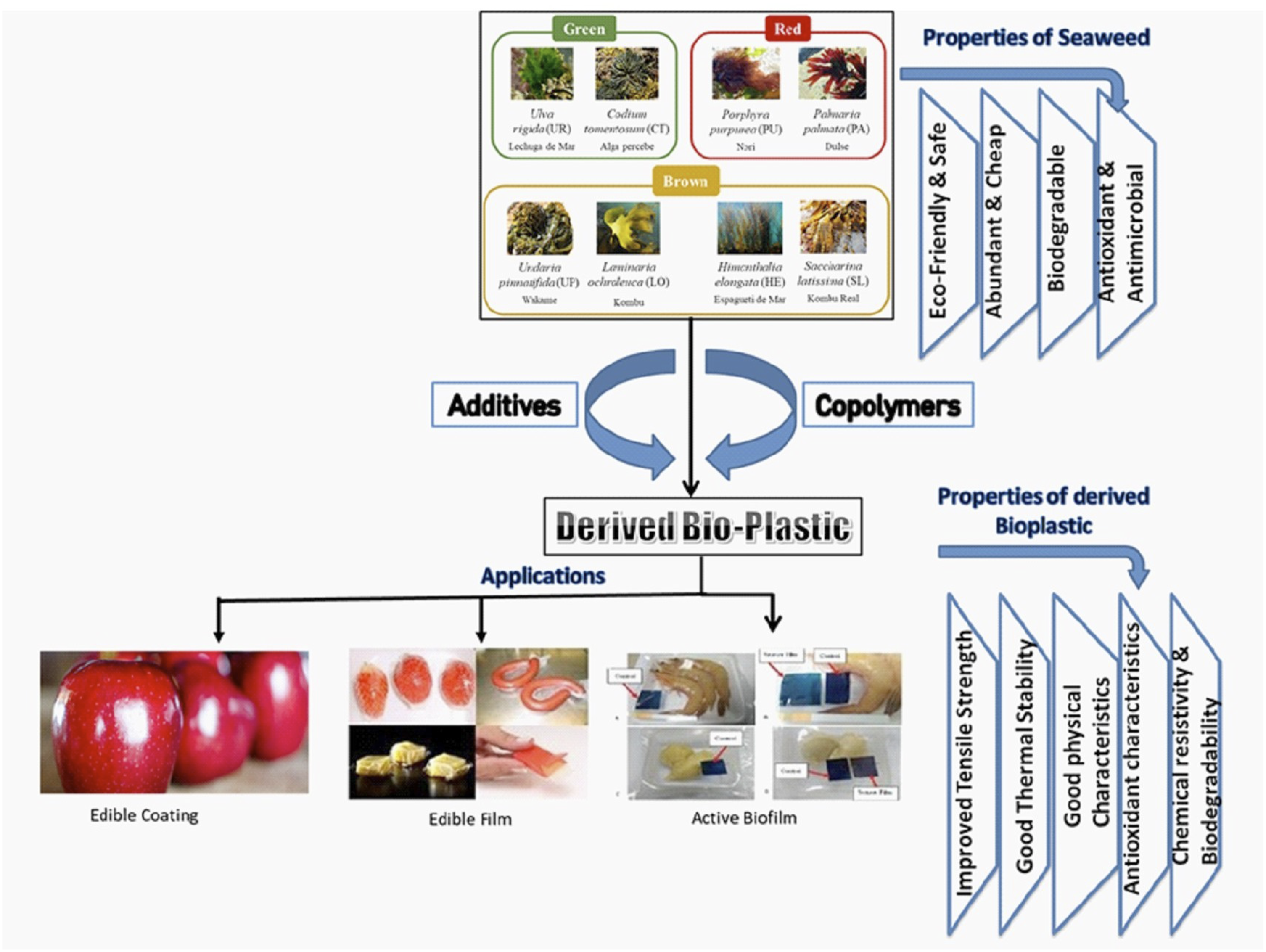
The growing environmental and health concerns associated with petroleum-based conventional packaging have intensified the search for sustainable alternatives. While terrestrial crop-based biopolymers have been explored, seaweed-derived polysaccharides remain underutilized despite their superior ecological benefits. Existing reviews primarily focus on material characterization and biodegradability of biopolymers, lacking comprehensive integration of recent extraction innovations (2020–2025), mechanical reinforcement strategies, quantitative performance analysis, lifecycle sustainability, economic viability assessments for seaweed-based packaging. This review uniquely synthesizes advances in enzyme-assisted, microwave-assisted, and ultrasound-assisted extraction methods with nano-reinforcement strategies, providing comprehensive techno-economic analysis of seaweed polysaccharides (alginate, carrageenan, agar, ulvan, fucoidan, laminarin) for food packaging. The review integrates material science innovations with lifecycle assessments, market forecasts and commercialization roadmaps. Systematic literature analysis from Scopus, Web of Science, and Google Scholar (2019–2025) using defined inclusion criteria: peer-reviewed studies with experimental validation, quantitative analysis, and sustainability metrics. (1) Advanced extraction methods improve polysaccharide yield and purity while lowering energy use. (2) Blending with PLA/PHB and nano-reinforcement (ZnO/AgNPs) enhances mechanical strength and antimicrobial performance. (3) Seaweed-based films effectively extend the shelf life of perishable foods. (4) Although current production costs are higher than conventional plastics, life-cycle assessments show environmental and waste-management benefits. (5) Market outlooks suggest strong growth potential driven by regulations and increasing consumer preference for sustainable packaging. Seaweed-derived polysaccharides represent viable and sustainable alternatives to conventional plastics and terrestrial biopolymers, offering a superior environmental profile and functional versatility for food packaging applications. However, their large-scale commercialization requires cost-effective biorefinery optimization, standardized processing, hybrid material design for enhanced performance, and supportive policy frameworks. This review outlines key pathways linking research innovation to industrial-scale adoption in sustainable food packaging.
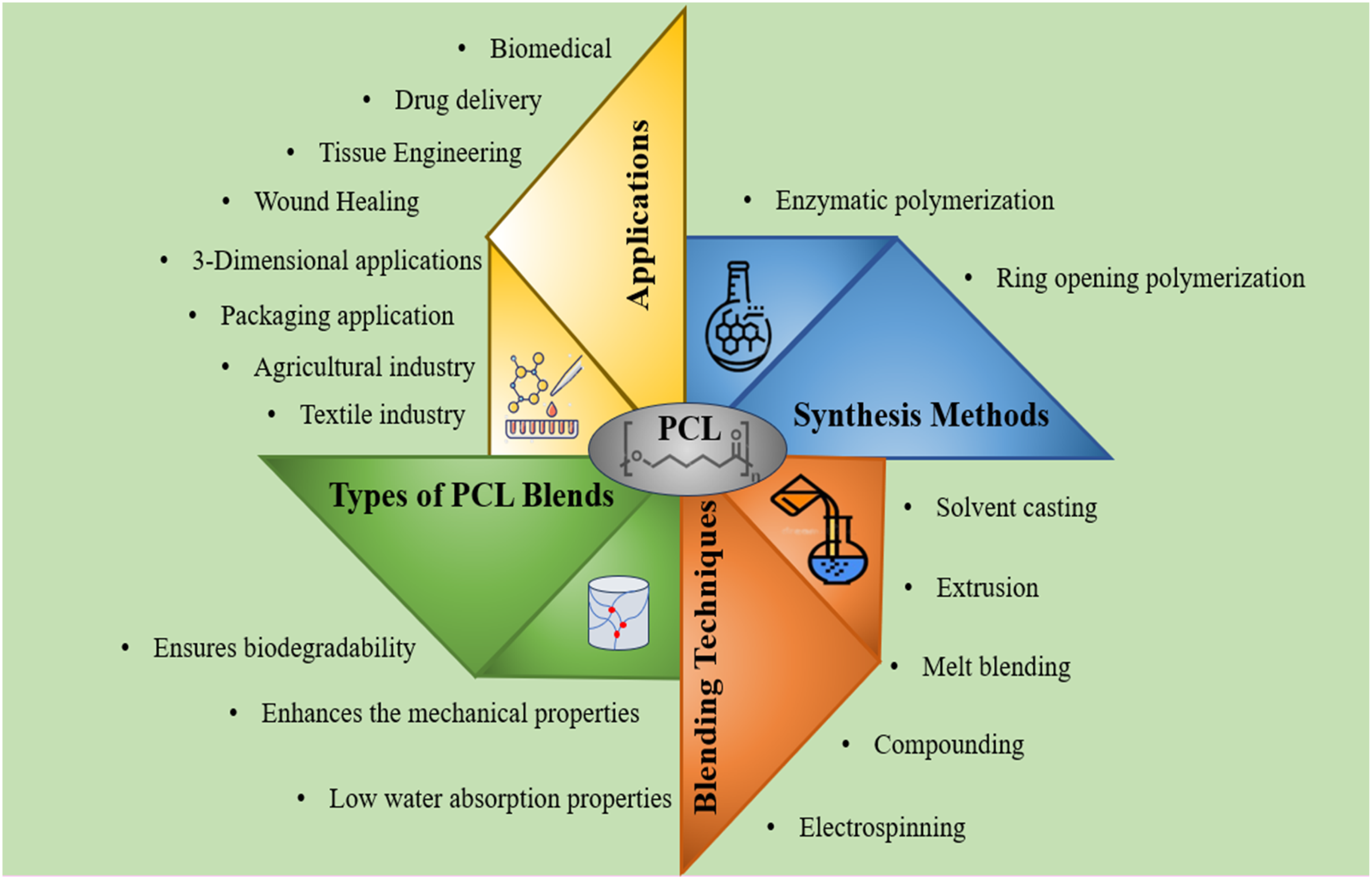
Available accessReview articleFirst published August, 2026pp. 219-256Polycaprolactone (PCL) is a biodegradable polyester with a wide range of applications in the biomedical field, environmental field, and sustainable packaging sector. Due to the continual improvements being made to PCL, this review article aims to consolidate these developments and provide direction for future research. It provides an overview of contemporary advancements in the preparation and modification of PCL as well as some of the innovative techniques that have been introduced. In addition, innovative techniques for preparing PCL via the use of ring-opening polymerization of advanced catalysts and the use of blending techniques (i.e., solvent casting, extrusion and melt blending) to enhance the properties of PCL with other biopolymers are discussed. Safety and regulatory issues were also addressed, including information on the potential for nanotoxicological side effects, in vivo inflammatory responses, and compliance with European Union (EU) and US Food and Drug Administration (FDA) regulatory requirements. Limitations of PCL include mechanical properties, hydrophobicity, slow degradation and scalability, and methods of overcoming these limitations are also discussed. Valued from an economic, environmental, and regulatory standpoint, PCL has potential as a sustainable material for the production of medical devices. Further research should target improving multi-functionality, biocompatibility, and performance of PCL in specific applications. The goal of this review is to combine recent technical accomplishments with the necessary elements for researchers and commercial users to move forward toward the development of high-value and sustainable applications of PCL.
Available accessResearch articleFirst published August, 2026pp. 257-273, Stéphane Bruzaud, Nadia AoudiaThe use of marine biomass in polymer matrices as viable approach to designing new sustainable materials is becoming increasingly common. The development of sustainable polymer composites reinforced with renewable resources has attracted increasing attention. In this study, poly(lactic acid) (PLA)-based biocomposites reinforced with brown seaweed powder (
Available accessResearch articleFirst published August, 2026pp. 274-294, Michaela Džuganová, Katarína Tomanová , [...]Calcium lignosulfonate was dosed to acrylonitrile-butadiene rubber in constant amount of 50 phr. Glycerol and ethylene glycol as cheap and highly available low molecular weight substances were used as plasticizers for rubber compounds. They were added into formulations in the amount ranging from 5 to 30 phr. The work was focused on investigation of plasticizers on curing process, rheology, morphology, mechanical and dynamical-mechanical properties of tested formulations. The results revealed that the addition of plasticizers resulted in the decrease in minimum and maximum torques. This points to the decrease in rubber compounds’ viscosity, which was clearly confirmed by rheological measurements. It was demonstrated that plasticizers plasticize both the rubber matrix and the biopolymer. This led to better dispersion and distribution of lignosulfonate and higher adhesion between the rubber and the filler on their interface. Due to its three hydroxyl groups, glycerol possesses a higher polarity than ethylene glycol. This increased polarity enhances its plasticizing efficiency within rubber compounds, particularly regarding the biopolymer, resulting in a more uniform dispersion throughout the rubber matrix. Plasticized lignosulfonate formed small soft domains of high deformability acting as a reinforcing filler contributing to the improved tensile characteristics of vulcanizates. A remarkable increase of tensile strength in more than 6.5 MPa was recorded for the vulcanizate with 20 phr of glycerol when compared to the reference (from 3.7 MPa up to 10.3 MPa). The elongation at break increased by more than 200% at high amounts of both plasticizers, again with higher contribution of glycerol. Dynamic-mechanical analysis indicated the emergence of two peaks in the loss factor temperature dependences, implying the development of the two polymer phases, namely the rubber matrix phase and the lignosulfonate phase, within the vulcanizates due to the application of plasticizers.
Available accessResearch articleFirst published August, 2026pp. 295-320, Pankaj Kumar GuptaHybrid composites can replace traditional materials due to their lightweight nature, high strength, and impressive performance. This paper investigates the hybrid J-C-G composite’s mechanical and abrasive wear performance. Hybrid and non-hybrid composites were manufactured using woven jute, unidirectional carbon, and glass fabric via the hand layup. The stacking sequencing and hybridization results were tested on Tensile, Flexural, and wear. The stacking sequence and hybridization of materials have been noted to exert a substantial influence on the mechanical and tribological properties. The effect of three-factors, load, sliding velocity, and distance on wear and coefficient friction were investigated. The reinforced composite specimen was tested under applied loads of 20 N and 150 N, sliding velocities of 2 m/s and 8 m/s, and varying sliding distances of 1000 m and 1500 m, respectively, as per ASTM G99 standard. The results indicated that wear loss increased with higher sliding velocities and loads. The results show that Jute-Carbon-Glass (JCG) composites have a tensile strength of 300 MPa, comparable to synthetic composites. This suggests that up to two layers, or 33%, of synthetic fibres, can be replaced with natural fibres without reducing tensile strength. The tensile strength differs significantly between JCG and GJC composites. The tensile strength of JCG composite is 300 MPa, whereas the GJC composite has a tensile strength of just 28.40 MPa—representing a 956.34% increase from GJC to JCG. GJCs and JCGs with identical weight fractions of their materials show different wear values, 54.80 µm and 42.26 µm, respectively This study aims to assess the novel impact of stacking sequences on the mechanical and wear performance of hybrid Jute-Carbon-Glass (J-C-G) composites, with a focus on stacking sequence, hybridization, and test conditions (load, sliding velocity, and distance), to promote lightweight and cost-effective solutions.