Letter
Select search scope: search across all journals or within the current journal
1-20 of 135 articles

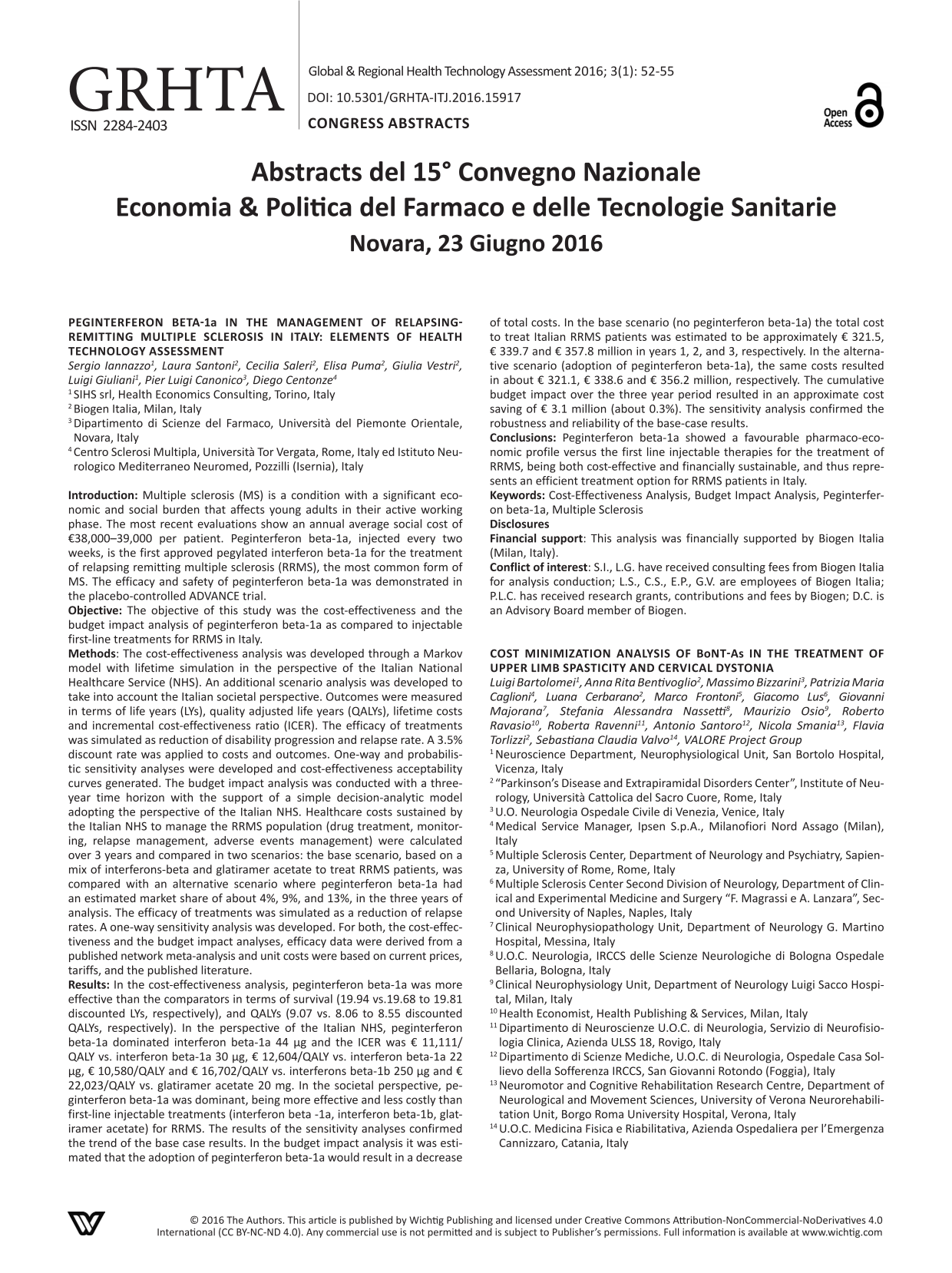
Botulinum toxin type A (BoNT-A) injections are recommended for the management of upper limb spasticity (ULS) and cervical dystonia (CD). The main aim of this cost minimization analysis (CMA) was to compare the annual cost per patient for three BoNT-As (Botox®, Dysport® and Xeomin®) in the treatment of ULS or CD in Italy. A budget impact analysis (BIA) was also conducted.
The CMA was conducted from the perspective of the Italian National Health Service. Only direct medical costs (BoNT-A and standard therapy) were considered. By using a Delphi panel of twelve Italian Experts in the treatment of ULS and CD, data was collected about BoNT-As (dose, number of administrations and acquisition price) and standard therapy (concomitant medications, visits, Day-Hospital, hospitalizations, etc.). Costs were assessed in Euros 2014. The BIA was conducted to evaluate the pharmaceutical expenditure for the three BoNT-As on a five-year time horizon. A sensitivity analysis was conducted.
The mean annual cost per patient with ULS was €1,840.20 with Dysport®, €2,067.12 with Botox® and €2,171.05 with Xeomin®. The mean annual cost per patient with CD was €1,353.79 with Dysport®, €1,433.12 with Botox® and €1,503.60 with Xeomin®. In the time horizon considered, the substitution process of Botox® and Xeomin® by Dysport® would result in a total saving of €620,000 when treating ULS and a total saving of €481,000 in the case of CD. Sensitivity and probabilistic analyses showed the robustness of results.
From the Italian National Health Service's perspective, Dysport® appears to be the cost-saving therapeutic option compared with Botox® and Xeomin® in the treatment of ULS or CD.

Concerns are growing about CNS drug prescription because of professional responsibility. This is due to Regulatory Authorities reimbursement policies aimed at promoting generic drugs because of their cost saving potential; this attitude, however, often does not take into account the primary goal of maintaining patient adherence to therapy. This situation is more complex in the psychiatric setting for chronic patients with cognitive or personality disorders. This article provides a review of regulatory, pharmacological and clinical issues (e.g. compliance) involved in the appropriate prescription of brand and generic drugs. It is important that medical prescribers are aware of these issues in order to comply with good clinical practice – given the specific characteristics of psychiatric patients – for a successful antipsychotic therapy in the era of generic drugs.
In recent years public health systems have faced the challenge of ensuring sustainable costs for innovative medicinal products. The aim of this study is to analyse pricing behaviour applied in the Italian oncology sector.
The study examined all new oncologic compounds that are reimbursed in Italy, for utilization in the first-line metastatic setting. A regression model was developed to analyse the relation between drug price, clinical benefit, market potential and the year in which reimbursement was granted in Italy. The clinical benefit was measured by increment in Overall Survival respect to standard of care; two different metrics were considered, namely median and mean.
The analysis revealed a strong correlation between price and clinical benefit and a weak negative correlation between prices and volumes; no time trends were observed in reimbursement price reduction. As regards pricing, the Italian Medicines Agency seems to have maintained basically consistent reference levels over the 10 years. Nevertheless, the analysis highlighted significant differences: some compounds showed lower prices than expected; conversely, vemurafenib, sunitinib and, to a much lesser degree, pazopanib prices were higher than expected. The only drug for which price evaluation is inverted depending on whether median or mean values are used is ipilimumab, the only immunotherapeutic compound considered.
The study highlights the extent to which the value of oncological drugs depends on the endpoints considered in the analysis, as well as on the metric adopted, confirming that the decision must be multidimensional, as required by an Health Technology Assessment rationale.
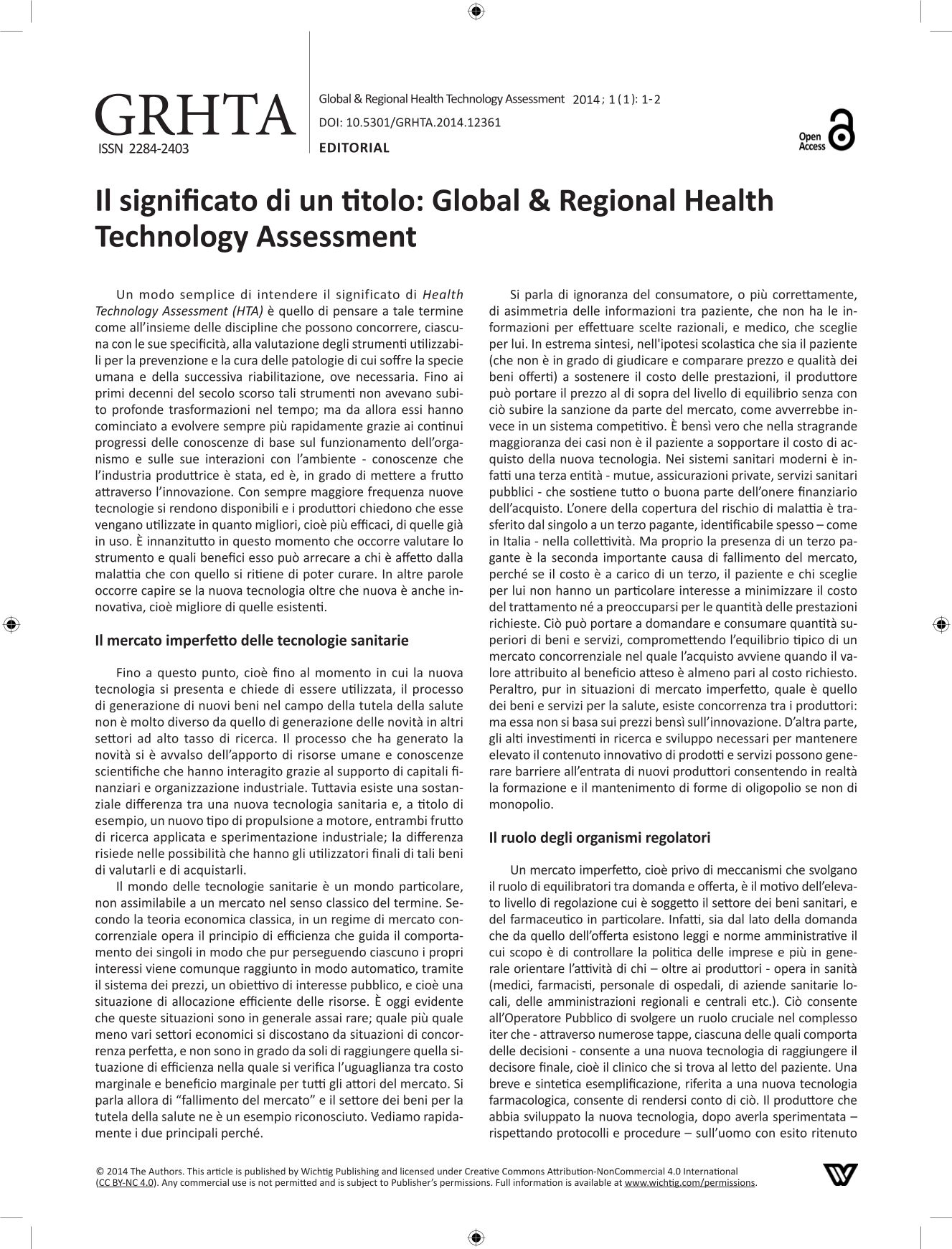
Arising with the launch of generic drugs into the pharmaceutical market, the issue of the equivalence among drugs has grown in the course of time, expanding from chemical to biological and biotechnological substances. Far from being a merely academic topic, it implies a tangible clash of interests between providers (the industry) and buyers (public and private health care agencies) of an ever growing number of products. Regional, national and international regulations and laws are piling up, together with some confusion in such a complicated matter. This article aims to bring some clarity, starting from the terms used.
Defining therapeutic innovation is a key point to determine the price of newly marketed drugs; however, a pre-requisite for an appropriate management of innovation is that some general rules have been identified to recognize the therapeutic value of any pharmacological agent. These issues are a matter of debate for Regulatory Agencies and for the scientific community as well.
Cost-effectiveness principles still represent the main approach to quantify the economic value of a drug based on its clinical effectiveness, and QALYs still represent the main tool to compare outcomes across different therapeutic areas. The main problem in this area is represented by the difficulty in translating general principles into practical decisions. Factors that still hamper the application of the value-based approach include organizational constraints (e.g. drug fixed budgets), the lack of familiarity with cost-effectiveness by most decision-makers, and the history of local decisions.
Within the Italian federalist framework, national and regional governance tools for pharmaceutical care have been developed in recent years. From a financial perspective, the pharmaceutical outpatient expenditure has already been put under control and this has markedly contributed to reducing the overall costs. The hospital pharmaceutical expenses instead have grown. On this last element bears how innovative and expensive drugs are introduced and managed; among these drugs, cancer drugs have a decisive role.
In the last years the AIFA (Agenzia Italiana del Farmaco - Italian Drugs Agency) policies regarding the adoption process of new drugs have stressed the concept of value for money: any innovative and expensive drug is linked to a web-based control register in order to monitor outcomes. The aim is to relate the drug price to the obtained results (payment by result and risk-sharing) or at least to institute simple financial agreements (cost-sharing) that can be defined as managed entry agreements (MEA). The critical point that can cause equity problems is the way these national governance tools are applied in different regional contexts. There are in fact marked differences among Italian regions. Most regions are aware that the only way to rule the system, and in particular the use of innovative drugs, is to have stronger evidence-based management tools able to connect different systems of oncological prescriptions. The aim is to follow patients in different care settings in order to measure the pathway phases in terms of consumption, costs and quality outcomes and therefore evaluate in actual practice the value for money of innovative drugs.
Chronic Obstructive Pulmonary Disease (COPD) is a major cause of chronic morbidity and mortality worldwide. The clinical trial by Bateman and colleagues, that enrolled 3,991 moderate to very severe COPD patients in 31 Countries, demonstrated that tiotropium bromide delivered via the Respimat® inhaler can delay the time to first exacerbation and reduce overall exacerbation rates. The aim of our study was to estimate the costs associated with this device utilization to treat COPD in Italy.
The analysis was conducted from the perspective of the Italian National Health Service (INHS) with a time horizon of one year. Tiotropium delivered with the Respimat® inhaler on top of the standard of care (SoC) was compared with SoC alone. Effectiveness was measured in terms of relative risk of exacerbations, derived from the Bateman trial. The average costs for routine COPD treatment and for the management of exacerbations were based on the economic literature. The total cost per patient/year was €3,469 (routine cost €670; exacerbation cost €2,799) with SoC and €3,369 (routine cost €840; exacerbation cost €2,529) with tiotropium in add-on to the SoC. The total saving per patient/year was about €100, corresponding to 2.9% of the total annual cost. Taking into account the total population with moderate to very severe COPD in Italy (1,880,500 patients, according to the available epidemiological data), this treatment strategy would result in a total saving of about €188 million per year. In conclusion, this study showed that adoption of tiotropium bromide delivered via the Respimat® inhaler has the potential to reduce the economic burden of COPD in Italy.
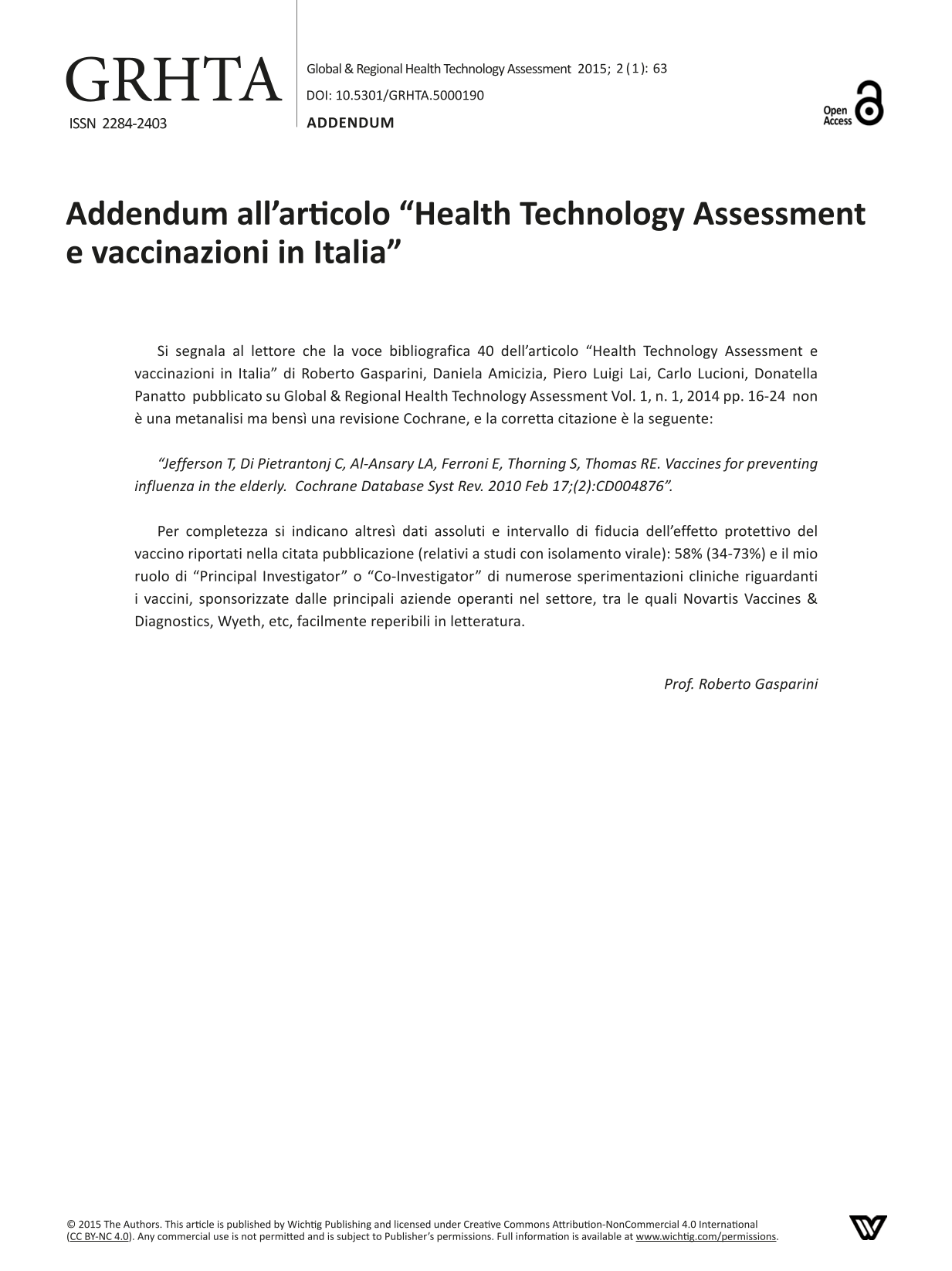
Vaccines are a basic investment in the long term, both for Countries and the whole world – where they are estimated to save 2.5 million lives among children each year. In this perspective vaccine research and development are intensifying; several novel vaccines are authorized, implying that health decision-makers more frequently face constraint problems in planning the available resource allocation.
Health Technology Assessment (HTA) is now acknowledged as a key tool for supporting decision-makers in making their choices. HTA is a multidisciplinary method, and the purpose of this article is to outline the issues to be taken into consideration when evaluating the introduction of a new vaccine: epidemiology of the illness, actors involved in its prevention, analysis of the available evidence, mathematical modeling and economic evaluations, ethical aspects, organizational impact on health care facilities and health professionals due to the vaccination campaigns.

Ipilimumab, a fully human monoclonal antibody that blocks CTLA-4 to promote anti-tumour immunity, was the first treatment in metastatic melanoma to show a significant survival benefit.
A three-health-state partitioned survival model was developed to assess ipilimumab 3 mg/kg compared to dacarbazine and vemurafenib in first line therapy of advanced melanoma treatment-naive patients in Italy. The outcomes considered were costs, life years (LYs) and quality-adjusted life years (QALYs). Given the lack of trials assessing ipilimumab 3 mg/kg in this subgroup of patients, the efficacy was derived from a dataset of chemo-naive patients. Patient's management costs were estimated based on a micro-costing approach and the cost of adverse events based on both outpatient and inpatient care. Utilities considered were elicited from ipilimumab's clinical trials.
Basecase results showed that ipilimumab was both more costly and more effective than dacarbazine, with ratios of €38,345/LYs and €49,466/QALYs. By contrast, results vs. vemurafenib showed a marginal increase in health outcomes accompanied by a saving of €32,999, thus making ipilimumab the dominant strategy over vemurafenib in the base-case analysis. Sensitivity analysis showed overall robustness of the model.
Treatment with ipilimumab showed better results in terms of LYs and QALYs against both comparators. Moreover, ipilimumab was the dominant strategy compared to vemurafenib, thus highly likely to bring both health benefits and cost savings in the Italian setting.
The high prices of new cancer drugs are likely to undermine national health services sustainability. As a solution to this problem, the “payment-by-results” method was proposed and nowadays this approach is commonly implemented by national drug agencies: the drug manufacturer is set to refund to the National Health Service the price of the drug if the benefits expected for the patient are not achieved. Based on the payment-by-results approach, we developed a new and easy to implement model, that can set a fair price, so that neither industry, nor National Health Service can obtain an undue gain. Obviously, this price can be modified adjusting refund amounts to new healthcare and market conditions.
An area-under-the-curve Markov model was designed to evaluate the cost-effectiveness of ponatinib as a third line treatment of Chronic Myeloid Leukemia-Chronic Phase (CML-CP) with reference to Italy. As for current guidelines, comparators were dasatinib, nilotinib, bosutinib, allogeneic stem cell transplantation (SCT), hydroxyurea. The economic perspective was the Italian National Health Service's (NHS), where costs for treatment drugs, monitoring and follow-up, adverse events, SCT procedure were considered on a lifetime span. Costs (mainly based on current tariffs in Italy) and benefits (QALYs) were discounted at a 3.5% annual rate. Ponatinib resulted dominant versus SCT. The lowest ICER was €13,090 (ponatinib vs hydroxyurea); the highest was €22,529 (ponatinib vs dasatinib). Sensitivity analysis – both deterministic (one way) and probabilistic – was focused on the comparison between ponatinib and dasatinib. The deterministic analysis showed that the most critical parameter in the model was ponatinib price, a 20% increase of which would imply a 63% increase in the base case ICER (from €22,529 to €36,871). In the cost-effectiveness plane, ponatinib consistently resulted more expensive but also more effective than dasatinib. Assuming as a threshold value the range indicated by the Health Economics Italian Association (€25,000-€40,000), the acceptability curve showed that ponatinib would be cost-effective with about a 50% probability when compared to the lower value (90% probability when compared with the higher). This analysis suggests that treating CML-CP with ponatinib provides a substantial clinical benefit as compared with current alternatives, with an incremental survival of 3-4 QALYs and at reasonable costs from the perspective of the Italian NHS. Sensitivity analysis confirmed the robustness of these results.
Scope of this paper was to conduct a budget impact analysis (BIA) of the introduction of dapagliflozin as add-on therapy to metformin in the perspective of the Italian National Health Service (NHS).
Clinical data were drawn from a recent network meta-analysis (NMA) which, based on a systematic literature review and Bayesian statistical approach, analysed RCTs enrolling subjects with type 2 diabetes inadequately controlled on metformin monotherapy. After 1 year, compared to dipeptidyl peptidase-4 (DPP-4) inhibitors, thia-zolidinediones (TZDs) and sulphonylureas, dapagliflozin showed similar HbA1c control, with similar or reduced risk of hypoglycaemia and with the additional benefit of weight loss.
Data from the NMA were included in the BIA which comprised estimates of number of patients treated as well as the costs of drugs, of hypoglycaemia stripes, of severe hypoglycaemic and cardiovascular events. Unitary costs of resources were retrieved from local published sources and tariff lists. Sensitivity analyses were performed to test the robustness of the model.
The BIA model results show a potential reduction of the NHS' budget for patients treated with drugs in add-on to metformin in the size of 2.3 to 1.6 Million Euros in the 3 years following launch of dapagliflozin. This level of saving was maintained even when sensitivity analyses were performed to exclude the costs of diabetes self-monitoring and of severe hypoglycaemias.
Dapagliflozin can represent a convenient therapeutic option for the Italian NHS, as an add-on therapy, in the treatment of type 2 diabetes patients who failed control with metformin alone.

The recent availability of innovative, costly cancer drugs has prompted the search for a sustainable health economics model that would allow universal access to treatment coupled with long-term viability of the national health system.
The huge R&D investment and the relatively short life of drugs, which must face not only the market entry of competitor products but also a growing trend to limit the type and number of patients in whom their use is allowed, are the main factors underlying the high unit cost of innovative drugs; this ultimately has a major impact on overall drug expenditure, especially for in-hospital treatment.
To facilitate the inclusion of innovative drugs and maximize their beneficial effect on patients, we need to increase the efficiency of the national health system overall, and be able to measure the costs that can be avoided through a coherent HTA system apt to leverage synergies at a regional level, thereby freeing wasted resources that can be better invested in this area.
Secondly, the continuous monitoring of an innovative drug throughout its life cycle, based on the correct comparative evaluation of its efficacy for each therapeutic indication, can lead to a more refined definition of drug prices. Furthermore, cost containment must in all instances include appropriate negotiation of the unit price based on the overall volume acquired.
Last but not least, a significant R&D investment in clinical research is a fundamental step that can leverage synergies between public funds and contributions from pharma companies, allowing to overcome systems based on ceilings and/or payback models that, in the current scenario, appear undoubtedly outdated.


To evaluate the cost-effectiveness of paliperidone palmitate (paliperidone long-acting injectable; PP) compared with long-acting injectable risperidone (RRP) in multi-episode patients (two or more relapses) with schizophrenia in Italy.
A pre-existing Markov model was utilized to simulate the history of a cohort of multi-episode patients transitioning through different health states on a monthly basis over a 12 or 24 month horizon from the perspective of the Italian National Health Service. Therapeutic strategies consisted of treatment with long-acting injectable risperidone (mean dose 37.5 mg every 2 weeks) or paliperidone palmitate (mean dose 75 mg equivalent [eq.] every month). Probability of relapse, level of adherence, side effects (extrapyramidal symptoms, tardive dyskinesia, weight gain and diabetes) and treatment discontinuation (switch) were derived from long-term observational data when feasible. The cost-effectiveness analysis considered quality adjusted life-years (QALYs) and direct medical costs. QALYs and costs (expressed in 2014 euro) were discounted at 3% annually. A one-way sensitivity analysis and a probabilistic sensitivity analysis were conducted.
Paliperidone palmitate is the dominant long-acting injectable therapeutic option: a more effective (additional QALYs, less relapses) and less costly treatment option compared with long-acting injectable risperidone over a 12 or 24 month horizon. Results were robust when tested in sensitivity and probabilistic analyses.
Paliperidone palmitate was cost-saving from the Italian National Health Service perspective compared with long-acting injectable risperidone in the long-term treatment of multi-episode (two or more relapses) schizophrenia patients.