






Abstract
The present research work investigated the influence of biodegradable polymer coatings of hemp fiber on the structural, water absorption, mechanical, and tribological properties of hemp fiber and hemp fiber reinforced epoxy composites (HFREC). Hemp fibers were initially treated with sodium hydrogen carbonate and then coated with biodegradable polymers like polyhydroxybutyrate (PHB) and polylactic acid (PLA). Scanning electron microscopy (SEM) images of the coated fibers showed a visible change in fiber surface and improvement in surface roughness, while; X-Ray diffraction (XRD) analysis indicated the improvement in crystallinity of the coated fibers resulting in enhanced interfacial adhesion between the coated fibers and the epoxy matrix. The experimental results also revealed that both PHB and PLA coatings of the fibers have resulted in improvement of water resistance and mechanical properties such as tensile strength, modulus, and impact strength of coated HFREC. Tribological test results also revealed that the coated HFREC have improved wear and frictional properties in comparison to uncoated HFREC. The best tribological and mechanical properties were exhibited by PLA coated HFREC, which was also confirmed through the SEM images of worn and fractured surfaces of the uncoated and coated hemp fiber composites.
Keywords
Introduction
In the past three decades, scientists and researchers have shown a great deal of interest in using natural fibers as reinforcing materials in polymer composites due to its advantages such as low cost, ease of availability, light weight, and high specific properties.1–3 In addition to the above benefits, natural fibers are also biodegradable and causes less wear and tear to the machining tools. As a result of the above advantages, scientists have started using natural fibers in place of synthetic fibers in manufacturing automotive parts especially the internal panels of the vehicles.3,4 Natural fiber reinforced polymer composites are also used in construction and building materials for structural applications.5,6
However, natural fibers are not entirely free from drawbacks. The major disadvantages of natural fibers are its high-water absorption rate and poor strength in comparison to synthetic fibers. Another major issue with natural fiber is its hydrophilic nature which is primarily responsible for poor bonding with hydrophobic polymer matrix resulting in poor mechanical and tribological properties of natural fiber reinforced polymer composites.7,8 Several researchers have successfully treated the natural fibers with different chemicals to reduce their hydrophilic properties to improve their bonding with the polymer matrices.9–11
Sepe et al. 12 observed minor enhancement in mechanical properties (tensile and flexural) of alkali and silane treated hemp fiber reinforced polymer composites. Swain and Biswas 13 noticed appreciable improvement in fiber-matrix adhesion due to the combination of alkali and benzoyl chloride treatment of jute fiber. Behera et al. 14 investigated the influence of alkali, glutamic acid, and combination of alkali and glutamic acid treatment on sisal fiber and sisal fiber reinforced epoxy composites. They observed that all the treated composites showed improvement in microhardness values and wear resistance in comparison to untreated composites. Liu et al. 15 chemically modified the surface of corn stalk fiber with the silane coupling agent and observed that the chemical modification has improved the mechanical and tribological properties of the composites reinforced with silane-treated corn stalk fibers.
A few scientists and researchers have used a new and innovative technique involving coated fibers to strengthen the fiber–matrix interfacial adhesion. Gupta and Singh 16 investigated the influence of polylactic acid (PLA) coated sisal fibers into the polyester resin. They observed that the PLA coated sisal fiber composites showed the best mechanical, water absorption, and dynamic mechanical properties in comparison to untreated and alkali-treated sisal fiber composites. Rodrıguez and Francucci 17 studied the effect of polyhydroxybutyrate (PHB) coating on jute fibers and reported that the PHB coating had remarkably improved the mechanical properties of PHB coated jute fiber reinforced polymer composites.
Many studies had been conducted to eliminate the drawbacks of natural fiber reinforced polymer composites. The present research work offers an innovative approach to fiber surface modification focused on the use of PHB coated hemp fibers and PLA coated hemp fibers. Prior to the coating, the fibers were also treated with sodium hydrogen carbonate. Both PLA and PHB are completely biodegradable polymers. The aim of this research work is to investigate the mechanical, water absorption, and tribological properties of composites prepared with PHB and PLA coated hemp fibers and an epoxy matrix.
Materials and methods
Materials
Bidirectional hemp fiber mats (density = 1.47 gm/cm3) were obtained from Go green products (Chennai, India). Epoxy matrix (LY 556, density = 1.25 gm/cm3) and hardener were purchased from Aditya traders (Varanasi, India). Sodium hydrogen carbonate was obtained from SRL chemicals (Mumbai, India). PHB and PLA pallets were provided by Eshwari Chemtech (Bangalore, India).
Fiber surface treatments
Sodium hydrogen carbonate (NaHCO3) treatment
Prior to the fiber coating process, the hemp fibers were subjected to sodium hydrogen carbonate treatment by submerging the hemp fibers in 5 wt% solution of NaHCO3 at room temperature for time period of 24 h. The NaHCO3 treated fibers were then properly washed with distilled water for 4–5 times and oven dried for 24 h at 62oC.
Polyhydroxybutyrate coating of fibers
Polyhydroxybutyrate solvent was prepared by submerging 2% w/v of PHB pallets in a chloroform solution. Uniform dispersion of PHB was achieved by heating the solution to 60oC with constant stirring. NaHCO3 treated hemp fibers were then coated with PHB by dipping the hemp fibers in the solution for 5 mins. Finally, the PHB coated hemp fibers were dried at room temperature for 30 h.
Polylactic acid coating of fibers
Polylactic acid solvent was prepared by submerging 2% w/v of PLA pallets in a chloroform solution. Uniform dispersion of PLA was achieved by heating the solution to 60oC with constant stirring. NaHCO3 treated hemp fibers were then coated with PLA by dipping the hemp fibers in the solution for 5 mins. Finally, the PLA coated hemp fibers were dried at room temperature for 30 h.
Composite fabrication
Simple hand layup technique was employed to manufacture the hemp fiber reinforced epoxy composites (HFREC). A silicon mold having a dimension of 180 mm × 180 mm × 4 mm was utilized for the purpose of composite preparation. Four layers (about 20%) of both uncoated and coated hemp fiber mats were placed in the silicon mold, and a 10:1 weight ratio of epoxy and its hardener was fed into the mold. The curing was done for a time period of 24 h by placing a uniform load of 5 kg over the mold and a further curing of 12 h was also done for HFREC sample after removal from the mold.
X-Ray diffraction
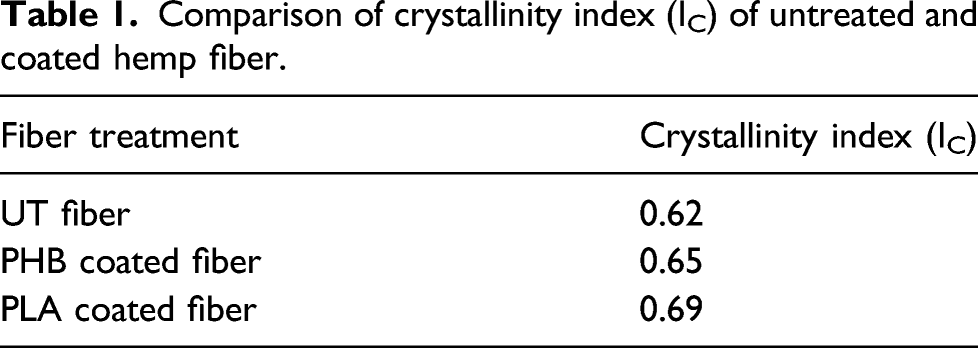
The crystallinity index (IC) of uncoated and coated hemp fibers were determined by recording their X-Ray diffractograms through Rigaku miniflex 600 diffractometer. Equation (1) was employed to determine the IC of the fiber.
Scanning electron microscopy
Investigation of the surface morphology of uncoated and coated hemp fibers, tensile fractured, and wear surfaces of the composites were done by scanning electron microscope (EVO-Scanning Electron Microscope MA15/18 by Carl Zeiss Microscopy Ltd).
Water absorption test
The amount of water absorbed by the HFREC samples were measured by submerging the composite samples for a time period of 24 h–192 h and calculating the change in weight of the composite samples after every 24 h. ASTM D570-98 standard was used to conduct the water absorption test. Equation (2) was used to calculate the percentage of water absorbed by the composite samples.
Mechanical testings
The tensile properties of HFREC specimens (150 mm × 15 mm × 4 mm) were investigated using a 100 kN Instron 5982 universal testing machine in compliance with ASTM D3039 standard. The impact properties of HFREC specimens (125 mm × 13 mm × 4 mm) were investigated by performing the charpy impact test using a Resil impactor impact testing machine in compliance with ASTM D6110-10 standard. Microhardness properties of HFREC were evaluated using a Microindentation Tester:MHT3 (Anton Paar) at test load of 370 gm. All the mechanical tests were replicated for a total of three times for each type of HFREC samples
Tribological tests
A ball-on-block tribological test setup supplied by Ducom Instruments, India was employed to perform the dry sliding wear tests on HFREC samples. The dry sliding wear experiments were performed by rotating the HFREC specimens against a 5.5 mm stationary steel ball. The tribological tests were conducted on all uncoated and coated HFREC specimens at various sliding speeds (2 m/s, 2.5 m/s, 3 m/s, and 3.5 m/s) and normal loads (15 N, 20 N, 25 N, and 25 N). A simple lever mechanism and a friction sensor were used for the application of load and measurement of frictional force, respectively. Equation (3) was used for the calculation of wear volume loss of the composites.
Results and discussion
Scanning electron microscopy images of fibers
Adhesion of fibers with polymers can be predicted by the SEM analysis of the fibers. Figure 1 shows the SEM images of uncoated, PHB coated, and PLA coated hemp fibers. The surface of uncoated or raw hemp fiber was marked by the presence of several impurities like waxy amorphous substances as revealed in Figure 1(a).18,19 These unwanted substances sticking to the fiber surface were responsible for poor fiber-matrix adhesion.
20
However, the SEM images from Figures 1(b) and (c) of hemp fibers coated with PHB and PLA showed that the unwanted amorphous substances and other impurities were removed from the fiber surface and fibrillation was also observed for the coated fibers. This may be because of the sodium hydrogen carbonate treatment of the fibers prior to the polymer coating. Furthermore, both PHB and PLA coating have the ability to transform the hydrophilic nature of natural fibers into hydrophobic nature, which may improve the fiber-matrix adhesion. SEM images of (a) untreated hemp fiber, (b) PHB coated hemp fiber, and (c) PLA coated hemp fiber.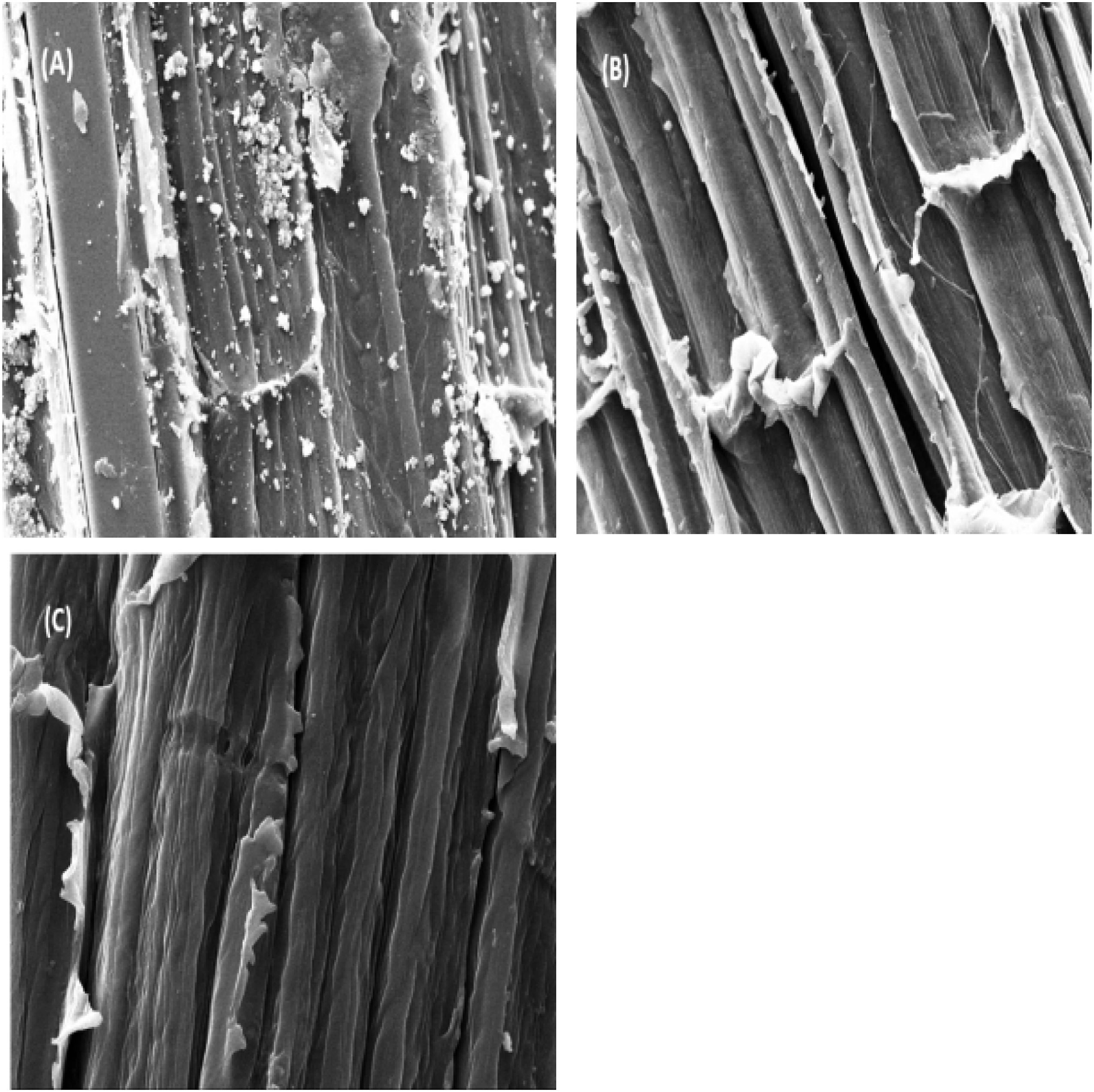
X-Ray diffraction analysis of fibers
XRD analysis of uncoated, PHB coated, and PLA coated hemp fibers were done to study their crystalline properties and their XRD patterns are represented in Figure 2.
21
Crystallinity index of the fibers are represented in Table 1. The highest diffraction intensity (I002) of the crystalline substances of the fibers and the lowest diffraction intensity (Iam) of the amorphous substances of the fibers occurred within a range of 23.64o to 22.12o and 19.41o to 18.20o, respectively, at the two XRD patterns of untreated hemp fiber, PHB coated hemp fiber, and PLA coated hemp fibers. Comparison of crystallinity index (IC) of untreated and coated hemp fiber.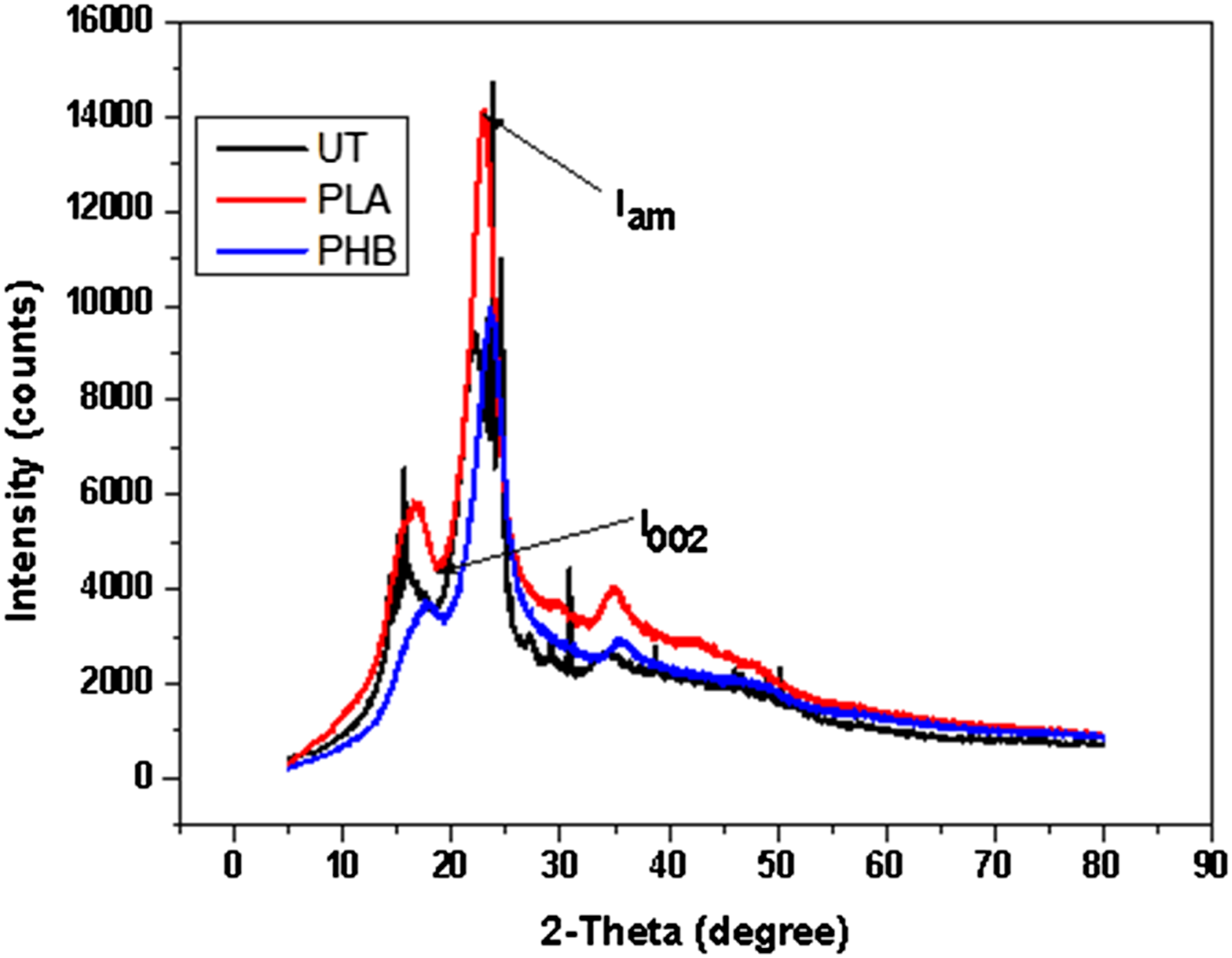
Effect of fiber coatings on water absorption properties of hemp fiber reinforced epoxy composites
Percentage of water absorbed by uncoated, PHB coated, and PLA coated HFREC were displayed in Figure 3. From the Figure 3, it was observed that initially all the HFREC samples, both in case of uncoated and coated fibers, absorb water quickly (upto 120 h) but once the saturation is achieved, the rate of water absorption becomes almost constant. Several researchers also confirmed similar observations.24,25 From the Figure 3, it is also observed that the composites reinforced with PHB and PLA coated fibers had better resistance to water absorption in comparison to uncoated hemp fiber composites and the best resistance to water absorption was shown by PLA coated HFREC. This can be due to the polymer coating of the fiber which may have reduced the hydrophilic nature of the fibers and have enhanced the fiber-matrix bonding.16,26 Percentage of water absorbed by untreated HFREC, PHB coated HFREC, and PLA coated HFREC.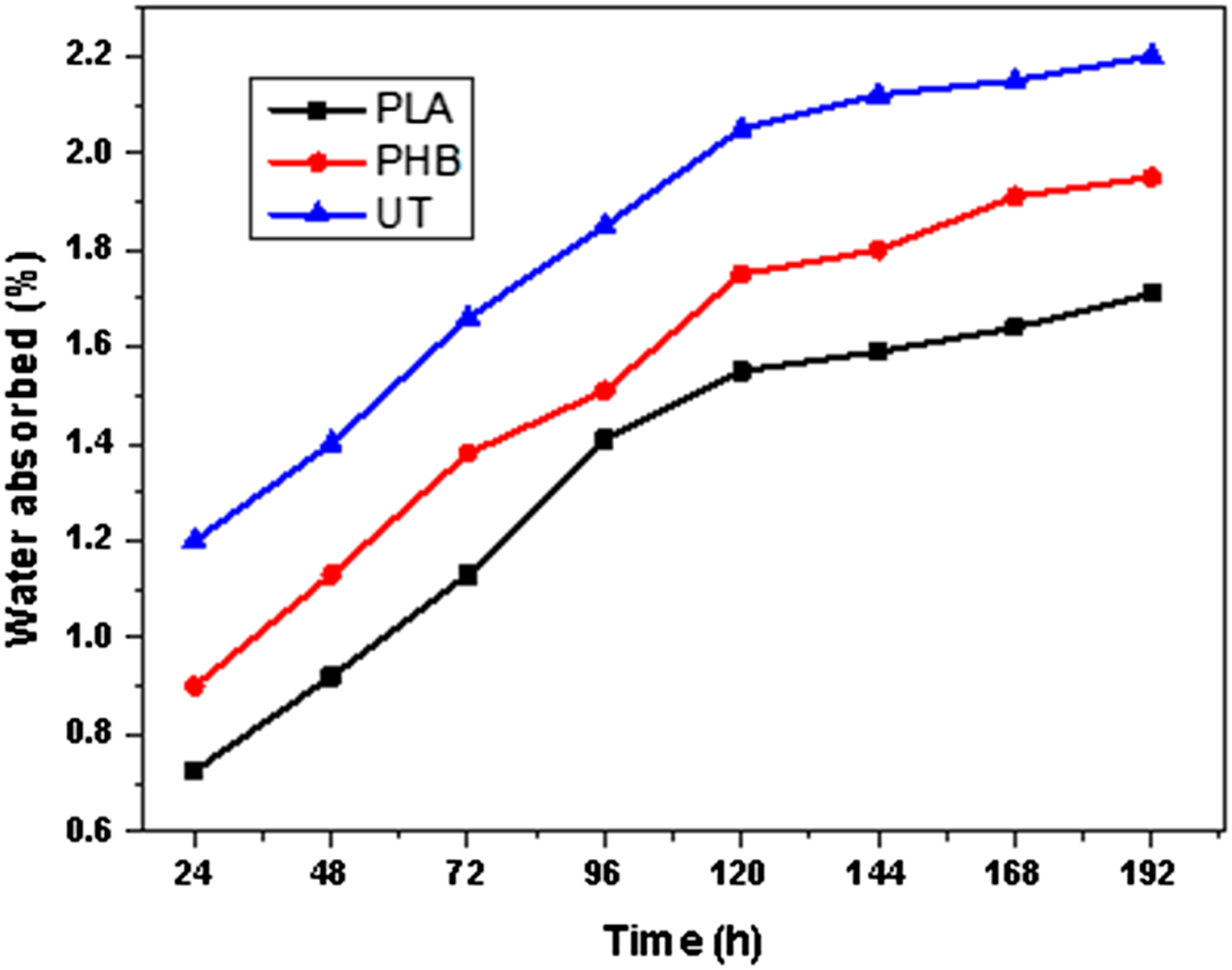
Effect of fiber coatings on mechanical properties of hemp fiber reinforced epoxy composites
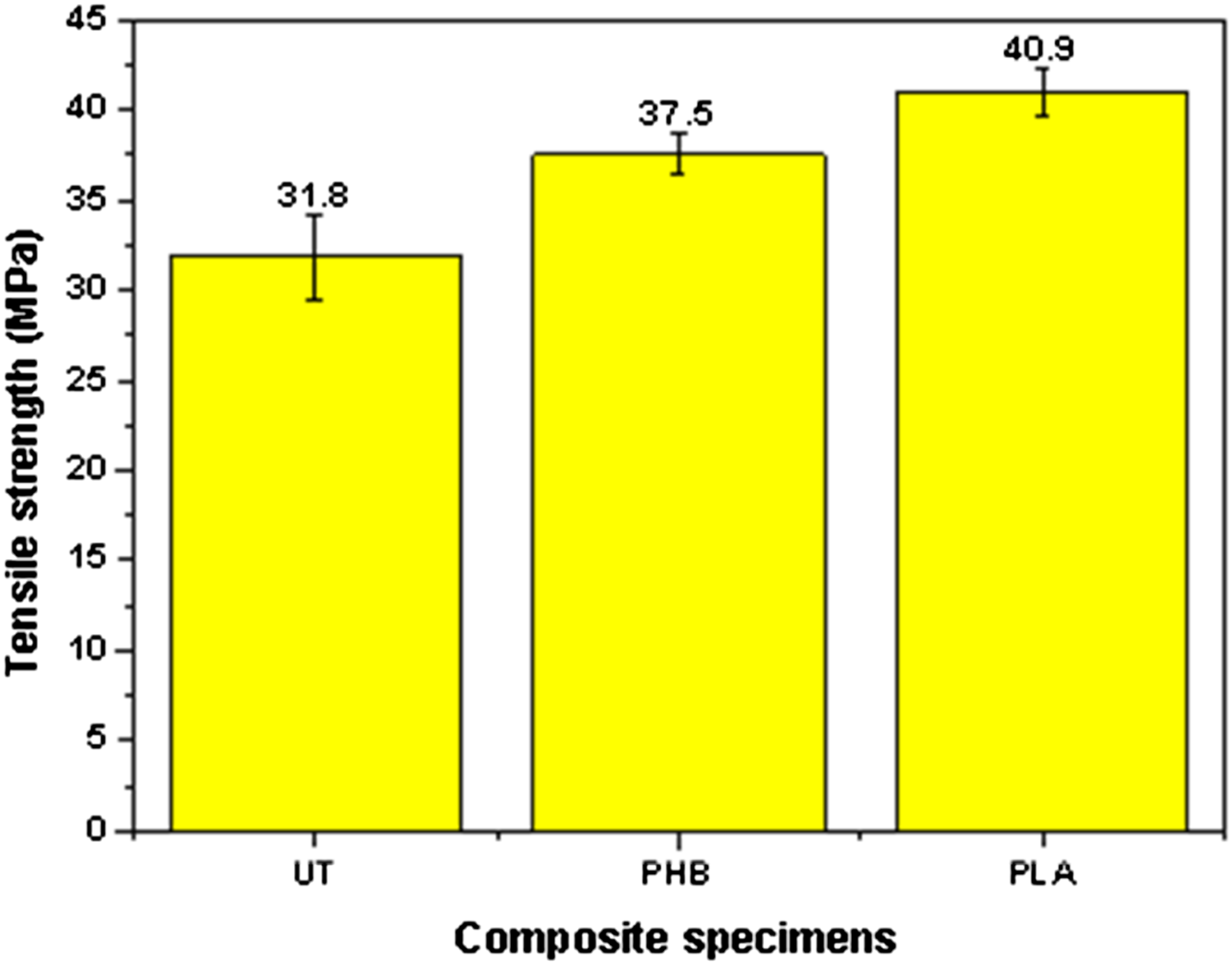
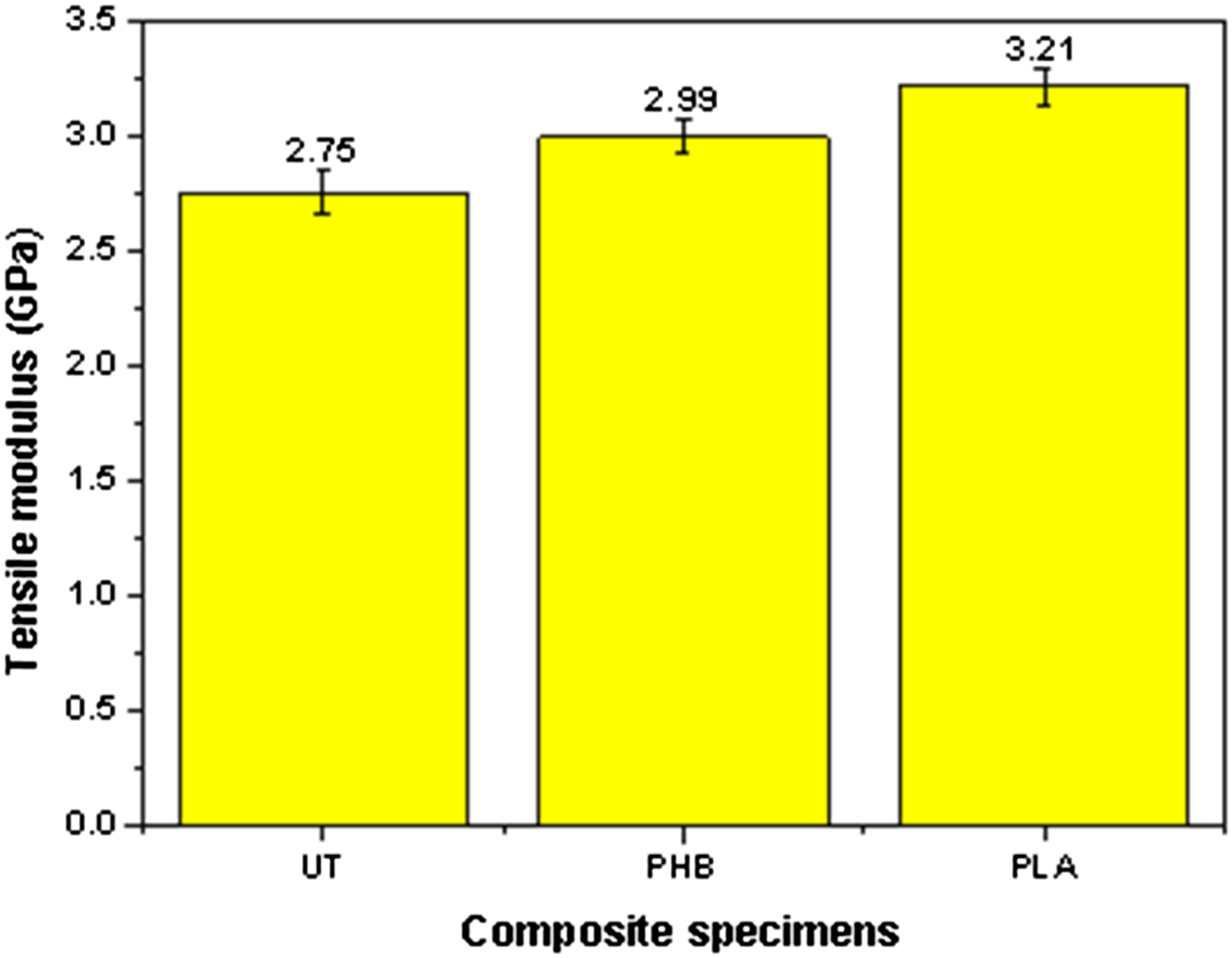
The tensile stress–strain curves obtained from the tensile tests of untreated HFREC, PHB coated HFREC, and PLA coated HFREC were shown in Figure 4. The tensile strength and tensile modulus of uncoated, PHB coated, and PLA coated HFREC were shown in Figure 5 and Figure 6. From the Figure 5 and Figure 6, it is evident that the polymer coating of fiber surface had led to an improvement in both tensile strength and tensile modulus of the composites. PHB coated HFREC and PLA coated HFREC showed an improvement of 17.92% and 28.61% in tensile strength and 8.72% and 16.73% in tensile modulus over composites reinforced with uncoated hemp fibers. Fibrillation of fibers caused by sodium hydrogen carbonate treatment and the ability of both PHB and PLA surface coating to change the hydrophilic nature of the fiber to hydrophobic nature may have resulted in improved mechanical interlocking between the fiber and the polymer matrix which in turn improved the tensile properties of the coated HFREC. Similar results were also observed by several researchers.17,27,28 Stress-Strain curves of untreated HFREC, PHB coated HFREC, and PLA coated HFREC obtained from tensile tests. Tensile strength of untreated HFREC, PHB coated HFREC, and PLA coated HFREC. Tensile modulus of untreated HFREC, PHB coated HFREC, and PLA coated HFREC.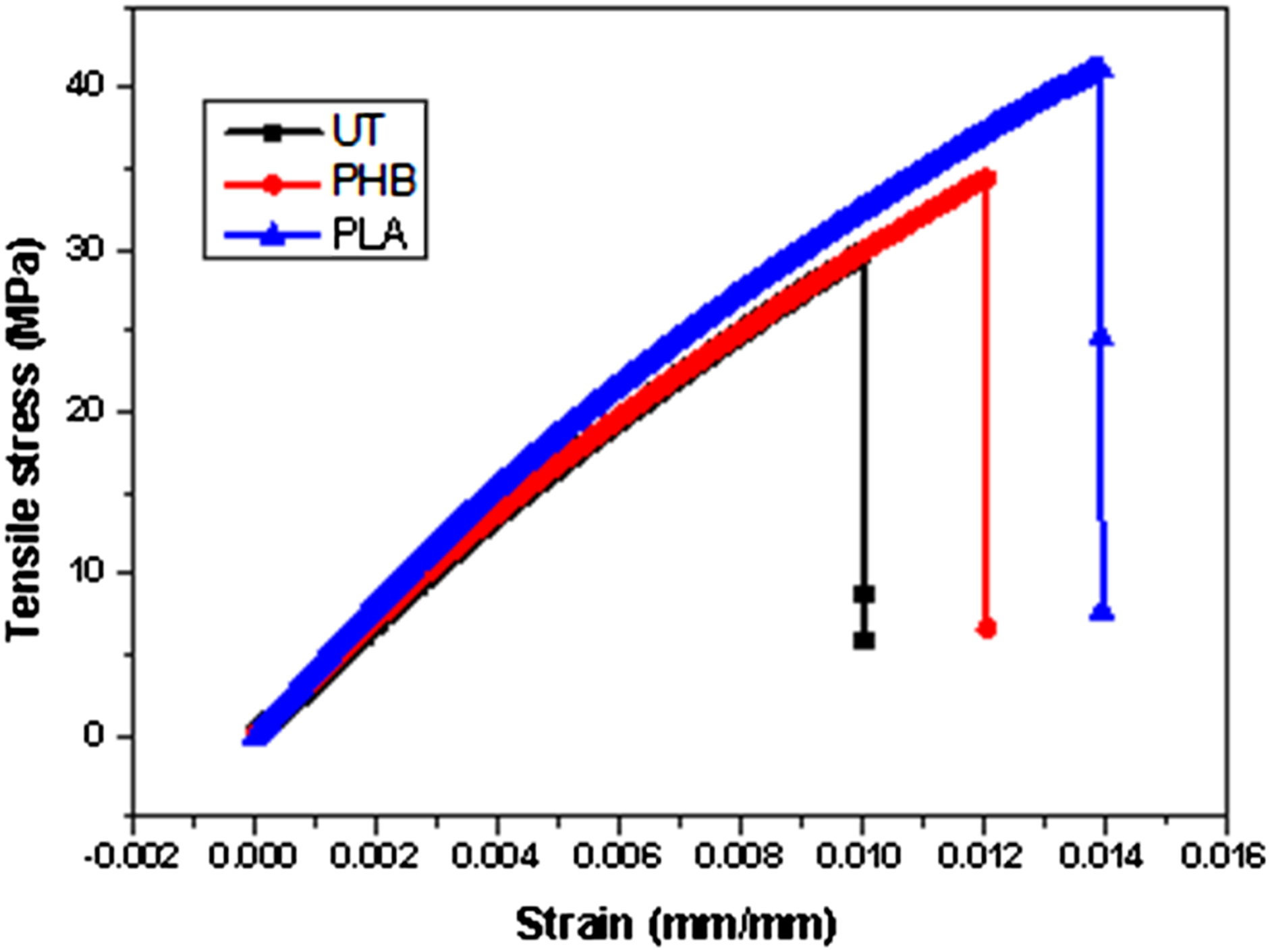
Charpy impact strength of uncoated, PHB coated, and PLA coated hemp fiber composites were displayed in Figure 7. From the Figure 7, it is observed that similar to the tensile properties, the impact strength of PHB coated, and PLA coated hemp fiber composites also showed an improvement of 40.21% and 47.82% in comparison to the impact strength of uncoated fiber composites. The fibrillation of elementary fibers due to the sodium hydrogen carbonate treatment results in a greater interfacial area and the deformation of the ductile polymer coating around the fibers during the fracture of the specimens may have absorbed some energy, allowing the impact energy of these specimens to be larger than the uncoated hemp fiber composites.16,17,28 Impact strength of untreated HFREC, PHB coated HFREC, and PLA coated HFREC.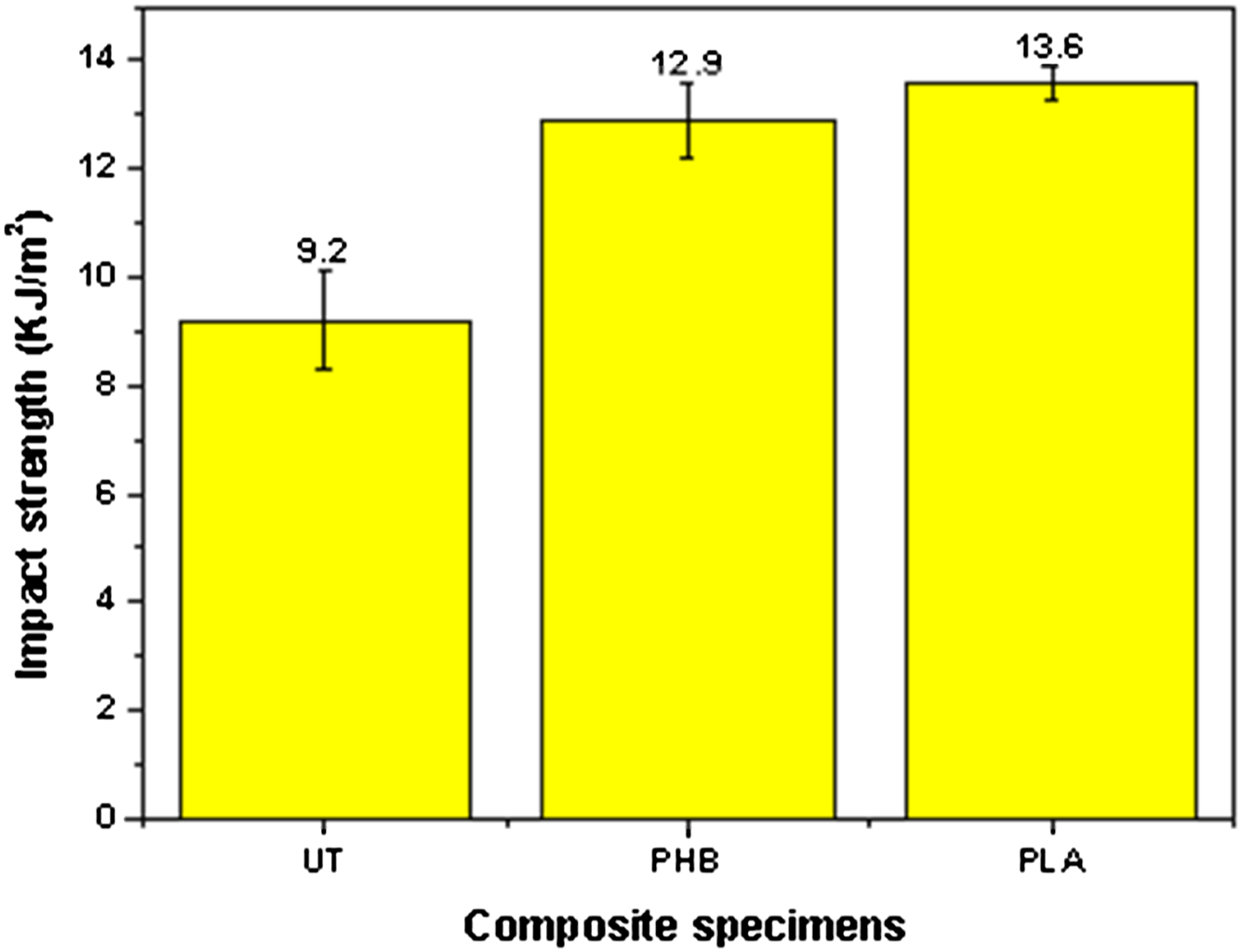
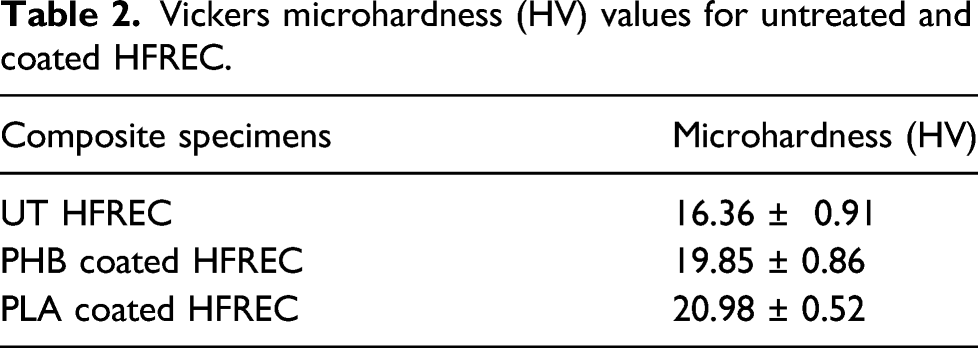
Vickers microhardness (HV) values for untreated and coated HFREC.
Scanning electron microscopy analysis of tensile fracture surfaces
SEM analysis was done to observe the tensile fracture surfaces of uncoated, PHB coated, and PLA coated fiber composites and were shown in Figure 8. Poor tensile strength of uncoated HFREC was due to the existence of voids which are clearly visible on its fractured surface Figure 8(a). Some extra voids or holes due to the fiber pullout are also present on its fracture surface which may have resulted inadequate stress transfer. However, it can be observed from the SEM images of the tensile fracture surfaces of PHB coated HFREC and PLA coated HFREC that the epoxy matrix materials are still attached to the hemp fibers even after the tensile test Figures 8(b) and (c). This is an indication of good fiber-matrix adhesion arising from both the polymer (PHB and PLA) coating of the fibers which may have resulted in improved tensile strength of coated fiber composites.16,17,30 This enhancement in tensile strength was more prominent in case of PLA coated fiber composites which can also be verified from the SEM micrograph Figure 8(c) of its fracture surface where a small number of voids and improved fiber-matrix adhesion was visible. SEM images of tensile fractured surfaces of HFREC: (a) Untreated HFREC, (b) PHB coated HFREC, and (c) PLA coated HFREC.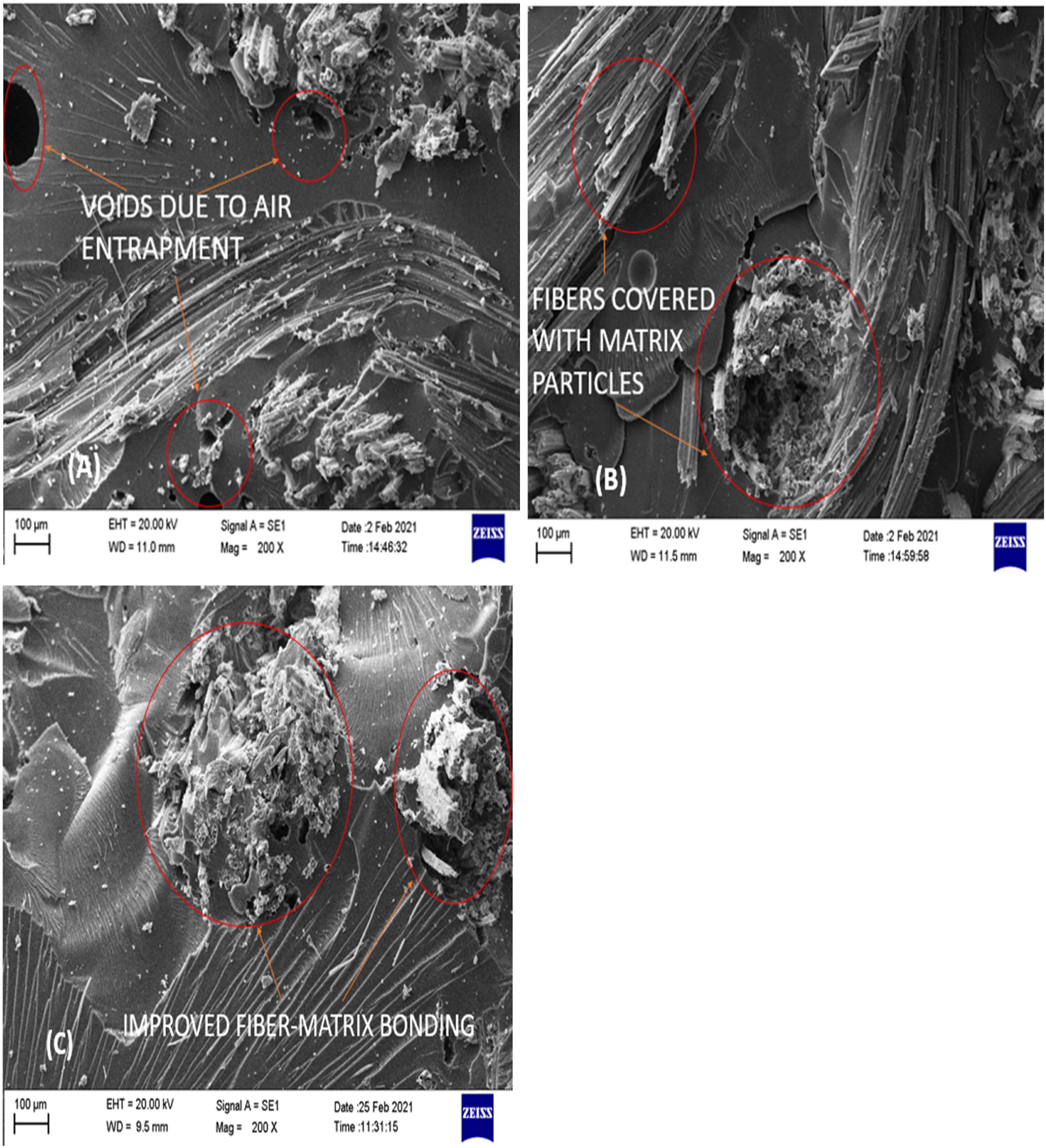
Effect of operating factors and fiber coatings on tribological properties of hemp fiber reinforced epoxy composites
Volume loss
The impact of normal loads (15 N, 20 N, 25 N, and 30 N) on the wear volume loss of uncoated HFREC, PHB coated HFREC, and PLA coated HFREC at constant sliding speed of 2.7 m/s are displayed in Figure 9. It can be noticed from the Figure 9 that the increase in applied load increases the wear volume loss of both uncoated HFREC and coated HFREC samples. Several researchers had also obtained similar results in their research work.31–33 At higher loads, a close adhesion force forms between the composite specimens and the surface of the steel ball; these atomic forces are much more intense than both the materials innate properties and thus breaking the bonds, which results in higher wear volume loss in weaker material.
34
Increased material loss from the composite surface can also be due to the removal of lubricant layer at higher load.
35
The PLA coated fiber composites exhibited minimum volume loss of 90.3 mm3 at 15 N normal load and the uncoated HFREC exhibited the maximum volume loss of 355.4 mm3 at 30 N normal load among all the composites tested at different applied loads. Volume loss versus Applied load for untreated HFREC, PHB coated HFREC, and PLA coated HFREC.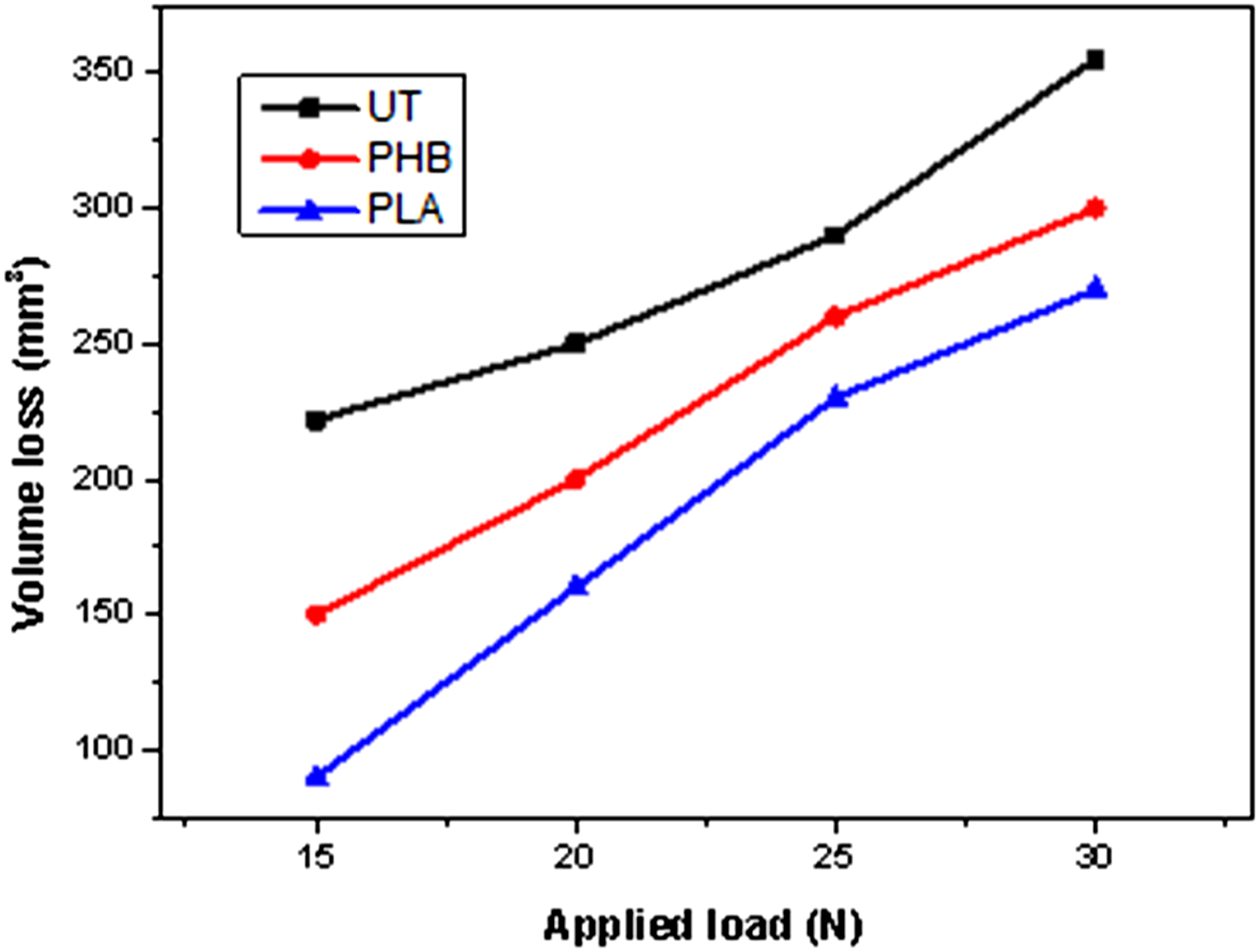
The effect of siding speeds (2 m/s, 2.5 m/s, 3 m/s, and 3.5 m/s) on the wear volume loss of uncoated HFREC, PHB coated HFREC, and PLA coated HFREC at constant applied load of 20 N are displayed in Figure 10. As with applied load, the wear volume loss of both uncoated and coated fiber composite samples also increases as the sliding speed increases. Increased material loss from the composite surface at higher speed can be due to the thermal softening of the epoxy layer as a result of higher frictional heat generation at the interface.
36
The PLA coated fiber composites exhibited minimum volume loss of 110.2 mm3 at 2 m/s sliding speed and the uncoated HFREC exhibited the maximum volume loss of 282.1 mm3 at 3.5 m/s sliding speed among all the composites tested at different sliding speeds. Volume loss versus Sliding speed for untreated HFREC, PHB coated HFREC, and PLA coated HFREC.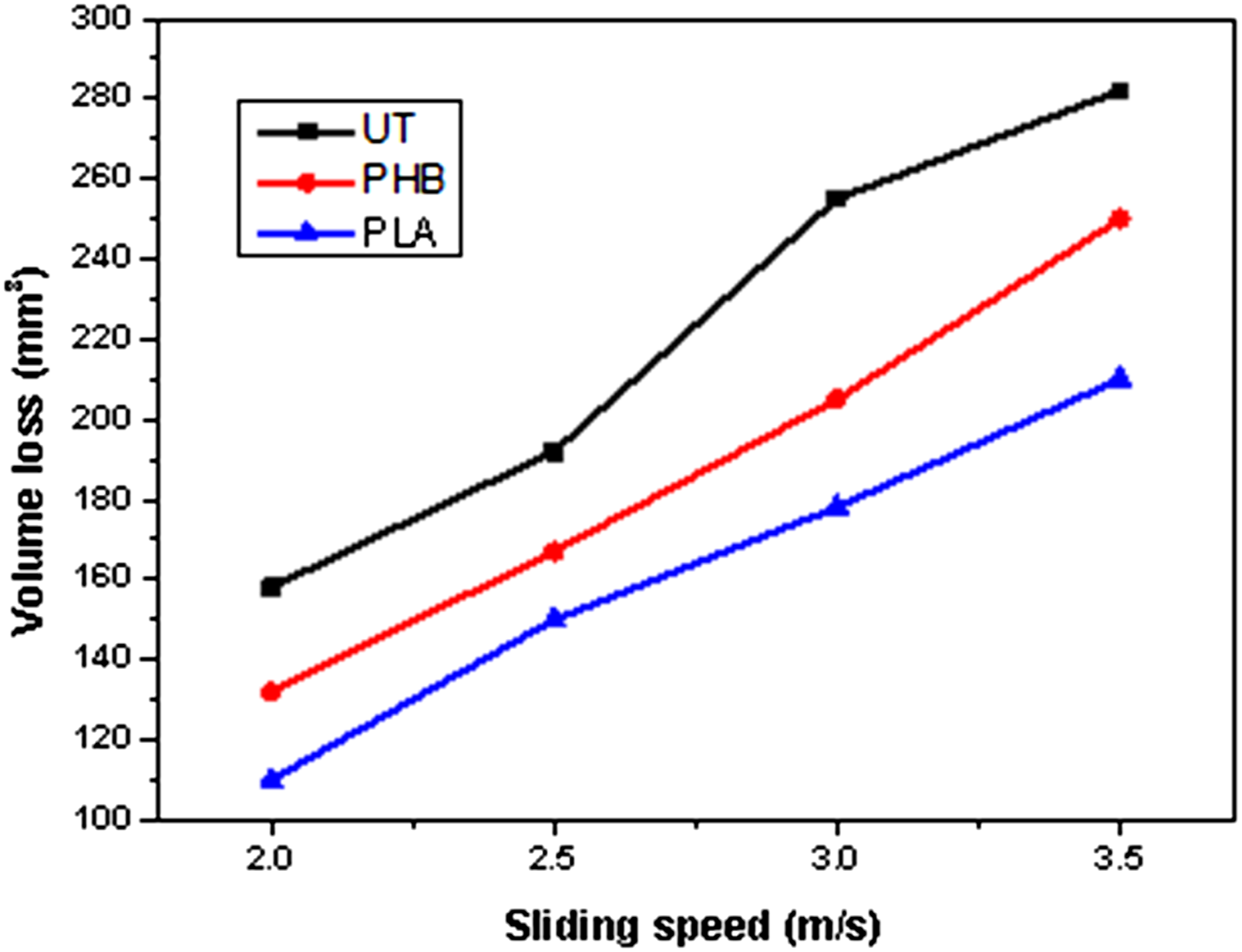
It can also be observed from Figure 9 and Figure 10 that both the coated HFREC showed higher wear resistance in comparison to uncoated HFREC. It can be possible that the prior treatment of fiber with sodium hydrogen carbonate may have improved the fibers’ surface roughness and the polymer coating (PHB and PLA) of the fiber may have reduced its hydrophilic nature contributing to its improved mechanical interlocking with epoxy matrix.16,17,35,37 This may be the possible explanation for the increased wear resistance of the coated HFREC. From Figure 9 and Figure 10, it was also observed that the PLA coated HFREC showed the lowest volume loss, followed by PHB coated HFREC and uncoated HFREC.
Coefficient of friction
The effect of normal loads (15 N, 20 N, 25 N, and 30 N) on the COF values of uncoated HFREC, PHB coated HFREC, and PLA coated HFREC at a uniform sliding speed of 2.7 m/s are represented in Figure 11. It can be observed from the Figure 11 that the increase in applied load increases the friction coefficient values of both uncoated and coated fiber composites. Similar result was also observed by Mylsamy et al.
38
in their research work. At higher loads, the COF values increases due to the increase in friction force as a result of the rise in interface temperature due to the increased contact pressure between the composite specimen and the steel ball.39,40,41 The lowest value of COF was obtained for PLA coated HFREC at 15 N applied load was 0.32 and the highest value of COF was obtained for uncoated HFREC at 30 N applied load was 0.49 among all the composites tested at different applied loads. COF versus Applied load for untreated HFREC, PHB coated HFREC, and PLA coated HFREC.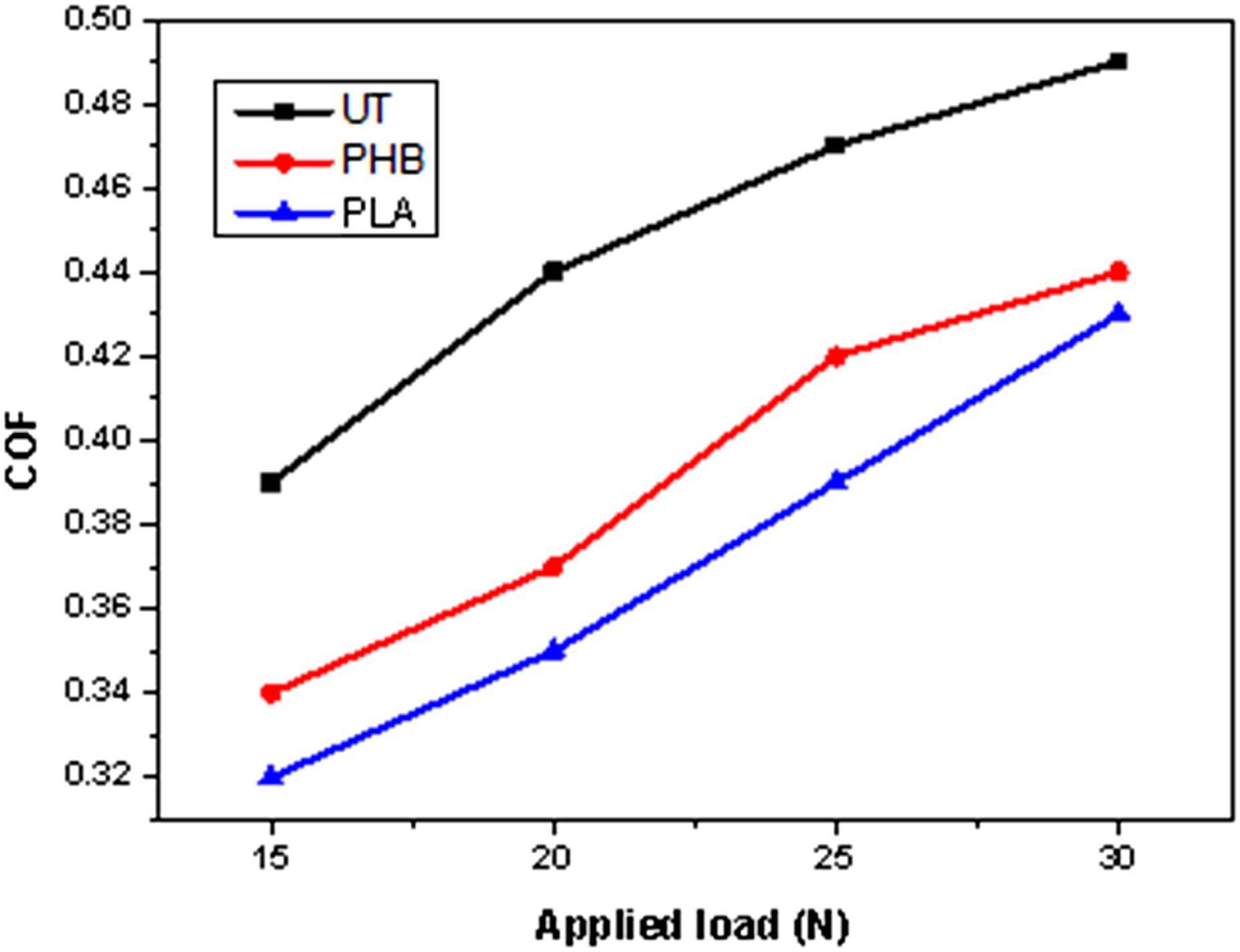
The effect of sliding speeds (2 m/s, 2.5 m/s, 3 m/s, and 3.5 m/s) on the COF values of uncoated HFREC, PHB coated HFREC, and PLA coated HFREC at a constant applied load of 20 N are displayed in Figure 12. As with applied load, the friction coefficient values also increases with the increase in sliding speed for both the uncoated and coated fiber composites. At higher speeds, the amount of heat generated at the interface between the HFREC specimen and the steel ball increases causing the frictional force to rise which results in the enhancement of COF values.
39
The lowest friction coefficient value of 0.33 was acquired for PLA coated fiber composites at 2 m/s sliding speed and the highest friction coefficient value of 0.47 was acquired for uncoated fiber composites at 3.5 m/s sliding speed. It was also noticed from the Figure 11 and Figure 12 that the friction coefficient values of PHB coated and PLA coated fiber composites were lower than the COF values of uncoated fiber composites. Enhancement of mechanical interlocking between the hemp fiber and epoxy matrix owing to the sodium hydrogen carbonate treatment and polymer coating of the fiber resulted in the formation of friction film which may have reduced the material loss and COF values.37,42 From the Figure 11 and Figure 12, it was also observed that the most desired COF values (0.3–0.5) under industrial norms for break pads was obtained for PLA coated hemp fiber composites, followed by PHB coated fiber composites and uncoated fiber composites. COF versus Sliding speed for untreated HFREC, PHB coated HFREC, and PLA coated HFREC.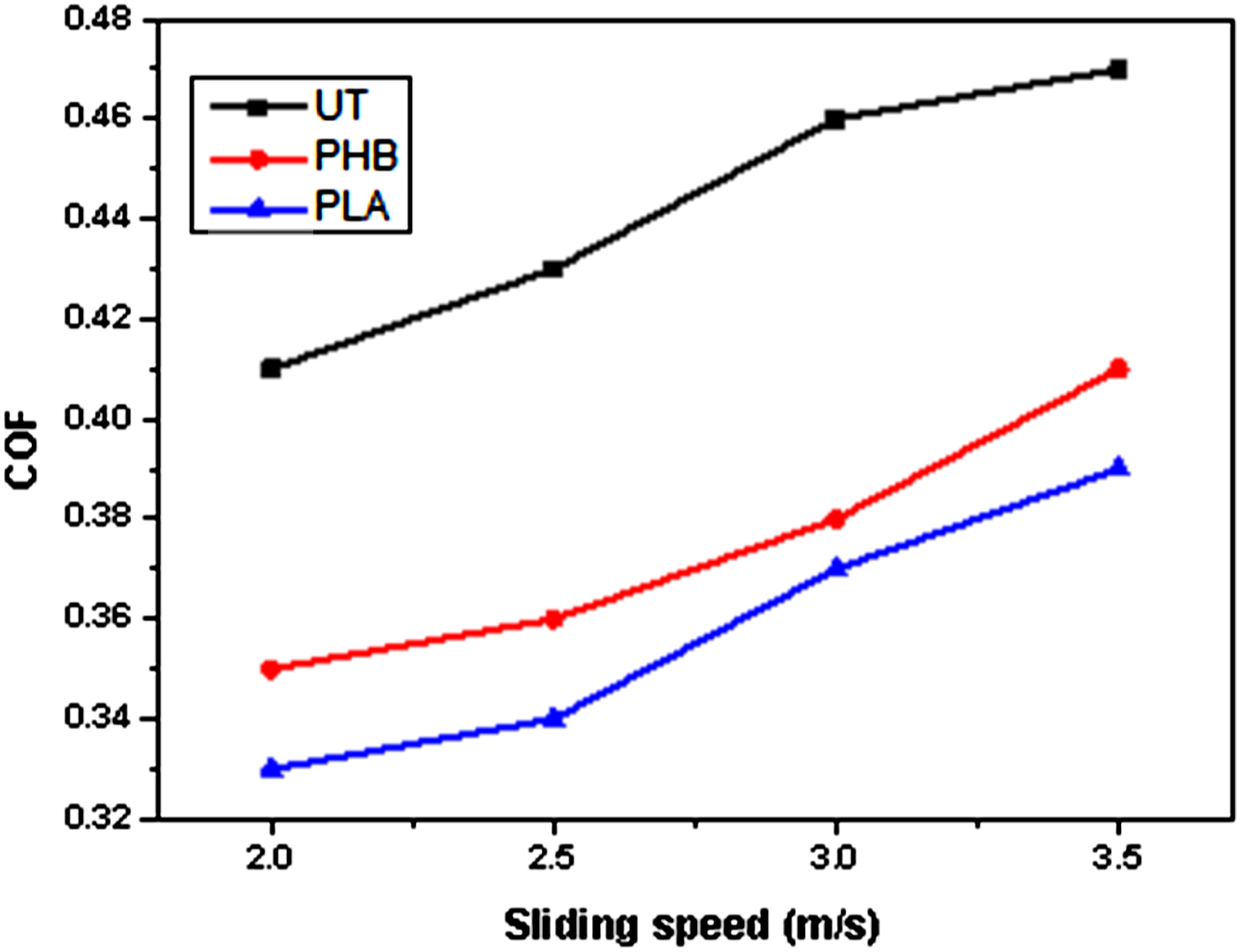
Scanning electron microscopy analysis of worn surface
SEM images of the wear surfaces of the uncoated HFREC, PHB coated HFREC, and PLA coated HFREC were displayed in Figure 13. Wide interface gap created between the fiber and the matrix due to the detachment of the fiber from the matrix was observed on the wear surface of uncoated fiber composite Figure 13(a). The wear surface of the uncoated HFREC was also marked by extreme fiber cutting and wear debris from both the fiber and the matrix.35,37 This validates the poor wear resistance of uncoated HFREC among all the wear tested composites. The nature of the wear process was adhesive in the beginning but due to the fiber pullout it may have converted into abrasive wear.
42
SEM images of worn surfaces of HFREC at 20 N load and 2.7 m/s sliding speed: (a) Untreated HFREC, (b) PHB coated HFREC, and (c) PLA coated HFREC.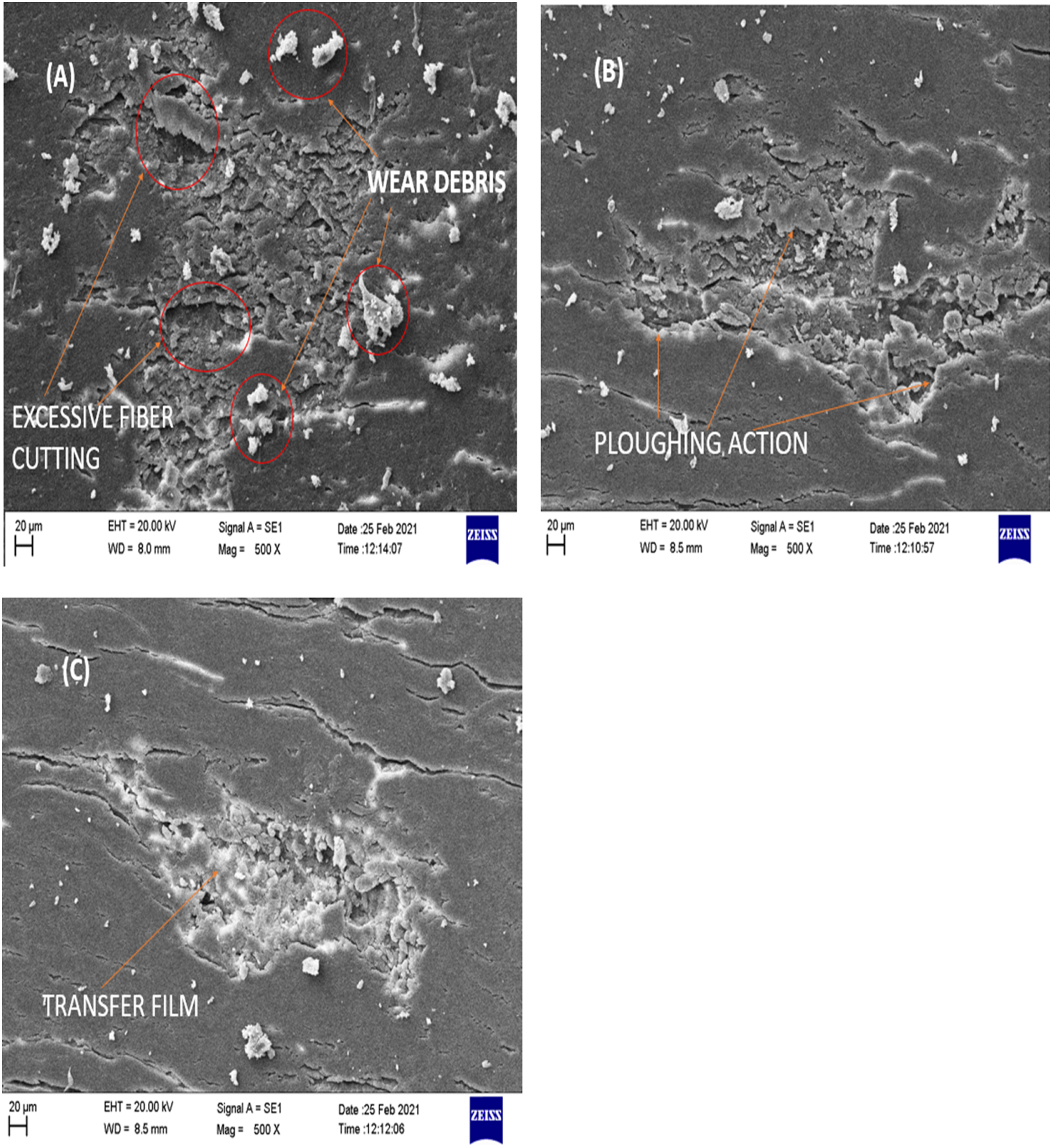
Comparatively, smooth wear surface was observed for PHB coated HFREC and PLA coated HFREC in the Figures 13(b) and (c). From the Figures 13(b) and (c), it was also observed that the hemp fibers were properly attached to the polymer matrix due to the improved fiber-matrix bonding as a result of the polymer coatings of the fibers. Plowing marks and the adhesion spots were also less visible on the wear surface of the coated fiber composites. The wear surface of the coated fiber composites were also characterized by the presence of thin transfer film, which may have improved their wear resistance. Plowing may be considered as the primary wear feature in polymer coated HFREC as observed in Figures 13(b) and (c).
Conclusions
The following hypotheses can be drawn from the present study’s experimental findings: 1. SEM photographs of the hemp fibers revealed that the prior treatment of sodium hydrogen carbonate and both the polymer (PHB and PLA) coating had removed the surface impurities and made the surface rough, respectively. 2. Crystallinity index of polymer coated fibers was found to be higher than the uncoated fibers. 3. The water absorption resistance of the hemp fiber composites improved considerably for the composites reinforced with polymer coated fibers. PLA coated HFREC showed maximum resistance to water absorption. 4. Both the PHB coated HFREC and PLA coated HFREC exhibited appreciable improvement in tensile strength, tensile modulus, impact strength, and microhardness values in comparison to uncoated HFREC. PLA coated HFREC showed the maximum improvement in mechanical properties among all the mechanically tested composites. 5. Polymer coated fiber composites also exhibited appreciable enhancement in wear resistance and friction properties. PLA coated hemp fiber composites showed the best tribological properties, followed by PHB coated HFREC and uncoated HFREC. 6. Improved interfacial adhesion between the polymer coated fibers and the epoxy matrix was also validated from SEM images of tensile fracture and wear surfaces of coated HFREC.
Footnotes
Declaration of conflicting interests
The author(s) declared no potential conflicts of interest with respect to the research, authorship, and/or publication of this article.
Funding
The author(s) received no financial support for the research, authorship, and/or publication of this article.
Data availability statement
The raw/processed data required to reproduce these findings cannot be shared at this time as the data also forms part of an ongoing research work.
