






Abstract
Objectives:
The postpartum period can involve maternal stress and obsessive-compulsive behaviors, which may reduce confidence in breastfeeding. This study aimed to examine associations between breastfeeding self-efficacy, maternal stress, and obsessive-compulsive behaviors in postpartum mothers.
Participants:
A total of 303 mothers, 1 and 6 months postpartum, attending Family Health Centers in the Central Anatolia Region of Turkey, participated in the study.
Methods:
This cross-sectional descriptive study collected data using a personal information form, the Postnatal Breastfeeding Self-Efficacy Scale, the Postpartum Stressors Scale, and the Obsessive and Compulsive Behaviors Scale related to infant care. Data were analyzed using descriptive statistics, Pearson correlation, and linear regression analyses.
Results:
Mothers demonstrated high breastfeeding self-efficacy (55.9 ± 10.9), moderate maternal stress (19.3 ± 5.2), and low levels of obsessive-compulsive behaviors (23.9 ± 8.3). Breastfeeding self-efficacy was negatively correlated with maternal stress and obsessive-compulsive behaviors (p < .05). Linear regression analysis indicated that maternal stress and obsessive-compulsive behaviors were significant negative predictors of breastfeeding self-efficacy, explaining 14% of the variance (F = 25.867, p < .001). No significant relationship was found between maternal stress and obsessive-compulsive behaviors (p < .05).
Conclusion:
The findings indicate that maternal stress and obsessive-compulsive behaviors related to infant care are important factors negatively influencing breastfeeding self-efficacy, whereas maternal stress levels were not significantly associated with obsessive-compulsive behaviors. These results emphasize the need to address maternal psychological well-being in postpartum care. It is recommended that midwifery care incorporate early screening for maternal stress and obsessive-compulsive tendencies, along with individualized education and psychosocial support programs, to enhance breastfeeding self-efficacy.
Background
The postpartum period is a multidimensional and sensitive transition phase during which the mother undergoes physical recovery, adapts to her new role, and meets her baby’s basic care and feeding needs while experiencing significant psychosocial changes. During this time, women face hormonal fluctuations, sleep deprivation, changes in body image, societal expectations, and pressures associated with motherhood (La Rosa et al., 2025). These multiple demands can trigger negative emotional responses, including stress, anxiety, feelings of inadequacy, and uncertainty. Research has demonstrated that high levels of postpartum stress not only affect maternal mental health but also negatively impact maternal functioning, breastfeeding behaviors, and the development of secure attachment with the infant (Ionio et al., 2024; Sanni et al., 2024).
Breastfeeding self-efficacy is a critical construct that reflects a mother’s confidence in her ability to breastfeed and is essential for both psychological well-being and the maintenance of successful breastfeeding behaviors. This concept is grounded in Bandura’s self-efficacy theory, which asserts that an individual’s beliefs in their own capabilities influence motivation, perseverance, and coping in challenging situations. Bandura identified four primary sources of self-efficacy: mastery experiences, vicarious experiences, verbal persuasion, and emotional/physiologic states. Mastery experiences refer to a mother’s own successful breastfeeding attempts, which reinforce her confidence in managing future challenges. Vicarious experiences occur when mothers observe peers, family members, or healthcare providers breastfeeding successfully, promoting the belief that they too can succeed. Verbal persuasion involves encouragement, guidance, and positive feedback from professionals, partners, or family, which strengthens maternal confidence. Emotional and physiologic states, such as stress, fatigue, and anxiety, can either enhance or undermine self-efficacy, with calm and supported mothers maintaining higher confidence, whereas high stress or negative emotions may diminish perceived competence. Mothers who develop high breastfeeding self-efficacy through these mechanisms are more resilient in the face of postpartum challenges, maintain consistency in breastfeeding practices, and experience lower psychological distress. Evidence suggests that higher breastfeeding self-efficacy is associated with lower stress levels and longer breastfeeding duration (Kahforoushan et al., 2022), highlighting its significance in both physiologic and psychological domains.
Key Messages
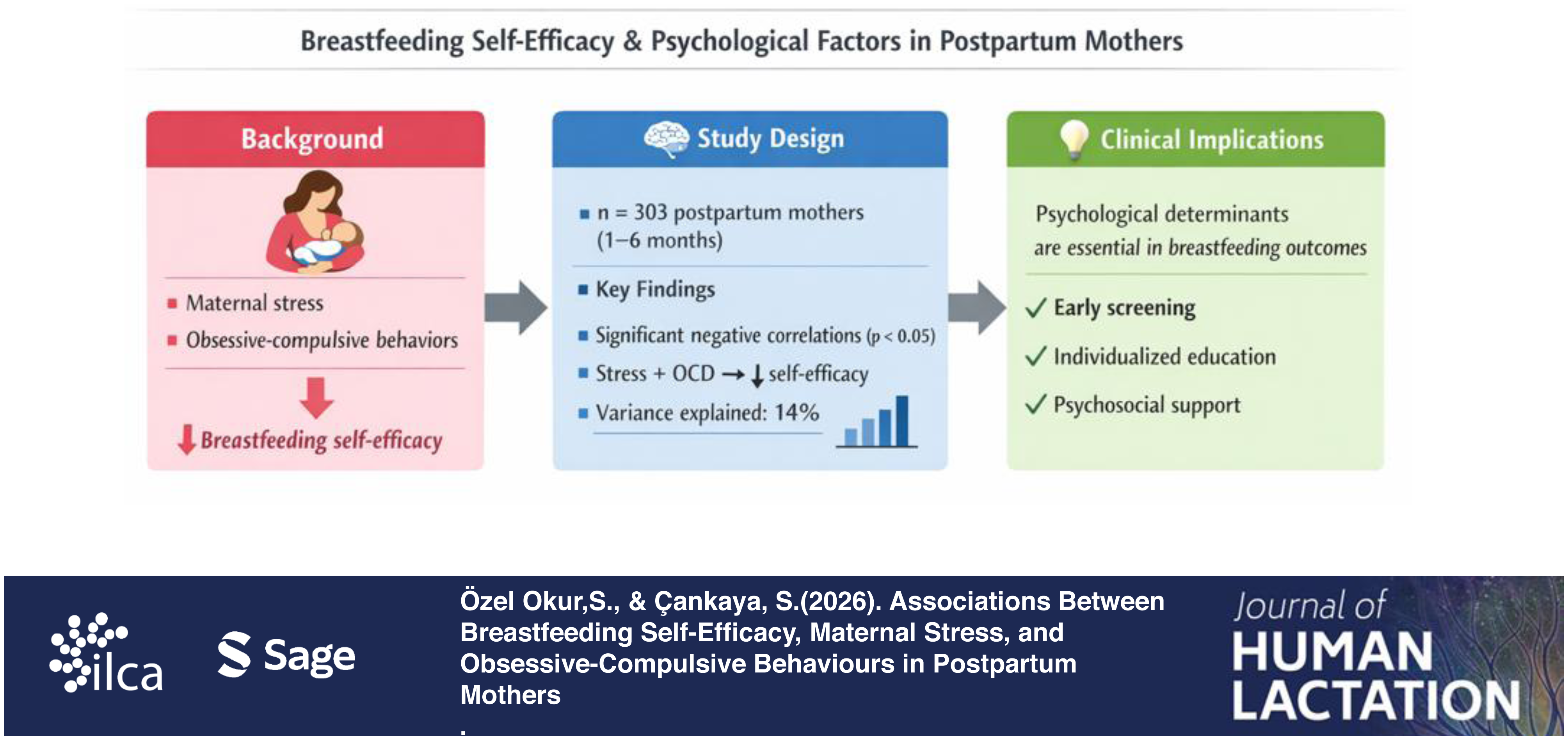
Postpartum mothers demonstrated high breastfeeding self-efficacy, moderate levels of stress, and low levels of obsessive-compulsive behaviors related to infant care.
Increased maternal stress and higher obsessive-compulsive behaviors were associated with lower breastfeeding self-efficacy.
Maternal stress and obsessive-compulsive behaviors were not significantly correlated with each other.
Both maternal stress and obsessive-compulsive behaviors were significant predictors of breastfeeding self-efficacy, accounting for 14% of its variance.
Early screening for stress and obsessive-compulsive tendencies, along with targeted psychosocial support in postpartum care, is essential to enhance breastfeeding outcomes.
In addition to stress, postpartum mental health also can be affected by obsessive-compulsive symptoms. Recent studies have indicated that some mothers develop obsessive-compulsive behaviors characterized by repetitive, time-consuming actions intended to prevent harm to the infant (Öztürkler & Çınar, 2025). Common manifestations include frequent checking, excessive cleaning, and ritualistic behaviors designed to suppress intrusive thoughts about the baby’s well-being (Jüris, 2024). Although initially perceived as protective, over time these behaviors can exacerbate anxiety, impair daily functioning, and complicate the maternal experience.
Theoretical integration suggests that postpartum stress and obsessive-compulsive behaviors may interact with breastfeeding self-efficacy in meaningful ways. For instance, mothers experiencing higher stress levels are more likely to exhibit obsessive-compulsive behaviors, and these behaviors are inversely associated with confidence in breastfeeding (Kılıç & Yılmaz, 2025). In turn, low self-efficacy can amplify stress and compulsive tendencies, creating a negative feedback loop. Moreover, systematic reviews have indicated that postpartum obsessive-compulsive symptoms may contribute to long-term risks, such as postpartum depression, and negatively affect the emotional bond between mother and infant (Ferra et al., 2024).
Given this interplay, it is crucial to assess breastfeeding self-efficacy within a comprehensive theoretical framework that accounts for Bandura’s four sources of self-efficacy alongside maternal stress and obsessive-compulsive behaviors. Such a multidimensional assessment can inform targeted psychological support, individualized breastfeeding counseling, and early identification and management of compulsive symptoms, ultimately benefiting both maternal well-being and infant development.
Aims
This study aimed to examine the associations between breastfeeding self-efficacy, maternal stress, and obsessive-compulsive behaviors related to infant care during the postpartum period. The study sought to determine how these variables influence one another to inform interventions that support maternal and infant health. We examined the following research questions:
Methods
Study Design
This study employed a cross-sectional descriptive design.
Setting
The study was conducted in family health centers (FHCs) located in the central Anatolian region of Turkey, specifically in the Konya provincial center. Konya is divided into three central districts, Selçuklu, Meram, and Karatay, with a total of 102 FHCs distributed as follows: 41 in Selçuklu, 29 in Meram, and 32 in Karatay. To ensure heterogeneity in terms of socioeconomic status and household welfare, three FHCs representing different socioeconomic levels were selected from each district, resulting in nine FHCs included in the study (FHC Nos. 69, 80, 28, 25, 15, 12, 74, 10, and 59). Mothers registered at these FHCs were invited to participate in the study.
Population and Sample
The study population comprised mothers who were registered with the FHCs in the Selçuklu, Meram, and Karatay districts of Konya and had given birth to a healthy infant aged between 1 and 6 months. The study sample included mothers attending one of the nine selected FHCs between December 2023 and March 2024.
Inclusion criteria were mothers aged 18 years or older, married or in a partnership, literate and proficient in Turkish, with a term delivery of a healthy infant aged 1–6 months, and consenting to participate. Exclusion criteria included mothers under the age of 18 years and those with high-risk pregnancies, chronic diseases (e.g., hypertension, diabetes, or asthma), complications during childbirth or the postpartum period (e.g., hemorrhage, puerperal infection, or thromboembolic disease), inverted nipples, mastitis, or breast abscess), and infants with health problems.
The sample size was calculated using the G*Power 3.1.9.2 program, based on a mean breastfeeding self-efficacy score of 57 ± 12.1 (Faul et al., 2007; Gümüşsoy et al., 2020). A sample of 303 mothers was determined to provide 80% power, a margin of error of 0.05, a two-sided deviation, and an effect size of 0.16. Mothers meeting the inclusion criteria were recruited through a convenience sampling method.
Data Collection
Data were collected in a private setting using self-report instruments, including a personal information form, the Postnatal Breastfeeding Self-Efficacy Scale, the Postpartum Stressors Scale, and the Obsessive and Compulsive Behaviors Scale related to infant care.
Measures
Personal Information Form
The 26-item personal information form was developed by the researchers based on a review of relevant literature and aimed to assess sociodemographic characteristics (e.g., “Have you received training in breastfeeding techniques?” “Have you experienced psychological or spiritual difficulties after childbirth?” and “How do you currently feed your infant?”) and factors potentially affecting postpartum breastfeeding self-efficacy (Ionio et al., 2024; Kahforoushan et al., 2022; Sanni et al., 2024).
Postnatal Breastfeeding Self-Efficacy Scale
This brief scale was developed by Dennis (2023), and its Turkish validity and reliability were established by Aluş Tokat et al. (2010). The scale consists of 14 items and uses a 5-point Likert-type response format, with all items positively worded. The lowest possible score is 14, and the highest is 70, with higher scores indicating a higher level of breastfeeding self-efficacy. In previous studies, the Cronbach’s alpha value of the scale was reported as 0.86, and in this study, the internal consistency of the scale was found to be 0.93.
Postpartum Stressors Scale
This scale is a tool designed to identify stress factors experienced by women in the postpartum period. The scale was originally developed by Park et al. (2005) and subsequently adapted to Turkish culture by Şahbaz and Erbil (2024), with a validity and reliability study conducted. This scale consists of nine items rated on a 4-point Likert-type scale, where 1 indicates “not at all stressful,” 2 indicates “mildly stressful,” 3 indicates “moderately stressful,” and 4 indicates “extremely stressful.” The lowest possible total score is 9, and the highest is 36, with higher scores reflecting greater postpartum stress. In this study, the Cronbach’s alpha internal consistency coefficient was 0.78.
Obsessive and Compulsive Behaviors Scale of Mothers in the Postpartum Period Regarding Infant Care
This scale was developed to determine the prevalence of obsessive and compulsive behaviors among mothers in the postpartum period related to infant care (Özdemir et al., 2020). It is a unidimensional scale consisting of nine items scored on a 5-point Likert-type scale. Each item is scored as follows: 1 = “does not define the subject at all”; 2 = “defines the subject very little”; 3 = “defines the subject a little”; 4 = “defines the subject usually”; and 5 = “defines the subject a lot.” The scale is evaluated based on the total score, with the lowest possible score being 9 and the highest 45. Higher scores indicate a higher prevalence of obsessive and compulsive behaviors related to infant care in the postpartum period. In this study, the Cronbach’s alpha internal consistency coefficient was 0.86.
Ethical Considerations
The study was conducted in accordance with the ethical standards outlined in the 1964 Helsinki Declaration and its subsequent amendments. Prior to commencement of the study, approval was obtained from the Selcuk University, Faculty of Health Sciences, Dean’s Office for Non-Interventional Clinical Research (Ethics Permit No. 2023/1195). Data were collected from mothers on a voluntary basis, and all information provided was kept confidential, with no personal identifiers used during data publication. Written informed consent was obtained from all participants. Permission for the use of the scales included in the study was obtained from the original authors.
Data Analysis
The data obtained from the study were analyzed using SPSS version 25.0 (IBM SPSS Statistics for Windows) after the researchers conducted preliminary error checks. Normality analysis indicated that the skewness and kurtosis values of all scales fell within the range of −1.50 to +1.50, allowing for the use of parametric tests. Descriptive statistics, including frequencies, percentages, means, and standard deviations, were used to summarize the data. Pearson correlation analysis was conducted to examine the relationships between continuous variables. Linear regression analysis was performed to determine the factors affecting breastfeeding self-efficacy, including variables that were found to be significant in correlation analyses. Statistical significance was set at a p value of <.05.
Results
Participant Characteristics
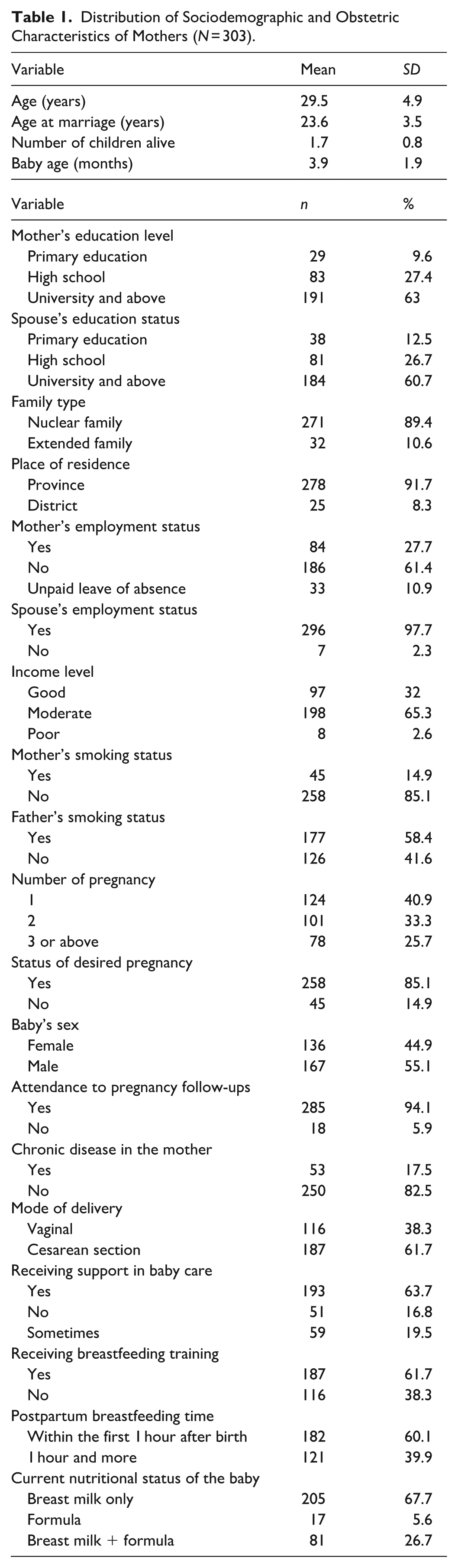
Table 1 presents the sociodemographic and obstetric characteristics of the mothers included in the study. The mean age of the mothers was 29.5 years (SD = 4.9), and the mean age of their infants was 3.9 months (SD = 1.9). Most of the mothers (63%) had a university degree or higher level of education, whereas 61.4% were not engaged in income-generating employment. In terms of perceived income status, 65.3% of the mothers reported having a moderate economic level. All participating mothers had full-term and healthy births, with no reported cases of infant loss or congenital anomalies. Exclusive breastfeeding was reported by 67.7% of the mothers. Regarding health-related behaviors, 14.9% of the mothers reported smoking, whereas none reported alcohol consumption.
Distribution of Sociodemographic and Obstetric Characteristics of Mothers (N = 303).
Descriptive Statistics of Main Variables
The mothers demonstrated high levels of breastfeeding self-efficacy, with a mean Postnatal Breastfeeding Self-Efficacy Scale score of 55.9 (SD = 10.9). Maternal stress levels were found to be moderate, with a mean Postpartum Stressors Scale score of 19.3 (SD = 5.2). In addition, the level of obsessive-compulsive behaviors related to infant care was low, with a mean score of 23.9 (SD = 8.3).
Table 2 presents the correlation coefficients between breastfeeding self-efficacy, maternal stress, and obsessive-compulsive behaviors. A statistically significant moderate negative correlation was found between breastfeeding self-efficacy and maternal stress (r = −0.344, p < .001). Additionally, a weak but statistically significant negative correlation was identified between breastfeeding self-efficacy and obsessive-compulsive behaviors (r = −0.159, p = .005). No statistically significant association was observed between maternal stress and obsessive-compulsive behaviors (p < .05).
Relationship Between Maternal Stress Level, Breastfeeding Self-Efficacy, and Mother’s Obsessive-Compulsive Behaviors Related to Infant Care (N = 303).
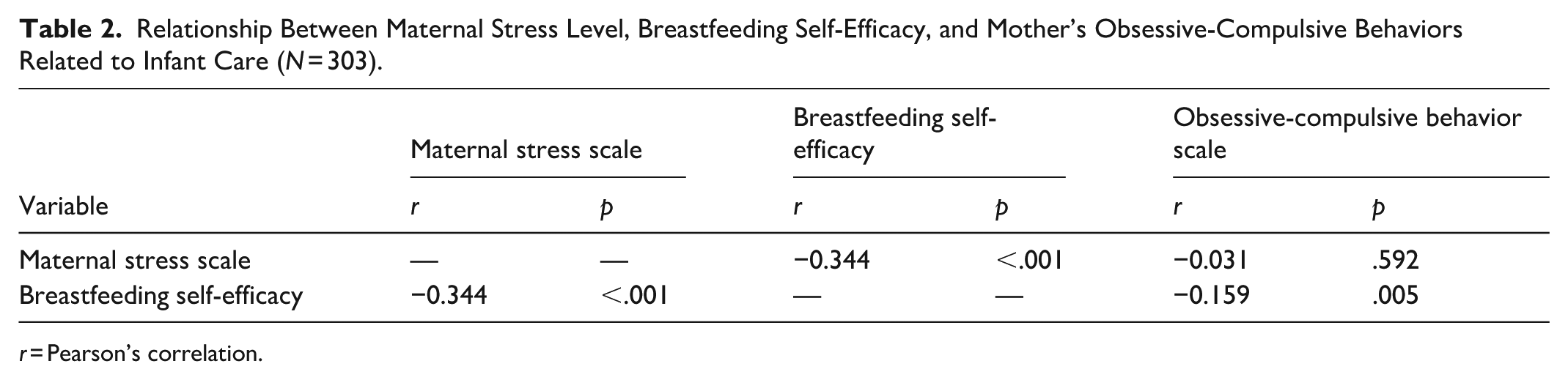
r = Pearson’s correlation.
The results of the linear regression analysis examining factors associated with breastfeeding self-efficacy are presented in Table 3. Variables that showed statistically significant correlations with breastfeeding self-efficacy were included in the regression model. The overall model was statistically significant (F = 25.867, p < .001), indicating that the independent variables jointly contributed to the prediction of breastfeeding self-efficacy. However, the model explained a relatively limited proportion of the variance (R2 = 0.147; adjusted R2 = 0.141).
Linear Regression Analysis of Factors Associated with Breastfeeding Self-Efficacy.
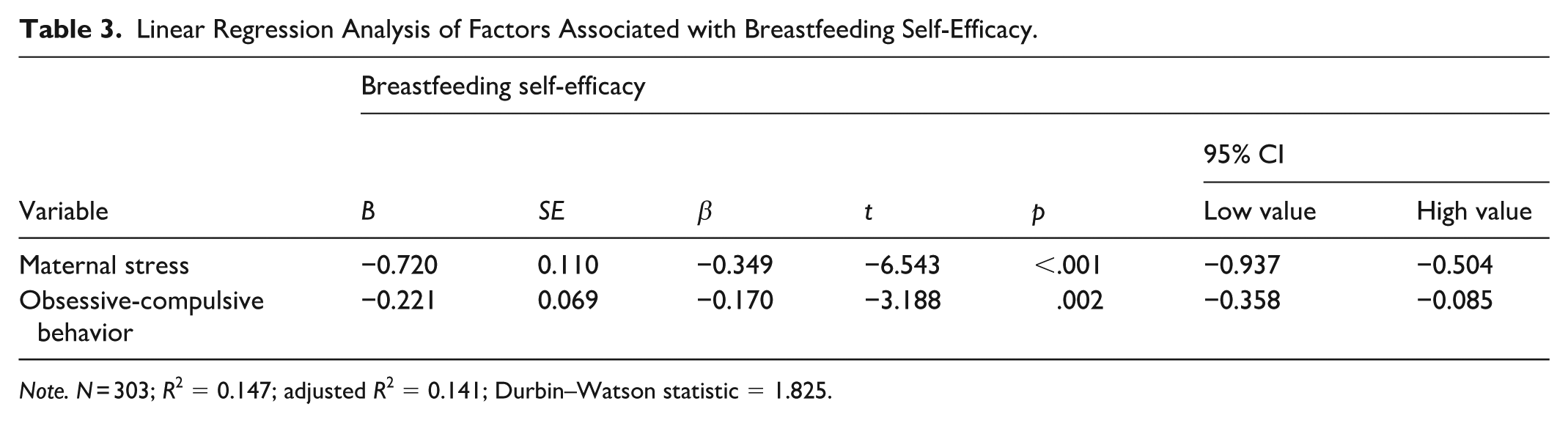
Note. N = 303; R2 = 0.147; adjusted R2 = 0.141; Durbin–Watson statistic = 1.825.
Maternal stress (β = −0.349, p < .001) and obsessive-compulsive behaviors (β = −0.170, p = 0.002) were identified as statistically significant predictors of breastfeeding self-efficacy, with both variables demonstrating negative associations. These findings indicate that higher levels of maternal stress and obsessive-compulsive behaviors are associated with lower levels of breastfeeding self-efficacy. Nevertheless, the modest explanatory power of the model suggests that additional variables not included in the analysis also may play a role in determining breastfeeding self-efficacy.
Discussion
The objective of this study was to examine the associations between maternal stress, breastfeeding self-efficacy, and maternal obsessive-compulsive behaviors during the first 6 months postpartum. The findings indicated that mothers generally had high levels of breastfeeding self-efficacy. Previous studies conducted in different regions of Turkey have similarly reported high breastfeeding self-efficacy levels (Akça & Yıldız, 2024; Mercan & Tari Selcuk, 2021), whereas other studies have reported lower or moderate levels in different populations (Gizaw et al., 2022; Miller et al., 2022). Additionally, evidence has suggested that breastfeeding self-efficacy may be higher among mothers with prior breastfeeding experience (Si & Mao, 2024). These variations may be explained by differences in sociodemographic and contextual factors such as maternal age, parity, delivery mode, employment status, social support, and cultural norms related to infant feeding. Therefore, breastfeeding self-efficacy should be interpreted within both individual and sociocultural contexts.
Consistent with the study hypotheses, a moderate negative association was found between maternal stress and breastfeeding self-efficacy. This finding aligns with previous literature demonstrating that maternal psychological distress, including stress, anxiety, and depression, negatively influences breastfeeding practices, breastfeeding self-efficacy, and breastfeeding duration (Coo et al., 2024; Nagel et al., 2022; Yuen et al., 2022). Although the association identified in this study was moderate in magnitude, it indicates that increased stress is associated with decreased confidence in breastfeeding. This supports the theoretical perspective that emotional and physiologic states, as described in Bandura’s self-efficacy framework, play a crucial role in shaping maternal confidence. Furthermore, prior research has shown that reduced stress levels and increased social support contribute to more positive breastfeeding attitudes and higher breastfeeding self-efficacy (Uğurlu et al., 2023; Zeng et al., 2024). These findings collectively suggest that maternal stress acts as a risk factor, whereas breastfeeding self-efficacy functions as a protective factor in postpartum maternal health.
The findings of this study also revealed a weak but statistically significant negative association between obsessive-compulsive behaviors related to infant care and breastfeeding self-efficacy. This suggests that as obsessive-compulsive symptoms increase, mothers’ confidence in their breastfeeding abilities decreases, although the strength of this association is limited. Although the literature directly examining this association is scarce, existing studies have supported similar patterns. For instance, previous research has shown that increased obsessive-compulsive symptoms in postpartum women are associated with lower perceived breastfeeding competence and greater breastfeeding difficulties (Duman & Dinç Kaya, 2024; Phillips et al., 2022). Given that obsessive-compulsive behaviors may interfere with maternal functioning and caregiving routines, their potential impact on breastfeeding should not be overlooked. Moreover, obsessive-compulsive symptoms in the postpartum period have been associated with disruptions in the mother–infant bond and negative developmental outcomes (Thompson et al., 2023).
Although no statistically significant association was found between maternal stress and obsessive-compulsive behaviors in this study, the broader literature suggests that these variables are often interrelated. Meta-analytic evidence indicates that the prevalence of obsessive-compulsive symptoms is higher among pregnant and postpartum women compared with the general population (Salari et al., 2024). The lack of association in this study may be related to sample characteristics, measurement differences, or contextual factors and therefore should be interpreted with caution.
Importantly, the regression model explained only a limited proportion of the variance in breastfeeding self-efficacy (R2 = 0.147), indicating that maternal stress and obsessive-compulsive behaviors account for a relatively small part of this outcome. This finding highlights the multifactorial nature of breastfeeding self-efficacy and suggests that additional variables, such as social support, prior breastfeeding experience, cultural influences, and maternal health status, may play a significant role.
From a clinical and practical perspective, the findings emphasize the importance of providing continuous psychosocial and educational support to postpartum mothers. Healthcare professionals, particularly midwives, not only should focus on clinical care but also should address maternal emotional well-being, social support systems, and cognitive perceptions related to breastfeeding. Interventions that include early screening for stress and obsessive-compulsive symptoms, along with strategies such as cognitive restructuring, problem-solving training, and individualized counseling, may contribute to improving breastfeeding self-efficacy. Such approaches ultimately may enhance both maternal well-being and infant health outcomes.
Limitations of the Study
This study has several limitations that should be considered when interpreting the findings. First, the research was conducted exclusively in family health centers located in a single provincial center in the Central Anatolia Region of Turkey, which may limit the generalizability of the results to other regions with different sociodemographic, cultural, or healthcare characteristics. Second, due to the cross-sectional and correlational design, causal associations between maternal stress, breastfeeding self-efficacy, and obsessive-compulsive behaviors cannot be established, and the directionality of the observed associations remains uncertain. Third, data were collected through self-reported questionnaires, which may be subject to response biases such as social desirability, recall bias, or subjective interpretation of items.
Fourth, the sample consisted solely of mothers who voluntarily participated and were actively registered with family health services, potentially excluding perspectives from less engaged, underserved, or marginalized populations. Fifth, several potential confounding factors, including prior mental health history, partner and familial support, cultural beliefs regarding breastfeeding, and infant health status, were not controlled in the analysis, which may have influenced the observed associations. Sixth, the study relied exclusively on quantitative methods, limiting the depth of understanding regarding mothers’ lived experiences, psychosocial challenges, and contextual factors affecting breastfeeding and postpartum mental health.
Strengths of the Study
Despite these limitations, the study has several strengths. It provides novel insights into the associations among maternal stress, breastfeeding self-efficacy, and obsessive-compulsive behaviors in the early postpartum period within a Turkish context, which has been underexplored in the literature. The study also benefits from a relatively large sample size (N = 303) and the use of validated measurement instruments, which enhance the reliability of the findings. Moreover, by examining both psychological factors (stress and obsessive-compulsive disorder symptoms) and breastfeeding self-efficacy simultaneously, this study offers a comprehensive perspective on potential risk and protective factors influencing maternal confidence in breastfeeding. These findings may inform the development of targeted interventions and support programs for postpartum mothers in clinical and community settings.
Conclusion and Recommendations
The breastfeeding self-efficacy of the mothers who participated in this study was found to be generally high. Maternal stress and obsessive-compulsive behaviors related to infant care emerged as the most significant factors negatively associated with breastfeeding self-efficacy, whereas no significant correlation was observed between maternal stress levels and obsessive-compulsive behaviors. These findings highlight the multifactorial nature of breastfeeding self-efficacy and underscore the importance of addressing both psychological and behavioral factors during the postpartum period.
Mental health disorders in the postpartum period can adversely affect the mother–infant relationship, compromise breastfeeding, and influence early child development. In this context, healthcare professionals, particularly those working in community and family health centers, should proactively assess maternal mental health, provide individualized support and counseling, and, when necessary, refer mothers to specialized care. Early recognition and timely intervention for maternal mental health disorders are crucial to optimize outcomes for both mother and infant.
It is imperative that maternal stress in the postpartum period be identified and addressed at the earliest opportunity. Health professionals should offer targeted interventions aimed at reducing stress and enhancing breastfeeding self-efficacy, which may include motivational interviewing, individualized counseling, structured education programs, and consistent breastfeeding support. To maximize effectiveness, these interventions ideally shouldbegin during the prenatal period and continue throughout the immediate postpartum period, particularly within the first hour after birth, which is recognized as a critical window for breastfeeding initiation.
Furthermore, it is essential to increase awareness among healthcare professionals regarding the prevalence and impact of maternal stress and obsessive-compulsive tendencies in postpartum mothers. Symptomatic mothers should be referred to psychologists within primary healthcare services, and their spouses and close relatives should be actively involved in education and support efforts. Allocating sufficient time to engage with mothers, providing practical guidance on breastfeeding and infant care, and fostering a supportive environment can significantly enhance maternal confidence and breastfeeding outcomes.
Overall, a multidisciplinary approach that combines psychological support, education, and practical guidance is recommended to strengthen breastfeeding self-efficacy and promote optimal maternal and infant well-being.
Footnotes
Acknowledgements
The authors thank all the participants for being a part of this study.

Ethical Considerations
At the outset, written approvals were obtained from Selcuk University, Faculty of Health Sciences, Non-Invasive Ethics Committee (Registration No. 2023/1195).
Author Contributions
Funding
The authors disclosed receipt of the following financial support for the research, authorship, and/or publication of this article: This study was funded by the Selcuk University Scientific Research Projects Unit (Project No. 24401045).
Declaration of Conflicting Interests
The authors declared the following potential conflicts of interest with respect to the research, authorship, and/or publication of this article: All authors have individually completed the International Committee of Medical Journal Editors (ICMJE) Conflict of Interest Form, and the completed forms have been uploaded to the online system by the corresponding author. All information indicated in the forms has been compiled, and this requirement has been fully satisfied.