






Abstract
Hotels have speeded up technology adoption in response to the COVID-19 hit. This study attempts to understand whether smart technologies adopted by hotels enhance employees’ work-related behaviors (i.e., productivity, satisfaction, and retention) in the post-pandemic era. Through the lens of the Technology Acceptance Model (TAM), this study examines the relationships between smart technology attributes (STAs), hotel employees’ perceived usefulness (PU) of smart technology, and work-related behaviors (WBs). The moderating effects of perceived risk and hotel affiliation on the relationships are also investigated. Results from a survey of 272 hotel employees in Hong Kong indicate a positive influence of STAs on hotel employees’ PU, which in turn enhances their WBs. Furthermore, perceived risk and hotel affiliation are found to have a moderating effect on the relationships between STAs and PU. Theoretical contributions, managerial implications, and the limitations of this study are discussed.
Keywords
Introduction
The concept of smart technology draws increasing attention from hotel operations because of organizational resilience during COVID-19 and the changing tourists’ behaviors in the post-pandemic era. Nowadays, customers are familiar with the use of smart technology in daily life and would expect some common smart technology applications to accommodate their stay at the hotel. Owing to the high costs of adopting technology applications, hotel operators need to choose and implement the right package of applications to achieve performance outcomes (Howard and Rose, 2019; Zhang et al., 2022). Many hotels adopt smart technology strategic planning to reduce human resources costs, enhance service experiences and guest satisfaction, optimize employee productivity and service delivery, improve resource allocations, and sustain business performance (Ahmad and Scott, 2019; Melián-González and Bulchand-Gidumal, 2016).
Although many studies have discussed the importance of smart technology amenities and the needs from the customers’ point of view (or demand side) (e.g., Jeong and Shin, 2020; Shin et al., 2021), the research gaps are witnessed from the supplier’s perspective. First, from the demand’s viewpoint, hotel guests expect quality hotel facilities and services and the ease of accessing service information to enhance their overall travel experiences. However, the most important decision on technology adoption happens from the supply side, the hotel management (Howard and Rose, 2019) with implementation and maintenance of smart technologies completed by hotel employees. Consequently, mismatching of strategic planning and execution outcomes from hotel employees and customers occurred (Bilgihan et al., 2016; Iranmanesh et al., 2022).
Second, studies scarcely aim to capture employees’ perceptions and behavioral intentions of technology adoption in workplaces after COVID-19 (Iskender et al., 2022). Previous studies indicated that smart technology benefits employees such as increasing their confidence, additional customer engagement time, and reduced errors. However, the COVID-19 pandemic has accelerated the technology adoption by hotels (Iskender et al., 2022). Whether the smart technology attributes (STAs) can enhance hotel employees’ work-related performance in the post-pandemic era is undetermined. This study therefore investigates the STAs (i.e., informativeness, accessibility, interactivity, and personalization), perceived usefulness (PU) of using smart technology, and work-related behaviors (WBs) (i.e., productivity, satisfaction, and retention) from hotel employees’ perspective after the COVID-19 outbreak.
In addition, this study extends the Technology Acceptance Model (TAM), the most commonly used model in hotel technology adoption studies (Kim and Lee, 2014; Tavitiyaman et al., 2022) with the potential impacts of STAs on PU and WBs in hotel organizations. Employee performance is often deemed an important dimension of hotel performance (Ezzaouia and Bulchand-Gidumal, 2023). Empirical evidence proved that smart technology is not an independent factor which directly increases a hotel’s performance (Mihalič and Buhalis, 2013). Other existing factors can potentially moderate the relationship between smart technology and hotel performance (Hua et al., 2020).
Research has shown that perceived risk (PR) (Hua et al., 2017; Jarrar et al., 2020) and hotel affiliation (Bulent Ozturk and Hancer, 2014; Siguaw et al., 2000) may influence smart technology adoption in the tourism and hospitality industry. However, existing studies were mostly centered on tourists’ behaviors and service consumptions. Future research is required to investigate the impact of smart tourism technology with specific hotel characteristics on hotel performance (Iranmanesh et al., 2022). Therefore, the originality of this research lies on the following: to the best the authors’ knowledge, no empirical studies have addressed the role of PR and hotel affiliation (independent or chain hotels) in smart technology adoption from hotel employees’ perspective. The rationale for this inclusion is twofold: On the one hand, given that hotel employees are the direct contact persons who deliver services to hotel guests via smart technology assistance, their attitude and perceived risk toward smart technology could affect their work performance and hotel guests’ service experience accordingly. For example, employees may possibly encounter difficulties or even fail in adopting technologies to assist their service deliveries. On the other hand, hotel affiliation reflects the nature of internal resources and decision-making of smart technology strategic planning and adoption. For example, chain hotels may have more financial resources for implementing more advanced technologies and providing more employee training than independent hotels.
The objectives of this study are as follows: (1) to examine the impact of STAs on hotel employees’ PU of technology, (2) to evaluate the influence of PU of smart technology on employees’ WBs, and (3) to assess the moderating effects of PR and hotel affiliation on the relationships between STAs and PU of technology. This study contributes to the understanding of STAs from hotel employees’ perspective and the theoretical development of the TAM model. From the organizational perspective, the optimized STAs could strengthen hotel employees’ PU and enhance employees’ performance outcomes. The moderating effect of hotel employees’ PR and hotel affiliation could present new insight into the literature on smart technology adoption.
Literature review
Smart technologies in the hotel industry
In the hospitality industry, the adoption of smart technologies sees an upsurge owing to technological advancement. Hailey Shin et al. (2021); Kim and Qu (2014); Shin et al. (2021) described smart technologies as the technological applications in the tourism industry which add value to travel experiences. Some typical smart technology applications in hotels nowadays include artificial intelligence (AI), augmented reality (AR), big data analytics, E-commerce and social commerce, front desk technologies, information systems, mobile apps, self-service technologies and robots, smart systems, social media, virtual reality (VR), and electronic payment (Iranmanesh et al., 2022; Zhang et al., 2022).
In previous studies, researchers have pointed out four main attributes of smart technologies: informativeness, accessibility, interactivity, and personalization (Huang et al., 2017). Informativeness refers to quality, credibility, and accuracy of information in smart technology (Huang et al., 2017). Information in smart technologies can directly affect the experiences and satisfaction of tourists, because tourists highly relied on some selected information (e.g., food and transport-related information) during their trips (Pai et al., 2020). Additionally, Huang et al. (2017) suggested that smart technologies provide fruitful information during the trip planning and booking stages of travelers. Accessibility refers to the extent of convenience and usage of information in smart technology (Huang et al., 2017). Shin et al. (2021) also identified that accessibility could directly affect the perceived usability of technologies and satisfaction. Interactivity explains the level of instant and active feedback when tourists are using smart technology (Huang et al., 2017). When high interactivity exists in adopting smart technologies, the users can promptly receive the desired response (Pai et al., 2020). Personalization is defined as the function of smart technologies that provide specific and tailor-made information corresponding to the personal preferences of the users (Huang et al., 2017). Smart technologies can potentially collect customer-related data and react accordingly, which eventually increases user satisfaction (Zhang et al., 2022).
Perceived usefulness of smart technology
Perceived usefulness is defined as a mindset or belief of a person in adopting a particular technology system, which will improve his or her working performance (Rafdinal et al., 2021). The Technology Acceptance Model (TAM) suggests that the use of smart technology is commonly evaluated by the level of perceived usefulness and ease of use (Verma et al., 2018).
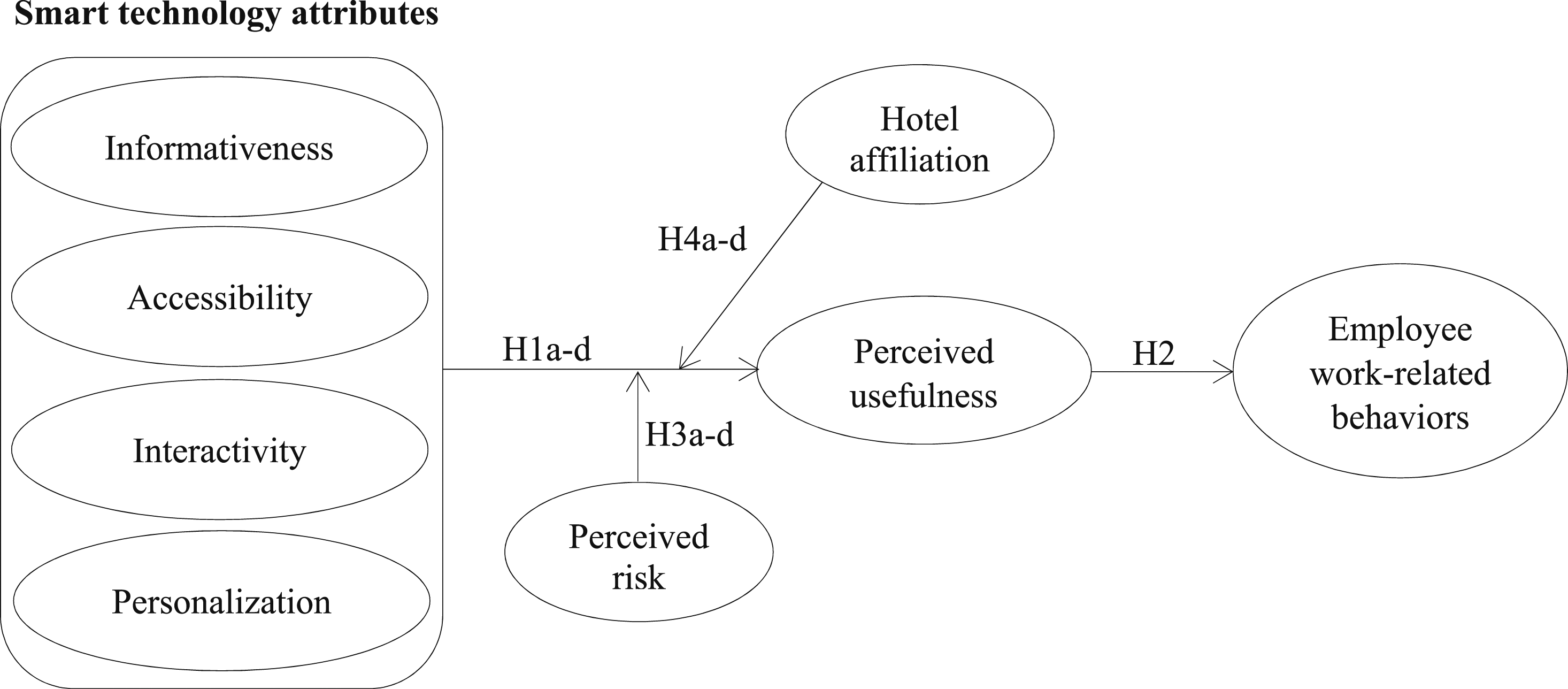
Hassan et al. (2022a) stated that perceived usefulness was positively correlated with responsiveness and smartness. Furthermore, Verma et al. (2018) claimed that the users’ beliefs on the benefits of technology systems (e.g., big data analytics) positively increased their perceived usefulness of those systems. Hence, perceived usefulness (PU) in this study implies that the four STAs would improve hotel employees’ PU of smart technology. Thus, H1a–d are proposed as follows: H1a: Informativeness enhances hotel employees’ PU of smart technology. H1b: Accessibility enhances hotel employees’ PU of smart technology. H1c: Interactivity enhances hotel employees’ PU of smart technology. H1d: Personalization enhances hotel employees’ PU of smart technology.
Employee work-related behaviors
This study attempts to understand how hotel employees interpret and perceive the adoption of smart technologies and their work-related behaviors (WBs). Employee WBs unveil various aspects of the job (Greenberg, 2011). Among many WBs, this study explores job satisfaction, retention, and productivity because they are the key considerations of hotel management (Salem et al., 2024). In addition, these three elements are closely related to each other and could reflect the effectiveness of hotel technology adoption. Job satisfaction usually demonstrates one’s positive psychological feelings toward job-related experiences, which can increase his or her retention in the company (Biason, 2020). Employee retention is the stage when staff continues to work in the same company (Ghani et al., 2022). In addition, productivity is constantly defined as the efficiency of corporates or individuals to create output (Dwyer, 2022). According to Elshaer and Marzouk (2024), using smart technologies within hotel firms would enhance organizational innovations and could help hotels in the aspects of practices, teamwork, quality circles, expansion, and job enrichment. Hassan et al. (2022b) indicated that smart devices have been widely adopted in hospitality industries and have led to a positive impact on employee performance as their efficiency is fostered. Lastly, Verma et al. (2018) stated that behavioral intention is determined by the individual’s perceived usefulness of the information technology system. Tavitiyaman et al. (2022) found that hotel guests’ behavioral intention is positively influenced by their perception of hotel smart technology usefulness. We concur a similar reasoning on the supply side (i.e., hotel employees) as well. Thus, H2 is proposed as follows:
A positive relationship exists between PU of smart technology and desirable WBs of hotel employees.
Perceived risk: Moderating effect
Perceived risk (PR) refers to the uncertainty or consequence caused by unfavorable consequences against users’ expectations (Oglethorpe and Monroe, 1987). The common risks of technological activities include privacy concerns (Chen et al., 2014; Gretzel et al., 2015a, 2015b; Stankov et al., 2019), data security leakage (Ozturk, 2020; Tanakinjal et al., 2010), poor protection on systems against cyber-attacks (Ozturk, 2020), threats of online purchases and transaction (Kesharwani and Bisht, 2012; Ozturk, 2020), technology and process failure (Gretzel et al., 2015b; Meuter et al., 2000), technology and service design problem (Meuter et al., 2000), customer-driven failure (Meuter et al., 2000), and p1ersonal barriers to technology adoption (Stankov et al., 2019).
In the tourism industry, the level of PR has been addressed with focus on tourists’ behaviors and service consumptions. For example, Hua et al. (2017) found that PR was negatively associated with tourists’ attitudes toward using social media, which later influenced their behavioral intention in selecting a travel destination. Jarrar et al. (2020) illustrated the common types of PRs including security issues (personal information leakage), poor interactivity, and accessibility. Pradhan et al. (2018) concluded that tourists’ PR would affect their intention on the usage of smart technology. Using tourism apps in smartphone as the focus of their research, Jarrar et al. (2020) also determined the distinct relationship between PR and intention of using smart technologies. Similarly, the PU of smart technology would also be affected by their PR of using smart technologies. Correspondingly, when the level of PRs for the use of smart technologies (e.g., technology and process failure) and technology and service design problems increase, the perception that the smart technologies would facilitate job performance and productivity would vanish. Therefore, H3a–d are presented as follows: H3a: PR moderates the relationship between informativeness and PU. H3b: PR risk moderates the relationship between accessibility and PU. H3c: PR moderates the relationship between interactivity and PU. H3d: PR moderates the relationship between personalization and PU.
Hotel affiliation: Moderating effect
The hotel organization attempts to adopt various types of technology to differentiate itself from other competitors to remain competitive. Existing research has shown that hotel affiliation (independent or chain hotel) affects the technology adoption and usage in hotels (Bulent Ozturk and Hancer, 2014; Siguaw et al., 2000). The study by Hollenbeck (2018) found that independent hotels performed better than chain hotels in terms of online reviews. By contrast, chain hotels have more resource implications (e.g., cost-effective access to Wi-Fi) on technology implementations than small and/or independent hotels (Stankov et al., 2019). In addition, adoption priorities of smart technologies are influenced by organizational strategies, which are closely connected with hotel affiliation. Independent and chain hotels often look for different operational benefits and face different risks in technology adoption (Hua et al., 2020). For example, in chain hotels, customer preferences may be shared among different properties through smart technologies so that employees can provide personalized customer services, which will likely increase employees’ PU of smart technology.
Accordingly, H4a–d are presented, and Figure 1 presents the conceptual framework with the following proposed hypotheses: H4a: Hotel affiliation moderates the relationship between informativeness and PU. H4b: Hotel affiliation moderates the relationship between accessibility and PU. H4c: Hotel affiliation moderates the relationship between interactivity and PU. H4d: Hotel affiliation moderates the relationship between personalization and PU. The conceptual framework.
Methodology
Research design and data collection procedure
This study examines the relationships between smart technology attributes (STAs), hotel employees’ perceived usefulness (PU) of smart technology, and their work-related behaviors (WBs). Moreover, the moderating effect of perceived risk (PR) and hotel affiliation on the relationship between STAs and PU is also examined. The target population was hotel employees in Hong Kong. Sampling was conducted using our employers and alumni/graduates’ database. Prospective respondents who currently work in hotels that collaborated with undergraduate degree programs in hospitality or tourism area in Hong Kong were invited via emails.
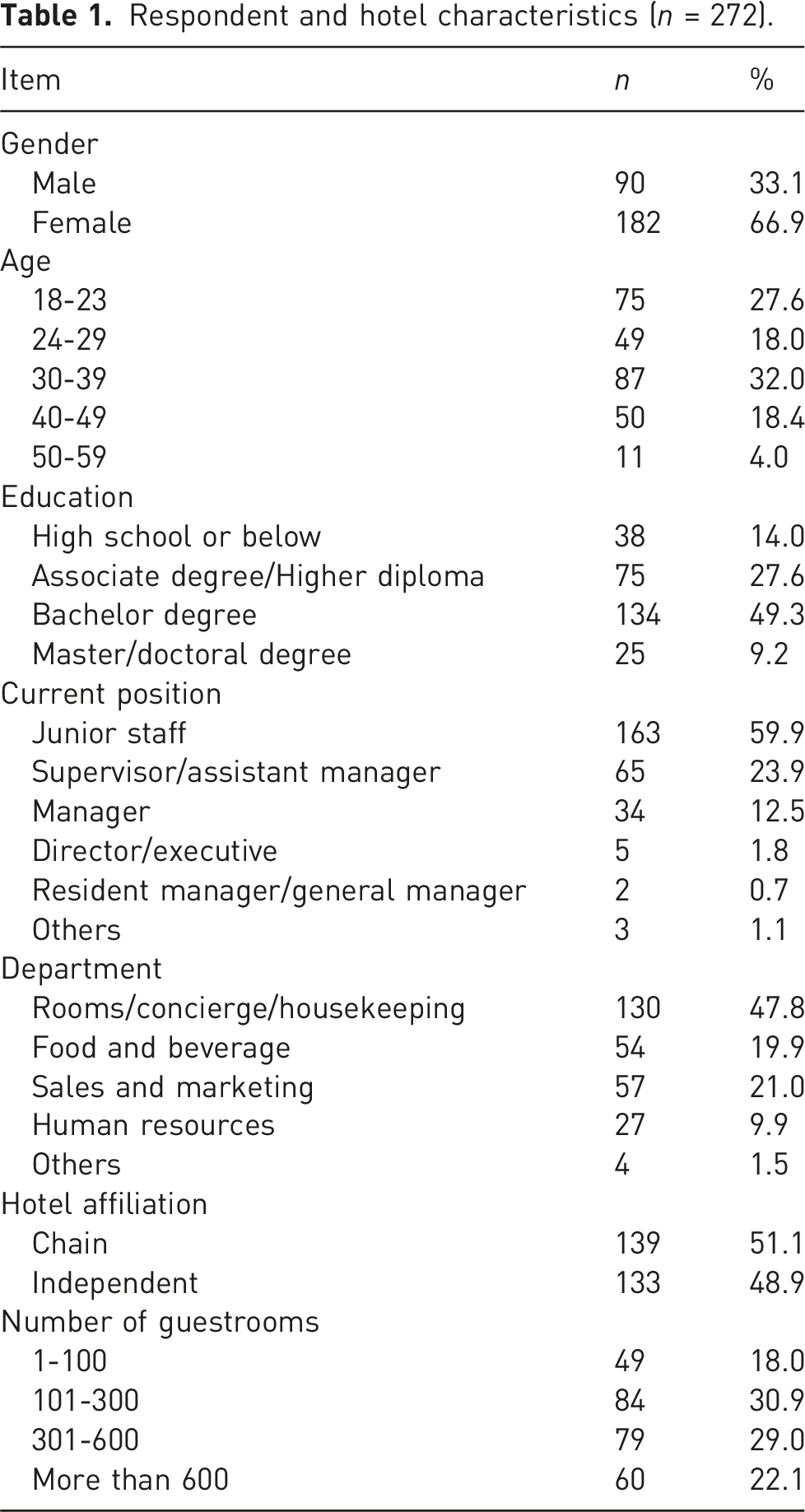
Respondent and hotel characteristics (n = 272).
Questionnaire instrument development
The self-administered questionnaire instrument was designed on the basis of a review of related literature. All latent variables were measured using multiple items adapted and modified from previous studies (Huang et al., 2017; Jeong and Shin, 2020; Kim, 2016; Meuter et al., 2000) with a conscientious effort to apply to the research objectives of this study. The questionnaire comprised the following major sections. First, respondents were asked to indicate their agreement with fourteen statements on STAs in Section I. Section II consisted of PU (three items), PR (three items), and WBs (three items). Sections I and II questions were developed with a five-point Likert scale, ranging from strongly agree (5) to strongly disagree (1). All questions in the last section were multiple-choice questions. This section contained three questions concerning the respondents’ demographic characteristics (age, gender, and education), two questions on their jobs (position and department), and two questions regarding the nature of their hotel organizations (hotel affiliation and number of guestrooms).
Method of analysis
Partial least square (PLS) structural equation modeling (SEM) implemented in SmartPLS was used to measure the data and analyze the relationships between the constructs. The PLS-SEM is primarily used for its value as a confirmatory multivariate approach that enables the simultaneous testing of hypotheses with many latent constructs. The hypotheses related to moderation were examined using the following two methods: (1) PLS path modeling and (2) PLS multi-group analysis (PLS-MGA). The PLS path modeling method can examine the moderating effects of one latent variable on the direct relationships between other latent variables and was therefore used to test H3 in this study. Given that H4a–d involve a categorical potential moderator (i.e., hotel affiliation: chain vs. independent hotels), PLS-MGA was used to test the hypothesis to identify differences in group-specific path coefficients (Hair et al., 2017; Henseler et al., 2009; Vinzi et al., 2010).
Results
Respondents’ characteristics
Table 1 shows the detailed characteristics of respondents. Females represented roughly two-thirds (66.9%) of the total of 272 respondents. Most of the respondents held a bachelor’s degree (49.3%); nearly half (47.8%) of them worked at rooms/concierge/housekeeping departments. Many of them were junior staff (59.9%). Regarding hotel affiliations, slightly over half (51.1%) of the respondents worked at hotels which are affiliated to hotel chains, while the rest (48.9%) worked at independent hotels.
Measurement model assessment
Confirmatory factor analysis of key constructs.
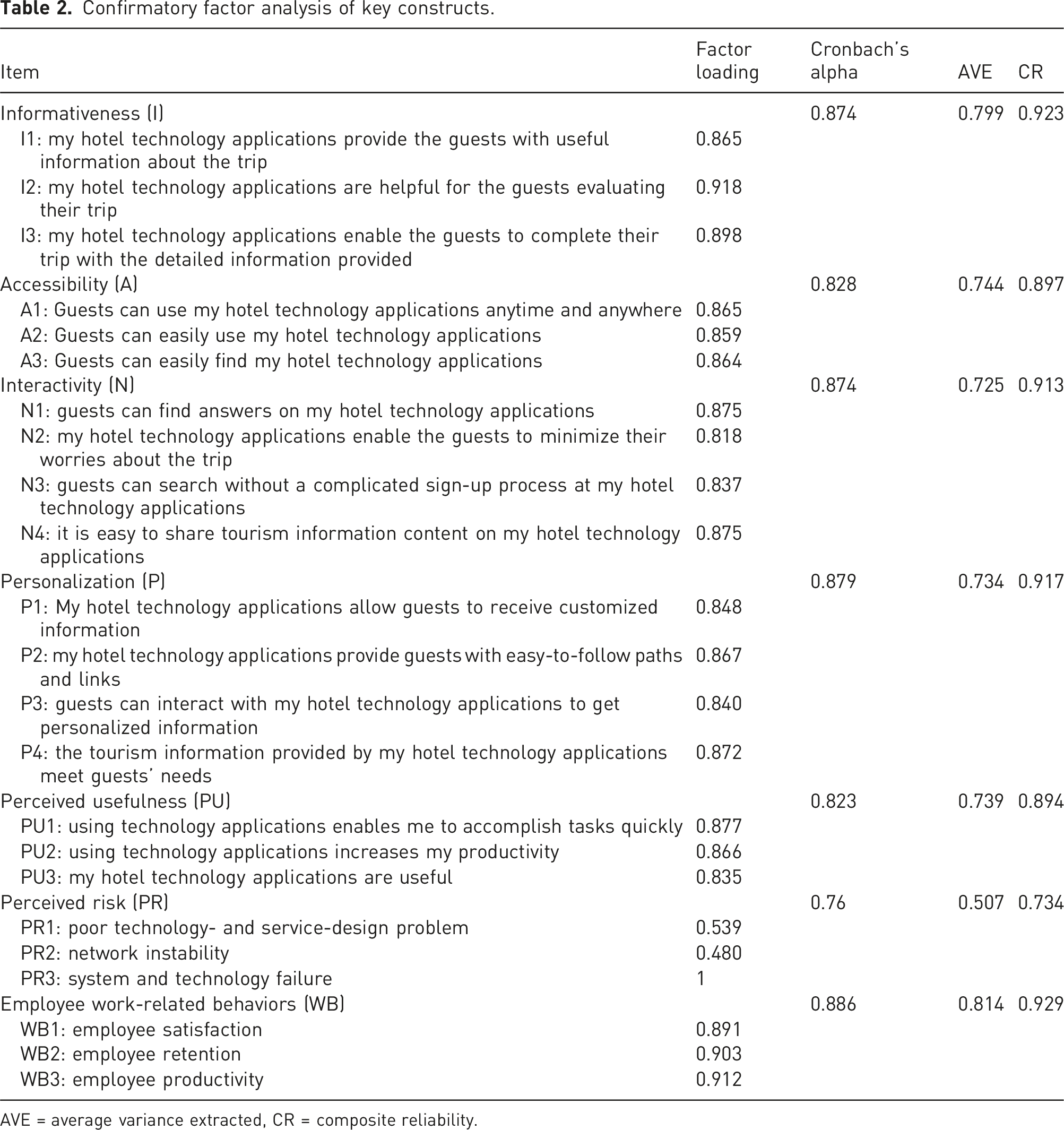
AVE = average variance extracted, CR = composite reliability.
Discriminant validity testing of key constructs (Fornell-Larcker criterion).
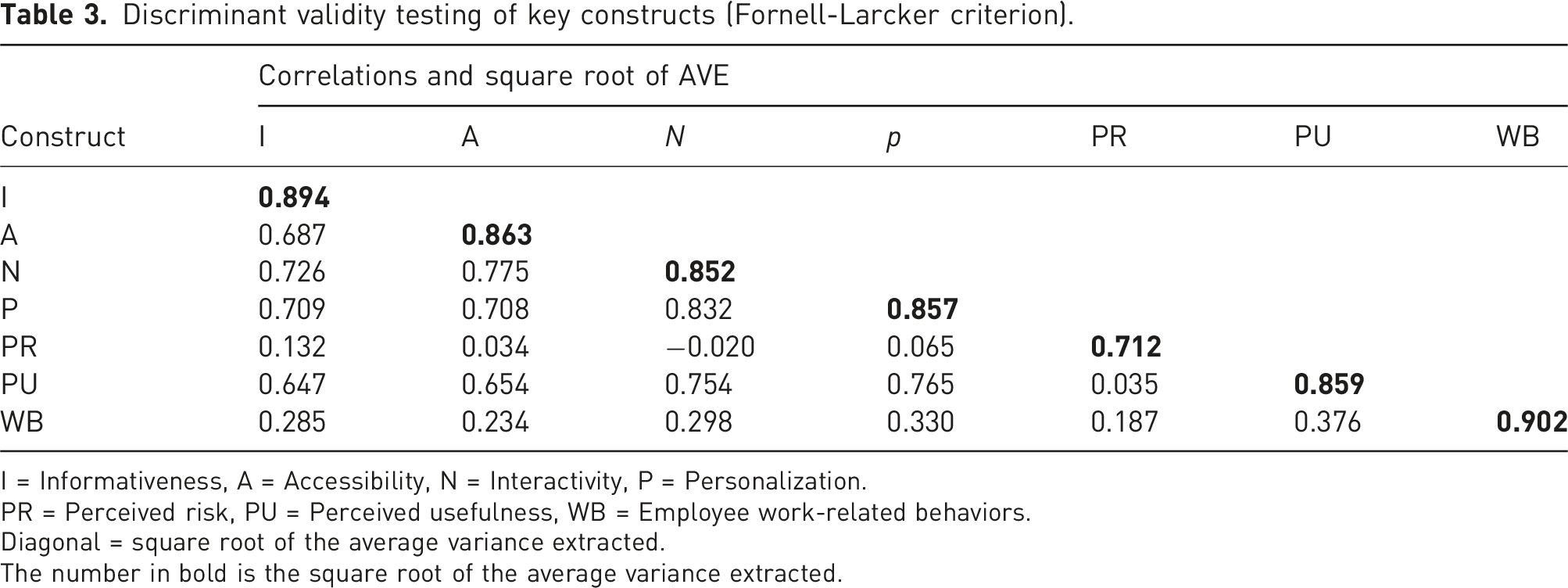
I = Informativeness, A = Accessibility, N = Interactivity, P = Personalization.
PR = Perceived risk, PU = Perceived usefulness, WB = Employee work-related behaviors.
Diagonal = square root of the average variance extracted.
The number in bold is the square root of the average variance extracted.
Hypothesis testing analysis
Structural equation model result.
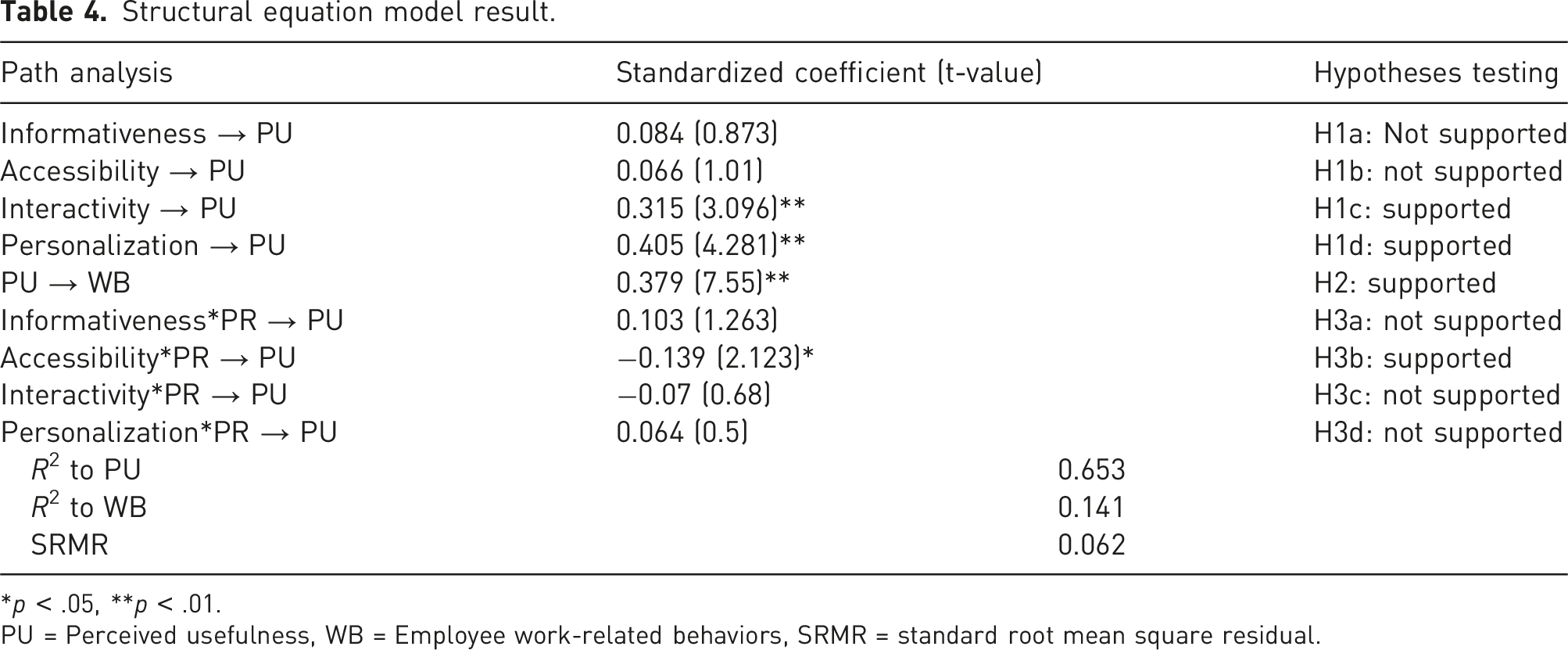
*p < .05, **p < .01.
PU = Perceived usefulness, WB = Employee work-related behaviors, SRMR = standard root mean square residual.
This study proposed and tested a total of thirteen hypothesized relationships. Concerning the impacts of STAs, hotel employees’ PU of smart technology was significantly and positively influenced by interactivity (β = 0.315, t-value = 3.096, p < .01) and personalization (β = 0.405, t-value = 4.281, p < .01), supporting H1c and H1d. By contrast, no significant impacts exist on informativeness (β = 0.084, t-value = 0.873, p > .05) and accessibility (β = 0.066, t-value = 1.01, p > .05) on hotel employees’ PU of smart technology. Thus, H1a and H1b were not supported. Moreover, PU significantly and positively affected the employees’ WBs (β = 0.379, t-value = 7.55, p < .01), which supported H2.
In terms of the moderating role of PR, results show that PR moderated the relationship between accessibility and PU (H3b) (β = −0.139, t-value = 2.123, p < .05), supporting H3b. When the PR of smart technology decreased, the accessibility attribute would positively influence hotel employees’ PU of smart technology. However, PR did not affect the relationships between the other three STAs and pU. Thus, H3a, H3c, and H3d were not supported.
Moderating role of hotel affiliation
Moderating effect of hotel affiliation on the relationship between smart technology attributes and perceived usefulness.
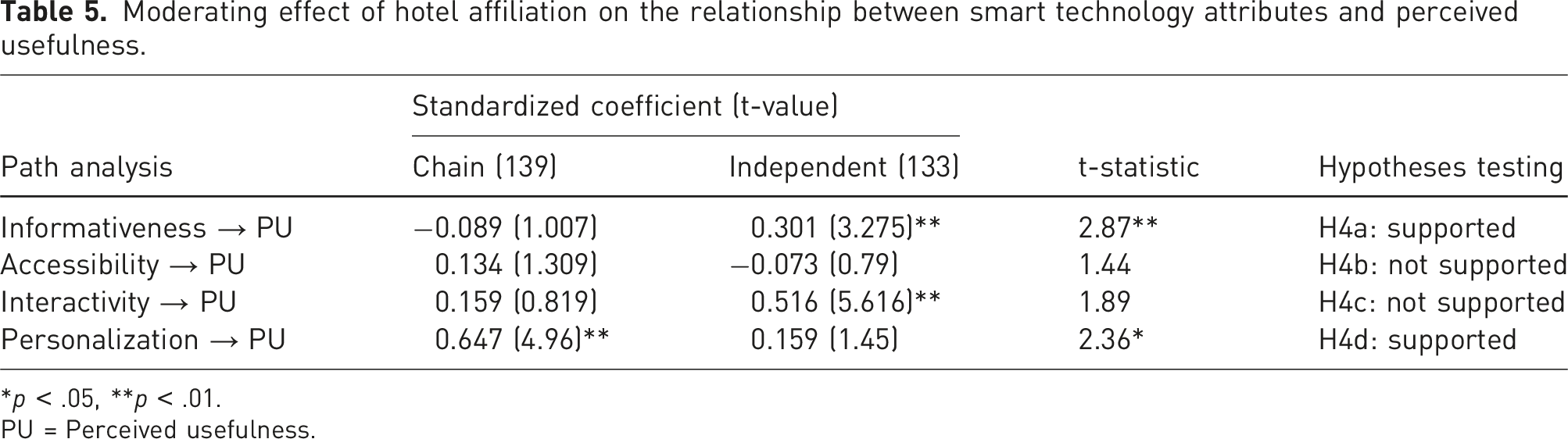
*p < .05, **p < .01.
PU = Perceived usefulness.
Discussion and implications
This empirical study investigates the relationships among STAs, hotel employees’ PU of smart technology, and WBs in the post-COVID era. It especially focuses on the moderating effects of PR and hotel affiliation on the relationships between STAs and PU. This study offers new insights for theoretical development and practical implications.
In the context of the Hong Kong hotel industry, this study unfolded that only the STAs of interactivity and personalization significantly influence hotel employees’ PU of smart technology. These results differ from those of Huang et al. (2017), Lee et al. (2018), and Pai et al. (2020) who explored STAs from the perspective of tourists. Employees perceived that hotel guests could explore and access hotel technology applications with few difficulties. The official hotel website, apps, and the availability of customer data via internal data systems in the hotels allow employees to provide prompt services to hotel guests. Moreover, the technology applications used in hotels were user-friendly and were thus capable of satisfying their needs and expectations. Hotel guests can create their personalized services via technology applications such as self-service devices, mobile applications, and chatbots (Ahmad and Scott, 2019).
However, the impacts of STAs of informativeness and accessibility on hotel employees’ PU of smart technology were insignificant. These results were similar to those of Jeong and Shin (2020). Hotel guests normally either search and access the needed information before traveling or approach employees for them during their stay. Even when hotel guests are outside the hotels, they can access the hotel technology applications (e.g., hotels with 5G services) and obtain information regarding their trip. Hong Kong is promoting its destination as a smart city (Innovation and Technology Bureau, 2020), and most travel information and tourism enterprise apps are available for tourists. Therefore, neither informativeness nor accessibility had a significant impact on how valuable employees thought hotel technology applications were.
Another finding is that the perceived usefulness of hotel smart technology applications enhances work-related behaviors of hotel employees, which paralleled the findings of Cohen and Olsen (2013), Ezzaouia and Bulchand-Gidumal (2023), and Jeong and Shin (2020). Once hotel smart technology applications have been successfully implemented, the smart technology attributes enable hotel employees to serve individual guests with less time and effort and to enhance employee performance, especially when a shortage of manpower occurs. Specifically, smart technology applications could save employees’ working time on routine operations such as daily reports so that employees could share their important time with hotel guests and personal break time. Effective smart technology could shorten hotel employees’ working overtime, which can improve their work–life balance and well-being. Therefore, the higher the employees’ PU of smart technology, the higher the employees’ perceived work productivity, satisfaction, and retention.
Concerning the moderating role of PR, results show that when the PR of using smart technologies such as the possibility of technological problems or failure occurrence decreased, the positive influence of accessibility attribute on hotel employees’ PU of hotel technology applications increased. Alternatively, PR hindered the positive effects of accessibility attribute on the employees’ perceptions of the smart technology’s usefulness. The effects of other STAs on PU were not influenced by the pR. This result is similar to Meuter et al. (2000). Given the barriers of inexperienced hotel guests’ technology knowledge as examples, hotel guests may face challenges in accessing hotel technology applications (Hua et al., 2017; Tavitiyaman et al., 2022). When the risk of using hotel technology applications increases, guest satisfaction will be negatively affected. Employees may possibly encounter challenges in accessing and implementing relevant technology applications with possible system and technology failures. Consequently, this constraint will raise the difficulty in hotel employees dealing with problems, completing tasks effectively, and achieving higher job performance. Therefore, hotel employees would only perceive hotel technology applications as useful in delivering services to guests when the perceived risk is low.
Hotel affiliation was found to have a moderating role between STAs of informativeness and personalization and hotel employees’ PU of smart technology, which is similar to the findings of Bulent Ozturk (2020) and Siguaw et al. (2000). While for employees working at independent hotels, informativeness enhanced their perceived usefulness compared with the chain hotel. In utilizing the existing resources, chain hotels are usually believed to be able to offer essential brand and hotel information with enhanced efficiency. By comparison, adopting high technologies may enable independent hotel employees to believe more on the technology’s usefulness in helping guests access and use relevant hotel information. This result concurs with the study of Hollenbeck (2018), which showed that as information on online reviews increased, independent hotel revenue has improved more than that of chain hotels. Further details of independent hotels by online review provide an opportunity for hotel guests to gain further understanding of the independent hotel facilities and services, which could increase their PU of smart technology as embedded in the facilities and services provided.
As far as personalization is concerned, for employees working at chain hotels, personalization attribute significantly improved the PU of smart technology. Given that chain hotels may maximize technology knowledge transfer to other hotel properties within the same chain, they frequently incorporate the newest technology to enhance the unique experiences of the guests of each target category. This approach can utilize resources and improve the business performance of the chain hotels as a whole. By contrast, independent hotels only seem to provide basic smart technology features, such as Wi-Fi, or mobile apps with rudimentary functions, to deliver travel- and service-related information to guests, without the technology design to enhance personalization of services. This finding is due to limited resources for technology development and financial support.
Theoretical implications
Theoretically, this study has made three distinctive contributions. First, the results reflect theoretical development on the effect of STAs on PU from hotel employees’ perspective. STAs have been examined through the lens of tourists’ experiences and behaviors in previous studies such as Huang et al. (2017) and Jeong and Shin (2020). However, hotel employees are an important stakeholder in smart technology adoption and implementation. Hotel employees’ WBs will affect hotel performance and will be affected by STAs. Findings showed that only two STAs (i.e., interactivity and personalization) are significant determinants of PU of smart technology from hotel employees’ point of view. These results differ from the results of previous studies that adopted the perspectives of tourists. Therefore, this study reveals that employees and guests acknowledge STAs differently.
In addition, this study advances knowledge by indicating that hotel employees’ PU of smart technology significantly affects their WBs. According to Davis (1989), PU could promote the behavioral intention of technology acceptance/usage. If hotel employees perceive the smart technology as useful, they will have higher job productivity, satisfaction, and loyalty. Therefore, possible benefits of using smart technologies include allowing hotel employees to work more efficiently with less pressure and improving their job satisfaction and loyalty, which may lead to a better hotel organizational performance.
The last important contribution is to examine the moderating effects of perceived risk and hotel affiliation on the relationship between smart technology attributes and perceived usefulness. This study is the first of its kind to empirically validate such important moderating effects, adding to the theoretical development of smart technology adoption literature. Specifically, our contribution in examining the moderating effects is twofold: First, hotel employees’ perceived risk of using smart technologies moderates the influence of accessibility attribute on perceived usefulness. Herein, we contributed to the literature that focused on the restrictions or limitations of implementing smart technologies in the tourism and hospitality industry (Jarrar et al., 2020; Pradhan et al., 2018). Second, by extending the previous studies (e.g., Hollenbeck, 2018) in comparing chain hotels and independent counterparts, hotel affiliations significantly affect the role played by smart technology attributes in hotel employees’ perceived usefulness of smart technologies. This study provides empirical evidence to support the significant relationship between informativeness and perceived usefulness for independent hotels. In the meantime, the relationship between personalization and perceived usefulness is statistically significant for chain hotels. As far as hotel affiliation is concerned, smart technology attributes could benefit hotel management and operations at different functions and levels. This study offers a comprehensive framework governing the relationships among smart technology attributes, perceived risk, hotel affiliation, and perceived usefulness from hotel employees’ perspective, thus separating itself from previous research that focuses on the tourists or hotel guests’ perspective.
Overall, this study successfully extends TAM by fully unveiling and discussing the perceptions of various attributes of smart technologies by hotel employees affecting their perceived usefulness of smart technologies and then work-related behaviors (Kim and Lee, 2014; Tavitiyaman et al., 2022). The TAM model is further extended by incorporating the proven moderating effects of employees’ perceived risk and hotel affiliation. The major relationships in the TAM model will be subjected to the contextual (e.g., hotel affiliation) and individual (e.g., perceived risk) difference.
Managerial implications
This study is timely as suggested by Iskender et al. (2022), capturing employees’ perceptions and behavioral intentions of technology adoption in workplaces after COVID-19. The pandemic crisis has expediated the technology usage by hotels (Iskender et al., 2022), and the new normal in the hotel industry will be technology-driven. However, hotels are people-centered businesses. The benefits of technology adoption highly depend upon employee behavior (Melián-González and Bulchand-Gidumal, 2016). Priorities should be given to the smart technologies that support daily operations and allow employees to provide more customized service (Singh and Munjal, 2012). Hotel managers must ensure that smart technologies implemented in their hotels can maximize employees’ PU through interactivity and personalization attributes. Hotel operators are suggested to prioritize the adoption of certain smart technologies that provide valuable interaction and facilitate employees to provide customized service to guests. An example is regular updating of the latest hotel product or service offerings to the apps and website, thus allowing hotel employees to enhance the level of interactivity and personalization when serving guests of different backgrounds and communicate and share this information with hotel guests.
Hotel managers should establish a proper communication channel with hotel employees regarding the importance of smart technology attributes and encourage them to implement these smart technology attributes effectively (V De Souza Meira et al., 2022). Regular trainings in new or upgraded advanced technology software and training in enhancing customer experiences via smart technology support should be offered to hotel employees, especially frontline employees who have close and direct contact with hotel guests. These initiatives will not only strengthen hotel employees’ acceptance and use of smart technologies but also improve the employees’ job satisfaction and loyalty, which could enhance the competitiveness of hotel businesses.
In addition, hotel managers should ensure that the level of perceived risk is minimized from the perspective of hotel employees (Xie et al., 2022). The high quality of webpage design and layout should be user-friendly with minimal difficulties. The data network should be kept secure and stable for heavy usage at all times. If any system fails, the hotel should have a prompt contingency plan to handle ad hoc customer services. The backup of data should be recorded as a daily routine, enabling hotel employees to search for information and share it with hotel guests during real-time services if needed. Lastly, the perceived risk of using smart technologies can also be alleviated through on-the-job training and job shadowing efforts. Experienced colleagues within and across different hotel units can provide necessary support to those with limited experience of using relevant technologies.
Hotel managers from either chain or independent hotels can prioritize their options differently when adopting smart technologies. For the former, smart technologies with high personalization attributes should be highly prioritized. For the latter, smart technologies aiming at assisting in conveying and communicating hotel and trip information (i.e., high informativeness attribute) should be implemented first. Independent hotels can link informativeness with their products, facilities, and services so that hotel employees can demonstrate and provide these details to guests more easily. In the meantime, chain hotels should urge hotel employees to promote the “personalization” concept to hotel guests when utilizing smart technology. This process should be incorporated into their standard training (with guidelines/handbook documented) and internal branding efforts. Guests’ values and personal requests and preferences should be highlighted and entertained in various ways. These implementations will optimize the level of hotel employees’ PU of smart technology. Hotels can achieve better technology investment planning, improve employees’ productivity, and enhance guest satisfaction.
Finally, given the expected intense competition in the hotel sector during the post-COVID-19 period, hotels should further enhance their competitiveness in the market. Given that technology development, upgrade, and maintenance are cost-intensive, hotels with limited financial resources could be embedded to increase room and service charges for efficient and personalized guest services with smart technology assistance (Bilgihan et al., 2016). Hotel guests are willing to pay for competent hotel technology applications to enjoy a memorable and convenient hotel stay.
Limitations and future research
This study has a number of limitations which should be acknowledged. The samples in this study were selected through a convenience sampling approach in Hong Kong. For example, the ages/demographics of hotel employees may influence the results and the validity of the model. Future research can consider other rigorous sampling methods and extend the sampling recruitment scope to gain any new insights. Furthermore, this study focused on Hong Kong hotel industry. The generalization of these findings could be limited to destinations in other regions or countries with similar economic and socio-cultural settings. Future research can be conducted with various regions and countries to validate the results in various contexts.
Footnotes
Acknowledgements
The work described in this paper was fully supported by a grant from the Research Grants Council of the Hong Kong Special Administrative Region, China (Project No.: UGC/IDS(R)24/22) and a grant [number BHM-2021-243(J)] from the College of Professional and Continuing Education, an affiliate of The Hong Kong Polytechnic University.
Declaration of conflicting interests
The author(s) declared no potential conflicts of interest with respect to the research, authorship, and/or publication of this article.
Funding
The author(s) disclosed receipt of the following financial support for the research, authorship, and/or publication of this article: This work was supported by the Research Grants Council, University Grants Committee, Hong Kong SAR; UGC/IDS(R)24/22, College of Professional and Continuing Education, The Hong Kong Polytechnic University; BHM-2021-243(J).
