






Abstract
This study investigates burnout among migrant hotel workers, focusing on how organisational practices, workplace experiences, and structural conditions intersect to generate chronic emotional and physical strain. Drawing on 17 in-depth interviews, the research integrates structural vulnerability, emotional labour, and person–environment fit theories as sensitising lenses. The findings reveal that burnout among migrant hotel workers is not only an individual stress response, but also a socially and organisationally embedded experience shaped by employment insecurity, financial pressure, cultural expectations, emotional service demands, and limited organisational support. By reframing burnout as a multi-layered, context-specific phenomenon rather than an individual psychological deficit, the study contributes to theoretical understanding of burnout in migrant-dependent service industries. It also offers practical implications, calling for culturally responsive organisational practices, clearer reporting pathways, safer work design, and more consistent managerial support to meet duty of care obligations and reduce burnout risks faced by migrant workers in hospitality.
Introduction
The global hotel industry faces ongoing workforce challenges, including high turnover, recruitment difficulties, and uneven skill retention. These pressures are especially evident in countries like Australia, where hotel operations heavily depend on internationally sourced labour. According to the Australian Bureau of Statistics (2022), 54% of workers in the Accommodation and Food Services sector were born overseas, and 34.5% of temporary migrants are employed in this sector, the highest of any industry (Crock and Parsons, 2023). Many of these workers experience insecure employment and limited career progression, which place them in vulnerable roles (Wiltshire et al., 2022). These figures reflect not only migrant workers’ essential contributions but also the industry’s dependence on a marginalised and transient workforce.
This study defines migrant hotel workers as foreign-born individuals employed in the hotel sector under temporary, employer-dependent, or non-citizen visa arrangements. This definition aligns with the International Labour Organization (ILO, 2015) and the OECD (2022), which classify migrant workers as non-nationals engaged in paid employment under legal and institutional frameworks that often restrict their rights and security. Structural constraints such as exclusion from collective bargaining, limited access to legal protections, and few opportunities for training or promotion continue to shape these workers’ employment realities (Alberti and Iannuzzi, 2020; Hack-Polay et al., 2022; Sönmez et al., 2020), thereby serving as critical factors in the erosion of work-related wellbeing.
Although previous hospitality research has examined emotional labour pressures, workforce instability, and precarious working conditions within hotel employment (Choi et al., 2019; Koo et al., 2020; Quesada et al., 2011), less attention has been given to how structural vulnerability, emotional labour expectations, and person–environment misfit interact to shape burnout among migrant hotel workers. These vulnerabilities are especially pronounced among temporary migrant workers, who often face financial pressure, limited legal protections, and employer dependency (Crock and Parsons, 2023; Wiltshire et al., 2022). To date, limited qualitative research has explored how these interconnected conditions collectively influence burnout within migrant hotel employment.
Burnout, defined by the World Health Organization (2019) as emotional exhaustion, depersonalisation, and reduced personal accomplishment, offers a useful lens for examining how the mismatch between workplace demands and personal resources leads to mental and physical strain (Ahmad et al., 2026; Jones et al., 2024). For migrants, these demands are heightened by visa insecurity, racial and linguistic marginalisation, and transnational obligations (Alberti, 2014; Clibborn, 2021; Mansour and Tremblay, 2018). Cultural values emphasising deference and silence may also discourage help-seeking under stress (Bauder, 2006; Hack-Polay et al., 2022).
This study seeks to address these critical gaps by exploring how burnout is experienced and expressed by migrant hotel workers. Drawing on structural vulnerability theory (Quesada et al., 2011), emotional labour theory (Hochschild, 1983), and person–environment fit theory (Edwards et al., 1998), the research conceptualises burnout as a complex, multi-layered, and intersectional phenomenon. These theories reflect migrant hospitality contexts: structural vulnerability highlights legal and institutional constraints; emotional labour captures the affective demands of hotel work; and person–environment fit explains misalignments between personal and organisational values.
To distinguish between organisational and cultural contributors, individual-level escalation processes, and broader workplace structures shaping burnout, the study addresses the following interrelated research questions: 1) What organisational and cultural factors contribute to burnout among migrant hotel workers? 2) How do individual-level circumstances and migrant experiences escalate burnout among migrant hotel workers? and 3) In what ways do workplace structures and management practices exacerbate or mitigate burnout among migrant hotel workers? Ultimately, the study offers a deeper and contextualised understanding of burnout among migrant hotel workers by examining how structural vulnerability, workplace conditions, and person–environment misalignment interact within hotel employment.
Literature review
Theoretical perspectives
Burnout is commonly understood through job demands–resources models and cognitive appraisal theories (Bakker et al., 2023; Lazarus and Folkman, 1984), which frame it as a chronic imbalance between demands and coping resources. While these frameworks highlight individual and organisational factors, they often overlook broader structural forces, particularly those shaping migrant experiences such as immigration status, cultural dissonance, and exclusion. This study draws on three complementary theoretical perspectives to examine burnout among migrant hotel workers: structural vulnerability theory, emotional labour theory, and person–environment fit theory.
Structural vulnerability theory (Quesada et al., 2011) directs attention to how institutional disadvantage may shape work-related strain. Migrants face precarious visas, union exclusion, and blocked advancement (Hack-Polay et al., 2022; Sönmez et al., 2020), which erode agency and increase strain. Sönmez et al. (2020) show how hospitality’s systemic exclusions heighten emotional exhaustion. Emotional labour theory (Hochschild, 1983) highlights the cost of surface acting, where workers must show positive emotions regardless of their real feelings. For migrants, this is intensified by language gaps, cultural tensions, and discrimination (Lam et al., 2022), with fewer resources and greater vulnerability.
Person–environment fit theory (Edwards et al., 1998) explains how misalignment between personal traits (e.g., values, beliefs, needs) and workplace norms can lead to stress and burnout. Attitudes and behaviours are shaped by individuals’ perceptions of how well their traits align with their work environment (Hsu et al., 2019). In the context of migrant hotel workers, this theory helps identify the specific relational and cultural misfits that contribute to burnout. Research shows migrant hotel workers feel more alienated when organisational cultures fail to recognise diversity or support inclusion (Choi et al., 2017; Min et al., 2023). Park and Hai (2024) found that burnout risk rises when migrants perceive a poor fit between their values and those of their workplace.
Collectively, these theories provide sensitising lenses rather than a predetermined explanatory model for exploring burnout among migrant hotel workers. The framework does not assume in advance that structural vulnerability, emotional labour, and person–environment misfit will necessarily explain participants’ felt experience of burnout. Instead, it guides attention to possible structures of institutional, affective, and relational dimensions that may emerge in participants’ accounts of their lived burnout experience. Structural vulnerability theory can highlight systemic exclusions that intensify burnout risk, emotional labour theory can uncover the specific invisible emotional demands placed on migrant workers, and person–environment fit theory can uncover the relational and cultural forms of workplace misalignment that may exacerbate emotional strain and negatively affect wellbeing. While each theory has been applied independently in hospitality research, there remains limited integration of these perspectives in studies examining burnout among migrant hotel workers.
By integrating these theories, this study adopts an exploratory framework proposing burnout as a socially and structurally embedded condition shaped by precarious employment, cultural misrecognition, and systemic exclusion. This approach moves beyond individualistic explanations of burnout by situating migrant workers’ experiences within broader organisational, cultural, and structural contexts.
Burnout in hotel work
Burnout is a persistent concern in hospitality due to the emotional and physical demands of service roles (Grobelna, 2021; Zhu et al., 2025). Hotel employees must maintain composure despite long hours, understaffing, and limited support (Ahmad et al., 2024; Choi et al., 2019). Burnout is typically defined through emotional exhaustion, depersonalisation, and reduced personal accomplishment (Maslach et al., 2001). Within the hospitality industry, burnout is regarded as an unsustainable work practice, which must be prevented to achieve workforce sustainability (Mooney et al., 2022).
While research increasingly addresses burnout, most studies focus on its prevalence and causes within the work environment, such as emotional labour, excessive workloads, and customer incivility (Ahmad et al., 2024; Cheung, 2021; Grobelna, 2021; Salama et al., 2022). Since 2000, burnout research in hospitality has drawn from organisational psychology, sociology, and management. However, the field remains fragmented, with calls for greater insight into how individual, organisational, and macro-level factors interact (Mooney et al., 2022; Saito et al., 2025).
Although existing studies have advanced the understanding of work-related wellbeing and associated burnout risks in hospitality, they often treat hotel staff as a homogeneous group. Consequently, little is known about the experiences of specific groups, such as migrant workers. Migrants face unique employment barriers related to language, social exclusion, and cultural norms, and there is a need for better understanding of what limits their work-related wellbeing. This is supported by Eggerth and Flynn (2012), who explained that the population of migrant workers is unique and needs to be further incorporated into existing theories that examine employee behaviour.
In addition, Choi et al. (2017) noted that failure to understand such a significant segment limits both theoretical development and industry practice. Structural marginalisation and cultural misrecognition remain underexamined. While burnout models often focus on workload and coping strategies, they frequently ignore the intersectional pressures that migrant workers face. For example, Ahmad et al. (2024) found that emotionally intense work quickly causes exhaustion without supportive leadership. Lam and Cheung (2024) further show that emotional labour pressures increase in multicultural teams due to identity suppression and misrecognition.
Although some studies examine resilience and emotional intelligence as burnout buffers (Choi et al., 2019), many overlook the structural constraints that limit migrant workers’ ability to cope. Rathi and Lee (2016) warn that focusing on personal resilience may obscure the lack of access to support or avenues to challenge mistreatment. Even emotionally stable individuals may struggle under visa precarity and lack of redress. Personality-based models (McCrae and Costa, 1987), while valuable, often fail to consider how cultural norms and employment insecurity shape burnout. Responding to this, Ornek et al. (2022) call for more inclusive frameworks that integrate migration-related risks and power dynamics. This study answers that call by examining how systemic and cultural conditions shape burnout among migrant hotel workers.
Migrant workers in the hotel industry
Migrant workers are essential to hotel staffing globally but are often concentrated in low-status, labour-intensive jobs with limited opportunities for advancement (Ahmad et al., 2024; Efthymiou et al., 2020). Roles in housekeeping, kitchens, and cleaning are shaped by visa dependency, informal hiring, and labour segmentation (Baum, 2012; Joppe, 2012). Rather than addressing short-term labour shortages, reliance on migrants is embedded in hospitality’s cost-efficiency model. Research from the UK, Canada, the US, and Australia shows continued demand for migrant labour, partly due to local reluctance to accept low-paid, physically taxing jobs (Baum, 2012; Janta et al., 2011; Tham and Fudge, 2019). However, limited research has explored how these employment structures affect migrant workers’ daily experiences and wellbeing.
At the meso level, workplace structures often reinforce the marginalisation of migrant employees. These include limited input into decision-making, poor access to complaints mechanisms, and few opportunities for professional development (Alberti and Iannuzzi, 2020; Hack-Polay et al., 2022; Sönmez et al., 2020). Those on employer-dependent visas are especially vulnerable, as they may be reluctant to speak out against unsafe or exploitative conditions (Clibborn, 2021). These structural constraints often intersect with transnational obligations and cultural expectations, influencing how migrant workers respond emotionally to workplace stress.
Research shows that many migrants internalise values of endurance, silence, and deference (Alberti, 2014; Bauder, 2006). Combined with job insecurity, these norms can limit help-seeking and resistance to overwork. For example, Shen and Hu (2022) found that rural migrants in China’s service sector were expected to suppress their emotions and remain upbeat, regardless of dissatisfaction. Similarly, Cheung et al. (2021) found that in hotel settings, emotional labour and cultural distance forced migrants to conceal emotions and conform to service expectations.
Although migrant workers’ economic contributions to hospitality are widely recognised, their emotional wellbeing remains comparatively underexplored. Existing research frequently prioritises issues such as wages, visa status, or labour market participation while paying less attention to how institutional structures affect mental health and burnout. This study addresses that gap by examining burnout as a lived experience shaped by the institutional context of migrant hotel work. By centring migrant experiences, the research moves beyond individual and organisational explanations of burnout to expose the cultural and structural dimensions at play.
Methodology
Research design
The hospitality literature increasingly calls for greater inclusion of diverse worker perspectives, particularly those of migrant employees who face unique challenges in navigating hotel careers (Choi et al., 2019; Koo et al., 2020). Despite this recognition, qualitative studies focusing on migrant hotel workers remain limited. Addressing this gap, this study adopts a qualitative approach to foreground the lived experiences of migrant workers and capture the nuanced ways burnout develops in this demographic.
This study adopts an intersectional lens to explore how overlapping cultural identities, structural vulnerabilities, and organisational structures uniquely shape migrant hotel workers’ experiences of burnout. These factors are proposed to operate at the personal level, micro level (e.g., cultural beliefs, interpersonal dynamics), meso level (e.g., organisational cultures, management practices), and macro level (e.g., national culture and institutionalisation), providing a layered understanding of burnout’s development within hospitality workplaces.
The study employed the six-phase thematic analysis framework developed by Naeem et al. (2023), using an interpretive, exploratory design. Thematic analysis allowed for the identification of both deductive codes (informed by the theoretical frameworks) and inductive codes (emerging from participants’ narratives). This dual approach was essential for uncovering context-specific insights into the interplay between emotional strain, identity, and structural conditions (Bott and Tourish, 2016).
Data were collected through semi-structured interviews that encouraged participants to reflect on their personal burnout experiences and the pressures that shaped them. Interview data are presented as participants’ initial reflections on burnout and related distress, representing how burnout was understood and described at the time of the interview. This format enabled the participants to describe both their emotional reactions and the broader organisational and structural contexts in which these experiences unfolded (Choi et al., 2022). The interviews explored how participants responded to work-related stress, providing insight into both internal (psychological) and external (organisational) burnout triggers.
The study recruited both frontline and supervisory-level migrant hotel workers to capture a range of lived hotel employment experiences felt across different job roles. The design prioritised capturing the voices of workers typically underrepresented in hospitality research. This was achieved through visa-based screening and recruitment strategies that led to a final sample comprising migrant hotel workers employed across frontline, supervisory, full-time, part-time, and casual roles.
Data collection
Participants were recruited between November 2022 and March 2023 in Australia. Purposeful and snowball sampling techniques were used to ensure diversity in hotel size, star rating, and operational structures. A total of 30 invitations were distributed across randomly selected 3- to 5-star hotels. To reduce potential selection bias, initial contact was made through human resource managers who circulated the invitation to all hotel employees via internal channels. Prospective participants contacted the research team directly, preserving confidentiality throughout the process. The study focused on frontline hotel workers and supervisors, including guest service agents, food and beverage staff, and frontline managers. Snowball sampling further diversified the sample through participant referrals.
Eligibility was confirmed by verifying each participant’s temporary or non-citizen visa status in Australia, ensuring they met the study’s definition of migrant hotel workers. To confirm recent burnout experiences, participants completed the Maslach Burnout Inventory (MBI; Maslach and Jackson, 1981) prior to interviews. The MBI measures emotional exhaustion, depersonalisation, and reduced personal accomplishment (Maslach and Jackson, 1981). Only participants meeting the criteria of high emotional exhaustion and depersonalisation and low personal accomplishment proceeded to the interviews. Six individuals who did not meet these criteria were excluded.
Participant profiles.
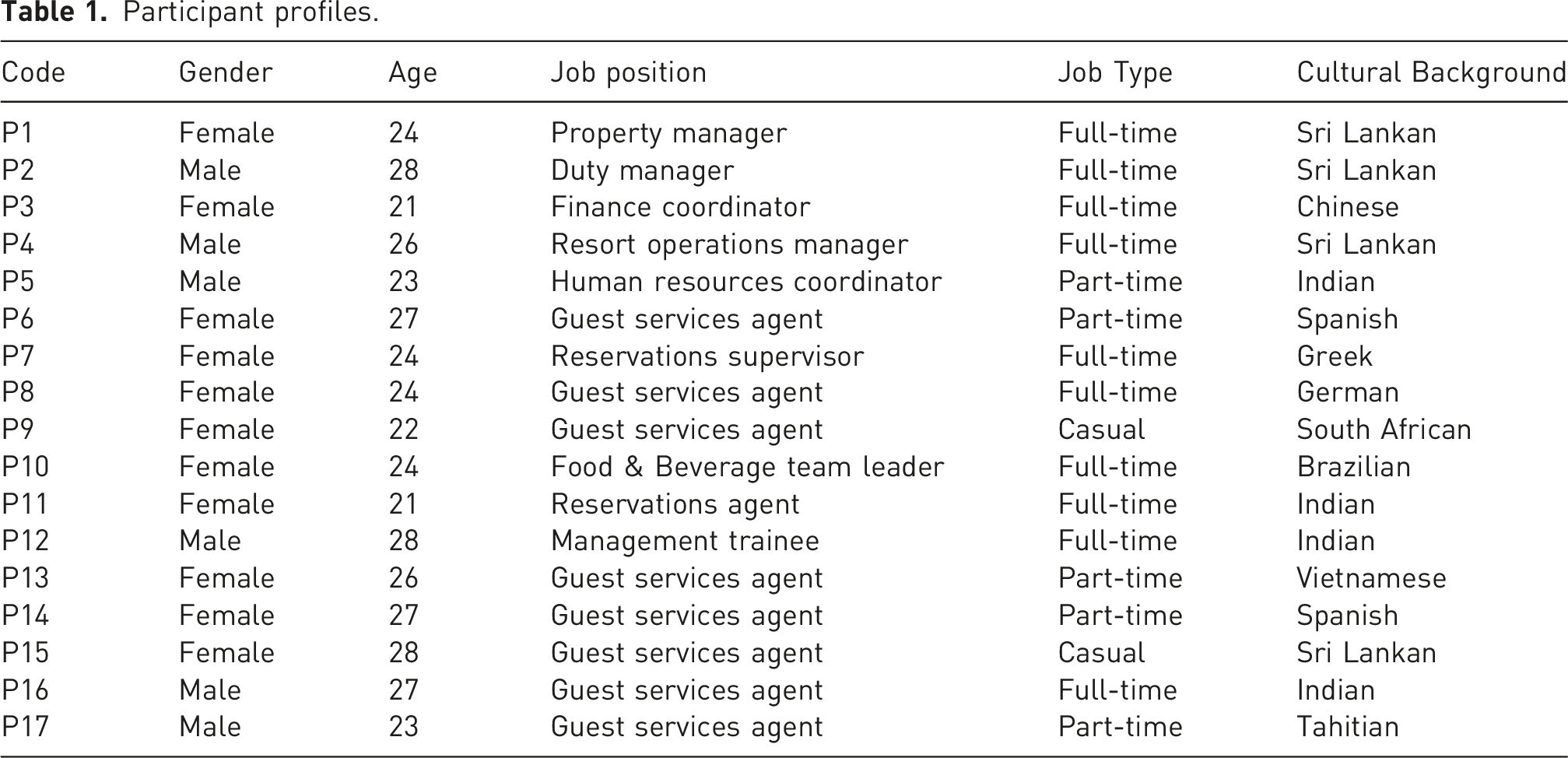
Thematic saturation was monitored during data collection. After each interview, notes and memos were used to track recurring patterns. Emerging themes were reviewed iteratively to determine whether new data generated novel insights. Saturation was reached by the 15th interview, as the final two did not yield new themes. The sample size aligns with guidelines suggesting saturation often occurs between 12 and 17 interviews in relatively homogeneous groups (Guest et al., 2006).
The interview protocol was designed to explore participants’ personal accounts of burnout. Core questions included prompts such as: “Tell me about your recent work burnout experience,” “What contributed to your burnout experience?” and “How did you process the pressure?” Follow-up prompts explored emotional, cognitive, and behavioural responses, as well as reflections on prior episodes to identify recurring patterns. To align with the study’s theoretical framework, targeted questions probed structural vulnerability (e.g., “How did your visa or job conditions affect your experience at work?”), emotional labour (e.g., “When did you have to hide how you really felt?”), and person–environment fit (e.g., “To what extent do you feel your skills and personality align with what your job requires?”). These questions supported theory-informed, experience-based data collection.
Data analysis
The analysis focused on how participants described behaviours, emotions, and thoughts within wider organisational, structural, and socio-cultural contexts. This approach captured not only internal psychological mechanisms but also how they are shaped by employment conditions and cultural norms. By integrating these dimensions, the study highlights the interplay between individual experiences and systemic stressors in migrant hotel work.
Following Naeem et al.’s (2023) six-step thematic analysis process, interviews were transcribed and imported into NVivo. Two researchers independently read transcripts multiple times to gain familiarity with the data. They identified key quotations reflecting burnout experiences and coded them for emerging patterns. After each interview, analytic memos were used to support coding and monitor thematic saturation, allowing the team to assess whether new data continued to generate novel insights. Line-by-line coding was used, along with memos recording analytic reflections. In the next step, researchers refined codes by reviewing their contexts, generating terms to capture participants’ experiences. Codes were then discussed and consolidated.
In step three, similar codes were grouped into broader themes, identifying shared experiences across the dataset. For instance, codes such as “emotional exhaustion,” “fear of job loss,” and “pressure to accept all shifts” formed themes related to visa dependency and managerial neglect, later mapped to structural vulnerability. In step four, themes were refined and organised across personal, micro, meso, and macro levels. Step five involved interpreting themes in relation to the research questions, ensuring the analysis remained grounded in participants’ lived realities. Subthemes were refined, and patterns were compared across demographics (e.g., visa type, job role).
Finally, the derived themes were mapped onto the study’s theoretical framework; structural vulnerability, emotional labour, and person–environment fit. This mapping was conducted after theme development, to avoid imposing theory on the data. For instance, themes about managing emotions under surveillance were aligned with emotional labour theory, while patterns involving structural dependence and lack of recourse were examined through the lens of structural vulnerability. This process enabled a nuanced understanding of how burnout among migrant hotel workers is shaped by intersecting personal, organisational, and structural forces.
Findings and discussion
Organisational and cultural factors escalating burnout
Participants described hotel work as emotionally and physically draining. Common stressors included long hours, staff shortages, and last-minute rostering, leaving little time for rest or recovery. These demands are well documented across hospitality work (Ahmad et al., 2024; Grobelna, 2021; Min et al., 2023; Salama et al., 2022). However, participants’ lived experiences suggested that these common hospitality stressors were intensified by migration-related insecurity, financial pressure, and limited workplace power, which made it difficult for some workers to refuse additional work, request rest, or seek support.
This dynamic contributed to the cumulative nature of burnout, especially emotional depletion and physical collapse. Participants described how work demands and limited recovery time resulted in prolonged overexertion: I was working so much that I didn’t eat properly or sleep properly. I ended up collapsing because I was physically and emotionally exhausted. (P10, Female, 24)
For some participants, this exhaustion was directly connected to concerns about income, employment security, and temporary migration status: I couldn’t afford to miss shifts even when I was sick because I had to pay my own bills, and being on a student visa, I couldn’t risk losing my job. I was worried that if I said no too many times, they might stop giving me shifts or replace me. So, I kept working even when I knew I needed rest. (P15, Female, 28)
These accounts show that long hours and exhaustion were not experienced only as workload issues. For participants who linked employment to visa status, income security, or perceived replaceability, the ability to set boundaries or prioritise health was constrained. Several participants also reported the physical toll of these conditions, describing musculoskeletal pain, fatigue, and hormonal disruption. These effects were described as ongoing and health-compromising: The reception desk is too low for me, and I now have constant back pain. I’ve had to start physiotherapy. (P8, Female, 24) My hormones went crazy. I was crying all the time for no reason and couldn’t control it. (P14, Female, 27)
Another recurring theme was emotional labour. Participants described the need to manage their emotions in customer-facing roles, even when confronted with abuse or aggression: I was screamed at by a guest. I went to the back room, cried, and then went straight back to the desk with a smile. (P1, Female, 24)
Aligned with Hochschild’s (1983) theory, this account shows how emotional labour formed part of participants’ everyday hotel work. The analysis does not suggest that emotional labour is migrant-specific in itself; rather, participants’ accounts indicate that emotional dissonance became more difficult to manage when combined with perceived replaceability and concerns about employment security (Lam et al., 2022).
Some participants noted that their input was dismissed due to their accent or foreignness: Even when I gave good ideas, they didn’t listen because of my accent. I felt like they thought I didn’t know what I was talking about. After a while, I stopped trying to speak up because it felt pointless. (P12, Male, 28)
Such accounts show how linguistic and cultural difference shaped participants’ workplace voice and sense of credibility. Participant 12’s experience suggests that being ignored was not simply a general organisational problem, but was interpreted through accent, foreignness, and perceived outsider status. This reflects structural vulnerability theory (Quesada et al., 2011), which explains how social hierarchies, including race, class, and immigration status, can limit workers’ capacity to speak up, be heard, or access protection.
In addition to these structural constraints, participants described cultural values around obedience, endurance, and deference to authority. These norms shaped how they internalised and responded to stress: In my culture, you don’t say no to work. That’s why I kept working until I hit my breaking point. (P3, Female, 21)
This shows how cultural expectations around endurance and compliance shaped participants’ responses to workplace pressure. When combined with financial pressure and limited job alternatives, such norms made it harder for some participants to refuse additional work or seek support. You have to accept whatever work you get here because survival depends on it. I had rent, bills, and tuition, so I couldn’t just say no when they asked me to work more. Even when I was tired, I felt I had to take the shift because I needed the money. (P13, Female, 26)
This account highlights how financial pressure beyond the immediate workplace contributed to compliance with demanding work conditions (Mansour and Tremblay, 2018). Gendered expectations were also noted. Female workers, in particular, were expected to perform aesthetic labour despite the physical toll: I had to wear high heels even if I was standing for 10 hours. (P13, Female, 26) Guests would yell at me, sometimes making inappropriate comments. (P7, Female, 24)
These comments show how gendered service expectations intensified the physical and emotional burden of hotel work. For some migrant women, aesthetic labour and customer mistreatment were experienced alongside expectations to remain composed, physically presentable, and silent despite discomfort or harassment. These accounts reinforce gendered analyses of hospitality work (Hack-Polay et al., 2022; Lam et al., 2022), while grounding them in the specific experiences of migrant hotel workers.
Although most participants described managerial neglect or indifference, a few recalled isolated moments of support: My manager gave me paid time off when I was overwhelmed. It helped me recover. (P11, Female, 21)
This example suggests that managerial support could help interrupt burnout when it provided practical recovery time. However, such support appeared inconsistent and dependent on individual managers rather than embedded in formal workplace systems. The lack of systemic support left many participants with limited avenues for recovery or redress.
Burnout was therefore not experienced simply as a reaction to workload, nor as an experience explained only by migrant status. Instead, participants’ accounts suggest that routine hospitality stressors became more harmful when they intersected with migration-related insecurity, cultural expectations around endurance, limited workplace voice, and financial pressure. These intersecting pressures intensified common hotel work demands within precarious migrant employment contexts.
Figure 1 illustrates the thematic coding framework for the organisational and cultural burnout factors discussed in this section. Coding framework: Organisational and cultural burnout factors.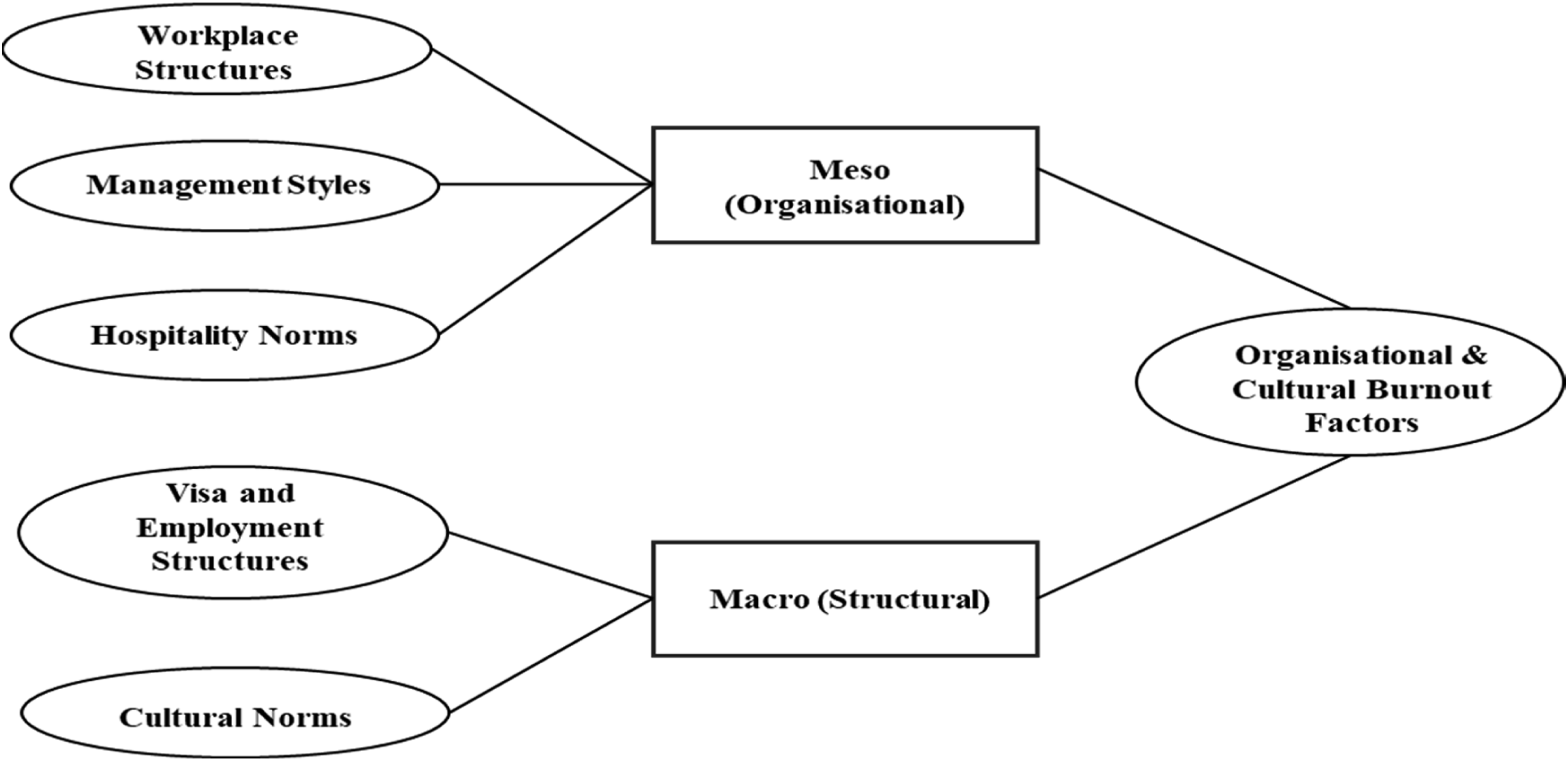
Individual-level escalators of burnout
In addition to workplace and structural pressures, participants described personal and situational factors that escalated their burnout. These included isolation, financial pressure, study-work conflict, and the challenges of navigating employment in a new country. Participants in this study often described difficulty balancing work, study, financial pressure, and personal commitments: Even working part-time while studying drained me. I just couldn’t keep up. (P13, Female, 26)
This imbalance was worsened by casual and part-time contracts, which offered little predictability or stability. Many described feeling overworked, undervalued, or taken advantage of by employers: They always expected us to stay late or pick up extra shifts. Saying no wasn’t really an option because I needed the money and I was worried they would stop giving me shifts. Even when I was tired, I felt I had to say yes because I didn’t want to look difficult. (P4, Male, 26) I never knew when I’d be rostered. It was impossible to plan study or personal things. (P9, Female, 22)
These reflections show how unpredictable work arrangements limited participants’ ability to plan study, rest, and personal life. While such issues may affect hospitality workers more generally, some participants described these conditions as more difficult to challenge because of financial dependence, insecure employment, or concerns about losing work.
Family separation and the absence of local support were also key stressors: I really missed my family. I was alone in a new country, and it was hard coping with everything by myself. (P14, Female, 27)
This account provides direct evidence of the migrant-specific emotional context of burnout. The participant’s distress was not only related to work pressure, but also to managing that pressure without familiar family support in the host country. This sense of isolation often magnified feelings of stress, making it harder for participants to recover from work-related strain.
Many also reported physical symptoms linked to chronic stress, including fatigue, hormonal changes, and hair loss: I didn’t realise how bad it was until I started losing my hair. That’s when I knew something was really wrong. (P14, Female, 27)
These somatic symptoms were presented by participants as signs that work-related pressure had exceeded manageable limits. While burnout frameworks typically focus on psychological exhaustion, these embodied effects were highly visible in participants’ accounts. Even when participants attempted to manage their well-being through self-care, such efforts were often undermined by structural constraints: Even my lunch breaks were cut short because we were always short-staffed. (P10, Female, 24)
This example illustrates a needs-supplies misfit, where the workplace failed to provide adequate recovery time to meet basic physiological and psychological needs. While the quote primarily evidences poor workplace support, its significance within this study lies in how limited recovery interacted with participants’ broader financial pressure, constrained workplace voice, and difficulty refusing demands. This misalignment between worker needs and organisational practices aligns with person–environment fit theory (Choi et al., 2017; Edwards et al., 1998).
Taken together, these findings show that individual-level burnout escalation was not simply a matter of personal weakness or poor coping. Rather, participants’ personal strain was shaped by the interaction of work demands, social isolation, study-work conflict, financial pressure, and limited capacity to challenge workplace expectations. What may appear as individual struggle was therefore connected to broader employment and migration-related conditions (Ornek et al., 2022; Quesada et al., 2011). Figure 2 shows the NVivo coding structure for individual-level burnout factors. NVivo coding structure: Individual-level escalators of burnout.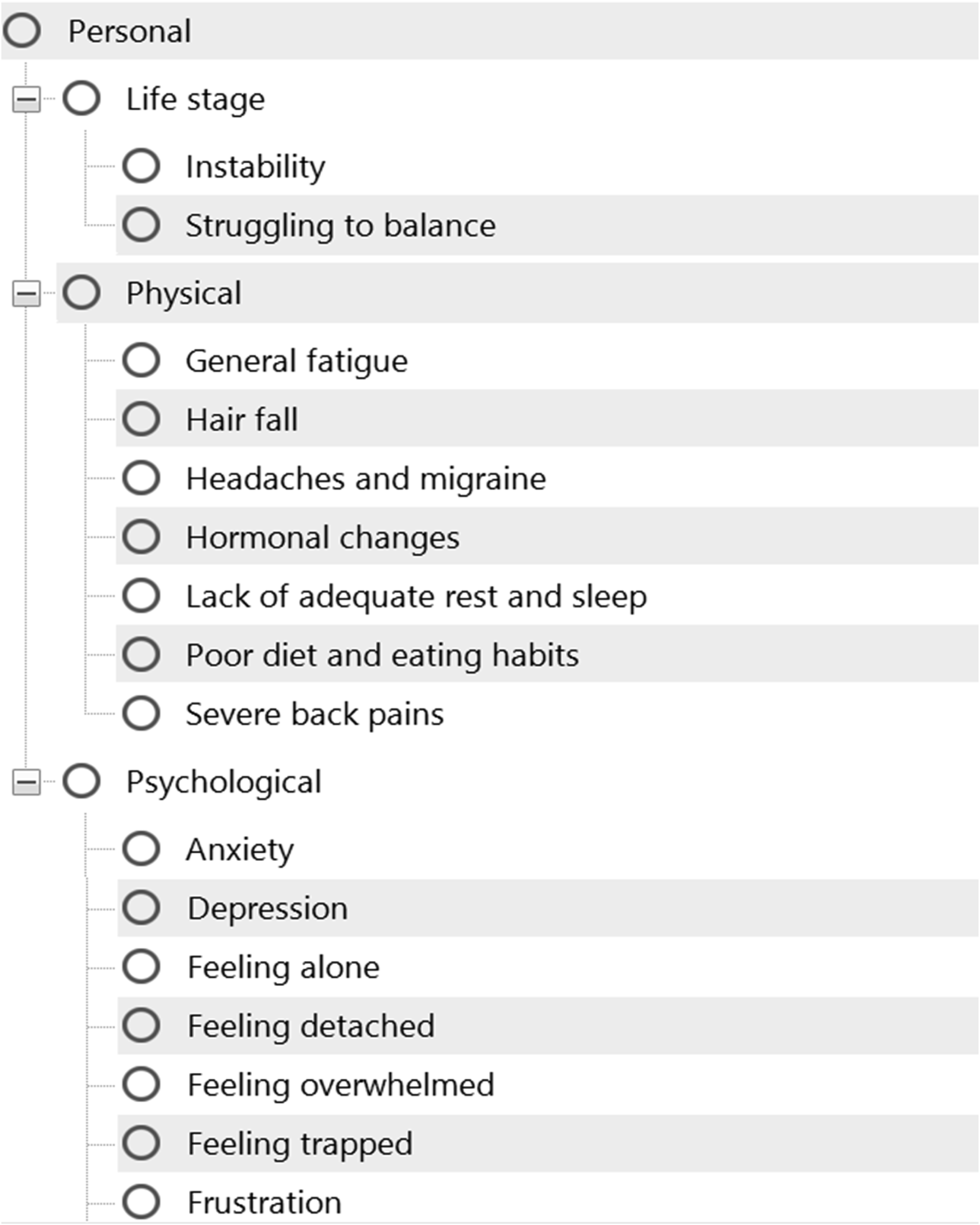
Role of workplace structures and industry management practices in escalating burnout
Organisational and managerial practices played a critical role in participants’ experiences of burnout. Inadequate responses to safety concerns, inflexible scheduling, and a lack of formal support were commonly described as contributing to persistent stress, exhaustion, and invisibility. One participant recalled being physically assaulted at work and receiving no meaningful response from her employer: I was assaulted by a guest and asked for time off, but nothing was done. I felt like I just had to keep working because I didn’t know who else to speak to, and I was worried that complaining too much would make things worse for me. (P6, Female, 27)
This account provides direct evidence of organisational failure following a serious workplace safety incident. Although the participant sought time off after being assaulted by a guest, the lack of available support left her feeling unsupported and unable to deal with the experienced work further.
Poor rostering and chronic understaffing were also frequent sources of strain. Participants described short-notice shifts, denied breaks, and extended hours without recovery: We work long hours without any proper workstation setup. My back hurts every day. (P4, Male, 26) Breaks didn’t really happen when we were busy. You just had to keep going, even when you were starving. (P9, Female, 22)
These accounts demonstrate how productivity-driven norms overrode basic wellbeing needs, including safe workstation design, adequate rest, and meal breaks. While such conditions are not unique to migrant workers, participants’ wider accounts suggest that the intersection with the felt insecure employment, financial pressure, and limited workplace voice made these conditions more difficult to resist or negotiate. In this sense, common hospitality stressors became more harmful when workers felt unable to request adjustments or protect recovery time. These experiences align with existing scholarship on the health risks of chronic understaffing in precarious labour contexts (Ahmad et al., 2024; Sönmez et al., 2020).
While most accounts pointed to managerial disengagement or indifference, a few participants shared rare examples of support that helped alleviate stress: They gave me paid days off and small gifts. That really helped me bounce back. (P11, Female, 21) My manager listens and says thank you… it’s rare, but it makes a difference. (P8, Female, 24)
These examples provide evidence that practical and emotional support from managers could mitigate burnout. Paid time off provided recovery time, while recognition helped participants feel valued and less invisible. However, these acts of care appeared to stem from individual managers’ discretion rather than from formal organisational policies. This highlights the need for systemic, not incidental, approaches to employee wellbeing that formally mandate such culturally responsive and trauma-informed support.
Some participants also discussed the structural constraints that kept them in harmful workplaces. Financial pressure, employment insecurity, and limited alternatives often left them with little choice: I left because I knew it was killing me… but not everyone has the option. Some people need the money for rent, tuition, or family, so they keep going even when the job is damaging them. If you are not secure here, leaving is scary because you don’t know how long it will take to find another job. (P14, Female, 27)
This statement illustrates constrained agency. Although Participant 14 was able to leave, her account shows that exiting harmful work was not equally available to all hotel workers. Cumulatively, these findings show that burnout among migrant hotel workers was shaped by the interaction of organisational neglect, weak managerial support, financial pressure, and constrained workplace agency. While similar patterns appear in broader hospitality research (Lam and Cheung, 2024), participants’ accounts suggest that these pressures became more harmful when workers felt unable to challenge mistreatment, request support, or exit damaging work arrangements.
Framework of burnout factors for migrant workers.
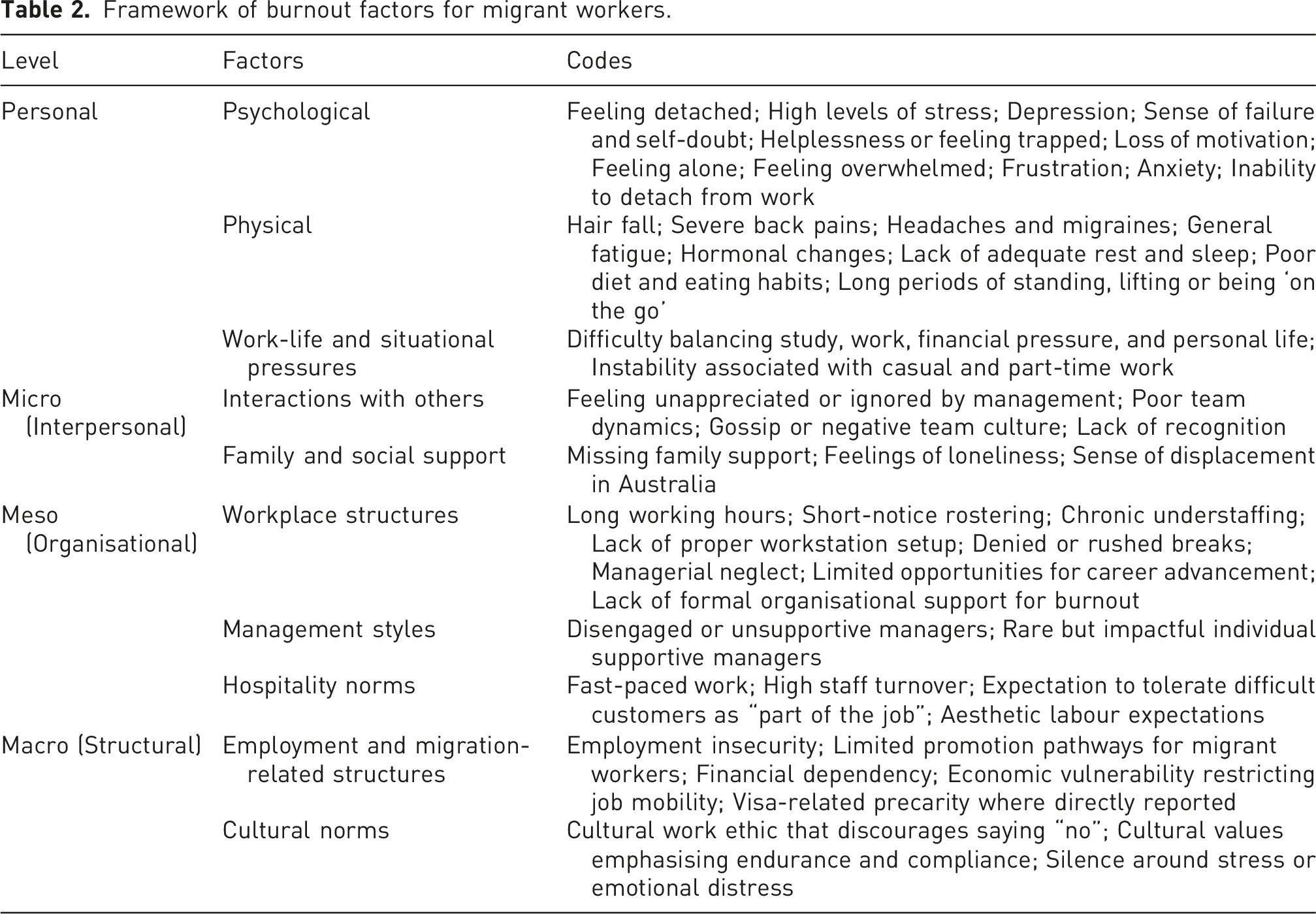
Figure 3 illustrates how personal traits, structural vulnerabilities, organisational stressors, and emotional/physical strains intersect within broader cultural values. The model reflects an integrated conceptual approach (Hochschild, 1983; Maslach et al., 2001; Quesada et al., 2011), presenting burnout as a socially and structurally embedded experience. Structural risks such as employment insecurity, labour segmentation, and exclusion from workplace protections (Alberti and Iannuzzi, 2020; Sönmez et al., 2020) are compounded by organisational stressors like long shifts, emotional dissonance, and weak managerial support (Ahmad et al., 2024; Lam and Cheung, 2024). At the individual level, overcommitment, limited boundary-setting, and culturally shaped values around endurance increase susceptibility to burnout (Lam et al., 2022; Min et al., 2023; Rathi and Lee, 2016). The model underscores the need for culturally responsive and structurally informed organisational responses. Conceptual model of burnout among migrant hotel workers.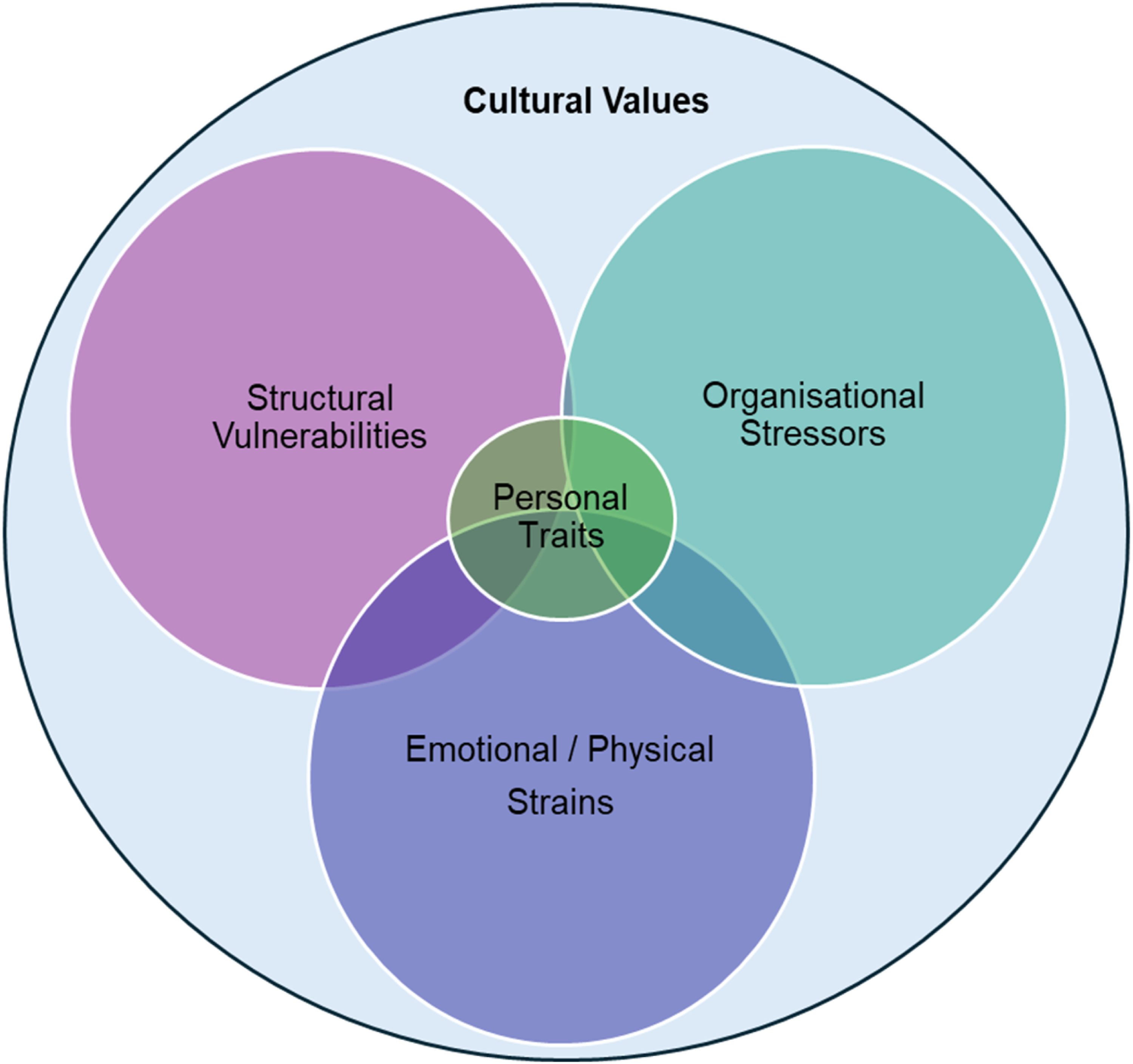
Conclusion and implications
This study explored the burnout experiences of migrant hotel workers in Australia, revealing how burnout is shaped not solely by individual stress responses but by the experienced interaction of organisational, cultural, and structural forces. Participants described emotionally and physically taxing environments marked by long hours, erratic rostering, understaffing, guest mistreatment, and limited managerial support. While many of these pressures reflect broader hospitality working conditions, the findings show that they became more difficult to manage when combined with migration-related insecurity, financial pressure, limited workplace voice, and weak organisational support.
Importantly, the study underscores that for migrant workers, the ability to resist or recover from burnout is constrained by precarious conditions and structural vulnerabilities. Rather than suggesting that visa status alone explains burnout, the findings indicate that temporary migration status, income insecurity, perceived replaceability, and limited confidence in reporting pathways collectively reduced some participants’ capacity to challenge excessive demands or seek formal support. These constraints were reinforced by cultural norms that emphasised deference, endurance, and silence.
From the individual level standpoint, participants described burnout through emotional exhaustion, physical depletion, social isolation, and difficulty maintaining boundaries between work, study, and personal life. Migrant hotel workers frequently reported detachment and a diminished sense of accomplishment, particularly when organisational demands conflicted with their values and wellbeing thresholds. Burnout therefore emerged not only as a psychological issue, but as a condition shaped by the interaction of demanding hotel work, constrained agency, and limited recovery support.
The findings show that migration-related and employment-related constraints created a baseline of insecurity for some participants. This insecurity reduced workers’ agency, placing them in low-power positions where asking for better conditions could feel unsafe or impractical (Alberti and Iannuzzi, 2020; Sönmez et al., 2020). At the organisational level, this vulnerability was intensified by weak reporting pathways, inconsistent managerial support, poor rostering, and insufficient recovery time. These conditions made common hospitality stressors more difficult to resist or negotiate.
Through the lens of emotional labour theory (Hochschild, 1983), the study shows that participants were required to manage emotions during difficult guest interactions, customer mistreatment, and everyday service encounters. However, the findings do not suggest that emotional labour is unique to migrant workers. Rather, they show how emotional regulation can become more burdensome when combined with linguistic barriers, cultural difference, perceived replaceability and concerns about employment security. Through the lens of person–environment fit theory (Edwards et al., 1998), the findings also show how misalignment between workers’ wellbeing needs and organisational practices, such as denied breaks, unsafe work conditions, and limited managerial response, contributed to burnout.
The findings support a contextualised understanding of burnout among migrant hotel workers. Burnout was not merely an individual psychological phenomenon, nor was it explained by migrant status alone. Instead, it was shaped by the lived interaction of workplace structures, emotional service demands, cultural expectations, financial pressure, and migration-related insecurity. This study contributes to hospitality burnout research by showing how common hotel work pressures can become more harmful when experienced within precarious migrant employment contexts.
Theoretical implications
This study contributes to hospitality burnout research by positioning burnout as a socially and organisationally embedded experience among migrant hotel workers. The findings support the value of structural vulnerability theory (Quesada et al., 2011) by showing how employment insecurity, limited workplace voice, and constrained access to support shaped participants’ capacity to respond to harmful work conditions. Rather than claiming that structural vulnerability alone explains burnout, the study demonstrates how structural constraints interacted with everyday hotel work pressures to intensify participants’ experiences of exhaustion and limited agency.
The study also contributes to emotional labour theory (Hochschild, 1983) by showing how participants managed emotions in customer-facing hotel roles, particularly during guest mistreatment, inappropriate comments, and expectations to remain composed. Emotional labour was not experienced in isolation, but alongside linguistic difference, perceived replaceability, gendered service expectations, and limited workplace voice. These findings offer a more contextualised application of emotional labour theory by demonstrating how emotional dissonance can be intensified when affective service demands intersect with migrant workers’ organisational and socio-cultural positioning.
Additionally, the research supports person–environment fit theory (Edwards et al., 1998) by showing that misalignment between migrant hotel workers and their organisational contexts is not simply a matter of individual personality mismatch but is also shaped by workplace and structural conditions. Lack of managerial support, exclusion from decision-making, and failure to acknowledge cultural diversity created persistent feelings of not belonging and intensified emotional strain. This extends the application of person–environment fit theory by emphasising systemic barriers over individual deficits in driving burnout.
A key theoretical contribution lies in the combined use of structural vulnerability theory (Quesada et al., 2011), emotional labour theory (Hochschild, 1983), and person–environment fit theory (Edwards et al., 1998), moving beyond existing single-theory models in hospitality research. Rather than viewing burnout as a singular issue of job demands, this integrated framing positions migrant worker burnout as an institutionally embedded condition shaped through three compounding layers: structural constraints, workplace systems, and personal vulnerabilities. This integration offers a more contextualised theoretical explanation for the complex, multi-layered nature of migrant worker burnout and highlights the role of these dimensions in shaping work-related wellbeing.
Practical implications
The findings of this study have significant practical implications for the hospitality industry, particularly for the management of diverse and migrant-dependent workforces. Addressing burnout among migrant hotel workers requires not only individual coping interventions but also active managerial monitoring of work-based wellbeing. This involves exercising duty of care and reviewing workplace policies and practices to ensure they remain responsive to the needs of diverse employee cohorts.
Hospitality organisations should develop culturally responsive practices that support the emotional and physical wellbeing of migrant workers. This should include formal procedures for responding to workplace harm, such as guest aggression, inappropriate customer behaviour and physical assault. Organisations should also provide confidential and accessible reporting channels so migrant workers can raise concerns without fear of stigma, job loss, or negative consequences. This recommendation responds directly to participants’ accounts of guest mistreatment, weak reporting pathways, and limited confidence in challenging harmful workplace conditions.
Operational reforms are also necessary to address chronic overwork and physical strain. Scheduling practices should be transparent and equitable, provide adequate rest periods and ensuring workers are not routinely expected to work excessive hours. Investment in ergonomic workspaces and protections against last-minute rostering are critical to safeguarding physical health and preventing chronic fatigue. These recommendations are linked to participants’ accounts of long hours, rushed or denied breaks, poor workstation setup, and physical exhaustion.
Organisations must also foster inclusive management practices. This involves equipping managers to recognise how language, accent, cultural difference, and perceived replaceability may affect migrant workers’ confidence to speak up or seek support. The findings showed that supportive managerial behaviours, such as providing paid time off, listening and offering recognition, could help alleviate burnout. However, such support should be formalised within organisational systems rather than relying on the goodwill of individual managers.
Mentorship and support networks should be created to enable migrant hotel workers to access career development opportunities and participate meaningfully in workplace decision-making. These initiatives may help reduce feelings of invisibility, limited workplace voice, and perceived replaceability, while strengthening employee retention and wellbeing.
These recommendations are directly informed by the study’s theoretical framing and empirical findings. Confidential reporting channels and stronger duty-of-care mechanisms respond to the structural vulnerabilities that limited migrant workers’ ability to challenge harmful workplace practices. Support following guest mistreatment and customer aggression addresses the emotional labour burden identified in participants’ accounts, where burnout was intensified by the need to regulate emotions during difficult and sometimes unsafe service encounters. Improved rostering, recovery time, ergonomic work design and inclusive management practices address person–environment misfit by reducing the mismatch between workers’ wellbeing needs and everyday organisational practices.
The study calls for a structural rethinking of labour practices in hospitality. Superficial diversity policies are not enough. Sustainable equity requires organisations to embed inclusion, wellbeing and worker voice into core operations, taking seriously the systemic and cultural barriers migrant workers face. Embedding culturally responsive support and safer work design into everyday hotel operations can better support migrant workers’ wellbeing and contribute to more sustainable workforce practices.
Limitations and future research
While this study provides valuable insights into migrant hotel worker burnout, several limitations should be acknowledged. The sample primarily included young workers aged 21 to 28 in early-career positions. While representative of a significant segment of the workforce, the findings may not reflect the experiences of older migrants, those in senior roles, or those with different visa arrangements. Future research should include more diverse participants to explore differences across age groups, visa types, and job levels.
The cross-sectional qualitative design provides a valuable snapshot but does not capture burnout over time. Longitudinal studies are needed to trace burnout trajectories and assess the long-term effects of coping strategies and organisational interventions. This would offer richer insight into how burnout evolves with changing work conditions, visa transitions, and support mechanisms.
The findings are further limited to the Australian hospitality context, which may not fully generalise to other sectors or national labour markets. Comparative research across different countries, industries, or visa regimes could provide a richer understanding of how structural factors shape burnout globally. In addition, future studies should explore how institutional policies, such as visa pathways, union protections, and anti-discrimination legislation, interact with workplace cultures to either mitigate or exacerbate burnout risks.
Footnotes

Funding
The authors received no financial support for the research, authorship, and/or publication of this article.
Declaration of conflicting interests
The authors declared no potential conflicts of interest with respect to the research, authorship, and/or publication of this article.