







Abstract
In this paper, we describe a simple methodology that offers a familiar constitutive description of plasticity in terms of the dislocation density evolution as an outcome of the approach based on the thermodynamics of irreversible processes. We further demonstrate that the dislocation density evolution approach can organically predict the critical strain corresponding to the Considère instability point. Finally, we show that the fractal dimension (FD) of the dislocation population of a deforming material can be integrated in the proposed modelling framework and, consequently, the FD behaviour can be traced, providing insights in the evolution of the dislocation structure in the course of deformation.
Introduction and motivation
Plastic deformation of metals is a physical process that is inherently irreversible, spatially inhomogeneous and temporally intermittent in nature due to a discrete origin of crystallographic slip caused by lattice dislocations.1–6 A crystal containing lattice dislocations is not in thermal equilibrium due to self-energy of dislocations. Furthermore, a large fraction of the mechanical work expended to generate dislocations and induce their motion to ensure plastic deformation is dissipated as heat. This indicates that plasticity is a highly irreversible dissipative process and that the resulting dislocation arrangements are far from equilibrium. Early attempts to formulate the principles of irreversible thermodynamics in relation to plastic deformation of solids go back to the pioneering works by Bridgman 7 and Prigogine 8 in the 1950s. Our understanding of the mechanical behaviour of metals can be improved if a connection between the fundamental mechanisms of plastic flow and the non-linear thermodynamics of irreversible processes is made. However, as was emphasised by Kocks et al., 9 special care should be exercised in attempting to apply the thermodynamic principles to plastic deformation of solids. The major challenge is the essential irreversibility of plastic deformation. The immediate problem that arises is how to define reference state deviations from which to determine the thermodynamic driving force and the entropy flux with respect to the time and space variables of the process. Additional complexity is added when ‘state variables’ are to be defined. Indeed, the number of material parameters relevant to plastic deformation may by far exceed the number of macroscopically observable quantities and relations. In view of these difficulties, the general thermodynamic approaches to plastic deformation have, in the past, been replaced with constitutive modelling approaches. The gap between the basic principles of thermodynamics and phenomenological constitutive models has existed for a long time. However, recently, significant progress with bridging the concepts of dislocation theory with those of irreversible thermodynamics was made. The arsenal of non-linear theories of dynamic systems, including bifurcation analysis and theory of reaction–diffusion dynamics, was instrumental in achieving this progress.10–12
These studies, which initially were in the realm of fundamental research, are now gaining in technological importance, especially for materials science problems. Over the last years, the whole field of materials science experienced a fascinating renewal. By the advent of processing techniques operating in strongly non-equilibrium conditions, totally new materials structures were obtained. Examples of such non-equilibrium processing routes include (but by no means are limited to) rapid quenching and melt spinning techniques for fabrication of metallic glasses, mechanical alloying and attrition, severe plastic deformation (SPD) and dynamic plastic deformation, and ion implantation, which nowadays are part and parcel of modern technology.13–15
Here, we give an overview of our recent efforts at understanding a ‘classical’ problem related to the evolution of the defect structure and its effect on the macroscopic mechanical response of solids, which is still not fully captured by the existing theoretical models. Additional motivation is provided by the increasing demand for a reliable prediction of fracture of structural materials. Accurate prediction of fracture is critical for ensuring the safety of engineering materials and structures. It is, however, an extremely challenging task, mainly because of the obvious difficulty of recognition of ‘harbingers’ of a critical state culminating in failure. It is also important to be able to identify the points of transition from one deformation regime to another along the strain path under given testing or service conditions. The stress–strain curve provides a common means for rational analysis of critical phenomena during plastic deformation, but a reliable theory is required to be able to recognise the signs of nearing critical events by ‘reading’ the stress–strain curve.
The paper is organised as follows. Based on the irreversible thermodynamics, we will first discuss an existing approach to a reliable description of the dislocation density evolution – an important ingredient of the intended analysis. As a logical consequence of the proposed approach, we will look at an old problem of instability of plastic flow from a different angle, in terms of the evolution of the dislocation density. We will show that the classical Considère instability condition appears as a natural consequence of the evolution of dislocation ensembles. Finally, within essentially the same approach, we will discuss one of the most fascinating and intriguing aspects of plastic deformation related to pattern formation and/or coherent temporal behaviour of a dislocation ensemble over large space and time scales.
Non-equilibrium thermodynamics and dislocation dynamics
A plastically deforming crystal is considered as an open system exchanging energy with an external heat reservoir and undergoing changes in its inner structure. The irreversible thermodynamics constitutes a first principles basis for a universal description of the evolution of such systems. Entropy production is a key concept in irreversible thermodynamics, which provides a measure of the irreversibility in the evolving system.
7
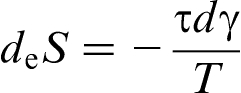
The total entropy flux is represented by a sum of the entropy production diS due to changes in the internal microstructure (and is always a positive quantity) and the quantity deS associated with the entropy flux due to heat exchange with the thermal bath: dS = diS+deS. Following the general formalism proposed by Prigogine,
8
Huang et al.
16
and then the present authors
17
developed an irreversible thermodynamics approach to dislocation based modelling of strain hardening. They related the entropy production diS associated with a shear strain increment dγ to the energy dissipated due to dislocation generation (dW+), motion (dW= ), and annihilation (dW− ) in the bulk of the deforming metal as  , where T is the absolute temperature. The energy dissipation due to generation and annihilation of dislocations is associated with the dislocation line energy
16
as
, where T is the absolute temperature. The energy dissipation due to generation and annihilation of dislocations is associated with the dislocation line energy
16
as  and
and  , where dρ+ and dρ− are the increments of the dislocation density associated with dislocation production and recovery (annihilation) respectively, G is the shear modulus, and b is the magnitude of the Burgers vector of a dislocation. The term dW= is related to the increment of the dislocation density as
  , where 〈l〉 is the dislocation mean free path, which is inversely proportional to average dislocation spacing as
 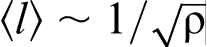 , with
  being the total dislocation density, and τ denotes the shear stress acting in the dislocation glide plane.
18
According to the Taylor relation, the shear stress τ scales with
being the total dislocation density, and τ denotes the shear stress acting in the dislocation glide plane.
18
According to the Taylor relation, the shear stress τ scales with  as
as

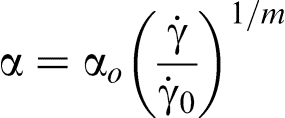
 . Here α
o
is a constant, which represents the mechanical resistance to dislocation glide due to dislocation–dislocation interaction at absolute zero temperature. The temperature dependence is associated with thermally activated dislocation glide and resides in the parameters
. Here α
o
is a constant, which represents the mechanical resistance to dislocation glide due to dislocation–dislocation interaction at absolute zero temperature. The temperature dependence is associated with thermally activated dislocation glide and resides in the parameters  and m. Thus, at low temperatures (below half the melting point, say),
  may be considered to be constant, while m is inversely proportional to the absolute temperature. Conversely, at sufficiently high temperatures, m can be regarded as a constant, while
  is temperature dependent (and is given by an Arrhenius equation).
Equation (1) is rather universal in the sense that it holds for virtually all conceivable dislocation–dislocation interaction mechanisms. It is also supported by a wealth of experimental data and computer simulations using discrete dislocation dynamics.
20
Hence, dW= is expressed as  . Combining the expressions for dW+, dW− and dW= , one obtains:

τdγ upon a strain increment dγ.
8
When dislocations are organised in a heterogeneous cell wall structure, a ‘composite model’21,22 can be used to describe the mechanical response. Considering a deformed crystal as a two-phase structure composed of the dislocation rich cell wall ‘phase’ and the dislocation depleted interior ‘phase’, with volume fractions fw and fc = 1 − fw respectively, we obtained the following expression for deS (cf. equation (4)):

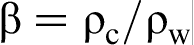 is the proportionality factor between the dislocation densities in the two respective phases, ρw and ρc. (It is assumed that the rule of mixture applies:
  .) Combining equations (3) and (5), one obtains:
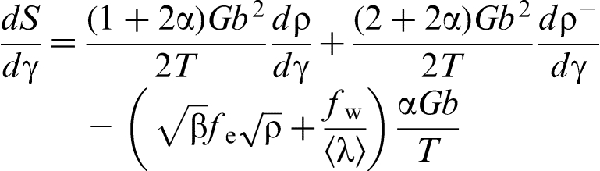
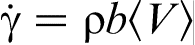 , with 〈V〉 denoting the average dislocation glide velocity, one obtains the expression for the dislocation recovery rate:
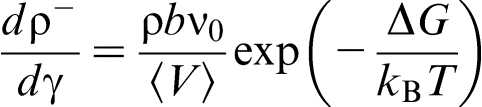
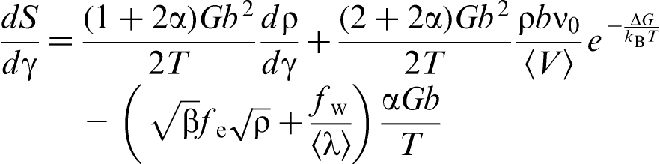
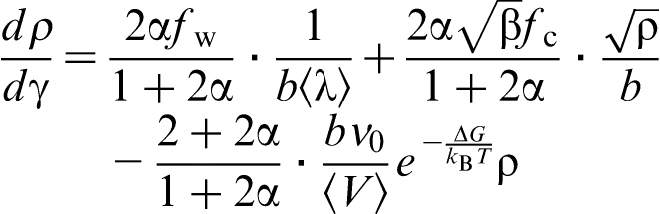
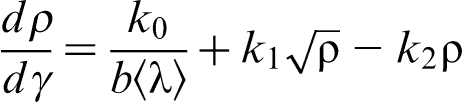
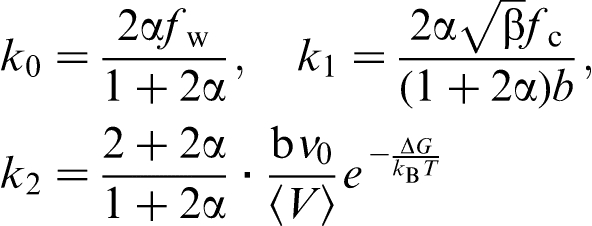
By integrating equation (10), the average dislocation density can be found as a function of strain at a given deformation temperature and strain rate, provided the initial value of ρ is known. Then, using the Taylor relation, equation (1), the equation for the flow stress as a function of strain representing the stress–stain curve in the plastic regime can be obtained.
The non-uniform differential equation (10) admits a closed form analytical solution.
23
In two important special cases when either k0 = 0 (Kocks–Mecking model) or k1 = 0 (Mecking–Estrin model), simple analytical expressions for the flow stress as a function of strain follow:


Despite its simplicity, this equation matches the experimental stress–strain curves obtained for both conventional coarse grain materials19,28 and the ultrafine grained (UFG) ones29–32 pretty well, at least for sufficiently small strains before strain localisation (necking) occurs, as exemplified in Fig. 1 for conventional and UFG 99.96 copper, produced by equal channel angular pressing (ECAP) to different number of passes. Excellent results of an approximation of the true stress–strain data by the Kocks–Mecking model function are obtained with the regression coefficient r2 ≥ 0.99 during the uniform deformation stage.

True stress–strain curves for conventional coarse grained and UFG 99.98 copper (black solid lines) and their approximation by Kocks–Mecking model function (dashed line, red in online version); fragments of strain hardening rate curves
are shown by dashed lines, and their intersection with stress–strain curve signifies onset of necking according to Considère criterion
Hence, in concluding this section, we would like to say that the constitutive description offered by the time proven kinetic approach to dislocation plasticity of metals can be reproduced within the framework of irreversible thermodynamics. This provides a new perspective on the dislocation density evolution modelling represented by the Kocks–Mecking–Estrin kinetic equation. In particular, the coefficients in the evolution equation for the dislocation density can be reevaluated on the basis of equation (11). In what follows, we shall reconsider the implications of the evolution equation for ρ?with regard to two aspects: (1) first, we shall demonstrate that the dislocation density evolution framework is inherently capable of predicting the critical strain corresponding to the Considère instability point; (2) second, we shall demonstrate that fractal dimension (FD) of the dislocation ensemble can be considered as part of the same approach and used as a predictive parameter
Macroscopic instability criterion in context of dislocation kinetics approach
In a vast majority of ductile metals and alloys, plastic deformation under uniaxial tensile conditions commences as a macroscopically homogeneous process, which finally ends up with strain localisation at a certain strain when necking sets in. The historically first criterion of plastic instability was proposed by Considère. 33 Several other instability criteria were later considered to describe the critical conditions under which plastic deformation becomes unstable with respect to local perturbations of uniform plastic flow.34–38
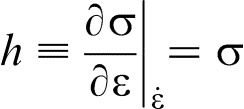
The Considère criterion defines the onset of necking as the point where the strain hardening coefficient h drops below the value of the flow stress σ at a given plastic strain rate  . The criterion can be deduced from a variety of considerations of the deformation mechanics near the maximum point on the stress–strain diagram
39
and is expressed by the simple condition
. The criterion can be deduced from a variety of considerations of the deformation mechanics near the maximum point on the stress–strain diagram
39
and is expressed by the simple condition
Let us assume that the hardening behaviour is described within the KME approach discussed in the preceding section, which was proven effective for describing the stress–strain curves in materials with grain sizes varying in a wide range: from conventional coarse grained annealed polycrystals to severely deformed UFG materials. The Kocks–Mecking equation rewritten in terms of the time derivative of the dislocation density reads
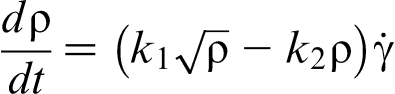
 from the uniform dislocation density and shear strain rate respectively, the instability condition for the tensile deformation is easily obtained by considering how these perturbations develop with time. One then arrives at the instability condition in the form
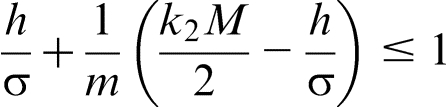
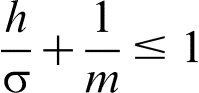
Hence, we have just seen that the Considère instability condition appeared as a natural consequence of the evolution of dislocation ensembles described by the Kocks–Mecking equations. Moreover, this conclusion is important because it justifies that the dislocation density evolution approach is inherently capable of predicting the critical strain corresponding to the Considère instability point in a simple and explicit manner.
40
In the present model, the strain hardening coefficient h is obtained as a function of plastic strain ε:

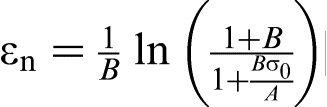
 , equation (14), can be calculated in a straightforward manner by combining equations (12) and (18), which yields:
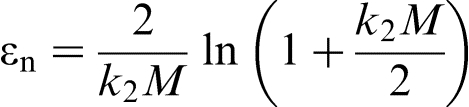
Results of non-linear model curve fitting of the stress-strain data for conventional and ultrafine grained copper. Experimentally obtained and calculated Considere strain.
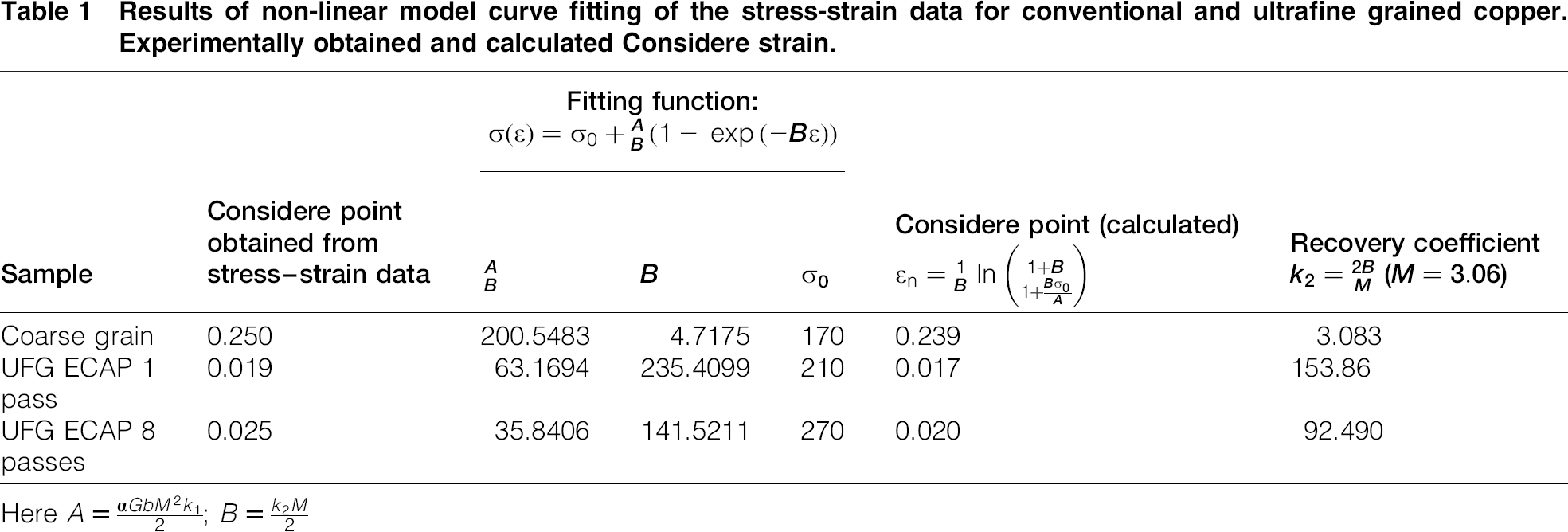



 (
( )
)Here  ;
; 
Not only does equation (19) explain this trend, but it also explicitly accounts for the short uniform elongation and early strain localisation in UFG materials because of a high rate of dislocation recovery. Overall, the trends predicted by the proposed formulations can easily be verified. Experimental stress–strain data available in the literature (e.g. Refs. 29 and 43) and in the authors’ databases were fitted by the σ(ε) function followed from the KM dislocation kinetics. The values of k2 obtained from these fits were plotted against the necking strain εn in Fig. 2. As can be seen, the theoretical predictions based entirely on the dislocation evolution approach and the experimental results are in excellent agreement.
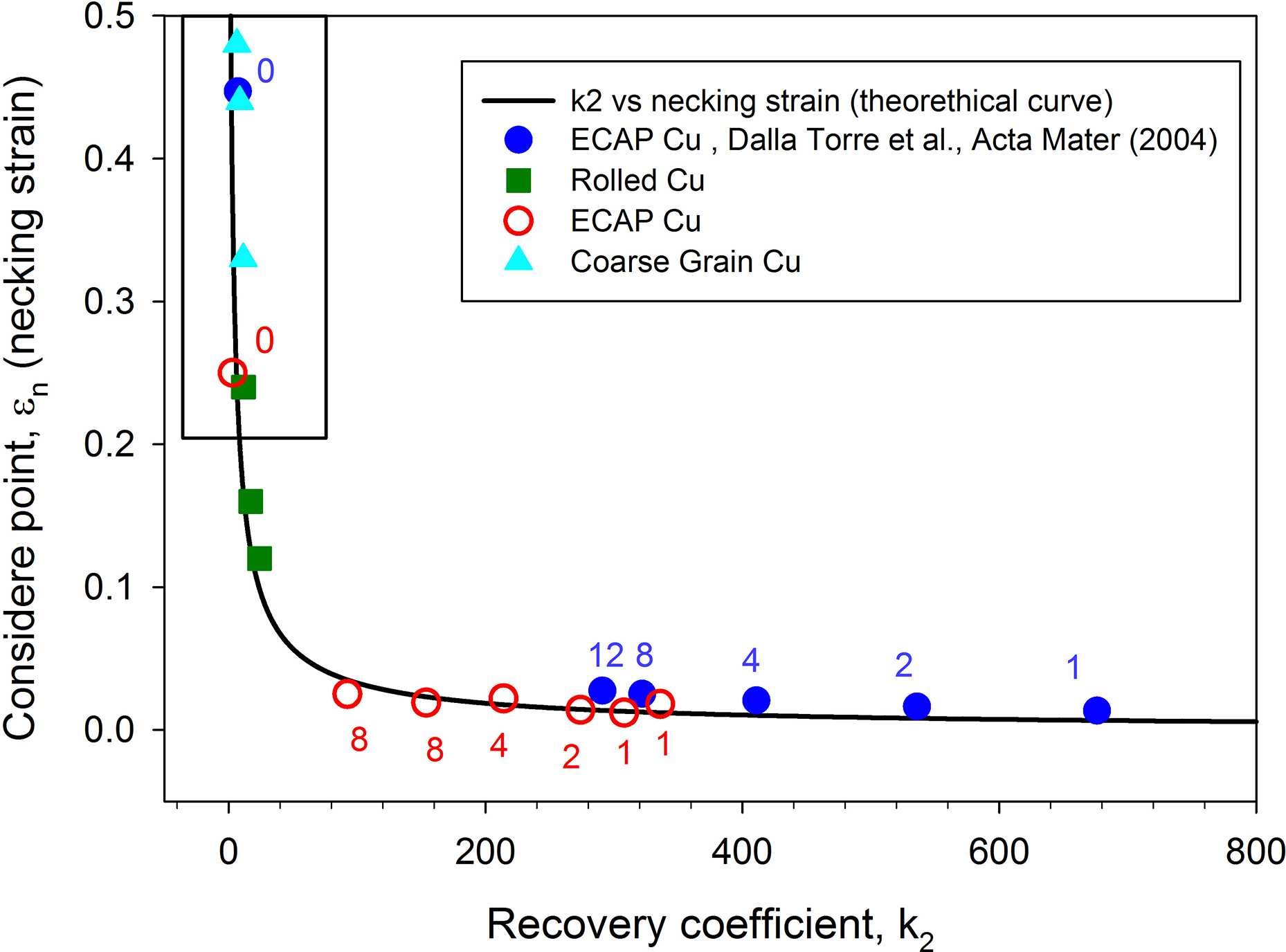
Dependence of critical necking strain on dynamic recovery coefficient k2; compilation of experimental data for differently processed pure Cu is compared with model predictions by equation (19); remarkably good agreement between experimental data and predicted trends is noteworthy
Concluding this section, we would like to note that the analysis of the macroscopic instability based on the dislocation kinetics approach highlights unequivocally that a key factor influencing dislocation evolution during plastic flow and up to the point of instability is the dislocation annihilation rate controlled by the phenomenological coefficient k2 in the KME model. This conclusion provides an insight into the genesis of premature (pre-Considère) loss of macroscopic stability of plastic flow and supports similar statements made in early investigations.17,28,44–46
Dislocation based modelling of FD as function of deformation state
The above analysis assumed implicitly that a certain well defined length scale is inherently present in the dislocation structure. This assumption is cast in the basic constitutive KME equation (10) through the dislocation mean free path 〈λ〉. In fact, complex fractal structures often emerge as a result of self-organisation in open dissipative systems. Being a highly dissipative process, plastic deformation induces a broad variety of patterns, which may either occur over a range of length scales or exhibit a scale free behaviour.4,12,47 The spatial complexity of objects exhibiting scale invariance can be naturally described using the ideas of fractal analysis. 48 In contrast with theories dealing with average based quantities, such as the grain or dislocation cell size, fractal analysis operates with multiscale features and relates the macroscopic properties of a material to its defect structure at various length scales. Several authors reported the fractal nature of slip line patterns in early stages of plastic deformation of crystalline solids.12,49–52 In the present section, following the reasoning given in recent publications,17,53 we demonstrate that the above approach can shed light on the behaviour of the FD of the evolving dislocation ensemble.
When a metallic sample deforms plastically, a deformation relief is formed on its surface, e.g. Fig. 3. It is intuitively clear that the features of the surface relief are affected by the bulk microstructure. Thus, the surface pattern should evolve with strain following the variation of the underlying bulk microstructure. However, quantitative results describing the behaviour of FD associated with the surface profile during plastic deformation are still scarce. Zaiser et al. 54 have measured the Hausdorf FD from the surface profile quantified by atomic force microscopy (AFM) and white light interferometry for polycrystalline 99.99 purity copper deformed to 25 strain. For both experimental techniques, the FD was found to increase from 2.0 to 2.3 and then to stay steady at this level up to 25 strain. Meissner et al., 49 who used AFM profiling of deformed surface of a nickel single crystal, found that during easy glide (stage I of strain hardening), the FD showed a slight trend to increase and then to grow rapidly in stage II of strain hardening. The rationale behind the investigations of the behaviour of FD as a function of plastic strain is that FD appears to be a microstructure sensitive integral quantity, which reveals the fundamental trends of microstructure development under load. Our aim here is to show that, indeed, the FD can be used to reveal the critical points of transition from one deformation stage to another and that evolution of the FD of a dislocation structure can be seen as a direct consequence of the evolution of the dislocation ensembles discussed above.
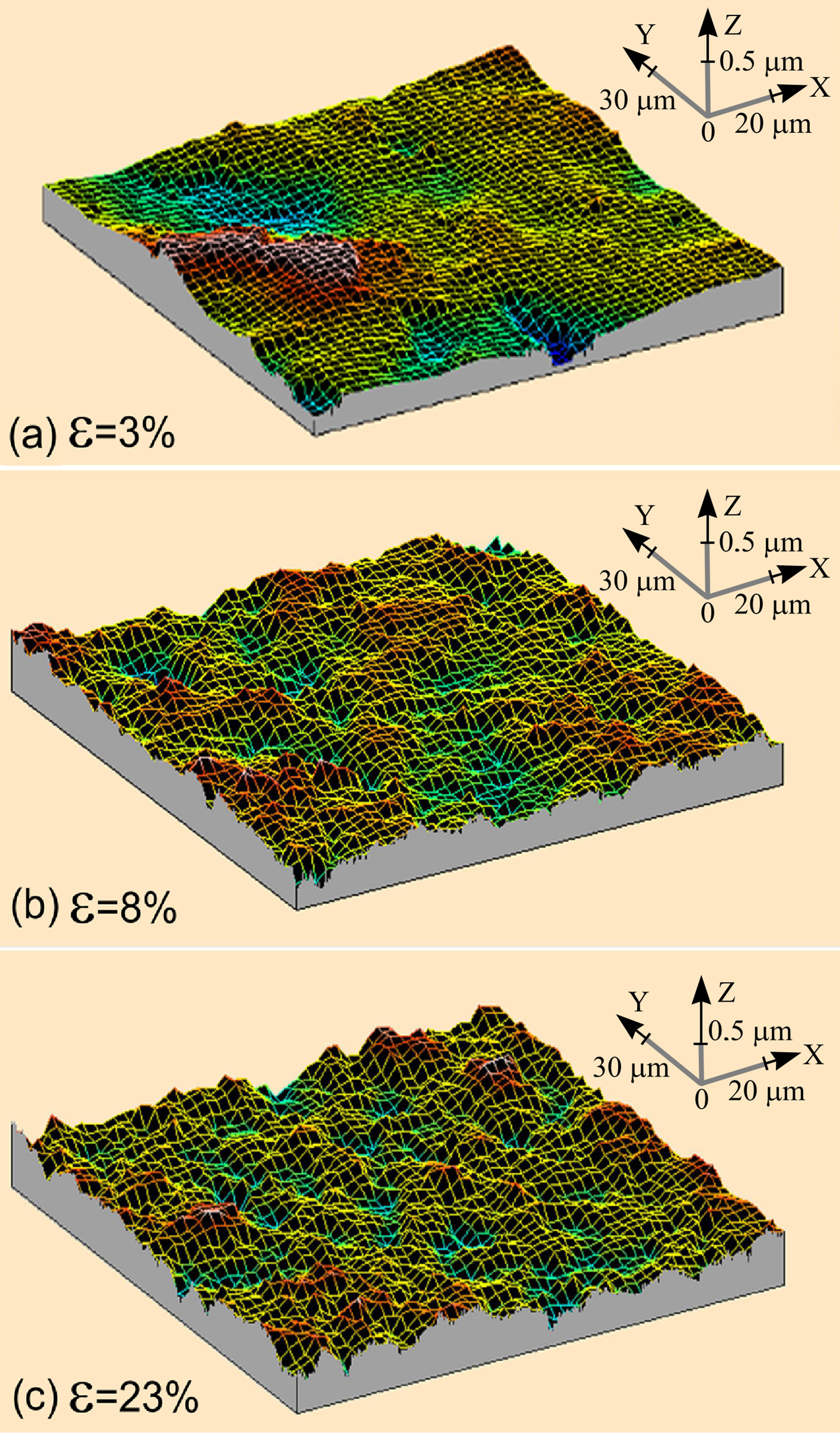
Typical surface profiles measured with SWLI Nikon MicroMap interference microscope at different strains; variation of surface roughness is discernible with naked eye
Based on observations by transmission electron microscopy, Zaiser et al.
55
suggested that dislocation cell structures that form in fcc single crystals can be considered as fractals characterised by power–law distributions of cell sizes λ:

 . The average dislocation cell size is found as
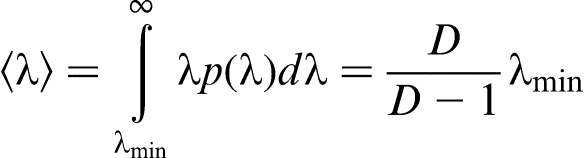
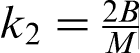 , where ζ; is the proportionality coefficient, which is supposed to be close to unity
55
and is dropped in what follows. Recalling equation (1) again, λ min can be expressed as
, where ζ; is the proportionality coefficient, which is supposed to be close to unity
55
and is dropped in what follows. Recalling equation (1) again, λ min can be expressed as 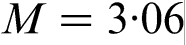 and equation (21) can be rewritten as



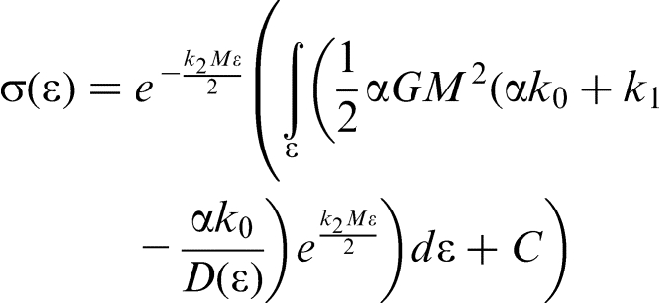
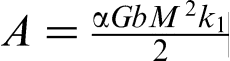 derived from the solution of equation (24)17,27

The behaviour of FD with strain theoretically predicted from the stress–strain curve is exemplified in Fig. 4 by the results for polycrystalline copper (adapted from Ref. 17). The most striking prediction of the model is the occurrence of a pronounced maximum in the strain dependence of D before the onset of necking as defined by the Considère criterion, equation(14). After that peak, D drops off slightly. The latter decrease of FD is indicative of a reduction in the degree of chaos in the system with an increasing significance of dynamic recovery and slip coarsening in stage III deformation before final macroscopic strain localisation in a neck.
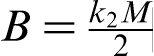
Fragment of strain hardening curve of coarse grained polycrystalline copper and results of experimental measurements of FD from surface profiles (cf. Figure 3); model FD calculated from stress–strain curve is shown by red solid line; dashed line shows fragment of strain dependence of strain hardening coefficient
used to determine onset of necking based on Considère criterion
To verify the model predictions, the ‘box counting’ FD D(ε) was determined from equation (26) using experimental data on the deformation behaviour of polycrystalline 99.98 copper. The surface topography was quantified for different strains using a scanning white light interference microscope (Nikon MicroMap) with lateral X–Y resolution of 500 nm and vertical Z resolution of < 1 nm. The X–Y area of observation was set at 0.12 × 0.12 mm2 (see Ref. 17 for experimental details). The FD of the three-dimensional surface maps was obtained by covering the data set Z(x,y) with a grid of boxes with edge length r and counting the number of boxes N(r) that contain at least one element of the surface profile. Experimental results illustrating the surface topography at different strains are shown in Fig. 3, and the FD data obtained are plotted in Fig. 4 (circles). The model based FD calculated using the tensile data for copper is shown on the same plot by the red solid line. The error bars reflect the scatter of fractal exponents obtained from different surface profiles taken at the same strain. It is evident that the simplified analytical model presented in Ref. 17 captures the known salient features of the FD variation, particularly a tendency of D to increase with strain. The observation of a drop of FD towards the point of failure can be interpreted as an indication that the dislocation cell structure becomes progressively more ordered on approach to fracture. A similar behaviour of FD was repeatedly reported in the Earth science literature. 56
As discussed elsewhere, 17 the seemingly good quantitative agreement of the experimentally measured FD values with the model predictions, Fig. 4, should not be overrated. The absolute values of the FD obtained by different methods can vary considerably, depending on the imaging technique, magnification, voxel, and mesh size and shape, as well as on the implementation of the calculation algorithm.57–59 Still, we would like to emphasise the remarkably good agreement obtained in this work with regard to the common trends in the behaviour of experimentally measured and predicted FD. Hence, the significance of FD as a robust and informative index characterising the evolution of dislocation structures should not be underestimated.
In concluding this section, we note that both experimental observations and dislocation based theoretical predictions corroborate the suggestion that the FD serves as a characteristic parameter reflecting the microstructure evolution. It is worthwhile mentioning that so does acoustic emission (AE), as was demonstrated in our recent work 53 using a thorough analysis of the power spectral density function for AE and its evolution with strain. It was concluded that the modern AE techniques open up a way to characterise the intimate details of the evolution of a dislocation ensemble through the access to its FD this technique provides. In conjunction with the surface profile analysis, the AE measurements can be used as an important diagnostic tool in revealing the evolution of the dislocation structure of the material during plastic deformation. The predictive capability of this tool with regard to forecasting a nearing plastic instability is a particularly promising aspect of the method proposed.
Conclusions
It was shown that the irreversible thermodynamics approach to dislocation mediated plasticity of metals leads to a simple and versatile description of the evolution of the dislocation density and associated strain hardening. It recovers the well known KME equation but redefines the coefficients in that equation.
An analytical expression for the FD of the cellular (or tangled) dislocation structure evolving in the course of plastic deformation can be obtained on the basis of the dislocation model proposed. This makes it possible to trace the variation of FD of the dislocation cell structure with strain by simply measuring the macroscopic stress–strain curve.
In particular, we showed that the behaviour of FD can give an indication of a nearing loss of uniformity of plastic flow and the onset of strain localisation. Access to the FD was provided by the inspection of surface morphology by white light interferometry based on the assumption that the surface topography reflects the features of the dislocation structure in the bulk of the material. It was suggested that there exists a remarkable link between the FD evolution as measured by surface profile analysis and the power spectrum characteristics of the AE. This link can provide additional insights in the evolution of the dislocation structure in the bulk of a deforming material. In summary, a general irreversible thermodynamics approach was shown to uncover new facets of dislocation mediated plasticity and to suggest new ways of looking at the dislocation density evolution and the ensuing tensile instability. The significance of the evolving FD as a traceable and quantifiable characteristic of the dislocation cell structure was also highlighted.
Acknowledgements
Financial support from the Russian Ministry of Education and Science through the grant-in-aid 14.A12.31.0001 and the contract RFMEFI58314X0006 is gratefully appreciated. Partial support from the Russian Foundation for Basic Research (RFBR) under project no. 13-08-00259 and from the Russian Government Program of Competitive Growth of Kazan Federal University is also acknowledged.