Abstract
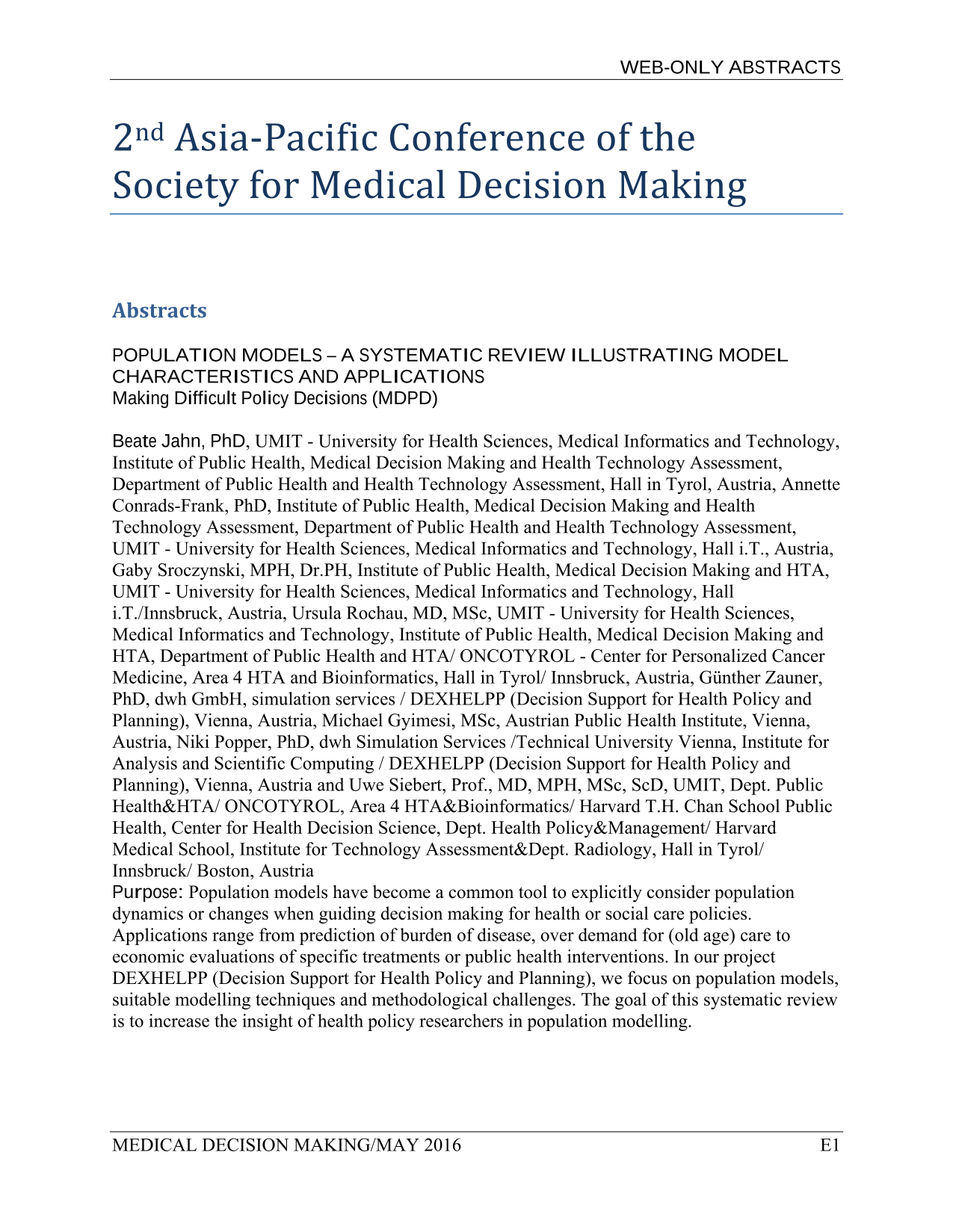
 Available accessAbstractFirst published May, 2016pp. E1-E77

Select search scope: search across all journals or within the current journal


 Available accessAbstractFirst published May, 2016pp. E1-E77Available accessReview articleFirst published May, 2016pp. 427-452
Available accessReview articleFirst published May, 2016pp. 453-471Available accessResearch articleFirst published May, 2016pp. 472-478The effectiveness of a pedometer intervention was affected by manipulating the goals given to participants and by providing social comparison feedback about how participants’ performance compared with others. In study 1 (
Available accessResearch articleFirst published May, 2016pp. 479-489Available accessResearch articleFirst published May, 2016pp. 490-502Available accessResearch articleFirst published May, 2016pp. 503-517We present results from a hypothetical framed field experiment assessing whether risk preferences significantly differ across the health and financial domains when they are elicited through the same multiple price list paired-lottery method. We consider a sample of 300 patients attending outpatient clinics in a university hospital in Athens during the Greek financial crisis. Risk preferences in finance were elicited using paired-lottery questions with hypothetical payments. The questions were adapted to the health domain by framing the lotteries as risky treatments in hypothetical health care scenarios. Using maximum likelihood methods, we estimated the degree of risk aversion, allowing for the estimates to be dependent on domain and individual characteristics. The subjects in our sample, who were exposed to both health and financial distress, tended to be less risk averse in the financial domain than in the health domain.
Available accessResearch articleFirst published May, 2016pp. 518-525Available accessResearch articleFirst published May, 2016pp. 526-535Available accessResearch articleFirst published May, 2016pp. 536-540
Available accessResearch articleFirst published May, 2016pp. 541-549The unconscious thought theory argues that making complex decisions after a period of distraction can lead to better decision quality than deciding either immediately or after conscious deliberation. Two studies have tested this unconscious thought effect (UTE) in clinical diagnosis with conflicting results. The studies used different methodologies and had methodological weaknesses. We attempted to replicate the UTE in medical diagnosis by providing favorable conditions for the effect while maintaining ecological validity. Family physicians (
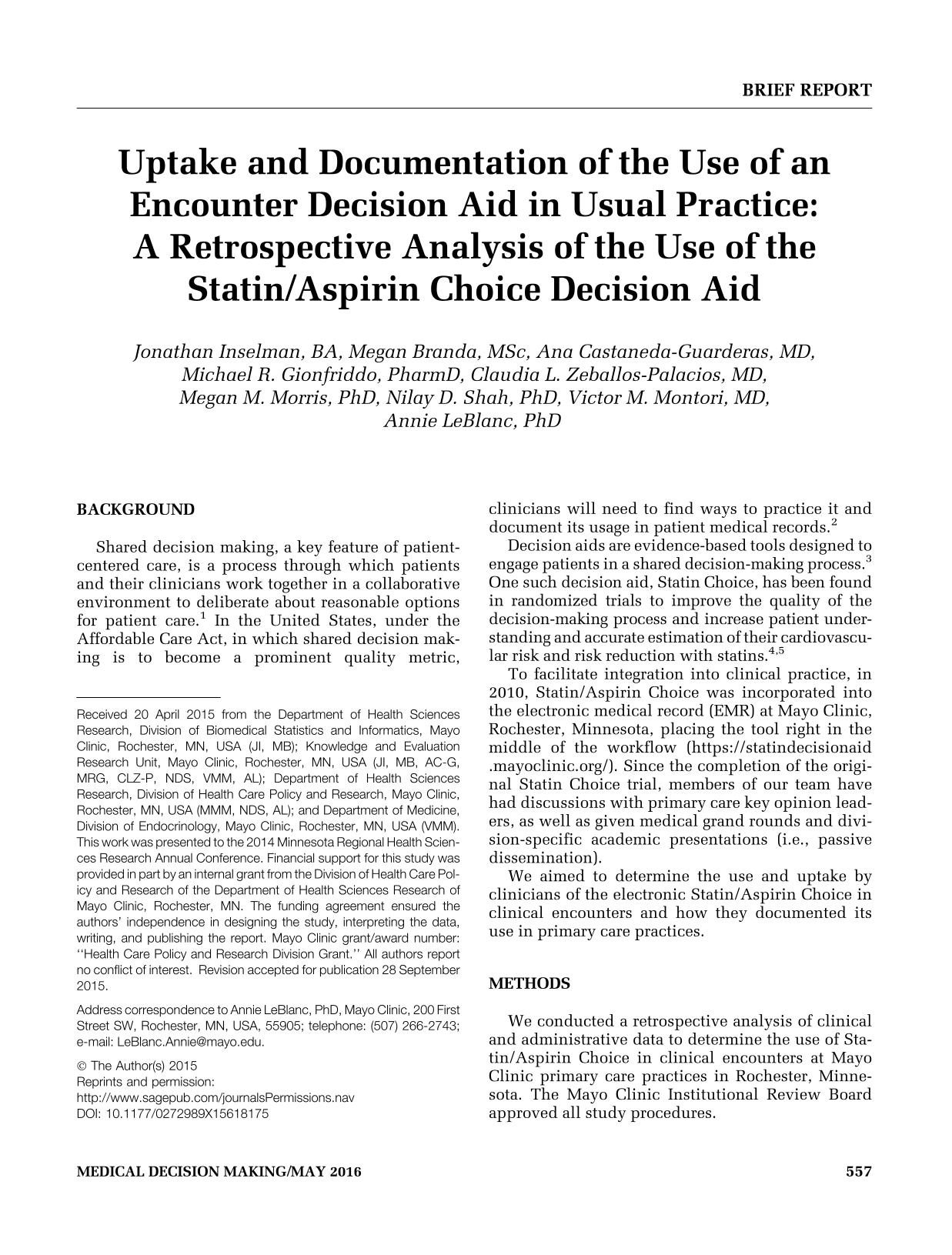
Available accessResearch articleFirst published May, 2016pp. 550-556Available accessBrief reportFirst published May, 2016pp. 557-561